"Love follows knowledge."
"Beauty above all beauty!"
– St. Catherine of Siena

Sunday, March 21, 2021

In This House of Brede by Rumer Godden, Post 1

This novel, In This House of Brede, written by the English novelist and Catholic convert, Rumer Godden, published in 1969, is set in a Benedictine Abbey (Brede) in northern England.  A widow and successful career woman, Philippa Talbot, decides to quit her secular job and become a Benedictine nun at Brede Abbey.  Let me provide chapter by chapter summaries, but spoiler alert: don’t read this if you don’t want to know before a first read.  After the summaries I will provide thoughts on the novel’s structure and themes.


Chapter Summaries:

Preface:

1953.  Philippa’s last day at her job and the background of her career as a “controller.”  She’s 42 years old.  Enters Abbey on Jan 1, 1954.

Chapter 1:

1957, Oct.  History and nature of Brede Abbey.  Four years after Philippa entered, now 46.  Abbess Hester stricken.  Backstory of Abbess Hester and Sister Julian.  Philippa and Julian compared.  Both are in the fourth year of their novitiate.  Money motif; missionary motif; modernity motif.  Julian’s brother John.  Backstory of Julian not taking solemn vows, leads to Abbess Hester’s stroke.  Dame Veronica as cellar. 

Chapter 2:

1957, Oct.  Abbess Hester dies.  Dame Veronica’s paralysis over her sin and guilt.  Abbess Hester’s funeral.  Discussion of the coming election.  Sister Cecily backstory.  Other postulants.  Central theme stated: Not what thou art but what thou wouldst be (Loc 1192); When you become God’s in the measure He wants, He, Himself, will know how to bestow you on others (Loc 1266).  Dame Emily to hospital.

Chapter 3:

1957, Nov.  Dame Emily sick.  Dom Gervase backstory – beaten by a gang of boys.  Sister Julian leaves,  Dame Perpetua as Prioress; expected Abbess.  Chaos without Abbess.  Central theme expressed by Pilippa: “I wasn’t a full person” (Loc 1457).  Philippa sleepless and in turmoil, longing for Keith.  Can she remain and become fully professed?  Struggle.  Dame Catherine consoles her.  Vote for Abbess is held.  Dame Catherine selected.

Chapter 4:

1957, Nov.  More history of Brede, thru the 13 Abbesses.  Movement from England to France and back to England thru the storms of history, Protestant Reformation, French Revolution.  The values and norms of the Benedictine Order thru Novitiate formation: Enclosure, Self-Effacement, Poverty, Chastity, Stability, Obedience; paradox of giving completely leads one to finding.  Dame Catherine takes on responsibility as Abbess; struggles emotionally.  Catherine’s backstory of religious conversion, of her brother Mark who is now a bishop. 

Chapter 5:

1957, Dec.  Life at monastery thru the seasons, beautifully written section.  Abbess Catherine finding her voice.  Philippa’s backstory to being received for temporary promise; learning to sing with Dame Maura and Cecily, highlighting Cecily’s musical abilities; Learning Latin under Dame Agnes; hostility from Agnes.  More backstory to Philippa’s life; connections to outside world.  Christmas at the Abbey; Cecily and her mother; Cecily and Dame Maura at the organ.  Catherine’s formal enthronement as Abbess.

Chapter 6

1958, Jan.  Novitiates at work and talk.  Sister Cecily considered, special or weak?  Abbess Catherine reviews account books; finds great negative balance due to Abbess Hester’s “stone disease.”  Dame Veronica failure as Cellarer; the note of a “sinking fund” comes out.  Money box missing 100 pounds; Dame Veronica lies about it; refuses to explain.  Philippa going through mail finds a letter from famous sculptor, Duranksi, of plans with Abbess Hester for Apse and Altar.  Contrast: Dame Veronica writing light poetry with Dame Agnes writing scholarly book on Holy Cross.  Dame Agnes 15 years of scholarship.  Dame Veronica tells about Abbess Hester’s commission of sculptures.  Backstory on commission.  But now they can’t pay for it because Sister Julian left the monastery.  Dame Veronica overdoses and nearly dies.  When she recovers admits she had stolen from the money box for her criminal brother.  Backstory to Veronica’s life.

Chapter 7

1958, Jan.  Abbess Catherine methodically looks for solutions to financial crises.  She holds distribution of new offices.  Theme mentioned of changing outside world (Loc 3372).  Abbess Catherine finds outlet for Dame Veronica to make satisfaction and pay debt.  Abbess Catherine holds Chapter of Faults.  Philippa analyzes accounts and suggests only solution is to sell monastery lands to pay off debt.  Rejected by Dame Agnes, the only no vote.  Dame Agnes insists it would violate the stability and enclosure of the monastery.  But the vote is to sell.  Later at a visit, McTurk agrees with Dame Agnes.  Philippa feels terrible and contrite over her suggestion.


Chapter 8

1958, Jan – Apr.  Stefan Duranski arrives.  Dame Emily returns from hospital.  Abbess Catherine is nearly 50 years old.  (Phillipa is around 47, both nearly same age.)  Exposition on the artwork and placement.  First part of the work will take up to Easter, displacing the church; second part after Easter.  Duranski and his men work while Nuns carry on.  Duranski carves Lady of Peace from an old trough.  Work has an act of “creating” coordinating with theme of “becoming” (Loc 3727).  The statue seemed to “emerge naturally from the stone (Loc 3749).  “Like us” says Sister Constance (Loc 3759).  Discussion of clothing of sisters Hilary and Cecily.  More backstory to Cecily; flashback to decision to join monastic life.  Discussion on monastic life.  Hilary’s clothing; flashback to Philippa’s clothing and first profession.  Sister Cecily bursts onto Abbess to plead to be clothed; Abbess allows it; Cecily clothed.  Modernity theme again.

Chapter 9

1958, April.  Duranski is back carving the sculptures.  The monastery pairs down expenses to save money to pay for the sculptures.  Abbess  becomes friends with Duranski.  Grows in her responsibility as Abbess.  Larry comes to visit Cecily to persuade her to marry him; more of Cecily’s backstory.  Abbess Catherine at her work.  The transfer of the cross piece to Abbess’ room.  Cracks and hidden jewel pops out, solving their money problem.  Philippa presents her dowry, also pays for the altar piece.

Chapter 10

1958, June.  Monastery finds itself richer.  Philippa makes solemn profession; theme of becoming: “simply grow” (Loc 4634).  Penny Stevens visits Philippa with her crises.  Bird imagery, motif: lark in the sky.  Penny to have a baby but won’t tell Donald since he doesn’t want children; says she wants to abort; Philippa dissuades her.  Donald comes to see Philippa; Penny had the abortion but is bleeding and needs emergency surgery.  Philippa has monastery pray for Penny.  “You can do nothing yourself, but you can make yourself an instrument through which strength can flow,” Abbess Catherine says.  Kate farren becomes a postulant; her mother was Philippa’s nanny for Keith.  Philippa needs to avoid Kate who is now Sr. Pollycarp.

Chapter 11

1958, Oct.  Death of Pope Pius XII.  Motif of modernism vs, tradition.  Pope John XXIII selected.  A sense of the modern is felt.  Japanese Mr. Konishi wants to send Japanese young women to become nuns with the hope of returning to Japan to start a Benedictine monastery.  Five postulants will be coming.  Backstory on Mr. Konishi.  Philippa as sacristan; exposition on duties of sacristan.  Theme of becoming: “I am advancing” (Loc 5192).  Nuns trying to learn about Japan.  Backstory on five Japanese postulants.  Philippa knows Japanese.  Exposition on self-mortification “discipline.”

Chapter 12

1959, Lent (March?).  Abbess summons Philippa, desires that Philippa be appointed zelatrix for Japanese postulants.  Philippa begs no because she would then also have to zelatrix to Sr. Pollycarp.  Backstory on Sr. Pollycarp’s personality and her clothing and on her family.  Philippa has to tell story of Keith’s death; started with a small nugget of gold (possible connection between ruby an nugget?).  Philippa working in Washington went to California with Keith & Mrs. Farren (Sr. Polly’s mother) as Keith’s nanny.  Backstory of Keith’s playing and running into a cave where he fell into a hole and of his horrible, tragic death.  Backstory of Philippa’s career relocations: Washington, Tokyo, London.

Chapter 13

1959, Holy Week (Apr?).  Holy week events & liturgies; holiest part of the novel.  Larry sends Sr. Cecily and Easter card and visits monastery.  Abbess learns Japanese postulants won’t be coming for another year.  Mr. Konishi expected Philippa to assist with the Japanese postulants.  Sr. Polly gets chicken pox and gives it to Philippa.  Sr. Polly and Philippa bond in infirmary.  After Philippa is over chicken pox, goes to Abbess and volunteers to be zelatrix. 

Chapter 14

1961, Jan.  Backstory to Japanese postulants.  Arriving in May, 1960.  Mariko, Sumi, Yoko, Yuri, Kazuko.  In Dec Abbess asked them if they wanted to be clothed.  Backstory of Yoko: widow.  Backstory of Mariko: Konishi’s daughter.  Backstory of Sumi: daughter of Konihi’s servants, friends with Mariko.  Backstory of Yuri: orphan, nurse.  Backstory of Kazuko: sullen, withdrawn, and insecure.  Exposition of Japanese postulants living monastery life.  Interactions and exchange of customs.  Bird metaphor again (Loc 5838).  Yuri gave up, not clothed, goes to Japan.  Clothing ceremony of postulants.  Dame Philippa acknowledged as excellent influence.  “The strength of the monastery is that it keeps its traditions,” Abbess Catherine.

Chapter 15

1961, Summer, Christmas, 1962, Lent, Pentecost, Sept, Oct, Nov.  Seasons of prayer.  McTurk brings two Buddhist monks to monastery.  Exposition of Christmas feast days.  Exposition on Lenten practices.  Dame Maura attracted to Cecily’s face.  Exposition on feasts, Pentecost.  Dame Veronica’s mother & brother Paul visit.  Dame Veronica prideful as published poet.  Dame Agnes unable to publish her book, humbled.  Philippa advices Penny who is expecting another baby but Donald has lost his job.  Bird imagery: Sept swallows.  Feast of Christ the King.  Dame Thecla’s brother, an Ethiopian priest celebrates Christ the King Mass.  All Saints and Souls Days practices.  Dame Maura’s praise of Cecliy’s voice.  Kazuko finds her charism weaving silk.  Backstory to Sr, Kazuko, becomes attached to Dame Colette. 

Chapter 16

1962, March/Spring, May.  Sr, Cecily asks Abbess to stop her from music, but won’t tell her why.  Abbess needs to talk with Dame Maura.  Sr. Hilary asks Abbess to look after Cecily.  Dame Maura confesses to Abbess about her attraction to Sr. Cecily; tells of kissing Cecily’s scratched arms.  Abbess will send Dame Maura to Canada, tells Cecily to be more “bereft.”  Battle of the cats; cats have over produced.  Need to be brought back to balance.  Dame Veronica prideful in her poetry; Abbess needs to bring her down.  Backstory to Dame Veronica’s issues.  Abbess will not publish her books.  Backstory to Dame Agnes not able to publish her book.  Sr. Cecily asks to go to another monastery; rejected; Cecily was missing Maura.  Penny brings her two children to show Philippa.  Philippa has Cecily meet the children; Cecily attracted to baby; now she is unsure if she wants to profess.  Backstory to Cecily and Larry.  Philippa asks college in Illinois to look at Dame Agnes’ book.  College decides to publish it; Dame Agnes is jubilant.  Dame Veronica tells Agnes that Philippa was responsible for getting book to the publisher.  Agnes thanks Philippa with all her heart.  Dame Veronica reprimanded.  Dame Emily dying.

Chapter 17

1962, Spring.  Mrs. Bannerman comes to monastery to persuade Cecily to leave just before her final profession.  Abbess asks Cecily if she would like to return to secular life.  Cecily refuses and rejects Mrs. Bannerman.  She is sure she wants to profess.

Chapter 18

1962, Oct – 1963, June.  Vatican II Council on TV.  Modernist motif.  Nuns react.  Pope John XXIII dies.  Nuns form camps of modernist versus traditional.  Argument over vernacular versus Latin.  Abbess Catherine tries to take middle course.  The stability of the monastery is threatened.

Chapter 19

1964 (?)-1968. Japanese novice’s solemn profession.  Relatives from Japan flown in.  Mr. Konishi bought a site in Japan for a monastery where in a few years they would move to.  Cecily and Dame Maura exchange letters.  News arrives that Larry Bannerman has married Cecily’s cousin, Jean.  Dame Maura returns during Advent.  Finds Cecily singing.  Dame Cecily now thirty-four years old and settled in.

Chapter 20

1969, June.  The monastery in Japan is ready, now five years after Japanese nun’s solemn profession.  Dame Colette will be the Abbess there; a contingent of Brede nuns and sisters to go, but not Philippa.  Departure set for June 27th.  Philippa breathes sigh of relief to return to her own life.  Had been selected infirmarian two years now.  In those two years Dame Emily underwent her illness; was not dying.  Feast of Corpus Christi.  Bird (martlet) imagery (Loc 7188); two martlets when Dame Emily dies; Dame Colette suddenly dies as well.  Now they will need another Abbess for Japan monastery.  Only Philippa is the logical choice, but Dame Philippa needs to freely choose.  She struggles with anguishing decision.  Dames Agnes and Philippa sit and discuss history of Brede – the gift from Elinor Hartshorn, needed to gift all.  Philippa runs to Abbess Catherine.

Envoi

1969, June.  At the airport Penny, Donald, and McTurk looking for Philippa to pass.  Philippa has chosen to go to Japan and be Abbess.  She realizes she may never see the other nuns again.  Sir Richard also shows up at the airport.  They all see each other.  Philippa enters the plane and the plane takes off.


Wednesday, March 17, 2021

Happy St. Patrick’s Day

Last year I posted the St. Patrick’s Breastplate prayer and a beautiful recitation of it.  Go back and pray and listen to it.  It’s worth it.  It’s a prayer one should pray regularly, but if you forget, today is the opportune time to do it at least once for the year.

Today I want to link to an expounding of the prayer by Fr. Patrick Briscoe, OP, “St.Patrick’s Breastplate UNPACKED” over at Aleteia. 

Let me give you a sample. 


St. Patrick’s Breastplate (also called the Lorica, from the Latin word for Roman armor) is a prayer to take up arms in spiritual battle. Summoning the forces of heaven to combat the armies of hell, this prayer attributed to the Apostle of Ireland contains a wealth of theological wisdom. On the feast of St. Patrick, take a moment to pray and reflect on these ancient, powerful words.


I arise today

Through a mighty strength, the invocation of the Trinity,

Through belief in the Threeness,

Through confession of the Oneness

of the Creator of creation.


St. Patrick’s prayer starts with the central mystery of the Christian faith: the Holy Trinity. The Christian God is one in three, three in one. The eternal Father begets the Son, and together they breathe forth the Holy Spirit. Eternal and infinite, the love of Father, Son, and Spirit pours forth upon the world. The diffused goodness of God, a goodness so great that it cannot be contained, spills out upon all creation, making and forming the world in love.


Oh read the entire article.  It’s a beautiful prayer and a great explanation.

I also found another musical version, this by Dwight Beal, who I have never heard of.  He takes some liberties with the words to fit his melody, but the spirit is faithful to the prayer.  He calls it "The Hymn of St. Patrick."


It’s beautiful.  Happy St. Patrick’s Day.  And remember, it's a religious day first and foremost.


Sunday, March 14, 2021

Sunday Meditation: The Son of Man Lifted Up

From today’s Gospel reading.


“Just as Moses lifted up the serpent in the desert, 
so must the Son of Man be lifted up, 
so that everyone who believes in him may have eternal life.”


       -John 3:14


That has always been a verse dear to me.

Wednesday, March 10, 2021

Notable Quote: Into This Dark Night by St. John of the Cross

 “Into this dark night souls begin to enter when God draws them forth from the state of beginners—which is the state of those that meditate on the spiritual road—and begins to set them in the state of progressives—which is that of those who are already contemplatives—to the end that, after passing through it, they may arrive at the state of the perfect, which is that of the Divine union of the soul with God.”


-St. John of the Cross, from Dark Night of the Soul, E. Ellison Peers Translation


Sunday, March 7, 2021

Dante’s Divine Comedy: Blog Links

Since Dante’s La Commedia is the most commented work on my blog, and since the number of posts on Dante Alighieri or his work amount to 56, I thought it worthwhile to have a post where they are collected and organized for user friendly linking.  So the following are links to all my posts on the Divine Comedy, organized by canticle and canto.

General posts on the overall work can be found here.

(1) TheDivine Comedy: Overview   

(2) Rod Dreher on Dante’s Divine Comedy 

(3) Dante Alighieri’s 750th Birthday 

(4) Literature in the News: Pope Frances Releases, Candor Lucis Aeternae


Inferno


Cantos I thru V

(1) Summary 

(2) Commentary 

Cantos VI thru XI

(1) Summary

(2) Commentary 

(3) Commentary, Dante’s Inferno, Canto VIII

XII thru XVII

(1) Summary 

(2) Commentary 

Cantos XVIII thru XXIII

(1) Summary 

(2) Commentary 

Cantos XXIV thru XXIX

(1) Summary 

(2) Commentary 

Cantos XXX thru XXXIV

(1) Summary 

(2) Commentary 


Purgatorio


Overall:

(1) Overview 

(2) Introduction 

(3) Structure & Ante Purgatory 

(4) Middle Section 

(5) Ending https://ashesfromburntroses.blogspot.com/2015/06/purgatorio-by-dante-alighieri-part-4.html   

Note: Posts 2, 3, 4, 5 were from a 2014-15 read.

Cantos I thru V

(1) Summary 

(2) Commentary 

(3) Notable Quote from Canto 2 

Cantos VI thru XI

(1) ) Summary 

(2) Commentary 

Cantos XII thru XVII

(1) ) Summary 

(2) Commentary 

Cantos XVIII thru XXIII

(1) ) Summary 

(2) Commentary 

Cantos XXIV thru XXVIII

(1) ) Summary 

(2) Commentary 

(3) On Arnaut Daniel 

Cantos XXIX thru XXXIII

(1) ) Summary 

(2) Commentary-1 

(3) Commentary-2 

(4) Commentary-3 


Paradiso


Overall:

(1) Introduction 

Cantos I thru V

(1) Summary 

(2) Comments 

Cantos VI thru IX

(1) Summary 

(2) Comments 

Cantos X thru XIV

(1) Summary 

(2) Comments 

Cantos XV thru XVIII

(1) Summary 

(2) Comments 

Cantos XIX thru XXII

(1)Summary 

(2) Comments 

Cantos XXIII thru XXVI

(1) Summary 

(2) Comments 

Cantos XXVII thru XXX

(1) Summary 

(2) Comments 

Cantos XXXI thru XXXIII

(1) Summary 

(2) Comment-1 

(3) Comment-2 

(4) Comment-3 


Friday, March 5, 2021

Faith Filled Friday: The Madonna Advocata

I had never heard of this icon, and I thought I knew a lot about the Dominican Order, the Order of Preachers.  The story goes back 800 years ago when on February 28th, 1221 St. Dominic de Guzmán established a monastery of nuns in Rome.  From the Catholic News Agency, "St. Dominic entrusted this Marian icon to nuns in Rome 800 years ago":  

Eight hundred years ago, a barefoot St. Dominic carried an icon of the Virgin Mary across Rome to entrust the Marian image to a new community of cloistered nuns, who have safeguarded the icon within the walls of their convent to this day.


The icon, known as the “Advocata,” can be found today in a small chapel on Rome’s highest hill, in the Church of Santa Maria del Rosario on Monte Mario.

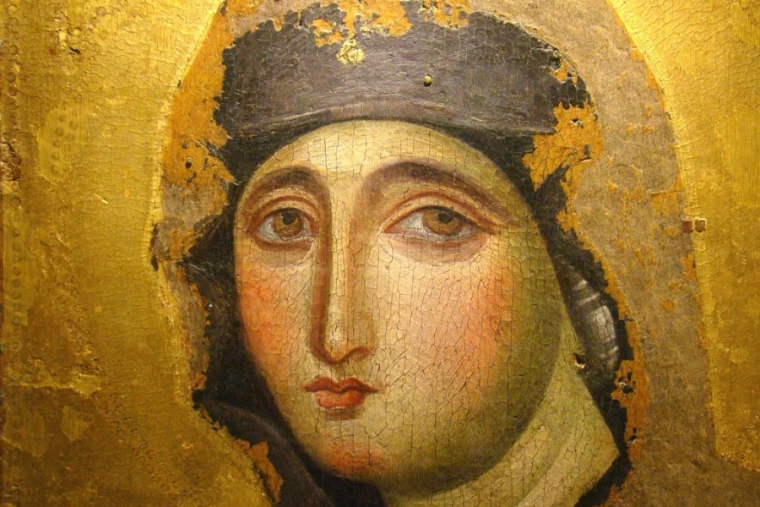
The image is absolutely stunning.  Here is the entire image, which has been damaged.


Miraculously the face has not been damaged, and it’s well worth cropping that part of the painting.


My goodness, what a stately, beautiful face.  Who and when was it painted?  Apparently it “dates back to at least the 7th century and has been revered over the centuries as having been painted by St. Luke.”  I’m not sure how it could be dated to the 7th century and be painted by St. Luke, but it says “at least the 7th century,” so who knows. 

I find it amazing that this community of nuns have kept the icon in their possession for 800 years.  According to the article they have moved twice in those years, but careful to preserve the icon.  If the procession took place in February of 1221and St. Dominic died in August of that year, so it was six months before he passed away.  So I went looking through my St. Dominic biographies for this event.  I couldn’t find anything but I was looking toward the end of the biographies since it happened toward the end of his life.  But one of my Lay Dominican sisters found it in the Augusta Theodosia Drane biography, detailed in pages 112 through 117.  Let me quote some key passages.


The most refractory of these religious [sisters] were some who were living at the time in the monastery of Santa Maria in Trastevere, in which was kept a celebrated picture of our Blessed Lady, said to have been painted by St. Luke.  This picture was a particular favorite with the Roman people.  Tradition said that it had been brought to Rome, many centuries before, from Constantinople; that it was the same that had been borne processionally by St, Gregory in the time of the plague, on that Easter day when the words of the Regina Caeli were first heard sung overhead by the voices of the angelic choirs.  After that Sergius III had caused it to be placed in the Lateran Basilica, but in the middle of the night it found its own way back to the majestic old church which seemed its chosen resting place.  The possession of this picture was no inconsiderable addition to the power and popularity of the nuns; without it they were determined never to stir, and there seemed great difficulties in the way of removing it.  (Drane, 112-3)


Quotes taken from The Life of Saint Dominic by Augusta Theodosia Drane, sixth edition, Tan Books, Charlotte, North Carolina, 1988.  [First published in 1857, London]


Well, that’s quite a story of movement, from Constantinople to Rome to the nuns to the Lateran Basilica and then miraculously back to the nuns.  But Dominic proposed and convinced the nuns to relocate to the convent of St. Sixtus, associated with the Basilica of St.Sixtus, a Roman basilica dating back to the seventh century.  One of St. Dominic’s most notable charism was his power of speech and persuasion, and it was evident here.  Thinking on my engineering work, St. Dominic would have been a great project manager and leader.  The story continues onto Ash Wednesday, which in 1221 fell on February 28th.


On Ash Wednesday, which fell that year on the 28th of February, the cardinals assembled at St. Sixtus, wither the Abbess and her nuns also proceeded in solemn procession.  (115)

And later,


Four days after, on the first Sunday in Lent, the nuns took possession of their convent.  They were forty-four in all, including a few seculars, and some religious of other convents.  (116)

But the painting was still not at St. Sixtus.


Dominic waited until nightfall before he ventured to remove the picture so often named; he feared lest some excitement and disturbance might be caused by this being done in broad day, for the people of the city felt a jealous unwillingness to suffer it to depart.  However at midnight, accompanied by the two cardinals Nicholas and Stephen and many other persons, all barefoot and carrying torches, he conducted it in solemn procession to St. Sixtus, where the nuns awaited its approach with similar marks of respect.  It did not return; and its quiet domestication in the new house completed the settlement of the nuns.  They were soon after joined by twenty-one others from various other houses, and thus was formed the second house of religious women living under the rule of St. Dominic.  (117)

So the story in the book differs somewhat from the article.  Nonetheless a beautiful and historic painting with quite a story.

By the way, I posted on the book, The Life of Saint Dominic, when I first read the biography two years ago.  

Monday, March 1, 2021

City of God, Volume I, Books 1-10 by St. Augustine of Hippo

This past year I read the first volume of St. Augustine of Hippo’s City of God, the great theological opus by one of the great Doctors of the Church.  Given that the entire City of God is a 1000 pages or so, it’s not a surprise that William Babcock divided his translation into two volumes.  The first volume is comprised of the first ten “Books” (what we might call chapters, Augustine calls books), and it’s actually a very natural dividing point.  Augustine himself divides his work at Book 10 as well.  Part 1 deals with the pagan thought and theology, while Part 2 deals with the Judeo-Christian thought and theology. 

I’m only going to compose this one post for this first volume.  I may at some point post some notable quotes from the book. 

Two cities are at the heart of this work, the city of man and the city of God.  It should not be a surprise that Augustine values the city of God over that of man, but how he gets there is a feat of extraordinary composition.  He reconstitutes all of Greco-Roman history, theology, and philosophy and then deconstructs the fallacies which led to the formation of the city of man. 

The occasion for writing City of God was the sack of the city of Rome in 410.  Rome, as a physical polis, had already deteriorated by the beginning of the fourth century.  The capital of the empire had been moved to Constantinople.  Even the center of the west had moved from Rome to Milan and Ravenna.  The resources for maintaining the infrastructure went elsewhere, and so it was an aging city.  But psychologically it was still the eternal city, the heart and soul of their culture, their founding roots.  

So when the news that their founding city had been sacked, pillaged, and destroyed, it came as a trauma to their sense of being.  It was akin to how we Catholics felt when the Cathedral of Notre Dame burned and was thought to have been destroyed.  It was a cultural symbol of all we hold dear and share, and was a defining image of the decline we had been experiencing and sensing.  The sack of Rome by the Visigoths was the first time the city of Rome had been invaded by outsiders in 800 years.  That time before was by the Gauls in 390 B.C, and Rome then vowed to never be weak again and to be on their guard for any threatening force again.  It was that historical disgrace that generated an expansionist mentality in the Roman culture through legends of how their lack of virtue had led to that sack.  Years later, Virgil would take up the legend of their developed virtue and put forth that their empire was a result of Roman virtue. 

So with any monumental failure, the politicians and, indeed, the voice of the people sought blame.  It had only been less than a century since Rome had been Christianized, and the remaining pagans, who looked at their glorious history before Christianity accused Christianity as the root cause of the sack and increasing sense of a coming fall of the west.  [By the way, central thesis of Edward Gibbons’s, The Decline and Fall of the Roman Empire, a very famous work, is just that, Christianity was to blame.  Despite its fame as a work of history, it’s dead wrong.]  The occasion for City of God, begun in 412, then was a defense of Christianity against the charges of the pagans.  St. Augustine would complete the work in 426.

William Babcock quotes this from City of God as its central thesis:


Two loves have made two cities.  Love of self, even to the point of contempt for God, made the earthly city; and love of God, even to the point of contempt for self, made the heavenly city. (XIV, 28)

Now it’s not so simple to say that the earthly city stands for the pagans and the heavenly city stands for the Christians—Augustine is way more complex than that—but the earthly city does encapsulate those who lack virtue and the heavenly city does encapsulate those who live by virtue.  And Augustine will argue, Christianity was the means of which virtue, which had faded in pagan Rome, was re-introduced into society, and therefore could not be the reason for the sack of Rome in 410.


Through these first ten Books, Augustine takes us through the sordid Roman founding and history.
  Augustine outlines the history of Rome as a failure of the Roman people to maintain virtue, and that the deities on which they believed failed first to provide a moral foundation and second were actual examples of lack of virtue. The gods themselves were the source of degradation. The gods then were no gods but demons.  All the evils that occurred to the Roman people prior to Augustus, and therefore prior to Christ, were never prevented by the pagan gods, and at their root was the sinful, even shameful, nature of the Roman people.  Whatever success the Roman people had could not be attributed to the pagan gods because the pagan gods themselves lacked the virtue needed.  Whatever success the Roman people had could only be attributed to the one true God for whatever purposes He had. 

Just as the pagan gods are rejected, so too is pagan theology examined and rejected.  Pagan theology fails to instruct man to salvation, and therefore could not be the source of Roman success.  You could think of it as coincidental but not causative.  At the heart of Augustine’s argument is that the pagan gods are false because as he demonstrates they do not control the natural world.  In every tenet pagan theology that Augustine takes up he goes on to show either an inconsistency in logic, a lack of any efficacy in the ritual, or a monstrous immorality with the gods and rituals. In turn he concludes that the pagan gods are either just reflections of man’s inner fancies or outright demons that have induced their worship.

Pagan philosophy is also examined and refuted.  Augustine refutes the pagan philosophic underpinning to the divine, first acknowledging the Platonists similarity to Christianity and then showing they actually worship many gods. Augustine then turns to undermining the validity of Apuleius’ claim that demons serve as intermediaries between gods and men, and finally Augustine rebuts the Egyptian Hermes Trismegistus on his magical creation of gods and how they are rooted in dead men, not a transcendent Being.

In Book X’s closing paragraph, Augustine summarizes what he was trying to do in Part 1 and projects what he will do in Part 2.

In these ten books, then, even if less fully than a few people expected of us, we have satisfied the desires of some, so far as the true God and Lord has deigned to give us his help, by refuting the objections of the ungodly, who prefer their own gods to the founder of the holy city which we have undertaken to discuss. Of these ten books, the first five were written against those who suppose that the gods are to be worshiped for the sake of the goods of this life, and the last five against those who hold that the worship of the gods should be maintained for the sake of the life to come after death. Next, as we promised in the first book, I shall set forth, so far as I am aided by God, what I judge should be said about the origin, the course, and the due ends of the two cities, which are, as we have said, deeply interwoven and mixed together in this world.

So Augustine ends Part 1 by rejecting the pagan notion of sacrifice as a means of obtaining happiness and showing how it is a dead end while Christianity the true sacrifice was obtained by Christ the real mediator with God so that our souls can ultimately reach beatific union. One can see how then it all fits together.

I have to admit I was intimidated to read this magnificent opus, but I found it highly readable ad profoundly captivating.  But I am an ancient Roman history buff.  Perhaps it was this translation.  I can’t speak to the accuracy of Babcock’s translation—it does feel like Augustine is writing, albeit in English—but it is well annotated, well footnoted, and a real scholarly work.  I can’t wait to read Volume II.


###

Here is what I composed as a short central thesis of each of the ten Books from Volume 1.  Of course it’s as I read it, and so it may not be the perfect summary.

Book I

My take as the central thesis of Book I, then, is that the sack of Rome cannot be seen as punishment from God because it is not clear that events in history can be discerned to God’s will.  Bad things happen to good people, good things happen to bad people.  Any event can be seen as a test from God, a punishment from God, or a result of collateral damage of an overarching movement of God’s will to shape history.

Book II

Book II was absolutely fascinating.  Picking up from Book I, where Augustine delineates historical events in the life of Rome, showing that good and bad things happen to both good and bad people, Augustine outlines the history of Rome as a failure of the Roman people to maintain virtue, and that the deities on which they believed failed first to provide a moral foundation and second were actual examples of lack of virtue.  The gods themselves were the source of degradation.  The gods then were no gods but demons.

Book III

I would summarized Book III as the following: all the evils that occurred to the Roman people prior to Augustus, and therefore prior to Christ, were never prevented by the pagan gods, and at their root was the sinful, even shameful, nature of the Roman people.

Book IV

I would summarized Book IV as the following: the success and happiness of the Roman people had nothing to do with the pagan gods, who at best did not exist and at worst were demons in disguise.  The success of the Roman people had to do with the one true God who exists and is the source of all goodness.

Book V

I would summarized Book V as the following: Fate is an illusion because individuals have free will, so Rome’s empire was not acquired from worship of the Roman gods but because the one true God was pleased with Roman virtue and therefore blessed the Roman people with an empire.

Book VI

Book VI still deals with the pagan gods, but now Augustine develops the philosophy of Roman philosopher, Marcus Terentius Varro, and how his pagan theology fails instruct on what leads men to salvation.  Augustine will show how Varro’s three forms of theology, mythic (pertaining to stories of the gods) natural (pertaining to the nature of the gods), and civic (pertaining the relationship of humanity to the gods). 

Book VII

This chapter described rites and rituals of which I was never aware, and Augustine presented the theology behind myths, at least as written by Varro, and as interpreted by Augustine.  In every tenet of pagan theology that Augustine takes up he goes on to show either an inconsistency in logic, a lack of any efficacy in the ritual, or a monstrous immorality with the gods and rituals.  In turn he concludes that the pagan gods are either just reflections of man’s inner fancies or outright demons that have induced their worship. 

Book VIII

In Book VIII, Augustine refutes the pagan philosophic underpinning to the divine, first acknowledging the Platonists similarity to Christianity and then showing they actually worship many gods.  Augustine then turns to undermining the validity of Apuleius’ claim that demons serve as intermediaries between gods and men, and finally Augustine rebuts the Egyptian Hermes Trismegistus on his magical creation of gods and how they are rooted in dead men.  Augustine concludes with rejecting the claim Christians worship martyrs in the same way. 

Book IX

Augustine in this Book describes the nature of demons as conceptualized by pagans, and shows they are not the equivalent of angels.  He shows that neither angels nor demons are mediators to God, and that neither angels nor demons should be worshipped in any way.

Book X

In this magnificent chapter, Augustine takes us from what is true happiness, that is being united with God in love, through how the pagans and Platonists (through the philosopher, Porphyry) have misunderstood union with God and individual purity which brings us to God, and that the true source of are not demons, who are working against that union, but Christ by His incarnation and sacrifice.  This was a super chapter that put the entire Part 1 into context.