On
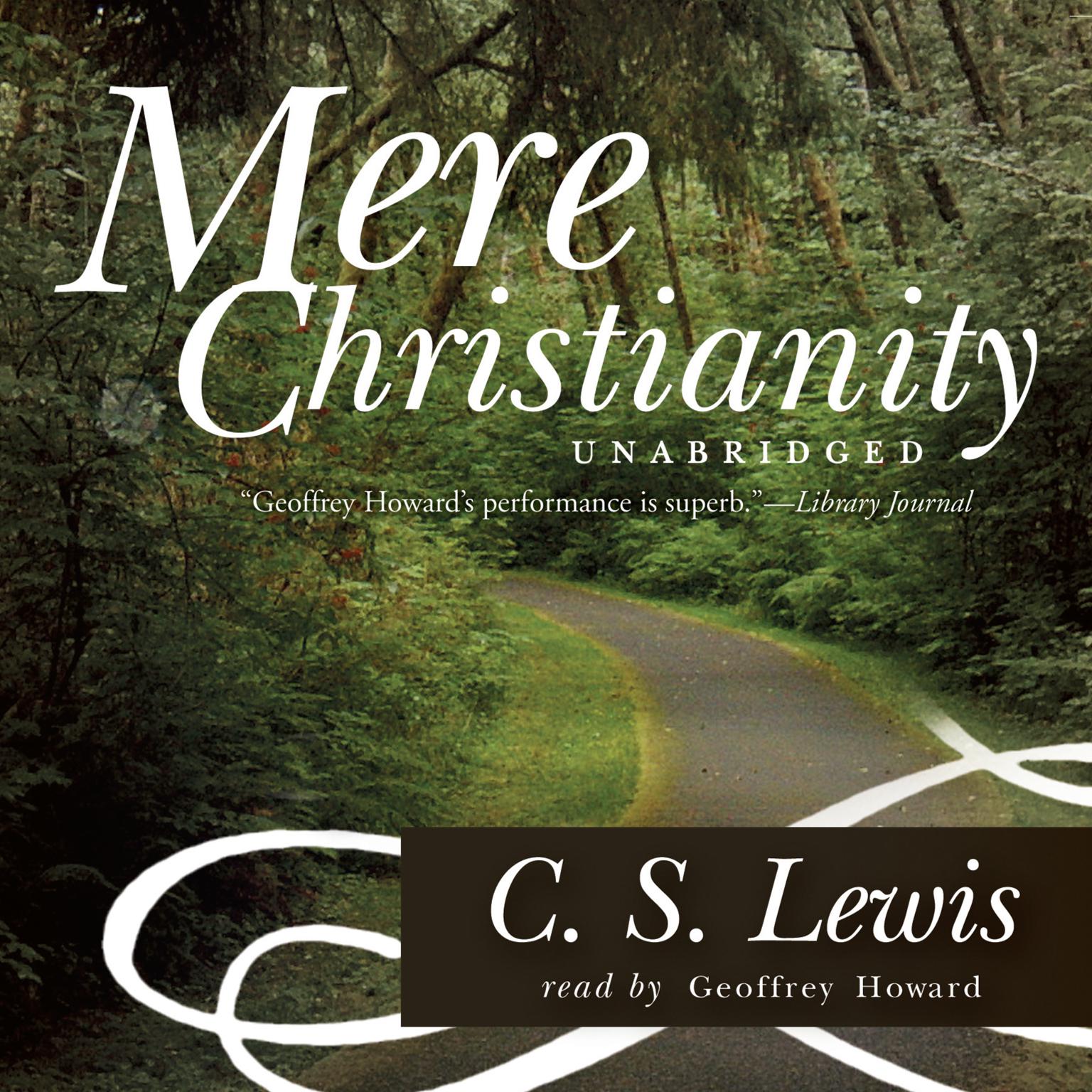
the first post of Mere Christianity,
I provided an overview, a summary of the five chapters of Book 1, and presented
the discussion of Book 1.I didn’t have the
space to provide some notable quotes from Book 1.I could have, but I don’t think super long
posts lend to a reader friendliness.So
here are some quotes from the five chapters of Book 1 that I think are
memorable.
From Chapter 1: The Law of Human
Nature
Every one has heard
people quarrelling. Sometimes it sounds funny and sometimes it sounds merely
unpleasant; but however it sounds, I believe we can learn something very
important from listening to the kind of things they say. They say things like
this: “How’d you like it if anyone did the same to you?”—“That’s my seat, I was
there first”—“Leave him alone, he isn’t doing you any harm”—“Why should you
shove in first?” “Give me a bit of your orange, I gave you a bit of mine”—“Come
on, you promised.” People say things like that every day, educated people as
well as uneducated, and children as well as grown-ups.
⁂
Now what interests me
about all these remarks is that the man who makes them is not merely saying
that the other man’s behaviour does not happen to please him. He is appealing
to some kind of standard of behaviour which he expects the other man to know
about. And the other man very seldom replies: “To hell with your standard.”
Nearly always he tries to make out that what he has been doing does not really
go against the standard, or that if it does there is some special excuse. He
pretends there is some special reason in this particular case why the person
who took the seat first should not keep it, or that things were quite different
when he was given the bit of orange, or that something has turned up which lets
him off keeping his promise. It looks, in fact, very much as if both parties
had in mind some kind of Law or Rule of fair play or decent behaviour or
morality or whatever you like to call it, about which they really agreed. And
they have. If they had not, they might, of course, fight like animals, but they
could not quarrel in the human sense of the word. Quarrelling means trying to
show that the other man is in the wrong. And there would be no sense in 4trying
to do that unless you and he had some sort of agreement as to what Right and
Wrong are; just as there would be no sense in saying that a footballer had
committed a foul unless there was some agreement about the rules of football.
⁂
…a man could choose
either to obey the Law of Human Nature or to disobey it.
⁂
These, then, are the two
points I wanted to make. First, that human beings, all over the earth, have
this curious idea that they ought to behave in a certain way, and cannot really
get rid of it. Secondly, that they do not in fact behave in that way. They know
the Law of Nature; they break it. These two facts are the foundation of all
clear thinking about ourselves and the universe we live in.
⁂
From Chapter 2: Some Objections
(Objection from Instinct)
If the Moral Law was one
of our instincts, we ought to be able to point to some one impulse inside us
which was always what we call “good,” always in agreement with the rule of
right ivilize. But you cannot. There is none of our impulses which the Moral
Law may not sometimes tell us to suppress, and none which it may not sometimes
tell us to encourage. It is a mistake to think that some of our impulses—say
mother love or patriotism—are good, and others, like sex or the fighting
instinct, are bad. All we mean is that the occasions on which the fighting
instinct or the sexual desire need to be restrained are rather more frequent
than those for restraining mother love or patriotism.
⁂
(Objection from Social
Convention)
There are two reasons for
saying it belongs to the same class as mathematics. The first is, as I said in
the first chapter, that though there are differences between the moral ideas of
one time or country and those of another, the differences are not really very
great—not nearly so great as most people imagine—and you can 11recognise the
same law running through them all: whereas mere conventions, like the rule of
the road or the kind of clothes people wear, may differ to any extent. The
other reason is this. When you think about these differences between the
morality of one people and another, do you think that the morality of one people
is ever better or worse than that of another? Have any of the changes been
improvements? If not, then of course there could never be any moral progress.
Progress means not just changing, but changing for the better. If no set of
moral ideas were truer or better than any other, there would be no sense in
preferring ivilized morality to savage morality, or Christian morality to Nazi
morality.
⁂
From Chapter 3: The Reality of the
Law
The laws of nature, as
applied to stones or trees, may only mean “what Nature, in fact, does.” But if
you turn to the Law of Human Nature, the Law of Decent Behaviour, it is a
different matter. That law certainly does not mean “what human beings, in fact,
do”; for as I said before, many of them do not obey this law at all, and none
of them obey it completely. The law of gravity tells you what stones do if you
drop them; but the Law of Human Nature tells you what human beings ought to do
and do not. In other words, when you are dealing with humans, something else
comes in above and beyond the actual facts.
⁂
From Chapter 4: What Lies Behind the
Law
The Law of Human Nature,
or of Right and Wrong, must be something above and beyond the actual facts of
human behaviour. In this case, besides the actual facts, you have something
else—a real law which we did not invent and which we know we ought to obey.
⁂
The other view is the
religious view. According to it, what is
behind the universe is more like a mind than it is like anything else we know.
That is to say, it is conscious, and has purposes, and prefers one thing to
another. And on this view it made the universe, partly for purposes we do not
know, but partly, at any rate, in order to produce creatures like itself—I
mean, like itself to the extent of having minds. Please do not think that one
of these views was held a long time ago and that the other has gradually taken
its place. Wherever there have been thinking men both views turn up.
⁂
The position of the
question, then, is like this. We want to know whether the universe simply
happens to be what it is for no reason or whether there is a power behind it
that makes it what it is. Since that power, if it exists, would be not one of
the observed facts but a reality which makes them, no mere observation of the
facts can find it. There is only one case in which we can know whether there is
anything more, namely our own case. And in that one case we find there is. Or
put it the other way round. If there was a controlling power outside the
universe, it could not show itself to us as one of the facts inside the
universe—no more than the architect of a house could actually be a wall or
staircase or fireplace in that house. The only way in which we could expect it
to show itself would be inside ourselves as an influence or a command trying to
get us to behave in a certain way.
⁂
From Chapter 5: We have Cause to be
Uneasy
We have not yet got as
far as the God of any actual religion, still less the God of that particular
religion called Christianity. We have only got as far as a Somebody or
Something behind the Moral Law. We are not taking anything from the Bible or
the Churches, we are trying to see what we can find out about this Somebody on
our own steam. And I want to make it quite clear that what we find out on our
own steam is something that gives us a shock.
⁂
Now, from this second bit
of evidence we conclude that the Being behind the universe is intensely
interested in right conduct—in fair play, unselfishness, courage, good faith,
honesty and truthfulness. In that sense we should agree with the account given
by Christianity and some other religions, that God is “good.” But do not let us
go too fast here. The Moral Law does not give us any grounds for thinking that
God is “good” in the sense of being indulgent, or soft, or sympathetic. There
is nothing indulgent about the Moral Law. It is as hard as nails. It tells you
to do the straight thing and it does not seem to care how painful, or
dangerous, or difficult it is to do. If God is like the Moral Law, then He is
not soft.
⁂
Christianity simply does
not make sense until you have faced the sort of facts I have been describing.
Christianity tells people to repent and promises them forgiveness. It therefore
has nothing (as far as I know) to say to people who do not know they have done
anything to repent of and who do not feel that they need any forgiveness. It is
after you have realised that there is a real Moral Law, and a Power behind the
law, and that you have broken that law and put yourself wrong with that
Power—it is after all this, and not a moment sooner, that Christianity begins
to talk.
⁂
Finally
I really like this summary of C. S. Lewis and his workfrom
Bishop Robert Barron, put out on YouTube on the 50th anniversary of
Lewis’s death.
This
is the first of a series of posts on Mere
Christianity by C. S. Lewis.
Some
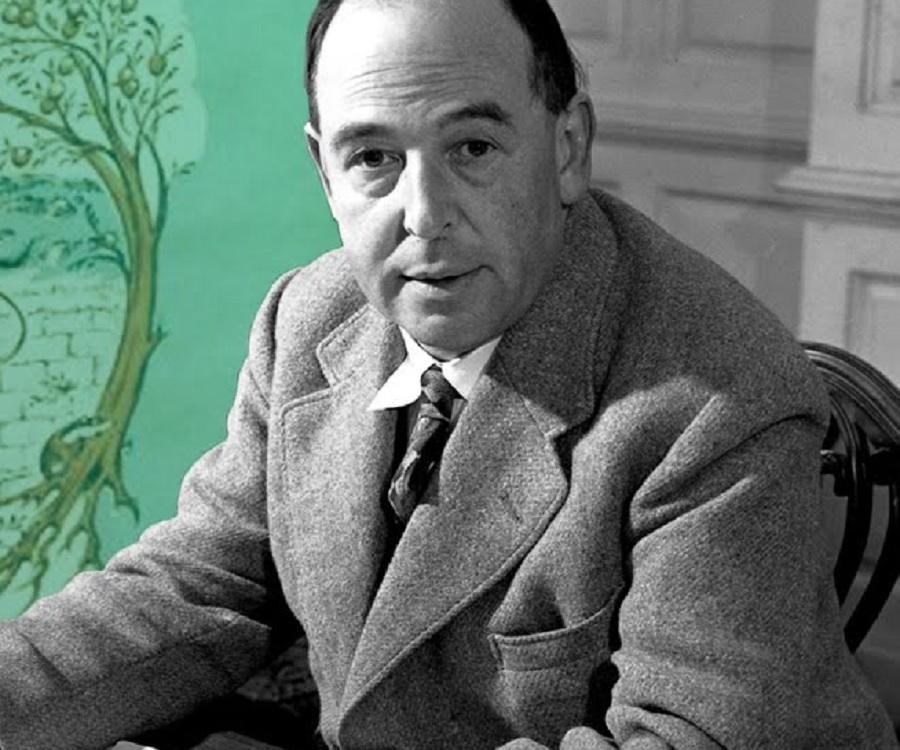
six months ago, the Catholic Thought Book Club read C. S. Lewis’s Mere Christianity.Clive Staples Lewis (1898 – 1963) was a novelist and Christian apologist from Oxford University and was highly
influential in the Catholic revival in England.Now Lewis was not a Catholic but he must have been a High Church
Anglican because he shares close to a Catholic worldview.He was friends with J. R. R. Tolkien, who was
Catholic, and they were part of a group at Oxford made up of Catholics and
Protestants who called themselves the Inklings.The Inklings shared their writings and critiqued each other.While Tolkien was known for his Lord of the Rings, Lewis was known for
his Chronicles of Narnia series, his
science fiction novels, and his works of apologetics.
Mere Christianity
was initially an explanation of the faith to the British public over a series of BBC radio
broadcasts during the World War II years of 1941 to 1944.The book does not delve into the areas where
Christian sects might disagree, but explain the fundamentals of why there is a
God and why the Christian understanding of that God makes the most sense.After the BBC broadcasts, Lewis compiled the
discussions and published it as a book after the war in 1953.The book is divided into four “Books,” each
having a number of chapters.The total
number of chapters add up to thirty-three.Here is the table of contents.
Preface
BOOK I. RIGHT AND WRONG
AS A CLUE TO THE MEANING OF THE UNIVERSE
1.The Law of Human Nature
2.Some Objections
3.The Reality of the Law
4.What Lies Behind the
Law
5.We Have Cause to be
Uneasy
BOOK II. WHAT CHRISTIANS
BELIEVE
1.The Rival Conceptions
of God
2.The Invasion
3.The Shocking
Alternative
4.The Perfect Penitent
5.The Practical
Conclusion
BOOK III. CHRISTIAN
BEHAVIOUR
1.The Three Parts of
Morality
2.The “Cardinal Virtues”
3.Social Morality
4.Morality and
Psychoanalysis
5.Sexual Morality
6.Christian Marriage
7.Forgiveness
8.The Great Sin
9.Charity
10.Hope
11.Faith
12.Faith
BOOK IV. BEYOND
PERSONALITY: OR FIRST STEPS IN THE DOCTRINE OF THE TRINITY
1.Making and Begetting
2.The Three-personal God
3.Time and Beyond Time
4.Good Infection
5.The Obstinate Toy
Soldiers
6.Two Notes
7.Let’s Pretend
8.Is Christianity Hard or
Easy?
9.Counting the Cost
10.Nice People or New Men
11.The New Men
The
book is structured as (1) why there is a God, (2) what Christians believe about
that God, (3) moral behavior as a result of that God, and (4) the nature of
this God.
If
you wish to read Mere Christianity
online, you can access it for free in several different formats here.
I’m
going to summarize the major sections and highlights and present some of our
conversation it proves enlightening.
Summary
Book
I
Chapter
1: The Law of Human Nature
There is a universal law
of human nature—the law of right and wrong—and we intuitively know this law
even if we fail to follow it.
Chapter
2: Some Objections
Objections to this moral
law include the law as an innate instinct, and the law as a social convention;
neither are satisfactory explanations.
Chapter
3: The Reality of the Law
The law of right and
wrong is not a law we all follow, but a law we all know we ought to follow it.
Chapter
4: What Lies Behind the Law
Men find themselves under
this moral law, a law they did not make but know they ought to obey.
Chapter
5: We Have Cause to be Uneasy
The moral law could only
have been put in us by something outside of humanity, that is, God.
###
I
was impressed with how systematic Lewis was in Book 1. Each chapter built on
the previous. I could see it as stepping toward his conclusion. I put this
together as to what I thought the steps through Book 1 consisted.I think it could serve as a summary:
Steps through Book 1:
There is an inherent
human nature of the moral law.
This moral law cannot be
explained by the two objections of instinct and of social convention.
The law of human nature
is verified across humanity.
There are only two views
of understanding the universe, the materialist view—that is of chance—and the
religious view—that is of a creator God outside the universe.
The existence of the
moral law within man points to something beyond the materialist view of the
universe.
The existence of the
moral law within man points to a “Somebody or a Something behind the moral law.
That Something or
Somebody is the Christian concept of God in that it asks us to repent and
promises forgiveness.
###
My
Comment:
I just finished Book 1
and found this fascinating. Unlike Thomas Aquinas, CS Lewis does not start with
the first cause argument for God. He starts with the moral law written in human
nature argument, and I have to admit I found it powerful. There are so many
places I would like to highlight, but let me limit it to this paragraph from
chapter 4. I'll break up the paragraph because it's kind of large.
Ever since men were able
to think, they have been wondering what this universe really is and how it came
to be there. And, very roughly, two views have been held. First, there is what
is called the materialist view. People who take that view think that matter and
space just happen to exist, and always have existed, nobody knows why; and that
the matter, behaving in certain fixed ways, has just happened, by a sort of
fluke, to produce creatures like ourselves who are able to think. By one chance
in a thousand something hit our sun and made it produce the planets; and by
another thousandth chance the chemicals necessary for life, and the right
temperature, occurred on one of these planets, and so some of the matter on
this earth came alive; and then, by a very long series of chances, the living
creatures developed into things like us.
The other view is the
religious view. According to it, what is behind the universe is more like a
mind than it is like anything else we know. That is to say, it is conscious,
and has purposes, and prefers one thing to another. And on this view it made
the universe, partly for purposes we do not know, but partly, at any rate, in
order to produce creatures like itself—I mean, like itself to the extent of
having minds. Please do not think that one of these views was held a long time
ago and that the other has gradually taken its place. Wherever there have been
thinking men both views turn up.
It had never occurred to
that all views of the universe conflate to one of the two. It has always been
so. By the way, he shoots down the hybrid view pretty easily. Yes, that's silly
Casey
Replied:
A bit of a quibble,
Manny. Lewis doesn't shoot down the hybrid view exactly but shuts down those
who reject the implications. There's a sense in which the hybrid idea is
exactly right. Creation is always emerging, striving, evolving but it is truly
doing so, not randomly and conveniently so. It actually strives with purpose
and intent. Purpose and intent are sort of outside-in. They can't be explained
simply by atoms crashing into atoms. A turtle strives for the lettuce. Atoms
don't bump together in a way that appears to be a turtle striving for lettuce.
The idea that there's a
bunch of stuff randomly appearing to aim a single something which doesn't exist
is where it gets silly.
My
Reply to Casey:
Well, wait a second. This
is what Lewis says exactly:
People who hold this view
say that the small variations by which life on this planet “evolved” from the
lowest forms to Man were not due to chance but to the “striving” or
“purposiveness” of a Life-Force. When people say this we must ask them whether
by Life-Force they mean something with a mind or not. If they do, then “a mind
bringing life into existence and leading it to perfection” is really a God, and
their view is thus identical with the Religious. If they do not, then what is
the sense in saying that something without a mind “strives” or has “purposes”?
This seems to me fatal to their view.
It seems like he's
shooting it down to me. I think somewhere in Book I Lewis supported evolution,
so he's not against evolution per se.
Casey
Replied to Me:
Let me try this
analogy.... If an arrow is flying through the air toward a target this implies
a shooter. Let's say an "atheist" position would be 'not
necessarily.' The Life-Force position would be yes there is a force behind the
motion of the arrow that we might call a shooter but not necessarily a mind. A
"Theist" position would be that there must be a shooter with a mind
because it is the mind that creates the target.
Once you accept that the
arrow has a target (an aim, a purpose) then you must accept the implication of
a mind. If you reject the mind behind the motion then you must reject the idea
of the target.
The reason for my quibble
is that the Theist hybridizes by accepting both the mechanical, emergent
elements and the mindful elements simultaneously. The Life-Forcer is hybridizing
both to try to keep one foot in each camp but it doesn't work. You must accept
the implications in full. It is the rejection of the implications that's
problematic.
My
Reply to Casey:
Actually Casey, I think
we agree. I'm saying the hybrid is problematic too. And so is Lewis. Anyway, I
love your analogy with the arrow. That is a great visual to capture the
movement of life and the universe.
Casey’s
Reply to Me:
Oh yes, we agree but I
feel it is important to make the distinction about the implications because I
think for decades Christians have been so engaged with atheists they've
neglected the in-betweeners which is a category that has grown enormously.
Probably because the waters have been muddied so much by the Christian-atheist
jibber-jabber.
Madeleine’s
Comment:
For me the strongest
argument for God is that no one has ever been able to answer how it is possible
that anything, living or not, especially human beings with intellect and
abilities and a free will, is able to exist in the first place.
My
Reply to Madeleine:
That is also from
Aquinas. You can read about the five ways or proofs of God from Aquinas
here.
I agree with you
Madeleine. That is the argument that holds the most weight for me too. But I
can understand how Lewis starts with the innate moral law argument. Since
Aquinas science has been so far advanced that most people in the last 200 years
think science can answer everything. If they don't currently have an answer to
how something started from nothing, they expect that some day science will.
I've actually had this come up in a debate with atheists. They argue like this:
"Just because we currently don't know doesn't mean some magic God did it;
science will eventually figure it out."
The innate moral law I
think still has holes. I'm not sure he satisfactorily answered the objection to
social conventions. It does seem to me that various cultures have different
perspectives as to what is morally acceptable. Other cultures might not agree
on a Christian moral universe. But I don't know.
Kerstin
Replied to Me:
Manny wrote: " If
they don't currently have an answer to how something started from nothing, they
expect that some day science will.
That's scientism. I know they don't see it, but we're crossing the line between
the physical and metaphysical. The natural sciences, shortened today into
"science", can only show us what you can see and measure according
the the physical realities of this universe. If you take all matter away and
with it all laws governing matter, science becomes obsolete.
I've actually had this come up in a debate with atheists. They argue like
this: "Just because we currently don't know doesn't mean some magic God
did it; science will eventually figure it out."
The infamous "God of the gaps" argument. Once we find the "God
particle" science will explain everything. ;-)
Frances
Comment:
These thoughts of
Benedict XVI when he was the young theology professor Joseph Ratzinger expand
on the religious view: “Finite being, as we experience it, is marked, through
and through, by intelligibility, that is to say, by a formal structure that
makes it understandable to an inquiring mind. In point of fact, all of the
sciences rest on the assumption that at all levels, microscopic and
microcosmic, being can be known. . . The only finally satisfying explanation
for this universal objective intelligibility is a great Intelligence who has
thought the universe into being. Our language provides an intriguing clue in
this regard, for we speak of our acts of knowledge as moments of ‘recognition,’
literally a re-cognition, a thinking again what has already been thought. ‘’
(Bishop Robert Barron,
Catholicism, Image Books, pages 67-68)
Kerstin’s
Reply to Frances:
The argument of
intelligibility is simply brilliant.
Note: This next section was written
just before Christmas, and I began to have some doubts, as you will read.
Before
I respond to specific comments, and given my schedule before the holidays may
not be timely, let me post Cardinal Fernández’s explanation through an
interview.Cardinal Fernández is the man
who wrote the document for Pope Francis.He explains the controversial part this in the interview:
These kinds of blessings
are simply simple pastoral channels that help to express people’s faith, even
if those people are great sinners.
Therefore, by giving this
blessing to two people who spontaneously come forward to request it, one can
legitimately ask God to grant them health, peace, prosperity—the things that we
all ask for and that a sinner can also ask for.
At the same time, since
one can think that in the daily lives of these two persons, not everything is
sin, one can therefore pray for them [to receive] a spirit of dialogue,
patience, mutual help.
But the declaration also
mentions a request for help from the Holy Spirit so that this relationship,
which is often unknown to the priest, may be purified of everything that does
not respond to the Gospel and the will of God, and may mature along the lines
of God’s plan.
As I was saying,
sometimes the priest, on a pilgrimage, does not know that couple, and sometimes
they are two very close friends who share good things, sometimes they had
sexual relations in the past and now what remains is a strong sense of
belonging and mutual help. As a parish priest, I have often met such couples,
who are sometimes exemplary.
Therefore, since it is
not a question of the sacrament of confession(!), but of a simple blessing, it
is still asked that this friendship be purified, matured and lived in fidelity
to the Gospel. And even if there was some kind of sexual relationship, known or
not, the blessing made in this way does not validate or justify anything.
Actually the same thing
happens whenever individuals are blessed, because that individual who asks for
a blessing — not absolution — may be a great sinner, but we do not deny a
blessing to him.
But clearly we have to
grow in the conviction that non-ritualized blessings are not a consecration of
the person, they are not a justification of all his actions, they are not a
ratification of the life he leads. No. No. I do not know at what point we have
so exalted this simple pastoral gesture that we have equated it with the
reception of the Eucharist. That is why we want to set so many conditions for
blessing.
I
continue to believe FS is theologically sound.So where is the disconnect?It
occurred to me this morning waking from a lousy sleep.I must have been turning this over in my
mind.In my claim-dispute-refutation
exercise I said this:
Dispute against claim #3:
If you’re blessing a sinner whose identity is integral with a sin, then you are
affirming that sin.
Refutation #1
No sinner’s identity is
integral to a sin in the eyes of God. It is wrong for a person to identify
himself as homosexual, for example, because it reduces the dignity of a human
being to a mere act. But it is just as wrong to consider the identity of a
person as such because you are doing the same thing in reducing that person to
a mere act, even if that person identifies himself as that sin. No one coming
before anyone, especially a priest, should be looked at as having the identity
as gay or having an identity of a sin.
That
refutation may be true but it requires a lot of spiritual growth, a growth not
possible to expect from the general public or even the general Catholic
layman.I don’t even know if I have
it.I’ve grown toward it and certainly I
try to look at the sinner as not the sin.As a lay Dominican I’m pushed toward it through regular prayer, frequent
confession, spiritual retreats, adoration, and such.There is no way anyone can expect the general
public to not separate the sinner from the sin.So this ties in to
Dispute against claim
#4-1: A gay couple coming before a priest for a blessing de facto implies an
affirmation of homosexual marriage/unions.
Unfortunately
to the general public that’s how it will be taken.I don’t know if there will be enough
preaching on the subject to change public perception.This gay identity thing is so engrained in
the culture that it will not budge.While it may be theologically sound, it is not practical.The Vatican will have to modify FS.
So
modify to what?I think they need to
strip the word “couple” out of it and apply the blessing toward individuals or
large groups (I’m thinking of the priest who blessed the passengers on the
bus.)Even that can be abused but at
least the perception goes away.
So
hopefully I answered most of your criticisms.Have a blessed Christmas if I can’t come back.
###
Note: This was written after
Christmas, and overcame the doubt and back to supporting FS.
I
was somewhat rushed when I put out my last comment, so let me back fill and
also add some further thoughts I’ve had over these last few days.I have read FS a fourth time now.I
continue to maintain this document is theologically sound.The critics of this, it seems to me, make two
errors, either intentionally or by inference-conclusion bias.There is also a third criticism of the
document which I’ll address as well.
The
first error is that of conflating union with couple.Cardinal Muller does this over and over.He beats on a strawman argument.He uses the word union throughout his
commentary, and FS clearly states numerous times that no union is being
blessed.A couple does not have to be a
union.A couple, while it may delineate a
bond between the two, in no way delineates a specific relationship.When my wife and I were dating, we were a
couple.With my wife and I being in a
married union, we are still a couple.The nature of what that couple is has changed.But it’s still the word couple.A married couple in an irregular union
(divorced and remarried without annulment) is also a couple.You don’t know whether they are living in an
adulterous state or as “brother and sister” as they are supposed to live while
the annulment process completes.Two gay
men can be a couple in a “union” or in a sexual relationship or in a platonic
relationship.The first two are not
acceptable to the Catholic Church.The
third is not a sinful state.All of
these are couples.The state of grace in
these souls is unknown to the outside world.All of the people in these examples are sinners, including me and if
you’re honest including you.All are in
need of grace.From paragraph 31: “a
blessing may be imparted that not only has an ascending value but also involves
the invocation of a blessing that descends from God upon those who—recognizing themselves to be destitute and
in need of his help—do not claim a legitimation of their own status, but who
beg that all that is true, good, and humanly valid in their lives and their
relationships be enriched, healed, and elevated by the presence of the Holy
Spirit.”In Catholic anthropology
there is no such thing as a gay union.The document only uses the word union to make clear what is not being
blessed.A couple are any two
individuals that are approaching for a blessing.The nature of their relationship is
irrelevant.They are sinners not
claiming to legitimate their status (whatever that may be) but seeking
healing by the presence of the Holy Spirit.If you think that gay platonic relationships don’t exist, you’re wrong.
The
other error I keep seeing concerns the nature of a blessing.As FS delineates, a blessing has multiple
functions.One function is to provide
favor or affirmation.A boy scout helps
an old lady across the street and on reaching the other side she blesses
him.That is an affirmation for the good
the boy just did.That is not the type
of blessing being offered in FS.Another
type of blessing is that to a sinner as an imparting of grace for the sinner to
be spiritually strengthened—that is as I’ve quoted from FS above, to be “healed
and elevated by the presence of the Holy Spirit.”A person not in a state to receive communion
walks up with his arms crossed to receive a blessing.That blessing is not an affirmation of
anything.It is an imparting of
grace.In a confessional, the absolution
is a blessing not of what a good job you did but a grace to be
strengthened.In fact the very first
words you’re supposed to say in the confessional is “Bless me Father for I have
sinned.”All sorts of sinners receive
blessings.Soldiers going off to battle
receive blessings.People undertaking
arduous tasks, say an astronaut, receive blessings.Criminals in jail receive blessings.People on their death beds in a coma receive
blessings.None of these is an
affirmation of any sin past or present.The
two paragraphs following par. 31 make this clear:
32. Indeed, the grace of God works in the lives of
those who do not claim to be righteous but who acknowledge themselves
humbly as sinners, like everyone else. This grace can orient everything
according to the mysterious and unpredictable designs of God. Therefore, with
its untiring wisdom and motherly care, the Church welcomes all who approach God
with humble hearts, accompanying them with
those spiritual aids that enable everyone to understand and realize God’s
will fully in their existence.
33. This is a blessing that, although not included in any liturgical rite,
unites intercessory prayer with the invocation of God’s help by those who
humbly turn to him. God never turns away anyone who approaches him!
Ultimately, a blessing offers people a means to increase their trust in God.
The request for a blessing, thus, expresses and nurtures openness to the
transcendence, mercy, and closeness to God in a thousand concrete circumstances
of life, which is no small thing in the world in which we live. It is a seed of
the Holy Spirit that must be nurtured, not hindered.
Do
you see that?FS is quite clear.It is people’s inference-conclusion
bias—otherwise known as jumping to a conclusion—that is the source of the
confusion.The document is not confused.It’s people’s reading comprehension that has
them confused.
A
third criticism I see of FS is that the document rests on “legalistic language”
or word contrivance.Well, welcome to
theology.Have you tried reading Thomas
Aquinas?Or how about the Council of
Nicaea with the definition of the Trinity?Three separate persons but it’s still one God because they have one will
and are made of one substance?That’s
not “word contrivance”?Or how about
transubstantiation?The substance of
bread and wine are changed to the substance of the Body and Blood of Christ but
the material elements of the bread and wine remain the same to the senses?Hmmm.Or
how about outside of Catholicism, because all religions do this, let’s say the
Protestant notion of Once Saved Always Saved?Because Christ was punished for my sins, I can commit any sin I want
because it’s already been satisfied, as long as I believe in Christ?I can go on with lots of examples.Those looking suspiciously at another’s
theology will always find word contrivance.FS doesn’t even reach anywhere near the level of word contrivance as any
of those examples.In fact it’s quite
clear that couple is not a union.
As
I’ve ruminated on this over the last few days what I think has happened is that
inference-conclusion bias shaped some readers views and then a hermeneutic of
suspicion took root.Some critics are
commenting in good faith; some are setting up strawmen.As I said before the holidays, the
theological distinctions will probably go over the general public’s head and
lead to the wrong conclusions.It would
require a large teaching effort on a subject that most priests and bishops even
now loath to bring up.I think FS would
have been less controversial if it has used the word “group” instead of couple,
and two is also a group.I think that
would have minimized the inference-conclusion bias.Either they didn’t think of it or the Holy
Father has his reasons.No matter.I remain docile to the teaching, faith
seeking understanding.
Before
the holidays I thought the Vatican would have to amend FS in time.I’m not so sure now.This was always left to the priest’s
discretion, and now the Vatican has made it clear it’s up to the bishops as to
the level of implementation.That
flexibility solves all criticism.I
suspect they will leave this alone.
I’m
also more hopeful now that I’ve been away from the media on this.This practice could actually be quite
fruitful in teaching the Catholic anthropology of human sexuality.It could also be quite fruitful in teaching
of loving the sinner and not the sin.I
was just watching Johnny Mathis on TV singing a Christmas carol.I know he’s same-sex attracted.I know also he’s a Catholic convert.Being almost ninety I doubt he’s sexually
active, but I’m pretty sure he committed sexual sins in his past.Whatever grace has brought him to sanctity
had to do with the presence of the Holy Spirit.All this blessing is doing is trying to lay the seeds for the Holy
Spirit in people’s lives.I don’t think
that’s a bad thing.
But
it supposedly took over a hundred years for the public to understand the
Trinity
###
Note: This was written just after the
New Year as one last final defense.
I
have to laugh when I see a polemicist like Robert Royal admit FS is not
heretical and yet goes on to rant and rave against the Vatican and the
Pope.From his article today in The Catholic Thing:
And as many of us could
see at the start – and, therefore, were often accused of not having even read
the text – though the document was
technically not heretical and even restated Church teaching about real
marriage, there was a wide chasm between what was explicitly said and what was
implicitly communicated.
Ha!Not heretical, and no you are reading into
what is implicitly communicated.Somebody
must have walked him through what an inference fallacy is because just last
week he was saying quite the opposite on TV.There is no implicit communication in a Magisterial document.What it says is what it say.Royal goes on to even say how the effect of the
document may have persuaded the German bishops to not go into schism.And yet he rants and raves about how ill-timed
the document is.Huh?Polemicists need to rant and rave in order to
get clicks and to remove the egg on their face from previous statements.
I
acknowledge that there are sincere people who honestly read FS and come away
with the impression that the blessing of same-sex couples validates a
relationship.And every time I read
their augmenting logic, I see the same application of the fallacy that a
same-sex couple must by definition be in a state of sin.I don’t know the name of that fallacy, but I
know it’s a fallacy.That is a
conclusion based on an inference, not a fact.It wouldn’t even hold up in court.
Yes,
I know you’ve got a whole list of people who have succumbed to this fallacy,
but there are enough who haven’t.First
off the US Council of Catholic Bishops (USCCB) have come out and supported the
document.I have not seen a single US
Bishop dissent from FS, and that would include all the conservative ones,
notably Cardinal Salvatore Cordileone.Bishop Robert Barron, who heads the committee that this would fall
under, came out with a specific statement which included:
The document allows for
the possibility of blessing those in irregular or same-sex relationships.
Despite some misleading reporting in the media, Fiducia Supplicans in no way
sanctions irregular bonds or changes the Church’s teaching on marriage and
sexuality. It further specifies that no liturgical blessing can be offered to
those in such unions, but rather an informal pastoral blessing. This latter
benediction is a calling forth of the divine grace to help those who receive it
to live more fully in accord with God’s will and to enhance whatever is good,
true, and beautiful in their lives.
Bishop
Barron’s Word on Fire ministry
published a tract (Clarity in Confusion: An Approach to “Fiducia Supplicans”) on the underlying logic of FS, written by a Dr. Richard
Declue, who I have never heard of:
Here, I think, is another reason for the
confusion: a distinction between blessing a same-sex couple and blessing their
union. What does it mean to bless same-sex couples but not bless their unions?
If you are blessing a couple, are you not blessing their union? In this case,
no! And this is what is understandably difficult for people to immediately
comprehend. It is not intuitively obvious that you can bless a couple without
blessing or condoning their union.
So what kind of blessing
are we even talking about, then? What is the purpose? The document describes
the kind of blessing it has in mind: “These forms of blessing express a supplication
that God may grant those aids that come from the impulses of his Spirit—what
classical theology calls ‘actual grace’—so that human relationships may mature
and grow in fidelity to the Gospel, that they may be freed from their
imperfections and frailties, and that they may express themselves in the
ever-increasing dimension of the divine love.” The term actual grace is defined
in the Catechism: “Actual graces . . . refer to God’s interventions, whether at
the beginning of conversion or in the course of the work of sanctification”.
Esteemed
professor of moral theology at The Catholic University, Dr. John Grabowski, who
specializes in sexual ethics, issued a positive statement.Even more significant (at least to me being a
Lay Dominican) is that Fr. Thomas Petri, O.P. was quoted in Our Sunday Visitor, the most prolific
Catholic publication:
Dominican Father Thomas
Petri, president of the Dominican House of Studies in Washington, told OSV News
he agreed with the USCCB’s assessment, saying the Vatican declaration “is
clear.”
“There can be no blessing
of same-sex relationships in a way that mimics marriage. There can be no
ritual. No vestments. No liturgy. Nothing in conjunction with some recent civil
ceremony for a couple,” Father Petri told OSV News. “On the contrary, what’s
suggested only as a pastoral guidance is the possibility that in some profound
religious experience, such as on a pilgrimage or at a spiritual retreat, that a
couple striving to live the will of God might spontaneously seek a priest’s
blessing (and) that they increasingly be able to do so.”
The
Dominican House of Studies is the faculty that teaches theology to Dominicans
friars, mostly those in the Eastern Province but accepts widely.These are no theological slouches, and more importantly
they are not of the polemical kind, neither polemical of the left nor of the
right.
But
I also hope you’ll watch this less than ten minute homily by Fr. Terrance
Chartier of the Franciscan Friars of the Immaculate.He not only explains FS perfectly and
succinctly and how it should be understood, but he also provides an
understanding of how it should be applied.(He even talks about sin of sowing Church discord, which people should
take seriously.I myself have taken that
to the confessional more than once.)He
makes many of the same points I made throughout this OP, how all Church
documents should be read in in the spirit of docility and not suspicion, and
how the potential of abuse is no reason to not generate anything new. Fr. Terrance also criticizes those on the
polemical left and the polemical right.
He
even quotes Thomas Aquinas!Father, you
should have been a Dominican!I’m
sending that video to Cardinal Dolan, the bishop of my diocese with a note it
should be widely disseminated.
###
Now
that I’ve had a few weeks to be away from the issue and certainly been away
from the attacks, let me summarize with my final thoughts.
FS remains to me
theologically sound.The Declaration
could have been improved by being more specific that persons are being blessed
rather than a couple.This is the cause
of the confusion, but I think the Vatican has clarified it enough and given
bishops the flexibility to enact it as best fit their diocese.
The
arguments against are the strawman argument about blessing a gay union, which
is false, or that a same-sex couple innately implies a state of sin or, more to
the point, a lack of desire to amend one’s life.There is no affirmation of any sin.The blessing is an imparting of grace to grow
toward holiness.That it can be abused
is no argument.Any sacrament can
currently be abused.
That
the blessing of an irregular or same-sex couple can cause the public to
misinterpret Catholic teaching is something that requires attention.But still I do not feel it warrants
concern.The priest will have to use his
judgement, but this now is an opportunity to catechize.The blessing is a teaching moment, which in
due time and practice may bring souls to Christ.
With
the intercession of St. Catherine of Siena, patroness of this blog, and my
personal patroness, I pray that it does so.