"Love follows knowledge."
"Beauty above all beauty!"
– St. Catherine of Siena

Showing posts with label Gerard Manly Hopkins. Show all posts

Tuesday, March 19, 2024

Music Tuesday: Adoro Te Devote

My friend Kelly, who has commented on this blog, and, actually as I think on it, was one of the people who inspired me to start this blog many years ago, sent me an email concerning this lovely hymn.   Kelly is the music director at her parish—I think that’s her title but actually I’m not a hundred percent sure.  Nonetheless she is involved in the music at her parish.  She sent me an email of a hymn that she came across, Adoro te devote, translated into English as “I Devoutly Adore You.” 

No, she wasn’t sending me a note of adoration—hahaha—but telling me about the translator into English of this hymn which was originally composed in Latin by St. Thomas Aquinas as a prayer.  Most people know about St. Thomas’s philosophic and theological gifts, but less known is his gift for composing poetry in Latin, and his poetry was prayer.  According to Wikipedia, https://en.wikipedia.org/wiki/Adoro_te_devote this prayer was not part of the liturgical works Aquinas had composed for the Solemnity of Corpus Christi https://en.wikipedia.org/wiki/Feast_of_Corpus_Christi but for his own private use before the Blessed Sacrament.  Here is a rendition of the hymn in Latin, followed by the Latin text.


Adoro te devote

By St. Thomas Aquinas


Adoro te devote, latens deitas,

Quæ sub his figuris vere latitas;

Tibi se cor meum totum subicit,

Quia te contemplans totum deficit.


Visus, tactus, gustus in te fallitur,

Sed auditu solo tuto creditur.

Credo quidquid dixit Dei Filius;

Nil hoc verbo Veritátis verius.


In Cruce latebat sola Deitas,

At hic latet simul et Humanitas,

Ambo tamen credens atque confitens,

Peto quod petivit latro pœnitens.


Plagas, sicut Thomas, non intueor:

Deum tamen meum te confiteor.

Fac me tibi semper magis credere,

In te spem habere, te diligere.


O memoriale mortis Domini,

Panis vivus, vitam præstans homini,

Præsta meæ menti de te vívere,

Et te illi semper dulce sapere.


Pie Pelicane, Jesu Domine,

Me immundum munda tuo Sanguine:

Cujus una stilla salvum facere

Totum mundum quit ab omni scelere.


Jesu, quem velatum nunc aspicio,

Oro, fiat illud quod tam sitio:

Ut te revelata cernens facie,

Visu sim beátus tuæ gloriæ. Amen.

Now that is very beautiful.  What Kelly had sent me was a link to an English translation of the hymn posted at the website, Hymnary.  Hymnary by its own identification, is a “comprehensive index of hymns and hymnals.”  I believe you can think of it as a library of hymns, and I’ve actually come across it before but I can’t remember why.  I must have done a search for a hymn and Hymnary popped up.  Kelly’s surprise when she looked at the Adoro te devote page, and why she thought of me, was the translator of the Latin hymn into English.  If you look at the bottom of the page the English translator is listed as “G. Manly Hopkins,” that is the great English poet and Catholic convert, Gerard Manly Hopkins.  I have posted often on Hopkins, and you can find those posts here.  

What is funny about that Hymnary page is that below the translator’s name is this about him: “no biographical information available about G. Manley Hopkins.”  Hahaha, that is very funny.  They could just have looked in Wikipedia or Norton’s Anthology of English Literature.  I suspect that the people who run Hymnary are mostly Protestant musicians, and so don’t know very much of poets nor of famous Catholic converts.  Hopkins is a great modernist poet who converted to Catholicism and became a Jesuit priest.  Like Thomas Aquinas, Hopkins’ poems are prayers as well.  Here is the Hopkins translation of the Adore te devote.


Adoro te devote

By St. Thomas Aquinas

Translated by Gerard Manly Hopkins


Godhead here in hiding whom I do adore

Masked by these bare shadows, shape and nothing more.

See, Lord, at thy service low lies here a heart

Lost, all lost in wonder at the God thou art.


Seeing, touching, tasting are in thee deceived;

How says trusty hearing? that shall be believed;

What God's Son has told me, take for truth I do;

Truth himself speaks truly or there's nothing true.


On the cross thy godhead made no sign to men;

Here thy very manhood steals from human ken:

Both are my confession, both are my belief,

And I pray the prayer made by the dying thief.


I am not like Thomas, wounds I cannot see,

But I plainly call thee Lord and God as he:

This faith each day deeper be my holding of,

Daily make me harder hope and dearer love.


O thou, our reminder of the Crucified,

Living Bread, the life of us for whom he died,

Lend this life to me, then; feed and feast my mind,

There be thou the sweetness man was meant to find.


Like what tender tales tell of the Pelican,

Bathe me, Jesus Lord, in what thy bosom ran--

Blood that but one drop of has the pow'r to win

All the world forgiveness of its world of sin.


Jesus whom I look at shrouded here below,

I beseech thee, send me what I thirst for so,

Some day to gaze on thee face to face in light

And be blest forever with thy glory's sight.

What is amazing is that Hopkins keeps Thomas’s eleven syllable line (called the hendecasyllabicline) and the coupling rhyme scheme.  The hendecasyllabic line is much more common in Latin and not very common in English. 

First let’s listen to it read as a poem, read here by Jonathan Roumie. 


Notice Hopkins also keeps the caesura—the pause in the middle of most lines—that forms the heart of the melody.  Listen to the Latin again and hear how Aquinas composes a pause at the end of each line but also a subtle, shorter pause in the middle of each line, the caesura.  Hopkins is very conscious of the caesura and incorporates it into the English translation as well. 

It’s not a complicated poem thematically.  The poem is about being and praying before the Blessed Sacrament—that which we Catholics consider to be the real presence of Jesus—that which looks like bread but has through transubstantiation become the Body of Christ.  The Thomas in the fourth stanza is a reference to Thomas the Apostle—the doubting Thomas of the Gospels.  Thomas Aquinas is saying that though he may be a “Thomas,” he is not the doubting one.  The allusion to the Pelican in the sixth stanza is a reference to the pelican being a symbol for Christ.  It was legendary that the pelican poked her chest until it bled to feed her chicks the blood which poured out.  From Wikipedia


In a newer, also medieval version of the European myth, the pelican was thought to be particularly attentive to her young, to the point of providing them with blood by wounding her own breast when no other food was available. As a result, the pelican came to symbolize the Passion of Jesus and the Eucharist, supplementing the image of the lamb and the flag. This mythical characteristic is referenced in the hymn "Adoro te devote" ("Humbly We Adore Thee"), where in the penultimate verse, Saint Thomas Aquinas describes Christ as the loving divine pelican, one drop of whose blood can save the world. Similarly, the 1678 Christian allegorical novel The Pilgrim’s Progress describes how “the pelican pierce[s] her own breast with her bill … to nourish her young ones with her blood, and thereby to show that Christ the blessed so loveth his young, his people, as to save them from death by his blood.”

Now here is a musical version of the hymn with the Gerard Manly Hopkins translation.  Note, the English version goes by the name "Godhead Here in Hiding: from the first words of the opening lines.


I picked this version because it sings all seven stanzas.  I think it important that one hear all seven stanzas to get the full insight of Thomas’s prayer.

Now if you want to hear a more modernized, ballad shaped rendition, the wonderful Matt Maher arranged this version.  He does take liberties with the stanza order and does not sing them all. 


That is beautiful too.  And the guitar instrumentation doesn’t take away from the reverence.

This reminds me of my post from earlier this month on the 750th anniversary of the death of St. Thomas Aquinas.  I also noted there how Pope Francis has authorized a plenary indulgence for all those who visit a Dominican church, shrine, or chapel.  You can get the details of the indulgence here.  

I just want to end with emphasizing how St. Thomas Aquinas was so much more than a theologian.  Philosopher, theologian, scholar, ethicist, mystic, poet, friend.  In this 750th year, discover a good biography and learn about his life and work. 


Tuesday, June 14, 2022

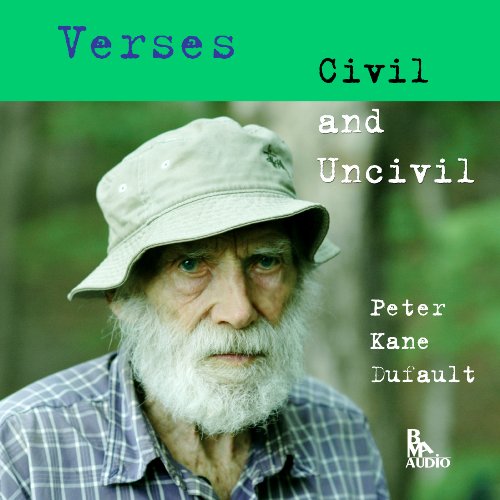
Poetry: “Goshawk” by Peter Kane Dufault

A friend of mine sent me an email the other day with an urging to check out a particular poem.  Here is her note:


When you have time, Manny, please look at this poem: 

       “Goshawk”   By poet Peter Kane Dufault

I happened upon it and was struck by its excellence yet violence. If you read it, tell me if it reminds you of a dark, shadowy likeness of Hopkins’ “The Windhover.’’ It really seems that way to me, a world without God.

I love it when friends ask me questions on literature.  It pricks something in me to investigate. 

First, you can find the poem at Poetry Nook,  but here’s the poem.


Goshawk

by Peter Kane Dufault


That harbinger of God's hardness, North

American Goshawk — storm-

grey above, ice-grey beneath — segment

of a winter azimuth — de-

tached herself from this morning and

seized a black hen and caromed

thirty yards through the soft snow, wrenching

feathers and flesh out, too

blood-crazy to kill clean. . . .


Tell me

if it's not hard how a haggard

hasn't even the hangman's mercy

but tears the heart out alive — that she

should have been made so;


and so, too, that when the dog

ran yapping and drove her off,

the grey crucifer levitated

in such a cold pride of windblown

lightness over the tines of the trees


you'd have forgiven her, even

if she could have torn

in that worse way there is:

with a word, never breaking the skin.


I had never heard of Peter Kane Dufault before.  He’s got a Wikpedia entry and a listing in Poetry Foundation, so he’s a poet of some merit.  He lived through most of the 20th century (1923-2013), fought in WWII, and even ran for Congress on an Anti-Vietnam War platform.  The Poetry Foundation bio note says he was highly thought of by some more well-known poets: “Poets such as Marianne Moore and Ted Hughes championed Dufault, as did New Yorker editor Howard Moss, who published the poet 44 times.”  Poetry Foundation lists six poems attributed to him, but none are as good as “Goshawk.”  Searching the internet you can find some two dozen poems of his.  Again, nothing I found as good as “Goshawk,” but of note you might want to read “After Boxing and “Paramath.”   

Perhaps the best of the obituaries is by Brad Leithauser in the New Yorker, published on June 7, 2013, several weeks after Dufault’s passing.  Here’s his opening:


A marvellous poet whom you’ve probably never heard of died some weeks ago. His name was Peter Kane Dufault, and at the time of his death he was a couple of days short of ninety. On the face of it, his lack of renown is surprising, for he had some prominent supporters, including Marianne Moore and Richard Wilbur and Ted Hughes and Amy Clampitt. He was also embraced by Howard Moss, the poetry editor of The New Yorker from 1948 until 1987. Dufault published forty-four poems in the magazine, nearly all of them during Moss’s tenure.

Leithauser characterizes Dufault as that poet we’d all wished we had known, a “pure poet” who lived his life in obscurity and simplicity.


It’s tempting to overstate the virtues of the recently dead, so I’ll resist declaring that, at the time of his death, Dufault was my favorite living American poet. But he was certainly among the five or six whose work counted most for me. In one way, he was preëminent: I came to think of him as the Pure Poet. If this was a romantic image, it was a romanticism he encouraged.

Perhaps if one had to reach for what Dufault’s themes centered around, I think this little characterization captures it.


He was constantly posing new theological questions, in an era often hostile to poetry of devotion. He looked hard at the natural world, then looked hard at its spiritual implications.

Here Leithauser captures Dufault’s style.


I first came upon him in the seventies, in “The New Yorker Book of Poems.” I fell hard for “In an Old Orchard,” with its abandoned farm “still pitifully gathering all / windfalls onto its damp lap of graves,” and looked up his two out-of-print collections, “Angel of Accidence” (1954) and “For Some Stringed Instrument” (1957). I didn’t know then that Marianne Moore had been a fan, but affinities between them were easy to spot: Dufault, too, had an eerily sharp eye for the more idiosyncratic dwellers of the animal kingdom. Manx cats and tarsiers and mud-dauber wasps and mastodons inhabited his stanzas. He was like her, too, in being quite fanciful in his imagery (an old turkey with a head “like a loading-hook from a drowned galleon,” a hefty starling seen as a “sampler-shape whose bid / to be a bird / suffers from thickness of the thread”) while always respecting his creatures’ fierce and inalienable reality: you never had the feeling that his was a denatured zoo, a menagerie of mere symbols. A reader was in danger of getting stung if he mistook one of Dufault’s wasps for an emblem.

It sounds like Dufault’s work is similar to Marranne Moore’s, who had a sharp eye for observation, a precise word or metaphor to capture it, and loved to write about animals for their wondrous nature.  Leithauser continues.


In 1993, a book of selected poems, “New Things Come Into the World,” appeared, published by a small press, Lindisfarne, which normally didn’t publish poetry. At that time, I’d never met Dufault, though we’d exchanged some letters. I reviewed “New Things Come Into the World” in the New York Review of Books, writing with that special charged eagerness that comes of introducing a little-known treasure to a potentially wide audience. I called him a “poet of vivid landscapes.” I called him “as fine an ‘animal poet’ as any American now going.” I compared him to Moore and Elizabeth Bishop and Clampitt and May Swenson.

Finally Leithauser felt a certain pride in knowing a poet of distinction that lived in obscurity.


Though he slowed down, creatively, in his last decade, he continued to write beautiful poems, and did so, nobly, in an undeserved obscurity. Now and then I’d come upon someone, in person or in print, who shared my enthusiasm, and I’d feel that clandestine bond which comes with membership in a small high-minded club. I felt this keenly when I read Ted Hughes’s blurb for a later Dufault collection, “Looking in All Directions” (2000): “So fresh and new and itself… wonderful stuff. Snatches those uncatchable moments—like snatching a butterfly out of the air—then letting it go undamaged. So nimble and delicate.”


###

Now to the poem. It’s an interesting poem.  It's not Gerard Manly Hopkins.  It's very visual, so it captures the reader.  Are there similarities to Hopkins?  This is a very different poem that “The Windhover.”  (I provided a detailedanalysis of Gerard Manly Hopkins’, “The Windhover.”)   It is quite possible Dufault is alluding to “The Windhover” but I just don’t see the interdependence.  Perhaps Dufault’s image of the goshawk “detaching herself from the “winter azimuth” is an allusion to the Hopkin’s image of  a “dapple-dawn-drawn Falcon,”  Or it’s coincidental imagery or Dufault just liked the image so much he reinvented it for his purpose.  An allusion is more than just reference; it requires significance, and I’m not getting the significance. 

Other than Dufault's use of alliteration I do not see other similarities.  Dufault does not use any real rhythm, sprung or conventional.  He's very prosaic, modernist, free verse, though his diction is terse, which gives it power, especially for a violent poem.  I'm baffled by Dufault's use of breaking words and phrases at the end of a line.  Hopkins does it to keep meter.  Not sure why Dufault does it.  Perhaps as an aesthetic capturing of the theme of ripping things apart?  That would be skillful on his part. 

Dufault's theme has been done many times: one finds in nature a certain viciousness, (he calls it a "hardness") and one points to God for it, either to condemn God, to "prove" God doesn't exist, or to point to some great spiritual meaning in the act of animals killing animals. 

Can you tell which of the three Dufault is expressing?  I think it's the latter but I'm not sure, and if it is the latter then what is this great spiritual meaning in the act of a hawk killing a chicken?  I've pondered it for a while.  He sees in the hawk gliding above a cross (“the grey crucifer levitated”), which is a nice metaphor, but what does it suggest?  Isn't Christ the one who gets killed and not the killer?

Why is the hawk the "harbinger" of God's hardness?  Is this an allegory?  A harbinger is one who comes ahead of another.  So is God going to come and destroy us?  Perhaps.  Or is the allegory a representation of the Calvinist interpretation of the crucifixion, where God's wrath is redirected on the Son and thereby satisfied?  I don't know.  And is that a reference to God at the end, imagining the hawk killing with a word instead of with violence (“if she could have torn/in that worse way there is:/with a word”)?  God creates with a word; Christ is the Word made flesh.  And why is killing through a word "the worse way"?  You got me. 

This may all hold together and be a great poem, but given that I have all these questions and still can't get beyond the surface events I wouldn't call this a great poem.  I do love how it reads.  Alliteration can be showy and stilted, but when done well as here it really drives the point as in the second stanza:


Tell me

if it's not hard how a haggard

hasn't even the hangman's mercy

but tears the heart out alive — that she

should have been made so

 And one marvels at the absolute power of the central violence in that opening:


          …de-

tached herself from this morning and

seized a black hen and caromed

thirty yards through the soft snow, wrenching

feathers and flesh out, too

blood-crazy to kill clean. . . .

The alliteration of “feathers and flesh” along with the hard C’s of “caromed,” “crazy,” “kill,” and “clean” adds to the very visual moment of struggle and brutality.  I am glad to have been introduce to Peter Kane Dufault.  I will have to remember him if I run across his work again.


 ###

In my search I found a couple of videos of Mr. Dufault.

First an extemporaneously composed poem criticizing America:


Second, here is a trailer to a documentary movie of his views” What I Meant to Tell You: An American Poet's State of the Union.”


He was definitely anti American, or of a different America to give him his due.  In his obituary Leithauser did say he would have edited out Dufault’s political poems.  They are not that good.  We would have disagreed vehemently, but still in my engagement on his life and this poem I grew to like Peter Kane Dufault.  Yes I can see how he was a “pure poet.”

 ###

Postscript:

I received a reply from my friend who had originally sent me the email on the poem. 

Her Comment:

I looked Peter Kane Dufault’s work up a little more and found that he wrote a poem called ‘’Peregrines,’’ and in that poem he quotes directly from ‘’The Windhover.’’ He had a rich imagination and an exceptional way with words but ‘’Peregrines‘ is not his best work. Unfortunately, this reader found it empty and meaningless. You mentioned that he was anti-American. Do you mean ‘’progressive left,’’ ‘’woke’’ anti-American?

My reply:

I really enjoyed "Peregrines"!  It's a poetic ramble, a jazzy improvisational piece that streams language around an emotion and theme.  It reminds me of the Beat poets, Lawrence Ferlinghetti in particular.  I have a secret crush for that poetry.  It's lesser poetry than more structured and sculpted but I find it fun.  My trash food addiction!  ;)


Dufault is an old time Liberal, someone of the Beat Generation.  I think that's a good analogy.  He’s definitely progressive and definitely "woke" but aren't they all?  In music he would be like the folk music types.  In fact he reminds me of Pete Seeger.  And amazingly they lived almost the exact same years (1919-2014).

Sunday, July 8, 2018

Poetry: The May Magnificat by Gerard Manly Hopkins, Part 2

This is the second time I’m posting this poem.  I’ve never posted the same poem twice.  I posted this back in October of 2014 but I never provided any analysis.  We recently discussed a few of Hopkins’ poems over at Catholic Thought Book Club and this was included.  I provided my analysis, which I’ll share, and I’ll post some of the discussion.

First the poem:


The May Magnificat
by Gerard Manley Hopkins

May is Mary's month, and I
Muse at that and wonder why:
Her feasts follow reason,
Dated due to season—

Candlemas, Lady Day;
But the Lady Month, May,
Why fasten that upon her,
With a feasting in her honour?

Is it only its being brighter
Than the most are must delight her?
Is it opportunest
And flowers finds soonest?

Ask of her, the mighty mother:
Her reply puts this other
Question: What is Spring?—
Growth in every thing—

Flesh and fleece, fur and feather,
Grass and greenworld all together;
Star-eyed strawberry-breasted
Throstle above her nested

Cluster of bugle blue eggs thin
Forms and warms the life within;
And bird and blossom swell
In sod or sheath or shell.

All things rising, all things sizing
Mary sees, sympathising
With that world of good,
Nature's motherhood.

Their magnifying of each its kind
With delight calls to mind
How she did in her stored
Magnify the Lord.

Well but there was more than this:
Spring's universal bliss
Much, had much to say
To offering Mary May.

When drop-of-blood-and-foam-dapple
Bloom lights the orchard-apple
And thicket and thorp are merry
With silver-surfèd cherry

And azuring-over greybell makes
Wood banks and brakes wash wet like lakes
And magic cuckoocall
Caps, clears, and clinches all—

This ecstasy all through mothering earth
Tells Mary her mirth till Christ's birth
To remember and exultation
In God who was her salvation.

Let’s attempt to really understand this lovely poem.  There are twelve quatrain stanzas in the poem with an AA BB rhyme scheme and as far as I can tell an irregular rhythm.  Any particular line has anywhere from five to ten syllables and Hopkins irregularly varies the meter between iambic (unstressed/stressed), trochaic (stressed/unstressed), and spondaic (stressed/stressed).  You can read about meter hereI’m not sure there is any aesthetic connection between the irregularity and the theme of the poem, other than, perhaps, the natural flow of language seeks to emulate the irregularity of nature.  Perhaps the regularity of the stanzas suggest the consistent form of nature, while the irregularities of the line suggest the varieties of natural elements within its consistent form.  Perhaps I may be over intellectualizing that, but it’s there as a possibility.

The twelve stanzas perhaps are meant to recall the twelve stars in Mary’s crown as noted in Revelations 12:1: “A great sign appeared in the sky, a woman clothed with the sun, with the moon under her feet, and on her head a crown of twelve stars.”  The image of Mary in the poem emphasizes, I think holds in tension the mature enthroned Mary, Queen of Heaven as we look upon her and the youthful young lady of the Annunciation who is carrying the Christ child.

Let’s walk through the poem and try to get central theme.  The poem starts with the question, why is May the Blessed Virgin Mary’s month?  Is it just an opportunity to offer her flowers, as Hopkins muses in the third stanza?  So in the fourth stanza he asks her directly, and her reply is “Question: What is spring?—/Growth in everything.”  Stanzas five and six provide examples of the fecundity of the spring season, and are I think the most lyrical.

Flesh and fleece, fur and feather,
Grass and greenworld all together;
Star-eyed strawberry-breasted
Throstle above her nested

Cluster of bugle blue eggs thin
Forms and warms the life within;
And bird and blossom swell
In sod or sheath or shell.

There you go, irregularity of meter within the regularity of form.  Very few poets can make that work so beautifully.  So what does this growth have to do with the Blessed Mother?  Stanzas seven and eight answer.  “Mary sees, sympathizing/With that world of good.”  No, she is not some pagan-esk Mother Nature goddess directing nature but as she sees life arising, she is in sympathy with it, and just as her being magnifies the Lord— “My soul doth magnify the Lord,” Luke 1:46, (King James Version emphasizes it better)—Hopkins tells us her sympathy magnifies nature.  Her blessings augment the beauty of the blossoming spring.  That would be enough of an observation and connection, but Hopkins goes further.

Well but there was more than this:
Spring's universal bliss
Much, had much to say
To offering Mary May.

Here we see it wasn’t Mary who controlled the spring, but the beauty and bliss of spring offers the month to her.  Why?  Because her joy at carrying the Lord in her womb brings her to overwhelming bliss.  Read the first lines of the Magnificat, Luke 1:46-49:

“My soul proclaims the greatness of the Lord;
my spirit rejoices in God my savior.
For he has looked upon his handmaid’s lowliness;
behold, from now on will all ages call me blessed.
The Mighty One has done great things for me,
and holy is his name…”

The lowly handmaid has been selected by God to carry the messiah.  How could one not be joyful?  And here she is with child, conception having occurred in March, growing within her as nature grows about her, and the two parallel growths further magnify each other.   Internal fecundity blesses external fecundity in a sort of synergy.  And that’s what is emphasized in the tenth, eleven, and twelfth stanzas.  And so, May is Mary’s month because nature and budding motherhood bless each other.

I have to admit there is one sentence in the poem which baffles me.  It comes in the first two lines of the tenth stanza: “When drop-of-blood-and-foam-dapple/Bloom lights the orchard-apple.”  I don’t get the reference to blood and foam.  Is that Christ’s blood and water coming from His side?  Doesn’t seem likely here, nor can I place it as a reference to some beautiful element of nature.  If anyone has thoughts on that, please respond. 

This is a beautiful poem though. 


Frances says:

Keeping this rhythm in mind, read the Hopkins' lines in question as phrases which build to a climax or conclusion. I'll type them out as if they are parts of sentences:

When drop-of-blood-and-foam-dapple bloom lights the orchard-apple, and thicket and thorp are merry with silver-surfed cherry, and azuring-over greybell makes wood banks and brakes wash wet like lakes, and magic cuckoo call caps, clears, and clinches all --

This ecstasy throughout nature speaks to Mary of the blood of Christ shed for human salvation. (Hopkins' final stanza, said plainly)

Does this make sense to you?

I respond:

Hi Frances. I would say that's as close to making sense as I've seen anywhere. I also just saw somewhere that the foam suggests the sea and Mary being Queen of the Seas or Star of the Seas. In Latin I believe it's Stella Maris. So perhaps a drop of blood for Christ, the foam of the seas for Mary dapple to bloom the apple trees. It's possible.

Leslie says:

I think he is alluding to the crucifixion and in metaphor, the tree of life with the reference to the apple orchard.

Kelly says:

Ah, I see what you mean. I guess I was only taking the words at face value. The drop of blood and foam, I was taking quite literally to mean the orchard blossom whose petals appear a pinkish/red tint on the outside and white when they open up. Thus their appearance of "blood" and "foam" brightens up the apple orchard with color and life.

I had not even considered that Hopkins was referring to an event in salvation history; very eye-opening! :) Maybe the "blood" red represents the seven sorrows of Our Lady and how Simeon had foretold "you yourself a sword will pierce" (Lk 2:35). Perhaps the white "foam" symbolizes her purity and the virginal birth of Christ. Both her sorrows and purity point to her Immaculate Heart.

I respond


Hey that's very possible Kelly. I like that. I guess we'll never know for sure, but now I lean toward your reading, some mixture of sorrow and purity.