My
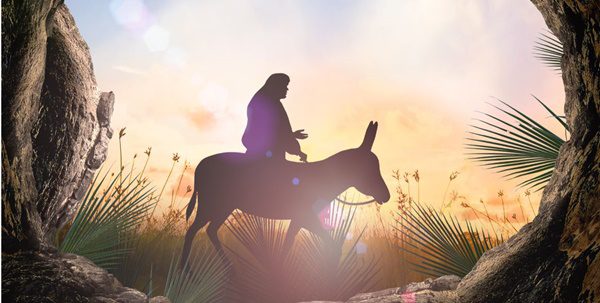
last Sunday Meditation concerned Palm Sunday, and I brought up the issue of the two donkeys in
Matthew’s version of the rendering of Christ’s triumphal entrance into
Jerusalem.Whether one or two, the
donkey is a central element of the Passion story.G. K. Chesterton has an adorable little poem
told from the perspective of the donkey.
There
isn’t too much to analyze.There is some
lovely alliteration in the first stanza with the “f” consonants, which is
picked up later with “four-footed” in the second stanza, and “fools” and “far
fierce” in the last stanza.The other
alliterative sound is the “s” consonant which is sprinkled in each of the
stanzas, but most important to the third stanza.Each stanza’s second and fourth lines end in
full rhyme, but the first and third have a have a slant or distant rhyme.
The
donkey speaks of being born—or is he referring to the origination of the donkey
species?—in a strange, malevolent time.This
is linked to the oddity of his being, and, while not being evil himself, he is
a “parody” of the devil in appearance.With
this he has had to live an oppressed and afflicted life.He too is a suffering servant, regularly
going through his own passion stations.But he is redeemed on his “hour,” on Palm Sunday by carrying the triumphal
Son of David.
One
last element to notice.Chesterton mostly
keeps the meter in every line except for the most key line in the whole poem,
the third line of the third stanza: “Starve, scourge, deride me: I am dumb.”This is a clear allusion to Christ with the
donkey considering himself the analogue to Christ, a Christ-figure!The donkey is saying, that, while I may be
your whipping beast, I had the dignity of carrying the Christ.
Here
is a lovely reading of the poem.
And
here is one of my favorite hymns appropriate for the triumphal entry.
How
beautifully sung. Have a blessed Easter Triduum.
In
addition to Eliot’s “The Journey of the Magi,” which I posted here,
we also read and discussed G.K. Chesterton’s poem, “The Wise Men” as part of
our discussion of Fr. Dwight Longenecker’s book, The Mystery of the Magi: The Quest to Identify the Three Wise Men.You can read the four part blog posts on
Longenecker’s book: Part 1, Part 2, Part 3, and Part 4.
The Wise Men
By G.K. Chesterton (1913)
Step softly, under snow
or rain,
To find the place where men can pray;
The way is all so very
plain
That
we may lose the way.
Oh, we have learnt to
peer and pore,
On tortured puzzles from our youth,
We know all labyrinthine
lore,
We are the three Wise Men
of yore,
And we know all things but the truth.
We have gone round and
round the hill,
And lost the wood among the trees,
And learnt long names for
every ill,
And served the made gods,
naming still
The Furies the Eumenides.
The gods of violence took
the veil
Of vision and philosophy,
The Serpent that brought
all men bale,
He bites his own accursed
tail,
And calls himself Eternity.
Go humbly . . . it has
hailed and snowed . . .
With voices low and lanterns lit;
So very simple is the
road,
That we may stray from it.
The world grows terrible
and white,
And blinding white the breaking day;
We walk bewildered in the
light,
For something is too
large for sight,
And something much too plain to say.
The Child that was ere
worlds begun ─
(. . . We need but walk a
little way . . .
We need but see a latch
undone . . .)
The Child that played
with moon and sun
Is playing with a little hay.
The house from which the
heavens are fed,
The old strange house that is our own,
Where tricks of words are
never said,
And Mercy is as plain as
bread,
And Honour is as hard as stone.
Go humbly; humble are the
skies,
And low and large and fierce the Star,
So very near the Manger
lies
That we may travel far.
Hark! Laughter like a
lion wakes
To roar to the resounding plain,
And the whole heaven
shouts and shakes
For God Himself is born again
And we are little
children walking
Through the snow and rain.
You
can hear “The Wise Men” read on YouTube, here:
I
can’t say I understand every line, but I think I got the gist, though it took
quite a few readings and listening’s.This is a poem you have to hear.
So
I have to say I was a little confused by the different forms of the
stanzas.There are three forms, a
quatrain (four lines), a cinquain (five lines), and a sestet (six lines).The stanzas are all in iambic meter
(unstressed/stressed syllable pattern) and are of eight syllables (referred to
as four feet) long.The quatrains and
the sestet end with a shortened line of six syllables.I should also mention that the quatrain and
the sestet also have an alternating ABAB (and a concluding AB for the sestet)
rhyme scheme while the cinquain has an ABAAB rhyme scheme.
So
the eight syllabic line quatrain, including the shortened fourth line, is a
classic ballad form.There are
variations on this, but what Chesterton chose might be most common.They are typically narrative and the form harkens
back to the Middle Ages, though they returned to popularity in the 19th
century.
The
cinquain was not as typical but also made a comeback in the 19th
century.The 19th century
poets strove for musicality, and Chesterton really comes from that
tradition.The great heyday of the
cinquain I would say was in the 17th century.“Hymn to God, My God, in My Sickness” by John
Donne is a really fine example.That
fifth line gives a cinquain more of a contemplative feel.
Finally
a sestet echoes the last six lines of an Italian sonnet, which among other
things gives a closure to a thought.
In
all there are ten stanzas, arranged in what I would consider a pattern:
4-5-5-5-4-5-5-5-4-6, where four stands for a quatrain, five for a cinquain, and
six for the sestet. There’s no such
established form that I could find, so I would say it’s Chesterton’s
creation.And like the Victorian poets
whose lineage he comes from (think Tennyson, Poe, Rossetti, even Yeats and
others) the musical/sound experience is paramount to his construction.And as I look at each of the stanzas, I would
say they function in their classical sense.Though not perfectly, the quatrains are narrative, the cinquains are
contemplative, and the sestet brings it to a conclusion.That’s pretty innovative and yet traditional
at the same time!
Now
what’s the narrative about?Yes, the
Magi traveling to Jesus, but what I can’t distinguish is whether it’s an actual
Magi speaking or someone in Chesterton’s present time (the narrator?) taking on
the persona of a Magi.It seems to
blur.What do people think on that?Is it one or the other or both?I just can’t make up my mind.
Now
what I would do at this point is identify the central idea of each stanza.Here’s my best guess.
Stanza
1: Journey to a place to pray, which I take is the Magi kneeling before the
manger as in a crèche scene.I’m also
struck by the paradox that way is plain but easy to lose one’s way.
Stanza
2: Describes the studious nature of the Magi with another paradox that despite
their learning they don’t know the truth.
Stanza
3: Further describes the Magi learning, but this time characterized as caught
in a circular trap serving merciless pagan gods.
Stanza
4: He describes these gods as hiding the truth, bringing evil by linking them
to the serpent.What’s fascinating here
is he has another reference to circular, the serpent biting his tail is a
circle, and he identifies it as a false eternity.
Now
take a break here.I would say that
stanzas one through four are the first chunk of thought.Let’s call this Part 1.It concerns the Magi’s fruitless existence
prior to encountering Christ.
Stanza
5: The journey continues.Again
Chesterton brings up the paradox about getting lost on a simple road.
Stanza
6: A description of the whirlwind of snow about them, being blinded by a light,
and paradoxically (again!) not being able to see something that is “too large
for sight.”
Stanza
7: A walking into the stable to find the Christ child. Best lines in the poem: “The Child that played
with moon and sun/Is playing with a little hay.”
Stanza
8: I have to admit, I am baffled by this stanza.Which house?The Magi’s home?The stable?The house of the narrator?This feels like the philosophic center of the
poem but I can’t get it.
OK,
those last four stanzas can be called Part 2.The reach the Christ child and are overwhelmed.
Stanza
9: I think they walk up to the manger here, and again another paradox: they are
near but yet so far still to go.I take
that as they still have a journey to comprehend the significance.
Stanza
10: So this concludes with a roaring laughter.Why?And another paradox, “God
Himself is born again.”“Again”?When was He born the first time?But the concluding couplet is very striking:
they have suddenly, I assume metaphorically, become children “walking through
snow and rain.”
So
what I take from that last stanza is that the joy of meeting the Christ child
transforms the narrators (he refers to a “we”) into children playing in
snow.The once drudgery of the journey
is a sort of child’s play now.This, and
the plain too that the lion roars on, brings the poem back to the first stanza
of snow and rain.It gives the poem a
circular feel.
This
leaves me with some unanswered questions.So why the circular form and how does that relate to the serpent’s evil
circular image in Part 1?What is stanza
8 all about?Why the laughter as a
concluding image—it seems to come from nowhere?And what about the narrator?Is
it the wise men of yore or present day speaker?
Still
I became very fond of the poem as I understood it!That was enjoyable.
Well
it’s not quite Friday yet, but it is October 7th 2021 and besides it
being the birthday of my beloved, departed father—he would have been 86
today—it is the anniversary of the Battle of Lepanto, the 450th
anniversary (1571) of perhaps the greatest naval battle in history and defeat
of the Ottoman Turks from overtaking Christian Europe.
So
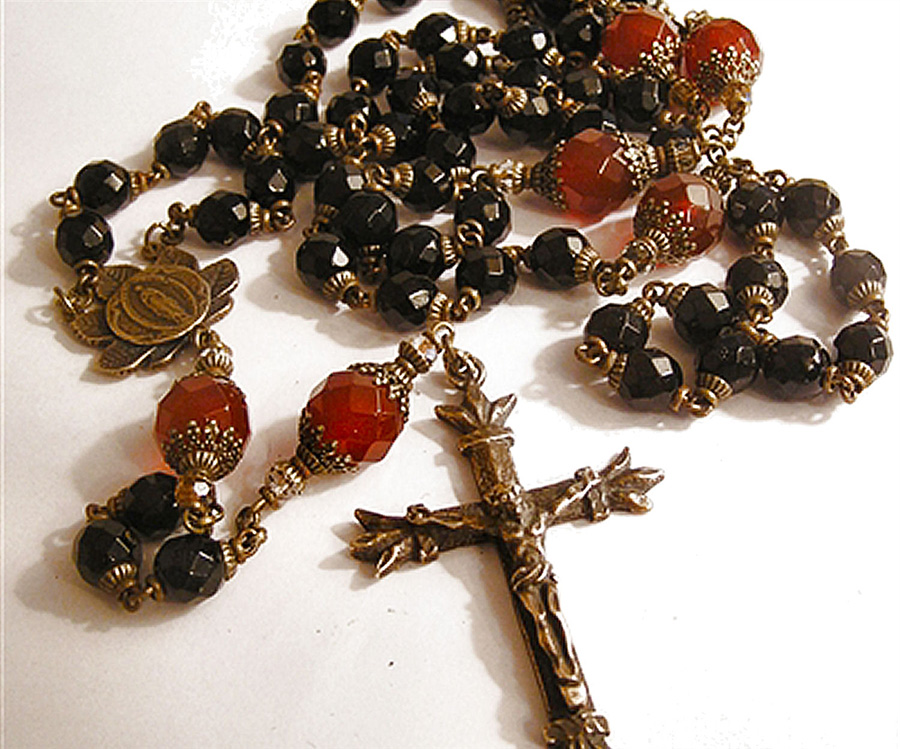
why is today called the Feast of Our Lady of the Rosary?It wasn’t initially.Originally it was called the Feast of Our Lady
of Victory but within two years (1573) Pope Gregory XIII changed it to the
Rosary.
During the five-decade
reign of Soleiman the Magnificent, the Ottoman Empire grew to its fullest
glory, encompassing the Caucuses, the Balkans, Anatolia, the Middle East, and
North Africa. Soleiman had conquered Aden, Algiers, Baghdad, Belgrade,
Budapest, Rhodes, and Temesvar. His war galleys terrorized not only the
Mediterranean Sea, but the Red Sea and the Persian Gulf as well. His one defeat
was at the gates of Vienna in 1529…Soleiman’s greatest
dream, however, the dream of all Turks, the dream his soldiers toasted before
setting off on every campaign, was the conquest of Rome. There the Turks could
transform Michelangelo’s St. Peter’s, then under construction, into a mosque,
just as they had Constantinople’s Hagia Sophia more than a century before.
But
the resistance was coordinated by Pope Pius V in what would be called The Holy
League.
In a papacy of great
achievements, the greatest came on March 7, 1571, on the feast of his fellow
Dominican, St. Thomas Aquinas. At the Dominican Church of Santa Maria Sopra
Minerva in Rome, Pope Pius formed the Holy League. Genoa, the Papal States, and
the Kingdom of Spain put aside their jealousies and pledged to assemble a fleet
capable of confronting the sultan’s war galleys before the east coast of Italy
became the next front in the war between the Christianity and Islam…As
the Pope prayed for Venice to answer a higher call, a new breed of fiery
priests led by stirring preachers like St. Francisco Borgia, superior general
of the Jesuits, inflamed the hearts of Christian Europeans throughout the
Mediterranean with their sermons against Islam. Enough Venetians must have been
listening, because on May 25 Venice at last joined the Holy League. By fits and
starts, with hesitation and quarreling on the part of a few of the principal
players, the fleet of the Holy League was forming.
But
Pope Pius needed a commander and chose a most dashing soldier.
The man chosen by Pius V
to serve as Captain General of the Holy League did not falter: Don John of
Austria, the illegitimate son of the late Holy Roman Emperor, Charles V, and
half-brother of Philip II, King of Spain. The young commander had distinguished
himself in combat against Barbary corsairs and in the Morisco rebellion in
Spain, a campaign in which he demonstrated his capacity for swift violence when
the threat called for it and restraint when charity demanded it.
There
is a lot in Check’s article I’m skipping over, but at the day of the battle divine
intervention took place.
It was. At dawn on
October 7, 1571, the Holy League rowed down the west coast of Greece and turned
east into the Gulf of Patras. When the morning mist cleared, the Christians,
rowing directly against the wind, saw the squadrons of the larger Ottoman fleet
arrayed like a crescent from shore to shore, bearing down on them under full
sail.
As the fleets grew
closer, the Christians could hear the gongs and cymbals, drums and cries of the
Turks. The men of the Holy League quietly pulled at their oars, the soldiers
stood on the decks in silent prayer. Priests holding large crucifixes marched up
and down the decks exhorting the men to be brave and hearing final confessions.
Then the Blessed Virgin
intervened.
The wind shifted 180
degrees. The sails of the Holy League were filled with the Divine breath,
driving them into battle. Now heading directly into the wind, the Turks were
forced to strike their sails. The tens of thousands of Christian galley slaves
who rowed the Turkish vessels felt the sharp sting of the lash summoning them
up from under their benches and demanding they take hold of their oars and pull
against the wind.
So
why is it called the Feast of Our Lady of the Rosary?Fr. Reginald Martin, O.P. has an article at
the Dominican Friars website titled, “The Battle Of Lepanto And The Holy Rosary”
which explains.
Pius V, a Dominican
friar, prayed the rosary throughout the battle and attributed the victory to
the intercession of the Blessed Virgin. Hence the feast of Our Lady of the
Rosary (which was first called the feast of Our Lady of Victory) on October 7.
Naturally, the feast is dear to Dominicans and their friends. But the Pontiff’s
were not the only prayers addressed that day to the Mother of God. The Christian
troops are said to have prayed the rosary throughout the night before the
battle, and some sources say that the rhythmic repetition of the prayer
thoroughly frightened and demoralized the Turkish host.
And
so through the Blessed Mother’s intervention Christendom was saved.If the Turks had won that battle, Europe may
have become Muslim.
Some
side notes.
(1)
Miguel de Cervantes, the author of Don
Quixote, fought in the battle and lost his left hand.If he had lost his right hand he may never
have been able to write.
(2)
Pope Pius V was a Dominican as mentioned above.Up until that time, Popes wore the same red robes as bishops and
cardinals.But Pope Pius V insisted on
wearing his Dominican white, and so ever since Popes have worn white.
(3)
Pope Pius V instituted the traditional 15 (three sets of five each) mysteries
of the rosary.It became the standard
and skyrocketed as a Catholic devotion until it is now the premier Catholic
devotion.Pope John Paul II added a
fourth set of five mysteries in 2002.
(4)
My father, born on this day, happens to have a Marian first name, Mario. I don't know if that was intentional or not on the part of his parents. Either way it was Providential. Please include his soul in your next
rosary.He passed away in 2006, fifteen
years ago.
(5)
Pope Pius V has a striking resemblance to my Uncle Valentino. He too has passed away.
(6)
G. K. Chesterton’s most famous poem is on the Battle of Lepanto, titled “Lepanto.”You can read it here.Here is an excerpt.
The Pope was in his
chapel before day or battle broke,
(Don John of Austria
is hidden in the smoke.)
The hidden room in man’s
house where God sits all the year,
The secret window whence
the world looks small and very dear.
He sees as in a mirror on
the monstrous twilight sea
The crescent of his cruel
ships whose name is mystery;
They fling great shadows
foe-wards, making Cross and Castle dark,
They veil the plumèd
lions on the galleys of St. Mark;
And above the ships are
palaces of brown, black-bearded chiefs,
And below the ships are
prisons, where with multitudinous griefs,
Christian captives sick
and sunless, all a labouring race repines
Like a race in sunken
cities, like a nation in the mines.
They are lost like slaves
that sweat, and in the skies of morning hung
The stair-ways of the
tallest gods when tyranny was young.
They are countless,
voiceless, hopeless as those fallen or fleeing on
Before the high Kings’
horses in the granite of Babylon.
And many a one grows
witless in his quiet room in hell
Where a yellow face looks
inward through the lattice of his cell,
And he finds his God
forgotten, and he seeks no more a sign—
(But Don John of
Austria has burst the battle-line!)
Don John pounding from
the slaughter-painted poop,
Purpling all the ocean
like a bloody pirate’s sloop,
Scarlet running over on
the silvers and the golds,
Breaking of the hatches
up and bursting of the holds,
Thronging of the
thousands up that labour under sea
White for bliss and blind
for sun and stunned for liberty.
Vivat Hispania!
Domino Gloria!
Don John of Austria
Has set his people free!
If
you haven’t done it already, pray a rosary.If you have, pray another!
It’s
been a couple of weeks since I last posted.
No I haven’t forgotten. There
have been a number of things that have limited my posting.
First,
I’ve gotten a new major project at work, and the start of a major project is
labor intense for the project manager.
Once I’ve gotten things rolled into a plan and I’ve got good people
working toward that plan, I can go into a more monitor mode. Until then there are budgets to be put
together, funding to be broken out, designs that need to be drawn up, plans
that need to be established, contracts that need to be written and sent over to
legal, and endless engineering documents to be composed that ensure good
engineering process. Hopefully I can take
a step back in a couple of months. In
the meantime, I’m still working the project I was on before, which has become a
pain. So I’m doubly busy.
Second,
baseball season! I’m obsessed with my beloved
Baltimore Orioles. They had a disastrous
first month of the season, possibly the worst start in team history. You would think I would give up after that
kind of start. No, I’m only more obsessed. I’m convinced this is a good team that had
injuries and bad luck, and will bounce back.
It seems like they are finally returning to norm. They’ve now won six of the last seven,
including a 17-1 win yesterday. However,
in a division where the Yankees (I call them the “Stinkees”) and the Red Sox (I
call them the “Red Pox”) are off to incredible starts, it does seem that the
hole the Orioles dug that first month will be too deep to climb out. We shall see.
Anyway, when I come home, my first order of business after a tiring day
at work and after Matthew runs me ragged with whatever he wants me to do before
he goes to bed is to turn on that night’s game.
Baseball is such a joyful pastime, even if your team is underperforming.
Third,
The Catholic Thought Book has been reading G. K. Chesterton’s The Everlasting Man. It’s been a bit slow for me, not because it’s
not a good read—it’s fascinating actually—but because I was burnt out from the
long list of reads the month before.
Also, although I’ve taken copious notes, I’m really not sure what I want
to say about, or, perhaps more accurately, not sure on how to go about saying
something on it. I’m about two thirds of
the way through (the rest of the club has finished) and I still intend to post
something on it. All those notes can’t
go to waste.
Here’s
what the book club is onto now, if you want to join in or follow my blog
posts. Currently we have as a short
two-three week read of Pope Paul VI’s famous papal encyclical Humanae Vitae. It’s the 50 year anniversary of this
enormously important document which confirmed Catholic teaching on reproduction
and marital relations. It stands as a
contrast to the sexual revolution that was swirling in the air in 1968 when it
was written and published. It’s not a
very long document, only 17 pages. It
won’t take you long to read, and you can read it here from Vatican documents. I will definitely have a couple of posts on
it.
The
short read is to fill the time gap while we vote, select, and acquire our next book. The winner for the next read is The Power of Silence: Against the Dictatorship of Noise, by Robert Cardinal Sarah, one of the cardinals who are on a short list for the next pope.Everyone who I know who has read this book
has raved about it.I have a friend,
Mary Sue, who is a very devout Evangelical Protestant, and she said this in her
Goodreads review of this book:
This book moved me. Every
once in a while, I come across a book that makes me want to reevaluate
everything I know, and this book did that. I absolutely loved the recognition I
felt reading this book - despite standing in quite a different corner of
Christianity as a young, American, fairly Calvinist woman compared to an
established and revered African Catholic cardinal, I could identify many (not
all, but many) of Cardinal Sarah's reflections and understandings as ones I've
shared and come to love with all my heart. More importantly, he put into words
things I've felt so deeply it hurts about the quality of silence and solitude
I've loved desperately as a believer. I've not even known that these things could
be put into words, but Cardinal Sarah did that.
I
don’t know what she is referring to when she says that the book made her “reevaluate
everything [she] knows” but that is quite a statement. I will have to ask her to explain once I have
read the book myself. So if that doesn’t
get you to want to read this book, then you have no Catholic blood in your
veins. (I kid.) By the
way, Mary Sue has commented occasionally on my blog and she keeps her own blog,
At the Still Point. This week the Book Club is acquiring the book, next week we start reading, and
the week after we discuss the opening sections.
Hope that motivates you.
Nice
to be blogging again. Bless you all that
read these humble posts.
There has been a meme around the Catholic blogosphere
lately on stating why one remains a Roman Catholic. It comes in response to what I think is an
exaggerated Pew Poll showing a declining Christianity in the United States, an
especially a shift of Catholics away from their cradle or chosen faith. I’m not going to get into why I think the
results of the poll has been exaggerated (too controversial for this blog and no
one wants to filter through a statistical analysis), but I do want to
contribute to the meme and state why I remain a Catholic.
First, if you want, the Anchoress on two posts from
her blog states her reasons, and more importantly, provides links to a slew of
Catholic blogs who take on the meme. You
can find those posts here and
here. It makes for great reading.
Second, as some have pointed out, G. K. Chesterton—one
of the most important converts to Roman Catholicism—actually took this meme up
in an essay back in 1926. You can read
that essay from the American Chesterton Society (ACS) site here. But it is worthy to quote that well known
first sentence:
The difficulty of
explaining “why I am a Catholic” is that there are ten thousand reasons all
amounting to one reason: that Catholicism is true. I could fill all my space
with separate sentences each beginning with the words, “It is the only thing
that…” As, for instance, (1) It is the only thing that really prevents a sin
from being a secret. (2) It is the only thing in which the superior cannot be
superior; in the sense of supercilious. (3) It is the only thing that frees a
man from the degrading slavery of being a child of his age. (4) It is the only
thing that talks as if it were the truth; as if it were a real messenger
refusing to tamper with a real message. (5) It is the only type of Christianity
that really contains every type of man; even the respectable man. (6) It is the
only large attempt to change the world from the inside; working through wills
and not laws; and so on.
I have to say, I’ve grown to love Chesterton since
I’ve read a few of his works. A couple
of years ago I read his novel, The Man
Who Was Thursday, which I posted on my blog here, and after reading Orthodoxy earlier this year, and which I excerpted a passage
here. I hope to do a fuller post on Orthodoxy in
the future; it’s truly the great dissent to the modern age and I need to
explain that. But though coming late in
life to the man, I can now see why he’s regarded so highly by so many.
So why do I remain a Catholic? As Chesterton says, there are ten thousand
reasons which add up to the one, truth.
But I’ll elaborate with two short answers. First through a list of Catholic attributes
which you cannot find elsewhere.
1.The
true presence of the body and blood of Christ in the Eucharist.
2.Real
confession that is not a superficial mumbling to one’s self.
3.The
saints as guides and brothers and sisters on our journey.
4.The
mythic as part of our everyday life.
5.The
use of reason to understand the natural world as a scientific phenomenon
without stripping it of faith.
6.The
Blessed Virgin as a go to advocate as the mother of Christ and the Queen of
Heaven.
7.It
has a deep history having integrated the Classical world with the Judaic world,
while developing the Christian world.
The superficial platitude that the Church caused the Dark Ages is all
wrong; the Church saved civilization.
8.The
sheer beauty of it: the literature, the philosophy, the art, the music, the
liturgy, all summing up to reflect the beauty of God.
9.It
is Apostolic and started by Christ handing the keys of His church to Peter.
10.It
doesn’t change with the times; there is a guiding Magisterium.
The way I like it said is that Catholicism is the fullness
of Christianity. Only the Eastern
Orthodox churches would have similar attributes, but then they wouldn’t have
been started by Peter.
The second answer will be a paraphrase of a quote by St.
Catherine of Siena my patroness: my Catholic faith is in me as a fish is in the
sea and the sea is in the fish. Of course it's true. I breath and swim in the
truth that is Catholicism, and that truth is infused in me. You can't leave
that.



/463912201-56a61b075f9b58b7d0dfefb8.jpg)


