"Love follows knowledge."
"Beauty above all beauty!"
– St. Catherine of Siena

Showing posts with label Word of the Day. Show all posts

Monday, July 15, 2024

Word of the Day: Zeppelin

About a month ago, I’m driving away from my house and I turn into this very wide street in the neighborhood.  I’m up on the hill looking downhill and across and over the trees I see this object.  Far out there was a zeppelin floating across the sky.  I stopped and took a picture.


Here’s a zoomed in view.


That’s a cool picture if I say so myself.  When I got home later I showed my wife and she was impressed. 

I called Matthew over and I said, “Come look at the picture of the zeppelin I got.”

He said, “A what?”

“A zeppelin.”

“What’s a zeppelin?”

“You don’t know what a zeppelin is?”

“No, what is it?

“It’s a really large balloon.”  So I showed him the picture.

“Oh, that’s a blimp,” he said.

“A blimp?  It’s called a zeppelin.”

“No it’s not.  It’s a blimp.”

And we argued over that for a while.  So what is it called, a blimp or a zeppelin?

From Webster’s Dictionary:


zeppelin

noun

zep·​pe·​lin ˈze-p(ə-)lən

: a rigid airship consisting of a cylindrical trussed and covered frame supported by internal gas cells

broadly : AIRSHIP


blimp

noun

ˈblimp

1

: an airship that maintains its form by pressure from contained gas

2

capitalized : COLONEL BLIMP


Hmm, a zeppelin seems to have an internal structure while a blimp is just formed by the internal gas pressure.  I followed it up with a search and got this distinction from Mental Floss.


Both blimps and zeppelins work by being lighter than air—they're filled with a gas that's lighter than oxygen, so they go up like hot-air balloons. But balloons can't be steered. Realizing this, German Count (Graf) Ferdinand von Zeppelin decided he wanted to devise a "dirigible [or steerable] balloon" in the 1890s for use in military reconnaissance work. Eventually, these dirigible balloons took the generic name zeppelin and were used as bombers or scout craft through World War I. This was just one of their many uses, however. The airships doubled as a major mode of transportation between the wars, routinely making transatlantic flights, and the enormous Graf Zeppelin even circumnavigated the globe in 1929.


So, yes, that is the difference.  A zeppelin has an internal structure so it can be steered.  So what is that in the Staten Island sky?  It had to be a zeppelin because it wasn’t just floating.  It was moving east to west.

These teenagers think they know it all.  But a grey-haired sexagenarian—now there’s a word of the day for you and no it has nothing to do with sex—can outthink them any day. 

One last thing.  This all brought back a memory from my childhood of watching TV comedy reruns in the afternoon after school.  This brought back a memory from the TV show F-Troop.  


Classic!


Saturday, April 22, 2017

Word of the Day: Tsundoku

I came across this fascinating word in The Huffington Post’s Arts and Culture section.  I can’t stand The Huff’s politics and social biases but they do have a fine Book and Arts sections.  

The article is by a Katherine Brooks, titled “There’s A Japanese Word For People Who Buy More Books Than They Can Actually Read.”  Now obviously that would catch my eye, if you’ve learned anything about me.  From her article:

Book hoarding is a well-documented habit.

In fact, most literary types are pretty proud of the practice, steadfast in their desire to stuff shelves to maximum capacity. They’re not looking to stop hoarding, because parting with pieces of carefully curated piles is hard and stopping yourself from buying the next Strand staff pick is even harder. So, sorry Marie Kondo, but the books are staying.

The desire to buy more books than you can physically read in one human lifetime is actually so universal, there’s a specific word for it: tsundoku. Defined as the stockpiling of books that will never be consumed, the term is a Japanese portmanteau of sorts, combining the words “tsunde” (meaning “to stack things”) and “oku” (meaning “to leave for a while”).

I refuse to open the links Ms. Brooks provides on the habit of “book hoarding” and especially the link on the rehab therapy that is available—good heavens, there’s actually a syndrome named for it!  I refuse to accept I have any neuroses and I’m not going to find out that I do. But I do compulsively buy books, even when I realize I may never read them. 

The Japanese have a word for my compulsion.  (Does compulsion still imply I have a mental disorder?  Heaven forbid.) Tsundoku, pronounced tsoon-doh-koo.  Brooks describes the word as a “portmanteau of sorts,” a portmanteau word being a word formed by two words that have been amalgamated into one.  Which is different than a compound, where two words are joined together.  A classic example of a portmanteau word is “smog” formed from “smoke” and “fog.”  A classic example of a word compound is “paperclip,” formed from joining “paper” and “clip” together. 

I don’t know Japanese to be even remotely knowledgeable, but it strikes me that tsundoku is a compound not a portmanteau, despite dropping the “e” from the end of the initial part of the compound, “tsunde.”  I’ll let the Japanese linguists figure that one out.

Back to Ms. Brooks’ article:

Tsundoku has no direct synonym in English, Oxford Dictionaries clarified in a blog post, defining the word as “the act of leaving a book unread after buying it, typically piling it up together with other such unread books.” An informative subreddit provides even more context, explaining that “the tsundoku scale” ranges from just one unread book to a serious hoard. “Everyone is most likely to be ‘tsundokursed’ one way or the other,” it warns.

The blog Other-Worldly, a blog about strange and unusual words, defines tsundoku best: 

(n.) buying books and not reading them; letting books pile up unread on shelves or floors or nightstands.


Or like me in plastic storage boxes in the basement.  I swear, I’m not crazy.  I swear it, believe me, I’m not.  


Sunday, May 8, 2016

Word of the Day: Scorbutic


I haven’t had a “Word of the Day” post in quite a while.  I never posted them every day to begin with, so it’s not exactly precisely denominated.  I should have called them “Word of Interest” or something like that.  Perhaps I’ll do so in the future.

Why is “scorbutic” a word of interest?  It caught my eye while reading a short story, “A House of Gentlefolks,” by Evelyn Waugh.  I’ve never seen the word before, and one usually runs across words that obscure in non-fiction, not fiction.  Waugh obviously is a very erudite man who loves to challenge readers from his deep well of diction.  Here is the passage with the word.  It comes from the opening paragraphs of the story.

I arrived in Vanburgh at five to one.  It was raining hard by now and the dreary little station yard was empty except for a deserted and draughty-looking taxi.  They might have sent a car for me. 

How far was it to Stayle?  About three miles, the ticket collector told me.  Which part of Stayle might I be wanting?  The Duke’s?  That was a good mile the other side of the village.

They really might have sent a car.

With a little difficulty I found the driver of the taxi, a sulky and scorbutic young man who may well have been the bully of some long-forgotten school story.  It was some consolation to feel that he must be getting wetter than I.  It was a beastly drive.

The only work of Waugh’s I’ve ever read before was his novel, Brideshead Revisited, a truly great English novel of the 20th century.  This is the first I’ve read of his short stories, and I have to say I’m impressed.  I picked this story at random but with an eye toward an early work.  “A House of Gentlefolks” is listed as having been first published in 1927.  Without getting into a deep analysis—and this is not a highly complicated story with intricate nuances, but just a well written piece—we have a narrator, Ernest Vaughan, who is a young man being hired to tutor the Duke’s mentally underdeveloped grandson with a tour of Europe.  The grandson is a young man himself of eighteen.  The Duke, his wife, and his sister-in-law, all aged, are in reduced terms, despite the aristocratic titles.  The key detail that we learn is that the story is set a good ten years after the war, that is, World War I, of course, which would have started in 1914.  This is a post war story, a story of a declined Britain.  Indeed the town of Stayle is dilapidated, and noticeably puns with the word “stale.”  The story is bracketed with characters who are too young and too old to have served.  The in between, such as the Duke’s footmen, “have been killed in the war.” 

Which brings us to the scorbutic taxi driver.  The taxi driver is a minor character.  The drive in from the station serves only as an entry point for the story.  Once the narrator is dropped off at the Duke’s, the driver disappears.  So why such a distinct detail as being scorbutic, and what exactly does it mean?

It sounded like some sort of disease when I read it and didn’t recognize it, and that’s what it is.  From Dictionary.com

Scorbutic or scorbutical
[skawr-byoo-tik]

adjective, Pathology.
1.
pertaining to, of the nature of, or affected with scurvy.

Word Origin
1645-55; < New Latin scorbūticus, equivalent to Medieval Latin scorbūt (us) scurvy (≪ Middle Low German scorbûk) + -icus –ic

Well, I do know what scurvy is: a disease acquired from the deficiency of vitamin C.  It was prevalent among sailors who went on long sea voyages and did not supplement their diet with foods rich in the vitamin.  What does a scorbutic person look like?  Well, here is a medical sketch:


It effects the gums and teeth most, and laves the person lethargic and weak.  So why is the taxi driver assumed to have this disease?  First, the taxi driver’s disease echoes and foreshadows the mentally diseased grandson on which the story will hinge.  Second, it shows a society that has been reduced to malnutrition.  And third, it’s a detail that can be projected on to the current state of the British Empire, sickened and debilitated.  It’s a wonderfully placed detail, pregnant with meaning.

Wednesday, July 1, 2015

Word of the Day: Eucatastrophe

In the June 2015 edition of the Magnificat Magazine, a devotional monthly, the editorial from Editor-in-Chief Father Peter Cameron, O.P. starts with a J. R. R. Tolkien  coined word, “eucatastrophe.” From the editorial:  

What is “eucatastrophe”?

In one of his letters, Tolkien writes:

I coined the word “eucatastrophe”: the sudden happy turn in a story which pierces you with a joy that brings tears….It produces its peculiar effect because it is a sudden glimpse of Truth, your whole nature chained in material cause and effect, the chain of death, feels a sudden relief as if a major limb out of joint had suddenly snapped back.  It perceives…that this is indeed how things really do work in the Great World for which nature is made.

That is quite fascinating, both as a theological argument (which I’m not going to get into here) but as an element of story craft.  Happenstance, a chance event that turns a plot, may if the author integrates it correctly be an integral part of worldview and not just a convenient way of turning a plot.  The happenstance carries meaning, Tolkien calling that eucatastrophe.  Fr. Cameron goes on to explain:

Just as the hero of a mythical tale is on the verge of a disastrous dead ends, with his demise looming before him, terrible and inevitable, the eucatastrophe happens:

The good catastrophe, the sudden joyous “turn”….this joy is a sudden and miraculous grace….It denies (in the face of much evidence, if you will) universal final defeat…, giving a fleeting glimpse of joy.  Joy beyond the walls of the world, poignant as grief.

Tolkien considered the Incarnation as the eucatastrophe of human history, and the resurrection the eucatastrophe of the Incarnation.

And then Fr. Cameron goes on to develop the theology. 

One can see how Tolkien employed this in his fiction.  But let’s explore the etymology of the coinage since Tolkien was a philologist by training.  The word can be broken down to eu, which comes from the Greek (through Latin) word for well or good, and catastrophe.  From the Online Etymology Dictionary:  

catastrophe (n.) 1530s, "reversal of what is expected" (especially a fatal turning point in a drama), from Latin catastropha, from Greek katastrophe "an overturning; a sudden end," from katastrephein "to overturn, turn down, trample on; to come to an end," from kata "down" (see cata-) + strephein "turn" (see strophe). Extension to "sudden disaster" is first recorded 1748.


So there you have it, eucatastrophe, a good fatal turning point.  That is a great word to know and keep in mind as one reads stories.

Monday, June 22, 2015

Word of the Day: Progymnasmata

I just came across this word.  You won’t find it in a dictionary.  I’m not even sure on how to pronounce it. 

pro - gym - nas - ma - ta

It’s a Greek etymology and comes from the ancient world.  From Richard Nordquist at the About.Com’s Grammar and Composition site comes this definition: 

The progymnasmata are a series of exercises that introduce students to basic rhetorical concepts and strategies. Instructors looking for effective approaches to teaching composition or speech might find some fresh ideas in these assignments, even though they were developed over 2,000 years ago in ancient Greece and Rome.

I had never heard of this, and so I looked it up in various dictionaries.  Nothing to be found, but have no fear Wikipedia had an entry on it.  (The people who put down Wikipedia are all wrong; it’s a great site, and unless you’re dealing with a very controversial issue it’s very accurate, even more so than standard encyclopedias.)  Here’s the history: 

Composition was not a primary subject taught in schools until the fifth century. In fact, the term “progymnasmata” first appeared in Chapter 28 of Rhetoric to Alexander, most likely written by Anaximenes of Lampsacus in the late fourth century. This work is preserved alongside those of Aristotle, yet he never mentions the use of preliminary exercises. But Aristotle does touch on the rhetorical forms, which became an aspect within the nature of progymnasmata. The use of preliminary rhetorical exercises is discussed briefly in some Greek and Roman dialogues, but all handbooks from that time remain lost today. There are only four known surviving handbooks of progymnasmata. The earliest one is that of Theon, written some time during the first century A.D. In his introduction, Theon addresses teachers rather than students and criticizes students who skip out on these preliminary exercises. The second handbook is attributed to one of the most influential rhetoricians of the second century, Hemogenes of Tarsus. But there is no preface to his work and the exercises are brief; therefore, many doubt its authenticity.[2] But the third handbook is attributed to Apthonius of Antioch, student of the great sophist Libanius during the second half of the fourth century. This is the most widely used and referenced handbook that became the standard on the practice of progymnasmata. His treatises were combined with rhetorical treatises of Hermogenes on stasis theory and style to create the “Hermogenic Corpus.” The final handbook is attributed to Nicolaus of Myra, who taught rhetoric in Constantinople during the late fifth century.

Now I find this fascinating.  I may be in a minority on this, but I believe the ancient and medieval world had better approaches to writing and rhetoric than we do in the modern world.  Progymnasmata is a process on which a student goes through a series of exercises to develop his writing and oratory skills.  Both Nordquist’s post (you can sign up for email delivery of Grammar and Composition links, and they are excellent) and Wikipedia’s entry describe the list of exercises.  Here is the list preserved from Aphthonius of Antioch book, per Nordquist.

1. Fable, or retelling of a folk tale.
2. Narrative, either fiction or nonfiction.
3. Chreia or anecdote, a story based on amplification of a famous statement or action.
4. Proverb, which asked students to amplify by arguing for or against some maxim or adage.
5. Refutation, which disproved the persuasive point of a narrative.
6. Confirmation, which proved the persuasive point of a narrative.
7. Commonplace, which amplified on the moral qualities of some virtue or vice, often as exemplified in some common phrase of advice.
8. Encomium or praise, which expanded on the virtues of some person or thing.
9. Invective, which censured some evil person or thing.
10. Comparison, which compared two people or things and explored their comparative merits and shortcomings.
11. Personification, the characterization of some fictional person by the use of appropriate language.
12. Description, which created intense and graphic depictions of a subject.
13. Argument, which created and supported a thesis or some general question, such as, "Is town life superior to country life?"
14. Legislation [or deliberation], in which the student argued for or against the goodness of a law.


I feel deprived not having had these exercises in school.  What the heck do they teach in High School to develop writers?  I don’t remember a single exercise, except once where we had to write a makeup news article.  I wrote a baseball article of a fictionalized game, and the teacher thought I had copied it out of a newspaper.  He accused me of plagiarizing.  Ultimately he retracted and gave me a good grade.  I have nothing but bad memories of pre-college writing.  We need to go back to classical writing!

Saturday, March 7, 2015

Word of the Day: Joy

I’ve been reading Pope Benedict’s Jesus of Nazareth: The Infancy Narratives and came across this fascinating little passage on the word rejoice.  It certainly would have been fitting if I had posted this during the Christmas season, but I read this recently and it’s fresh in my mind.  The Holy Father is discussing the Annunciation to our Blessed mother.

A striking feature of the angel’s greeting is that he does not address is that he does not address Mary with the usual Hebrew salutation shalom—peace be with you—but with the greeting formula chaîre, which we might translate with the word “Hail,” as in the Church’s Marian prayer, pieced together from the words of the annunciation narrative (cf. Lk 1:28-42).  Yet at this point it is only right to draw out the true meaning of the word chaîre: rejoice!  This exclamation from the angel—we could say—marks the true beginning of the New Testament.   (p. 26)

[Quotes are from Image edition, 2012]

So it when Gabriel comes to the Virgin, he isn’t just greeting her with “Hail Mary,” he is greeting her with “Rejoice Mary.”

The word reappears during the Holy Night on the lips of the angel who says to the shepherds: “I bring you good news of great joy” (Lk 2:10).  It appears again—in John’s Gospel—at the encounter with the risen Lord: “The disciples were glad when they saw the Lord” (20:20).  Jesus’ farewell discourses in Saint John’s Gospel present a theology of joy, which as it were illuminates the depth of the word.  “I will see you again and your hearts will rejoice, and no one will take your joy from you” (16:22). (p. 26-27)

Gladness in the John 20:20 quote is synonymous with joyous.  Here then is the conflation of several Biblical events to the word “joy.”  This observation is quite significant.

Joy appears in these texts as the particular gift of the Holy Spirit, the true gift of the Redeemer.  So a chord is sounded with the angel’s salutation which then resounds throughout the life of the Church.  Its content is also present in the fundamental word that serves to designate the entire Christian message: Gospel—good news.  (p. 27)

Pope Benedict wrote this in German, so something might not have been completely conveyed in the translation.  Gospel or “good news” is sometimes translated as “glad tidings,” which can therefore be translated as “joyous tidings.”  So then at the heart of Christian faith is joy.  This is what the Holy Father means above by “the theology of joy.”


And that is so true.  What separates my life from the moment I fell in love with my faith—not just embraced it, but fell in love with it—is the joy that I feel afterward.  I’m not even sure I know how to describe it other than to say it’s joy, but a joy beyond common joy, a supernatural joy.  I’ve tried to describe this to atheists or even just routine, non-devout Christians.  They understand it because it’s a foreign feeling to them.  It’s not like the joy that I get from following baseball.  I do get joy from that, but it’s not the same as the joy from Christ.  That’s divine joy.


Saturday, January 31, 2015

Word of the Day: Chinks

What do you think of when you hear the word “chinks?"  Now since I grew up on the Brooklyn streets, where we had a huge diversity of ethnicities and a complete lack of any compulsion to be politically correct, I do have to admit that not given a context my mind jumps to the derogatory slang term for a far eastern person.  But most of the time in context I think of it as referring to some sort of damage to some sort of wall or hard surface.  From Dictionary dot com

noun
1.
a crack, cleft, or fissure:
a chink in a wall.
2.
a narrow opening:
a chink between two buildings.

verb (used with object)
3.
to fill up chinks in.

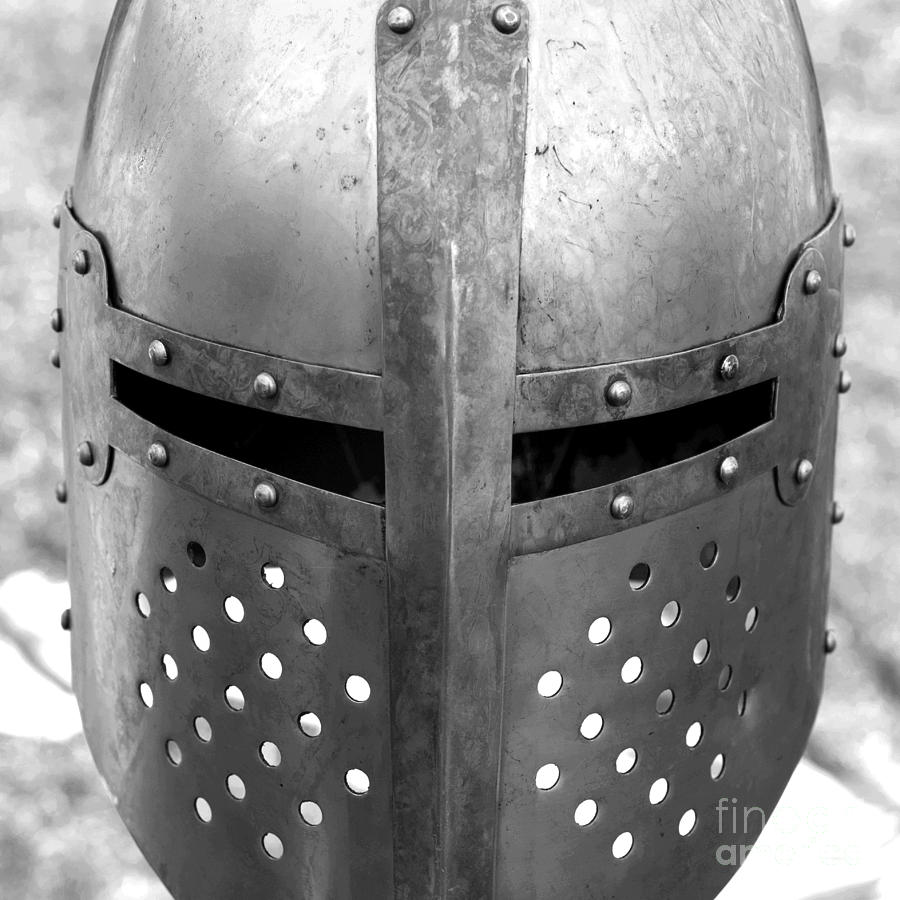
Set aside the alternative definition of a sharp ringing sound (as in the chink of glasses tapping) I hardly ever refer to chink for anything other than an unwanted crack or indentation.  The common phrase, which has become an idiom from an apparent use as a metaphor is “chinks in armor.”  As a metaphor it compares a fracture of a personal defense, abstract or concrete, to the crack in armor.

Never owning a knight’s helmet (I come from peasant stock, not aristocracy :-P) I never think of chink as in a narrow opening, but I guess that’s the root of the ethnic slur.  The slits for sight on a knight’s helmet are sometimes referred to as chinks, which can resemble East Asian eyes. 


Wikipedia traces the slang slur to the end of the latter part of the 19th century: 

"Chink"'s first usage is recorded from about 1890 but "chinky" had first appeared in print, as far as can be ascertained, in 1878. Chinky is still used in Britain as a nickname for Chinese food.

Well it’s good to know that it’s not just we Brooklynites that can be insensitive.  ;)  But what’s important there is that the word “chink” and its metaphoric use well predates the slur.

Why do I bring this up?  I came across this little controversy between the United States Army, who as far as I can tell innocently used the “chinks in armor” metaphor, and those politically correct enforcers who screamed racism.  From the article, “Army Deletes Tweet About ‘Chinks In Armor’ After People Cry Racism:”  

The U.S. Army has deleted a tweet that used the term “chinks” in armor after people freaked out that the same word can be used in a completely different context as a racial slur against people of Chinese descent.

“Chinks in special ops’ digital and physical armor poses challenges, experts say,” the tweet read, followed by a link to a news release about how terrorists’ using social media has left a hole — dare I say, a chink in  — our country’s defenses.

You can go over and read the outraged counter tweets which forced the Army, though “shocked” at the reaction, to retract the tweet. 

So let this post serve as a public service announcement as to what “chink” really means. 


Saturday, January 10, 2015

Word of the Day: Cacasotto


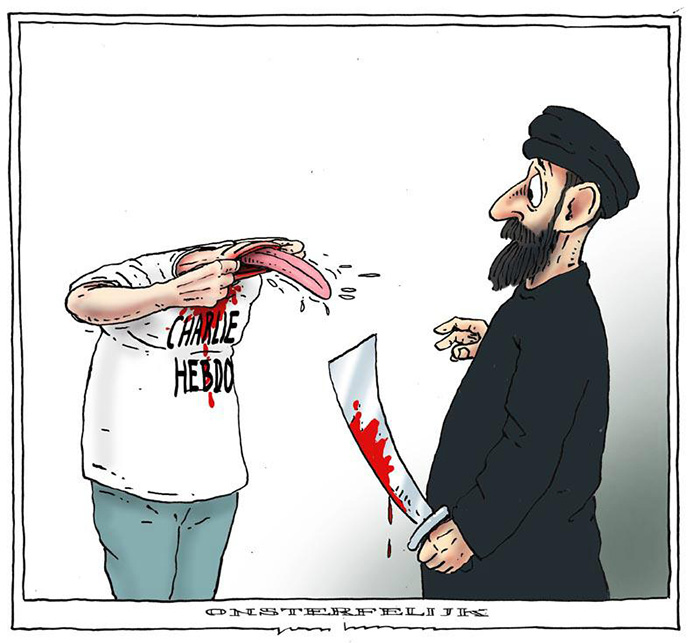
Actually this is the word of the week, post the events in Paris and across the western world.  After my last post and seeing the reaction of the western media to this attack on free speech and artistic expression, I am very disappointed.  The one word that comes to mind is an Italian vulgarism, cacasott’.  My Italian grammar is weak, so I’m not sure when you drop the last vowel and use an apostrophe, but we have always pronounced it without that last vowel.  Literally it means shit-in-your-pants, and it’s usually directed at a person or entity, so it’s a noun meaning, one who is shit-in-his-pants cowardly.
 

That is what the western media deserves to be called in respect to the Islamic terrorists killings in Paris.  Many were calling for all media to dramatically publish the Charlie Hepdo anti-Islamic cartoons, not as an insult to Islam, but as a defiant measure against anti-free expression.  I echoed this exhortation in my last blog post.  Other than a few media, the western media, who supposedly prizes free speech above all freedoms, at least that’s what they tell us when they insult Christianity, were shitting in their pants afraid.  Cacasotts!
 

In an opinion piece on National Review Online, Rich Lowery had said it well in his “The Crises of Free Speech":
 

In the fight over free expression, the editors and cartoonists of Charlie Hebdo occupied the most forward and exposed position. They lit a flare over their own parapet every night and said to the enemy that you may bring your worst, but you can’t make us afraid.
 

That their craft required such bravery in perhaps the most cosmopolitan city in the world is a testament to the embattled state of free speech in the West.
 

The sad fact is that physical intimidation works. Some press outlets pixilated or cropped out the covers of Charlie Hebdo in their coverage of the Paris attacks, as if they were the works of obscenity that the attackers consider them.
 

One expects the Liberal outlets, which are not really Liberal in the truest sense of the word, to be cacasotts, but the more common sense media outlets also pulled back from fully publishing a cartoon.  Cacasotts!  They have no qualms about nudity, vulgarisms, or even offending Christians, but because Muslims threaten violence and actually carry it out, they sit in their news rooms shitting in their pants. 
 

Jonah Goldberg, also at National Review Online, also had a great piece, “A Win for the Jihadists.”  Yes, despite being killed in their supposed martyrdom, the terrorists won because they cowed the western media.
 

The vigils in Paris are moving. The hashtag plumes of #JeSuisCharlie (“I am Charlie”) are endearing. The expressions of condemnation from Muslim leaders are commendable, as are the assurances of solidarity and support from Western governments.
 

But, as a practical matter, they don’t change a thing: The jihadists won this week.
 

Even if the atrocity in Paris served to imbue the civilized world — Muslim and non-Muslim alike — with a newfound resolve to battle radical Islam (it almost certainly won’t), this still stands as a victory for the bad guys.
 

And further down Goldberg continues:
 

As a conservative, I don’t like gratuitous mockery of religion, any religion. That’s not to say I think all blasphemies are equally offensive. For instance, I think most satire of Christianity is particularly cowardly and lame precisely because Christians are such a safe target. Also, after centuries of tolerance for satire of Christianity, opportunities for cleverness or originality are few and far between.
 

Mockery of Islam, meanwhile, whether in good taste or not, is dangerous and therefore also courageous even when stupid.
 

In a world where Muslim extremists weren’t killing people for such things, I’d be against publishing such material (not as matter of law, but of editorial judgment). But we don’t live in that world. And the slaughter in Paris only makes that more of a reality.
 

And finally I want to return to Lowery’s piece for a conclusion:
 

We all love the cliché that the pen is mightier than the sword. But it hasn’t been true through most of human history and isn’t true in many places — especially in the Muslim world — even today. The pen is an instrument that needs constant protection and the enlivening spirit of satirists of all sorts.
 

The cartoonists of Charlie Hebdo understood that. Does the West?
 

That’s a rhetorical question.  We know the media has proven to be cacasotts.
 

I started my young adulthood as an anti-communist, cold war warrior, as we used to be called.  When the Soviet Union collapsed, I thought that warrior part of my life had ended.  Then there were the September 11th attacks, and a new phase of my life started, an anti-Islamic-Fascist warrior, if you will.  It doesn’t appear the Jihadist are going away any time soon.  I’ll probably end my life still a rhetorical warrior against them.  But one thing I am not is a cacasott.


Sorry for being so political.