We have entered Lent, and today is the First
Sunday of Lent.In all three year
cycles, the First Sunday of Lent has Jesus enter the desert to be tempted by
Satan.Matthew’s and Luke’s versions of
Jesus’s forty days of temptation similar in that they detail Satan’s forms of
temptations.In Mark’s version we have a
general summary of temptations, but he offers two amazing details: Jesus lives
among the wild beasts and that angels minister to Him.
The Spirit drove Jesus out into
the desert,
and he remained in the desert for
forty days,
tempted by Satan.
He was among wild beasts,
and the angels ministered to him.
After John had been arrested,
Jesus came to Galilee proclaiming
the gospel of God:
"This is the time of
fulfillment.
The kingdom of God is at hand.
Repent, and believe in the
gospel."
~Mk
1:12-15
It’s noteworthy to observe that Matthew’s
version does include the detail of the angels ministering to Jesus but no wild
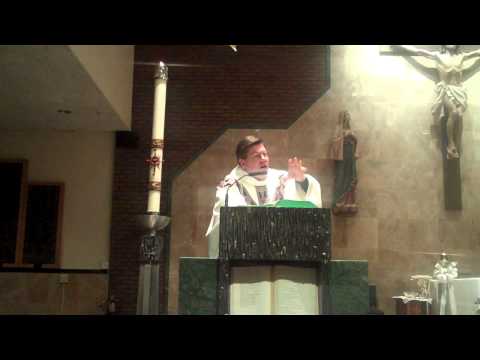
beasts, and Luke has neither detail.This week Fr. Geoffrey Plant has a fine homily that explains Lent, the
forty days in the desert, Satan. the temptations in the desert and the
association with the temptation of Adam and Eve, and the wild beasts which
allude to the beasts in Isaiah.
Then the wolf shall be a guest of the lamb,
and the leopard shall lie down with the young goat;
The calf and the young lion shall browse together,
with a little child to guide them.
The cow and the bear shall graze,
together their young shall lie down;
the lion shall eat hay like the ox.
The baby shall play by the viper’s den,
and the child lay his hand on the adder’s lair.
They shall not harm or destroy on all my holy mountain;
for the earth shall be filled with knowledge of the LORD,
as water covers the sea.(Isa
11:6-9)
Meditation: "He was among
wild beasts, and the angels ministered to him.”
Seek
out Bishop Barron’s homily on this week’s reading.He’s got a different and perhaps more
meditative understanding of the wild beasts and the angels.
This
is a wonderful meditation as a Lenten meditation.It comes from a letter by Blessed Pier
Giorgio Frassati on what makes a truly profitable life.I quote it from the February 2023 edition of Magnificat.
If
you have not heard of Blessed Pier Giorgio Frassati, his life is a must to learn.He came
from a rich, well-connected Italian family who secretly helped the poor with
his time and money from a young age.Whatever
money he was given, he gave it away.He
was a mountain climber, a student of engineering, a Third Order Dominican, a
passionate Catholic, a lover of the Eucharist, a lover of Christ, and he did
all this before contracting a form of polio which killed him at the age of twenty-four.He perhaps lived out the beatitudes as well
as any young man could do.Wherever he
went, his joyful smile made friends.I
think of his as the saint of friendship.
I
don’t know who he wrote this letter to, but it encapsulates the essence of his
Catholic point of view.
May peace be in your
soul….Every other gift which one possesses in this life is vanity.It is wonderful to be alive inasmuch as our
true life is the life beyond; otherwise who could bear the burden of this life
if there weren’t a prize for suffering, an eternal joy; how could one explain
the admirable resignation of so many poor creatures who struggle with life and
often die in the breach if it weren’t for the certainty of God’s justice?In the world which has distanced itself from
God, there is a lack of peace, but there is also a lack of charity that is true
and perfect love.Maybe if all of us
listened more to Saint Paul, human miseries would be slightly diminished….
My life is monotonous,
but every day I understand better what a grace it is to be Catholic.Poor unlucky those who don’t have faith: to
live without a faith, without a patrimony to defend, without a steady struggle
for the truth, is not living but existing.We must never exist but live, because even through every disappointment
we should remember that we are the only ones who possess the truth, we have a
faith to sustain, a hope to attain: our homeland.And therefore let us banish all melancholy
that can only exist when the faith is lost.Human sorrows touch us, but if they are viewed in the light of religion,
and thus of self-surrender, they are not harmful but helpful, because they
purify the soul of the little and inevitable stains by which we men, due to our
wicked nature, dirty ourselves many times.In this holy Lent, let us lift up our hearts and always go forward for
the triumph of the reign of Christ in Society.
Cordial greetings in
Jesus Christ.
-Blessed Pier Giorgio Frassati
From Magnificat February
2023
From Letters to His
Friends and Family, Father Timothy E. Deeter, Tr., 2009, St Pauls Alba
House, Staten Island, NY.
For
a young man, he knew the range of human experience: “Human sorrows touch us,
but if they are viewed in the light of religion, and thus of self-surrender,
they are not harmful but helpful, because they purify the soul of the little
and inevitable stains by which we men, due to our wicked nature, dirty ourselves
many times.”I don’t know how old he was
when he wrote that, but there is no way I could have envisioned that in my
twenties.
Let
me close with his ending exhortation: “In this holy Lent, let us lift up our
hearts and always go forward for the triumph of the reign of Christ in Society.”
Here
is a little film clip of his life.
I
hope he is finally canonized in my lifetime.He is someone I really admire.
Yes,
I know.It’s supposed to be Music
Tuesday, but today is Ash Wednesday, the beginning of Lent, and I wanted to
commemorate it with a perfect music piece for the day.It’s Gregorio Allegri’s Miserere mei, Deus, a polyphonic choral piece composed around
1638.Wikipedia explains it better than
I can.
Miserere (full title: Miserere mei, Deus,
Latin for "Have mercy on me, O God") is a setting of Psalm 51 by
Italian composer Gregorio Allegri. It was composed during the reign of Pope
Urban VIII, probably during the 1630s, for the exclusive use of the Sistine
Chapel during the Tenebrae services of Holy Week, and its mystique was
increased by unwritten performance traditions and ornamentation. It is written
for two choirs, of five and four voices respectively, singing alternately and
joining to sing the ending in 9-part polyphony.
You
can read the history of the piece in that Wikipedia entry.It’s interesting.
So
this is the penitential 51st psalm set to song, and one that should
be prayed repeatedly during Lent.This
rendition, conducted and arranged by Edward Higginbottom is just stunningly
beautiful.
The
lyrics are listed but I’ll present them here.First in Latin.
Miserere mei, Deus:
secundum magnam misericordiam tuam.
Et secundum multitudinem
miserationum tuarum, dele iniquitatem meam.
Amplius lava me ab
iniquitate mea: et a peccato meo munda me.
Quoniam iniquitatem meam
ego cognosco: et peccatum meum contra me est semper.
Tibi soli peccavi, et
malum coram te feci: ut justificeris in sermonibus tuis, et vincas cum
judicaris.
Ecce enim in
iniquitatibus conceptus sum: et in peccatis concepit me mater mea.
Ecce enim veritatem
dilexisti: incerta et occulta sapientiae tuae manifestasti mihi.
Asperges me hysopo, et
mundabor: lavabis me, et super nivem dealbabor.
Auditui meo dabis gaudium
et laetitiam: et exsultabunt ossa humiliata.
Averte faciem tuam a
peccatis meis: et omnes iniquitates meas dele.
Cor mundum crea in me,
Deus: et spiritum rectum innova in visceribus meis.
Ne proiicias me a facie
tua: et spiritum sanctum tuum ne auferas a me.
Redde mihi laetitiam
salutaris tui: et spiritu principali confirma me.
Docebo iniquos vias tuas:
et impii ad te convertentur.
Libera me de sanguinibus,
Deus, Deus salutis meae: et exsultabit lingua mea justitiam tuam.
Domine, labia mea
aperies: et os meum annuntiabit laudem tuam.
Quoniam si voluisses
sacrificium, dedissem utique: holocaustis non delectaberis.
Sacrificium Deo spiritus
contribulatus: cor contritum, et humiliatum, Deus, non despicies.
Benigne fac, Domine, in
bona voluntate tua Sion: ut aedificentur muri Ierusalem.
Tunc acceptabis
sacrificium justitiae, oblationes, et holocausta: tunc imponent super altare
tuum vitulos.
English translation
(Douay Rheims)
Have mercy on me, O God,
according to thy great mercy.
And according to the
multitude of thy tender mercies blot out my iniquity.
Wash me yet more from my
iniquity, and cleanse me from my sin.
For I know my iniquity,
and my sin is always before me.
To thee only have I
sinned, and have done evil before thee: that thou mayst be justified in thy
words and mayst overcome when thou art judged.
For behold I was
conceived in iniquities; and in sins did my mother conceive me.
For behold thou hast
loved truth: the uncertain and hidden things of thy wisdom thou hast made
manifest to me.
Thou shalt sprinkle me
with hyssop, and I shall be cleansed: thou shalt wash me, and I shall be made
whiter than snow.
To my hearing thou shalt
give joy and gladness: and the bones that have been humbled shall rejoice.
Turn away thy face from
my sins, and blot out all my iniquities.
Create a clean heart in
me, O God: and renew a right spirit within my bowels.
Cast me not away from thy
face; and take not thy holy spirit from me.
Restore unto me the joy
of thy salvation, and strengthen me with a perfect spirit.
I will teach the unjust
thy ways: and the wicked shall be converted to thee.
Deliver me from blood, O
God, thou God of my salvation: and my tongue shall extol thy justice.
O Lord, thou wilt open my
lips: and my mouth shall declare thy praise.
For if thou hadst desired
sacrifice, I would indeed have given it: with burnt offerings thou wilt not be
delighted.
A sacrifice to God is an
afflicted spirit: a contrite and humbled heart, O God, thou wilt not despise.
Deal favourably, O Lord,
in thy good will with Sion; that the walls of Jerusalem may be built up.
Then shalt thou accept
the sacrifice of justice, oblations and whole burnt offerings: then shall they
lay calves upon thy altar.
Perhaps
you can visit this choral several times during Lent.The lyrics are part of the video.You can pray it as you listen.
I
want to introduce one of my Lenten reads for this year. Today is Ash Wednesday, the beginning of Lent. I hope you got
your ashes across your forehead today. You
don’t have to be Catholic to receive ashes from a Catholic church. Ashes are not a sacrament but a sacramental,
and so anyone can receive them. What’s a
sacramental? According to the Catechism of the Catholic Church, “sacramentals
are sacred signs which bear a resemblance to the sacraments” but “do not confer
the grace of the Holy Spirit” (CCC 1667-1670).
That’s rather theological, so let’s just summarize it as an action or
outward sign that helps you get closer to God.
Ash Wednesday is a reminder that one is dust (“Remember that you are
dust, and to dust you shall return") and a calling to repent (“Repent, and
believe in the Gospel").
So
this starts Lent where one is called to self-denial, penance, increased prayer,
and alms giving. This Lent I’m giving up
the usual deserts and snacks and alcoholic beverages. Someone also suggested one give up buying all
“wants” and make purchases only of necessities.
I thought that was a brilliant self-denial, and so this year I will
limit purchasing things only to things that are basic needs. That’s going to be hard to do with limiting
myself from buying books, but it will be a good test.
During
Lent I increase devotional and spiritual reads, and a few weeks ago I mentioned
I was going to read Compassionate Blood by Fr. Romanus Cessario, O.P. on meditations of
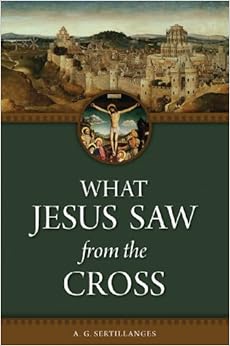
Christ’s passion through the words of St. Catherine of Siena. Now that’s a relatively short read. A lengthier read is going to be What Jesus Saw from the Cross, published
in 1930 by the French Dominican Antonin-Gilbert Sertillanges, O.P.
The
book is basically just what the title implies, a meditation on what Jesus saw
looking out while hanging on the cross. It’s
objective is stated in the Prologue:
St. Paul exhorts us to
“to on Jesus Christ, and in his words, understood in the spiritual sense in
which he intended them, are of immeasurable importance. However, there is perhaps another sense in
which it is not impossible, nor without importance, to put on Jesus Christ.
We may put on Christ in
imagination, placing ourselves not at the foot of the cross, nor before it, but
upon it, with head bowed beneath the inscription, wearing the crown of thorns,
pierced by the nails, feeling the cold, rough wood between our shoulders. In short, we can make our own the sphere of
vision and the emotions that were His, seeing with His eyes and feeling with
His heart, remembering, judging, and foreseeing with Him so that, still in this
same sense of imaging that we have changed places with Him, it is no longer we
who live but Christ who lives in us.
It was in Jerusalem that
this thought came to me, while I stood (as I frequently did) on a spot which is
uniquely suggestive of such reflections.
Now
that’s enticing. Then I read the first
chapter, “The View from the Cross,” and it blew me away. Here’s a sample:
Having established the
site of Calvary and described the Cross, the question still remains, in what
direction was the Sufferer facing? There
are mystical authors who orient the Cross to the west—that is to say, they “disorient”
it. Their idea is that the look which
regenerates is turned toward us, Israel and the Old Law being forsaken. This theory, besides being a priori and not free from partiality,
finds no confirmation in the situation of Calvary.
As you pass out of the Gate
of Ephraim you are facing Mount Gareb, of which Calvary is a small foothill: to
turn the gibbet to the west would be to make it face the hills and to hide it
from the people. The idlers of the gate
and the loiterers of the esplanade, the passerby who met in great numbers at
the crossroads, the folk that clustered everywhere about, the dwellers in the
tents set up in the open air for the feast, all these would have been
foiled. The public example made of the
victim would have been thwarted; furthermore, the erection of the gibbet and
the management of the execution would have been made difficult. In every way, it would have been a bad arrangement.
No, Jesus faced the gate
by which He had come forth, through which came His insulters and those who were
greedy for a spectacle. He offered
Himself to those who hated and mocked Him.
He lent Himself to the convenience of His executioners.
And, if reasons of
appropriateness must be added, the new Man looked toward the beginnings, toward
the end of the earth from which came civilization together with the light. He faced as the apse of a church faces, having
before His eyes the rampart of a world beyond which He had passed, although He
had not forsaken it. His final glance
saluted the Temple, His Father’s house, and the rising sun.
That
is excellent prose. I assume the
original French was just as finely written.
For some reason the book doesn’t list the translator, but it does say it
was translated in 1948. A great subject,
outstanding writing, intense spirituality, profound meditation, all through the
thoughts of a Dominican friar—this is going to be a great read. I’ll try to post again as I get deeper into
the book.
For
those looking for a devotional book to read for Lent, the monthly Catholic
magazine, Magnificat, has put out a
devotional this season, Compassionate
Blood, written by Fr. Romanus Cessario, O.P. Fr. Romanus using the thoughts
and words of my dear St. Catherine of Siena creates a meditation on Christ’s Passion. Here’s what the ad blurb says:
“What do we learn from
this description of the suffering Christ? What does Catherine teach us about
the transformation that brings the world stillness on Good Friday from noon
until three o’clock?
“The answer is simple: We
discover that because of his enormous love, Christ’s sufferings and death cause
the transformation of all that exists, the transformation we call Christian
salvation….
The transformation that
Catherine announces is one that creates in those persons who remain united with
Christ a new ground for love, a new sort of loving…. The transformation affects
both our persons and our actions.”
Father Romanus Cessario,
O.P.
Senior Editor of Magnificat
Of
course given St. Catherine is my patroness, as soon as I saw the flyer in this month’s
edition of Magnificat I went and
ordered it right away. It just came in the
mail today. Flipping through the pages,
it looks like a great little read, especially if you’re looking to learn
something about St. Catherine’s theology.
And remember St. Catherine of Siena is one of the doctors of thechurch. It’s 86 pages not including the footnotes and about the size of a well-constructed
paperback. Here’s an image of the book.
You
can order it here for $9.95, three dollars off the regular price. I don’t know when the sale ends, so hurry if
you are interested. March 1st
is Ash Wednesday, and if you order now it should arrive before then.
This
is the perfect Lenten song. From the
first time I heard this song and no matter how many times I’ve heard it, it
still overwhelms me. This is Johnny Cash
at his finest and most authentic. This
song just hits you right in the gut.
I
have to post the lyrics as well.
Redemption
From
the hands it came down
From the side it came down
From the feet it came down
And ran to the ground
Between heaven and hell
A teardrop fell
In the deep crimson dew
The tree of life grew
And
the blood gave life
To the branches of the tree
And the blood was the price
That set captives free
And the numbers that came
Through the fire and the flood
Clung to the tree
And were redeemed by the blood
From
the tree streamed a light
That started the fight
'Round the tree grew a vine
On whose fruit I could dine
My old friend Lucifer came
Fought to keep me in chains
But I saw through the tricks
Of six-sixty-six
And
the blood gave life
To the branches of the tree
And the blood was the price
That set captives free
And the numbers that came
Through the fire and the flood
Clung to the tree
And were redeemed by the blood
From
his hands it came down
From his side it came down
From his feet it came down
And ran to the ground
And a small inner voice
Said "You do have a choice."
The vine engrafted me
And I clung to the tree
And
the blood gave life
To the branches of the tree
And the blood was the price
That set captives free
And with the numbers that came
Through the fire and the flood
I clung to the tree
And were redeemed by the blood
From
his hands it came down
From his side it came down
From the feet it came down
And ran to the ground
"Redemption"
is track #11 on the album American Recordings. It was written by Shakur, Tupac
Amaru / Rouse, Ricky. Read more: Johnny Cash - Redemption Lyrics | MetroLyrics
Wow,
I foundd it hard to believe Tupac Shakur gets a songwriting credit on this, but
there it is. It’s a great song.
This
apparently is a true story from Sister Theresa Aletheia Noble’s blog, Pursued by Truth about a priest who was robbed on the subway on Ash Wednesday. It’s really very funny, and the good Sister
has a nice Lenten reflection on it.
A Jesuit priest who used
to say Mass at our convent was on the subway making his way to visit his mother
on Ash Wednesday.
At one stop a young man
entered the subway car and told the priest to hand over his wallet. When the
priest explained that he did not have a wallet with him, the young man made him
empty his pockets.
The priest pulled out his
train pass, some change, and a little silver box. The young man demanded to
know what was inside the box.
The priest said, “Well, I
am a Catholic and it is Ash Wednesday so I am bringing some blessed ashes to
someone who is sick.”
The young man responded,
“Oh, I am Catholic, can I have some ashes?”
So the priest opened the
little box, said the prayer and traced the cross on the man’s forehead.
The young man left at the
next stop.
Read
Sister Theresa’s little homily on how we all feel like this thief, here.
I’ve been bummed out all week, ever since the pastor
at my church, Fr. Richard Veras of St. Rita’s on Staten Island, announced he
was being transferred.They have this
rule in the New York City dioceses that a priest is assigned for six year terms
to a parish, with the option of remaining for two terms or twelve years.After that he must be reassigned unless he’s
of retirement age.For the past year I
was worried about this.I wasn’t sure
which year Fr. Veras came to St. Rita’s but I suspected he was coming up on his
six year term. One the one hand I figured they would give him a second term,
since that is typically the case, but on the other hand I knew that Fr. Veras
is special and I’m sure the dioceses would want him to serve in a higher
capacity.So at the end of Mass this
past Sunday when just before dismissal he had us sit down for an announcement,
and when he said that with such a solemn and glum expression, I had a
feeling.The feeling was correct.He was being reassigned to a high school (Our
Lady of Lourdes) in Poughkeepsie, NY where there was some important—I can’t
remember exactly, going in one ear and out the other—need for his
services.Though the congregation seemed
somewhat surprised, they gave him a round of applause.
What makes Fr. Veras special?Well, first he writes, and perhaps I’m
prejudice for writers but anyone who writes has formulated his thoughts into a coherence.If you know the Catholic magazine, Magnificat, he’s a frequent contributor.
In
fact if you have the current special Lenten edition, he’s in there.Second, he’s written books.I haven’t read any to endorse them, but here on Amazon you can see his two published works. I’ll now have to buy one and check it
out.
Third he brings the community together around the
church.One of the first things he did
when came was gather together all the reminisces of one of his predecessors,
who was the pastor for several decades at St. Rita’s, and put it together into
a book.It was a decade’s long look at
the life and times at the parish.He
organized parish trips and retreats and dinners.The school is thriving and highly
ranked.He’s a leader in the regional
Communion and Liberation Movement
and he’s gotten some of the local high school kids to be a part of it.Fourth he instituted a Lenten series where
every Friday night during Lent he brings in a speaker or dramatist or musician
which reflects our faith.It’s wonderful
and it now makes the newspaper as a major article.Here’s the article for this year’sseries.
The former Swiss Guard for Pope John Paul II now CEO
was last week’s speaker and packed the church.He was a great speaker.Tonight
is a dramatic monologue of St. Francis of Assisi performed by a professional
actor.I know people who come to these
Lenten events from out of state.You
have to understand, we are a small, humble parish.It takes a special person to entice speakers
and musicians to come, and I’m pretty sure he’s not paying them.Here’s a picture of our humble church looking
down the nave.It’s a flat roof, flat
ceiling with a skylight and mundane stain glass windows that are way up on top
where you can’t even see much of them.Fr. Veras has put St. Rita’s on the map.
Fourth, coming to mass is special.People say hello to each other, know each
other, welcome each other.I only know
people by face, but they say hello to me too.The rosary group, the prayer groups, the charitable events all pull
people together around the parish.The
musical director is excellent and an opera singer in her other job.Both the children’s choir and the adult choir
have plenty of volunteers.For Easter
and Christmas we get additional musicians and singers.They did a great Little Drummer Boy rendition
with a really good drummer, who was probably ten years old, this past
Christmas.I met a person a few years
ago and when I said I belonged to St. Rita’s parish he said he heard how
something special was happening there.He wondered what and I couldn’t answer him at the time.But it’s been Fr. Veras.
Fifth, and finally the most important to me, Fr.
Veras gives the best homilies.At my
son’s baptism he gave a wonderful homily connecting the baptism to the Old
Testament.Remember, my wife and her
family are Jewish, and I know they felt a little uncomfortable.He connected their tradition as it grew into
the Christian tradition and made everyone feel at ease.My mother’s cousin, who is an elderly priest
and attended the baptism said afterward Fr. Veras was magnificent.Here’sa confession.When I go to mass
and it’s not Fr. Veras celebrating, I’m disappointed, especially if I expected
him.Besides being insightful on the
scripture reading, he connects the readings with life, either his life or
someone he encountered or read about.And the central core of his preaching is that through friendship and
love and community we encounter Christ.It’s not just that He is present.He is always present, but that through contact with others, through our
sacrifice, we encounter Him tangibly.Whether it was someone who saved another during the holocaust or a new
born who was saved from an abortion or feeding the destitute at a soup kitchen,
you physically encounter Christ.
I know I’m not doing his sermons complete
justice.You have to understand that
I’ve only returned to the Church these last six years, which completely
overlaps Fr. Veras’s tenure.I’ve been a
sinner, even an atheist and agnostic.I’m not going to say the transformation was due solely to Fr. Veras.No, there’s a multiplicity of reasons,
including reading through the devotion of lots of Catholic bloggers on the
internet, some of you who may be reading this now.But Fr. Veras was a most important part of
it.
I did find a picture of him on the web.Here he is, a most humble man.
On my recent Ash Wednesday post I said I was looking
forward to Lent.Well, if you’re looking
forward to Lent, it’s probably not hard enough.Now I can taste the bitterness of true Lenten sacrifice.
Lord, I thank you for the six years I
was blessed to have Fr. Veras as pastor, and may his new assignment be means to
enlighten many more people.May his
future be bright and may we carry his spirit forward with the transition.In Christ I pray.