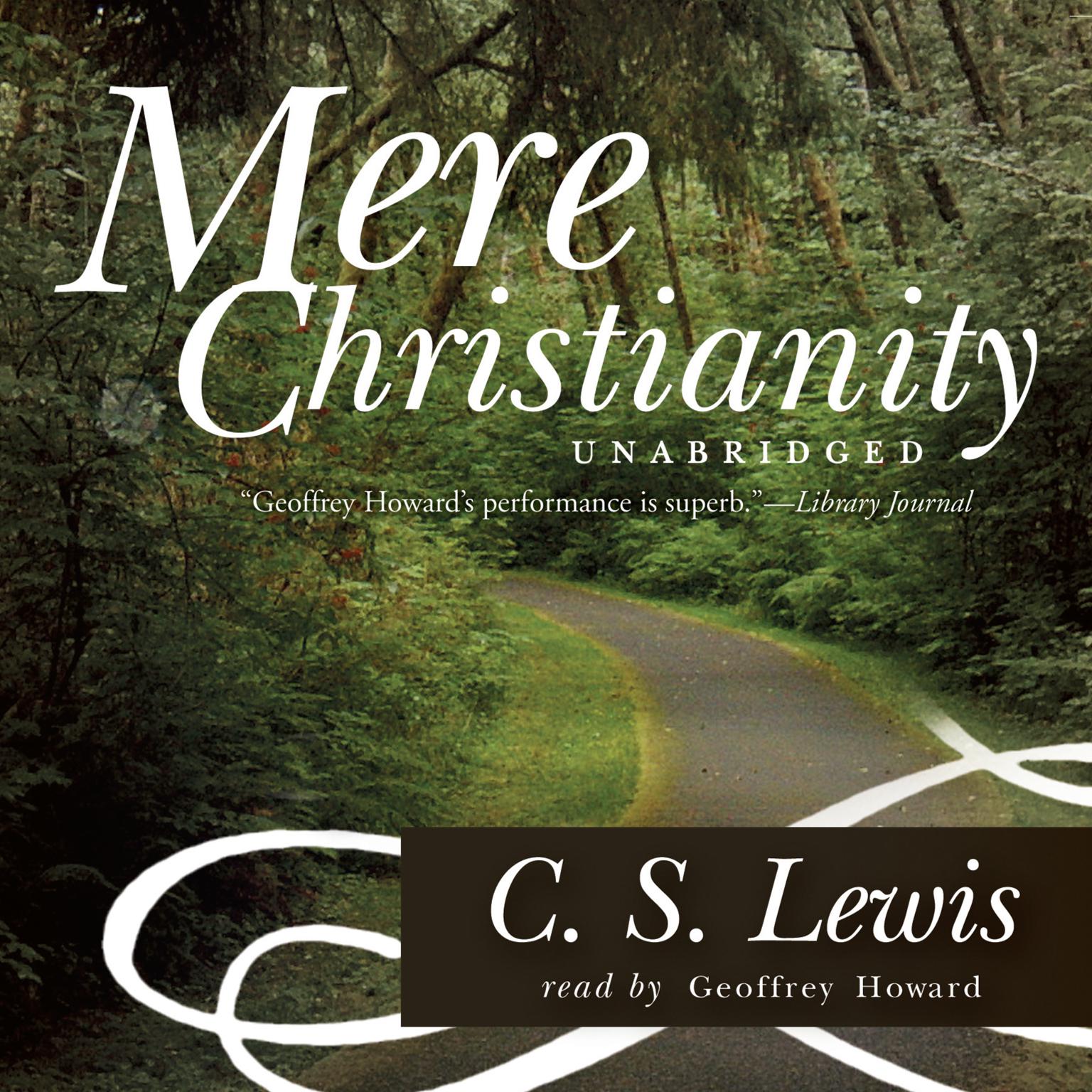
This
is the third of a series of posts on Mere
Christianity by C. S. Lewis.
You can find Post #1 here.
Post #2 here.
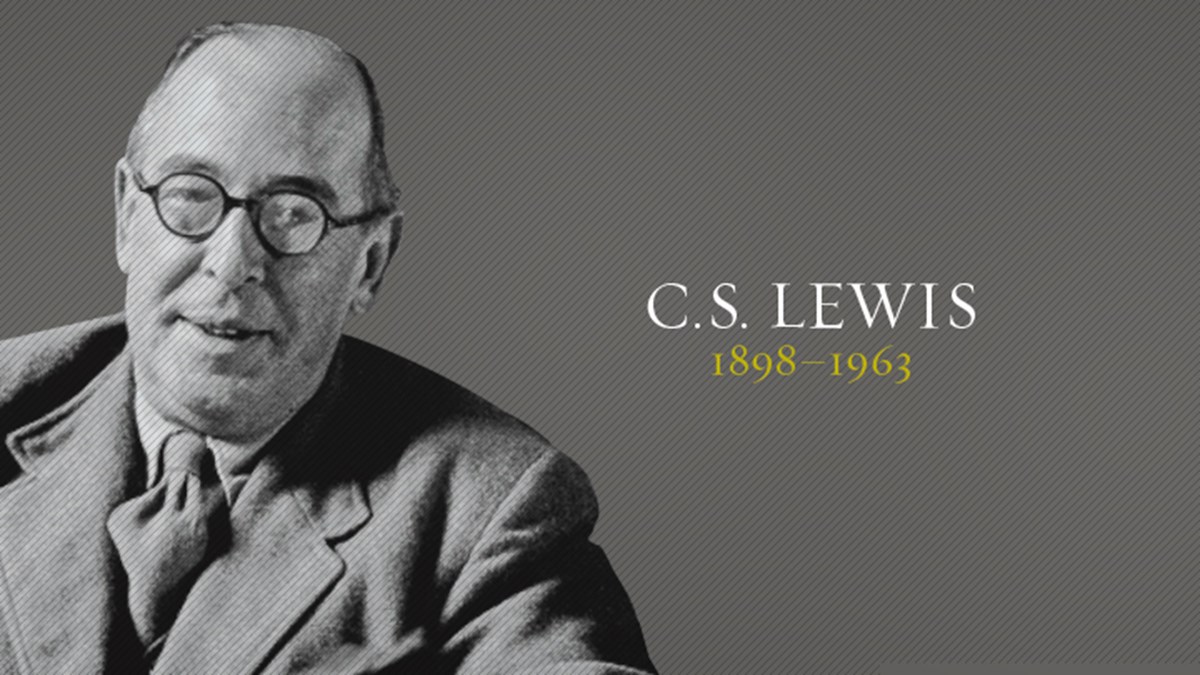
Book 2: What Christians Believ
Summary:
Chapter
1: The Rival Conceptions of God
Throughout humanity most groups of people have believed in a concept of the divine, but there are different conceptions of God. One major distinction is a God outside of creation (Christianity) from a God infused as part of creation (Pantheism).
Chapter
2: The Invasion
Given that there is evil in the world, we can conceptualize the world as a good world that has gone bad (Christianity) or a world where good and bad are of equal strength in opposition (Dualism).
Chapter
3: The Shocking Alternative
God created man with free will to choose either right or wrong, and the need to choose Him. He presented Himself to a people for us to know Him, and then provided a savior to show us how to choose right.
Chapter
4: The Perfect Penitent
This Savior is God Himself in human form, come to show us how to become one with God. This union with God requires man to repent of his disunity and graft onto God Himself.
Chapter
5: The Practical Conclusion
Jesus Christ showed us perfect repentance and sacrifice and by sharing in that sacrifice and humility we can share in His conquest of death.
###
My
Comment:
I found the breakdown of
the rival conceptions of God in Chapter 1 fascinating. If I may, Lewis breaks it down into a series
of contrasts, first between a materialist universe versus a spiritual endowed
universe and second between two types of spiritually endowed universe, a
pantheistic and a transcendent. Book 1
was all about contrasting a material atheist universe, so he doesn’t spend much
time here on it. Chapter 1 was mostly
contrasting a pantheistic universe with a transcendent God universe. He doesn’t use the word transcendent, though
I think that’s the right theological term.
He derives three contrasting distinctions between a pantheistic God (or
gods) and a transcendent God.
1. A pantheistic universe
is amoral while a transcendent God universe contains morality.
2. In a pantheistic
universe, God is the universe while in a transcendent God universe, the universe
is God’s creation.
3. In a pantheistic
universe, there is no distinction between good and evil while in a transcendent
God universe, there must exist a difference between good and evil.
That is fascinating. I think he is right to limit the notion of
God to either ontologically being the universe or ontologically being separated
from the universe. Can you have
something other than these two options?
I can’t conceptualize one.
I have to admit I’m not totally convinced of his derived notions of the pantheistic universe. I’ve never given it any thought but I’m not sure why a pantheistic universe would have to be amoral. Couldn’t you have a degeneration from an originally good pantheistic universe, a corruption of that origin?
Casey
Replied:
Hmm... interesting
question. Well for the pantheist if all is God and God is all then everything
has godliness in it. Or if we say God is the highest thing then the universe is
the highest thing which means everything is the highest thing which is the same
as saying nothing is the highest thing. In other words nothing has any special
value over anything else.
I'd suppose for the pantheist wrong is simply swimming against the current of the universe.
My
Reply to Casey:
Yeah, I just don't know enough about pantheism to pin anything down. So is the pantheistic god inside individual people too, and how would they understand an act such as murder? The fact that I can conceptualize alternatives that could show a corruption from the deity may mean that it's possible to have a belief in morality within pantheism. But frankly this is pure speculation on my part.
Casey
Replied:
I guess saying pantheism
is like saying monotheism. How one understands the One God leads one down very
different paths.
So some might say nature
is good. A mountain is good or more good than a skyscraper. So acting in a way
that's one with nature is good. But then why is a skyscraper not equivalent to
an anthill? We are nature too.
The other way to see it
is that man is at the top of the natural world. I think this would be in line
with ancient Greek thought. So what's good for man is what is good for all men.
Golden rule kind of thing.
But I can't see where
morality emerges really. In other words a pantheist would say murder is wrong
because how could you say otherwise but it doesn't emerge from their pantheism.
They just rig up a reason that shows it is consistent.
I'm having a hard time articulating but I hope that's somewhat clear. The thing is nobody says "I'm a pantheist." They're a particular thing that falls under that category.
My
Reply to Casey:
LOL. I've never met one. It's so far afield from our concept of the universe that we can't grasp it or articulate it. I don't think Lewis is an expert on it himself. Let's just say we would need more expert information, and it's not really relevant to this book. I do appreciate the fact that Lewis did articulate these two distinct possibilities. That in itself is a idea to have learned.
Casey
Commented:
The quote from this
section that sticks out for me is "But the Christian thinks any good he
does comes from the Christ-life inside him. He does not think God will love is
because we are good, but that God will make us good because He loves us"
Don't you think this sums up the biggest misconception non-Christians have about Christians? Our struggle is not to please God or win His favor but to get out of God's way so he can take us over.
My
Comment:
From chapter 2, that the Christianity is complicated resonated with me. Critics of Christianity (especially Muslims) point to the complexity of the Trinity and ask why the Christian concept of God so complicated? Both Jews and Muslims point to a simple concept of God and think that resonates with truth. The rebuttal is why would you think God is simple? Look at the universe and how complicated it is, Newtonian physics, electromagnetics, quantum mechanics, relativity, string theory. We consistently find more and more complexity. The fact of the complexity of the Trinity suggests to me that someone did not make it up. Who would have made up quantum mechanics from fiction? No one. You wouldn’t make up something that defies logic, but one can see how a simple Allah as God is made up.
My
Comment:
Also from Chapter 2, Lewis says: “Goodness is, so to speak, itself: badness is only spoiled goodness.” I’ve heard this concept subtlety differently. I’ve heard it stated that “evil is the absence of good.” The distinction sounds small but could be huge. Wikipedia has an article on the “Absence of Good.”
It quotes Augustine on
the subject from Book 7 of the Confessions:
“And it was made clear unto me that those things are good which yet are
corrupted, which, neither were they supremely good, nor unless they were good,
could be corrupted; because if supremely good, they were incorruptible, and if
not good at all, there was nothing in them to be corrupted.”
Augustine seems to be
saying that if something is good it can’t be corrupted. The Wikipedia article also cites other
Catholic theologians who hold that evil is the absence of good:
Through the influence of
Augustine, this doctrine influenced much of Catholic thought on the subject of
evil. For instance, Boethius famously proved, in Book III of his Consolation of
Philosophy, that "evil is nothing". The theologian Pseudo-Dionysius
the Areopagite also states that all being is good, in Chapter 4 of his work The
Divine Names. Further to the East, John of Damascus wrote in his Exact
Exposition of the Orthodox Faith (book 2, chapter 4) that "evil is nothing
else than absence of goodness, just as darkness also is absence of light. For
goodness is the light of the mind, and, similarly, evil is the darkness of the
mind." Thomas Aquinas concluded, in article 1 of question 5 of the First
Part of his Summa Theologiae, that "goodness and being are really the
same, and differ only in idea"
Is there a distinction between those writers and what Lewis presented in chapter 2? It seems to me that there is.
Casey
Replied:
Regarding goodness and
badness, I think the distinction is this: There is a hierarchy of goods. Food
is a good. it is right to pursue food. the absence of food or starvation is an
evil. That's the philosophical idea.
What Lewis is saying is that we go wrong when we pursue food as if it were at the top of the hierarchy. We aim wrongly. Become gluttons. We've spoiled the food so to speak.
My
Reply:
Yes, I understand that Casey. We can also think of gluttony as good and proper eating having lost some of the good. The good diminished and so it became disordered and to how much good diminished leads to the severity. I guess "spoiled goodness" can encapsulate the same concept. The diminished good has spoiled eating. Perhaps it's the same idea.
My
Comment:
So Book 2, Chapter 3 is
where C.S. Lewis gives us his famous options of choosing Christ’s nature:
either a lunatic, demon, or the Son of God!
A man who was merely a man and said the sort of things Jesus said would not be a great moral teacher. He would either be a lunatic—on a level with the man who says he is a poached egg—or else he would be the Devil of Hell. You must make your choice. Either this man was, and is, the Son of God: or else a madman or something worse. You can shut Him up for a fool, you can spit at Him and kill Him as a demon; or you can fall at His feet and call Him Lord and God. But let us not come with any patronising nonsense about His being a great human teacher. He has not left that open to us. He did not intend to.
That is spot on!
###
The central idea of Christianity is summarized nicely in Chapter 4:
We are told that Christ was killed for us, that His death has washed out our sins, and that by dying He disabled death itself. That is the formula. That is Christianity. That is what has to be believed. Any theories we build up as to how Christ’s death did all this are, in my view, quite secondary: mere plans or diagrams to be left alone if they do not help us, and, even if they do help us, not to be confused with the thing itself. All the same, some of these theories are worth looking at.
What Lewis is alluding is the theology of atonement, how does Christ’s death save us. He is right to say how it is really vague on how that works. As far as I know, the Catholic Church does not have a single, dogmatic belief on it. The Catholic Church offers several possibilities: Christ as sacrificial offering in the mode of a sin offering, Christus Victor (Christ the conqueror of death and victor over Satan), Christ as paying a ransom (Christ paid a debt for us that we couldn’t pay), and Christ as a model of vicarious love. These concepts are not mutually exclusive. They can all be true at the same time, and a Catholic is free to believe in any one or all three. I tend to believe all four.
What is interesting is that Lewis gives one option, and it’s the ransom theory. Why I find this interesting is that the Lutherans and Calvinists do have a dogmatic theory, and it’s the penal substitution theory. In the penal substitution theory Christ is punished by a wrathful God the Father in substitution for human sins. God redirects His wrath to Christ rather than on human beings. In other words God punishes the innocent and lets the guilty go free. The Catholic Church explicitly rejects this view (God cannot be unjust), and per the Council of Trent Catholics are not allowed to hold this view. You are free to hold any of the other options but not penal substitution. I find it interesting that Lewis, a Protestant (and not all types of Protestants subscribe to the penal substitution belief) promotes one of the Catholic options and not the most widely known Protestant option.
###
Quite
a few things captivated me from chapter 5.
I absolutely loved the point in the very first paragraph that the next
step in the evolution of man has occurred.
People often ask when the next step in evolution—the step to something beyond man—will happen. But on the Christian view, it has happened already. In Christ a new kind of man appeared: and the new kind of life which began in Him is to be put into us.
Our
mission in this life is to evolve to be Christ so that we can pass into the
next life in the state of this new man.
And then Lewis reduces how this is done into three things:
There are three things that spread the Christ life to us: baptism, belief, and that mysterious action which different Christians call by different names—Holy Communion, the Mass, the Lord’s Supper. At least, those are the three ordinary methods. I am not saying there may not be special cases where it is spread without one or more of these.
Another
interesting point from this chapter is how God transforms us. Through those three things, Christ-life is
instilled in us, and that Christ is working through us.
You can lose [the Christ-life] by neglect, or you can drive it away by committing suicide. You have to feed it and look after it: but always remember you are not making it, you are only keeping up a life you got from someone else. In the same way a Christian can lose the Christ-life which has been put into him, and he has to make efforts to keep it. But even the best Christian that ever lived is not acting on his own steam—he is only nourishing or protecting a life he could never have acquired by his own efforts.
And
so we get to the “practical consequence” of which Lewis names this
chapter.
And that has practical consequences. As long as the natural life is in your body, it will do a lot towards repairing that body. Cut it, and up to a point it will heal, as a dead body would not. A live body is not one that never gets hurt, but one that can to some extent repair itself. In the same way a Christian is not a man who never goes wrong, but a man who is enabled to repent and pick himself up and begin over again after each stumble—because the Christ-life is inside him, repairing him all the time, enabling him to repeat (in some degree) the kind of voluntary death which Christ Himself carried out.
And
there is so much more to this chapter.
He explains how we Christians make up the Body of Christ and how Christ
operates through Christians. One of the
most satisfying things (at least for me) Lewis touches on is the possible
eternal destiny of non-Christians.
Here is another thing that used to puzzle me. Is it not frightfully unfair that this new life should be confined to people who have heard of Christ and been able to believe in Him? But the truth is God has not told us what His arrangements about the other people are. We do know that no man can be saved except through Christ; we do not know that only those who know Him can be saved through Him. But in the meantime, if you are worried about the people outside, the most unreasonable thing you can do is to remain outside yourself. Christians are Christ’s body, the organism through which He works. Every addition to that body enables Him to do more. If you want to help those outside you must add your own little cell to the body of Christ who alone can help them. Cutting off a man’s fingers would be an odd way of getting him to do more work.
Again Lewis seems to go against the fundamentalist Protestant who restrict salvation not just Christians but certain types of Christians who are of the “elect.” I even see it in some of the ultra-traditionalist Catholics who insist that no one outside the Church can be saved. That is not actually the Catholic position.
###
Some notable quotes from Book 2.
From Chapter 1: The Rival Conceptions
of God
The first big division of humanity is into the majority, who believe in some kind of God or gods, and the minority who do not. On this point, Christianity lines up with the majority—lines up with ancient Greeks and Romans, modern savages, Stoics, Platonists, Hindus, Mohammedans, etc., against the modern Western European materialist.
⁂
Pantheists usually believe that God, so to speak, animates the universe as you animate your body: that the universe almost is God, so that if it did not exist He would not exist either, and anything you find in the universe is a part of God.
⁂
The Christian idea is quite different. They think God invented and made the universe—like a man making a picture or composing a tune. A painter is not a picture, and he does not die if his picture is destroyed.
⁂
From Chapter 2: The Invasion
Reality, in fact, is usually something you could not have guessed. That is one of the reasons I believe Christianity. It is a religion you could not have guessed.
⁂
What is the problem? A
universe that contains much that is obviously bad and apparently meaningless,
but containing creatures like ourselves who know that it is bad and
meaningless. There are only two views that face all the facts. One is the
Christian view that this is a good world that has gone wrong, but still retains
the memory of what it ought to have been. The other is the view called Dualism.
Dualism means the belief that there are two equal and independent powers at the
back of everything, one of them good and the other bad, and that this universe
is the battlefield in which they fight out an endless war. I personally think
that next to Christianity Dualism is the manliest and most sensible creed on
the market.
⁂
From Chapter 3: The Shocking
Alternative
Christians, then, believe
that an evil power has made himself for the present the Prince of this World.
And, of course, that raises problems. Is this state of affairs in accordance
with God’s will or not? If it is, He is a strange God, you will say: and if it
is not, how can anything happen contrary to the will of a being with absolute
power?
⁂
Then comes the real
shock. Among these Jews there suddenly turns up a man who goes about talking as
if He was God. He claims to forgive sins. He says He has always existed. He
says He is coming to judge the world at the end of time. Now let us get this
clear. Among Pantheists, like the Indians, anyone might say that he was a part
of God, or one with God: there would be nothing very odd about it. But this
man, since He was a Jew, could not mean that kind of God. God, in their
language, meant the Being outside the world Who had made it and was infinitely
different from anything else. And when you have grasped that, you will see that
what this man said was, quite simply, the most shocking thing that has ever
been uttered by human lips.
⁂
A man who was merely a man and said the sort of things Jesus said would not be a great moral teacher. He would either be a lunatic—on a level with the man who says he is a poached egg—or else he would be the Devil of Hell. You must make your choice. Either this man was, and is, the Son of God: or else a madman or something worse. You can shut Him up for a fool, you can spit at Him and kill Him as a demon; or you can fall at His feet and call Him Lord and God. But let us not come with any patronising nonsense about His being a great human teacher. He has not left that open to us. He did not intend to.
From Chapter 4: The Perfect Penitent
Now it seems to me obvious that He was neither a lunatic nor a fiend: and consequently, however strange or terrifying or unlikely it may seem, I have to accept the view that He was and is God. God has landed on this enemy-occupied world in human form.
⁂
We believe that the death of Christ is just that point in history at which something absolutely unimaginable from outside shows through into our own world. And if we cannot picture even the atoms of which our own world is built, of course we are not going to be able to picture this. Indeed, if we found that we could fully understand it, that very fact would show it was not what it professes to be—the inconceivable, the uncreated, the thing from beyond nature, striking down into nature like lightning.
⁂
Now what was the sort of “hole” man had got himself into? He had tried to set up on his own, to behave as if he belonged to himself. In other words, fallen man is not simply an imperfect creature who needs improvement: he is a rebel who must lay down his arms. Laying down your arms, surrendering, saying you are sorry, realising that you have been on the wrong track and getting ready to start life over again from the ground floor—that is the only way out of our “hole.” This process of surrender—this movement full speed astern—is what Christians call repentance.
⁂
But supposing God became a man—suppose our human nature which can suffer and die was amalgamated with God’s nature in one person—then that person could help us. He could surrender His will, and suffer and die, because He was man; and He could do it perfectly because He was God. You and I can go through this process only if God does it in us; but God can do it only if He becomes man.
From Chapter 5: The Practical
Conclusion
The perfect surrender and humiliation were undergone by Christ: perfect because He was God, surrender and humiliation because He was man. Now the Christian belief is that if we somehow share the humility and suffering of Christ we shall also share in His conquest of death and find a new life after we have died and in it become perfect, and perfectly happy, creatures. This means something much more than our trying to follow His teaching. People often ask when the next step in evolution—the step to something beyond man—will happen. But on the Christian view, it has happened already. In Christ a new kind of man appeared: and the new kind of life which began in Him is to be put into us.
⁂
And perhaps that explains one or two things. It explains why this new life is spread not only by purely mental acts like belief, but by bodily acts like baptism and Holy Communion. It is not merely the spreading of an idea; it is more like evolution—a biological or super-biological fact. There is no good trying to be more spiritual than God. God never meant man to be a purely spiritual creature. That is why He uses material things like bread and wine to put the new life into us.
⁂
To
conclude, I would like to end this post with a video clip of Lewis giving a
spiritual talk titled, “God Is Always With You!” This is actually an excerpt from his
broadcast of Mere Christianity.