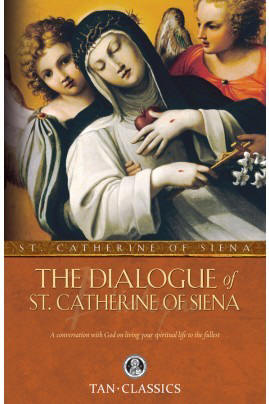
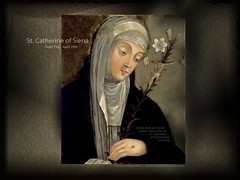
"Love follows knowledge."
"Beauty above all beauty!"
– St. Catherine of Siena

Showing posts with label God's Love. Show all posts

Sunday, May 31, 2026

Sunday Meditation: The Heart of God

On the first Sunday after Pentecost the Church celebrates the Solemnity of the Holy Trinity.  Each liturgical year has different readings, and for Year A the Gospel is the often quoted, “God so loved the world that he gave his only Son.”  Why is this passage read for the Feast of the Holy Trinity?  On the surface it only mentions two of the three persons of the Trinity.  God the Father and the Son are clearly stated.  But look carefully.  The Holy Spirit is a spiraling forth of the love between the Father and the Son.  That love is clearly there, and so then is the Holy Spirit.


Today’s Gospel:


God so loved the world that he gave his only Son,

so that everyone who believes in him might not perish

but might have eternal life.

For God did not send his Son into the world to condemn the world, but that the world might be saved through him.

Whoever believes in him will not be condemned,

but whoever does not believe has already been condemned,

because he has not believed in the name of the only Son of God.

~Jn:3:16-18


It is so hard to describe the Trinity.  I don’t think you can capture it with one image.  It takes a complex set of words to formulate the Christian notion of the Trinity.  This program, Catholic Saints & Feasts, does a noteworthy job of it in short of a seven minute video. 


Catholic Saints & Feasts:

God is the ultimate superlative adjective whose nature admits of no competing God. Christian monotheism stops us from approaching different gods for different things. We believe in one God with one will, one mind, and one plan for mankind.  The Holy Trinity, the God of Christianity, is complex. Clear language must be used and clear thinking deployed to grasp the Christian God.


The church believes that God is one in his nature and three in his persons.  This means that if you were in a pitch black room and sensed a presence nearby, your first question would be, "What is that? Is it the dog or the cat, my spouse or the wind?" If it were God in the darkness, he would answer the question of what by saying, "I am God." Satisfied that the presence was a person and not an animal or the wind, the next question would be, "Who are you?" And to that question, God would reply in three successive voices. I am the father. I am the son. I am the holy spirit. A nature is the source of operations, but a person does [music] them. A statue has eyes, but it is not its nature to see.  It is not man's nature to lay eggs or to breathe underwater, but it is the nature of a bird or a fish to do so. Our nature sets the parameters for what actions are possible for us. The daughter of a lion is a lioness and does what lions do. The son of a man is a man and does what men do. And the son of God is God and knows, loves, and acts as God does perfectly.  Our trinitarian supernova is both a unity and a plurality, both one and many at the same time. This means that God does not exist alone but in a community of love. God is not narcissistic admiring his own beauty and perfection.  Instead, the love of the father is directed toward the son for all eternity. And the love of the holy spirit animates and passes between the father and the son. The trinity's three persons do not share portions of the divine nature. They each possess it totally.


Our God, distinct in his persons, one in his essence and equal in his majesty, is solemnly invoked as the water spills on our heads at baptism and as the oil is traced on our palms at our anointing. God in all of his complexity and in all of his simplicity is with us always in this world and hopefully in the world to come. Most Holy Trinity, we look to your three persons as a model of true love, knowledge, and community life. Help all marriages and families strive for the high ideal of perfection you set before the world, no matter the discouragement resulting from our sins and imperfections. Amen.


Not only did the words make the Trinity understandable, but there were so many beautiful images to present how artists through the ages have tried to capture the Trinity.

For the pastoral homily I turn to Fr. Kris Janczak in his YouTube Channel, Good Soil.  I’m not sure if I’ve ever posted one of Fr. Janczak’s homilies before but I have listened to a few.  I think today he really highlights what is a pastoral understanding of this Solemnity.


Fr. Kris:

Even though we celebrate this feast day once a year, every single day we pray to the holy trinity. In the name of the Father and of the Son and of the Holy Spirit. May almighty God bless you, Father, Son, and the Holy Spirit. Glory be to the Father and to the Son and to the Holy Spirit. Through him and with him and in him, O God, almighty Father, in the unity of the Holy Spirit, all glory and honor is yours forever and ever.  Sound familiar? See, sometimes we automatically repeat these prayers, forgetting that when we say them, we honor one God who is in three persons.


There were much smarter and more educated people in the past who tried but failed. However, I am here to tell you that this is not about understanding but believing. That is not to grasp all this with our brains but with our hearts. And that makes all the difference. There were endless times during Jesus ministry when he repeated, "Believe, have faith, trust me." He didn't ask people to understand.  He asked them to believe. Today he is asking us to believe to believe that the father and the son and the holy spirit are one. One God. Yet what does this mean to us? What does it mean to believe in the Holy Trinity? Well, the holy trinity is united in the greatest love.  The one thing that connects these three, father, son, and the spirit is love. It is love that makes them one God.


If I could compare this truth to something, it would be to a marriage between a man and a woman.  During our Catholic wedding ceremony during the mass, before the end of mass, the priest blesses the couple using a unique and beautiful blessing.  It is called the Nuptial Blessing. It is a rather long blessing or prayer if you wish. But there is one sentence in there that says, "God, we pray that they husband and wife become one flesh, become one body." How can they become one flesh? How can they become connected? Only by a true love that they have for each other. They are still two separate people, but they are equal. And by their sacrificial love, they become one, one flesh, husband and wife. And nothing should separate that union.


If I could summarize it, through love, persons become one.


Sunday Meditation: God so loved the world that he gave his only Son.


We sang this at our parish today, “All Hail Adored Trinity.”


All hail, adored Trinity!

All hail, eternal Unity!

O God the Father, God the Son,

And God the Spirit, ever One.


Three persons praise we evermore,

One only God our hearts adore:

In thy sure mercy, ever kind,

May we your strong protection find.


The Trinity is at the heart of God.


Friday, November 15, 2024

Notable Quote: “Prayer is Already Love” by Madeleine Delbrêl

I have seen Madeleine Delbrêl’s name come up in the meditations in the Magnificat magazine before, but I was not aware who she was.  The Vatican declared her as Venerable, which means she might one day be a saint.  She is sometimes called the French Dorothy Day, and indeed there are quite a few parallels.  Delbrêl grew up in an agnostic home, and famously wrote an atheist manifesto at the age of seventeen and lived a Bohemian lifestyle.  When her also atheist boyfriend broke up with her to join the Dominican Order—that must have been some discussion—she started to re-evaluate her beliefs and ultimately had a religious experience and conversion.  I’m not going to get any more biographical but if you wish to learn more you can read from Catholic World Report, “Madeleine Delbrêl’s “writing reenchants everyday life….through Christ’s love” and from America, ”Who is MadeleineDelbrêl—the “French Dorothy Day” Pope Francis made venerable this weekend?”  


Now for her magnificent quote on prayer.


Praying is establishing normal relations between God and ourselves.  It is converting, returning our spirit, our heart, our will towards God who is constantly our Father and Creator.  Prayer is already love.  It asks for love; it receives love.  But because we are sinners it will always be at times heavy-going, painful, and disconcerting.  From one angle it is already love.  From another it is a kind of necessary but voluntary virtue.

          ~Venerable Madeleine Delbrêl


I have taken the quote from Magnificat’s October 2024 issue.  “Prayer is already love,” that knocks my socks off!  “It asks for love; it receives love.”  When I’m deeply praying, I am feeling that.  I know that’s true. 


One definitely needs to seek her books out.


Sunday, May 5, 2024

Sunday Meditation: The Joy of Love

On the sixth Sunday of Easter the Gospel continues with Jesus’s great discourse, and here He gets to the heart of Christianity.  Keep in mind that the second reading is from the First Letter of St. John, where the evangelist makes the astounding declaration that God is Love. 


Jesus said to his disciples:

"As the Father loves me, so I also love you.

Remain in my love.

If you keep my commandments, you will remain in my love,

just as I have kept my Father's commandments

and remain in his love.


"I have told you this so that my joy may be in you

and your joy might be complete.

This is my commandment: love one another as I love you.

No one has greater love than this,

to lay down one's life for one's friends.

You are my friends if you do what I command you.

I no longer call you slaves,

because a slave does not know what his master is doing.

I have called you friends,

because I have told you everything I have heard from my Father.

It was not you who chose me, but I who chose you

and appointed you to go and bear fruit that will remain,

so that whatever you ask the Father in my name he may give you.

This I command you: love one another."

~Jn 15:9-17

If God is love, then what kind of love is God?  In Greek philosophy there were five kinds of love: Eros, or romantic love; Philia, or love between friends; Storge love between family members; Philautia, or self-love; and Xenia or hospitality.  Jesus uses none of these terms.

What Jesus uses is Agape, and here is a definition from Wikipedia.  https://en.wikipedia.org/wiki/Agape

Agape (/ɑːˈɡɑːpeɪ, ˈɑːɡəˌpeɪ, ˈæɡə-/;[1] from Ancient Greek ἀγάπη (agápē)) is "the highest form of love, charity" and "the love of God for [human beings] and of [human beings] for God".[2] This is in contrast to philia, brotherly love, or philautia, self-love, as it embraces a profound sacrificial love that transcends and persists regardless of circumstance.

What it comes down to is charity to the point of sacrifice.  That is what Jesus calls us to do.  I’m going to offer two homilies.  First from Fr. Joshua Kibler, C.O. at the Pittsburgh Oratory.


Here also is an excellent homily from Bishop Barron.


That is spot on.  I have grown tired of all the people point out errors of dogma or of flawed morals and have no love.  They are nothing more than “noisy gongs” and “clanging cymbals” (1 Cor 13:1). 


Sunday Meditation: "I have told you this so that my joy may be in you

and your joy might be complete.”


Today’s John Michael Talbot song appropriate for the reading, I Found My Beloved.


If you didn’t catch the closing lyrics, here they are:


So I have abandoned

All I ever sought to be

And in dying

My spirit has been released


Wednesday, December 6, 2023

Notable Quote: “Love Supplies” by St. Albert the Great

St. Albert the Great (1200-1280) was a Dominican friar and Bishop, famously known for being the teacher of St. Thomas Aquinas.  Born in Germany, he was one of the first to learn of Aristotle’s writings after western Europe had lost them.  He became a translator and teacher of Aristotle, which was very influential and consequential to St. Thomas.  Like Aristotle he was fascinated with the natural world, and a good deal of his writings might be classified as some of the earliest scientific writings in the west since the collapse of Rome.  His Wikipedia entry says the following:  


Albert was a scientist, philosopher, astrologer, theologian, spiritual writer, ecumenist, and diplomat. Under the auspices of Humbert of Romans, Albert molded the curriculum of studies for all Dominican students, introduced Aristotle to the classroom and probed the work of Neoplatonists, such as Plotinus. Indeed, it was the thirty years of work done by Aquinas and himself that allowed for the inclusion of Aristotelian study in the curriculum of Dominican schools.

His learning and his writing spanned great range of subject and depth of knowledge.  Not only is he a canonized saint, but a Doctor of the Church.  Humbert of Romans, mentioned above, who was the fifth Master General of the Dominican Order said the following of his fellow friar, Albertus Magnus.   


This celebrated man, Brother Albert, seems like the tree of life planted in the center of terrestrial paradise, bearing incessantly the fruits of honor grace.  In outward appearance he was of noble stature, and endowed with great physical strength.  His body was well proportioned, and perfectly fitted for all the fatigues of God’s service.  From the day when he entered the Order he walked courageously in the path of justice, by the observance of its Rule and the mortification of his flesh, seeking thus by a long martyrdom to triumph over the solicitations of the enemy.  He frequently passed the nights in prayer, and his sublime contemplation offered himself a holocaust on the altar of the heart.  In the morning he celebrated the Divine Mysteries with the greatest purity of soul and the most ardent love.  He was incessantly occupied either in read, writing, dictating, preaching, or hearing confessions.  He never allowed his mind to repose where there was question of divine works.  And as wisdom cannot enter into an evil soul, nor dwell in a body that is enslaved to sin, he ever preserved the purity of his conscience, that he might read with fruit the Holy Scriptures, which he passionately loved.  Consumed with the fire of charity, he labored for the salvation of his neighbor with untold success.  The example of his life, his angelic piety, his stupendous learning, and his indefatigable zeal in uprooting error procured him an incredible influence, not only in Germany, but in almost every part of the earth.  (quoted from Albert the Great: The First Universal Doctor by Fr. Thomas Schwertner, O.P., Mediatrix Press, 2018, p. 279-80)

What a tribute.  The stature of Albert the Great is immense and should have a wider dissemination.  November 15 the was his feast day, and the devotional magazine, Magnificat, quoted a passage for meditation from one of St. Albert’s writings, On Union with God.  I’m going to take one paragraph from that meditation as a notable quote.


All that we need so far described, all that is necessary for salvation, can find in love alone its highest, completest, most beneficent perfection.  Love supplies all that is wanting for our salvation; it contains abundantly every good thing and lacks not even the presence of the supreme object of our desires.  It is by love alone that we turn to God, are transformed into his likeness, and are united to him, so that we become one spirit with him and receive by and from him all our happiness: here [on earth] in grace, hereafter in glory.  Love can find no rest until it reposes in the full and perfect possession of the Beloved.  It is by the path of love, which is charity, that God draws closer to man, and man to God.  But where love is not found God cannot dwell.  If, then, we possess love we possess God, for God is love (1 Jn 4:8).

He sounds a lot like St. Augustine of Hippo in his Confessions.  Well, great minds think alike.  St. Albert lived a long life, actually outliving his most famous student, St. Thomas (1225-1274).  Can you imagine those three men in heaven discussing the beatific vision?  How I would love to be at their feet to overhear.

St. Albert the Great, pray for us.


Friday, August 13, 2021

Faith Filled Friday: The Bonds of Love by St. Catherine of Siena

I happened to be glancing at the Office of Readings from the Liturgy of the hours this past Sunday and came across this gem of a passage from my beloved St. Catherine of Siena.  I typically pray the Morning (Lauds) and Evening Prayers (Vespers) of the Divine Office but on the Feast Day of St. Dominic (August 8th) I decided to glance at the Office of Readings to see if there was something by the founder of the Order of Preachers.  There wasn’t but I was blessed with this passage from St. Catherine’s Dialogue.  Here Catherine is speaking to God the Father about her desire for all souls to be saved.


From a dialogue On Divine Providence by Saint Catherine of Siena, virgin

The bonds of love


My sweet Lord, look with mercy upon your people and especially upon the mystical body of your Church. Greater glory is given to your name for pardoning a multitude of your creatures than if I alone were pardoned for my great sins against your majesty. It would be no consolation for me to enjoy your life if your holy people stood in death. For I see that sin darkens the life of your bride the Church—my sin and the sins of others.


It is a special grace I ask for, this pardon for the creatures you have made in your image and likeness. When you created man, you were moved by love to make him in your own image. Surely only love could so dignify your creatures. But I know very well that man lost the dignity you gave him; he deserved to lose it, since he had committed sin. Moved by love and wishing to reconcile the human race to yourself, you gave us your only-begotten Son. He became our mediator and our justice by taking on all our injustice and sin out of obedience to your will, eternal Father, just as you willed that he take on our human nature. What an immeasurably profound love! Your Son went down from the heights of his divinity to the depths of our humanity. Can anyone’s heart remain closed and hardened after this?


We image your divinity, but you image our humanity in that union of the two which you have worked in a man. You have veiled the Godhead in a cloud, in the clay of our humanity. Only your love could so dignify the flesh of Adam. And so by reason of this immeasurable love I beg, with all the strength of my soul, that you freely extend your mercy to all your lowly creatures.

She implores God that though our bond of love—we to Him, He to us—to have mercy on all of us.  He made us in His image because of love. He reconciled us through a man because of love.  Human flesh itself contains the cloud of divinity which is love, and which we are blessed with immeasurable dignity.  And so after reminding God of this bond of love, she begs “with all the strength of [her] soul” to extend mercy to all.  What a great desire and line of reasoning. 


Friday, March 27, 2020

Faith Filled Friday: Love is Had Only by Loving by St. Catherine of Siena

This is from a letter of St. Catherine’s as quoted in the March 2020 edition of Magnificat.  It is taken from Susan Noffke’s translation, Volume 1, but I do not know who St. Catherine is addressing.  The bold are my editorial addition to highlight key sentences.

In the name of Jesus Christ crucified and of gentle Mary.  I Caterina, servant and slave of the servants of Jesus Christ, am writing to you in his precious blood.  I long to see you clothed in the garment of blazing charity…But you will say to me, “Since I have no such love, and without it I am powerless, how can I get it?”  I will tell you.  Love is had only by loving.  If you want love, you must begin by loving.  Once you want it, you must open the eye of your understanding to see where and how love is to be found.  And you will find it within your very self.  How?  When you recognize your nothingness.  And once you see that of yourself you do not even exist, you will recognize and appreciate that God is the source of your existence and of every favor above and beyond that existence—God’s graces and gifts both temporal and spiritual.  So everything we have, everything we discover within ourselves, is indeed the gift of God’s boundless goodness and charity. 

This discovery and sight of our Creator’s tremendous goodness to us makes us rise to such growth of love and desire that we count as nothing ourselves and the world and all the world’s pleasures.  This doesn’t surprise me, because this is love’s way, that when we see ourselves loved we love in return.  And because we love, we would rather die than offend the one we love.  We are fed in love’s fire because we realize how loved we are when we see that we ourselves were the soil and the rock that held the standard of the most holy cross.  For you know very well that neither earth nor rock could have held the cross, nor could cross or nails have held God’s Only Begotten Son, had not love held him fast.  So God’s love for our souls was the rock and the nails that held him fast.


There’s an intentional circularity I think in her thought here.  We exist only because of God’s love, and through that love, love dwells in us, and that love for us is what made God sacrifice His only son, and that sacrifice on Calvary could exist because love was in us to love Him back.  In engineering we call this a feedback loop.  God loves us, we love God, and love magnifies, not diminishes.