"Love follows knowledge."
"Beauty above all beauty!"
– St. Catherine of Siena

Showing posts with label Feminism. Show all posts

Friday, January 14, 2022

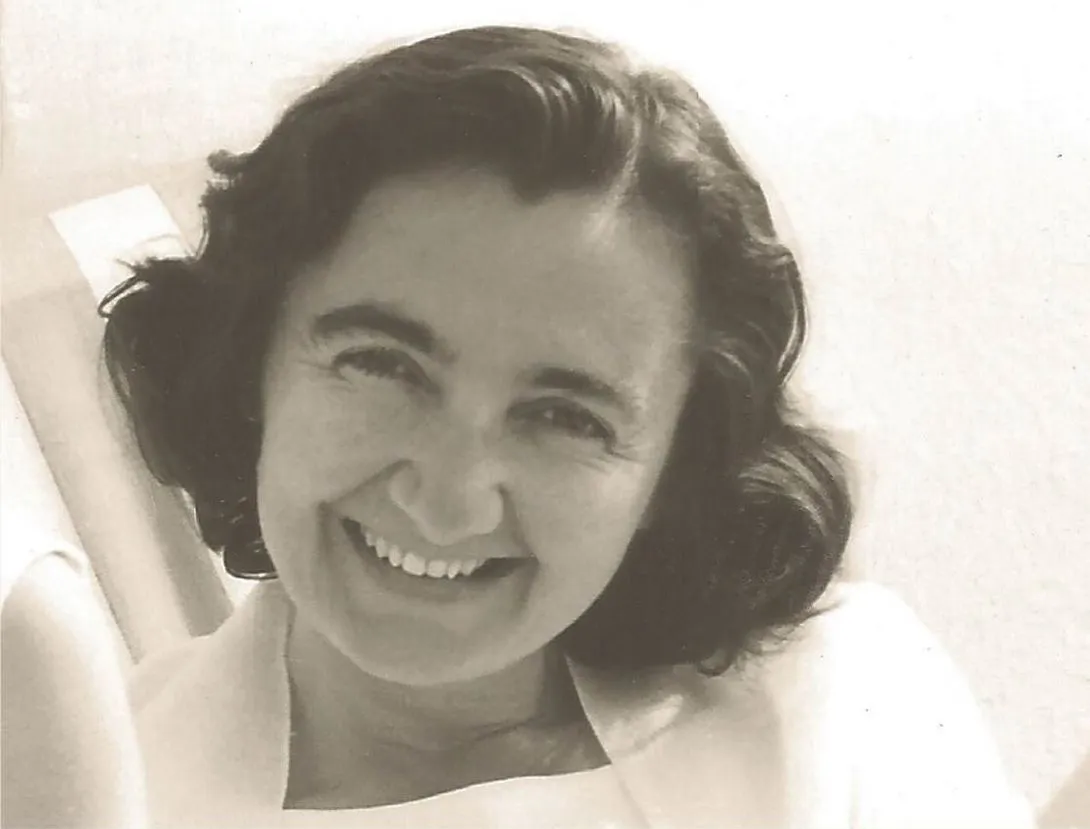
In Memorial, Alice von Hildebrand

I don’t know how many people who come here know of Alice von Hildebrand.  She’s probably better known as the wife of the more famous 20th century philosopher, Dietrich von Hildebrand, but she was a philosopher in her own right.  She taught at Hunter College in New York City where in an age of relativism and deconstructionism insisted on the philosophic principle that objective truth existed.  She passed away today.  This is a fine article from Aleteia, “Alice von Hildebrand, Catholic philosopher and critic of moral relativism, dies at 98.”  Here is how they describe her relationship within the left wing academy:

She found it difficult to get a teaching position, even at Catholic colleges, which told her at the time that they did not hire women to teach philosophy. Finally hired at Hunter College, part of the City University of New York, she became the first woman to teach philosophy there. She also found herself in a secular world for the first time. Her dedication to objective truth raised the hackles of professors who were materialistic, liberal and communist, she said.

I went to a couple of City University of NY colleges and I know from personal experience they were filled with left wing radicals.  And still are!  Here from the article is what I would say is at the heart of her philosophy:


“The crucial question in teaching philosophy is whether there is an objective truth and whether man’s mind can find it,” she said in a 1996 interview with Catholic New York, the newspaper of the Archdiocese of New York. “Relativism and subjectivism inevitably block the way to God, who is truth itself. … The moment you recognize that there is an objective truth, independent of man’s mind, you look for it, and, if you’re honest, you find God.”

Here she describes the seed that perhaps shaped her heart for life.  Jourdain was her maiden name:


Growing up in Belgium, French was Alice Jourdain’s mother tongue. She wrote that at the age of 11, she discovered Blaise Pascal while taking a course on 17th-century French literature. His Pensées overwhelmed her, especially “with the beauty of his style. [He] awakened in me a profound philosophical interest. I started memorizing many of his most beautiful thoughts, and I recall reciting them over and over again as I walked along the Belgian seashore where my parents had a summer home.”


I assume she considered herself a conservative.
  When I searched on line for some of her notable quotes, they all have a conservative bent.  Here are a few.


A woman by her very nature is maternal -- for every woman, whether ... married or unmarried, is called upon to be a biological, psychological or spiritual mother -- she knows intuitively that to give, to nurture, to care for others, to suffer with and for them -- for maternity implies suffering -- is infinitely more valuable in God's sight than to conquer nations and fly to the moon.

By the way, Alice did not have any children herself.  But I wonder if this next quote is an amplification of the above:


Do you think that the Lord gave them to me for a decoration?

LOL, I’m guessing at what she’s referring to.  But I love this quote:


The diabolical work that has taken place since the legalization of abortion is that it has destroyed, in those tragic women who have allowed their child to be murdered, their sense for the sacredness of maternity. Abortion not only murders the innocent; it spiritually murders women... the wound created in their souls is so great that only God's grace can heal it. The very soul of a woman is meant to be maternal.

She held such a high value to femininity that it led to this quote:


By living up to their calling, women will succeed in guaranteeing a proper recognition of the unique value of femininity and its crucial mission in the world.

And she had a fighting spirit in defending that femininity, as in this challenge to feminists:


Unwittingly, the feminists acknowledge the superiority of the male sex by wishing to become like men.

And finally one more on her faith and her perspective of the transitory nature of this life:


One thing is certain: When the time has come, nothing which is man-made will subsist. One day, all human accomplishments will be reduced to a pile of ashes. But every single child to whom a has given birth will live forever, for he has been given an immortal soul made to God's image and likeness.

May her immortal soul be now with God and her beloved husband.   Eternal rest grant unto this good woman, O Lord, and let perpetual light shine upon her. May she rest in peace. Amen


EDIT (Jan 16th, 2022 at 11:45 PM:

If anyone is still interested, this is one of Alice's last interviews.  

Monday, June 15, 2020

Oroonoko, or The Royal Slave by Aphra Behn, Part 3


This is the third and final post in a series on the novel, Oronooko or the Royal Slave  by Aphra Behn. 
You can find Part 1 here.  
Part 2 is here.  


Continuing with the various themes…

Kingship
The importance and nature of kingship is I think the central theme of the novel.  It is around this that Behn’s vision creates both character and plot.  The grand nature of Oronooko, his military prowess, his commanding presence, his exploits, his moral code, his intelligence and mien, and his reduction to a slave from which breaks free, if not in life than in death, shows a man with divine properties.  It is his innate, instinctive qualities that make him for Behn a natural born king.  He is a prince, so genetically he is endowed by Providence.  The narrator’s first reaction upon seeing him is one of encountering the sublime:

[Oronooko] was adorned with a native beauty so transcending all those of his gloomy race, that he struck an awe and reverence, even in those that not his quality; as he did in me, who beheld him with a surprise and wonder, when afterwards he arrived in our world.  (79)

And from his countenance, the narrator intuits:

He came into the room, and addressed himself to me, and some other women, with the best grace in the world. He was pretty tall, but of a shape the most exact that can be fancied; the most famous statuary could not form the figure of a man more admirably turned from head to foot… The whole proportion and air of his face was so noble, and exactly formed, that, bating his colour, there could be nothing in nature more beautiful, agreeable and handsome. There was no one grace wanting, that bears the standard of true beauty… Nor did the perfections of his mind come short of those of his person; for his discourse was admirable upon almost any subject; and whoever had heard him speak, would have been convinced of their errors, that all fine wit is confined to the white men, especially to those of Christendom; and would have confessed that Oroonoko was as capable even of reigning well, and of governing as wisely, had as great a soul, as politic maxims, and was as sensible of power as any prince civilized in the most refined schools of humanity and learning, or the most illustrious courts.  (80-81)

What we see here is that Oronooko is naturally aristocratic, divinely blessed with all the gifts of a great warrior and philosopher king. 

One should note the immediate history of Kingship in England as Behn, sympathetic to the monarchist, would have seen it.  Henry VIII by his succession of wives, infidelities, and dissolving of the bond with Rome and becoming the head of his own church was seen as a dissolute King.  It is quite possible that Oronooko’s grandfather, as King of the fictional African country, with his temper tantrums and concubines, was an allusion to Henry VIII.  England then passed through a national religious crises and a crises in succession, which culminated in the installment of Charles I as King.  Charles had a high monarchist view of the Kingship—that is as divine right—and conflicted terribly with Parliament.  That was the central question of 17th century England, where do the powers of the King end and what should be the powers of the parliament.  In addition, the English cultural landscape was still undergoing a crises in religious constitution.  While Catholicism had been alienated and diminished, a struggle had ensued between the Puritans (named so because they wished to purify the English Church of Catholicism) and the High Anglicans who maintained liturgy and many Catholic practices.  The conflict between Parliament and the Monarchy was not on the surface a religious conflict, but religious conflicts of the day intertwined with the political.  Charles I was a High Anglican, but had married a Catholic.  Parliament, led by Oliver Cromwell, was Puritan.  In short, a civil war developed, Charles I was executed, Cromwell ruled until his death, upon which Charles II, son of Charles I, restored the monarchy.  Charles II was also High Anglican, but he too had married a Catholic, and his sympathies may have been with Catholicism even more so than his father.  Charles II died in 1685 (converting to Catholicism on his death bed, by the way), replaced his brother James II.  James II was an outright Catholic and within three years in 1688, the year Oronooko was written, was deposed for a Protestant King.

It is within this context that Behn writes of kingship in Oronooko or The Royal Slave.  That is the full title of the work.  Calling Oronooko “royal” is a loaded word in her historical context.  It certainly calls up a political position, and given Oronooko is a natural, divinely graced king, it is clear that Behn is supporting the royalist position.  If Oronooko’s grandfather alludes to Henry VIII, Orinooko, as gallant warrior king, philosopher, and gentleman courtier alludes to Henry V.  Undoubtedly, Behn had either read or seen Shakespeare’s play on the great monarch.  Recall that Henry V is valiant in battle, noble in spirit, and gentle with Catherine of Valois.  Oronooko is an African Henry V.

Christ-Figure
Behn uses several allusions to either move the plot and characterize Oronooko within the story.  I have mentioned Achilles and Henry V, and there is also Othello in the killing of his wife, but the last sections Oronooko clearly becomes a Christ-figure.  When he gathers the slaves into a group, we see them abandon him, betray, and once captured scourged by his own fellow slaves.

But they were no sooner arrived at the place, where all the slaves receive their punishments of whipping, but they laid hands on Caesar and Tuscan, faint with heat and toil; and, surprising them, bound them to two several stakes, and whipped them in a most deplorable and inhumane manner, rending the very flesh from their bones; especially Caesar, who was not perceived to make any moan, or to alter his face, only to roll his eyes on the faithless governor, and those he believed guilty, with fierceness and indignation. And, to complete his rage, he saw every one of those slaves, who, but a few days before, adored him as something more than mortal, now had a whip to give him some lashes, while he strove not to break his fetters, though, if he had, it were impossible. But he pronounced a woe and revenge from his eyes, that darted fire, that ’twas at once both awful and terrible to behold. (131)

Oronooko does survive this and once returned to the safety of Parham plantation, plots his revenge.  The Governor, not satisfied with Oronooko surviving that ordeal, demands he be handed over from Trefry.  One could see this as a sort of Pilate and the Sanhedrin haggling over Christ’s fate.  Once recovered, Oronooko kills Imoinda (with her consent) and decides to make a last stand to seek his vengeance.  At this last stand, cornered and angry, he cuts flesh from his neck and throws it at the band who are after him.  This is the scene where some have suggested an allusion to the Eucharist:

[Oronooko] held up his knife in a menacing posture, ‘Look ye, ye faithless crew,’ said he, ‘’ tis not life I seek, nor am I afraid of dying’, and, at that word, cut a piece of flesh from his own throat, and threw it at them, ‘yet still I would live if I could, till I had perfected my revenge. But oh! it cannot be. I feel life gliding from my eyes and heart, and, if I make not haste, I shall yet fall a victim to the shameful whip.’ At that, he ripped up his own belly, and took his bowels and pulled them out, with what strength he could, while some, on their knees imploring, besought him to hold his hand. (138)

Even this is not the end of incredible Oronooko.  He is taken back and surgically patched together.  While recovering, Major Bannister at the command of the governor forcibly took Oronooko, tied him to a stake to be burned.  Stoically he stood fixed at the stake. 

He had learned to take tobacco, and when he was assured he should die, he desired they would give him a pipe in his mouth, ready lighted, which they did, and the executioner came, and first cut off his members, and threw them into the fire. After that, with an ill-favoured knife, they cut his ears, and his nose, and burned them; he still smoked on, as if nothing had touched him. Then they hacked off one of his arms, and still he bore up, and held his pipe. But at the cutting off the other arm, his head sunk, and his pipe dropped, and he gave up the ghost, without a groan, or a reproach. (139-140)

Subsequently his body is quartered and each quarter sent to a plantation for spectacle.  “Thus died this great man, worthy of a better fate,” concludes Aphra Behn.

Oronooko stoically smoking a pipe while tied to a stake, fire smoking around him, and being hacked body part by body part has to be one of the most incredible images in all of literature.  Oronooko or The Royal Slave may be early for Gothic fiction, but, my Lord, that has to be among the most imaginative gothic endings I can recall.  It’s either brilliant or absurd. 

Clearly we can see the rudiments of a Christ passion narrative in the elements of Oronooko’s demise.  Oroonoko is betrayed, abandoned, scourged, and affixed to a pole until dead.  While there are some intervening events in the Oronooko narrative that are not in the passion narrative, the association is clear.  But for what end?  Actually that Oronooko is framed as a Christ-figure makes sense.  If the central theme of the novel is the indignity of enslaving a divinely graced king, then what better to associate with him with the Kingly Servant of Jesus Christ?  I think Behn in the novel is upholding the sacred nature of kingship, which reflects on the political crises in her day. 

Behn creates Oronnoko as a natural king, and that implies a certain divine authority granted to him.  Think of it as Christ the King authorizes a representative on earth.  The Church is Christ's representative on the theological and moral realm; the monarchy is Christ's representative in the administrative realm.  While it not being a sacrament, the installation of a king did (it may even still) involve a religious ceremony.  Kings of England are usually installed by the Bishop of Canterbury, even under Anglicanism.  I don't know how far back it goes, but Charlemagne had the Pope crown him as Holy Roman Emperor.  This practice of anointing kings goes back to Kings Saul and David and the other Kings of the Old Testament.  Shakespeare in Richard II dramatizes the sin of regicide, even when the king is reprehensible.  Behn makes Oronooko out to be a Christ-figure because she sees him as a divine king. What about the suggestion of the Eucharistic parallel to Oronooko cutting his flesh off for others that my friend Mary Sue asked me to evaluate?  Frankly I don’t see it.  But I could be wrong but let me say why I could be wrong first and then get to why I don’t think so.  The reason I could be wrong—and wrong being that Behn meant it as a Eucharistic parallel—is that the words ceremony and sacrifice do run through the novel.  What is the relationship between ceremony and sacrifice in Oronooko’s experiences?  Frankly I can’t piece anything together.  I just don’t see any ceremonies and what are deemed sacrifices seem like mere deaths.  Either I’m missing the importance of ceremony in the novel, or Behn intended it and didn’t communicate it well or she didn’t intend it at all. 

As to why I don’t think there is a Eucharistic parallel, there are several reasons.  First, the bare descriptive facts don’t suggest it: “and, at that word, cut a piece of flesh from his own throat, and threw it at them.”  No one eats his flesh.  He doesn’t offer it to be eaten.  Christ offers His body and blood to His apostles and believers.  Oronooko is throwing it at the mob that wishes to kill him.  Second, Christ doesn’t cut flesh off His body.  He transforms bread and wine into His body and blood.  Even the blood spilled at the crucifixion, no one drinks it.  Oronooko is physically cutting flesh off his neck in what seems like a moment of frustration.  (And what an odd place to cut flesh off one’s body.)  If Behn is creating an analogue, it strikes me as a very poor one.  Third, the Eucharist is a spiritual union with Christ and therefore God.  Jesus establishes the theological grounds in the Gospel of John, chapter six.  He says:

“I am the bread of life.  Your ancestors ate the manna in the desert, but they died; this is the bread that comes down from heaven so that one may eat it and not die.  I am the living bread that came down from heaven; whoever eats this bread will live forever; and the bread that I will give is my flesh for the life of the world.” 
The Jews quarreled among themselves, saying, “How can this man give us [his] flesh to eat?”
Jesus said to them, “Amen, amen, I say to you, unless you eat the flesh of the Son of Man and drink his blood, you do not have life within you.  Whoever eats my flesh and drinks my blood has eternal life, and I will raise him on the last day.  For my flesh is true food, and my blood is true drink.  Whoever eats my flesh and drinks my blood remains in me and I in him.  Just as the living Father sent me and I have life because of the Father, so also the one who feeds on me will have life because of me.  (John 6; 48-57)

There is no implication that feeding off of Oronooko’s flesh has any theological or spiritual implications.  There is nothing in Oronooko’s act, physically or spiritually, that would suggest an analogue to the Eucharist.

I may be off here, but I don’t see the differences between Christians as being an important theme in the novel.  Yes, the hypocrisy of Christians is dramatized, but it’s a general Christianity that is identified.  I don’t see anything that would distinguish between Puritan, High Anglican, or Roman Catholic.  I couldn’t find any citation to identify Behn’s Christian denomination.  My guess—pure speculation—is she’s High Anglican like Charles II, and perhaps she’s sympathetic to the Catholicism, like the King.  I don’t, however, see any Catholicism in the novel.

It’s also possible, perhaps even likely, that the ending is not meant to allude to a crucifixion at all.  England had developed a rather barbarous execution technique for the worst criminals, hanged, drawn, and quartered, going back from Behn’s day at least four hundred years.  Per the Wikipedia entry, the sufferer would be “hanged (almost to the point of death), emasculated, disembowelled, beheaded, and quartered (chopped into four pieces).”  Oronooko is not hanged and he only disembowels himself, but he is emasculated, hacked to pieces, and quartered for spectacle.  I think this cultural meme is on Behn’s mind, though hanged, drawn, and quartered is in itself a form of crucifixion.  The practice was famously used against hidden Roman Catholics in Elizabethan and Civil War times.  Perhaps some sort of allusion is meant. 

###

Final Goodreads Review:
This fascinating little novel was written in 1688, a generation before Daniel DeFoe, who is typically considered the first modern novelist in English, and written by a woman no less.  The novel follows Oronooko, an African prince who is tricked into slavery by so called “Christians.”  At its core, the novel is about the nature of kingship, which was the big political issue of its day, the Restoration period of English history, but in doing so Aphra Behn creates a narrative of the indignities of slavery, a social position well ahead of her time.  Her woman’s voice and perspective—the tale is told in the first person of Behn as a character in the story—also gives dignity to the female characters.  The prose is dated to Behn’s time, but it is good and rhythmic prose, but some may not enjoy reading that.  Partly woman’s amatory novel, partly heroic action story, and partly slave narrative, the novel doesn’t always seem to know what it should be, but I do think the story holds together.  The story holds together because Behn creates an indelibly memorable character in Oroonoko, who at times recalls Henry V, at times recalls Othello, and other times a Christ-figure.  This novel should be more widely known than it is, at a minimum for its due placement in the history of the novel. 

I initially gave the novel three stars with a statement of three and a half stars if I could be more precise.  My mind still sees it as three and a half stars but I give it four stars as I lean to the higher side.  On reflection the novel has grown on me.


Wednesday, June 3, 2020

Oroonoko, or The Royal Slave by Aphra Behn, Part 2


This is the second in a series on the novel, Oronooko or the Royal Slave  by Aphra Behn. 
You can find Part 1 here.  

So what to make of this strange story?  There are several themes that have been proposed for the novel.  Let me give my opinion of each.

Anti-Colonialism

Well, certainly there is colonialism.  The English and the Dutch fight over this New World territory, set up plantations, and administer a ruling government.  The slaves however that work the plantations are imported from Africa, and the natives for the most part seem to be left alone.  At the beginning of the novel Behn sets up what projects to be a much more prominent theme when she characterizes the natives as innocent in a prelapsarian way. 

They are extreme modest and bashful, very shy, and nice of being touched. And though they are all thus naked, if one lives for ever among them, there is not to be seen an indecent action, or glance; and being continually used to see one another so unadorned, so like our first parents before the Fall, it seems as if they had no wishes; there being nothing to heighten curiosity, but all you can see, you see at once, and every moment see; and where there is no novelty, there can be no curiosity. (75)

But then later when Oronooko accompanies a group into the heart of the country, there is great fear of the Indians.

About this time we were in many mortal fears, about some disputes the English had with the Indians, so that we could scarce trust ourselves, without great numbers, to go to any Indian towns, or place, where they abode, for fear they should fall upon us, as they did immediately after my coming away, and that it was in the possession of the Dutch, who used them not so civilly as the English, so that they cut in pieces all they could take, getting into houses, and hanging up the mother, and all her children about her, and cut a footman, I left behind me, all in joints, and nailed him to trees. (120)

I guess one could say the natives were provoked but it certainly not the docile and innocent humanity of pre-fallen world.  But the natives are at least sincere and perhaps serve as a contrast to the white Christians who lie and cheat repeatedly.  I can’t quite tell if the author intended the theme of anti-colonialism.  It just isn’t developed.  I think the natives serve as a contrast to the Europeans.

Contemporary Politics of Behn’s England

I think we can all agree that Behn supports the monarchy, and I’ll develop that theme further down, but is there an intraparty political dynamic going on in the novel?  The two major characters who are in the power structure of the territory, Governor William Byam and the King’s plantation manager, John Treffry, are both Royalist.  One is Oronooko’s biggest supporter and the other is Oronooko’s biggest nemesis.  The only white character in the power structure who is not a Royalist is George Marten, a brother to a Cromwell supporter, and, though not a fully developed character, seems to be sympathetic to Oronooko.  If there is any political implication from the tension between Byam and Trefrey, it is lost on me.  There isn’t any outright hostility, just diverging interest in Oronooko. 

International Dynamics between England and Dutch
There is an English/Dutch rivalry that is undercurrent in the novel, but I can’t discern any noticeable bias.  It probably reflects the historical circumstances of her time, but I don’t see a theme.  Perhaps the fact that she, an English woman, doesn’t favor England by default is a statement in itself, but I don’t sense an international rivalry between the nations as a theme.  Christian Europeans are depicted as liars and cheats and brutal slave owners in contrast to the Surinamese and the Africans, but I think both were and are mentioned in the novel as slave owners too.  While the English and Dutch are rivals in both African and South American colonialism, this rivalry isn’t a developed theme.


Anti-Slavery
Slavery is definitely a theme of the novel, and Behn doesn’t lend any support to this heinous practice.  I don’t know if she stands out on this issue for her day, but she is certainly valiant.  I assume slavery was a commonly held notion in her day, but she seems to go against that trend.  Now that is not to say there aren’t complexities that complicate the theme.  Oronooko and his countrymen enslave, hold slaves, and sell slaves.  Oronooko himself participates in the practice.  But when Oronooko is enslaved he reaches what I think is an enlightenment on the practice.  First in being enslaved, he feels the degradation of what the practice entails.

First it is quite extraordinary that Behn creates such a noble and gallant character in Oronooko in contrast to the scheming and treacherous whites.  And Behn does this twice in that she creates an almost equally noble female in Imoinda to complement Oronooko. 

[Oronooko] became, at the age of seventeen, one of the most expert captains, and bravest soldiers, that ever saw the field of Mars; so that he was adored as the wonder of all that world, and the darling of the soldiers. Besides, he was adorned with a native beauty so transcending all those of his gloomy race, that he struck an awe and reverence, even in those that knew not his quality; as he did in me, who beheld him with surprise and wonder,when afterwards he arrived in our world. (79)

There are some I think that characterize Oronooko as a “noble savage,” but frankly I think that is a mischaracterization.  A noble savage implies a certain innocence that has been preserved from civilized corruption.  I think Behn characterizes the natives of Surinam as noble savages, but the Africans of Coramantien have a functioning government with rivalries, courts, wars, hereditary monarchies.  In addition, Oronooko is educated in European culture.

’Twas then, afflicted as Oroonoko was, that he was proclaimed general in the old man’s place; and then it was, at the finishing of that war, which had continued for two years, that the prince came to court; where he had hardly been a month together, from the time of his fifth year to that of seventeen; and ’twas amazing to imagine where it was he learned so much humanity; or, to give his accomplishments a juster name, where ’twas he got that real greatness of soul, those refined notions of true honour, that absolute generosity, and that softness that was capable of the highest passions of love and gallantry, whose objects were almost continually fighting men, or those mangled, or dead; who heard no sounds, but those of war and groans. Some part of it we may attribute to the care of a Frenchman of wit and learning, who finding it turn to very good account to be a sort of royal tutor to this young Black, and perceiving him very ready, apt, and quick of apprehension, took a great pleasure to teach him morals, language and science, and was for it extremely beloved and valued by him. Another reason was, he loved, when he came from war, to see all the English gentlemen that traded thither; and did not only learn their language, but that of the Spaniards also, with whom he traded afterwards for slaves. (79)

This is not a noble savage but a man larger than life.  The narrator goes on to speak from her firsthand experience with him.

I have often seen and conversed with this great man, and been a witness to many of his mighty actions; and do assure my reader, the most illustrious courts could not have produced a braver man, both for greatness of courage and mind, a judgment more solid, a wit more quick, and a conversation more sweet and diverting. He knew almost as much as if he had read much: he had heard of, and admired the Romans; he had heard of the late Civil Wars in England, and the deplorable death of our great monarch, and would discourse of it with all the sense, and abhorrence of the injustice imaginable. He had an extreme good and graceful mien, and all the civility of a well-bred great man. He had nothing of barbarity in his nature, but in all points addressed himself as if his education had been in some European court. (80)

Second, while experiencing the life of a slave, Oronooko grows, so that freedom is seen as part of the nobility of every man.  Here is his impassioned speech to his fellow slaves to stir them to rebellion.

Caesar, having singled out these men from the women and children, made a harangue to them of the miseries, and ignominies of slavery; counting up all their toils and sufferings, under such loads, burdens, and drudgeries, as were fitter for beasts than men; senseless brutes, than human souls. He told them it was not for days, months, or years, but for eternity; there was no end to be of their misfortunes. They suffered not like men who might find a glory, and fortitude in oppression, but like dogs that loved the whip and bell, 61 and fawned the more they were beaten. That they had lost the divine quality of men (126)

Though Oronooko is no Christian, he frames this in Christian terms, telling them “they had lost the divine quality of men.”  And further, he characterizes the brutality of enslaving as that of savages. 

‘And why,’ said he, ‘my dear friends and fellow sufferers, should we be slaves to an unknown people? Have they vanquished us nobly in fight? Have they won us in honourable battle? And are we, by the chance of war, become their slaves? This would not anger a noble heart, this would not animate a soldier’s soul. No, but we are bought and sold like apes, or monkeys, to be the sport of women, fools and cowards, and the support of rogues, runagades, 62 that have abandoned their own countries, for raping, murders, thefts and villainies. Do you not hear every day how they upbraid each other with infamy of life, below the wildest savages, and shall we render obedience to such a degenerate race, who have no one human virtue left, to distinguish them from the vilest creatures? Will you, I say, suffer the lash from such hands?’ (126)

Behn has turned the convention on its head.  The African is the noble and grand character, while the Europeans are the degenerate savages.

Feminism
The feminism theme is not as pronounced as one would expect if it were a dominant theme.  On the one hand, none of the female characters have any power or even rebel against male authority.  Yes, Imoinda is cast as a powerful woman, but even she is below in stature to Oronooko, who she complements, and she never displays any will to break free from the men who dominate her life.  She acquiesces to become the African King’s concubine, though her wishes are clearly against it.  She is sold off as a slave when the King no longer has use for her, and accepts her death at Oronooko’s hand for fear to be left alive without his protection.  As powerful a woman as she is cast, we never see her power in either rebellion or to work her way out of a situation.  In the end, she is a minor character.

In what way then is there a feminist theme?  Two thoughts.  I think the respect Oronooko pays to Imoinda is an honest respect paid to a woman without objectifying her in her gender.  Here’s how Behn describes Oronooko’s courtship:

She was touched with what he said, and returned it all in such answers as went to his very heart, all in such answers as went to his very heart, with a pleasure unknown before. Nor did he use those obligations ill that love had done him; but turned all his happy moments to the best advantage; and as he knew no vice, his flame aimed at nothing but honour, if such a distinction may be made in love; and especially in that country, where men take to themselves as many as they can maintain; and where the only crime and sin with woman is to turn her off, to abandon her to want, shame and misery. Such ill morals are only practised in Christian countries, where they prefer the bare name of religion; and, without virtue or morality, think that’s sufficient. But Oroonoko was none of those professors; but as he had right notions of honour, so he made her such propositions as were not only and barely such; but, contrary to the custom of his country… (82-83)

He was not only honorable by the standards of his country, but superior to those of “Christian countries.”  This is certainly an understanding of a woman’s needs that only a female writer can conceptualize. 

Also in support of a feminist theme is the strong voice of the female narrator.  It is the narrator who is Oronooko’s equal as he provides intimate details of his life.  Here is how she speaks of a moment after such a private conversation:

Before I parted that day with him, I got, with much ado, a promise from him to rest yet a little longer with patience, and wait the coming of the Lord Governor, who was every day expected on our shore. He assured me he would, and this promise he desired me to know was given perfectly in complaisance to me, in whom he had an entire confidence. (115)

Notice the language: “I got…a promise from him,” “he assured me,” “this promise he desired me to know.”  Despite her being a woman, she is at least an equal in the relationship.  And it is only in her, a woman, Oronooko places his confidence, not any of the men, not even Trefry.  It is the female narrator who is Trefry’s superior in obtaining Oronooko’s trust, as he tells her of his life story. 

While women’s issues are not part of the thematic structure, certainly through the narrator’s voice and through Oronooko’s respect for the women he encounters and develops a relationship with, the novel shows great dignity for women. 


Saturday, July 27, 2013

Literature In The News: Jane Austen to be Placed on a Ten Pound Note

Here's a new feature for my blog, Literature In The News. There have been a couple of instances I've come across where a news article on something literary would make a good blog post but didn't write it. So here's the first.

 
First off, let me give a hat tip to Tom McDonald who blogs at God and the Machine for bringing this news bit to my attention. 


The first Lit in the News post will highlight Jane Austen replacing Charles Darwin on a British Ten Pound Note.  From The Guardian:   

Jane Austen has been confirmed as the next face of the £10 note in a victory for campaigners demanding female representation – aside from the Queen – on the country's cash.

Sir Mervyn King, the Bank's former governor, had let slip to MPs that the author of Pride and Prejudice was "waiting in the wings" as a potential candidate to feature on a banknote, and his successor, Mark Carney, confirmed on Wednesday that she would feature, probably from 2017.

"Jane Austen certainly merits a place in the select group of historical figures to appear on our banknotes. Her novels have an enduring and universal appeal and she is recognised as one of the greatest writers in English literature," the new governor said.

He also announced that the Bank would carry out a review of the process for selecting the historical figures who appear on banknotes, to ensure that a diverse range of figures is represented.

"We believe that our notes should celebrate the full diversity of great British historical figures and their contributions in a wide range of fields. The Bank is committed to that objective, and we want people to have confidence in our commitment to diversity. That is why I am today announcing a review of the selection process for future banknote characters," Carney said. The review will be overseen by the chief cashier Chris Salmon, whose signature appears on banknotes.


I should say the feminists did agitate for a woman to make it onto the currency, and frankly they have a point.  If cultural figures make it onto the currency, then there is little reason women should not be represented.  I have to say I’m pleased they picked Jane Austen.   I love her work.  I’ve read three of her six novels, Pride and Prejudice, Emma,  and Persuasion.   I know Pride and Prejudice gets most of the notoriety, but I think Emma is her greatest work.  I guess I shouldn’t speak for the ones I haven’t read.  I do intend to read them, and it’s just about time for another.  I’ll have to put one on my 2014 list.  Any suggestions of the ones I haven’t read?

In that Guardian article the feminists admitted that Austen was not their personal choice, but they did ultimately try to put Austen in the best feminist light possible.  The truth is that Austen is not really a feminist by modern standards.  While her female characters are bright, energetic, and independent, they seek personal fulfillment in the context of traditional marriage and male/female roles.  And while her novels only tangentially address religion, religious and traditional morality color many of the decisions the characters make.  She was the daughter of an Anglican priest after all.  Despite the claims of some critics, there is nothing deconstructive or subversive about Austen.  I don’t see Austen in sympathy with modern day feminism at all.

Tom McDonald, who I gave the hat tip above, speculated what if we in the United States decided to put a writer on our money.  He suggested Washington Irving.  You can read through the comments, but it seems the most popular choice was Mark Twain.  I thought of Twain too, but ultimately I went with Walt Whitman.  I think Whitman is more universal American than Twain.  But that might be my opinion.  If you had to choose, which American author would you put on our twenty dollar bill?