"Love follows knowledge."
"Beauty above all beauty!"
– St. Catherine of Siena

Showing posts with label My Little King. Show all posts

Thursday, April 27, 2023

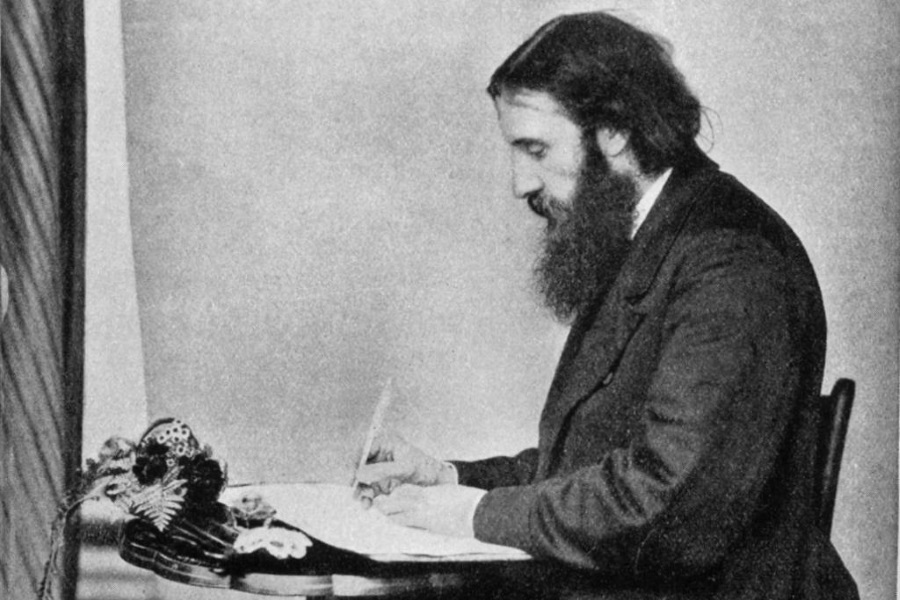
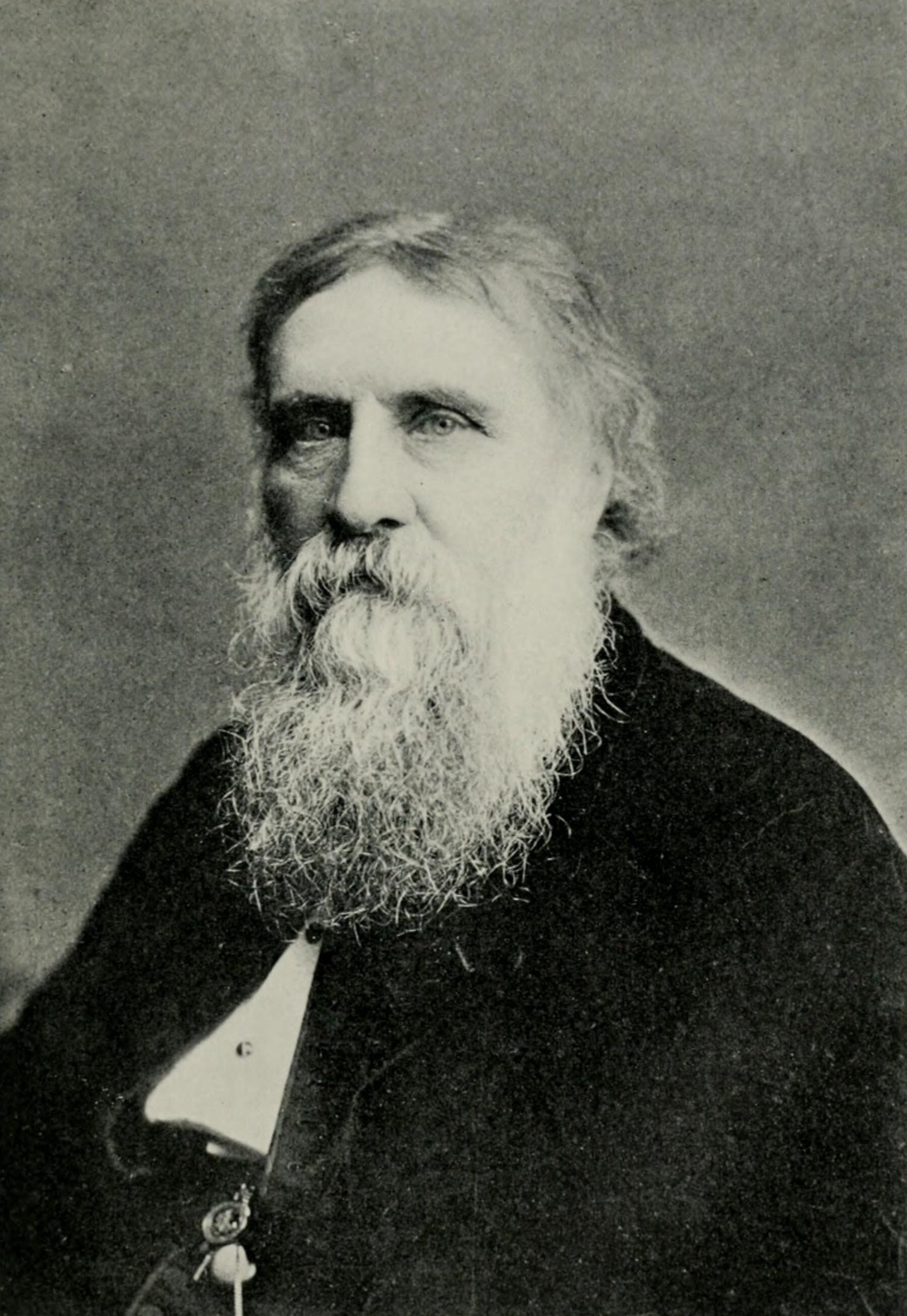
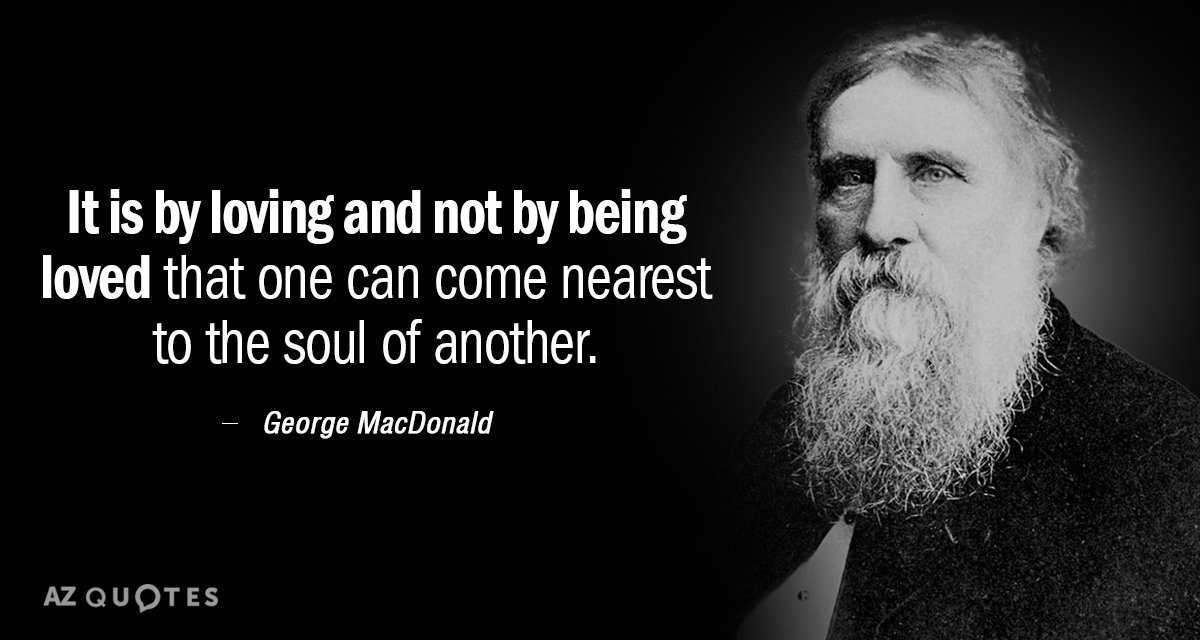
George MacDonald: My Little King, Part 3, “My Uncle Peter”

This is the third and final post of George MacDonald’s collection of Christmas poems and short stories under the book title, My Little King.

You can read Post #1, on the poem, “A Christmas Carol,” here.  

You can read Post #2 on the short story, “The Gifts of the Child Christ,”  here.


This post will focus on the short story, “My Uncle Peter.”  You can read the story online at The Literature Network, here.  It is part of a volume of MacDonald’s stories interweaved in a frame story called Adela Cathcart.  “My Uncle Peter” is in chapters 14 and 15.  You can skip the frame narrative.  The story in my My Little King collection does not include it.


Summary

A story told from the first person of Charlie about his Uncle Peter, a man born on Christmas Day and whose wish is that he die on Christmas Day.  Peter is a good hearted person, a lifelong bachelor, who does surprising acts of charity for his family and anyone who he comes across that needs it.  He takes great joy in these acts.  There are two inflection points in Uncle Peter’s life.  The first is when he inherits a large sum of money, and then the acts of charity go up exponentially.  The second is when he comes across a little beggar girl, perhaps a gypsy, who is without parents but lives with an abusive aunt.  Uncle Peter takes in the girl as an adopted child and raises her to be a noble woman. 

###

So what’s unique about “My Uncle Peter?”  Is a story about a totally good man interesting?  For the most part I enjoyed it, though I do have one little criticism, and I’m not sure if it’s a valid criticism.  I’ll get to later.  First let’s try to pick out the highlights and ask some questions.

What do we know about Peter Belper?  We do catch his last name at one point, but it doesn’t seem to have any significance.  The most significant feature about Peter—according to him, I think—is that he was born on Christmas Day, and he wishes to die on Christmas Day.  We know, alas, that from an offhand remark by Charlie, who is telling the story in retrospect, that he does not die on Christmas Day.  In a way, this seems odd since so many other events take place on Christmas Day, that a reader might think there is some significance to not dying on that day on the calendar.  We know that Peter is a life-long bachelor, though there was a hint of a previous love that has saddened his life.  We know Peter is a religious man, going to church regularly and has definite opinions on theology.  We know he has no attachment to money, giving it away in what I would call radical charity.  I think the oddest characteristic of Peter is his exuberant boyishness, almost as if he never grew up, but he has and he does live the life of an adult.  It’s his joy that gets expressed as boyishness.  Here’s when he takes Charlie for the first time to a toy store to choose his Christmas present.


I wandered about, staring like a distracted ghost at the 'wealth of Ormus and of Ind,' displayed about me. Uncle Peter followed me with perfect patience; nay, I believe, with a delight that equalled my perplexity, for, every now and then when I looked round to him with a silent appeal for sympathy in the distressing dilemma into which he had thrown me, I found him rubbing his hands and spiritually chuckling over his victim. Nor would he volunteer the least assistance to save me from the dire consequences of too much liberty. … As soon as, in despair of choosing well, I had made a desperate plunge at decision, my Uncle Peter, as if to forestall any supervention of repentance, began buying like a maniac, giving me everything that took his fancy or mine, till we and our toys nearly filled the cab which he called to take us home.

Peter gets a sort of thrill in watching Charlie caught in indecision, and then buys “like a maniac” anyway, even after he picked one.  When Peter receives the letter with his inheritance, he jumps on the table to dance, and when the table collapses he continues dancing “amidst its ruins like Nero in blazing Rome.”  With his wealth he went around the neighborhood giving out presents, presents of money hidden in rather mundane objects, rubbing his hands in glee as he dropped them off.  When one woman catches him and questions him, and he responds naively and she accepts it, Peter again does a strange dance.


She kept the parcel and shut the door. When I looked round I saw my uncle going through a regular series of convolutions, corresponding exactly to the bodily contortions he must have executed at school every time he received a course of what they call _palmies_ in Scotland; if, indeed, Uncle Peter was ever even suspected of improper behaviour at school. It consisted first of a dance, then a double-up; then another dance, then another double-up, and so on.

Again he goes into a weird gyration.  The radical charity is strange enough, but these boyish body movements seem rather perverse.  But there is no harm or evil or baseness to his perversion.  It’s as if it’s a perversion of goodness.  If this had been a modernist story by a “sophisticated” writer, there is a very good chance that the “strangeness” of the central character would have been toward some baseness.  But not in this story.

###

Madeline Commented:

I wonder how many of us have a bachelor uncle like Peter. He is a paradigm of a blessed vocation to the single life.

My Reply:

I have a bachelor uncle who eventually got married in his fifties. I wouldn't say he was a saint, but he was (and still is) incredibly handy at fixing anything. If you had, and still today, a repair problem all you had to do is call. Come to think of it, he was the one who taught me how to drive. 

###

So what is the significance of so many events in the story occurring on Christmas Day?  Is it just a way for MacDonald to make the story a Christmas story?  Could he have written almost the same story without the events occurring on Christmas Day?  

First let’s list the Christmas occurrences.  Peter is born on Christmas Day.  He wants to die on Christmas Day.  He takes Charlie Christmas shopping on Christmas Eve.  He finds out he has inherited a fortune on Christmas Eve.  He goes out and gives presents on Christmas Day.  He dresses up and plays with his nephew and nieces on Christmas.  He finds the little girl who he will adopt on Christmas Day, The little girl’s name is “Little Christmas,” and she too was born on Christmas Day.  When Chrissy was thirteen and got abducted a month before Christmas, she found her way back to Peter on Christmas Day.  Perhaps there are more Christmas instances, but that is quite enough.  It makes the point. 

Are these just forced Christmas occurrences?  Perhaps some but I think it emphasizes the magic around Uncle Peter’s giving spirit.   But it does even more than that.  Christmas is linked narratively to Peter.  This is how he explains his radical generosity.

And to hear him defend any of his extravagancies, it would appear that he considered himself especially privileged in that respect. 'Ah, my dear,' he would say to my mother when she expostulated with him on making some present far beyond the small means he at that time possessed, 'ah, my dear, you see I was born on Christmas-day.'

His birth connection to Christmas is so often repeated that it becomes a leitmotif: 'for wasn't I born on Christmas-day?' concluded Uncle Peter for the twentieth time that forenoon.”  And Charlie pays him a high compliment to his generosity.


"One Christmas-eve we had been occupied, as usual, with the presents of the following Christmas-day, and--will you believe it?--in the same lodgings, too, for my uncle was a thorough Tory in his hatred of change. Indeed, although two years had passed, and he had had the whole of his property at his disposal since the legal term of one year, he still continued to draw his salary of L100 of Messrs. Buff and Codgers. One Christmas-eve, I say, I was helping him to make up parcels, when, from a sudden impulse, I said to him-- 


"'How good you are, uncle!' 


"'Ha! ha! ha!' laughed he; 'that's the best joke of all. Good, my boy! Ha! ha! ha! Why, Charlie, you don't fancy I care one atom for all these people, do you? I do it all to please myself. Ha! ha! ha! It's the cheapest pleasure at the money, considering the quality, that I know. That _is_ a joke. Good, indeed! Ha! ha! ha!'

But we know that he does care about these people.  It’s a façade.  “How good you are, uncle!”  Uncle Peter is fundamentally a good man, and his goodness is linked to Christmas in name and birth, but ultimately it’s linked to Christ who was born on Christmas Day.

And so I think we can surmise why Uncle Peter does not die on Christmas Day.  The clue is in the last sentence of the story.


From that time till now that she is my wife, Chrissy has had no more such adventures; and if Uncle Peter did not die on Christmas-day, it did not matter much, for Christmas-day makes all the days of the year as sacred as itself."

While yes Charlie says that all the days of the year are sacred because of Christmas, it is Christmas Day that provides the light of Christ’s love, a love that shines in Peter.  Peter cannot on die on Christmas because goodness stems from it.

###

To wrap this up, I think we need to look at the character of Chrissy and the conclusion of the story.  My summary above I think was a little lacking on the conclusion of the story.  The story doesn’t end with Uncle Peter adopting the little street urchin.  She is transformed in time with love, faith, and decent living.  But then an incident happens when she is thirteen where she is kidnapped and dragged into her old life.  A month later she makes her way back home, returning on Christmas Day, in similar ragged and dirty clothes she was first found on the street.  After bathing and returning to her clean clothes, she narrates the entire month long ordeal.

She tells how she was abducted in the street by what might have been her reprobate aunt and her spouse, how she was stripped of her clothing and given rags, locked in a room until they came back intoxicated and incapacitated.  She was given very little food and when the adults no longer had use for her, brought her to the country home of a Mrs. Sprinx where she was indentured into servitude.  While there she made friends with a little boy named Eddie who eventually gives her a key to escape.  Even after Chrissy finishes this narrative, she convinces Charlie to take a ride out to Mrs. Sprinx to visit Eddie.

That’s a rather strange ending.  What started as a story about a whimsical and loving Uncle Peter morphed into a story about the adventures of his adopted daughter.  The concluding adventures of Chrissy take up a third or more of the story.  What does it have to do with Uncle Peter?  He pretty much disappears from the story.  Now I’m not opposed to stories that evolve from their initial situation, but the evolved story needs I think two elements for it to work.  (1) The parts of the stories need to be linked structurally and thematically. (2) The concluding narrative should be more interesting than the initial, or it will come across as flat. 

So what’s the thematic link?  Chrissy is not as idiosyncratic a character as Uncle Peter, but she is as devout as Peter.  Peter’s goodness has instilled goodness into Chrissy.  Notice Chrissy’s faith when Charlie asks what she did when locked in the aunt’s room.


"'There was only one thing to be done, Charlie. I think that is a foolish question to ask.' 


"'Well, what _did_ you do, Chrissy?' 


"'Said my prayers, Charlie.' 


"'And then?' 


"'Said them again.' 


"'And nothing else?' 


"'Yes; I tried to get out of the window, but that was of no use; for I could not open it. And it was one story high at least.' 


"'And what did you do next?' 


"'Said over all my hymns.' 


"'And then--what _did_ you do next?' 


"'Why do you ask me so many times?' 


"'Because I want to know.' 


"'Well, I will tell you.--I left my prayers alone; and I began at the beginning, and I told God the whole story, as if He had known nothing about it, from the very beginning when Uncle Peter found me on the crossing, down to the minute when I was talking there to Him in the dark.'

Prayers, hymns, conversing with God, she has put her trust in God.  Isn’t that what is at the heart of Uncle Peter’s radical charity, a relying on God to have enough so that one can share with others?  When she could not escape and gives into to tears, she comes to another insight into Providence.


I was nearly frozen to death, and there was all the long night to bear yet. How I got through it, I cannot tell. It did go away. Perhaps God destroyed some of it for me. But when the light began to come through the window, and show me all the filth of the place, the man and the woman lying on the floor, the woman with her head cut and covered with blood, I began to feel that the darkness had been my friend. I felt this yet more when I saw the state of my own dress, which I had forgotten in the dark. I felt as if I had done some shameful thing, and wanted to follow the darkness, and hide in the skirts of it. It was an old gown of some woollen stuff, but it was impossible to tell what, it was so dirty and worn. I was ashamed that even those drunken creatures should wake and see me in it. But the light would come, and it came and came, until at last it waked them up, and the first words were so dreadful! They quarrelled and swore at each other and at me, until I almost thought there couldn't be a God who would let that go on so, and never stop it. But I suppose He wants them to stop, and doesn't care to stop it Himself, for He could easily do that of course, if He liked.'

So thematically Chrissy’s abduction is a return to the abyss from which she started but now she has her faith to guide her.  She sees God’s hand at work.  The fighting couple will stop when God wants them to stop.  Things will work out for her.  Later, a human connection is made with Eddie and that leads to her freedom.

Chrissy’s adventure is her second struggle through hell, but now she has been graced with love and faith through Uncle Peter’s nurturing.  She’s a complete human being, possessed of faith and reason.  The second narrative is linked to the first both structurally, by motif—it happens near and on Christmas Day—and thematically.

But is the second narrative more interesting than the first?  That perhaps is a personal opinion.  For me, I would say no.  Though Chrissy is a lovely child, and we wonder how she will escape, she is not as interesting as Uncle Peter, who is a marvelous creation.  The suspense is even dissipated since we know she returns to narrate the events.  I loved this story, but I think the ending could have been better thought out.  What did you think?

###

Madeline Commented:

Maybe more detail could have been given about how Chrissy and the narrator ended up husband and wife. Was Uncle Peter a matchmaker too?

My Reply:

LoL, that didn’t bother me. They were about the same age and in frequent close contact. Seemed a natural.


Did you like the story?

Madeline’s Reply:

Yes, I did like it. It reminded me of Dickens, and his little innocent urchins and obnoxiously sanguine characters. Even the kidnappers could have come out of Dickens. I liked best Chrissy's telling of how she endured and escaped by praying through it. Dickens wouldn't have written that. The characters, except the kidnappers, of course, were sympathetic and consistently likeable. And I liked the emphasis on two characters born on Christmas, and how that led to Uncle Peter adopting her. I agree with you about the ending. Maybe he had a deadline and rushed to finish it?

My Reply:

Oh, you are so right. This owes a bit to Dickens, though I think the prose style is somewhat different.

Kerstin Commented:

The ending was a little abrupt. With Christmas stories the ending has to convey the Christian Hope we mark at this time of year, otherwise they fall flat.


Thursday, March 9, 2023

George MacDonald: My Little King, Part 2

This is the second post of George MacDonald’s collect of Christmas poems and short stories under the book title, My Little King.

You can read Post #1, on the poem, “A Christmas Carol,” here.  


This post will focus on the short story, “The Gifts of the Child Christ.”  You can read the story online at The Literature Network, here.  Or you can hear it being read through Librovox.


The following summary was put together in collaboration with my co-moderator at the Catholic Thought Book Club, Kerstin.

Summary


Mr. Greatorex is a widower of about 30 and remarried. The couple is unhappy. He has a daughter from his previous marriage, Sophy, who is neglected by the couple and most of the household. Even her nurse, Alice, is pre-occupied with the prospect of inheriting a large sum of money.


Sophy is a pious child. Their preacher has a recurring theme in his Sunday sermons, “the chastening of the Lord”, which makes a deep impression on her innocent mind. She wishes that the Lord would chasten her.


Mrs. Greatorex is pregnant and on Christmas night she gives birth to a stillborn boy. Early in the morning the household finds Sophy with her lifeless brother on her lap in a Pietà–like position.


In a parallel sub-plot, Alice, the  Greatorex’s servant, anticipates a large inheritance from her uncle and leaves the service of the Greatorexes. Her new found wealth creates a change in her that now she feels above her fiance John and breaks up with him. In a twist of the plot, her “inheritance” turns out to be a ruse, and now 'chastened', returns to John and her employers. She will be at the Greatorex’s home when the stillborn child is found.

###

Celia Commented:

This story, though sad, does end up on a positive note. Especially noteworthy is Sophy's attitude about Christmas: she is looking for the Christ Child, not presents. A very wise 9 year old.

My Reply to Celia:

I thought Sophy was five years old. Where did you see nine?

Celia’s Reply:

I looked again and she is 7.  How did I get Sophy's age? From this excerpt.


"Some six years before, he had married to please his parents; and a year before, he had married to please himself."


I assume Sophy is 7, maybe 6.

Kerstin Commented:

Now we have to tie in how the "chastening of the Lord" fits in.


Sophy, who is the most innocent of all and desires this correction - even though she may not even understand what is meant here - really has no need of it. It is the family around her who have fallen into dysfunctional behavior patterns.


Mr. and Mrs. Greatorex live parallel lives, they are absorbed and closed off to each other with their own selfishness. It is not a relationship of mutual giving. The repercussions of this self-isolation is spilling over in how they neglect Sophy.


Alice is so self-absorbed and blinded by the promise of monetary riches and social status that she no longer recognizes the intangible riches of marrying a good man.


It is a household barren of love. Letty's child dies because there is no love, the self-giving necessary to nurture life. It is fitting that all this happens during Christmas night, for during this night Love is born. The coming of the Savior marks a demarcation line of what was before and what comes after. Only now can Love break in and heal this family from their self-destruction. But there is a real cost too. The sins of this previous life truly happened, and the pain and suffering they brought need to be transformed and redeemed. Sophy's Pietà–like posture points to this.

###

My Comment:

I think everyone has mentioned all the bright spots of the story. Let me mention a couple of negatives.


(1) The baby was relatively a surprise. You have to search to find that Letty might even be pregnant. There is no detail of of Letty's pregnancy. The most I could find is that she wanted to give her husband a son.


(2) Where is any detail of the birth? If the baby was still born, who cleaned it up? Where were the post birth fluids? Was the baby still born or just died in infancy? I cannot tell. At first I thought Sophy had smothered it by accident. But that couldn't be it.


(3) Once the dead baby has been found, where is the horror and shock? For a moment Alice runs to her boyfriend crying, but once the baby is taken away, they have a conversation about her inheritance as if nothing has happened. There was a dead baby in the room moments before and they are talking about inheritance?


(4) Where is Letty's reaction to the dead baby? She's in her room crying and when her husband comes in and sooths her, it's all alright, just like that? It's all ok after an hour or two?


I found the ending of the story bizarre and lacking and really unclear in detail.

My Comment:

This is not a criticism, but something I can't understand how it fits. The name "Greatorex" is unusual, definitely not an English/Scottish name, and almost certainly contrived to have some significance. But what? "Rex" is Latin for king. So "Great king"? Why? Ironic? Alluding to the king who will be born at Christmas?

Kerstin Replied:

I was wondering about this too. If it is a play on words, were they making themselves greater than God?

Keith Replied:

Hello everyone. Just joining in this read. I wonder if the almost casual nature of the response to the baby’s death reflects how much more common it was in the 19th century for babies to die at birth or to be born dead.


And perhaps the reticence about Letty’s pregnancy and the specifics of the birth reflects how one did not speak of such things in those days. I wonder how MacDonald speaks of pregnancy in his other works? This is the first I’ve read of his.

My Reply to Keith:

Well, that could be about infant mortality being more common then. It's still rather bizarre to me. I thought about the reticence of bodily things in Victorian times, but still there has to be some detail, even if it's oblique or a euphemism. I didn't see any.

Kerstin Replied:

George MacDonald was a protestant minister. Six of his eleven children died before he did, five in infancy. Looking at the passage more closely, I think we find that the tragedy that has befallen the Greatorex household is felt very keenly.


Her mistress was again taken ill. Doctor and nurse were sent for in hot haste; hansom cabs came and went throughout the night, like noisy moths to the one lighted house in the street; there were soft steps within, and doors were gently opened and shut. The waters of Mara had risen and filled the house.


Towards morning they were ebbing slowly away. Letty did not know that her husband was watching by her bedside. The street was quiet now. So was the house. Most of its people had been up throughout the night, but now they had all gone to bed except the strange nurse and Mr. Greatorex.


The “waters of Mara” are out of Exodus 15:22 – 27. Israel had just crossed the Red Sea and they couldn’t find any fresh water for three days. Then at Marah the water they found was bitter. Moses threw a piece of wood into the water and it was made fresh. This reference not only points at the Passion, but is also about suffering at its most dire, the lack of life-giving water.

My Reply to Kerstin:

Yes, I remember reading that. Did anyone realize she was pregnant then? I think she was ill frequently in the story but it went unexplained.


That's an interesting detail from MacDonald's bio. Yes, I can see how he might be projecting into the scene.


By criticizing the casualness of the baby's death in the story, I don't mean to imply that MacDonald was not compassionate to babies dying. I'm criticizing the way he rushed to conclude his story. It felt he was just trying to bring it to a close and provided a simplified wrapping up of the story.

Kerstin Replied:

I had a hunch Liddy was pregnant, though it wasn't confirmed until Sophy finds the baby. Her not feeling well again - for a young married woman that usually means morning sickness - and then the activity going on in the house during the night, made me wonder.


###

My Comment:

So here’s an interesting question.  The story is titled “The Gifts of the Christ Child.”  Now who is the “Christ child”?  Is it simply the Christ whose birth they are celebrating?  Is it Sophy?  Is it the dead baby?


Certainly it’s Christmas Day, so baby Jesus does enter the scene metaphysically.  But I think you could make the case that both Sophy and the dead baby are Christ figure types.


The dead baby is probably most obvious.  Sophy’s discovery of the child is worth quoting.


The room next the foot of the stair, and opposite her step-mother's, was the spare room, with which she associated ideas of state and grandeur: where better could she begin than at the guest-chamber?—There!—Could it be? Yes!—Through the chink of the scarce-closed door she saw light. Either he was already there or there they were expecting him. From that moment she felt as if lifted out of the body. Far exalted above all dread, she peeped modestly in, and then entered. Beyond the foot of the bed, a candle stood on a little low table, but nobody was to be seen. There was a stool near the table: she would sit on it by the candle, and wait for him. But ere she reached it, she caught sight of something upon the bed that drew her thither. She stood entranced.—Could it be?—It might be. Perhaps he had left it there while he went into her mamma's room with something for her.—The loveliest of dolls ever imagined! She drew nearer. The light was low, and the shadows were many: she could not be sure what it was. But when she had gone close up to it, she concluded with certainty that it was in very truth a doll—perhaps intended for her—but beyond doubt the most exquisite of dolls. She dragged a chair to the bed, got, up, pushed her little arms softly under it, and drawing it gently to her, slid down with it. When she felt her feet firm on the floor, filled with the solemn composure of holy awe she carried the gift of the child Jesus to the candle, that she might the better admire its beauty and know its preciousness. But the light had no sooner fallen upon it than a strange undefinable doubt awoke within her. Whatever it was, it was the very essence of loveliness—the tiny darling with its alabaster face, and its delicately modelled hands and fingers! A long night-gown covered all the rest.—Was it possible?—Could it be?—Yes, indeed! it must be—it could be nothing else than a real baby! What a goose she had been! Of course it was baby Jesus himself!—for was not this his very own Christmas Day on which he was always born?—If she had felt awe of his gift before, what a grandeur of adoring love, what a divine dignity possessed her, holding in her arms the very child himself! One shudder of bliss passed through her, and in an agony of possession she clasped the baby to her great heart—then at once became still with the satisfaction of eternity, with the peace of God. She sat down on the stool, near the little table, with her back to the candle, that its rays should not fall on the eyes of the sleeping Jesus and wake him: there she sat, lost in the very majesty of bliss, at once the mother and the slave of the Lord Jesus.


That is perhaps the best written passage in the entire story.  The baby is described in Christ allusions: “Through the chink of the scarce-closed door she saw light.”  “…she concluded with certainty that it was in very truth a doll…”  “…filled with the solemn composure of holy awe she carried the gift of the child Jesus to the candle…”  “Of course it was baby Jesus himself!—for was not this his very own Christmas Day on which he was always born?”  “If she had felt awe of his gift before, what a grandeur of adoring love, what a divine dignity possessed her…”  “then at once became still with the satisfaction of eternity, with the peace of God…” and finally, “there she sat, lost in the very majesty of bliss, at once the mother and the slave of the Lord Jesus.” 


And then when Sophy awakes to realize the dead baby, she proclaims Christ’s death.


“Jesus is dead,” she said, slowly and sadly, but with perfect calmness. “He is dead,” she repeated. “He came too early, and there was no one up to take care of him, and he’s dead—dead—dead!”


The thrice pronouncement of “dead—dead—dead” echoes the thrice incantation of the Agnus Dei.  It’s a reference to Christ’s sacrifice and the redemption of the world.  Through the baby’s death, all the characters are redeemed.


So how is Sophy a Christ figure? 


But she did not read far: her thoughts went back to a phrase which had haunted her ever since first she went to church: "Whom the Lord loveth, he chasteneth."


Later she thinks, “I wish he would chasten me.”  To chasten is “to correct by punishment or suffering.”  (Webster’s Dictionary) with the connotation of purifying.  And frequently she says, "If the Lord would but chasten me!"  The frequency of Sophy’s wish to be chastened is a leitmotif, a recurring phrase that accompanies her and characterizes her.  When Alice is struggling because of her humiliation, Sophy turns to her: "Is the Lord chastening Alice? I wish he would chasten Phosy."  Sophy becomes the “suffering servant,” taking on the sins of the world, or at least those around her.  And so when she sits with the lifeless baby she associates with being chastened:


 She sat for a time still as marble waiting for marble to awake, heedful as tenderest woman not to rouse him before his time, though her heart was swelling with the eager petition that he would ask his Father to be as good as chasten her. And as she sat, she began, after her wont, to model her face to the likeness of his, that she might understand his stillness—the absolute peace that dwelt on his countenance.


She for a moment becomes Jesus.  Indeed through Sophy her father is transformed.


And every day, as he looked in her face and talked to her, it was with more and more respect for what he found in her, with growing tenderness for her predilections, and reverence for the divine idea enclosed in her ignorance, for her childish wisdom, and her calm seeking—until at length he would have been horrified at the thought of training her up in his way: had she not a way of her own to go—following—not the dead Jesus, but Him who liveth for evermore?


Her childish wisdom is divine wisdom.  She too is a child Christ.


Tuesday, February 28, 2023

George MacDonald: My Little King, Part 1

For our Christmas read, the Catholic Thought book club selected the Christmas poems and short stories of George MacDonald collected under the title My Little King.  George MacDonald was a Scottish author writing in many different mediums who had a theological bent to his writings, writing in the Victorian era.  In time he left the Presbyterianism that he grew up with and embraced what I will characterize as a more High Church character to Christianity.  He rejected pre-destination and penal substitution, and believed in a merciful than was envisioned by Calvin.  That is my reading of MacDonald’s theology, and I’m no expert.  So take it with a grain of salt. 


We took on three works from this collection: the poem “A Christmas Carol,” and the short Pstories “The Gifts of the Child Christ” and “Uncle Peter.”  I’ll start with the poem first.


A Christmas Carol

By George MacDonald


(Also known as “Mary’s Lullaby” to avoid confusion with the classic Christmas story by Charles Dickens)


Babe Jesus lay in Mary's lap,

The sun shone in his hair;

And this was how she saw, mayhap,

The crown already there.


For she sang: "Sleep on, my little king;

Bad Herod dares not come;

Before thee sleeping, holy thing,

The wild winds would be dumb."


"I kiss thy hands, I kiss thy feet,

My child, so long desired;

Thy hands will never be soiled, my sweet;

Thy feet will never be tired."


"For thou art the king of men, my son;

Thy crown I see it plain!

And men shall worship thee, every one,

And cry, Glory! Amen!"


Babe Jesus he opened his eyes wide--

At Mary looked her lord.

Mother Mary stinted her song and sighed;

Babe Jesus said never a word.


My Comment:

I went searching on YouTube for the melody to this but alas I couldn't find one. It sounds like it would make a lovely song. I'm sure it was intended as a song. If someone finds this put to music, please post it.


My Comment:

Anyone else find this stanza perplexing?


"I kiss thy hands, I kiss thy feet,

My child, so long desired;

Thy hands will never be soiled, my sweet;

Thy feet will never be tired."


I know MacDonald is focused on the Lord's kingship but he is also a carpenter. His hands will definitely be soiled. But more ironic perhaps is his feet will never get tired. That seems to ignore the passion carrying of the cross where Christ is beyond tired. He even needed the help of Simon the Cyrene.


So is this an oversight by MacDonald or is he being ironic?


Michelle’s Reply:

Yes! What came to my mind was how He walked all over Judea to heal and preach. I can't imagine how tiring that must have been, and His poor sacred feet must have hurt!


My Reply:

Yes. MacDonald must have realized it when he wrote. He's just capturing a mother's wish, but with irony. The reality will be different.


Kerstin’s Reply:

I don't think it is meant in the physical sense, of the realities of living. It is meant metaphorically. Jesus will never use his hands for ill, they will never be instruments for sin. His feet are instruments for spreading the Good News, and he will never tire to fulfill his mission.


My Reply to Kerstin:

That is possible Kerstin. I didn’t think of that.


My Comment:

Reading this over and over again, now I'm stuck on this verse: "My child, so long desired." Now that is coming out of Mary's voice. But Mary had taken a vow of celibacy. She couldn't have "long desired" a child. She had intended to live childless with Joseph.


Michelle’s Reply:

I thought it meant how Israel longed for the Messiah.


My Reply to Michelle:

Ah yes. Not her personal desire but the Jewish people’s desire. Very good Michelle.