"Love follows knowledge."
"Beauty above all beauty!"
– St. Catherine of Siena

Showing posts with label Jazz. Show all posts

Thursday, August 3, 2023

Tony Bennett, In Memoriam

I’m sure you have heard the great singer, crooner Tony Bennett died on July 21st.  He was 96 years old, and in recent years suffered from Alzheimer’s, diagnosed back in 2016.  Still he performed several times in recent years.  From the L.A. TimesObituary.  


Tony Bennett, the enduring New York City crooner who famously left his heart in San Francisco and melted hearts all over the world during his more than seven decades on the music scene, died Friday. He was 96, just two weeks short of his birthday.

His birthday was on August 3rd, today, and the Federal government has declared in his honor to be Tony Bennett Day.  

I’m going to honor him with a few selections that captures his style and grace.  He had a lovely slow way of crooning, shown here in “When Joanna Loved Me.”  Notice the articulation and phrasing.  Just perfection.


From an appearance on the Ed Sullivan Show, “Stranger in Paradise.”  The pitch of the long  notes makes the song.


I think Bennett excelled in the jazzy pieces from the American songbook.  “The Best is Yet to Come” is probably more associated with Frank Sinatra but I think Bennett outs his personal stamp on it that makes it his own.


But if you think Bennett and Sinatra were rivals, Sinatra paid him the highest compliment.  From the obit:

“He excites me when I watch him — he moves me,” Sinatra said in a 1965 Life magazine article. “He’s the singer who gets across what the composer has in mind, and probably a little more. There’s a feeling in back of it.”

Tony had a special relationship with Lady Gaga in his later years.  Here he does a duet with her, “The Lady is a Tramp.”


This Irving Berlin song for me is the quintessential Tony Bennett song, jazzy, American, and with a hint of living a classy life.  I love his rendition of “Steppin Out With My Baby.”


There was something very American in Tony Bennett’s voice.  I can’t put my finger on it, but his voice just exudes an American.  Yes, he was an Italian-American, but his voice speaks of the melting pot of the big American city.


Anthony Dominick Benedetto was born Aug. 3, 1926, in Long Island City, N.Y., the third child of Giovanni Benedetto, a grocer, and his wife, Anna. He grew up in the working-class Astoria neighborhood of Queens, which Bennett once described as “a lot like a small Midwestern town.”


When he was 10, his father died and his mother struggled to maintain the family as a seamstress.


Always interested in singing, Bennett made his first public performance at 9 at a local political gathering, and by the time he was a teenager, he was performing in clubs as Joe Bari, a name he chose because he thought it sounded less ethnic. He attended the School of Industrial Arts in Manhattan, although he didn’t graduate. By 16, he was trying to make a living working as an elevator operator and a copy boy for the Associated Press, before breaking into show business as a singing waiter in Astoria.

From Astoria to perhaps the song of the city he is most known for, “I Left My Heart in San Francisco.”


Finally, this rendition of “Somewhere Over the Rainbow” just blows me away.  This shows exactly what Frank Sinatra said in the quote above, Bennett captures exactly what the composer had in mind.


Somewhere over the rainbow, Tony Bennett now rests in eternal peace.  Thank you dear man.

Tuesday, January 17, 2023

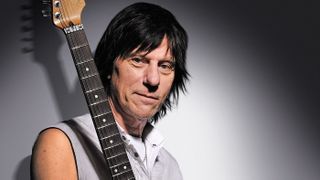
Music Tuesday: Jeff Beck, Rest in Peace

Last week on January 10th we had the passing of one of the greatest electric guitarist ever, Jeff Beck.    From his Rolling Stone magazine obituary:


JEFF BECK, THE blues-rock innovator and two-time Rock and Roll Hall of Fame inductee who revolutionized how the guitar is played, died Tuesday at the age of 78.


Beck’s family confirmed the former Yardbirds guitarist’s death Wednesday. “On behalf of his family, it is with deep and profound sadness that we share the news of Jeff Beck’s passing,” Beck’s family said in a statement. “After suddenly contracting bacterial meningitis, he peacefully passed away yesterday. His family asks for privacy while they process this tremendous loss.”  

It was tremendous loss for all of us.  He contracted the deadly disease, but before that he looked superb and was playing better than ever.  I can’t possibly outline his entire career.  Read the Wikipedia entry.  His initial entry into the spot light was following Eric Clapton and Jimmy Page in the Yardbirds.   Here’s how Wikipedia describes The Yardbird’s series of guitarists.


The band started the careers of three of rock's most famous guitarists: Eric Clapton, Jimmy Page, and Jeff Beck, all of whom ranked in the top five of Rolling Stone magazine's list of 100 greatest guitarists.

Frankly, in my humble opinion, out of those three great guitarists, Jeff Beck was the most talented.  Here he is as lead guitarist in what might have been The Yardbird;s greatest hit, “Heart Full of Soul.”


The Rolling Stone article describes Beck’s evolution from blues to psychedelic rock to jazz fusion.  Jazz fusion is what I think he excelled at and created avant-garde following.  He certainly is not as well-known as Clapton and Page, and that’s because he is a musician’s musician, a purest.  Salon had a retrospective article with his passing on what made his guitar playing special. 


The praise Jeff Beck, who has died aged 78, received from indebted musicians during his lifetime already read like unbridled eulogies. Eric Clapton had called him "the most unique guitarist," Steve Lukather (Toto) "God's guitarist," and Joe Satriani "just a genius."


Jazz great John McLaughlin described Beck as "the best guitarist alive," Steve Vai as "unique in the most superlative use of the word," and Noel Redding (Jimi Hendrix Experience) as his "personal favorite." Queen's Brian May said Beck "radically changed" his view of the guitar.


Beck's fame was not drawn from a catalogue of hit songs (though there was, of course, Hi Ho Silver Lining), nor from a cushy decades-long residency in a mega-band (though there were many supposed offers). Instead, he was a guitarist's guitarist who seemed to be the humble protagonist at the center of a plethora of seminal moments in pop history.

“The humble protagonist,” that is such a perfect description.  In the interviews I sampled, he was truly a humble man and certainly not an egocentric rock star.  He had a hobby of restoring and repairing antique cars, and by hobby I mean he didn’t pay someone to restore them.  He did it himself.

Here is an interview interweaved with a retrospective of his career.


There are lots of videos of Beck playing with rapid speed and intensity, but I found him shining even more with the delicate pieces.  Here he with “Where Were You,” his own composition.


Here’s another of a song you know the lyrics to but on which his instrumental captures the song and I think even transforms the song, The Beatles’ “A Day in the Life.” 


He makes the guitar sound like a human voice.  Here’s how the Salon article described his technique.


He had an intuitive musical ear and technical control for sophisticated jazz harmonies, pitch inflection and melody, as well as a wide timbral finesse – from a barely audible fragile touch to a wall of dense noise. He interacted with amp feedback to turn the guitar's usual "pluckiness" into anything from mechanical growls to uncannily vocal timbres, to other-worldly sustained flute sounds.


Beck's commitment to these dimensions manifested in his idiosyncratic technique. He abandoned a plectrum for direct contact with the strings, ensuring that every note was distinct, different and mattered.


He would simultaneously control the whammy bar, volume and tone control of the guitar which – with the combination of harmonics, off-fret slide and left-hand inflection – explored an orchestral range of sonic possibilities. Always pushing and never complacent, each record explored new territory and musical affordances.

Here is a sample of work.  From his 1975 album, Blow by Blow, “You Know What I Mean.”


From his 1976 album, Wired, the Charles Mingus piece, "Goodbye Pork Pie Hat."


Here’s one of his classics, “Going Down,” originally recorded in 1972 as part with The Jeff Beck Group, but here performed live in 2013 with Bret Hart and an almost all female group.


Finally here is a piece he combines all his skills, and even finds joy in a young female bassist, Tal Wilkenfeld, complimenting his playing with her own solo.


Notice his expression at Tal’s playing.  He was such a good, humble soul.  His playing is now for the Lord.  Until I get to attend that concert I will miss his music. 


Tuesday, April 21, 2020

Music Tuesday: Lee Konitz, RIP


One of the tragedies of the Coronavirus is the death of Lee Konitz who passed away from the contagion last week on April 15th.  He was 92.  Konitz was a jazz legend, one of the remaining artists from the bebop and cool jazz styles of the forties, fifties, and sixties.  The NY Times had a wonderful obituary.  Let me pull a few quotes.  First the facts:

Lee Konitz, a prolific and idiosyncratic saxophonist who was one of the earliest and most admired exponents of the style known as cool jazz, died on Wednesday in Manhattan. He was 92.

Next, what made him great:

Mr. Konitz initially attracted attention as much for the way he didn’t play as for the way he did. Like most of his jazz contemporaries, he adopted the expanded harmonic vocabulary of his fellow alto saxophonist Charlie Parker, the leading figure in modern jazz. But his approach departed from Parker’s in significant ways, and he quickly emerged as a role model for musicians seeking an alternative to Parker’s pervasive influence.

Where modern jazz in the Parker mold, better known as bebop, tended to be passionate and virtuosic, Mr. Konitz’s improvisations were measured and understated, more thoughtful than heated.

“I knew and loved Charlie Parker and copied his bebop solos like everyone else,” Mr. Konitz told The Wall Street Journal in 2013. “But I didn’t want to sound like him. So I used almost no vibrato and played mostly in the higher register. That’s the heart of my sound.”

Although some musicians and critics dismissed Mr. Konitz’s style as overly cerebral and lacking in emotion, it proved influential in the development of the so-called cool school. But while cool jazz, essentially a less heated variation on bebop, was popular for several years — and some of its exponents, notably the baritone saxophonist Gerry Mulligan and the trumpeter and singer Chet Baker, both of whom he sometimes worked with, became stars — Mr. Konitz for most of his career was a musician’s musician, admired by his peers and jazz aficionados but little known to the general public.


At his best, Lee Konitz seems to put out a dream like melody and rhythm.  As I’ve grown older, I appreciate it more so that the hard bebop sounds where you sometimes can’t pick out the melody.  Let’s start with this lovely tune, “When You’re Smiling.”
Personnel: Lee Kontiz- Alto Sax, Billy Bauer- Guitar, Henry Grimes- Bass, Dave Bailey-Drums.


Here in “Topsy” he joins Warne Marsh who is on tenor sax.  The subtle distinction between the two saxes, which at times are interweaving, is what makes this so interesting.  The contrast is subtle.  Personnel: Lee Konitz (alto sax), Warne Marsh (tenor sax), Billy Bauer (guitar), Oscar Pettiford (bass), Kenny Clarke (drums)


Konitz doesn’t hit you over the head with style.  He’s so subdued.  Here is a live piece, “Just Friends,” with Knonitz coming in at the 1:50 mark.  Personnel: Lee Konitz (alto sax), Art Farmer (fluegelhorn), Ake Persson (trombone), Pim Jacobs (Piano), Stu Martin (drums).


Here in an interview, Lee articulates what makes beautiful music for him.


Finally a lovely ballad, “Lover Man,” with Lee on alto sax and Paul Bley on piano. 


That might be the quintessential Lee Konitz piece.  Beautiful music, indeed.  Eternal rest in peace, Mr. Konitz.


Tuesday, January 7, 2014

Music Tuesday: "In a Sentimental Mood" by Duke Ellington and John Coltrane

I don’t post enough jazz.  Perhaps it’s off-putting to people, but then so is classical.  If you give it a chance it can be so satisfying. 

My all time favorite jazz composer is DukeEllington He’s known mostly for Big Band compositions, but occasionally he recorded reduced the size of his band to a six to nine pieces.  Here he records his big band classic, “In a Sentimental Mood,” with a just quartet.  I’m no expert but I don’t recall Ellington ever recording with that small a group.  But this is not just any quartet.  This quartet features John Coltrane on saxophone.  The album from which this recording comes from, Duke Ellington and John Coltrane, has its own Wikipedia entry. 

On a small group arrangement you want to highlight the virtuoso and John Coltrane (“the Trane”)   is one of the greatest sax virtuosos ever.  The arrangement of piano and sax almost has the feel of a sonata in classical music.  [If you get a chance and are so interested compare this with Leonard Bernstein’s “Sonata for Clarinet and Piano.”   You can find it on youtube.]

 Here's Ellington and Coltrane in one of the most moving pieces I've ever heard.


Now that you’ve heard the quartet featuring Coltrane, here’s the Big Band version.  What I think I hear is alternative takes at the melody by a clarinet, sax, trombone, and trumpet.  And there is a lot more accompaniment by the rest of the orchestra. 


It is very lovely in its own way—it’s just a lovely composition—but either Coltrane is just so superior or it works so much better as a quartet.  What do you think?

Tuesday, February 12, 2013

Music Tuesday: Louis Armstrong, "When The Saints Go Marching In"

Today is Fat Tuesday, otherwise known as Mardi Gras, the day before Ash Wednesday and the beginning of Lent.  [Side note, I didn't realize until now that "Mardi Gras" was French for Fat Tuesday, but yeah I see that now in the words.]

To celebrate, I'm going to suspend Blues Tuesday for Music Tuesday so I can play this wonderful piece.  [Actually I think I will change it permanently to Music Tuesday.  Limiting it to just blues doesn't do justice to all the different music I enjoy.]  "When the Saints Go Marching In" is a hymn which morphed into a joyous jazz piece.  It actually started as a funeral march.  I don't think I've ever heard it played as a dirge.  You can read about its impressive history here.

Of course, if I'm going to post this song, it has to be played by the great Louis Armstrong.  I really like that quote by Duke Ellington at the beginning of the video clip.  From everything I've ever read about Armstrong he was a decent man and a good soul, not something you can say about many prominent musicians.  Reading through his Wikipedia bio, it says that as a seventeen year old just married, he adopted a brain damaged three year old boy, a child from a cousin who had suddenly died.  How many seventeen year old men (if you can even call them men by today's standards) would do that?  He took care of that boy the rest of his life.


I was curious about Armstrong's religion, since New Orleans is predominantly Catholic and this has such a Catholic feel.  The Wikipedia bio says this about his religion:

 
When asked about his religion, Armstrong would answer that he was raised a Baptist, always wore a Star of David, and was friends with the Pope. Armstrong wore the Star of David in honor of the Karnofsky family, who took him in as a child and lent him the money to buy his first cornet. Louis Armstrong was, in fact, baptized as a Catholic at the Sacred Heart of Jesus Church in New Orleans, and he met popes Pius XII and Paul VI, though there is no evidence that he considered himself Catholic. Armstrong seems to have been tolerant towards various religions, but also found humor in them.

Hope you enjoyed it.  Tomorrow begins our time of penance.