"Love follows knowledge."
"Beauty above all beauty!"
– St. Catherine of Siena

Showing posts with label Memoir. Show all posts

Wednesday, September 28, 2022

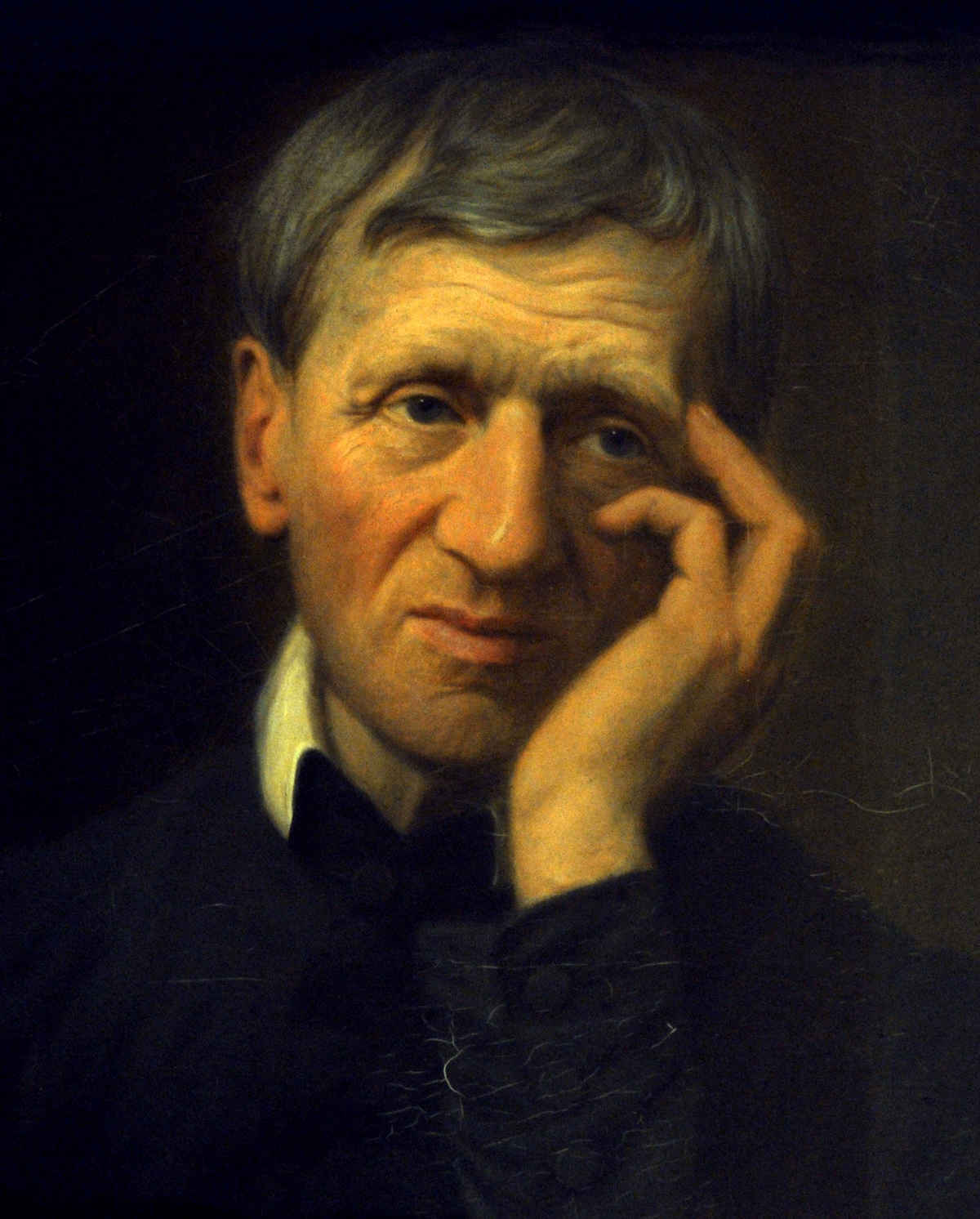
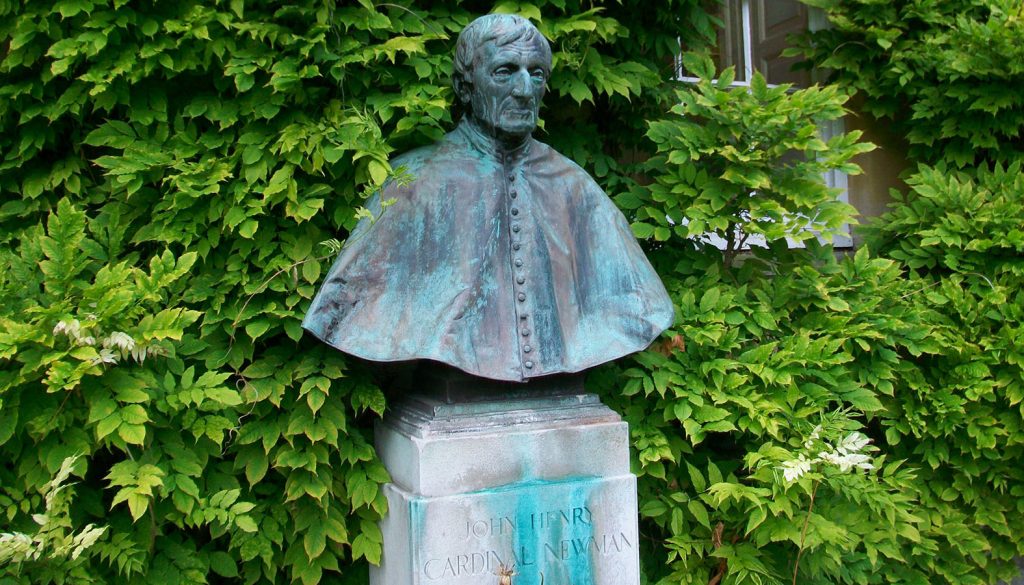
Apologia Pro Vita Sua by Cardinal John Henry Newman, Post 3

This is the third post in a series of St. John Henry Newman’s Apologia Pro Vita Sua. 

You can find Post #1 here.  

Post #2 here.  
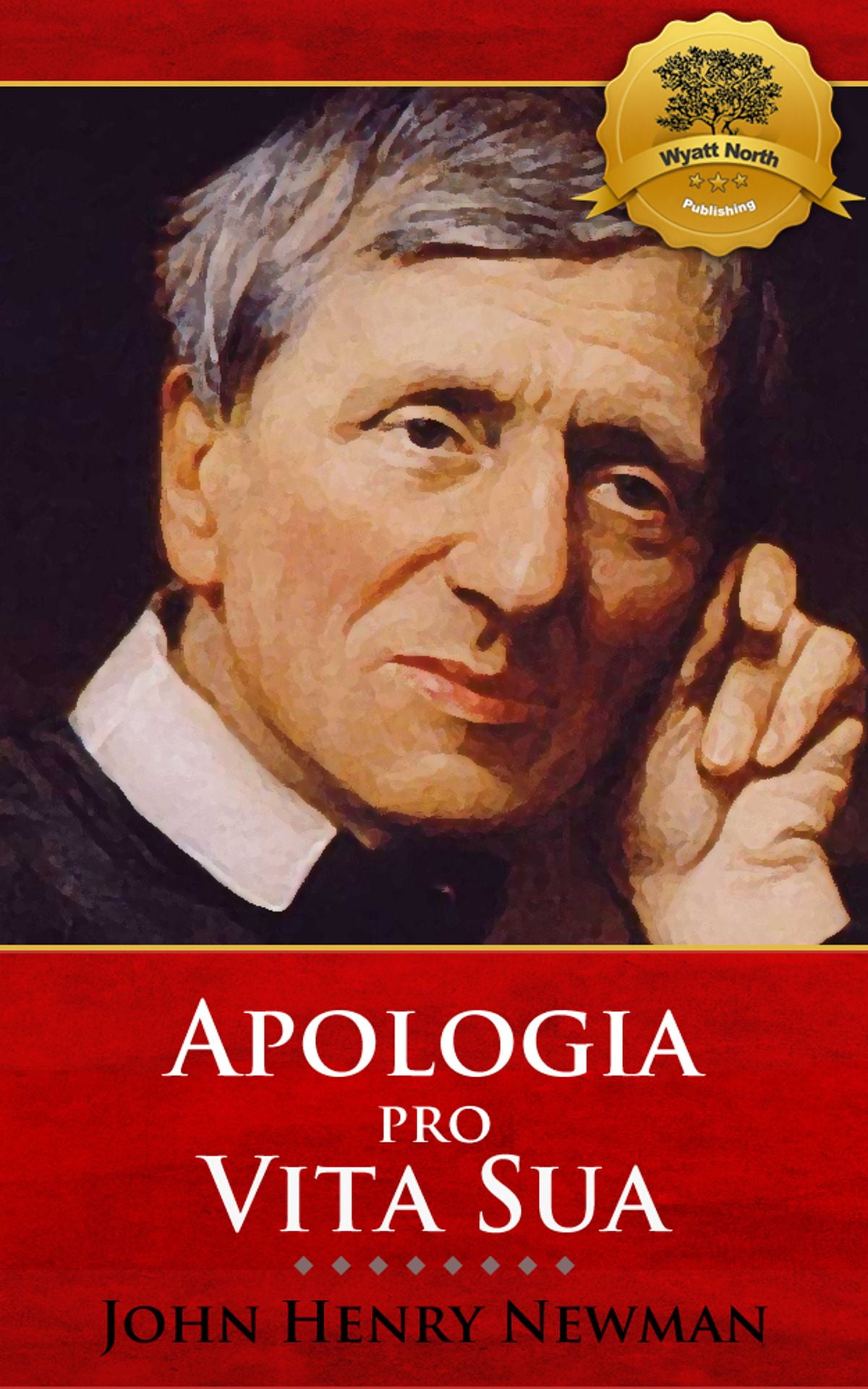


Chapter 2: History of My Religious Opinions from 1833 to 1839

Summary

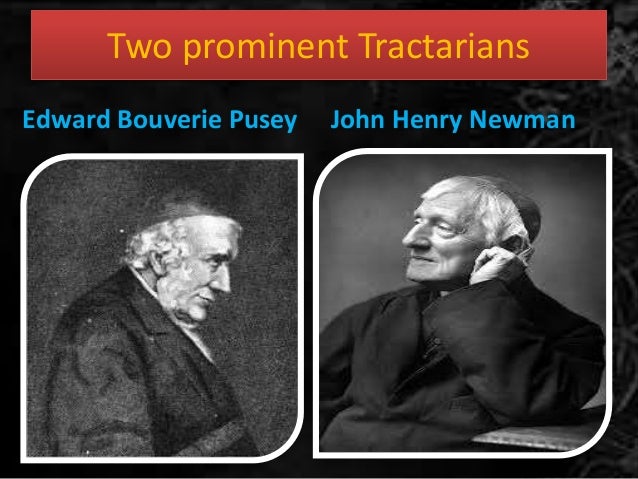
Chapter 2 provides the bulk of Newman’s output as a Protestant theologian.  He makes it clear that he is still very much a committed Protestant but one of the key features of this period is Newman joining and supporting the Oxford Movement, a High Church theology that eventually evolved into Anglo-Catholicism and fought against the “Liberalism” of its day—that is the Evangelical Protestants and Low Church theology.  Newman provides a description of two of the key members of his movement, Mr. Hugh Rose, John Keble, and Dr. Edward Pusey.  What governs the development of this chapter are the series of Newman’s publications over these years.  The most important of these publications were a series of tracts published by Newman, Pusey, and Keble that came to be known as the Tracts for the Times.  The objective of the tracts was to present Anglicanism as the Via Media, that is, the middle way between Catholicism and Mainline Protestantism.  The theology of the Oxford Movement was to recover the rich history of English Christianity from the Middle Ages but yet maintain a distinction from “Popish” Rome.  One of Newman’s tracts, the last tract to be written, Tract 90, goes on to show that the 39 Articles central to the practice and faith of the Church of England are “compatible” with the Council of Trent, the Catholic Council in response to Protestantism, the central theological statement of the Counter-Reformation.  Tract 90 caused a firestorm within the English Church from all sides that the Tracts had to be stopped and Newman forced to resign from the Oxford Movement. 

Let me provide some Wikipedia links that might help you sort out this chapter.
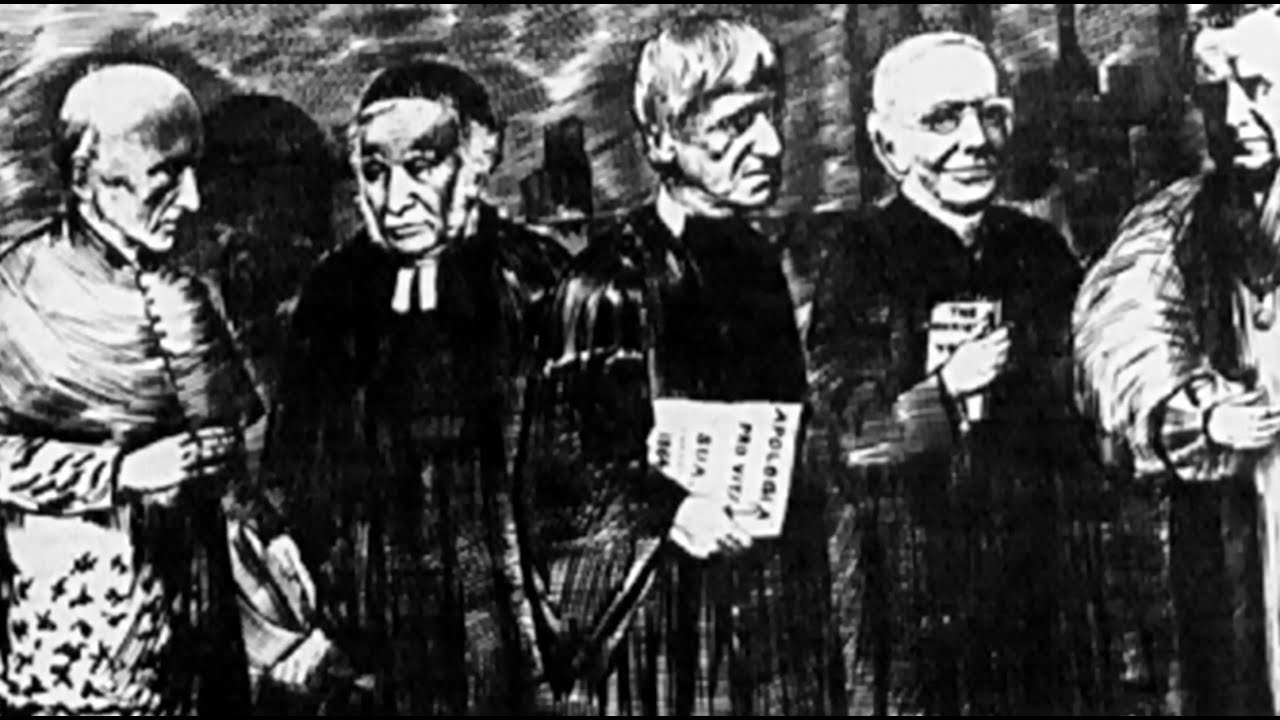
Oxford Movement.

Dr. Edward Pusey

John Keble

Tracts for the Times

Tract 90

Via Media.   


###

How are you guys doing on this read?  I was going back and forth in private mail with one of our members who is “struggling” with this read.  I pointed out this is a tough read.  There are several difficulties. First, it was written in the 19th century, so there's a style gap between Newman and us. Second, he's very intellectual, so there is a lot of knowledge that is assumed the reader to know. Third he's dealing with finer points of apologetics. Fourth, there's a historical time and place context. The history of the Anglican Church is not something we are generally taught.  These definitely make reading this book difficult.

So, if you’re having trouble, just ask, either publicly or in a private mail.  I would prefer publicly since that generates conversation.  Also, just read along and just follow the conversation.  Even if you don’t get it completely, I think you will get something out of this read.  I believe I am getting it, though slowly, and so I think our schedule will be blown.  But this is a famous work, and we will be satisfied to have read it.  Plus, his conversion is coming up in the next couple of chapters, and that will be exciting.  If all you get out of chapter 2 is the summary I posted above, I think that’s all you need to know to move on.  So move on.  It’s ok.

###

John Henry Newman has the reputation of being one of the great prose stylist of the English language.  So far in the first two chapters we probably have only seen that brilliance shine a few times, probably because the dry facts of this person and his publications and that person and his positions doesn’t make for inspired writing.  At the beginning of chapter 2, Newman does give us a portrait of Mr. Hugh Rose that allows his prose to excel.  Let me quote these three paragraphs not so much because they are very important to the chapter theme, but because they show Newman’s skill as a writer.  Perhaps the key take-away is that Rose had been “severed” from the Oxford Movement and he went on to die young.


To mention Mr. Hugh Rose's name is to kindle in the minds of those who knew him a host of pleasant and affectionate remembrances. He was the man above all others fitted by his cast of mind and literary powers to make a stand, if a stand could be made, against the calamity of the times. He was gifted with a high and large mind, and a true sensibility of what was great and beautiful; he wrote with warmth and energy; and he had a cool head and cautious judgment. He spent his strength and shortened his life, Pro Ecclesia Dei, as he understood that sovereign idea. Some years earlier he had been the first to give warning, I think from the University Pulpit at Cambridge, of the perils to England which lay in the biblical and theological speculations of Germany. The Reform agitation followed, and the Whig Government came into power; and he anticipated in their distribution of Church patronage the authoritative introduction of liberal opinions into the country. He feared that by the Whig party a door would be opened in England to the most grievous of heresies, which never could be closed again. In order under such grave circumstances to unite Churchmen together, and to make a front against the coming danger, he had in 1832 commenced the British Magazine, and in the same year he came to Oxford in the summer term, in order to beat up for writers for his publication; on that occasion I became known to him through Mr. Palmer. His reputation and position came in aid of his obvious fitness, in point of character and intellect, to become the centre of an ecclesiastical movement, if such a movement were to depend on the action of a party. His delicate health, his premature death, would have frustrated the expectation, even though the new school of opinion had been more exactly thrown into the shape of a party, than in fact was the case. But he zealously backed up the first efforts of those who were principals in it; and, when he went abroad to die, in 1838, he allowed me the solace of expressing my feelings of attachment and gratitude to him by addressing him, in the dedication of a volume of my Sermons, as the man, "who, when hearts were failing, bade us stir up the gift that was in us, and betake ourselves to our true Mother."


But there were other reasons, besides Mr. Rose's state of health, which hindered those who so much admired him from availing themselves of his close co-operation in the coming fight. United as both he and they were in the general scope of the Movement, they were in discordance with each other from the first in their estimate of the means to be adopted for attaining it. Mr. Rose had a position in the Church, a name, and serious responsibilities; he had direct ecclesiastical superiors; he had intimate relations with his own University, and a large clerical connexion through the country. Froude and I were nobodies; with no characters to lose, and no antecedents to fetter us. Rose could not go a-head across country, as Froude had no scruples in doing. Froude was a bold rider, as on horseback, so also in his speculations. After a long conversation with him on the logical bearing of his principles, Mr. Rose said of him with quiet humour, that "he did not seem to be afraid of inferences." It was simply the truth; Froude had that strong hold of first principles, and that keen perception of their value, that he was comparatively indifferent to the revolutionary action which would attend on their application to a given state of things; whereas in the thoughts of Rose, as a practical man, existing facts had the precedence of every other idea, and the chief test of the soundness of a line of policy lay in the consideration whether it would work. This was one of the first questions, which, as it seemed to me, on every occasion occurred to his mind. With Froude, Erastianism,—that is, the union (so he viewed it) of Church and State,—was the parent, or if not the parent, the serviceable and sufficient tool, of liberalism. Till that union was snapped, Christian doctrine never could be safe; and, while he well knew how high and unselfish was the temper of Mr. Rose, yet he used to apply to him an epithet, reproachful in his own mouth;—Rose was a "conservative." By bad luck, I brought out this word to Mr. Rose in a letter of my own, which I wrote to him in criticism of something he had inserted in his Magazine: I got a vehement rebuke for my pains, for though Rose pursued a conservative line, he had as high a disdain, as Froude could have, of a worldly ambition, and an extreme sensitiveness of such an imputation.


But there was another reason still, and a more elementary one, which severed Mr. Rose from the Oxford Movement. Living movements do not come of committees, nor are great ideas worked out through the post, even though it had been the penny post. This principle deeply penetrated both Froude and myself from the first, and recommended to us the course which things soon took spontaneously, and without set purpose of our own. Universities are the natural centres of intellectual movements. How could men act together, whatever was their zeal, unless they were united in a sort of individuality? Now, first, we had no unity of place. Mr. Rose was in Suffolk, Mr. Perceval in Surrey, Mr. Keble in Gloucestershire; Hurrell Froude had to go for his health to Barbadoes. Mr. Palmer was indeed in Oxford; this was an important advantage, and told well in the first months of the Movement;—but another condition, besides that of place, was required.

Try to read each sentence to yourself and let each sentence settle before you go to the next.  Newman has such a wonderful rhythm.  Notice how he uses couplets of adjectives and nouns: “pleasant and affectionate remembrances,” “cast of mind and literary powers,” “gifted with a high and large mind,” “of what was great and beautiful; he wrote with warmth and energy; and he had a cool head and cautious judgment.”  It all sort of culminates with this powerful sentence: “He spent his strength and shortened his life…”  Some writers love to write in twos, others in threes; Newman definitely in twos, which provides a very distinct rhythm. 

Here’s another stylistic observation: he likes add little tags phrases (free modifying phrases) at the end of main clauses in order to balance the sentence.  Like this: “His reputation and position came in aid of his obvious fitness, in point of character and intellect, to become the centre of an ecclesiastical movement, if such a movement were to depend on the action of a party.”  “in point of character and intellect” is a modifying phrase of the main clause, and then he adds a tag “if such a movement were to depend on the action of a party” after subordinate clause, “to become the centre of an ecclesiastical movement.”  One half of the sentence balances the other—again a sort of duple rhythm—and the repetition of the word “movement” from the subordinate clause echoes in the subsequent tag phrase, which seems to give an emphasis on that final beat of the rhythm. 

Finally Newman is skillful in mixing long and short sentences.  After a number of longish sentences, notice how the short staccato clauses of this section just bounces on the tongue:  “Mr. Rose had a position in the Church, a name, and serious responsibilities; he had direct ecclesiastical superiors; he had intimate relations with his own University, and a large clerical connexion through the country. Froude and I were nobodies; with no characters to lose, and no antecedents to fetter us.”  And none of these stylistic flourishes calls attention to itself.  It probably came very natural to him, not giving it much thought.  It’s just there for those that hear it and appreciate it.

###

Joseph Commented:

I apologize that I've been a bit MIA, but I've had a busy couple of weeks. I find fascinating, from chapter one but fleshed out in chapter two, that the "religious liberalism" which Cardinal Newman was reacting against is pretty much the same as that we have today, just with different emphases. By and large, the critiques of the Oxford Movement seem to be that a Christianity which conforms itself to the fashions of the day eventually ceases to be Christianity. In broad strokes, we can see this pattern of argument repeated in today's debates over a slew of moral issues, and we can look back and see it as a forerunner to the Modernism of the early twentieth century. It certainly gives credence to the observation in Ecclesiastes that, "there is nothing new under the sun."

My Reply:

The same thought occurred to me too Joseph.  However, I had to scale back.  The tension between those that seek progressive advancement and those that seek to conserve is always there going back to the nominalism of the Middle Ages, so it's not unusual for Newman and those of his day to characterize a dichotomy between a "liberal" faction and a "conservative" one.  The question is always what is being conserved and what is being advanced.  Here it seems that the Evangelical, Low Church is being called the liberal while the Anglican High Church is the conservative.  Intuitively it could have been just the opposite for all I know.  Why is the Evangelical the liberal side?  A lot depends on the development of Anglican theology.


Here's what I know.  When Henry VIII overturned the Catholic faith, what he established was not too much different.  But in short order with Queen Elizabeth, the Puritan (forefathers to the Evangelicals) spirit started to rise sharply, and with her successor James I it really began to dominate, so much so that when his heir was going to be a Catholic king, the country went into Civil War, and the Puritans won that war.  England became very much Low Church Puritan.  When the monarchy was re-instituted, it was more a return to Henry VIII's Catholic-lite theology at the aristocratic level, but not so much at the local level.  Then there was another civil war, more going back and forth until the Bloodless Revolution where England pulled a king and queen from continental Europe who were very Protestant.  Now there was another hundred years or so until Newman's time, where I don't exactly know which theology was on top and which wasn't. 


So now why would Anglo-Catholic be more conservative?  As I reflected on it, I would have guessed the Low Church Evangelical was the conservative and those pushing closer toward Catholicism were the liberal.  But I guess I am wrong.  I just don’t have the nuanced understanding of the English religious scene of the 18th century that led to Newman.

Frances Commented:

I’m not certain if this contributes to the discussion but because it’s from Bishop Robert Barron’s Word On Fire, I’d like to quote “What Is Liberalism”? from ‘’The Pivotal Players’’:


‘’When John Henry Newman battled theological ‘liberalism’ in his writings, he wasn’t engaging what we today mean by that word, in its political sense. Here’s how he defined it: ‘Liberalism is the doctrine that there is no positive truth in religion and that demonstration or formal logic is the only basis for any certitude. It teaches that all are to be tolerated and that revealed religion is not a truth, but a sentiment and a taste.’’

Peej Commented:

Even though I haven’t started rereading yet, I do want to comment that the disregard of dogma is something I see in non-denominational churches today. One recent example is a sermon on Matthew 9–old wine in new wine skins—in a church in Parker, CO. The pastor used this verse to prove Biblically the principle of relevance. How remaining relevant and changing worship music can reach more people for Christ. But he never defined what is non-negotiable and what is dogma. This is a column built on quicksand.

My Reply to Frances and Peej:

Those are both helpful comments. What Peej is saying is along the lines of my assumption of Low Church representing the Liberal side but frankly it doesn't seem to add up altogether. The problem is that Newman was not clear as to what Liberalism refers to. I think he assumed it from the context of his time. In the 1865 version, there is a supplemental chapter called "Liberalism" where he states he was asked to define it. Apparently others reading it made the same observation, and so he had to add it. I have not read the chapter. Here is a link to the online 1865 publication.  


The chapter on Liberalism is the first of the supplemental material, under Note A. It looks like it's only 14 pages. I'll try to read it tonight, but if anyone else wishes to, please feel free to tell us what it says.


Sunday, September 18, 2022

Apologia Pro Vita Sua by Cardinal John Henry Newman, Post 2

This is the second post in a series of St. John Henry Newman’s Apologia Pro Vita Sua.  You can find Post #1 here. 


Chapter 1. History of My Religious Opinions to the Year 1833

Summary

Newman divides his chapters by religious opinions to a certain age.  In 1833 Newman would have been 32 years old, and he takes us through his adultescence, his university years, his ordination of Anglican clergyman, his assignment as parish vicar, and finally in 1833 a fateful trip on the Mediterranean where he spent time in the city of Rome.  Newman mentions a number of people who were either influential to his development or important in his career.  I won’t list them all but these I think were the most important: Thomas Scott, a historian, Joseph Milner, a Church historian, Dr. Whatley, professor at Oxford and future Archbishop of Dublin, Dr. Hawkins, vicar at St. Mary’s and a curate at Oxford, John Keble, a fellow professor (I think) at Oxford and perhaps his best friend at the time, Hurrell Foude, a student at Oxford and someone who had a great admiration for the Church of Rome.  In 1832 Newman took a trip to the Mediterranean with Froude where he encountered a number of Catholic devotions and practices.

###

There were lots of good sections in this first chapter, and I won’t be able to highlight them all.  Let me try to get the most important.

I found his initial religious conversion to be very important.


When I was fifteen, (in the autumn of 1816,) a great change of thought took place in me. I fell under the influences of a definite Creed, and received into my intellect impressions of dogma, which, through God's mercy, have never been effaced or obscured. Above and beyond the conversations and sermons of the excellent man, long dead, the Rev. Walter Mayers, of Pembroke College, Oxford, who was the human means of this beginning of divine faith in me, was the effect of the books which he put into my hands, all of the school of Calvin. One of the first books I read was a work of Romaine's; I neither recollect the title nor the contents, except one doctrine, which of course I do not include among those which I believe to have come from a divine source, viz. the doctrine of final perseverance. I received it at once, and believed that the inward conversion of which I was conscious, (and of which I still am more certain than that I have hands and feet,) would last into the next life, and that I was elected to eternal glory. I have no consciousness that this belief had any tendency whatever to lead me to be careless about pleasing God. I retained it till the age of twenty-one, when it gradually faded away; but I believe that it had some influence on my opinions, in the direction of those childish imaginations which I have already mentioned, viz. in isolating me from the objects which surrounded me, in confirming me in my mistrust of the reality of material phenomena, and making me rest in the thought of two and two only absolute and luminously self-evident beings, myself and my Creator;—for while I considered myself predestined to salvation, my mind did not dwell upon others, as fancying them simply passed over, not predestined to eternal death. I only thought of the mercy to myself.

In this one paragraph he takes us from fifteen years old to twenty-one, which are rather critical years in the formation of a person.  It is interesting he had his religious experience at the age of fifteen, which I cannot relate to.  At fifteen I had no inclination for religion.  My “religious experience” would happen in my forties.  Was it a different time, or was Newman differently inclined?  Well, he was definitely differently inclined than me, but there are today lots of adolescents and young men who are inclined to the religious life.  Otherwise we wouldn’t have priests.  But it was a different age as well.  The 19th century saw a resurgence of faith after the decline and persecution of the Enlightenment.  In many ways it paralleled the Romantic era.  Just think of William Wordsworth and how religious he became as he grew older.  I’m thinking that faith was in the air, and a bright, intellectually inclined young man would absorb it. 

What is most interesting in that quoted paragraph is that Newman’s conversion was of a Calvinist for of Protestantism.  This was not the form of Protestantism of his parents.  Newman doesn’t exactly tell us what form of Christianity were his parents, but the Vélez biography I quoted in the Introduction states that Newman had been brought up in a “conventional Anglican family that attended Sunday services in church and held morning and evening prayers at home” (p. 11).  Now I would imagine that in 1816 or prior “conventional Anglicanism” was not High Church Anglo Catholic, but I would be pretty sure it wasn’t Low Church Evangelical.  It probably had many of the attributes of Catholicism since Newman mentions his dependence on angels and crossing himself.  The sending off of children to boarding schools—which English families of means seemed to do—can create a divergence in cultural foundations between the generations.  Here we see that Newman until the age of twenty-one had adhered to an Evangelical Calvinism, of which pre-destination and God’s control of everything is paramount. 

I remember when Newman was canonized and I brought it up on a discussion board that he had been a convert to Catholicism.  A number of Evangelical Protestants didn’t think much of it given that many are now used to Anglicans converting to Catholicism.  So I looked it up back then to find he had started out as an Evangelical.  I pointed it out and was an interesting observation for them. 

###

Kerstin Commented:

I found it fascinating that from an early age on he was interested in matters of faith and the church. Few teenagers read church histories voluntarily. 

Also, he had a very keen sense of the material and immaterial. And then the realization at the age of 15 that he would live a single/celibate life. This is astounding. He was set apart from the beginning.

Christine in Bo/Mass Commented:

I hate to admit it b/c I know there is gold in this book, however it is really difficult to get into. It reads like a journal, a more of a personal record than something written for someone to internalize. Additionally all his influencers are exclusively male. Can that be? I will have to double back to check if he mentions Our Mother.


Finding "home" at the Newman Society in college I read on mining for the gold I am sure is there somewhere.

My Reply to Christine:

Oh Christine, he was big on the Blessed Mother but it may be when he was a Catholic convert or close to it. He's got sermons on the Marian dogmas.


Now as to women in his life, he was a bachelor, a priest, and a cardinal and I think the sexes didn't mix as much in Victorian times. I don't think he would have had as much interaction with women as we might think coming from today's world. He does mention his mother in that first chapter.

###

Newman throughout  Chapter 1 lays down markers of Catholic doctrine that may not have been influential in this early period but would I think come to bear upon his conversion in the future.  We see him talk about the difference in justification between Calvinism and Catholicism.  We also see how Dr. Hawkins introduced him to the importance of tradition in carrying the faith. 


There is one other principle, which I gained from Dr. Hawkins, more directly bearing upon Catholicism, than any that I have mentioned; and that is the doctrine of Tradition. When I was an Undergraduate, I heard him preach in the University Pulpit his celebrated sermon on the subject, and recollect how long it appeared to me, though he was at that time a very striking preacher; but, when I read it and studied it as his gift, it made a most serious impression upon me. He does not go one step, I think, beyond the high Anglican doctrine, nay he does not reach it; but he does his work thoroughly, and his view was in him original, and his subject was a novel one at the time. He lays down a proposition, self-evident as soon as stated, to those who have at all examined the structure of Scripture, viz. that the sacred text was never intended to teach doctrine, but only to prove it, and that, if we would learn doctrine, we must have recourse to the formularies of the Church; for instance to the Catechism, and to the Creeds. He considers, that, after learning from them the doctrines of Christianity, the inquirer must verify them by Scripture.

What is interesting in what he says here is that one cannot develop doctrine from scripture alone but that doctrine came from the tradition of the apostles and was proven in scripture.  And this makes a lot of sense.  The Gospels are not a manual.  They tell a story of events and sayings, but they do not put forth complete doctrine.  You can “prove” lots of things by looking at a text, including contradictory things.  The doctrine comes first, put out by the apostles and early church fathers, and then you go back to the story and show how to interpret the events in light of the doctrine.  The tradition, in effect, shapes our understanding of the scriptures.  I hope that makes sense.  Pope Benedict XVI I believe has made the same observation.

###

One more highlight of Chapter 1.  Toward 1827 Newman read a Christian Year by John Keble which apparently had great influence on his thought.  He states that there were “two main intellectual truths which it brought home.”


The first of these was what may be called, in a large sense of the word, the Sacramental system; that is, the doctrine that material phenomena are both the types and the instruments of real things unseen,—a doctrine, which embraces in its fulness, not only what Anglicans, as well as Catholics, believe about Sacraments properly so called; but also the article of "the Communion of Saints;" and likewise the Mysteries of the faith. The connexion of this philosophy of religion with what is sometimes called "Berkeleyism" has been mentioned above; I knew little of Berkeley at this time except by name; nor have I ever studied him.

As you can see, Newman is clearly moving toward High Anglicanism here.  The notion of sacraments as being material types of things unseen is exactly the Catholic understanding of the sacraments.  As to the second principle, as I understand it, it rejects the notion that we come to belief not through a judgment of the “probability” of facts, which can lead to skepticism, but through faith and love.


I considered that Mr. Keble met this difficulty by ascribing the firmness of assent which we give to religious doctrine, not to the probabilities which introduced it, but to the living power of faith and love which accepted it. In matters of religion, he seemed to say, it is not merely probability which makes us intellectually certain, but probability as it is put to account by faith and love. It is faith and love which give to probability a force which it has not in itself. Faith and love are directed towards an Object; in the vision of that Object they live; it is that Object, received in faith and love, which renders it reasonable to take probability as sufficient for internal conviction. Thus the argument from Probability, in the matter of religion, became an argument from Personality, which in fact is one form of the argument from Authority.

Hopefully I captured that correctly.  I’m not sure if this is a more Catholic notion but there is a strain of Protestantism that is much more utilitarian and of the physical world.  The very notion of the Eucharist being the true body of Christ defies the immediate common sense and relies on personal faith in something beyond the senses.  I think this is what Newman is alluding to here.

If I am correct on the understanding of the second principle, then both principles point to a continuity between the physical world and the spiritual, which is I believe one of the main differences between Catholics and Protestants.  Protestants I think have a much sharper division—even a barrier—between the physical and spiritual that sometimes it seems they tend toward the gnostic.

###

I posted this quote as a “Notable Quote,”  but it should be included in the book blog posts as well. 

This quote comes from the very first chapter, which details his beliefs and works up to the age of thirty-two.  The context of the quote is while speaking of a particular mentor of his at Oxford, a Dr. Hawkins.  Most certainly an Anglican, Dr. Hawkins had a very High Church theology.  He impressed this understanding upon the young Newman.


 “The sacred text was never intended to teach doctrine, but only to prove it, and that, if we would learn doctrine, we must have recourse to the formularies of the Church.”


Now you can see how this understanding of scripture would be an undermining of Protestant rudiments.  Certainly with this understanding, the Bible could not stand alone, and obviously you would need a “Church” to instruct you on the doctrine. 

Newman places himself under Dr. Hawkins between the years 1822 to 1825, which would span his twenty-first to twenty-fourth years.  He would convert to Roman Catholicism in 1845 at the age of forty-four, some twenty years later.


Wednesday, August 31, 2022

Apologia Pro Vita Sua by Cardinal John Henry Newman, Post 1

The Goodreads Catholic Thought book club read John Henry Newman’s confessional memoir of his conversion to Catholicism, Apologia Pro Vita Sua.  I will provide my thoughts, comments, and replies from that discussion in a series of posts.  In time, Newman not only converted but became a Catholic priest and subsequently promoted to Bishop and Cardinal.  As I will explain, a few years ago Newman was canonized to sainthood, so his full title I believe would be St. Cardinal John Henry Newman. 

As I was trying to put together a reading schedule, as well as searching for free online copies of the book, I realized there are two different versions of the book.  I came across the fact that there were two editions published, the original in 1864 and Newman’s revised in 1865.  The two seem to be structured differently.  The 1865 version has five chapters and an extensive collection of notes and supplemental material.  It was revised and edited out some of the material from the original.  But later publishing of the 1865 revised edition provided extensive notes and supplemental material that was edited out.  But it also included an extra chapter that the 1864 version did not contain.

Here are the 1865 five chapter titles:


Preface              xiv.

1.         History of my Religious Opinions up to 1833

2.         History of my Religious Opinions from 1833 to 1839

3.         History of my Religious Opinions from 1839 to 1841

4.         History of my Religious Opinions from 1841 to 1845          

Section 1

Section 2

5.         Position of my Mind since 1845


You can find the 1865 version online here.  

Here are the 1864 seven chapter titles:


Apologia pro Vita Sua           

1.         Mr. Kingsley's Method of Disputation

2.         True Mode of meeting Mr. Kingsley

3.         History of my Religious Opinions up to 1833

4.         History of my Religious Opinions from 1833 to 1839

5.         History of my Religious Opinions from 1839 to 1841

6.         History of my Religious Opinions from 1841 to 1845          

Section 1.

Section 2.

7.         General Answer to Mr. Kingsley


You can find the 1864 version online here.  

What you can see from a comparison between the tables of contents is that chapters three through six of the 1864 version are the same as chapters one through four of the 1865 version.  Chapters one, two, and seven are omitted from the 1865 version but most publications today include those chapters as supplemental material.  My Dover edition seems to.

So I think whichever edition you have you can probably find all the material except those that have the 1864 edition will not have chapter five of the 1865 edition.  That’s because I believe chapter five was written after the 1864 publication.

Now what should we read?  I propose we make our lives easier and just read the five chapters of the 1865 edition.  If you have bought the 1864 edition and it does not include that fifth chapter—I suspect it might in the Appendixes—then you can read that chapter online at the link I provided.

So, first check to see which edition you have.  My guess it’s the 1865 edition.  I think that’s the most widely published.  Second, is my plan acceptable?

###

As I was reading the first chapter, I realized how important Newman’s biography would be to understanding this work.  After all it’s his conversion story, of a man who converted at mid-way in his life and wrote the conversion story almost twenty years later.  I also remembered I had Bishop Robert Barron’s film biographies of those he considered “Pivotal Players” of Catholicism, and yes, John Henry Newman had his own hour and a half documentary.  I just finished watching it, and that too was very helpful in putting Newman’s work into context.  I wish I could share that DVD with all of us reading.  If by chance you had bought Bishop Barron’s Pivotal Players series, and like me forgot Newman was included, I suggest you dig it out and watch it prior to or as you read Apologia Pro Vita Sua.  I did a search on YouTube and unfortunately Word on Fire ministries did not make it free access.  But you can watch this interview with Bishop Barron where he discusses many of the same themes in the Newman DVD.


However, I did construct a timeline of Newman’s life, and I think this will be very helpful.  Let me share that with you here.

1801    Birth (February 2).

1808    Enters school at Ealing.

1816    Religious Conversion to Evangelical Protestantism.

1822    At Oriel College, Oxford.

1825    Ordained Anglican Clergyman.

1828-43  Parish Vicar, St. Mary the Virgin.

1832-33   Trip to the Mediterranean. 

1833    Start of Oxford Movement (Catholic Revival, High Anglicanism).

1845    Received into the Roman Catholic Church.

1847    Ordained Roman Catholic Priest.

1848    Founded English Oratory of St. Phillip Neri.

1854-58  Founder and Rector of Catholic University of Ireland.

1859    Opened Oratory School in Birmingham, England.

1864    Publishes Apologia Pro Vita Sua.

1879    Ordained Cardinal.

1889    Last Mass Celebrated, Christmas Day.

1890    Dies (August 11).

2019  Canonized Saint (October 13)

Feast Day: October 9th.

Now when you come across a year in your reading, and you can see Newman arranges the chapters by a particular year, you can figure out how old Newman is at the time by just subtracting one off the year because he was born in 1801.  For instance, he was received into the Catholic Church in 1845, making him 44 years old at the time.  He wrote Apologia Pro Vita Sua in 1864 making him 63 years old at the time.  I hope this will help your reading.

###


As part of the introduction I should write about how the Apologia was inspired.  It seems that just before 1864 Newman had been wanting to write about his conversion, and was scribbling notes in preparation but an occasion came upon him that focused the memoirs.  A certain Charles Kingsley, a novelist, historian, and ardent anti-Catholic, in a review of a recently published History of England written by James Anthony Froude, which strongly defended the English Reformation, insulted the Catholic clergy by twisting words of Newman prior to his conversion.  Let me provide this extensive quote from a Newman biography I just bought (discounted at five bucks!) and just received in the mail.


In 1864, Newman broke his long public silence to respond to false accusations and the ridicule of Roman Catholic priests by Charles Kingsley, a novelist, Chaplain to the Queen, and professor of Modern History at Cambridge.  In the January issue of Macmillan’s Magazine, which Newman received in late December 1863, Kingsley accused Newman of having stated as an Anglican that the Roman clergy did not consider truthfulness a virtue.  Kingsley wrote, “Truth, for its own sake, had never been a virtue with the Roman clergy.  Father Newman informs us that it need not, and on the whole ought not to be…”


After an unsatisfactory apology by Kingsley in the following issue of Macmillan’s Magazine, Newman began to write a pamphlet which eventually evolved into his famous autobiography.  For some time, Newman had been seeking an opportunity to explain and defend his religious opinions and certain steps in his life.  In this attack, he had found the occasion.  He gathered old correspondences from Anglican friends and worked with remarkable intensity to relate the history of his religious beliefs.  From late April to early June, he worked an average of over fifteen hours each day, writing in standing position at his desk at the library of the Birmingham Oratory.  The result was a powerful autobiography that reflected Newman's passion for the truth and the evolution of his religious beliefs.  Newman wrote his friend Richard Church about Kingsley’s accusation: “Thus, publically challenged, I must speak—and, unless I speak strongly, men won’t believe me in earnest.”  He asked his friend, a witness of Newman’s last years as an Anglican, to “correct any fault of fact” in his statement.  The Apologia Pro Vita Sua was read throughout the country by people of every religious creed.  It was a vindication of Newman’s intellectual honesty and of the validity of the Catholic Creed.  It remains today one of his most recognized and often cited works, the content of which recounted in this biography. 

-pages 548-9, Passion For Truth: The Life of John Henry Newman, Fr, Juan R, Vélez, Tan Books, Second Edition, 2019.

So what I think is the key takeaway from this is that the dispute was not over some deep theological issue but over a crass statement by what today might be called a bigot.  Newman found the opportunity to expose Kingsley and defend the burgeoning Catholic Church in England that was beginning to grow. Without further quoting the book—that was all done by hand and not copy and paste—this was a critical moment in the Catholic Renaissance in England.  Catholics thanked Newman, Protestants read the Apologia and started to if not accept Catholics at least drop some of their erroneous notions, and a number of prominent Englishmen converted to Catholicism.  Without Newman’s Apologia we might never have had the conversions of Gerard Manly Hopkins, Robert Hugh Benson, and G.K. Chesterton.  Newman’s autobiography was one of those rare books that had a lasting societal impact.


Kerstin Commented:

I didn't realize that this is the very Charles Kingsley who wrote The Water Babies and Westward Ho! or, the Voyages and Adventures of Sir Amyas Leigh, Knight,of Burrough, both of which I have yet to read. 

When you look at the picture of the man he looks like your typical set-in-his-ways 19th century man. Not somebody I would want to cross ;-) Newman seems to have gotten the brunt of it and defanged him. Yikes, what drama!


My Reply:

It's hard to say what is edgy or conventional in the appearance of people from the past. He's got those ridiculous sideburns, but I don't know the year they came into popularity. Without having a time context for style it's not so easy to tell. There was a time in my lifetime when tattoos were a sign of an edgy person. Now it's amazing how many people have them. So once they got popular, the edginess of them went away. And so the new edginess is not to have just one but to cover your entire body in a tattoos...lol. Kingsley also looks pretty stern in his photos. But that was the common way of posing for pictures for the 19th and well into the 20th century. I have a black and white picture of my grandfather that must have been taken before the 1950s and he looks pretty stern. But he was a very jovial and easygoing person. You can't really go by the picture.


Kerstin’s Reply:

I know what you're saying. Yet the disposition of a person gets etched into the face over time when youthful features are waning. It is not a complete picture of a person, of course. It is more of an intuitive reaction that's hard to put into words.


Saturday, August 8, 2020

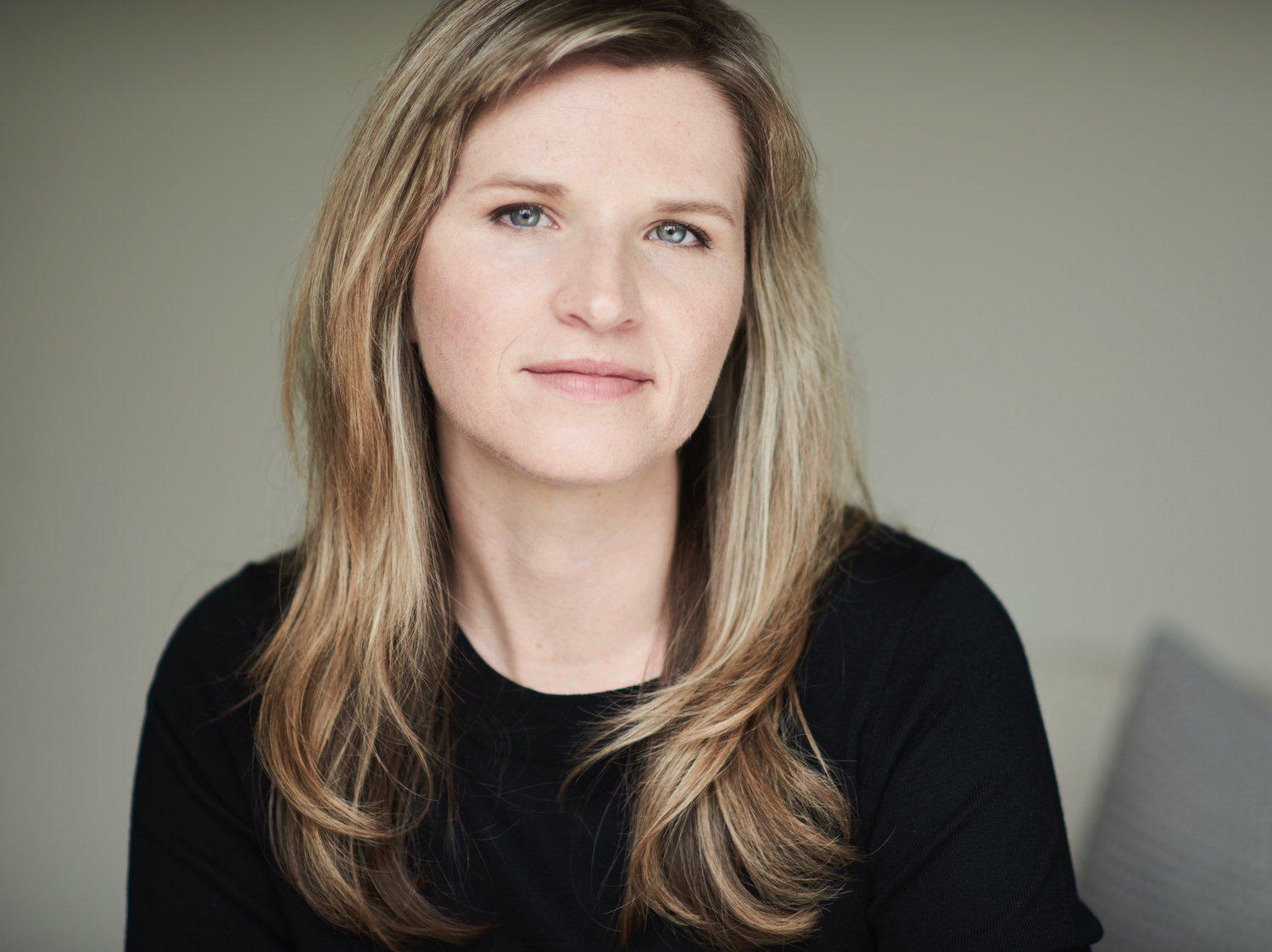
Educated by Tara Westover

The following is a review I put at Goodreads for a non-fiction work, a memoir from a young lady, Tara Westover, simply called Educated.  This memoir details her efforts to get an education.  She grew up in a remote area of Idaho under a father who was skeptical of government, refused to cooperate with it whenever he could, and therefore did not send his children to school.  Tara was really not home school either except for some basics.  The first time she stepped into a classroom was in college at Brigham Young University.  Ultimately Tara earned a PhD in history from Cambridge University in England.  So from this lack of early education, from a totally remote and self-sufficient family, a father who may have been paranoid and bi-polar, and an older brother who physically abused her, Tara fashions a memoir.  To make sense of my first sentence of the Goodreads review, you’ll have to realize I gave the book three stars.  You can only give whole stars at Goodreads, up to five, but many get precise with their rating by articulating a half star in the review.   

This is not the type of book I would normally read.  And I never did provide an ongoing commentary or analysis here on my blog.  I read this book because I joined a book club where I work and these are the types of books they read apparently.  I thought joining this book club would expand my reading selection, and I’m glad I read this book.  While my rating was not high, I did enjoy reading about Tara.  You might enjoy read this too.


Goodreads Review:

If I could be more precise, I would give it two and a half stars, but I rounded up because ultimately I liked Tara and realized that her achievement was extraordinary.  Until the end I was going to round down. 

She not only graduated college (Brigham Young), not only earned a Master’s degree from Cambridge University (in England), but also earned a PhD from Cambridge.  Is that remarkable enough to have a memoir over it?  Perhaps when you consider she never had any education until she first stepped into a University class at Brigham Young.  Except for some scattered lessons from her mother, Tara Westover went from zero education to a PhD.  

Is this still interesting enough to have a memoir over it?  Probably not.  Tara’s memoir is focused on why she had no education until seventeen years old.  Tara grew up in a family that refused cooperating with the modern world, refused modern medicine, and lived in complete self-sufficiency in the mountains of Idaho.  She grew up in an extreme, large Mormon family (five brothers and a sister) with a father who according to Tara was bi-polar and isolated the family from the contemporary society.  This is the premise of her memoir. 

So why only two and a half stars?  Two reasons.  First, it didn’t feel honest.  Not that she was lying, but it didn’t feel like the entire truth was delineated.  It seemed there were a glossing over facts here, an exaggerating facts there, all in order to create more of a story.  For instance, how could the abuse (physical not sexual) from her older brother Shawn go undetected within the family?  Or perhaps the truth was too raw (this was published when she was thirty-two, and so in her recent past) to present honestly.  

Second, I didn’t feel the book was well written, and I think that’s more of an indictment than the first reason.  I don’t mean to say her prose was poor.  It was adequate without much of a sparkle.  The writing was poor because she failed to connect the various motifs and themes that played a part in her story.  She jumped from one issue to another.  It starts off about a father who is supposedly bi-polar (and frankly she never convinces me that he is) and it turns on the abuse of an older brother, all of which denied her an education growing up.  What was the relationship between these themes?  How did her religion play a role in this?  Why do half her siblings side with her parents?  Why are their developments different from hers, even though they lived in the same household?  I was left with more questions than answers.  Westover needed to show the interconnectedness of the various threads for a unified whole. 

Frankly I don't think she really thought the book through.  At least not well enough.  It seems like a hodgepodge of things that roll into her life.  I know the book is non-fiction, and so she feels compelled to stick to a time sequence of events, but there are all sorts of things she could have organized around and what she could have included.  And though I know she loves her family, I think she says so, we hardly ever see why she loves her family.  She gives one deleterious event after another.  That she loves her family is I assume a given assumption.  But this family is so different, and their impact on her life so catastrophic, that is not an assumption she should have made.  She needed to show us why she loves them.  And if her father really is bi-polar, wouldn't that require some sense of compassion for him?  We never see any of that. 

Still, Tara is a wonderful young lady who overcame a lot.