"Love follows knowledge."
"Beauty above all beauty!"
– St. Catherine of Siena

Showing posts with label Heaven. Show all posts

Friday, February 28, 2025

The Voyage of the Dawn Treader: The End of the World

The final chapter of The Voyage of the DawnTreader (Book 5 of The Chronicles of Narnia series by C. S. Lewis) brings the ship to the end of the world.  In order to awaken the sleeping Lords for which the quest had launched, the ship must reach the end of the world and one passenger cross over to Aslan’s country.  Reepicheap, the brave and noble mouse, volunteers to be that sacrificial person. 


The ship goes as far as it can navigate, and Reepicheap, Edmund, Lucy and Eustace embark on a boat to the end.  Edmund, Lucy, and Eustace will only go so far as to reach the portal to cross back from Narnia to Earth, but Reepicheap will cross the end of the world into Aslan’s country.  Caspian had wanted to go, but as King he could not abdicate his throne.  So he stays behind.  This is such a wonderful passage. 


He Caspian] cheered up a little later on, but it was a grievous parting on both sides and I will not dwell on it. About two o'clock in the afternoon, well victualled and watered (though they thought they would need neither food nor drink) and with Reepicheep's coracle on board, the boat pulled away from the Dawn Treader to row through the endless carpet of lilies. The Dawn Treader flew all her flags and hung out her shields to honour their departure. Tall and big and homelike she looked from their low position with the lilies all round them. And even before she was out of sight they saw her turn and begin rowing slowly westward. Yet though Lucy shed a few tears she could not feel it as much as you might have expected. The light, the silence, the tingling smell of the Silver Sea, even (in some odd way) the loneliness itself, were too exciting.


There was no need to row, for the current drifted them steadily to the east. None of them slept nor ate. All that night and all next day they glided eastward, and when the third day dawned—with a brightness you or I could not bear even if we had dark glasses on—they saw a wonder ahead. It was as if a wall stood up between them and the sky, a greenish-grey, trembling, shimmering wall. Then up came the sun, and at its first rising they saw it through the wall and it turned into wonderful rainbow colours. Then they knew that the wall was really a long, tall wave—a wave endlessly fixed in one place as you may often see at the edge of a waterfall. It seemed to be about thirty feet high, and the current was gliding them swiftly towards it. You might have supposed they would have thought of their danger. They didn't. I don't think anyone could have in their position. For now they saw something not only behind the wave but behind the sun. They could not have seen even the sun if their eyes had not been strengthened by the water of the Last Sea. But now they could look at the rising sun and see it clearly and see things beyond it. What they saw—eastward, beyond the sun—was a range of mountains. It was so high that either they never saw the top of it or they forgot it. None of them remembers seeing any sky in that direction. And the mountains must really have been outside the world. For any mountains even a quarter or a twentieth of that height ought to have had ice and snow on them. But these were warm and green and full of forests and waterfalls however high you looked. And suddenly there came a breeze from the east, tossing the top of the wave into foamy shapes and ruffling the smooth water all round them. It lasted only a second or so but what it brought them in that second none of those three children will ever forget. It brought both a smell and a sound, a musical sound. Edmund and Eustace would never talk about it afterwards. Lucy could only say, "It would break your heart." "Why," said I, "was it so sad?" "Sad!! No," said Lucy.


No one in that boat doubted that they were seeing beyond the End of the World into Aslan's country.


At that moment, with a crunch, the boat ran aground. The water was too shallow now even for it. "This," said Reepicheep, "is where I go on alone."


They did not even try to stop him, for everything now felt as if it had been fated or had happened before. They helped him to lower his little coracle. Then he took off his sword ("I shall need it no more," he said) and flung it far away across the lilied sea. Where it fell it stood upright with the hilt above the surface. Then he bade them good-bye, trying to be sad for their sakes; but he was quivering with happiness. Lucy, for the first and last time, did what she had always wanted to do, taking him in her arms and caressing him. Then hastily he got into his coracle and took his paddle, and the current caught it and away he went, very black against the lilies. But no lilies grew on the wave; it was a smooth green slope. The coracle went more and more quickly, and beautifully it rushed up the wave's side. For one split second they saw its shape and Reepicheep's on the very top. Then it vanished, and since that moment no one can truly claim to have seen Reepicheep the Mouse. But my belief is that he came safe to Aslan's country and is alive there to this day.


As the sun rose the sight of those mountains outside the world faded away. The wave remained but there was only blue sky behind it.

Of course this is allegorical.  Aslan is God and Aslan’s country is paradise, located at the farthest east possible.  I was not familiar with the term, “coracle.”  From Wikipedia: “A coracle is a small, rounded, lightweight boat of the sort traditionally used in Wales, and also in parts of the west of Ireland and also particularly on the River Boyne, and in Scotland, particularly the River Spey.”   Reepicheap rides the wave and just suddenly disappears, almost as if he’s assumed into heaven. 


Wednesday, September 21, 2022

Sunday Meditation: The Unjust Stewart

I know, it’s not Sunday.  It’s Wednesday.  Were you as confused about this past Sunday’s Gospel reading as I was?  Normally if I miss posting a “Sunday Meditation” I usually let it go for the week.  But I had to come back to the Parable of the Unjust Stewart.  I guess I have never understood this parable before because I didn’t understand it now.  Not just not understand it, but completely baffled by it.  So I had to turn to Brant Pitre for an explanation, and you will see he does not disappoint.  It was so enlightening I thought everyone should understand it, and so I posted this “Wednesday” meditation! 


First the Gospel reading, but only the parable first.


Jesus said to his disciples,

"A rich man had a steward

who was reported to him for squandering his property.

He summoned him and said,

'What is this I hear about you?

Prepare a full account of your stewardship,

because you can no longer be my steward.'

The steward said to himself, 'What shall I do,

now that my master is taking the position of steward away from me?

I am not strong enough to dig and I am ashamed to beg.

I know what I shall do so that,

when I am removed from the stewardship,

they may welcome me into their homes.'

He called in his master's debtors one by one.

To the first he said,

'How much do you owe my master?'

He replied, 'One hundred measures of olive oil.'

He said to him, 'Here is your promissory note.

Sit down and quickly write one for fifty.'

Then to another the steward said, 'And you, how much do you owe?'

He replied, 'One hundred kors of wheat.'

The steward said to him, 'Here is your promissory note;

write one for eighty.'

And the master commended that dishonest steward for acting prudently.

"For the children of this world

are more prudent in dealing with their own generation

than are the children of light.

I tell you, make friends for yourselves with dishonest wealth,

so that when it fails, you will be welcomed into eternal dwellings.

Lk 16:1-9


So the steward is fired for being a lousy steward, then cheating his master to ingratiate himself with others, and yet the master commends him?  To add to the confusion, Jesus then goes into a series of wise sayings without any transition from the parable.  Here is how this passage ends.


“The person who is trustworthy in very small matters

is also trustworthy in great ones;

and the person who is dishonest in very small matters

is also dishonest in great ones.

If, therefore, you are not trustworthy with dishonest wealth,

who will trust you with true wealth?

If you are not trustworthy with what belongs to another,

who will give you what is yours?

No servant can serve two masters.

He will either hate one and love the other,

or be devoted to one and despise the other.

You cannot serve both God and mammon."

        Lk 16:10-13

These sayings, on the issues of trustworthiness and money, seem to be directed at the steward.  But the steward is neither trustworthy nor ascetic with money.  He seems to be a disciple of mammon. So why is the steward commended?  At this point, I needed help, and who best than Dr. Pitre.


Get that?  You are to pay off spiritual debts—sins—with the Lord’s money, so that those you whose debts you pay off will welcome you into eternal happiness. 

Interesting.  In a way it sounds a lot like works righteousness, only Jesus is not so much referring to works that you are storing up but to some sort of spiritual currency.  The bitcoin of heaven!

Sunday, April 16, 2017

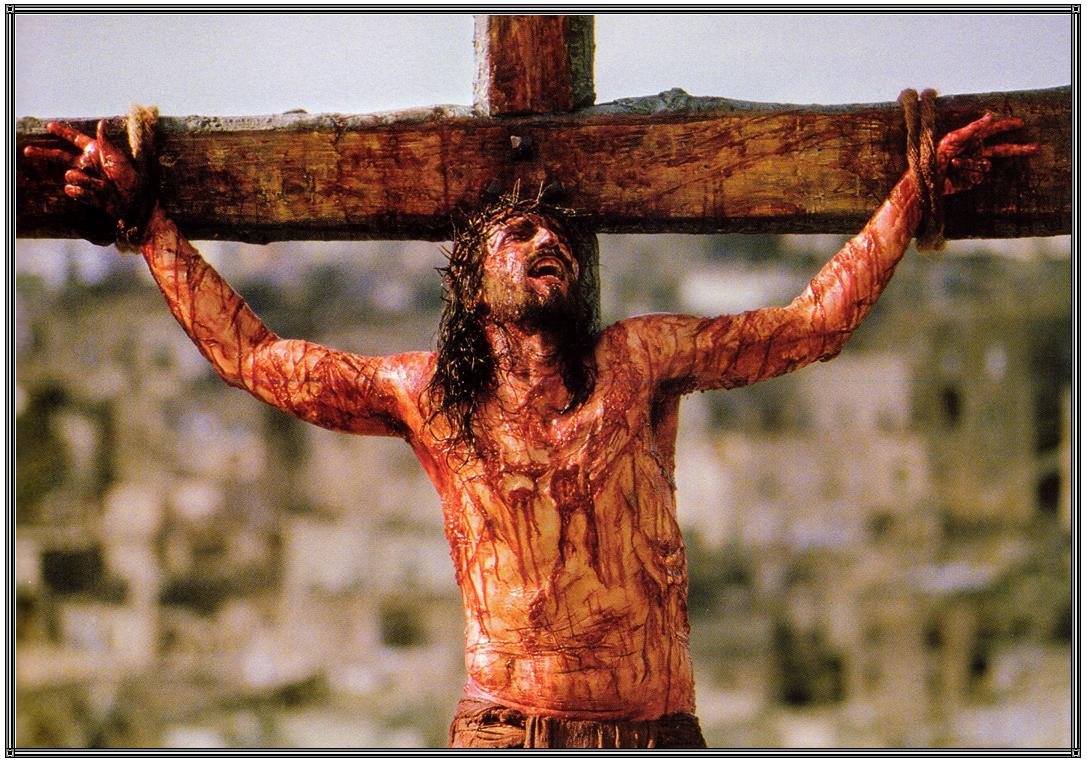
What Jesus Saw from the Cross: The Look to Heaven

I’ve posted twice on this wonderful book, A. G. Sertillanges’ What Jesus Saw from the Cross, already (here and here) and I wanted to post one more on its amazing conclusion.  I did want to post this before Easter Sunday, but I was just too busy.  But here it is on Easter Sunday night.

As I’ve noted, Sertillanges’ book is a devotional on Christ’s passion, taken from the perspective of Christ looking out hanging from the cross.  Sertillanges identifies the sights and sounds, the events of Christ’s last days, Christ’s friends and His enemies, His last words, and what all this sound and fury was about.  In the last chapter, as Christ raises His eyes toward heaven in His last moments of life, the vision steps away from what is below, and Sertillanges attempts to contemplate Christ’s vision beyond the earth. 

In the eyes of the dying Savior, things and people are never withdrawn from their natural environment nor isolated from the divine sphere in which they are enclosed.  When He meditates upon what He sees He cannot but consider its divine content.  Heaven envelopes the earth and all things that are upon it.  Lifted up from the earth, more by His soul than by His Cross, Christ finds in Heaven the first object of His contemplation.  From Heaven He comes and to Heaven He returns.  Thus it is with His eyes raised to Heaven that we must think of Him uttering His first and His last sentences, each of them beginning with the word Father.  (p.211)


Two things are important there—the intermingling of the divine with the material and the source of the first cause, God the Father.  In that glance toward the Father, eternity and the temporal meet, and the mutual love of the Father and Son, which blossoms in the form of the Holy Spirit, is made manifest.  What Sertillanges sees at that moment is the reconciliation of all things, the material and the spirit, the eternal and the transient, the internal and the external.

It is not without importance at the foot of the Cross, which reconciles all extremes, to notice how the heavens—especially the heavens at night—are related to the mystery of the soul.  The ether is beyond all measure; and beyond all measure and understanding also are the stirrings of the heart.  We cannot rise to the stars or descend to the depths of our being.  Two infinites stretch beyond the bounds of our experience, and both attract us irresistibly yet hold us at a distance.

What can we do without God in the heights, and without His grace in the depths of ourselves?  Yet we feel that these two domains coalesce and that God, who is in us and ineffably beyond us, welds the whole of nature into one.  If we go to God and give ourselves to Him, then we reconcile all things—being, our own being, and the Subsistent Being upon whom all else depends.  (pp. 213-14)

 Reconciliation implies that despite fragmentation there is unity.  Christ being one of the Trinity is aware of the impalpable wholeness.  Sertillanges continues:

We cannot doubt that Christ always has an intimate realization of these things.  If “the father had given all things into His hands” (John 3:35), it was assuredly with the full consciousness that this was so.  Filled with the knowledge of what is, He has by that very fact full assurance of what He does.  His vision reaches unerringly to God, the living Heaven, to the soul, that lowly heaven in which the other is reflected, to the nature of the universe, and to Himself in whom all these fragments of reality find their unity.

And so Sertillanges has Christ first lovingly contemplating the beauty of creation, the natural world, the blue vault of sky, the gathering clouds, expressing that vision in His imagination as a poet expresses mystery.  Here Christ becomes an artist, expressing truth and beauty, all leading to God and a part of God.

Who better than this human and heavenly soul was able to taste God in the universe and the universe in God who sustains it?  Associated with the divine harmony (One in Three, Three in One), is He not wholly attuned to the music of creation?  Son of Man, does He not find in man’s dwelling place His proper home?  He has caught up in Himself the whole of humanity.  He bears within Himself the Idea, the begetter of beings.  He is the “beginning of creation of God” (Rev 3:14) and He is the End.  Everything is a symbol of Him.  Nature tends to Him with all its significance and all its powers.  (pp. 216-17)

In that last moment Christ “perceives the harmony of creation as an eternal Will whose applications to human life for the object of His teaching, of His exhortations, and of His grace.  He mingles Heaven with earth, nature with the soul, time with the eternal outcome of time” (217).  Christ both contemplates the vastness of the grand universe and the minuteness of the molecular world, the infinity inside the microscopic.  His vision is both expansive and confined.

Second, Setillanges has Christ, at that moment of looking heavenward, in prayer on the cross.  Christ’s contemplation of the harmony of all things is a prayer.

Jesus prays.  His prayer on the Cross is a continuation of His constant prayer.  If the sky is Heaven, if the universe, the soul, and God are Heaven, then the act by which Jesus links all of these together in one common thought is a communion with Heaven in the most complete sense of the word, a vision of Heaven boundless and sublime.  (p. 220)

It is in prayer that the sublime of Heaven interfuses with the physicality of earth, the transcendence of the spirit with the incarnate of flesh and blood.  The cross is the axis between the two realms.

The cross, then, is the great place of prayer, just as it is the great altar, the great monstrance, and the first tabernacle.  It is not in vain that we are told to begin and end prayer with the sign of the Cross.  Properly understood the sign means: “I adore Thee, my God, by the Cross, by Jesus on the Cross, with Jesus on the Cross, in a spirit of commemoration and trust, but also in a spirit of obedience and sacrifice…I ask of Thee all that I need in the name of the Cross, that is, in the name of the same memory, in the name of the same merits, to which I humbly unite those things that are wanting, according to the exhortation of the Apostle” (Col 1:24).  (pp 224-25)

Paul in that passage in Colossians speaks of uniting his sufferings with that of Christ.  Sertillanges is suggesting that through such a union, we too marry the transcendence with our flesh and blood.  We reach it through prayer and sacrifice, which amounts to love.  Jesus prays on the cross the 22nd psalm, “My God, my God, why hast Thou forsaken me.”  We all know the famous first line, but surely Christ didn’t stop praying there.  He prayed the whole psalm, and in it we hear of the suffering servant but we also hear of the transcendent.  By the middle of the psalm, the psalmist gives praise to the Lord, and by the conclusion the Lord is triumphant.  The dualism of suffering and victory merge, as does Christ on the cross.

In Christ there are two lives, the one is a temporal life, which moves on from the manger to the Cross and the grave, the other eternal, immutable at the right hand of the Father.  The Beatific Visio, identical in each, welds as it were these two lives in one.  For Jesus, life after death is not entirely a renewal; it is a continuation.  Jesus is reborn and glorified in His flesh; but in His soul He merely pursues His destiny and continues His eternal colloquy with God.  The crown of His destiny makes no deep change in Him.  In the dust of daily action, and under the searing fire of pain, He was already in glory; He saw God face-to-face.  What was there still for Him to acquire, save that His body should finally share the glory of His soul.  (p. 230)

So in that moment of looking toward heaven, just before Christ dies, defeat and victory, heaven and earth, spirit and body, fuse.  Sertillanges has Jesus watching the heavens open.  “This is His vision of victory, symbolized on Calvary by those eyes that look out upon the infinity of space through a film of blood” (pp. 233-34).

This is a remarkable book, one of the best devotionals—if not the best—I have ever read. 


I hope your holy week was blessed and Easter Sunday joyous.  Alleluia, He is risen.