Today is the third feast Sunday following
Pentecost, and today is one that is fixed to the 29th of June.When it doesn’t fall on a Sunday, it used to
be a Holy Day of Obligation, and it still is in some parts of the world.Where it is not, such as the United States, it is transferred to the following
Sunday.
There are several Gospel readings for this
feast, depending on whether the Mass is a vigil, day, or night.I will choose the day Mass for Year C:
When Jesus went into
the region of Caesarea Philippi
he asked his
disciples,
“Who do people say
that the Son of Man is?”
They replied, “Some
say John the Baptist, others Elijah,
still others Jeremiah
or one of the prophets.”
He said to them, “But
who do you say that I am?”
Simon Peter said in
reply,
“You are the Christ,
the Son of the living God.”
Jesus said to him in reply, “Blessed
are you, Simon son of Jonah.
For flesh and blood has not revealed
this to you, but my heavenly Father.
And so I say to you,
you are Peter,
and upon this rock I
will build my Church,
and the gates of the
netherworld shall not prevail against it.
I will give you the
keys to the Kingdom of heaven.
Whatever you bind on
earth shall be bound in heaven;
and whatever you loose
on earth shall be loosed in heaven.”
~Mt 16:13-19
That is the often
quoted passage of Jesus handing the keys of heaven and hell, binding and loosing
to St. Peter.
Fr. Geoffrey Plant once
again provides a thorough understanding of the Solemnity’s significance.
Amazing this feast
day goes back to the third century!That
when the Church was still being persecuted.I really like that quote from St. Augustine: “Both apostles share the
same feast day, for these two were one, and even though they suffered on
different days, they were as one.Peter
went first and Paul followed.And so we
celebrate this day made holy by the apostles’ blood.Let us embrace what they believed, their
life, their labors, their sufferings, their preaching, and their confession of
faith.”
Also fascinating is
that in the New Testament, Peter is mentioned by three names: Peter (154
times), Simon (75 times), and Cephas (7 times).
Jeff Cavins provides
us a pastoral preaching (he is not a priest to call it a homily) on this
Solemnity.
Of particular note is
the pattern Cavins points out between the Gospel and the Acts of the Apostles,
between Jesus and the apostles after the Resurrection, and then between the
first half of Acts with Peter and the second half with Paul.And so there are parallels between Jesus,
Peter, and Paul.
Sunday Meditation: “But who do you
say that I am?”
For the hymn, I’m going to bet you never
heard this before.“St. Paul’s Blues” by
John Michael Talbot.
Has anyone heard that before?I did not think John Michael Talbot ever took
on the blues form.I’m not sure what to
think.
A
number of Catholic outlets have noted Dion DiMucci’s new music album, Blues with Friends.You may know Dion from the 1950s!He was the lead singer of Dion and the
Belmonts, players of Doo-Wop style of rock-n-roll.Well, if you’ve kept up with his music
career, it didn’t end in the 50’s with “Runaround Sue.” He’s made other music
as you can read in his Wikipedia entry, some of it popular.What you may not have known is that
throughout his 57 year career he has been a believing Catholic and at some
point a devout Catholic.He has actually
written songs with the well-known Catholic historian, Mike Aquilina.
Dion’s
new album has gotten a bit of air play because each song features a different virtuoso,
usually well known.Given that I love
the blues, given that I love Dion, given that I love many of the virtuosos
featured, I had to get the album.Before
I feature some of the songs let me provide a few excerpts of articles from
Catholic outlets.
“You don’t know how much
fun it was to make this album,” Dion told the Register. “This album was like
riding a cloud — no stress involved at all. It was amazing because sometimes
making an album can be excruciating. … [This time] the songs came. I wasn’t
under pressure. I was writing them as they came to me. I decided to record
them. I went into the studio and knocked these tracks out in three days. I just
sat down with the guitar and sang maybe six songs one day, six the next, two
the next. A lot of them are just one take.
“One take — that way the
songs are full of light, full of expression,” he continued. “You might not get
it perfect, but its full of expression. I’m full of expression. I’m not a
draughtsman. I express my art.”
Dion’s latest album,
Blues With Friends, has spent months on the Billboard “Blues Album” charts,
much of that time in the #1 slot. Featuring guest appearances by such rock
legends as Jeff Beck, Paul Simon, Billy Gibbons (of ZZ Top), Van Morrison,
Bruce Springsteen, and more, the album is another triumph from the man whose career
began with Dion and the Belmonts, and has lasted another 60 years beyond – and
counting.
Perhaps
the most obvious question a Catholic journalist would ask is the first he asks:
Catholic
World Report: Let’s talk about your Catholic faith,
and how that influences your music.
Dion
DiMucci: Well, my Catholic faith influences everything. That’s
at the center of my being, of my mind. If you would unzip my mind and look
inside my brain, you’d find a very orderly place, and that’s because of having
a personal relationship with God. I came into a 12-step spiritual program 52
years ago and it was gleaned from St. Ignatius of Loyola’s Disciplines. It’s
designed to lead you into union with God. And that’s a very peaceful place! A
place of wisdom, a place of power, of serenity; it’s home. I’m home, and I’m
not living in a chaotic world, because I’m living in God’s presence – or trying
to, a day at a time.
That influences
everything. It frees you up to write about beauty, and truth, and goodness, and
relationships. I think it helps you be creative. I’ve had a lot of people say
to me, “At your age, you sound like a young guy! Your voice is incredibly
vital.” That’s God. Without God I’d probably be drinking and drugging, sounding
husky – I probably wouldn’t even be alive. If he wasn’t the center, I think I’d
be in trouble in some way. I think I’d be living in a chaotic state. I’d
probably be grasping for position and power and money and pleasure and honor,
fighting everybody, trying to be better, trying to win, all of that. Instead of
just being content in all things.
And
of course then the collaboration with his partner comes tomind.
CWR:
Can you briefly recount how you and Mike Aquilina got to know each other, and
how you came to write songs together?
Dion:
We found ourselves in Rome together, in 2000. We were on the bus, and we
stopped and there was a statue of St. Jerome. I remembered a quote that I read
in the back of Mt. Carmel Catholic Church in the Bronx that said, “Ignorance of
Scripture is ignorance of Christ,” and that’s St. Jerome. So I said that to
Mike, and he says to me “The Thunderer!” I said “’The Thunderer’? What’s that?”
And he said, “Well, St. Jerome – he gave ‘ignorance of Scripture’ new meaning.
He was from what we now call Croatia, the brightest of the bright, so he was
sent to Rome. The pope saw how bright he was and had him translate the Bible
from Greek to Latin – the Vulgate. And he was an intolerant guy – he didn’t
like Italian women and Greek women, the way they combed their hair, the way
they did their eye makeup. People got on his nerves.” I said, “People got on
his nerves? How could he be a saint?” He said, “Well, it takes all kinds to
make it to heaven. He had great qualities. He moved to Israel; he made friends
with a rabbi, and he learned how to speak Hebrew, and he translated the Bible
again, from Hebrew to Latin! So he gives ‘ignorance of Scripture’ new meaning.”
I said, “I’ve got to write a song about this guy!” And we ended up writing a
song called “The Thunderer” about St. Jerome. That was the beginning, that’s
how we met.
And
about the actual making of the record, Dion
CWR:
Coming to your new album: in the liner notes, you talk about how the album’s
genesis was in an interaction you had with Joe Bonamassa. How did the album
come to fruition? How did you come to choose the “friends” on the album – Paul
Simon, Bruce Springsteen, Van Morrison, Jeff Beck, etc.?
Dion:
Well, you’re right, Joe Bonamassa was the catalyst for the album. Mike and I
had written all these songs. To be honest with you, Mike kept calling me saying
“Hey, got any plans to record those songs? They’re real good, and keep running
around my head!” I think this is the best batch of songs we ever put together.
They’re memorable, they’re great stories, they’re worthy to be told.
I went in and cut all of
the songs in three days. Bonamassa heard them at my house and said he wanted to
play on “Blues Comin’ On”. And that was it. That really sparked something in
me. It sparked the idea that I could cast characters, like each of these songs
is a mini movie and I could cast a character to infuse their personality onto
my song. It worked so well with Bonamassa, maybe it will work well with Billy
Gibbons – and it did! So I sent one to Brian Setzer – and it did! So I decided
to send one to Jeff Beck – and it worked again! When he said yes, that was the
gold standard, because he has magic in his hands.
After that it was just
like dominos, like riding a wave. It was crazy fun, because I never gave
anybody an idea of what to play – I just gave them the song, a finished track,
and they would just add their own thing to it. When these artists do something,
it really puts a smile on your face.
There’s
a lot more good stuff in both those articles, and well worth reading.But now let me turn to the music.Here is the entire playlist with the featured
artist of each song.
Playlist:
Blues Comin’ OnFeatured
Artist:Joe Bonamassa
Kickin’ ChildFeatured artist: Joe Menza
Uptown Number 7Featured
artist: Brian Setzer
Can’t Start Over
AgainFeatured artist: Jeff Beck
My Baby Loves To BoogieFeatured artist: John Hammond
I Got Nothin’Featured
artists: Van Morrison, Joe Louis Walker
Stumbling BluesFeatured
artists: Jimmy Vivino, Jerry Vivino
Bam Bang BoomFeatured
artist: Billy Gibbons
I Got The CureFeatured
artist: Sonny Landreth
Song For Sam Cooke (Here
In America)Featured artist: Paul
Simon
What If I Told YouFeatured
artist: Samantha Fish
Told You Once In AugustFeatured artists: John Hammond, Rory Block
Way Down (I Won’t Cry No
More)Featured artist: Stevie Van Zandt
Hymn To HimFeatured
Artists: Patti Scialfa, Bruce Springsteen
Whoa,
those are some heavyweights.Dion should
record with some of his friends more often.
So
let’s start with the song that inspired the album, “Blues Comin’ On.”
Joe Bonamassa is a blues guitarists, a really good one.Dion’s vocals really intertwine nicely with
Bonamassa’s guitar licks.
You
will just love the rhythmic beauty of “Kickin’ Child” with Joe Menza, who I am
not familiar with, on guitar.
This
one has a religious message with “Uptown Number 7,” featuring Brian Setzer from
the Stray Cats.
I
can’t embed all songs, and I’m having a hard time cutting back.“I Got The Cure” with Sonny Landreth on slide guitar is superb blues.
Perhaps
the highlight of the album has to be Dion’s tribute to his departed friend, Sam Cooke with “Song For Sam Cooke (Here In America)” featuring Paul Simon on
backup vocals.Here’s a clip where Dion
explains the song at the end.
I
just love that melody.And the lyrics
are beautiful.I’ll skip quoting the
chorus, but here are the verses from the song.
We traveled this land
back in nineteen sixty-two
We played the places that
were home to me and you
We drove to Memphis,
rocked a set
We walked the streets at
night and smoked a cigarette
Down the block I saw the
people stop and stare
You did your best to make
a Yankee boy aware
I never thought about the
color of your skin
I never worried 'bout the
hotel I was in
You were the man who
earned the glory and the fame
But cowards felt that
they could call you any name
You were the star,
standing in the light
That won you nothing on a
city street at night
You stayed more steady
than a backbeat on a drum
You told me you believed
a change was gonna come
You sang for freedom but
lived life free
I saw it in your smile
and in your dignity
You were a star when you
were standing on a stage
I look back on it, I feel
a burning rage
You sang "You Send
Me", I sang "I Wonder Why"
I still wonder, you were
way too young to die
That’s
one of the best tributes to another singer I have ever heard.
I
do have to highlight Samatha Fish’s lead guitar on “What If I Told You.”
Wow,
she can play. Great blues song too.
Around and round like an
old top
You spin my mind and then
it won't stop
Down and down you let a
name drop
Say you love me then you
flip flop
Finally
I have to include with the most religious song on the album, “Hymn to Him,”
featuring the husband and wife team of Bruce Springsteen and Patti Scialfa.
He's the light of
salvation
He's the head that's
never bowed
He's the first step of
wisdom
He's the sun through the
clouds
That’s
very moving and a great devotional.Another
interesting note.The linear notes of
the CD were written by a Robert Zimmerman.Hey, that’s Bob Dylan!
“Dion
knows how to sing, and he knows just the right way to craft these songs, these
blues songs. He’s got some friends here to help him out, some true luminaries.
But in the end, it’s Dion by himself alone, and that masterful voice of his
that will keep you returning to share these Blues songs with him.” - Excerpt
from Bob Dylan’s liner notes for Blues With Friends
I
guess readers here remember I’m a Rolling Stones fan when it comes to rock
music. I decided to play the Rolling
Stones’ Some Girlsalbum on my ipod,
a truly great album, but one of the album songs is “Beast of Burden.”
Wikipedia has an interesting background to the song.
Jagger says,
"Lyrically, this wasn't particularly heartfelt in a personal way. It's a
soul begging song, an attitude song. It was one of those where you get one
melodic lick, break it down and work it up; there are two parts here which are
basically the same." The song can be seen as allegorical, with Richards
saying in 2003, "When I returned to the fold after closing down the
laboratory [referring to his drug problems throughout the 1970s], I came back
into the studio with Mick... to say, 'Thanks, man, for shouldering the burden'
- that's why I wrote "Beast of Burden" for him, I realise in
retrospect."
Man,
if this isn’t perfection when it comes to rock and roll, I don’t know what
is. The bluesy melody, the wonderful
interweaving guitars, the lyrics of song of male insecurity, and Mick Jagger’s lamentation
filled vocals. Here’s what Wikipedia
says about the composition.
"Beast of
Burden" was recorded from October–December 1977. Although basic lyrics
were written before the Stones entered the studio, many of the lyrics on the
recording were improvised by Jagger to fit with the smooth running guitars of
Richards and Ronnie Wood. Characteristically, Richards and Wood trade off
rolling, fluid licks. Neither is really playing lead or rhythm guitar; they
both slip in and out, one playing high while the other is low. The song is
another famed Some Girls song that features each band member playing his
respective instrument without any outside performers; both Richards and Wood
play acoustic and electric guitars, with Wood performing the solo.
You
just cannot beat this.
Here
are the lyrics, with credit to Keno’s Rolling Stones Web Site.
BEAST
OF BURDEN
(M. Jagger/K. Richards)
I'll never be your beast
of burden
My back is broad but it's
a hurting
All I want is for you to
make love to me
I'll never be your beast
of burden
I've walked for miles my
feet are hurting
All I want is for you to
make love to me
Am I hard enough
Am I rough enough
Am I rich enough
I'm not too blind to see
I'll never be your beast
of burden
So let's go home and draw
the curtains
Music on the radio
Come on baby make sweet
love to me
Am I hard enough
Am I rough enough
Am I rich enough
I'm not too blind to see
Oh little sister
Pretty, pretty, pretty,
pretty, girl
You're a pretty, pretty,
pretty, pretty, pretty, pretty girl
Pretty, pretty
Such a pretty, pretty,
pretty girl
Come on baby please,
please, please
I'll tell ya
You can put me out
On the street
Put me out
With no shoes on my feet
But, put me out, put me
out
Put me out of misery
Yeah, all your sickness
I can suck it up
Throw it all at me
I can shrug it off
There's one thing baby
That I don't understand
You keep on telling me
I ain't your kind of man
Ain't I rough enough, ooh
baby
Ain't I tough enough
Ain't I rich enough, in
love enough
Ooh! Ooh! Please
I'll never be your beast
of burden
I'll never be your beast
of burden
Never, never, never,
never, never, never, never be
I don't need no beast of
burden
I need no fussing
I need no nursing
Never, never, never,
never, never, never, never be
Certainly there are great quotes out of the Psalms,
but as I’m reading through them, I was wondering if there were any great quotes
about the Psalms. I found this one
What's so powerful about the
Psalms are, as well as they're being gospel and songs of praise, they are also
the blues.
-Bono
That’s Bono from U2!
And he’s correct. One third of
the psalms are classified as lamentations.
It
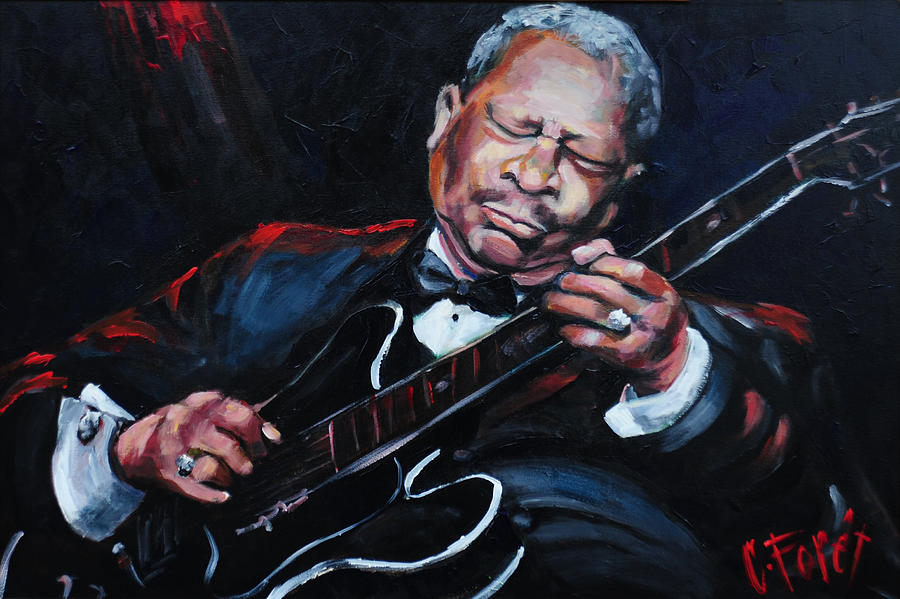
was with great sadness to learn a couple of weeks ago the great blues legend B.B. King passed away. He died on May 14th. From Billboard, which wrote a magnificent
obituary and worth reading every word of it:
B.B. King, the last of
the Southern-born blues musicians who defined modern electric blues in the
1950s and would influence scores of rock and blues guitarists, has died. He was
89.
The Mississippi-born
guitarist, who had suffered from Type II diabetes for two decades, died
peacefully in his sleep at 9:40 p.m. PDT Thursday at his home in Las Vegas, his
attorney Brent Bryson tells the AP. In October, King fell ill during a show and
after being diagnosed with dehydration and exhaustion, canceled his concert
tour and had not returned to touring at the time of his death.
With his trusty Gibson
guitar Lucille, King developed his audiences in stages, connecting with
African-Americans region by region in the 1950s and '60s, breaking through to
the American mainstream in the '70s and becoming a global ambassador for the
blues soon thereafter, becoming the first blues musician to play the Soviet
Union.
I
don’t know what’s left to say about B. B. King.
He was truly one of the greats, a great vocalist, a great guitarist, and
a great song writer.
Born Riley King on Sept.
16, 1925, in the Mississippi Delta near Itta Bena, he was raised on a cotton farm by his
maternal grandmother, Elnora. His mother died he was 9, his grandmother when he
was 14. He picked cotton on a plantation in Indianola, Miss., and his first
recording, made in 1940, was the “Sharecropper Record” in 1940.
King learned the guitar
by studying Jefferson, Walker, Lonnie Johnson and his cousin, Booker “Bukka”
White, who taught him the finer points of guitar.
“I guess the earliest
sound of blues that I can remember was in the fields while people would be
pickin’ cotton or choppin’ or something,’ ” King recalled in a 1988 interview
with Living Blues. “When I play and sing now, I can hear those same sounds that
I used to hear then.”
He believed gospel
singing was a path to success and in 1943 joined the Famous St. John Gospel
Singers, which was featured on WGRM, a gospel radio station. He sang in church
on Sundays, then changed hats in the evenings to play for tips on the street
corners of Indianola.
That same year he joined
the Army, but his stay lasted less than three months. He spent his service days
driving a tractor on a Delta plantation and his weekends at Indianola music
spots soaking up the likes of Duke Ellington, Count Basie and Robert Nighthawk.
At that time, he decided he would attempt to play blues rather than gospel.
I
should say that King’s style of blues did not initially resonate with me when I
was younger. He used a big band ensemble
more so than any other of the great blues legends, giving it a jazzy texture
which struck me as out of the true Mississippi Delta blues tradition. But in time it did grow on me. I remember seeing King at his New York City blues
club once (gosh, I wish I could remember when that was) and watching him live
persuaded me over. Forget the
arrangement, he really was a great guitarist.
From Billboard:
King, whose best-known
song was "The Thrill is Gone," developed a commercial style of the
blues guitar-playing long on vibrato and short, stinging guitar runs while
singing almost exclusively about romance. Unlike the musicians who influenced him,
Blind Lemon Jefferson and T-Bone Walker, for example, or his contemporaries
Muddy Waters, John Lee Hooker and Howlin Wolf whose music bore geographic
identities, King's music was not tethered to the style heard at the Mississippi
plantation he was born on or the Beale Street sound in Memphis where he first
established his career.
He took rural 12-bar
blues and welded it to big city, horn driven ensembles populated with musicians
who understood swing and jazz, but played music that worked a groove and
allowed King's honey-sweet vocals and passionate guitar licks to stand out. His
solos often started with a four- or five-note statement before sliding into a
soothing, jazzy phrase; it's the combination of tension and release that King
learned from gospel singers and the jazz saxophonists Lester Young and Johnny
Hodges.
Well
let’s sample some of his work.
Here’s
what I mean about the band arrangement mixed with his beautifully lyrical
guitar riffs.
But
then he could get down with traditional blues arrangement just like the best of
them.
And
he could just capture an emotion. He
understood that the blues are about a core emotion.
As
a musician, and especially a bluesman, King had regrets in how he had not been
the best father in the world. He
fathered fifteen children with several women, and he married two of them. There is an interview (I searched but couldn’t
find it) where he confesses and lives up to his mistakes. In the end, he made peace with his sins. I just love this Sinner’s Prayer he does with
Ray Charles.
Finally
one has to end a B. B. King retrospective with his greatest hit, possibly the
greatest blues song ever written and recorded.
I
could listen to that song every day of my life.
B. B. you may be gone, but thrill is still there. Rest in eternal light.