"Love follows knowledge."
"Beauty above all beauty!"
– St. Catherine of Siena

Showing posts with label Lord of the World. Show all posts

Saturday, May 29, 2021

List of Books I Wish I Had Read Earlier

I recently came across a book list where the creator of the list opined on wishing he had read those books earlier.  I thought that an interesting list.  So I decided to create my own. 

Now the first thing to decide was at what point would I consider as the dividing line as earlier?  I could say of any novel I really enjoyed and thought of highly should have been read earlier.  But “earlier” could be as early as a child.  No, the list had to be after a significant moment of my reading life.  Notice I said, “reading life.” 

I would say that the moment I got my Master’s Degree in English Literature to be such a dividing moment in my reading life.  Anything I read after would have been out of my mature years and from my free will.  Such books I read beyond that moment could have shaped my younger self, either as a person or as a lover of literature.

So finally, these books will be novels—I limit it to novels since novels are the art form I most enjoy—that I read since my 39th birthday that I wish I had read prior.  I’ll limit it to ten novels I have read in these past twenty years.  They are not necessarily the greatest novels I wished I had read earlier, but the most potentially impactful.  I’ll list them backwards, least wished to most wished.

10.  The Hobbit, by J.R.R. Tolkien. 

I was never a big Lord of the Rings fan, but I do acknowledge its greatness.  I read Lord of the Rings for the first time as a teenager, and then read it again in my twenties.  It’s a fun read, but I never saw the literary significance of it.  I know there is a core of Tolkien readers of good literary taste who rate it very high as a literary work.  I was never that passionate about it.  So I never read The Hobbit, the predecessor of LOTR, thinking it was along the same lines.  I finally read The Hobbit in 2012 and found it superb!  I think it’s a greater work than LOTR, perfectly written and not weighed down with stray adventures and characters.  It is a much more focused work, and so its moral is clearer and more direct.


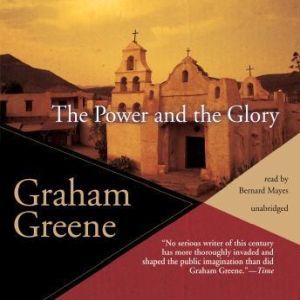
9. The Power and the Glory by Graham Greene.

It is possibly the greatest overtly Catholic novel ever written.  It is perfection in structure and storytelling.  It is powerful in its moral conception, capturing the weakness of man and man’s strength given a dedication to a higher cause.  The character of the “whiskey priest” is Everyman who feels caught between faith and doubt, between perseverance and cowardice.  It is tragic and heroic and will make you yearn for a life dedicated to a higher cause. 


8. Lord of the World by Robert Hugh Benson.

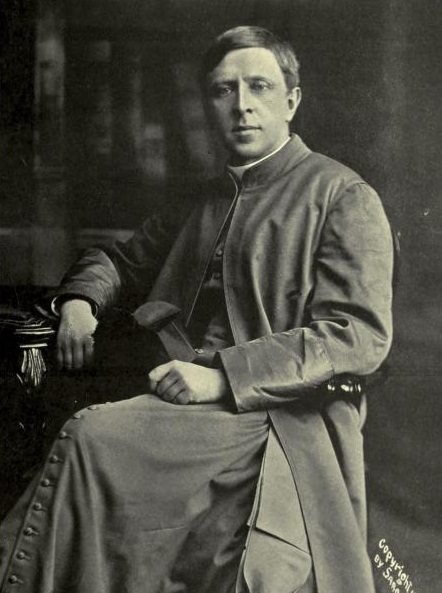
Famous Catholic convert, Catholic priest, and son of an Anglican Archbishop, Robert Hugh Benson was a gifted writer and wrote in different modes at the beginning of the twentieth century.  He wrote several novels, and this one praised by Popes Benedict XVI and Francis.  It’s an apocalyptic novel where a government of Freemasons have conquered the world and extinguished all religions except Catholicism.  The novel climaxes in a battle of Armageddon.  This is truly an underrated novel that should get more readership.  I read it last year and wished I read it as a young man.


7. Mariette in Ecstasy by Ron Hansen

This is another perfect gem of a novel by a writer who attempts various genres.  This novel is of a young lady entering a closed religious order as a novice at the turn of the 20th century and who experiences several ecstatic experiences.  The other sisters in the order divide between those who believe her and those who think she is faking them.  The novel brings into question the inability of science to understand religious experiences.  I read this novel in 2019 and was overwhelmed by the beauty of the writing, the psychological depth of the characters, and the profound modernist themes.


6. My Ántonia by Willa Cather.

This was my first Willa Cather novel, and it blew me away.  The depth of character, the beautiful prose, and perfect story structure should make this one of the great modernist novels.  My hunch is that Cather’s more traditional views holds this novel back from being more situated in the 20th century canon, but I would rank it with any American novel.  I don’t have a record of when I read it, but it should have been assigned in college.


5. Silence by Shūsaku Endō.

This too rivals for the greatest Catholic novel ever written.  A historical novel set in 16th century Japan where a Portuguese Jesuit priest sneaks into Japan to find out about an apostate priest and to serve the secret Catholic community.  He is captured and put into an existential situation where has to apostatize himself or have innocent peasants tortured and killed.  I read this in 2016, the year the movie version came out. 


4. Les Misérables by Victor Hugo.

My wife and I saw the musical many years ago on Broadway and loved it.  We’ve watched the PBS singing of the songs, and watched the movie.  I have the CD.  It’s been a particular favorite.  But I had not read the novel.  The novel is great!  Yes, it’s a tome of a book, and I read it over five years, one of the five parts of the novel in each year.  Yes, there is some expository digressions that interrupts the narrative.  That’s Victor Hugo.  But the narrative is fantastic.  The character of Jean Valjean captures my heart.  There are so many great moments.  The novel turns out to be much more religious than the modern adaptations.  I read Les Misérables from 2014 to 2019.  I wish I had read it earlier.


3. Crime and Punishment by Fyodor Dostoevsky.

I thought that The Brothers Karamazov was Dostoevsky’s great novel, and it is, but Crime and Punishment is its equal.  What a powerful all comprehensive work of art.  No one can better capture the psychological depth of characters than Dostoevsky.  And not just a momentary psychology but a psychology in development and transition.  This story is powerful for its Christian world view, its superb characters (I love Sonya!), and its intricate plot.  You know Raskolnikov is the killer.  It’s a question of whether he gets caught, and if you the reader want him to get caught.  I won’t spoil it.  For a novel that was written in 1866, it is so current today.  I read it in 2015. 


2. To Kill a Mockingbird by Harper Lee.

Another great novel.  You, dear reader, probably read this in high school.  For some reason I never was assigned this novel.  It’s also not one you would get assigned in college, and that is a pity.  I love the telling of the story from the point of view of a pre-teen girl, with all its implications of oncoming puberty.  I love the character of Atticus Finch, the heroic father and lawyer, and the implications of a little girl’s admiration for a moral and duty-bound hero.  I love the way Lee captures the South, both in its positive and negative attributes.  I read this in 2016 at the age of 54.  I should have read it forty years earlier.


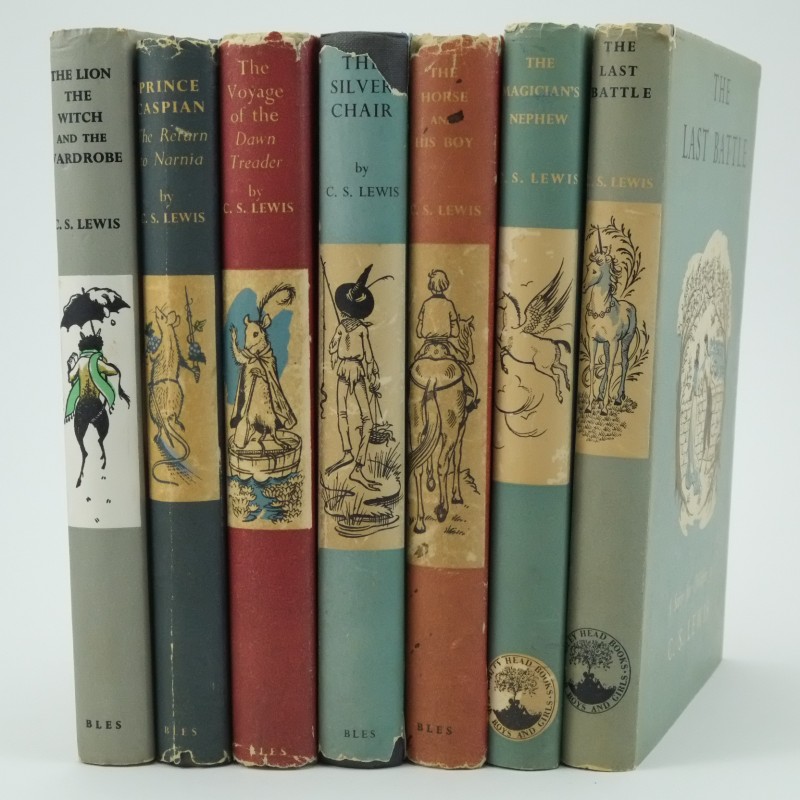
1. The Chronicles of Narnia by C. S. Lewis.

The number one book I wish I had read earlier is not a single book but a series, C. S. Lewis’ great interlocking series of novels affectionately just referred to as Narnia.  Actually I haven’t even finished the whole series of seven.  I have been reading one per year and have completed the first four.  The main characters in each of the novels are children, and there is a strong Christian themes and symbolism.  I have been reading this with my son, who claims he doesn’t like it, but seems interested every time we get into it.  On one hand, Narnia is a set of children’s or young adults’ novels, but really anyone of any age can and should read them.  I should have read it as a pre-teen.  I’m joyfully reading them now!


I’ve have posts on most of these ten novels.  Just do a search in that little box at the upper left of the blog page.

What novels do you wish you had read earlier?

Friday, November 20, 2020

Literature in the News: Joseph Pearce on Robert Hugh Benson

I came across a great interview with Joseph Pearce, the Catholic literary critic and biographer, on the famous convert to Catholicism, priest, and writer, Robert Hugh Benson, in Catholic World Report.  The article, published November 13, 2020, is titled, “Robert Hugh Benson, literary converts, and the Church in a dystopian age.” 

Joseph Pearce is known as being an English youth who joined a far-right nationalist gang who ultimately straightened out, repudiated his youthful indiscretions, converted to Roman Catholicism, and became a prolific biographer and literary critic.   


Robert Hugh Benson (1871-1914) was an English Anglican priest, the son of the Archbishop of Canterbury, who caused quite a controversy by converting to Roman Catholicism and becoming a Catholic priest.  He too was a prolific writer both of non-fiction and fiction.  I have read and had a series of posts on two of his books, his confessional memoir, Confessions of a Convert,  and his dystopian novel, Lord of the World.  Pearce comments on both books.

Let me give you two excerpts from the article.

First on why Lord of the World is actually more prophetic than the other famous dystopian novels.


Pearce: I agree that Orwell’s novel remains timely in terms of its cautionary reminder of how things could become once again but there’s no Stalinist or Hitlerite regime à la Big Brother in power at the moment – though that could change. Huxley’s dystopian prophecy remains relevant in terms of the way that the soporific desire for panem et cirenses continues to be a means by which those in power rule over the comfort-addicted hedonistic masses. Bradbury’s Fahrenheit 451 is particularly pertinent at the moment in the light of present-day efforts to burn books and bury the knowledge and lessons of the past. I would still state, however, that Benson’s Lord of the World is superior as a work of prophecy because it shows how the prince of lies can preach “peace and understanding” as a pretext for the diabolical imposition of a globalist agenda. This is made manifest in the persona and Machiavellian machinations of Felsenburgh, the liberal secularist demagogue par excellence. Felsenburgh is what George Soros and Bill Gates would like to be.

And then on the horrid periods in Catholic Church history and how today's fits in.


Pearce: I’m currently writing a history of Catholic England so I would hesitate to agree that the Church is in the biggest crisis ever. I’m currently in the reign of Henry VIII with its destruction of the monasteries and the killing of Catholics, commencing a period of 300 years of state persecution of the Church, the first 150 years of which included the execution of Catholic priests and those who fraternized with them. And beyond England, we’ve had anti-popes, the threat and conquests of Islam, the French Revolution, communism, et cetera. The Church Militant is always in crisis! That’s why it’s militant, i.e. at war! All that we need to do as Catholics in every generation of crisis is keep our eyes on heaven knowing that the gates of hell will not prevail.

There is plenty more to read. There is even a mention of Thomas More's Utopia which I’ve been reading and also commenting here on my blog. See, you get a great Catholic literary education here at Ashes From Burnt Roses.


Saturday, August 15, 2020

Lord of the World by Robert Hugh Benson, Part 5

This is the fifth and final post on Robert Hugh Benson’s novel, Lord of the World.

You can find Part 1 here.  

Part 2 here.  

Part 3 here.   

Part 4 here.  


Book 3, Chapter V

Oliver has been searching for his wife ever since she left and now fears she has become a Catholic or is in the process of euthanasia.  He is interrupted by a phone call that the government has discovered there is a new pope and Felsenburgh has come and called for a council in which Oliver needs to attend.  At the council Oliver hears from Felsenburgh’s secretary what has come about.  Intelligence has learned through the betrayal of Cardinal Dolgorovski that a new Pope has been elected and has been directing the church from Nazareth, and that a secret meeting of the leading Catholics is being convened on the coming Sunday.  The President proposes that each nation in the world send volors over to annihilate all the heads of the Church and so permanently eliminate all possible succession to the papacy.  The bill is passed.  On Saturday Oliver boards the English volor and travels toward Palestine to be part of the bombing mission.


Book 3, Chapter VI

The Catholic hierarchy are gathered and crowded at the house in Nazareth, and it is Pentecost morning.  All are gathered except Cardinal Dolgorovski, and his absence is noticed.  Cardinal Corkran recounts a series of events that explain that Cardinal Dolgorovski has betrayed them, and so it is evident that the government knows their whereabouts.  Pope Silvester says it does not matter.  He has had a vision from God of the coming events, and has everyone else prepare for Mass in two hours.  An hour later the papal attendant priest walks toward the chapel and notices the country folk rushing to escape.  He can feel the stillness of eternity upon him.  At the chapel he falls asleep only to wake in the middle of Mass.  As Mass concludes, there is a clamor outside.  He goes out to look and it is evident now that the volors are coming to destroy them.  Returning inside he joins the gathered religious in singing the hymn O salutaris hostia.  The gathered take the monstrance with the Blessed Sacrament and process it outside singing the hymn Pange Lingua.  And as the volors approach with their impending arsenal the material world dissolves into the end of times.

###

I must have read that section III of the last chapter three or four times.  I'm still not sure I got the ending right.  Is it Christ who is be referred to as the personal pronoun in the repeated "He was coming"?  Or is it Felsenburgh?  If it is Christ, then my reading above is correct and it's the apocalypse on which the novel ends, and the victory is the victory of Christ.  If it is Felsenburgh that is coming, then the novel ends with the destruction of the church and victory for the atheists.

I assume the victory is with Christ, or the novel wouldn't make sense.  But it is ambiguous, is it not?  Is it me?

###

I have to admit I spent three hours trying to translate all the Latin in that section III.  Finally I realized they were parts of well-known hymns.  Here you can read about and get the translation of Osalutaris hostia.  And here you can read about and get the translation of Pange lingua gloriosicorporis mysterium.  My translation was close in some cases but stilted in others.  I wound up taking each part of the Latin lyric and providing the English translation.  Let me give this to you.  It may help in your reading.


Latin translations of those spoken in Book 3, Chapter VI, Section III

(1)  p. 333 [from “O Salutaris Hostia”]

O Salutaris Hostia // Qui coeli pandis ostium. . . 

O Saving Victim // He opens the door of heaven


(2) p. 333 [from “O Salutaris Hostia”]

... Uni Trinoque Domino ....

To the One and Triune Lord.


(3) p 334 [from “O Salutaris Hostia”]

.. Qui vitam sine termino // Nobis donet in patria ...._

He who life without end // Brings us to our home


(4) p. 334

Pange Lingua

Sing Tongue


(5) p. 334 [from Pange Lingua]

.. In suprema nocte coena,_

On the night of the last supper


(6) p. 335 [from Pange Lingua]

Recumbens cum fratribus

Observata lège plena

Cibis in legalibus

Cibum turbae duodenae

Se dat suis manibus ....


Reclining with His brethren,

once the Law had been fully observed

with the prescribed foods,

as food to the gathered Twelve

He gives Himself with His hands.


(7) p. 335 [from Pange Lingua]

Verbum caro, panem verum // Verbo carnem efficit

In the Word was the true bread // the Word made flesh


(8) p335 [from Pange Lingua]

Et si census deficit // Ad formandum cor sincerum // Sola fides sufficit ....

And if sense is deficient // to form a sincere heart // Faith alone is enough…


(9) p. 336 [from Pange Lingua]

TANTUM ERGO SACRAMENTUM

VENEREMUR CERNUI

ET ANTIQUUM DOCUMENTUM

NOVA CEDAT RITUI.


Therefore, the great Sacrament

let us reverence, prostrate:

and let the old Covenant

give way to a new rite.


(10) p. 336 [from Pange Lingua]

PRAESTET FIDES SUPPLEMENTUM

SENSUUM DEFECTUI ....

May faith supplement

the defects of our senses ....


(11) p. 337 [from Pange Lingua]

.... GENITORI GENITOQUE

LAUS ET JUBILATIO

SALUS HONOR VIRTUS QUOQUE

SIT ET BENEDICTIO

PROCEDENTI AB UTROQUE

COMPAR SIT LAUDATIO.


To the Begetter and the Begotten

be praise and jubilation,

greeting, honour, strength also

and blessing.

To the One who proceeds from Both

be equal praise


(12) .337 [from Pange Lingua]

PROCEDENTI AB UTROQUE

COMPAR SIT LAUDATIO…

To the One who proceeds from Both

be equal praise


### 

My Reply to Irene and Kerstin who mentioned that “Sister” has a tradition of a title for nurse in England and Germany:

To Irene and Kerstin on Nursing, I didn't know that. So I now have done some research. It seems the title "sister" for nurse came about from the middle ages on. Nurses in hospitals were invariable religious sisters. Actually it may go back all the way to apostolic times. Phoebe, who is identified as a "deaconess" in Acts appears to have cared for the sick as part of her responsibilities. The term apparently stuck in Britain, and I find Benson's use of it to be totally intentional on his part, carrying the irony that I pointed out earlier.


My Reply to Joseph on why this dystopian novel doesn’t have the attention of other great dystopian novels:

Yes. Perhaps more than just the ending. The religious subject matter itself probably precludes a good number of people to not care about it. And then there are the Protestants who recoil from anything Catholic. And then this attacks the secularists themselves, so they would never buy into it. It's a novel that should be read. I am going to give it five stars. Except for some minor criticism I pointed out earlier, this novel should be a classic.


Kerstin Comment:

Oh my gosh, Manny, this [translation of Latin] was a herculean endeavor. I was a little disappointed my text didn't offer the translations. Thank you!


I thought that the novel ended with Mass and adoration was perfect.


My Reply to Kerstin:

LOL. it was getting to be Hurculean. It reminded me of my college days taking Spanish and needing to translate a passage into English. I was never very good with foreign languages.


Yes, I loved the novel ending with a Mass and process of the Blessed Sacrament chanting hymns. What a great movie scene that would make!!


My only criticism of the ending is that it doesn't seem definitely clear as to what happened. Was it Christ that was coming with the apocalypse? Or was it Felsenburgh with the destruction of the church? How do you all read that ending.


Joseph Reply, agreeing with others that they see the ending as Christ coming:

It also makes Mabel's death more ambiguous, it's hard to tell if she dies before Christ's return or if he comes back in time for her to repent fully which I thought was a really nice touch.


My Reply to Joseph:

Hmm, that's interesting. Now that you mention it, Benson is very particular of the days of the week of those last chapters. Let me see if I can construct a timeline.


### 

My Reply to Gerri who questioned the ending:

Hi Gerri.  Let's see if can address some of your questions.


"I didn't like the ending as much as I liked the rest of the book. It was overwritten in my estimation and that took away from my reading enjoyment."


In what way was it overwritten?  I thought ending with the Mass and then followed by the religious in procession with the Blessed Sacrament while chanting hymns was brilliant.  I could easily see that as a movie scene.  My complaint with the ending was that it left an ambiguity as to whether the Church was destroyed by the volors or Christ comes with the end of times in an apocalypse.  I think by and large, the ending is supposed to be the latter, the end of times.  It’s the only way to interpret the last sentence of the novel: “Then this world passed, and the glory of it.” 


I don’t know why Benson did not make it clear.  Perhaps he thought it was clear.  Like a good symphony, a novel should end with a closed cadence.  Beethoven is never hesitant to nail shut a symphony.  No ambiguity with him.  ;)


“Another thing I questioned is why Benson didn't wrap up the thread about Oliver.”


That’s another reason to consider the end of times ending to the novel.  All earthly life would be over, and Oliver will face his judgement along side Felsenburgh.


“Did I miss it or did anybody continue earlier discussions about the physical similarity between Fr. Fleming/Pope Silvester and Felsenburgh? Christ/Anti-Christ as the final battle might indicate?”


No you did not miss that.  It was never brought back up.  I was going to ask people’s opinions on that.  We can do that now.  I came to the conclusion it was a Christ/Anti-Christ parallel too.  I don’t feel I know enough about the Book of Daniel and Revelation to have an educated thought on that. 


###


My Goodreads Review:

A more precise rating is four and a half stars since it is not a perfect work, but I erred on the higher side because I thought this a beautifully written and prophetic novel of ideas.  As you can read from its description, it’s a dystopian novel of a future where secular humanism has come to dominate the world and seeks the final eradication of religion, especially Christianity.  The one religion that remains is Roman Catholicism, but any Christian denomination would have sufficed.  The author is a Roman Catholic priest, so he is writing from what he knows.  The novel was written in 1907 and is set a hundred years into its future, which would make it now.  In that future, secular humanism has come to dominate society and seeks the eradication of all religion, especially Christianity since it proposes a metaphysical world of a transcendent God who’s values go beyond the human ego.  The totalitarianism of Orwell has come and gone, but the secular stranglehold of Benson’s dystopian vision is very much with us.  And what does Benson see as the source of the secularist’s power?  Humanitarianism, as seen through the ego and not of Christ, and cold logic at the expense of human values.  The Lord of the world has been replaced by a lord over human beings, all of which will bring the narrative to an apocalyptic ending.

Not only is this a novel of ideas but one of extraordinary lyricism.  Robert Hugh Benson is a gifted writer.  There are scenes delineated in the best tradition of fine Victorian prose.  Here is an example of a moment when Fr. Percy Franklin, the novel’s central figure, enters a chapel to pray.


It was drawing on towards sunset, and the huge dark place was lighted here and there by patches of ruddy London light that lay on the gorgeous marble and gildings finished at last by a wealthy convert. In front of him rose up the choir, with a line of white surpliced and furred canons on either side, and the vast baldachino in the midst, beneath which burned the six lights as they had burned day by day for more than a century; behind that again lay the high line of the apse-choir with the dim, window-pierced vault above where Christ reigned in majesty. He let his eyes wander round for a few moments before beginning his deliberate prayer, drinking in the glory of the place, listening to the thunderous chorus, the peal of the organ, and the thin mellow voice of the priest. There on the left shone the refracted glow of the lamps that burned before the Lord in the Sacrament, on the right a dozen candles winked here and there at the foot of the gaunt images, high overhead hung the gigantic cross with that lean, emaciated Poor Man Who called all who looked on Him to the embraces of a God.


Such a simple moment, and yet Benson makes it come alive.  And here also is the dramatic entrance into the novel of its chief antithesis, the newly elected secular President of the world, dubbed Lord of the World, Julian Felsenburgh.  Here he enters on some sort of hovering craft over a cheering crowd.


High on the central deck there stood a chair, draped, too, in white, with some insignia visible above its back; and in the chair sat the figure of a man, motionless and lonely. He made no sign as he came; his dark dress showed vividedly against the whiteness; his head was raised, and he turned it gently now and again from side to side.


It came nearer still, in the profound stillness; the head turned, and for an instant the face was plainly visible in the soft, radiant light.


It was a pale face, strongly marked, as of a young man, with arched, black eyebrows, thin lips, and white hair.


Then the face turned once more, the steersman shifted his head, and the beautiful shape, wheeling a little, passed the corner, and moved up towards the palace.


There was an hysterical yelp somewhere, a cry, and again the tempestuous groan broke out.


There are many such startling scenes that this novel would make a superb movie.  Why hasn’t this been made into a movie?  The final climatic scene where the religious have just finished Mass and are in procession with the Blessed Sacrament chanting Latin hymns while the onslaught of the destroying bombers make their way is brilliant.  This is a novel that should have a much wider audience, and should be required reading across universities if universities had the incentive to be balanced.  But they are not.  So it behooves you to read the novel for yourself.


Wednesday, August 12, 2020

Lord of the World by Robert Hugh Benson, Part 4

This is the fourth post on Robert Hugh Benson’s novel, Lord of the World.

You can find Part 1 here.  

Part 2 here.    

Part 3 here. 


Book 3, Chapter III

Oliver has noticed that the destruction of the Catholic world has disturbed Mabel psychologically and emotionally.  She feels the government has betrayed the humanitarian ideals on which they were to bring about.  Oliver goes over the rationale for how the only way to bring about this ideal was to destroy those that disagreed with it.  Oliver is informed that Felsenburgh has passed a bill that would exterminate all Catholics from the earth.  Oliver tries to explain the reason for the new bill but Mabel cannot accept it.  She secretly leaves the house.  Late that night Mabel has made an unplanned visit to Mr. Francis to ask him, an ex-priest, why Catholics believe in God.  He explains the fundamentals and declares it is based on emotion.


Book 3, Chapter IV

A week later Mabel wakes up to a home where she has come to put an end of it.  She has waited the legally required eight days to ensure certainty, and thinking over the failure of the Humanitarian Faith and the new persecution laws, despite seeming perfectly logical, has caused her to lose faith in life itself and seek euthanasia.  On this her last day, she continues to be certain it is the right course of action.  A little while later she reads over her last letter to Oliver explaining why she has made this decision.  Then the nurse comes in with the euthanasia machine, but Mabel is looking out the window and frightened at the black sky.  The nurse reassures her and shows her how to use the machine.  Alone with the machine, she looks again out the window at the black sky.  She speaks to God, as if He existed, and was sorry for it all.  She then fumbles with the mask and turns the handle where a sweet gas strikes her.  As her earthly moments end, she sees the beyond.


###


I have to say I was quite moved with chapter four of the third book.  I’d like to highlight some details.  First let’s look at her decision to end her life.  Here early on she describes her emotions as she came to this “home.”


She had suffered, of course, to some degree from reactions. The second night after her arrival had been terrible, when, as she lay in bed in the hot darkness, her whole sentient life had protested and struggled against the fate her will ordained. It had demanded the familiar things the promise of food and breath and human intercourse; it had writhed in horror against the blind dark towards which it moved so inevitably; and, in the agony had been pacified only by the half-hinted promise of some deeper voice suggesting that death was not the end.  (p. 290-291)


The word that sticks out is “will,” “the fate her will ordained.”  The word comes up especially at the end when she has set the euthanasia machine in motion.  “Then the steady will that had borne her so far asserted itself, and she laid her hands softly in her lap, breathing deeply and easily” (303).  “Then she understood that the will had already lost touch with the body…” (303).  Ending her life is an act of will, something that has to override (1) her survival instinct, which Benson might argue was planted in each of us from God as natural biology, and (2) has to override her heart which Benson might argue is linked to God in natural morality.  Overriding the will is theologically choosing to do evil, to contradict God’s natural course. 


Also I think the will is linked to logic and all the arguments Oliver makes and Mabel accepts pertaining to logic.  Notice how often logic is employed.  Something is logical only if people agree on the ground rules of which the facts are based.  Something that is logical to a European can be completely illogical to a native of an Amazonian jungle.  Just because something seems logical doesn’t mean it is true.  Once you have accepted the logic, one carries out that action from an exertion of the will.  This is especially true when the logic violates natural instinct and God’s morality as I mentioned above.

### 

I am also fascinated by what Mabel sees in the sky and then as she dies physically and transition to the metaphysical.  Here is the scene when Sister Anne comes in the machine to find Mabel staring out the window at the sky.


When Sister Anne came in a few minutes later, she was astonished at what she saw. The girl crouched at the window, her hands on the sill, staring out at the sky in an attitude of unmistakable horror.


Sister Anne came across the room quickly, setting down something on the table as she passed. She touched the girl on the shoulder.


“My dear, what is it?”


There was a long sobbing breath, and Mabel turned, rising as she turned, and clutched the nurse with one shaking hand, pointing out with the other.


“There!” she said. “There look!”


“Well, my dear, what is it? I see nothing. It is a little dark!”


“Dark!” said the other. “You call that dark! Why, why, it is black—black!”  (p. 297)


First, before I get to the sky, why is the nurse’s title “sister”?  She is a “sister” of this new humanitarian religion.  In Benson’s day, many hospitals across Europe were worked by religious sisters.  It’s quite ironic that Sister Anne is the new Sister of Mercy.

As to what they see, there is a decided disconnect.  So who is seeing the reality?  Here’s how Benson portrays the disconnect.


“Nurse,” she said more quietly, “please look again and tell me if you see nothing. If you say there is nothing I will believe that I am going mad. No; you must not touch the blind.”


No; there was nothing. The sky was a little dark, as if a blight were coming on; but there was hardly more than a veil of cloud, and the light was scarcely more than tinged with gloom. It was just such a sky as precedes a spring thunderstorm. She said so, clearly and firmly.  (297-298)


Is Benson describing the sky objectively in that paragraph or is that description filtered through the point of view of Sister Anne?  That is an important decision the reader has to make there.  If Benson is objectively describing the sky, then Mabel is experience some sort of delusion from her nerves.  But if it is the sky seen through Sister Anne’s point of view, then there is some supernatural event going on that only Mabel is allowed to see.  I believe it is the second.  Mabel is being given a grace from above as a call to not go through it.

###


I was very moved by her last confession, though she didn’t think of it as a confession.


Then, hardly knowing what she said, looking steadily upon that appalling sky, she began to speak....


“O God!” she said. “If You are really there really there ”


Her voice faltered, and she gripped the sill to steady herself. She wondered vaguely why she spoke so; it was neither intellect nor emotion that inspired her. Yet she continued.... (p. 302)


Her will subsides here.  This comes out of her without her even thinking about it.  I think it’s an act of grace, God leading her to either away from what she wants to do or at least an act of penance.  She continues.


“O God, I know You are not there of course You are not. But if You were there, I know what I would say to You. I would tell You how puzzled and tired I am. No No I need not tell You: You would know it. But I would say that I was very sorry for all this. Oh! You would know that too. I need not say anything at all. O God! I don’t know what I want to say. I would like You to look after Oliver, of course, and all Your poor Christians. Oh! they will have such a hard time.... God. God You would understand, wouldn’t You?” ...


She even makes amends to the Christians, and cares about their difficulties to come.  This is so tender that as a reader I so wished she would pull back from the act.  But alas she doesn’t, and even asks God if He understands.  And God I think responds.


Again came the heavy rumble and the solemn bass of a myriad voices; it seemed a shade nearer, she thought.... She never liked thunderstorms or shouting crowds. They always gave her a headache ...


Of course He doesn’t approve.  Will this confession be her saving grace?  Perhaps.  Perhaps there is a suggestion in her final moments.
 

###

Those last moments of Mabel passing may be one of the best descriptions of a person dying that I have ever read.  Mabel was curious as to what she would feel, and she “would at least miss nothing of this unique last experience.”  So we get her observations in detail.  Her eyes are looking at that sky once again.


 It seemed at first that there was no change. There was the feathery head of the elm, the lead roof opposite, and the terrible sky above. She noticed a pigeon, white against the blackness, soar and swoop again out of sight in an instant....  (p. 303)


Ah, a white pigeon, the Holy Spirit.  But then she began to lose her will.


There was a sudden sensation of ecstatic lightness in all her limbs; she attempted to lift a hand, and was aware that it was impossible; it was no longer hers. She attempted to lower her eyes from that broad strip of violet sky, and perceived that that too was impossible. Then she understood that the will had already lost touch with the body, that the crumbling world had receded to an infinite distance that was as she had expected, but what continued to puzzle her was that her mind was still active.


What Benson does so beautifully here is have the beginnings of a dissociation between the body and soul.  And the paragraph continues as the soul and body start to pull apart.


It was true that the world she had known had withdrawn itself from the dominion of consciousness, as her body had done, except, that was, in the sense of hearing, which was still strangely alert; yet there was still enough memory to be aware that there was such a world that there were other persons in existence; that men went about their business, knowing nothing of what had happened; but faces, names, places had all alike gone. In fact, she was conscious of herself in such a manner as she had never been before; it seemed as if she had penetrated at last into some recess of her being into which hitherto she had only looked as through clouded glass. This was very strange, and yet it was familiar, too; she had arrived, it seemed, at a centre, round the circumference of which she had been circling all her life; and it was more than a mere point: it was a distinct space, walled and enclosed.... At the same instant she knew that hearing, too, was gone....  (p. 304)


What has happened I think is that all physical sensation is now gone except for sight, and I might venture to say that her physical sight is gone but there is now some sort of metaphysical sight.  The experience continues.


The enclosure melted, with a sound of breaking, and a limitless space was about her limitless, different to everything else, and alive, and astir. It was alive, as a breathing, panting body is alive self-evident and overpowering it was one, yet it was many; it was immaterial, yet absolutely real real in a sense in which she never dreamed of reality....


What she saw in her metaphysical sight suddenly shatters.  She has broken through into a new a new world and a new life, and she is aware of it.


Yet even this was familiar, as a place often visited in dreams is familiar; and then, without warning, something resembling sound or light, something which she knew in an instant to be unique, tore across it....


Then she saw, and understood....


What did she see?  What does she now understand?  One can guess: Christ? Heaven? Angels?  It is the mystery that we all await, and Benson quite properly leaves it a mystery.

The breaking light from the darkness in the sky reminded me of the verse in the Canticle of Zachariah, of which is prayed in every Lauds of the Divine Office:


In the tender compassion of our God

the dawn from on high shall break upon us,

to shine on those who dwell in darkness and the shadow of death,

and to guide our feet into the way of peace.  (Luke 1: 78-79)


There is a sort of tender compassion in her death, despite her violation of God’s law against suicide.  She’s only a character in a novel, and Benson has no obligation to explain further, but one hopes she is saved and not damned.


Frances Comment:

I'd like to share what Joseph Pearce writes in his excellent book Literature: What Every Catholic Should Know, and hope this is a good time to do it:


"Lord of the World deserves to stand beside Brave New World and 1984 as a classic of dystopian fiction. In fact, though Huxley's and Orwell's modern masterpieces may merit equal praise as works of literature, they are patently inferior as works of prophecy. The political dictatorships that gave Orwell's novel an ominous potency have had their day. Today, his cautionary fable serves merely as a timely reminder of what has been and what may be again if the warnings of history are not heeded. Benson's novel, on the other hand, is coming true before our eyes.


"The world depicted in Lord of the World is one where creeping secularism and godless humanism have triumphed over religion and traditional morality. It is a world where philosophical relativism has triumphed over objectivity and where, in the name of tolerance, religious doctrine is not tolerated. It is a world where euthanasia is practiced widely and religion hardly practiced at all. The lord of this nightmare world is a benign-looking politician intent on power in the name of 'peace,' and intent on the destruction of religion in the name of 'truth.' In such a world, only a small and defiant Church stands resolutely against the demonic 'Lord of the World.'


"We can hope that in healthier times, Benson, so long neglected, will once more be seen among the stars of the literary firmament, his own star once more in the ascendant." (pages 148-149)


My Reply to Frances:

Well, one could quibble that Orvell's "ominous potency" still lives in China. But on the whole that is so true. Benson is much more relevant to our times. It is very prophetic!


Susan Comment:

That is fascinating that you expressed your comment like that Manny...

That reminds me of the book I am reading right now, "America on Trial, A Defense of the Founding"... It really stresses the ideas of the primacy of the intellect vs. the primacy of the will.... and what happens when they get flipped...

The Aristotelian-Thomistic idea of Logos, and God's will being led by HIs Intellect, Natural Law...; the medieval roots of constitutionalism vs. the development of nominalism (no natures, so no natural law) and voluntarism, William of Ockham and Martin Luther, severing Aquinas' synthesis of reason and faith, primacy of the will/God is capricious... -> political absolutism. It is an excellent book... anyway, I think your comments on logic (reason) and will have a much more profound and integral connection to The Lord of the World than you might have thought, a connection to the uniqueness of America and the enshrinement of Natural Law/primacy of reason (in theory anyway, always imperfectly actualized) vs. the looming (ever closer!) triumph of primacy of will (totalitarianism).... a perfect read for July 4th! Have a wonderful, safe, holiday weekend!


My Reply to Susan:

Good comment Susan. Another way to phrase this is that Mabel supersedes God's will with her's. It becomes my will, not Thy will. Where have we seen that before? It seems to come up regularly in Catholic fiction. I admit, it's sometimes hard to discern God's will but I am certain that taking one's life is in opposition to God's will.


Actually I have been tracking the motifs of logic and will throughout the novel. It's not just in this chapter, but it seems to come to a climax here.