I’ve been reading a number of short stories of late, inspired
by the new Substack podcast, Classics Read Aloud, but
it’s impossible for me to do a full analysis on all the stories I read, even
only the ones I think are superlative.In
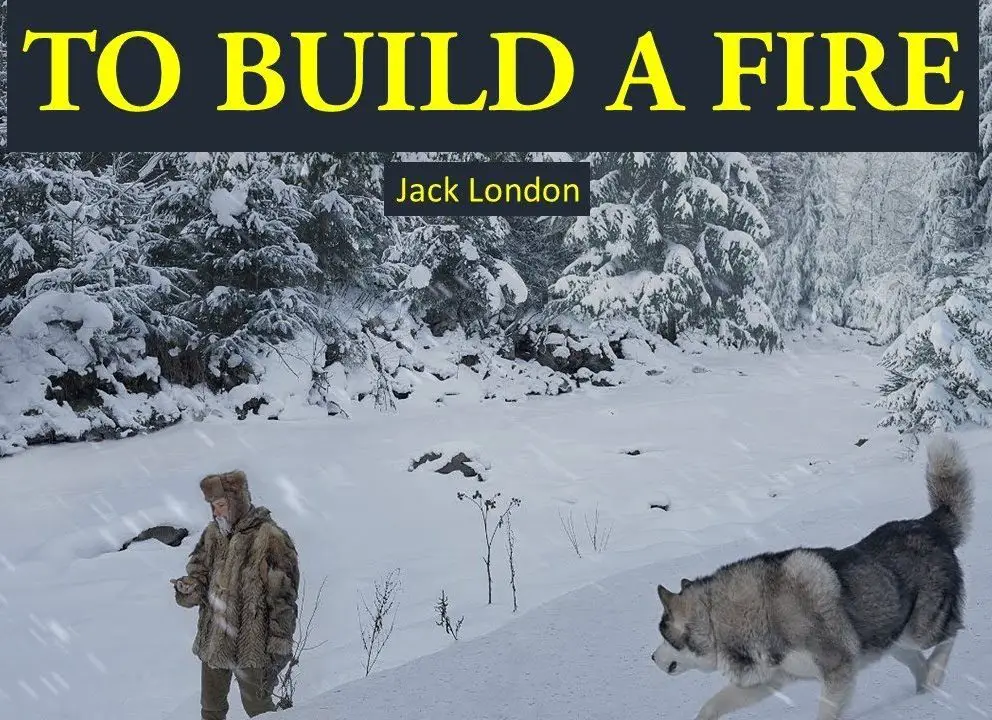
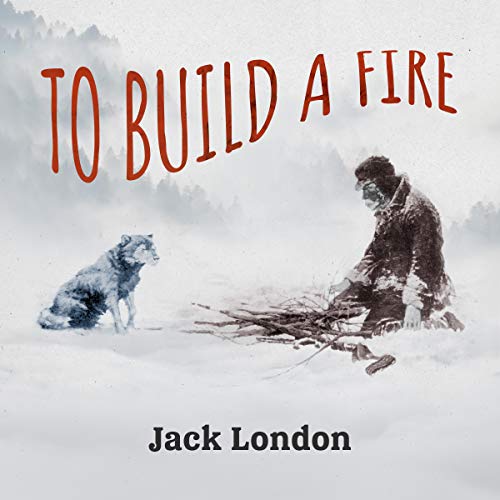
January I had two posts on a full analysis of Jack London’s “To Build a Fire” (here
and here).
One such story I just read was the great American short
story by Sherwood
Anderson, “The Egg.”I’m surprised
this story doesn’t have a Wikipedia entry.It’s a frequently anthologized story from Sherwood Anderson, and
possibly his most well-known.His
collection of stories in Winesburg, Ohio published
in 1919 centers around the characters of his fictional town of the title
centered around the central character of George Willard.The central organizing principle of Winesburg,
Ohio is that the psychological makeup of the characters, shaped by their
small town life, leads to a sort of grotesque reshaping of their person.“The Egg,” published in 1921 and perhaps an
outtake of the 1919 collect, follows the same form.The unnamed Father in the story is reshaped by
his acquired life of a small town chicken farmer and subsequent small
restauranteur.
You can read the story here
and listen to Ruby Love at Classics Read Aloud read it here.
The story is told in the first person of the Father’s son.Father, Mother, and Son are all unnamed.The story is at first mostly exposition of
the life of Father, first as a single farmhand, then marrying Mother, taking up
the chicken farm as a result of his wife’s ambitions, and then having their
son.After failing as a chicken farmer,
the exposition takes us to Father starting a small restaurant beside the town’s
railroad station.
Of course there is the symbolism of the egg, but I think to
fully understand this story is to see Father as one of the grotesqueries that
came out of the eggs.There are many
uses of irony in the story but I think transformation of Father from a
lucky-as-you-go sort to a distorted figure of a man because of ambition and the
hard luck of life is the most ironic.The story is so tragic comic, one laughs and has pity at the same
time.After the narrative climax of
failing to entertain a man, Joe Kane, at his restaurant with tricks using an
egg, the Father is reduced to a childlike grotesque when he comes home to cry
to his wife and son.
Here is the scene.
For two or three weeks this notion
of father's invaded our house. We did not talk much, but in our daily lives
tried earnestly to make smiles take the place of glum looks. Mother smiled at
the boarders and I, catching the infection, smiled at our cat. Father became a
little feverish in his anxiety to please. There was no doubt, lurking somewhere
in him, a touch of the spirit of the showman. He did not waste much of his
ammunition on the railroad men he served at night but seemed to be waiting for
a young man or woman from Bidwell to come in to show what he could do. On the
counter in the restaurant there was a wire basket kept always filled with eggs,
and it must have been before his eyes when the idea of being entertaining was
born in his brain. There was something pre-natal about the way eggs kept
themselves connected with the development of his idea. At any rate an egg
ruined his new impulse in life. Late one night I was awakened by a roar of
anger coming from father's throat. Both mother and I sat upright in our beds.
With trembling hands she lighted a lamp that stood on a table by her head.
Downstairs the front door of our restaurant went shut with a bang and in a few
minutes father tramped up the stairs. He held an egg in his hand and his hand
trembled as though he were having a chill. There was a half insane light in his
eyes. As he stood glaring at us I was sure he intended throwing the egg at
either mother or me. Then he laid it gently on the table beside the lamp and
dropped on his knees beside mother's bed. He began to cry like a boy and I,
carried away by his grief, cried with him. The two of us filled the little
upstairs room with our wailing voices. It is ridiculous, but of the picture we
made I can remember only the fact that mother's hand continually stroked the
bald path that ran across the top of his head. I have forgotten what mother
said to him and how she induced him to tell her of what had happened
downstairs. His explanation also has gone out of my mind. I remember only my
own grief and fright and the shiny path over father's head glowing in the lamp
light as he knelt by the bed.
The moment where father and son are by the bed crying
together captures the story in a nutshell: tragi comedy reduced to a moment of
pity, Father as grotesque and failure, Mother as the motivating fulcrum of the
family, and the son in a coming-of-age moment of his life.Is this the climax of the story or a denouement?Sometimes it’s hard to tell.The narrative climax may have been the moment
when Father in frustration throws the egg at Joe Kane.That’s the height of the narrative.But this scene where Father collapses to
tears from failure could be seen as the emotional climax.
My other insight on this story is that the first-person
narrator, though a little awkward in places, especially in that climatic scene
with Joe Kane, is perfect to accentuate the tragicomic effect.I don't think the story would have been as
good in third person.We pity Father
because of the immediacy of the son telling the story.
Here’s another interesting tidbit.The story was published in 1921 when Anderson
was forty-five years old, the same age as the Father in the story.Does the author identify with the son who is
telling the story or with the father who was a business failure living in Ohio
just as Anderson was in his life?Perhaps both.
By the way, I felt the pity much more when I just listened
to it being read than reading the story off the page. It felt more powerful. I
wonder if others reacted similarly.
Post #1 introduced
the story and analyzed the first three of six parts of the story.This post will analyze the las three parts
and conclude the analysis.
Part 4:
Another critical
event happens, the bulk of snow on the tree above the fire, loosened by the heat,
fell onto the fire snuffing it out (289).The man with frozen, uncooperative fingers attempts and fails repeatedly
to build another (292).
The collapse of
the snow from the tree is beautifully described.
But before he could cut the strings, it
happened. It was his own fault or, rather, his mistake. He should not have
built the fire under the spruce tree. He should have built it in the open. But
it had been easier to pull the twigs from the brush and drop them directly on
the fire. Now the tree under which he had done this carried a weight of snow on
its boughs. No wind had blown for weeks, and each bough was fully freighted.
Each time he had pulled a twig he had communicated a slight agitation to the tree--an
imperceptible agitation, so far as he was concerned, but an agitation
sufficient to bring about the disaster. High up in the tree one bough capsized
its load of snow. This fell on the boughs beneath, capsizing them. This process
continued, spreading out and involving the whole tree. It grew like an
avalanche, and it descended without warning upon the man and the fire, and the
fire was blotted out! Where it had burned was a mantle of fresh and disordered
snow.(289)
Notice the repetition
of “it happened” with the “it happened” when his feet broke through the ice (287),
the first critical event of the story.The
repetition provides a nice rhythm to the narrative.Also I’m struck to the use of the passive
voice.Even though it both instances,
the man makes a mistake of discernment, the events are framed as an act done to
him.This gives agency to the strength
and power of nature against his feeble human capabilities.
The writing
between the snuffing out of the fire and the failure to build another description
interspersed with the man’s panic, regret and the awareness of his freezing and
burning flesh is a masterpiece of narrative.Here’s one paragraph.
The old-timer on Sulphur Creek was right, he
thought in the moment of controlled despair that ensued: after fifty below, a
man should travel with a partner. He beat his hands, but failed in exciting any
sensation. Suddenly he bared both hands, removing the mittens with his teeth.
He caught the whole bunch between the heels of his hands. His arm-muscles not
being frozen enabled him to press the hand-heels tightly against the matches.
Then he scratched the bunch along his leg. It flared into flame, seventy sulphur
matches at once! There was no wind to blow them out. He kept his head to one
side to escape the strangling fumes, and held the blazing bunch to the
birch-bark. As he so held it, he became aware of sensation in his hand. His
flesh was burning. He could smell it. Deep down below the surface he could feel
it. The sensation developed into pain that grew acute. And still he endured it,
holding the flame of the matches clumsily to the bark that would not light
readily because his own burning hands were in the way, absorbing most of the
flame. (291)
After several
attempts at building the fire, he reaches a point of resignation.
A large piece of green moss fell squarely on
the little fire. He tried to poke it out with his fingers, but his shivering
frame made him poke too far, and he disrupted the nucleus of the little fire,
the burning grasses and tiny twigs separating and scattering. He tried to poke
them together again, but in spite of the tenseness of the effort, his shivering
got away with him, and the twigs were hopelessly scattered. Each twig gushed a
puff of smoke and went out. The fire-provider had failed. (292)
###
Part 5:
Having resigned
to not having the ability to start another fire, the thought of killing the dog
and using its cavity body heat to warm his hands comes to him (292).After finally catching the dog, the man’s
hands were too frozen to kill the dog as well (293).
This paragraph captures
his failure and the state of his physical condition at that moment.
But it was all he could do, hold
its body encircled in his arms and sit there. He realized that he could not
kill the dog. There was no way to do it. With his helpless hands he could
neither draw nor hold his sheath-knife nor throttle the animal. He released it,
and it plunged wildly away, with tail between its legs, and still snarling. It
halted forty feet away and surveyed him curiously, with ears sharply pricked
forward. The man looked down at his hands in order to locate them, and found
them hanging on the ends of his arms. It struck him as curious that one should
have to use his eyes in order to find out where his hands were. He began
threshing his arms back and forth, beating the mittened hands against his
sides. He did this for five minutes, violently, and his heart pumped enough
blood up to the surface to put a stop to his shivering. But no sensation was
aroused in the hands. He had an impression that they hung like weights on the
ends of his arms, but when he tried to run the impression down, he could not
find it.(293)
Nature has overwhelmed just about all his physical
capabilities.I am particularly struck
by that image of not knowing where his numbed, frozen hands are.I wonder if that is something that really
happens in such a situation or it’s something London imagined.Obviously he couldn’t have personally
experienced that.
###
Part 6:
The man has reached a panic state
and all he can now do is run toward the camp in hopes he can reach it before he
dies (293).Throughout his mind
experiences delusions until he finally collapses and dies.(295)
It is with the failure to start a
fire and to kill the dog that the reality of his death becomes firm.He has exhausted all options and panic ensues.
A certain fear of death, dull and oppressive, came to him.
This fear quickly became poignant as he realized that it was no longer a mere
matter of freezing his fingers and toes, or of losing his hands and feet, but
that it was a matter of life and death with the chances against him. This threw
him into a panic, and he turned and ran up the creek-bed along the old, dim
trail. The dog joined in behind and kept up with him. He ran blindly, without
intention, in fear such as he had never known in his life. Slowly, as he
ploughed and floundered through the snow, he began to see things again--the
banks of the creek, the old timber-jams, the leafless aspens, and the sky. The
running made him feel better. He did not shiver. Maybe, if he ran on, his feet
would thaw out; and, anyway, if he ran far enough, he would reach camp and the
boys. Without doubt he would lose some fingers and toes and some of his face;
but the boys would take care of him, and save the rest of him when he got
there. And at the same time there was another thought in his mind that said he
would never get to the camp and the boys; that it was too many miles away, that
the freezing had too great a start on him, and that he would soon be stiff and
dead. This thought he kept in the background and refused to consider. Sometimes
it pushed itself forward and demanded to be heard, but he thrust it back and
strove to think of other things. (293)
You can the contemplatio of
weighing the possibilities running through his head.A reader can only feel some real pity for
him.
Finally the man reaches his demise in the concluding
paragraph of the story.
Then the man drowsed off into what seemed to him the most
comfortable and satisfying sleep he had ever known. The dog sat facing him and
waiting. The brief day drew to a close in a long, slow twilight. There were no
signs of a fire to be made, and, besides, never in the dog's experience had it
known a man to sit like that in the snow and make no fire. As the twilight drew
on, its eager yearning for the fire mastered it, and with a great lifting and
shifting of forefeet, it whined softly, then flattened its ears down in
anticipation of being chidden by the man. But the man remained silent. Later,
the dog whined loudly. And still later it crept close to the man and caught the
scent of death. This made the animal bristle and back away. A little longer it
delayed, howling under the stars that leaped and danced and shone brightly in
the cold sky. Then it turned and trotted up the trail in the direction of the
camp it knew, where were the other food-providers and fire-providers.(295)
As in most great short stories,
the conclusion has been projected all along, though wrapped in the air of
uncertainty, but when it does come it comes abruptly.Even the finality of his death remains in
uncertain tension in that last paragraph until the dog confirms it with his sniff.What a powerful story.
There was a short film dramatizing
“To Build A Fire” which is worth watching.
It’s mostly faithful to the story, and after having read it I think
watching the film will enhance your experience.
Here it is.
Which is more powerful, the story
or the film? I always go with the story
but that film was well done.
###
The theme of the
story is the overwhelming power of nature against the small physicality of
humanity.We see man’s limitations lead
to his demise.The man was incapable of
seeing how thick was the ice, and that led to his feet cracking through and getting
wet.The overwhelming power of the cold would
incapacitate his hands to function.He could
not build a fire once his hands were frozen.
We also see the
man contrasted against the dog, who’s instincts are better suited to survive.The dog is in his indigenous climate.The man is alien to the place.The dog survives; the man doesn’t.
We also see the
man’s hubris leads to his demise.The
man’s sense of pride—he doesn’t need a companion in this climate, and he thinks
those that do as “womanish”—is contrasted against the dog’s humility.The dog realizes the danger and attaches
himself to the means of survival.The
man, despite his inexperience—a chechaquo (283)—sets out on such a trek
alone and did not take the Old-Timer’s advice.When he builds the first fire, he has a moment of exalted pride.The nature snuffs the fire out almost in
retaliation to such pride.
Pride leading to a downfall is a
classic trope of tragedy.In tragedy the
audience—the reader in this case—has pity for the suffering protagonist and
fear that what happens to him could happen to the reader.Aristotle says in his Poetics that the
aim of the writer of tragedy is to instill pity and fear for the purposes
of catharsis.I certainly have pity for
the man, and I certainly feel fear for the situation, but I’m not sure I have reached
catharsis.Catharsis is supposed to release
emotions in the audience, leaving the audience with a sense of relief or
enlightenment.I suppose I am
enlightened, but I am not sure I am relieved.The man ultimately died and we wish it otherwise.
This is the first
of two posts on my analysis of Jack London’s short story, “To Build a Fire.”
The first thing
to realize about this story is that there are two versions, one London wrote in
1902 and one in 1908.They are
significantly different though the premises of the stories are the same.I had read the 1902 version of “To Build a Fire” and
never thought much of it. I could not understand how it could be so famous. I
just had an opportunity to revisit the story.It was the 1908 version and it was great. This I can see being a great
story. It is incredibly tense.
Jack London is
best remembered as the author of The Call of the
Wild, a novel set in the arctic Yukon from the point of view of a house
dog who finds himself lost in the arctic and reverts to his wild
instincts.He also wrote another novel,
almost equally as good, called White Fang, a novel
from the point of view of a wild arctic wolfdog that gets domesticated.I loved both novels and recommend them
both.Jack London lived only to 40 years
old (1876-1916) and was an adventurist, journalist, and writer.He used the experiences from his adventures to
form most of his fiction.If you want to
compare London with various writers, I would say good analogues would be Stephan Crane and Ernest Hemingway.London’s writing can be categorized as Naturalism, a
literary movement in the late 19th century that sought to view
humanity as mere animal and nature as deterministic, overwhelming, and confining.In that sense, Stephan Crane might be a
closer analogy than Hemingway, though there is some of that in Hemingway as
well.Whether you agree with the philosophy
or not, it makes for great outdoor adventure stories.
“To Build a Fire”
is also set in the Yukon north, but this 1908 story is told from the point of
view of an unnamed human, male narrator.[The 1902 version, the point of view is also from a male character, Tom
Vincent, who needs to build a fire to stay alive in the Yukon but in that
version that character calmly builds the fire and survives.There is no dog in the 1902 version and is
about one-third the length of the 1908 version.]The narrative is one direct arc from setting
off on the Yukon trail to meet up with his friends in a camp to ultimately *
SPOILER * collapsing and freezing to death.For the purpose of analysis, I divide the story into six parts.I will walk you through the six parts.
First though, if
you wish to read the story, you can find it online at American
Literature.Com.There are a number
of audio reads on YouTube of “To Build a Fire” but frankly the best read is
from a Substack called Classics Read
Aloud.Ruby Love, the owner of
the Substack is a fantastic reader.In
my analysis, I will be citing from the Short Stories of Jack London:
Authorized One Volume Edition, Edited by Earle Labor, Robert C. Leitz III,
Milo Shepherd; Macmillan Publishing Company, New York, 1991.
###
Part 1:
The man sets off on
the Yukon trail to meet up with his friends who are at camp some ten miles away
(p. 282) and concludes at twelve noon when the man comes to a fork in the road
(p. 286).It is cold, colder than what
the man understands, and though he is conscious of the danger ignores it.Here is the opening paragraph that speaks to
the strangeness of the environment.
Day had broken cold and grey, exceedingly
cold and grey, when the man turned aside from the main Yukon trail and climbed
the high earth- bank, where a dim and little-travelled trail led eastward
through the fat spruce timberland. It was a steep bank, and he paused for
breath at the top, excusing the act to himself by looking at his watch. It was
nine o'clock. There was no sun nor hint of sun, though there was not a cloud in
the sky. It was a clear day, and yet there seemed an intangible pall over the
face of things, a subtle gloom that made the day dark, and that was due to the
absence of sun. This fact did not worry the man. He was used to the lack of
sun. It had been days since he had seen the sun, and he knew that a few more
days must pass before that cheerful orb, due south, would just peep above the
sky- line and dip immediately from view.(282)
Following the man
is a dog who’s instinct understood the danger better than the man.
At the man's heels trotted a dog, a big
native husky, the proper wolf-dog, grey-coated and without any visible or
temperamental difference from its brother, the wild wolf. The animal was
depressed by the tremendous cold. It knew that it was no time for travelling.
Its instinct told it a truer tale than was told to the man by the man's
judgment. In reality, it was not merely colder than fifty below zero; it was
colder than sixty below, than seventy below. It was seventy-five below zero.
Since the freezing-point is thirty-two above zero, it meant that one hundred
and seven degrees of frost obtained. The dog did not know anything about
thermometers. Possibly in its brain there was no sharp consciousness of a
condition of very cold such as was in the man's brain. But the brute had its
instinct. It experienced a vague but menacing apprehension that subdued it and
made it slink along at the man's heels, and that made it question eagerly every
unwonted movement of the man as if expecting him to go into camp or to seek
shelter somewhere and build a fire. The dog had learned fire, and it wanted
fire, or else to burrow under the snow and cuddle its warmth away from the air.
(283-4)
Here we see just
how cold it is—beyond the man’s imagination—but instinctually the dog
understands it.What author is
suggesting is the power of nature to overwhelm human capability to withstand
it, and that man’s loss of instinct is a danger to himself.The wild dog understands it because of his
instinct.
Part of the trail
the man is on runs along a frozen creek bed, and while the creek is frozen
there are unfrozen spots that pose danger if one breaks through the ice and
gets wet.Wetness in this environment means
instant freeze and the death of flesh.The
man calls these thin ice spots with water underneath, “traps.”If he got wet he would be forced to build a
fire to warm the flesh and dry the clothing.At one point he forces the dog to walk over the ice to discern the
danger.
In the course of the next two hours he came
upon several similar traps. Usually the snow above the hidden pools had a
sunken, candied appearance that advertised the danger. Once again, however, he
had a close call; and once, suspecting danger, he compelled the dog to go on in
front. The dog did not want to go. It hung back until the man shoved it
forward, and then it went quickly across the white, unbroken surface. Suddenly
it broke through, floundered to one side, and got away to firmer footing. It
had wet its forefeet and legs, and almost immediately the water that clung to
it turned to ice. It made quick efforts to lick the ice off its legs, then
dropped down in the snow and began to bite out the ice that had formed between
the toes. This was a matter of instinct. To permit the ice to remain would mean
sore feet. It did not know this. It merely obeyed the mysterious prompting that
arose from the deep crypts of its being. But the man knew, having achieved a
judgment on the subject, and he removed the mitten from his right hand and
helped tear out the ice- particles. He did not expose his fingers more than a
minute, and was astonished at the swift numbness that smote them. It certainly
was cold. He pulled on the mitten hastily, and beat the hand savagely across
his chest.(286)
###
Part 2:
At noon, the man
arrives at a fork in the creek, stops to eat, and feels the bitter cold on his
exposed flesh (286).He continues on
when he breaks through ice and gets his feet wet (287).
At twelve o'clock the day was at its
brightest. Yet the sun was too far south on its winter journey to clear the
horizon. The bulge of the earth intervened between it and Henderson Creek,
where the man walked under a clear sky at noon and cast no shadow. At half-past
twelve, to the minute, he arrived at the forks of the creek. He was pleased at
the speed he had made. If he kept it up, he would certainly be with the boys by
six. He unbuttoned his jacket and shirt and drew forth his lunch. The action
consumed no more than a quarter of a minute, yet in that brief moment the
numbness laid hold of the exposed fingers. He did not put the mitten on, but,
instead, struck the fingers a dozen sharp smashes against his leg. Then he sat
down on a snow-covered log to eat. The sting that followed upon the striking of
his fingers against his leg ceased so quickly that he was startled, he had had
no chance to take a bite of biscuit. He struck the fingers repeatedly and
returned them to the mitten, baring the other hand for the purpose of eating.
He tried to take a mouthful, but the ice-muzzle prevented. He had forgotten to
build a fire and thaw out. He chuckled at his foolishness, and as he chuckled
he noted the numbness creeping into the exposed fingers. Also, he noted that
the stinging which had first come to his toes when he sat down was already
passing away. He wondered whether the toes were warm or numbed. He moved them
inside the moccasins and decided that they were numbed.(286-7)
Even before he cracks
through the ice, the cold is starting to affect his flesh.And then it happens.
The man took a chew of tobacco and proceeded
to start a new amber beard. Also, his moist breath quickly powdered with white
his moustache, eyebrows, and lashes. There did not seem to be so many springs
on the left fork of the Henderson, and for half an hour the man saw no signs of
any. And then it happened. At a place where there were no signs, where the
soft, unbroken snow seemed to advertise solidity beneath, the man broke
through. It was not deep. He wetted himself half-way to the knees before he floundered
out to the firm crust.(287-8)
I’m struck on how
London slips in, “And then it happened” in the middle of the paragraph.This is actually the defining event of the
story.The rest of the story emanates
from there.One would have thought it
would have been better highlighted.Intuitively I might have started a new paragraph.But if you want to suggest that the importance
of events to a single person are incredibly small to ongoings of nature, I
think London has chosen well.
###
Part 3:
The man’s feet
break through the ice and are soaked halfway up to his knees (288).He then builds a fire to dry his clothes and
warm his flesh (289).
He worked slowly and carefully, keenly aware
of his danger. Gradually, as the flame grew stronger, he increased the size of
the twigs with which he fed it. He squatted in the snow, pulling the twigs out
from their entanglement in the brush and feeding directly to the flame. He knew
there must be no failure. When it is seventy- five below zero, a man must not
fail in his first attempt to build a fire--that is, if his feet are wet. If his
feet are dry, and he fails, he can run along the trail for half a mile and
restore his circulation. But the circulation of wet and freezing feet cannot be
restored by running when it is seventy-five below. No matter how fast he runs,
the wet feet will freeze the harder.
Part of the power
of this story is that we are privy to the man’s thoughts as he experiences his environment
and processes the events.I have a word
for such narrative process, contemplatio, the Latin word for
contemplation.It is sometimes referred
to as “free indirect discourse” or “internal focalization.”But I think those terms are broader.Contemplatio focuses more on the
character’s weighing of options or figuring out the circumstances and
possibilities.Anyway, that’s my term.Here are some examples in this section.
All this the man knew. The old-timer on
Sulphur Creek had told him about it the previous fall, and now he was
appreciating the advice. Already all sensation had gone out of his feet. To
build the fire he had been forced to remove his mittens, and the fingers had
quickly gone numb. His pace of four miles an hour had kept his heart pumping
blood to the surface of his body and to all the extremities. But the instant he
stopped, the action of the pump eased down.
We see there his
mind processing the old-timer’s advice and applying it to his
circumstance.London continues this
processing—contemplatio—in the next paragraph.
The fire was a success. He was safe. He
remembered the advice of the old-timer on Sulphur Creek, and smiled. The
old-timer had been very serious in laying down the law that no man must travel
alone in the Klondike after fifty below. Well, here he was; he had had the
accident; he was alone; and he had saved himself. Those old-timers were rather
womanish, some of them, he thought. All a man had to do was to keep his head,
and he was all right. Any man who was a man could travel alone. But it was
surprising, the rapidity with which his cheeks and nose were freezing. And he
had not thought his fingers could go lifeless in so short a time. Lifeless they
were, for he could scarcely make them move together to grip a twig, and they
seemed remote from his body and from him. When he touched a twig, he had to
look and see whether or not he had hold of it. The wires were pretty well down
between him and his finger-ends.
Notice all he
contemplates there: the old-timer’s advice, how he had now found it wrong, the
hubristic thought that “all a man had to do was to keep his head…” and that he
was such a man, and the thoughts on how his brain’s control of his lifeless
fingers was “down.”In addition to the contemplation,
we see the irony that he had been warned of the dangers and because of his
hubris had disregarded it.
I
started the conversation with a question of what is similar and what is
different between the Misfit and the grandmother.I think there is a value in exploring this
contrast, especially since I see it as leading to another theological theme.
As
to how they are different, perhaps that is the easy side of the equation and we
can dispense with it quickly.First, the
grandmother is not a killer.Second, the
grandmother uses her verbal dexterity and her wits to get her way and not a
gun."She was a talker," Bobby
Lee says.Meanwhile the Misfit seems to
be rather reticent.He's the opposite of
his father who seems to have a "knack of handling" the authorities.The Misfit is the opposite; he seems to
succumb to the authorities.Interestingly the authorities claim the Misfit killed his father, the
talker, just as he will kill the grandmother, the talker.I think the suggestion is that the Misfit
really did kill his father.The
grandmother's entire interaction with the Misfit is her attempt to handle the
authority of the guy with the gun.She
fails.The guy with the gun gets his
way.
As
to how they are similar, that takes some close reading to reveal, but I think
it's more probing.They are both sinful
people, though I think the Misfit realizes his sins while the grandmother is
oblivious to them.But I think at the
heart of it, their sins stem from the same impulse.Committing crimes and especially murdering
people is imposing your will over God's will.What are the grandmother's chief sins?As I listed above, she's vindictive, childish, conniving, manipulative,
and devious.I said she was
"passive-aggressive" which at its core is not that different from the
Misfit's aggressive behavior, the difference being how they weaponized the
aggression.Notice the grandmother
aggressive behavior toward Bailey when she tries to change his mind about going
to Florida standing "with one hand on her thin hip and the other rattling
the newspaper at his bald head."Now the newspaper is not a gun, but the posturing is aggressive.Vindictive, conniving, manipulative, these
are sins where she is imposing her will onto people.Ultimately for both the Misfit and for Grandma,
it's not "thy will be done" but "my will be done."
And
the childishness is also a commonality between the two.We've seen the grandmother reduce herself to
the children's level.She banters on
their level and they feel free to continue the bantering because they see her
as a mental equal.The Misfit too is an
adult who appears to not have matured.He doesn't kill for gain; he kills for the heck of it.His problems seem to stem from when he was a
child.
"I never was a bad
boy that I remember of," The Misfit said in an almost dreamy voice,
"but somewheres along the line I done something wrong and got sent to the
penitentiary. I was buried alive," and he looked up and held her attention
to himby a steady stare.
"That's when you
should have started to pray," she said. "What did you do to get sent
to the penitentiary that first time?"
"Turn to the right,
it was a wall," The Misfit said, looking up again at the cloudless sky.
"Turn to the left, it was a wall. Look up it was a ceiling, look down it
was a floor. I forget what I done, lady. I set there and set there, trying to
remember what it was I done and I ain't recalled it to this day. Oncet in a
while, I would think it was coming to me, but it never come."
Not
remembering one's crime is actually what a child says and does.At the end when the grandmother hits a nerve
on whether Jesus existed that brings the Misfit into a childish emotion.
"I wasn't there so I
can't say He didn't," The Misfit said. "I wisht I had of been
there," he said, hitting the ground with his fist. "It ain't right I
wasn't there because if I had of been there I would of known. Listen
lady," he said in a high voice, "if I had of been there I would of
known and I wouldn't be like I am now." His voice seemed about to crack and the
grandmother's head cleared for an instant.
He
reverts back to his childhood here, and places blame at some outside
circumstance for his criminal behavior, making an excuse like a child.Even he seems to think at the heart of his
problem is some inability to piece the adult world together.
"I call myself The
Misfit," he said, "because I can't make what all I done wrong fit
what all I gone through in punishment."
No
child thinks his punishment is warranted.He is saying that about himself.And what criminal calls himself the "Misfit?"Al Capone called himself
"Scarface."The famous pirate
called himself "Blackbeard."Another criminal was called "Jack the Ripper."John Wesley and June Star in the story are
misfits.As is the grandmother.The name "The Misfit" is childish,
and suggests his problems are rooted in an arrested development.
Another
commonality between the two is a veneer of respectability.Yes, the Misfit is a psychopathic killer, but
he is respectful and kind.When the
grandmother recognizes the Misfit and Bailey shouts some unmentionable words to
his mother, the Misfit finds an excuse for Bailey: “Lady,” he said, “don’t you
get upset. Sometimes a man says things he don’t mean. I don’t reckon he meant
to talk to you thataway.”When the
misfit wants to send Bailey and John Wesley into the woods, he asks
kindly.He is even kinder when he asks
the children’s mother and the little girl, making sure one of his henchmen
helps the mother up.He even excuses
himself when he’s embarrassed to be shirtless in front of ladies.
” He put on his black hat
and looked up suddenly and then away deep into the woods as if he were embarrassed
again. “I’m sorry I don’t have on a shirt before you ladies,” he said, hunching
his shoulders slightly.“We buried our
clothes that we had on when we escaped and we’re just making do until we can
get better. We borrowed these from some folks we met,” he explained.
He’s
trying to make do “until we can get better,”That’s the language of one concerned with respectability.
The
grandmother’s veneer of respectability is on display throughout the story.She dresses fancy for a vacation ride because
“anyone seeing her dead on the highway would know at once that she was a lady.”She tells June Star she should be “ashamed”
for insulting the waitress but meanwhile moments before in private she used the
most horrid racist terms.And she is
obsessed with the notion of a “good man.”She tells Red Butts he’s a good man.Red Butts is essentially a lying slob who keeps a monkey chained to a
tree and bosses his wife around.And
what does she tell the Misfit?
“I just know you’re a
good man,” she said desperately. “You’re not a bit common!”
Not
being “common” seems to be her definition of what is a good man.I’m sure she considers herself a good lady,
after all she does think of herself as a lady and not common.But is this the Christian definition of a
good man?Isn’t the definition of a good
man one who acts like Jesus Christ, who has the heart of Jesus Christ, or at
least tries to?Neither Red Butts nor
the Misfit nor the grandmother even come close to acting like Christ.That is why a good man is hard to find.
###
Let
me just add that there is nothing wrong with being respectable.We all should be respectable.Respectability is a way of being
neighborly.The issue is that that for
the grandmother (and the Misfit) it is only a veneer.Just as the Misfit on the surface is
respectable while inside he's a cold hearted murderer, the grandmother is only
respectable on the outside while on the inside she's a selfish racist.
So
why are all these similarities between the Misfit and the grandmother
important?Ultimately the story is about
the grandmother.The similarities
between the two provide a projection into each one.So what is at the core of the Misfit, can be,
with some reasonable consideration, attributed to the grandmother.This I think is important to grasp the
theological implications of the story.We are allowed into the Misfit's theological understanding of life, and
so with reasonable deliberation, we can project that theological world view to
the grandmother.Let's look at some of
the theological points.Let’s look at
the easiest one first, not needing help.
"If you would
pray," the old lady said, "Jesus would help you."
"That's right,"
The Misfit said.
"Well then, why
don't you pray?" she asked trembling with delight suddenly.
"I don't want no
hep," he said. "I'm doing all right by myself."
Is
he really doing alright by himself?He’s
been locked up in jail.He’s not doing
alright.He could use a lot of
help.Now project this into the
grandmother, and let’s consider the state of her soul.Is her soul doing alright by herself?She doesn’t seem to want help and she is
extraordinarily willful.It’s been her
will, not “thy will.”From what we have
seen of her sinfulness, I would say right now she’s heading for hell, the
metaphysical equivalent of the Misfit’s jail.
Second,
let’s look at how the Misfit can’t seem to recall sins.
"Turn to the right,
it was a wall," The Misfit said, looking up again at the cloudless sky.
"Turn to the left, it was a wall. Look up it was a ceiling, look down it
was a floor. I forget what I done, lady. I set there and set there, trying to remember
what it was I done andain't recalled it
to this day. Oncet in a while, I would think it was coming to me, but it never
come."
Consider
that as a metaphor for sitting at judgment day in front of Christ the
judge.None of us will be able to recall
all the sins of a lifetime.Most of the
time we aren’t even aware of the sins we commit that moment.Look at all the sins the grandmother has
committed on that morning’s journey.She’s oblivious to them.
Third,
let’s look at what the Misfit says about matching the punishment to the crime.
"Jesus thown
everything off balance.It was the same
case with Him as with me except He hadn't committed any crime and they could
prove I had committed one because they had the papers on me. Of course,"
he said, "they never shown me my papers. That's why I sign myself
now.I said long ago, you get you a
signature and sign everything you do and keep a copy of it. Then you'll know
what you done and you can hold up the crime to the punishment and see do they
match and in the end you'll have something to prove you ain't been treated
right.
Again,
take that as a metaphor for facing the Judge and He going down a list of your
sins to decide what your eternal fate will be.This is how the Misfit conceptualizes eternal judgement.But that’s not theologically correct, at
least from a Catholic perspective.It’s
not a list but the state of your soul at death.We all commit sins, but is your soul clean and absolved and in a state
of grace?I think we get further insight
when the Misfit talks about his name.
I call myself The Misfit,"
he said, "because I can't make what all I done wrong fit what all I gone
through in punishment."
The
implication I think is that he can’t fit the theology together.It doesn’t make sense to him.I think O’Connor is contrasting a Protestant
world view against a Catholic.We the
reader know the Catholic view, and we’re watching the Protestants live out
their dislocations that result from their world view.It’s O’Connor who solicits Protestant and Catholic
distinctions by naming the boy “John Wesley,” the same as a famous Protestant
theologian.
For
O’Connor, it seems to me that what drives her Protestant characters to this
sort of tension and anxiety is the lack of graces we Catholics receive from the
sacraments and from a church that provides authority.We don’t have to make it fit.The Church and the Magisterium has made it
fit for us.For the Misfit, and the
grandmother presumably, it’s him and his bible.They have to make it fit on their own.Second, the sacrament of penance on a regular basis would have done both
the Misfit and the grandmother a world of good.Neither would be experiencing the anxiety of a final judgement if their
sins had been taken care of sacramentally.
So
when the grandmother implores the Misfit to “pray, pray” and call on Jesus for
help, she is symbolically telling herself to pray and to call on Jesus.Notice how many times she calls on Jesus in
that encounter.Notice, when she reaches
her moment of crises, she falls “down in the ditch with her legs twisted under
her.”Are her legs twisted supposed to
suggest the crossed legs of Christ on the cross?Is O’Connor giving her a spiritual communion
with Christ as the grandmother seems to emotionally breakdown?I think so.It comes just before her moment of compassion.A spiritual communion is as close as one can
come to actually receiving the sacrament.We have been living with spiritual communions watching Mass on TV during
this virus.
I
would also venture to say that the three bullets the Mistfit fires into her is a
spiritual sacrament too.One could name
the bullets Father, Son, and Holy Spirit.
I’m
not one hundred percent sure on the theology.If anyone has other thoughts, please feel free to correct me.I don’t claim to be a theologian.
###
Madeleine
Commented:
I like your analysis,
Manny, although I think it may be a bit of a reach to imagine the Misfit
administering sacraments.
My
Reply:
LOL, I didn't quite
phrase it that way, but that is a startling thought.
###
I
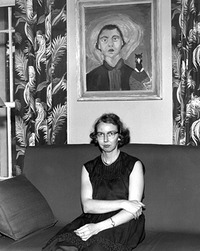
found this nice three and a half minute video biography of O’Connor. It gives you the basic facts and displays some
nice photographs.
This is the second part of a series on Flannery O'Connor's short story, "A Good Man is Hard to Find." You can find Part 1 here.
Let
me push the discussion a little further, into a reading that perhaps no one has
considered.Let’s look at the encounter
between the grandmother and the Misfit not from realism, but from a
metaphorical, even symbolic, perspective.You might even call this reading a metaphysical perspective.Keep in mind, this reading doesn’t undermine
the realism, but amplifies it.It
creates another level to action than the immediate.
By
all rights, when a car flips 360 degrees into a ten foot deep ditch and
passengers are not even wearing seatbelts as they wouldn’t in the 1950s, it is very
likely people in the car would have died.You don’t walk away from accidents like that.Let’s say, metaphysically, they have died and
unbeknownst to them they are dead and waiting for what comes next.The family is sitting in a ditch, ten feet
deep, which is not exactly the six feet of a burial, but O’Connor may not want
to make it obvious.But they are below
ground.Behind the ditch are woods.O’Connor describes them as “tall and dark and
deep.”That language is an allusion to a
famous poem by Robert Frost, “Stopping by Woods on a Snowy Evening.”That poem is ultimately about death (silence
of isolation, snow as symbol for death, frozen lake recalls the lake in Dante’s
Inferno).Read the last stanza:
The woods are lovely,
dark and deep,
But I have promises to
keep,
And miles to go before I
sleep,
And miles to go before I
sleep.
O’Connor’s
echo of “dark and deep” is not accidental.The grandmother has gone on a journey of many miles, her vacation as we
have seen; you can even stretch that to her life time, and now she has come to a
stop.Along comes a “big black battered
hearse-like automobile” which contains beings (angels?) who are going to bring her
and the family to their final end.“There
was not a cloud in the sky nor any sun.”We hear that several times.How
could there be no cloud in the sky and no sun?We are in a state of another world.They look up and it’s the heavens.They are in another plane, somewhere in between earth and heaven.They are going before the final judge.
So
that would make the Misfit, the executer of that judgement, and that would be
Jesus Christ.The Misfit even compares
himself to Jesus at one point.“Jesus
thown everything off balance,” the Misfit says.“It was the same case with Him as with me except He hadn’t committed any
crime…”Well, the Misfit has thrown
everything off balance too, and he clearly links himself to Jesus.Just before that connection to Jesus Bobby
Lee throws him the shirt with the parrots on it.Parrots have been used as representative for
the Holy Spirit at least since Gustave Flaubert’s story “A Simple Heart,” about a hundred years prior to O’Connor writing hers.We saw parrots as suggestive of the Holy
Spirit in Willa Cather’s novel Death of
the Archbishop.O’Connor was very
conscious of great writers, and I’m sure she read Flaubert’s story since it had
a Catholic dimension to it.So the
tossed shirt with the parrots flying onto the Misfit is certainly suggestive of
the Holy Spirit coming onto him.And
then the Misfit puts on the shirt.This
is all very symbolic action.
But
it goes even beyond that.Notice that
the Misfit is squatting down the whole time he is speaking to the
grandmother.“The Misfit squatted down
to the ground,” we are told early in the encounter.The whole time the Misfit is speaking to her
he is doodling on the ground with the butt of his gun.“The Misfit kept scratching in the ground with
the butt of his gun as if he were thinking about it.”Even just before the end he hits the ground
with his fist. The Misfit squatting and writing on the ground parallels Jesus
in John chapters seven and eight with the woman taken in adultery to be stoned.There too a woman’s fate hangs in the balance
while Jesus writes in the sand.If Jesus
agrees with the men who intend to stone her, she is doomed.
What
we see in this symbolic reading is the grandmother coming before judgement, and
the fate of her soul hanging in the balance.
No,
the Misfit is not Jesus, but O’Connor is using the Misfit to expand the meaning
of the story.Remember in this reading,
she is already dead from the car accident. The bullets are not what causes the
death, but what decides her judgement.The question then that beckons us is, what is her judgement: Saved or
damned?
###
My
Reply to Susan Margret to why the other characters don’t receive
a judgemtn like the grandmother;
Susan,
as a short story, the focus is usually on one or two characters. There just
isn't space enough to develop and bring to a conclusion secondary characters.
The rest of the family are there to move the plot. Each successive execution in
the woods is a means for the author to "turn the screw," as Henry
James would say, tighter on the grandmother's moment of truth. We should talk
about her moment of truth. Something changes in the grandmother. Notice what
happened at the story’s climax:
“I wasn’t there so I
can’t say He didn’t,” The Misfit said. “I wisht I had of been there,” he said,
hitting the ground with his fist. “It ain’t right I wasn’t there because if I
had of been there I would of known. Listen lady,” he said in a high voice, “if
I had of been there I would of known and I wouldn’t be like I am now.” His
voice seemed about to crack and the grandmother’s head cleared for an instant.
She saw the man’s face twisted close to her own as if he were going to cry and
she murmured, “Why you’re one of my babies. You’re one of my own children!” She
reached out and touched him on the shoulder. The Misfit sprang back as if a
snake had bitten him and shot her three times through the chest. Then he put
his gun down on the ground and took off his glasses and began to clean them.
At
the cracking of the Misfit’s voice and then seeing him almost cry, the
grandmother has a transcendent vision. With each shot, she has called out
“Bailey boy,” as if recalling her son as a child. This has been on her mind,
but has had to focus on the tension-filled situation and the preservation of
her life. When the Misfit pounds the ground with his fist—something I can see
John Wesley doing—and nearly coming to a cry, the grandmother's social pretense
of proper decorum falls away, her selfish sense of preservation falls away, and
she has what O’Connor is always aiming for in her stories, a moment of grace.
“Why you’re one of my babies. You’re one of my own children!” she says. All of
a sudden she no longer sees a murderer but a child, a child perhaps who has
gone wrong, but nonetheless a child of God and as a mother herself sees in him
her own child. This is in complete opposition to everything we have seen of
her. That litany of sins I enumerated above dissolve, fade into a memory. The
willful striving to be socially respectable also dissolves, and the compassion
of her heart is laid bare, honest and forthright.
This
is why the Misfit at the end says, “She would of been a good woman, if it had
been somebody there to shoot her every minute of her life.”
Samuel
Johnson, the 18th century writer and intellectual has a famous quote: “When a
man knows he is to be hanged in a fortnight, it concentrates his mind
wonderfully.” The grandmother needed that moment of impending death to
concentrate her mind and accept God’s grace. This was her moment of truth.
###
Irene
Comment:
"When the
grandmother reaches out to the Misfit in recognition that he could be one of
her babies, is she having her first moment in the story of moving away from her
narcisistic inward obsession?
My
Reply:
Irene, we posted nearly
the same time. Yes, it is a moment of repressing her natural narcissism. I
don't know if she's recognizing her sins. If somehow she would have survived
and lived on, I could see her return to her previous way of life. But then it
could be life altering. On that we'll never know. However, for the state of her
soul at death, I would say this was enough of a repentance to be saved. With a
heck of a lot of time in Purgatory!