"Love follows knowledge."
"Beauty above all beauty!"
– St. Catherine of Siena

Showing posts with label Gospel of Matthew. Show all posts

Sunday, September 27, 2026

Sunday Meditation: A Change of Mind

In the Twenty-Sixth Sunday in Ordinary Time of Year A, we have to understand that the lectionary has jumped.  Last Sunday Jesus was in journey toward Jerusalem.  Today we jump into Holy Week.  Because the preceding passages were provided at or around Palm Sunday—the entry into Jerusalem on donkey, the cursing of the fig tree, the cleansing of the Temple—we may find the context of today’s reading dislocated.  So, refresh yourself on the context.  Today’s reading locates Jesus on the Tuesday of Holy Week.

Given that Jesus has violently overturn the tables at the Temple, the elders confront Jesus and demand by what authority has he done this.  Here he brings up John the Baptist and whether the Jewish religious leaders had accepted John.  This is critical because Jesus cites John the Baptist again in today’s passage.

As a parable, the Parable of the Two Sons, as I said three years ago, is not difficult.  The first son, at first disobedient, repents and responds to what he was asked to.  The second son, openly agreeable but shamefully reprehensible, had no intention of doing what he promised.  Jesus makes clear—something he doesn’t always do in His other parables—that the first son stands for the sinners who listened to John the Baptist and the second the religious authorities who agreed but didn’t obey John the Baptist.

I also find it interesting that Jesus asks the elders for their opinion.  Jesus asks lots of questions throughout the Gospels, 339 by one count, but opinion type questions are not that common, and opinion on moral scenarios are even less so.  “Who do you say that I am?” (Mt 16:15) may be asking for their opinion, but it’s not over ethics.  The question of which of the two sons was righteous echoes the question at the end of the Parable of the Good Samaritan, “Which of the three do you think was a neighbor to the man who fell into the hands of the robbers?” (Lk 10:36-37) with the slight difference that the one of the Good Samaritan was to instill a sense of repentance while the one of the two sons was to implicate sin.
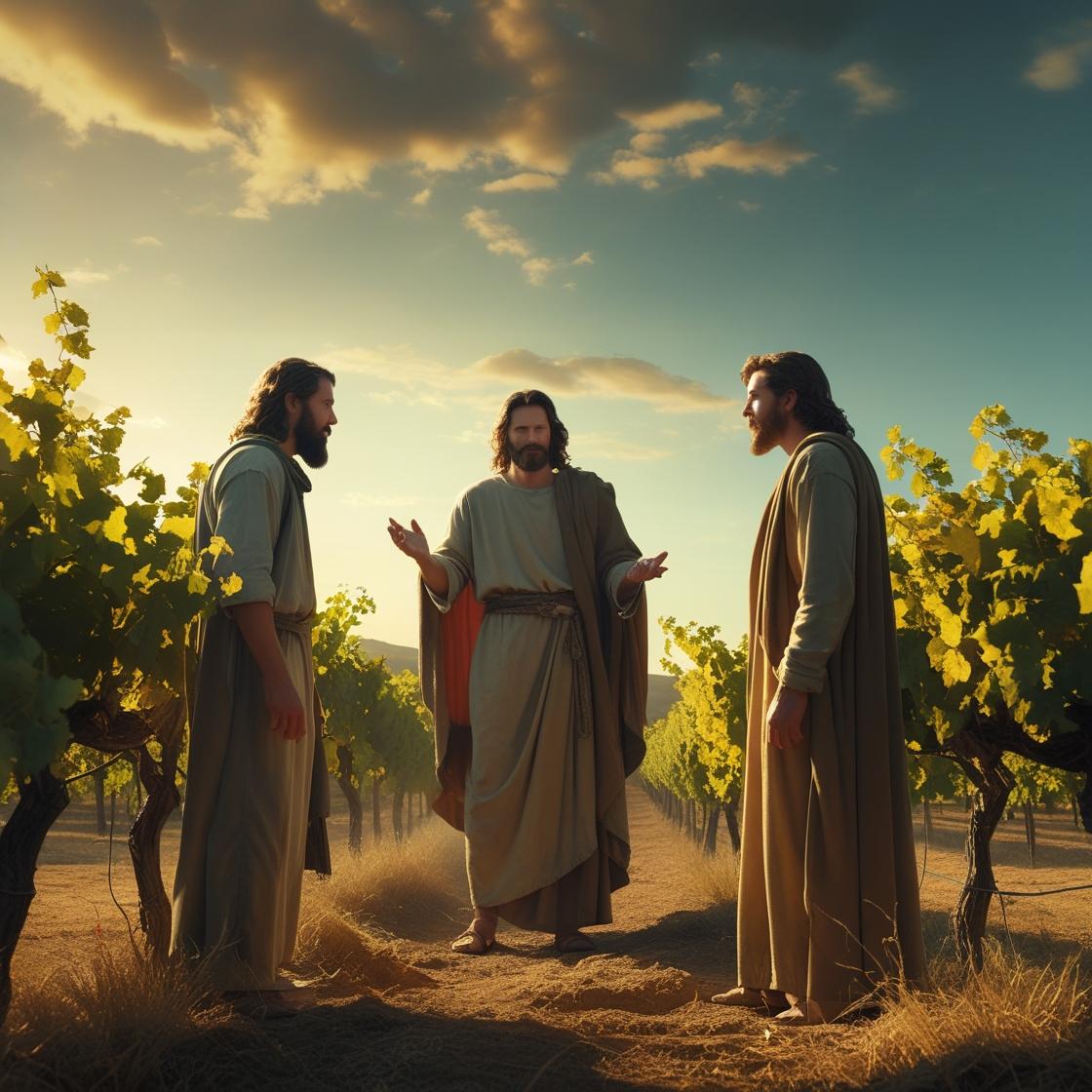


Today’s Gospel:


Jesus said to the chief priests and elders of the people:

"What is your opinion?

A man had two sons.

He came to the first and said,

'Son, go out and work in the vineyard today.'

He said in reply, 'I will not,'

but afterwards changed his mind and went.

The man came to the other son and gave the same order.

He said in reply, 'Yes, sir, 'but did not go.

Which of the two did his father's will?"

They answered, "The first."

Jesus said to them, "Amen, I say to you,

tax collectors and prostitutes

are entering the kingdom of God before you.

When John came to you in the way of righteousness,

you did not believe him;

but tax collectors and prostitutes did.

Yet even when you saw that,

you did not later change your minds and believe him."

~Mt: 20:1-16


Here is someone new to my embedded homilies, Dr. Nina Heereman.  This is not a homily but an exegesis since she is not at and cannot deliver from a pulpit, but still well explained.  She is a professor of Sacred Scripture at St. Patrick’s Seminary and University in Menlo Park, California.  I quoted Dr. Heereman last Sunday, but this is the first time I’m providing a link.  Her explanations do run longer than most I embed but well worth listening to.


Dr. Heereman:

Here comes Jesus question. The baptism of John, where was it from? From heaven or from men?  Was John's baptism something he did commissioned by God in the name of God or just on his own human account?  So they argued with one another and said, "If we say from heaven, she will say to us, then why did you not believe him?" This is the important point. If we say it was from heaven, he's going to say to us, "Why did you not believe him?" What would believing have meant? Believing John the Baptist would have meant believing what John was saying. Number one, repent. Receive the baptism of repentance and prepare yourself for the reception of the Messiah from believing in John would also follow recognizing the one that John announced which is Jesus… Had they believed in John the Baptist, had they had eyes to see, they would have already known in which authority Jesus was doing these things. Because if they   understood who John was, namely as the Lord  said earlier, Elijah, who is to come just before the Messiah, they would have understood Jesus' messianic pedigree, right? He's the son of David.  He's done all all through the gospel, we saw him working all these signs that hint to him being the promised son of David. And one of the foundational things that the son of David, the Messiah, was expected to do was precisely to cleanse the temple. So had they just observed him, they had enough indications that Jesus was the Messiah. But in refusing to listen to Baptist, they implicitly already rejected Jesus.

So Jesus has essentially told the elders by what authority, His divine authority.  Dr. Heereman continues.


Typical Jesus puts out the parable and then he lays out a trap for the high priests and they fall straight into it and by doing so they condemn themselves. They said the first, what's the first?  The first is the guy who first said to the father, "No, I don't care to work in the vineyard." But then he repented. Important word in the Gospel   of Matthew and he went. So the first son is very clearly an image for the sinner who doesn't care about God's commandments. Who doesn't even who doesn't care about serving God at all in his   life. But then the moment of repentance comes and he gives his life to serve the Lord. And so the so Jesus says to them truly amen which means what I'm going to say is as solid as a rock. You can build your life on this truth. I say to you the tax collectors and the harlots go into the kingdom of God before you. The before doesn't mean the tax collectors and the harlots precede the high priests.  It means they go and the high  priest don't because they are the second son who said yes sir but they didn't go be Jesus explains.  So why are the tax collectors entering heaven and they don't? Because John came to you to you high  priests everyone by the way of righteousness and you did not believe him. That's when they refused salvation. But the tax collectors and the harlots believed him and they converted and changed their lives and went to work in the vineyard. And even when you saw the tax collectors and the harlots repenting, you did not afterward repent and believe in him. The most powerful sign that John the Baptist was preaching and acting with divine authority was the fact that the most um that the worst sinners in the understanding of the first century, meaning the tax collectors, the one who collaborated with the Romans and the harlots, which were the epitome of sinful women in the  first century, those two heard the word of John the Baptist and converted.

John the Baptist is not just a throw in within this passage but critical to understanding it.  I bet not too many homilies pointed that out.


For the pastoral homily, I turn once again to Cardinal Blase Cupich.


Cardinal Cupich:

We have this parable of Jesus of the two sons and they differ not only in terms of how they ultimately respond to the father's demand to go into the vineyard.  But we also see that there are other aspects that differentiate them from each other.  The first and the oldest says no.  But the words of the father continue to ring in his ears moving him to change his mind.  It is that sense of continually listening to where God is calling us that is so important for a virtuous life.  We have a lot to learn I think from our Jewish brothers and sisters who pray what they call the Shemma here. O Israel Shemma Israel.  And it is listening to the voice of God that he alone is the Lord of all.  That regular kind of listening, allowing the voice of the Lord to be in our hearts is so important.  But it's also important for us to attend to the voices of people who have made a difference in our lives.  Especially parents, elders, teachers, coaches, people who have left us with a legacy of learning that shapes our lives.

It is so important to listen to the voice of God.  And how do we find the voice of God?  We read the Gospels.  St. Jerome famously said, “Ignorance of scripture is ignorance of Christ.”  Cardinal Cupich continues.


The second son also teaches us something for words don't seem to mean anything.  Not only does he listen, but his word means nothing as well. He says, "Yes, I'll go in." But doesn't and that of course is a very dangerous kind of life to have where the words of God, the words of others, the advice of others is just easily dismissed and we live in our own bubble.  You know, they tell us that the word sincere comes from two Latin words sin and cherus, without wax.  It referred to artists who carved marble statues and sometimes they made a mistake or maybe they didn't put in the work of shining the marble and so they would put wax over it either to cover the mistakes or to brighten up the statue.  But a person or who was an artist who did not use wax was sincere.  That I think also says a lot to us about sincerity in life. We are sincere not when we're waxing over things and polishing things just to make ourselves look good, but that we are true to our words.  Words make a difference. Keeping our word is something that defines our integrity.


Yes, like the parables of Jesus, we have much to learn from these two sons.  To listen to the voice of others and to count the importance of speaking words with sincerity.

A life of integrity is a life of sincerity.  Stay true to your word.


Sunday Meditation: “Yet even when you saw that, you did not later change your minds and believe him."


For the hymn, let’s listen to, “Lord Accept The Gifts We Offer.”


  1. Lord accept the gifts we offer;
    At this Eucharistic feast.
    Bread and wine to be transformed now
    Through the action of your priest (Priests)
    Take us too, O Lord, transform us
    By your grace in us increased.


  1. May our souls be pure and spotless.
    As the host of wheat so fine,
    May all stain of sin be crushed out,
    Like the grape that forms the wine,
    As we, too, become partakers
    In this sacrifice divine.


  1. Take our gifts, almighty Father
    Living God eternal true
    Which we give through Christ our Saviour
    Pleading here for us anew.
    Grant salvation to all present.
    And our faith and love renew.


Take us too, O Lord, transform us!


Monday, September 21, 2026

Sunday Meditation: The Generosity of Grace

For the Twenty-Fifth Sunday in Ordinary Time in Year A, Jesus gives another parable, that of the Workers in the Vinyard.  There is a lot to this parable.  The context goes back to last Sunday’s parable from Matthew’s chapter 18 where Jesus concludes the Community Discourse on the requirement to forgive.  Then we have chapter 19 where Jesus provides his discourse on divorce, the requirement to be as children, and the response to the rich young man on being perfect.  That is all skipped in the Sunday lectionary, which brings us today to chapter 20, a parable which illustrates God’s generosity of grace.  In some ways Jesus is continuing His Community Discourse in these two chapters.  The only shift I think from chapter 18 in these last two chapter is that Jesus shifts from requirements to counsels. 

As an allegory, the Parable of the Workers in the Vineyard sets up the landowner as God, work in the vineyard as doing God’s work, and the day’s pay as a reward in salvation.  God extends His grace to all who do His work, whether for working all day or for just an hour.  I did not embed Fr. Geoffrey’s Plant’s homily on today’s Gospel, but I want to quote his conclusion:


The workers who were employed early in the morning trusted in what they had done. They had laboured for twelve long hours and assumed that God rewards people according to what they have earned. The longer they had worked, the greater they believed would be their reward. But Jesus overturns that expectation. The owner of the vineyard is not an accountant carefully calculating what each worker deserves. He is astonishingly generous. The workers hired at the eleventh hour have no achievements on which to rely. They have nothing to bring except their need. They can only trust in the goodness of the landowner. That is how God's grace works. Grace that can be earned is no longer grace. Grace that can be calculated is no longer grace. Grace that can be claimed as a matter of entitlement is no longer grace. God's grace is not a wage paid for work performed. It is a gift, freely given to those who are willing to receive it. Whether we labour in the vineyard for one hour or for twelve is not ultimately decisive.  God gives salvation as an unmerited gift. 

In some respects, this parable with the workers who worked all day as disgruntled with the owner’s generosity reminds me of the Parable of the Prodigal Son in Luke’s Gospel.  The workers who worked all day express the same sort of injustice as the older brother with the prodigal brother.  Both parables show God’s generosity as being primary over God’s justice.  It’s interesting to note that Matthew the tax collector provides a parable with money while Luke seems to focus more on family dynamics. 

Three years ago I embedded a homily on this passage from Bishop Barron who emphasized St. Catherine of Siena’s famous quote, “All the way to heaven is heaven” in explaining this passage. 


Today’s Gospel:


Jesus told his disciples this parable:

"The kingdom of heaven is like a landowner

who went out at dawn to hire laborers for his vineyard.

After agreeing with them for the usual daily wage,

he sent them into his vineyard.

Going out about nine o'clock,

the landowner saw others standing idle in the marketplace,

and he said to them, 'You too go into my vineyard,

and I will give you what is just.'

So they went off.

And he went out again around noon,

and around three o'clock, and did likewise.

Going out about five o'clock,

the landowner found others standing around, and said to them,

'Why do you stand here idle all day?'

They answered, 'Because no one has hired us.'

He said to them, 'You too go into my vineyard.'

When it was evening the owner of the vineyard said to his foreman,

'Summon the laborers and give them their pay,

beginning with the last and ending with the first.'

When those who had started about five o'clock came,

each received the usual daily wage.

So when the first came, they thought that they would receive more,

but each of them also got the usual wage.

And on receiving it they grumbled against the landowner, saying,

'These last ones worked only one hour,

and you have made them equal to us,

who bore the day's burden and the heat.'

He said to one of them in reply,

'My friend, I am not cheating you.

Did you not agree with me for the usual daily wage?

Take what is yours and go.

What if I wish to give this last one the same as you?

Or am I not free to do as I wish with my own money?

Are you envious because I am generous?'

Thus, the last will be first, and the first will be last."

~Mt: 20:1-16


Though not a homily, let’s turn to Dr. Brant Pitre for the exegesis.


Dr. Pitre:

So just a little bit of background here with the cultural setting that Matthew is imagining.  Here is a situation where you have a wealthy land owner in this case the owner of the vineyard who would hire out day laborers; that was very common in first century Judaism, so a day laborer was a person who would go out into the marketplace of some public place and wait around for the hopes that some wealthy landowner might come and hire them for a temporary job and basically the idea would be is that you'd be hired for one day you'd go out to the field or in this case to a vineyard during the harvest season and you'd work for a day's wage and then you'd be paid that day, so it was sort of a contract work you know just temporary work like a temp worker.

Dr. Nina Heereman, professor of Sacred Scripture at St. Patrick’s Seminary and University in Menlo Park, California, in her explanation of this passage, makes the observation that Jesus and His earthly father Joseph could have been such day laborers waiting to be picked up for a day’s work.  I thought that a great observation.  Dr. Brant continues.


Around sunset time the owner of the vineyard says to call the laborers and give them their wages but start with the last and then go toward the first.  So I want you to feel the force of this difference.  Between the first and the last minute, guys who were working the fields is pretty grave when you really put it in context the men who were called last worked from 5 p.m. to 6 o'clock they worked for one hour right in the cool of the evening the men who were called first worked from 6:00 a.m. to 6:00 p.m. so they pulled a 12-hour shift in the heat of the day as they said in the scorching heat harvesting the grapes.  Okay and as the owner of the vineyard starts to pay out he starts with the guys who were hired at five o'clock and he gives them one Denarius.  Now as soon as the guys who started at 6:00 a.m. see that, their natural assumption is going to be well these guys got paid a Denarius for one hours work then I should make at least twelve times as much because I work 12-hour shift and instead the master gives them each the exact same one Denarius no matter how long they worked.


His response to them is the key.  He says to them first and foremost I'm not unjust because you agree lead with me for a Denarius so I haven't given you any less than you said you would work for.  So he hasn't shortchanged them anything, that's the first point.  The second point is he says I can give whatever I want to whomever I want, in other words am I not allowed to do what I choose with what belongs to me?  So another important point here is that the owner of the vineyard here is not being unjust because it's his money; he can give however much he would like to whomever he likes for whatever amount of work that they've that they performed right, and then the third point is something very interesting there he says or do you begrudge me my generosity.  Right and now that's a English translation; the literal Greek here is it says this is your eye evil.  Because I am good literally is your eye evil because I am good; the imagery there is of an envious eye so you'll see this in the gospel sometimes or the New Testament talk about the lust of the eyes, that's the sin of envy.  It's seeing someone else's possessions something belongs to someone else and desiring to take it for yourself right as if it belongs to you, and so with what the master is saying here is that you are angry because I am generous because your heart is envious for that which does not belong to you that money is his it's not yours it doesn't belong to you have no right to judge how he distributes it right now what does Jesus up to in doing this well

It is an important element of the parable that the early on workers visually see the latter brought on workers get paid a full day’s wage.  A significant part of the parable is understanding the sin of envy as coming through the eyes. 

Let’s turn to Fr. Charlie Bouchard O.P. for the pastoral homily.  He gives a fascinating example out of literature, the short story by Flannery O’Conner, “Revelation.”


Fr. Bouchard:

The readings today, the first reading and the gospel, especially, both give us examples of what biblical scholars sometimes refer to as a biblical reversal.  In other words, we start out seeming to go in one direction, but then God's plan turns things around and changes the outcome into a way that we didn't expect.  This is an example, of course, of the first reading saying that God's ways are not our ways.  And the Bible is full of these stories of biblical reversals.


There is an author by the name of Flannery O'Connor, who some of you have probably heard of.  She wrote stories, almost all of which take place in the Deep South, and they portray life in the South, which is maybe in the early part of the 20th century might seem a little strange to us who did not grow up down there.  But she has one story that I think is a perfect example of this biblical reversal that we're talking about.  It's a story called “Revelation,” and it's about a person named Mrs. Turpin, who lives on a farm, and she's a rather not very pleasant person.  The story portrays her as being very judgmental and kind of pompous. She looks at the poor around her, and she kind of disparages them.  She looks at the blacks around her in a very uh, discriminating uh, racist society, and she judges them very badly. 


And then at the very end of the story, she has this revelation, which is obviously where the title of the story came from.  And she is on her farm out over the pig pen of all things, this dignified woman standing near the pig pen.  And she has this great vision, this revelation of the end times of what God's judgment is going to look like.  And the story tells us that she looks up and sees this vision, this vast swinging bridge extending upward from the earth through a field of living fire.  Upon it, the author tells us, is a vast horde of souls, rumbling toward heaven.  There are whole companies of white trash, clean for the 1st time in their lives, and bands of poor blacks in white robes, and battalions of freaks and lunatics, shouting and clapping and leaping like frogs.  And bringing up the end of the procession, was a tribe of people whom she recognized at once, as those who, like herself and her husband, had always had little of everything, and the God given wit to use it right.  She leaned forward to observe them closer.  They were marching behind the others with great dignity, accountable as they had always been for good order, and common sense, and respectable behavior.  They alone were on key. 


Yet she could see by their shocked and altered faces that even their virtues were being burned away.  In this passage, to me, has always been just an immense theological statement about these biblical reversals.  Mrs. Turpin, who always thought that, you know, she was maybe not the greatest in the world, but certainly somebody who had it together in God's sight.  Somebody who did the right thing, who had common sense, who dressed properly, and yet she was very judgmental.  And so in this judgment scene, she sees all these people that she had really despised and had no use for, marching up to heaven in all their eccentricity, clapping and singing, and being off key perhaps.  Then she sees herself and her husband and others like them, the proper citizens of the town, who are also marching toward heaven.  But they alone were on key, even though they were at the end of the procession. 


And it's an example of how God's generosity really exceeds God's justice.  That God extends this grace of salvation, not only to those who appeared to have earned it, although they were at the very end of the line, but also to those who, perhaps in the judgment of some, did not earn this grace or did not merit salvation.  Those who live difficult, troublesome lives, those who couldn't pay their bills, those whose clothes weren't washed, all of those that Mrs. Turpin had disparaged, were really going 1st into heaven. The last ones we thought that would have been there.  They are the 1st in line, and she and her husband follow at the very end. 

“The last will be first, and the first will be last.” 


Sunday Meditation: “What if I wish to give this last one the same as you?”


This is such a beautiful and appropriate hymn, “Open My Eyes, Lord.”


Open my eyes, Lord,

Help me to see

Open my eyes, Lord

Help me to see Your face

Open my eyes, Lord

Help me to see


Open my ears, Lord

Help me to hear Your voice

Open my ears, Lord

Help me to hear


Open my heart, Lord

Help me to love like You

Open my heart, Lord

Help me to love


Lord, let me love like You.


Sunday, September 13, 2026

Sunday Meditation: You Must Forgive

On the Twenty-Fourth Sunday in Ordinary Time for Year A, Jesus completes His Community Discourse with the requirement to forgive wrongs.   To Peter’s well-known question as to how many times one should forgive a “brother or sister,” Jesus responds “not seven times but seventy-seven times” (or sometimes translated as “seventy times seven,” RSV, 2ndCE).  This is to say infinite.  Jesus then follows that up with the Parable of the Unforgiving Servant.

The infinite number of times one is to forgive, set in the context of the first reading, “Forgive your neighbor’s injustice; then when you pray, your own sins will be forgiven” (Sir 28:2) and combined with the Our Father’s “forgive us our trespasses as we forgive those who trespass against us” makes forgiveness a requirement for salvation.  But it’s even more than that.  In forgiving, God allows you to participate in His Divine action.  You become Godlike in the act of forgiveness.

The parable is a fascinating one.  It will be explicated by the homilists, but I want to touch on one element.  An internet homilist, who I won’t mention by name, but I have embedded his homilies here in the past, last week made a remark about empathy which I think misses the mark.  From a book he read called Suicidal Empathy he reached a conclusion that “empathy is not a supreme value” but acting in love to will the good of the other is.  That’s a false dichotomy.  I will get to the problem with that in a second, but to make matters worse, the homilist framed the issue in political terms: “I think it's the best exposure and take-down of the lunacy at the heart of much of the wokeist philosophy that dominates things today.”  So my first reaction to that was then Jesus doesn’t have a Sacred Heart of infinite compassion?  What then does the Sacred Heart of Jesus mean and what does Divine Mercy mean?

What the homilist gets wrong, in my humble opinion, and I admit I don’t have his stature or education, is that empathy starts the process, and then once connected to the other person’s heart (cor ad cor loquitur, heart speaks to heart from St. John Henry Newman) one reaches a rational plan of action that will address the good of the other.  But empathy is the entrance to that love.  Yes it is a supreme value.

The Parable of the Unforgiving Servant from today's Gospel is a perfect example.  The Master empathizes with the first debtor and releases him from his debt.  That was willing his good and it was a result of his heart being moved.  That debtor then refuses to empathize with the second debtor.  No connection in the heart is sparked, and so he throws second debtor in jail, justice without any empathy.  Jesus then sums it up, “So will my heavenly Father do to you, unless each of you forgives your brother from your heart.”  "From the heart," the center of empathy, is Jesus’s final word on the subject.


Today’s Gospel:


Peter approached Jesus and asked him,

“Lord, if my brother sins against me,

how often must I forgive?

As many as seven times?”

Jesus answered, “I say to you, not seven times but seventy-seven times.

That is why the kingdom of heaven may be likened to a king

who decided to settle accounts with his servants.

When he began the accounting,

a debtor was brought before him who owed him a huge amount.

Since he had no way of paying it back,

his master ordered him to be sold,

along with his wife, his children, and all his property,

in payment of the debt.

At that, the servant fell down, did him homage, and said,

‘Be patient with me, and I will pay you back in full.’

Moved with compassion the master of that servant

let him go and forgave him the loan.

When that servant had left, he found one of his fellow servants

who owed him a much smaller amount.

He seized him and started to choke him, demanding,

‘Pay back what you owe.’

Falling to his knees, his fellow servant begged him,

‘Be patient with me, and I will pay you back.’

But he refused.

Instead, he had the fellow servant put in prison

until he paid back the debt.

Now when his fellow servants saw what had happened,

they were deeply disturbed, and went to their master

and reported the whole affair.

His master summoned him and said to him, ‘You wicked servant!

I forgave you your entire debt because you begged me to.

Should you not have had pity on your fellow servant,

as I had pity on you?’

Then in anger his master handed him over to the torturers

until he should pay back the whole debt.

So will my heavenly Father do to you,

unless each of you forgives your brother from your heart.”

~Mt: 18:21-35


For the exegetical homily I go the USCCB’s Fr. Greg Friedman OFM.  This is a short but perfectly explained exegesis.


Fr. Greg:

Today's gospel parable is about the servant whose massive debt had been most generously forgiven by his master, but who in turn refuses to let a fellow servant off forgiving a very minor debt.  When the original master hears of this cruelty, we hear the result. Jesus concludes the parable with a harsh judgment by the master. Should you not have had pity on your fellow servant as I had pity on you? Jesus concludes the parable by describing how in anger his master handed him over to the torturers until he should pay back the whole debt.  After that conclusion, Jesus adds his teaching. So will my heavenly father do to you unless each of you forgives your brother from your heart. Like so many of Jesus parables, the ending shocks us in more than one way. And yet the responsibility for forgiveness is consistent with Jesus teaching earlier in the gospel in the sermon on the mount and with the prayer Christians pray daily. The Lord's prayer forgive us our trespasses as we forgive those who trespass against us.


The parable today is given as a response to the exchange between Jesus and Peter which precedes it in today's gospel to Peter's question about forgiveness.  Lord, if my brother sins against me, how often must I forgive? As many as seven times. Jesus gives the well-known answer, I say to you, not seven times, but 77 times. The offer of forgiveness seven times seems a reasonable attitude, one I suspect most people today actually would find rather extravagant. As Father Raymond Brown notes in his observations about Peter, Father Brown suggests that most of us might forgive once or twice but let someone offend a third time and we'd probably say enough is enough.  Peter, Father Brown suggests, was being very generous. And yet, the parable is about extreme forgiveness.  The standard Jesus sets is also staggering in its demand. Forgive 77 times which really suggests unending forgiveness.

The parable may be extreme, but Jesus is being serious: forgive or our heavenly Father will not forgive you.


For the pastoral homily, I’m returning to Archbishop Edward J. Weisenburger who knocks it out of the park with a great example of extreme forgiveness.


Archbishop Weisenburger:

"And so it shall be with each of you, unless  you forgive your brother from your heart."  Okay, this is serious stuff, a serious  demand. But brothers and sisters, this passage conveys an essential element  of Christianity. It's not something nice, extra. This is of the essence of our faith, and  it cannot be glossed over or denied. Moreover, I fear many of us, and I surely include myself  in that group, many of us would rather apply this demand of Jesus to others, rather than to  ourselves. It's a reflection on that line of the Our Father, where we pray as Jesus did,  saying, "forgive us our sins, as we forgive those who trespass against us." Yes, this teaching  serves as a lasting reminder of our God's demand that we have not simply been called to revel or  glory in His mercy for us, but rather we are to live that same kind of profoundly challenging,  difficult, or daunting mercy in our own lives.


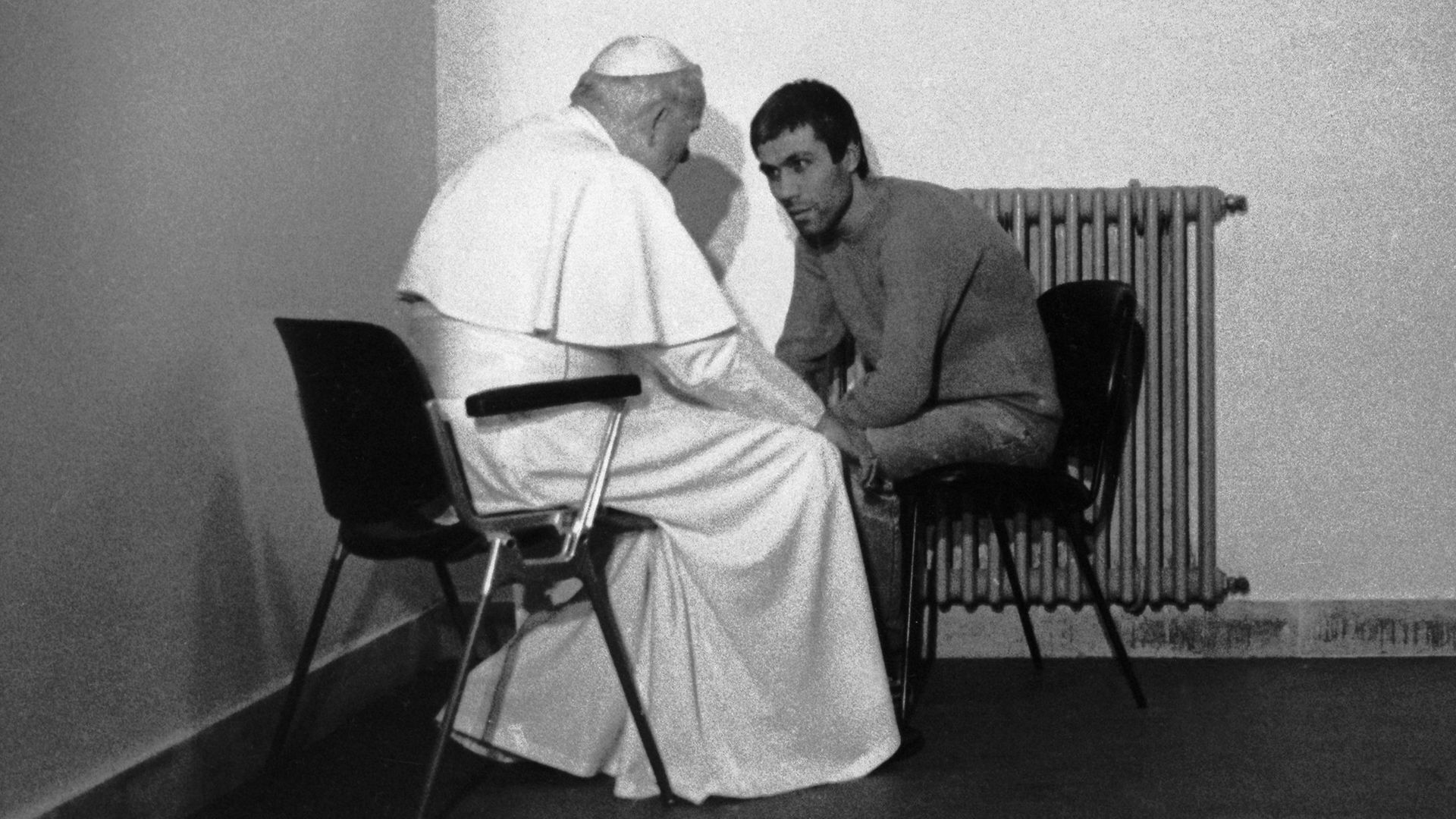
Now, as I pondered the parable, I was  reminded of something that happened in my senior year of seminary college. It was during Christmas season of 1983. A photo from Rome flashed across the scene. All around the world, it was the corner of a prison cell.  The subject of the photo: two men hunched over, sitting close together on molded plastic chairs. One in a white cassock with white skull cap, the other in a blue sweater, jeans, and running shoes with no laces. Time magazine told the story accurately, and I quote, "Last week, in an extraordinary moment of grace, the violence in St. Peter Square was transformed.  In a bare, white-walled cell in Rome's Rebibbia Prison, Pope John Paul II tenderly held the hand that held the gun that was meant to kill him. For 21 minutes, the Pope sat with his would-be assassin, Mehmet Ali Agca. The two talked softly. Once or twice, Agca laughed.  The Pope forgave him for the shooting. At the end of the meeting, Agca either kissed the Pope's ring or pressed the Holy Father's hand to his forehead in a Muslim gesture of respect."  End of quote. We're then told later that when asked about what they had talked about, Pope John Paul II responded, "That will have to remain a secret between him and me.  I spoke to him as a brother whom I have pardoned and who has my complete trust."


Okay, brothers and sisters, that picture, more expressive than a thousand words. That simple phrase, "a brother whom I have pardoned," continues to challenge us mightily more than four decades after the event took place. It actually gives life to the words of our Gospel today. And in doing so, it challenges us. And not because Pope St. John Paul provides a simple solution to the world's problems of "retaliation versus reconciliation." But quite the contrary, the Pope's words, "I pardoned him," compels me to ask what being a Christian demand of me today in a world that seems increasingly saturated with the cravings of revenge.


A picture and a real life example is worth a thousand homiletical words.


Sunday Meditation: “Should you not have had pity on your fellow servant, as I had pity on you?"


Here is a hymn I have never heard before but so beautiful, “Give Me a Heart of Forgiveness” credited to PureFire Worship.


Give me a heart of forgiveness, Lord,

Soft and open, like Yours before.

Help me to let go and to love again,

To break these chains and heal within.

Oh, give me a heart,

A heart of forgiveness.


Jesus, make my heart like yours.