
In the Twenty-Sixth Sunday in Ordinary Time of Year A, we have to understand that the lectionary has jumped. Last Sunday Jesus was in journey toward Jerusalem. Today we jump into Holy Week. Because the preceding passages were provided at or around Palm Sunday—the entry into Jerusalem on donkey, the cursing of the fig tree, the cleansing of the Temple—we may find the context of today’s reading dislocated. So, refresh yourself on the context. Today’s reading locates Jesus on the Tuesday of Holy Week.
Given that Jesus has violently overturn the tables at the Temple, the elders confront Jesus and demand by what authority has he done this. Here he brings up John the Baptist and whether the Jewish religious leaders had accepted John. This is critical because Jesus cites John the Baptist again in today’s passage.
As a parable, the Parable of the Two Sons, as I said three years ago, is not difficult. The first son, at first disobedient, repents and responds to what he was asked to. The second son, openly agreeable but shamefully reprehensible, had no intention of doing what he promised. Jesus makes clear—something he doesn’t always do in His other parables—that the first son stands for the sinners who listened to John the Baptist and the second the religious authorities who agreed but didn’t obey John the Baptist.
I also find it interesting that Jesus asks
the elders for their opinion. Jesus asks
lots of questions throughout the Gospels, 339
by one count, but opinion type questions are not that common, and opinion
on moral scenarios are even less so. “Who
do you say that I am?” (Mt 16:15) may be asking for their opinion, but it’s not
over ethics. The question of which of
the two sons was righteous echoes the question at the end of the Parable of the
Good Samaritan, “Which of the three do you think was a neighbor to the man who
fell into the hands of the robbers?” (Lk 10:36-37) with the slight difference
that the one of the Good Samaritan was to instill a sense of repentance while
the one of the two sons was to implicate sin.
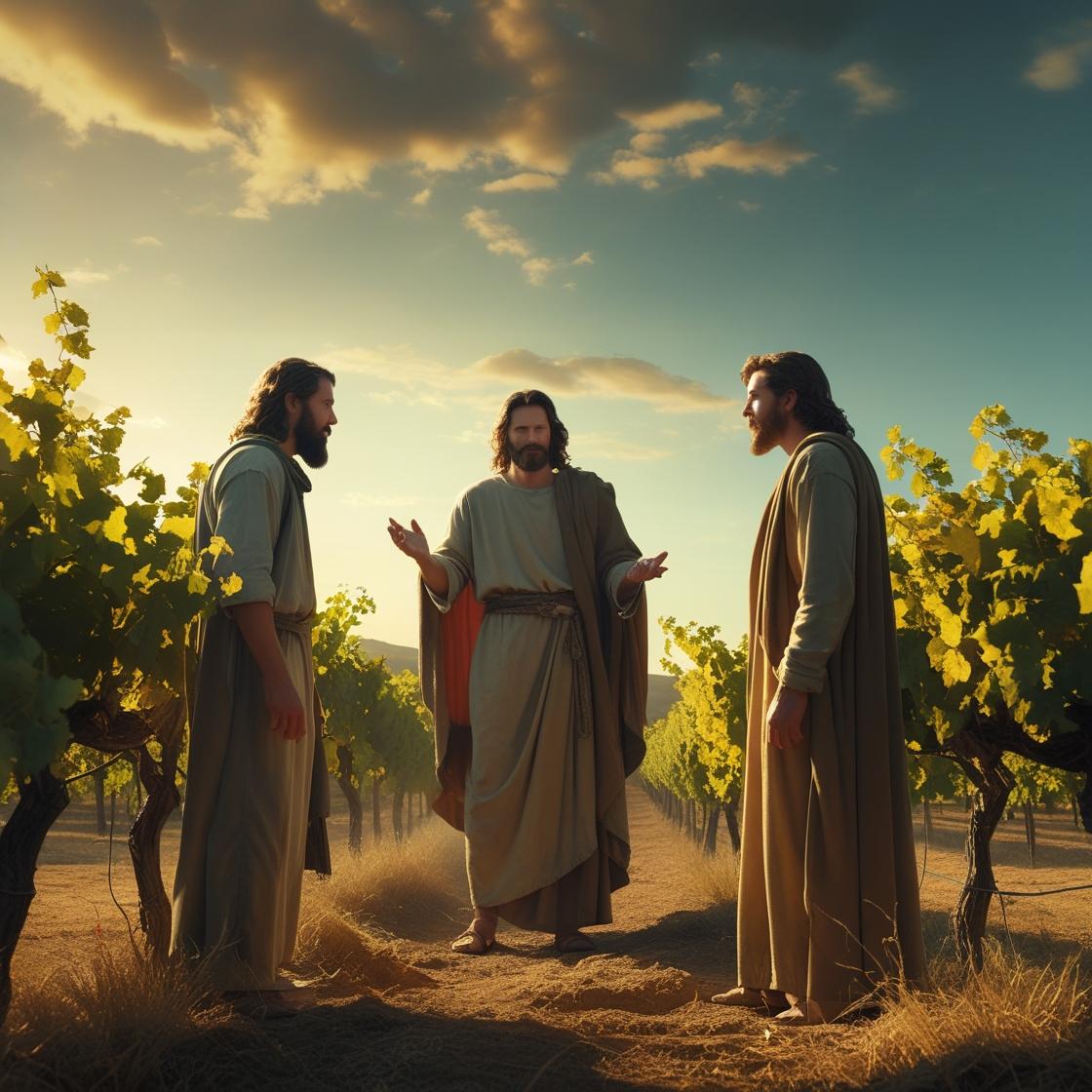
Today’s Gospel:
Jesus said to the chief priests and elders of the people:
"What is your opinion?
A man had two sons.
He came to the first and said,
'Son, go out and work in the vineyard today.'
He said in reply, 'I will not,'
but afterwards changed his mind and went.
The man came to the other son and gave the same order.
He said in reply, 'Yes, sir, 'but did not go.
Which of the two did his father's will?"
They answered, "The first."
Jesus said to them, "Amen, I say to you,
tax collectors and prostitutes
are entering the kingdom of God before you.
When John came to you in the way of righteousness,
you did not believe him;
but tax collectors and prostitutes did.
Yet even when you saw that,
you did not later change your minds and believe him."
~Mt: 20:1-16
Here is someone new to my embedded homilies, Dr. Nina Heereman. This is not a homily but an exegesis since she
is not at and cannot deliver from a pulpit, but still well explained. She is a professor of Sacred Scripture at St.
Patrick’s Seminary and University in Menlo Park, California. I quoted Dr. Heereman last Sunday, but this
is the first time I’m providing a link.
Her explanations do run longer than most I embed but well worth listening
to.
Dr. Heereman:
Here comes Jesus question. The baptism of John, where was it from? From heaven or from men? Was John's baptism something he did commissioned by God in the name of God or just on his own human account? So they argued with one another and said, "If we say from heaven, she will say to us, then why did you not believe him?" This is the important point. If we say it was from heaven, he's going to say to us, "Why did you not believe him?" What would believing have meant? Believing John the Baptist would have meant believing what John was saying. Number one, repent. Receive the baptism of repentance and prepare yourself for the reception of the Messiah from believing in John would also follow recognizing the one that John announced which is Jesus… Had they believed in John the Baptist, had they had eyes to see, they would have already known in which authority Jesus was doing these things. Because if they understood who John was, namely as the Lord said earlier, Elijah, who is to come just before the Messiah, they would have understood Jesus' messianic pedigree, right? He's the son of David. He's done all all through the gospel, we saw him working all these signs that hint to him being the promised son of David. And one of the foundational things that the son of David, the Messiah, was expected to do was precisely to cleanse the temple. So had they just observed him, they had enough indications that Jesus was the Messiah. But in refusing to listen to Baptist, they implicitly already rejected Jesus.
So Jesus has essentially told the elders by what authority, His divine
authority. Dr. Heereman continues.
Typical Jesus puts out the parable and then he lays out a trap for the high priests and they fall straight into it and by doing so they condemn themselves. They said the first, what's the first? The first is the guy who first said to the father, "No, I don't care to work in the vineyard." But then he repented. Important word in the Gospel of Matthew and he went. So the first son is very clearly an image for the sinner who doesn't care about God's commandments. Who doesn't even who doesn't care about serving God at all in his life. But then the moment of repentance comes and he gives his life to serve the Lord. And so the so Jesus says to them truly amen which means what I'm going to say is as solid as a rock. You can build your life on this truth. I say to you the tax collectors and the harlots go into the kingdom of God before you. The before doesn't mean the tax collectors and the harlots precede the high priests. It means they go and the high priest don't because they are the second son who said yes sir but they didn't go be Jesus explains. So why are the tax collectors entering heaven and they don't? Because John came to you to you high priests everyone by the way of righteousness and you did not believe him. That's when they refused salvation. But the tax collectors and the harlots believed him and they converted and changed their lives and went to work in the vineyard. And even when you saw the tax collectors and the harlots repenting, you did not afterward repent and believe in him. The most powerful sign that John the Baptist was preaching and acting with divine authority was the fact that the most um that the worst sinners in the understanding of the first century, meaning the tax collectors, the one who collaborated with the Romans and the harlots, which were the epitome of sinful women in the first century, those two heard the word of John the Baptist and converted.
John the Baptist is not just a throw in within this passage but critical to understanding it. I bet not too many homilies pointed that out.
For the pastoral homily, I turn once again to Cardinal Blase Cupich.
Cardinal Cupich:
We have this parable of Jesus of the two sons and they differ not only in terms of how they ultimately respond to the father's demand to go into the vineyard. But we also see that there are other aspects that differentiate them from each other. The first and the oldest says no. But the words of the father continue to ring in his ears moving him to change his mind. It is that sense of continually listening to where God is calling us that is so important for a virtuous life. We have a lot to learn I think from our Jewish brothers and sisters who pray what they call the Shemma here. O Israel Shemma Israel. And it is listening to the voice of God that he alone is the Lord of all. That regular kind of listening, allowing the voice of the Lord to be in our hearts is so important. But it's also important for us to attend to the voices of people who have made a difference in our lives. Especially parents, elders, teachers, coaches, people who have left us with a legacy of learning that shapes our lives.
It is so important to listen to the voice of God. And how do we find the voice of God? We read the Gospels. St. Jerome famously said, “Ignorance of
scripture is ignorance of Christ.”
Cardinal Cupich continues.
The second son also
teaches us something for words don't seem to mean anything. Not only does he listen, but his word means
nothing as well. He says, "Yes, I'll go in." But doesn't and that of
course is a very dangerous kind of life to have where the words of God, the
words of others, the advice of others is just easily dismissed and we live in
our own bubble. You know, they tell us
that the word sincere comes from two Latin words sin and cherus, without
wax. It referred to artists who carved
marble statues and sometimes they made a mistake or maybe they didn't put in
the work of shining the marble and so they would put wax over it either to
cover the mistakes or to brighten up the statue. But a person or who was an artist who did not
use wax was sincere. That I think also
says a lot to us about sincerity in life. We are sincere not when we're waxing
over things and polishing things just to make ourselves look good, but that we
are true to our words. Words make a
difference. Keeping our word is something that defines our integrity.
Yes, like the parables of Jesus, we have much to learn from these two sons. To listen to the voice of others and to count the importance of speaking words with sincerity.
A life of integrity is a life of sincerity. Stay true to your word.
Sunday Meditation: “Yet
even when you saw that, you did not later change your minds and believe
him."
For the hymn, let’s listen to, “Lord Accept The Gifts We Offer.”
- Lord accept
the gifts we offer;
At this Eucharistic feast.
Bread and wine to be transformed now
Through the action of your priest (Priests)
Take us too, O Lord, transform us
By your grace in us increased.
- May our souls
be pure and spotless.
As the host of wheat so fine,
May all stain of sin be crushed out,
Like the grape that forms the wine,
As we, too, become partakers
In this sacrifice divine.
- Take our
gifts, almighty Father
Living God eternal true
Which we give through Christ our Saviour
Pleading here for us anew.
Grant salvation to all present.
And our faith and love renew.
Take us too, O Lord, transform us!

No comments:
Post a Comment