"Love follows knowledge."
"Beauty above all beauty!"
– St. Catherine of Siena

Showing posts with label Mariette in Ecstasy. Show all posts

Saturday, May 29, 2021

List of Books I Wish I Had Read Earlier

I recently came across a book list where the creator of the list opined on wishing he had read those books earlier.  I thought that an interesting list.  So I decided to create my own. 

Now the first thing to decide was at what point would I consider as the dividing line as earlier?  I could say of any novel I really enjoyed and thought of highly should have been read earlier.  But “earlier” could be as early as a child.  No, the list had to be after a significant moment of my reading life.  Notice I said, “reading life.” 

I would say that the moment I got my Master’s Degree in English Literature to be such a dividing moment in my reading life.  Anything I read after would have been out of my mature years and from my free will.  Such books I read beyond that moment could have shaped my younger self, either as a person or as a lover of literature.

So finally, these books will be novels—I limit it to novels since novels are the art form I most enjoy—that I read since my 39th birthday that I wish I had read prior.  I’ll limit it to ten novels I have read in these past twenty years.  They are not necessarily the greatest novels I wished I had read earlier, but the most potentially impactful.  I’ll list them backwards, least wished to most wished.

10.  The Hobbit, by J.R.R. Tolkien. 

I was never a big Lord of the Rings fan, but I do acknowledge its greatness.  I read Lord of the Rings for the first time as a teenager, and then read it again in my twenties.  It’s a fun read, but I never saw the literary significance of it.  I know there is a core of Tolkien readers of good literary taste who rate it very high as a literary work.  I was never that passionate about it.  So I never read The Hobbit, the predecessor of LOTR, thinking it was along the same lines.  I finally read The Hobbit in 2012 and found it superb!  I think it’s a greater work than LOTR, perfectly written and not weighed down with stray adventures and characters.  It is a much more focused work, and so its moral is clearer and more direct.


9. The Power and the Glory by Graham Greene.

It is possibly the greatest overtly Catholic novel ever written.  It is perfection in structure and storytelling.  It is powerful in its moral conception, capturing the weakness of man and man’s strength given a dedication to a higher cause.  The character of the “whiskey priest” is Everyman who feels caught between faith and doubt, between perseverance and cowardice.  It is tragic and heroic and will make you yearn for a life dedicated to a higher cause. 


8. Lord of the World by Robert Hugh Benson.

Famous Catholic convert, Catholic priest, and son of an Anglican Archbishop, Robert Hugh Benson was a gifted writer and wrote in different modes at the beginning of the twentieth century.  He wrote several novels, and this one praised by Popes Benedict XVI and Francis.  It’s an apocalyptic novel where a government of Freemasons have conquered the world and extinguished all religions except Catholicism.  The novel climaxes in a battle of Armageddon.  This is truly an underrated novel that should get more readership.  I read it last year and wished I read it as a young man.


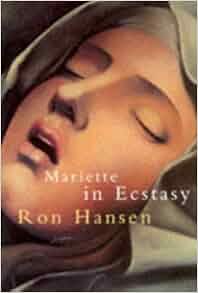
7. Mariette in Ecstasy by Ron Hansen

This is another perfect gem of a novel by a writer who attempts various genres.  This novel is of a young lady entering a closed religious order as a novice at the turn of the 20th century and who experiences several ecstatic experiences.  The other sisters in the order divide between those who believe her and those who think she is faking them.  The novel brings into question the inability of science to understand religious experiences.  I read this novel in 2019 and was overwhelmed by the beauty of the writing, the psychological depth of the characters, and the profound modernist themes.


6. My Ántonia by Willa Cather.

This was my first Willa Cather novel, and it blew me away.  The depth of character, the beautiful prose, and perfect story structure should make this one of the great modernist novels.  My hunch is that Cather’s more traditional views holds this novel back from being more situated in the 20th century canon, but I would rank it with any American novel.  I don’t have a record of when I read it, but it should have been assigned in college.


5. Silence by Shūsaku Endō.

This too rivals for the greatest Catholic novel ever written.  A historical novel set in 16th century Japan where a Portuguese Jesuit priest sneaks into Japan to find out about an apostate priest and to serve the secret Catholic community.  He is captured and put into an existential situation where has to apostatize himself or have innocent peasants tortured and killed.  I read this in 2016, the year the movie version came out. 


4. Les Misérables by Victor Hugo.

My wife and I saw the musical many years ago on Broadway and loved it.  We’ve watched the PBS singing of the songs, and watched the movie.  I have the CD.  It’s been a particular favorite.  But I had not read the novel.  The novel is great!  Yes, it’s a tome of a book, and I read it over five years, one of the five parts of the novel in each year.  Yes, there is some expository digressions that interrupts the narrative.  That’s Victor Hugo.  But the narrative is fantastic.  The character of Jean Valjean captures my heart.  There are so many great moments.  The novel turns out to be much more religious than the modern adaptations.  I read Les Misérables from 2014 to 2019.  I wish I had read it earlier.


3. Crime and Punishment by Fyodor Dostoevsky.

I thought that The Brothers Karamazov was Dostoevsky’s great novel, and it is, but Crime and Punishment is its equal.  What a powerful all comprehensive work of art.  No one can better capture the psychological depth of characters than Dostoevsky.  And not just a momentary psychology but a psychology in development and transition.  This story is powerful for its Christian world view, its superb characters (I love Sonya!), and its intricate plot.  You know Raskolnikov is the killer.  It’s a question of whether he gets caught, and if you the reader want him to get caught.  I won’t spoil it.  For a novel that was written in 1866, it is so current today.  I read it in 2015. 


2. To Kill a Mockingbird by Harper Lee.

Another great novel.  You, dear reader, probably read this in high school.  For some reason I never was assigned this novel.  It’s also not one you would get assigned in college, and that is a pity.  I love the telling of the story from the point of view of a pre-teen girl, with all its implications of oncoming puberty.  I love the character of Atticus Finch, the heroic father and lawyer, and the implications of a little girl’s admiration for a moral and duty-bound hero.  I love the way Lee captures the South, both in its positive and negative attributes.  I read this in 2016 at the age of 54.  I should have read it forty years earlier.


1. The Chronicles of Narnia by C. S. Lewis.

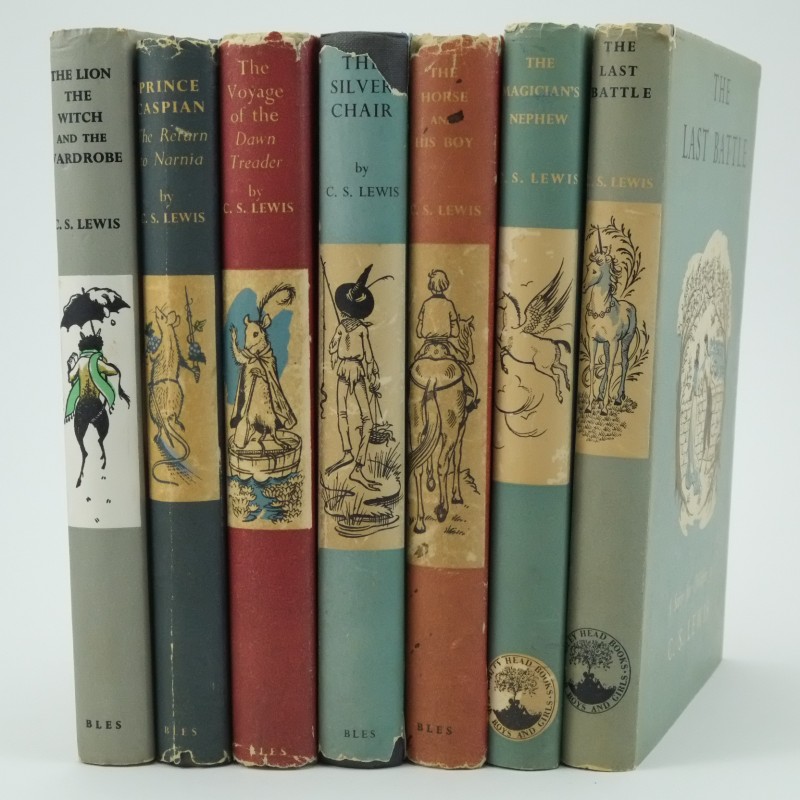
The number one book I wish I had read earlier is not a single book but a series, C. S. Lewis’ great interlocking series of novels affectionately just referred to as Narnia.  Actually I haven’t even finished the whole series of seven.  I have been reading one per year and have completed the first four.  The main characters in each of the novels are children, and there is a strong Christian themes and symbolism.  I have been reading this with my son, who claims he doesn’t like it, but seems interested every time we get into it.  On one hand, Narnia is a set of children’s or young adults’ novels, but really anyone of any age can and should read them.  I should have read it as a pre-teen.  I’m joyfully reading them now!


I’ve have posts on most of these ten novels.  Just do a search in that little box at the upper left of the blog page.

What novels do you wish you had read earlier?

Thursday, October 17, 2019

Mariette in Ecstasy, Post 6

This is my final post on Ron Hansen’s Mariette in Ecstasy.  It will amount to some noted excerpts from the novel and my final review I posted on Goodreads.

The first post can be found here.  
The second post here. 
The third post here.  
The fourth post here.    
The fifth post here.  


Excerpts:

In a note to Père Marriott, 14 September 1906:
I have so much to tell you of Christ’s kindnesses and promises to me, but before reading further I plead to you: Do not believe anything I say.  Writing you gives me such consolation, but as I begin to put words on paper a great fear overwhelms me.  I have such fantastic and foreign things to report that it seems highly likely that I have dreamed them.  I shall say it frankly here that my head is a bit strange, for I have seen and heard impossible things, and whenever before has Christ appeared to souls as sinful as mine?  (p. 58)


When the pains started in September, I had no idea what they truly meant. And then I persuaded myself that all sisters espoused to Christ by their vows would have experienced his wounds. You can’t know how stupid and innocent I was! (p. 130)


Mariette walks a toweled broom along a hallway by Sister Virginie’s cell and then kneels below a horrid crucifix that she hates, Christ’s flesh-painted head like a block of woe, his black hair sleek as enamel and his black beard like ironweed, his round eyes bleary with pity and failure, and his frail form softly breasted and feminine and redly willowed in blood.  And yet she prays, as she always does, We adore you, O Christ, and we praise you, because by your holy cross you have redeemed the world.  And just then, she’ll later tell Père Marriott, she is veiled in Christ’s blessing and tenderness, she feels it flow down from her head like holy oil and thrill her skin like terror.  Everything she has ever wished for seems to have been, in a hidden way, this.  Entire years of her life are instantly there as if she could touch any hour of them, but she now sees Jesus present in her history as she hadn’t before, kindness itself and everlasting loyal, good father and friend and husband to her, hurting just as she hurt at times, pleased by her tiniest pleasures, wholly loving her common humanness, and her essential uniqueness, so that the treacheries and sins and affronts of her past seem hideous to her and whatever good she’s done seems as nothing compared to the shame she feels for her fecklessness and indifference to him.  And she is kneeling there in misery and sorrow when she opens her hands like a book and sees an intrusion of blood on both palms, pennies of skin turning redder and slowly rising up in blisters that in two or three minutes tear with terrible pain of hammered nails, and then the hand flesh jerks with the fierce sudden weight of Christ’s body and she feels the hot burn in both wrists.  She feels her feet twisted behind her as both are transfixed with nails and the agony in both soles is as though she’s stood in the rage of orange, glowing embers.  She is breathless, she thirsts, she chills with loss of blood, and she hears Sister Dominique from a great distance, asking “Are you ill?” when she feels an iron point rammed hard against her heart and she faints.  (p. 157-158)


Mass of the Conversion of Saint Paul, Apostle, 1933.

She kneels just inside the church of Our Lady of Sorrows, behind the pews of holy old women half sitting with their rosaries, their heads hooded in black scarves.  High Mass has ended.  Externs are putting out the candles and vacuuming the carpets.  And then there is silence, and she opens to Saint Paul: “We are afflicted in every way possible, but we are not crushed; full of doubts, we never despair.  We are persecuted but never abandoned; we are struck down but never destroyed.  Continually we carry about in our bodies the dying of Jesus, so that in our bodies the life of Jesus may also be revealed.”  (p.178)


###

Review Posted at Goodreads

The complexity of this novel belies its simplicity.  We are inside a Benedictine class of monastery, and a new novice, Mariette, has been taken in, a young woman of seventeen, passionately devout but filled with all the other fervors a young woman would have.  In the course of a few months, Mariette starts having extreme religious experiences (or perhaps the continuation of such experiences from before she entered the priory), climaxing with physically formed stigmata followed by a coma-like ecstasy.  Is this real, faked, or a psychosomatic induced phenomena? 

For much of the novel the reader is in a state of ambiguity and suspense.    To understand the novel, the key I think is to understand why the novel is set in 1906 going into 1907.  By 1906 medicine has developed to an understanding of germs, vaccines, and x-rays.  By 1906, psychology was the rage; Freud published Three Essays on the Theory of Sexuality in 1905.  By 1906 religious experiences were being located inside the mind; William James published The Varieties of Religious Experiences in 1902.  And perhaps more importantly, in 1907 Pope Pius X published, Pascendi Dominici Gregis, the encyclical refuting modernism.  You the reader are placed inside the world of the novel to discern a supernatural phenomenon with a modernist worldview.  But mind you, if you believe the author leaves it at the end for the reader to decide the nature of the phenomena as some reviewers have stated, you have misread the novel. Hansen is quite clear.

There are several major themes that stem out of the novel: the ambiguity of religious experience, the shift to a worldview based on empiricism, the unwillingness of people to change their habitual lives even if Christ has entered it.  But for me I think the most profound theme in the novel is the theme of achieving holiness through humiliation.  For Mariette, the stigmata and ecstasy are not the culmination of holiness but steps on the way to reaching a fuller holiness.  We see at the end her pride extinguished, and the death of the old self into a new creation. 


This is a novel of high craft, fine prose, even poetic prose, complex characters, especially Mariette the central character, profound ideas, and the beautiful creation of an original world.  In short Mariette in Ecstasy is a work of art and Ron Hansen's masterpiece.


Tuesday, October 1, 2019

Mariette in Ecstasy, Post 5


The first post on Ron Hansen’s Mariette in Ecstasy can be found here.  
The second post here.  
The third post here.  
The fourth post here.  


Just skimming through the novel to put my final thoughts together and I came across this interesting tidbit.  When Mariette first enters the convent and has a little discussion with her sister, Mother Céline, they discuss the letter that their father wrote explaining that Mariette suffers from “trances, hallucinations, unnatural piety, great extremes of temperament, and…’inner wrenchings’”  Mother Céline asks:

“Was he dishonest in his description?’
“I have no opinion, Reverend Mother.”
“Was he duped then?”  (p. 31)

Now go to the examination scene where when she puts her hands in the water the wounds disappear.

She tells him, “Christ took back the wounds.”
She expects her father to stare at her with fear and astonishment, but he is, as always, frank and unimpressed, as firm as practical as a clock.  “And your feet?” he asks.
“I have no wounds.”
“Even that is miraculous!” Père Marriott says.
Dr. Baptiste smirks at him and then at Mother Saint-Raphaël.  “You have all been duped.” (p.173)

There’s the word twice, “duped.”  That certainly wasn’t an accident.  I’m now convinced that Irene was right at the beginning of our discussion.  Dr. Baptiste is anti-religious.  What I think is central here is that Mariette “expects her father to stare at her with fear and astonishment,” but he does not.  There are two opposing world views here coming into opposition: the supernatural Catholic and the empiricist modern.  It is also interesting we get the supernatural Catholic world view not so much from the Sisters at the priory but from the readings they read as a group.  There are several writers they read.  I can’t remember exactly but I think St. Augustine, St. Benedict, and especially Blessed Julian of Norwich.  The Julian of Norwich readings actually foreshadow Mariette’s experiences. 


###

We have discussed three of the major themes of the novel: the ambiguity of religious experience, the shift to a worldview based on empiricism, and the unwillingness of people to change their habitual lives even if Christ has entered their space.  But for me I think the most profound theme in the novel is the theme of holiness through humiliation.  It’s a rather complex theme, so let me try to walk you through it.

First off, I don’t think Mariette’s spiritual “crucifixion” is really from the stigmata.  That is just a sign from God.  Her real “crucifixion” is the humiliation she undergoes first as she is examined and criticized, next when she is expelled from the convent that she dearly wanted to be part of,  and then when for the rest of her life she is looked upon as a fraud.  Those final vignettes of her leading a lonely and isolated life are very poignant.

But this theme of crucifixion through humiliation runs throughout the novel.  Of course we get its opposite, pride.  Pride is the one sin that is most feared.  And as a seventeen year old, zealous in her faith, Mariette suffers from pride in many places.  On her first day at the convent in a conversation with Sister Hermance, the two share their deepest desires.  Sister Hermance first:

“When I joined the order I prayed to go away from home and have home totally forget me.  I have been praying since for humiliations and hardships and perfect atonement for my sins.  And perhaps, too, consumption and an early death.”  She thinks for a second or two and asks, “Is it too much, Mariette?” 

She shrugs.  “I have been praying to be a great saint.”

Sister Hermance peers at her seriously.  “Such pride, Mariette!  You surprise me.”

She smiles.  “I’ll try to be irresistible.” (p. 19)

We do see Mariette’s youthful exuberance in her devotion.  And while we’re all called on to be saints, to want be a great saint requires an exertion rooted in pride.  Sister Hermance reacts to its boldness.  What Sister Hermance desires is way more humble: to be forgotten, perhaps alluding to the Blessed Mother as she fades from the center of the Gospels.  She also wants “humiliations and hardships and perfect atonement.”  We will see Mariette go through all that in time.  Sister Hermance finally adds, “consumption and an early death.”  Mariette too will undergo a spiritual death and the death of her convent life.  We see in Sister Hermance’s desire what Mariette will learn.

If you read through the novel looking for pride and humiliations you will see they come up frequently.  Here are some of her prides: Mariette is Mother Céline’s sister.  She is the lovely girl who’s hair is still uncut.  She is the one they gossip about.  She is the holy one who writes the profound paper on theology.  She takes on penances.  She prays perfectly.  When she is alone in Père Marriott’s chambers, she thinks of herself as a priest, acting it out (p. 39).  In one of the embedded inquest dialogues, Sister Catherine is asked what she thought of Mariette, she says, “She is passionate.  She is perhaps too proud.  She is not hysterical.”  Here is another Sister who sees Mariette’s pride.

And it is Mother Saint-Raphaël who publically identifies Mariette’s pride.  She does at the scene of the open confessions, well prior to Mariette’s first stigmata:

“Our postulant has been too proud.  She has been a princess of vanities.  She has sought our admiration and attention in a hundred ways since she has joined our convent.  She hopes we will praise her for being pretty and fetching and young.  She is slack in her work and lax in her conscience.  She has been a temptation to the novices and a pet to all the professed sisters.  Ever since I have been her mistress, she has been a snare and a worldliness to me and terrible impediment to the peace and interests of the Holy Spirit.  (p. 88)

Look too at Mother Saint-Raphaël’s self-discovery dialogue with Mariette, where the Mother confesses to have also had the sin of pride in her youth (p. 50-51).   So when Mariette gets her stigmata, the one in a handful of people in all of history to have been blessed with one, there too one senses a pride.  The first happens on Christmas Eve:

She holds out her blood-painted hands like a present and she smiles crazily as she says, “Oh, look at what Jesus has done to me.”  (p.112)

This perhaps is her moment of most pride.  No one has questioned her yet.  No one has doubted.  Clearly there is an element of pride in her manner of stumbling forth, holding her wounds as a “present.”  Look at the phrasing: “Look at what Jesus has done to me,” with emphasis on the personal pronoun, “me.”

But throughout the novel, Mariette is also aware of her pride and her necessity to eradicate if from her person.  In her first note to Père Marriott written on her first night at the convent, concluding Part 1, she explains:

Every day and in the midst of every kind of disobedience and failing, I have asked Jesus to have pity on me and either take my life entirely or, in his justice and mercy, give me a great deal to suffer in atonement for my foolishness and the sins of the world.  While there have been times when he permitted me to enjoy the greatest consolations, there have been times of darkness and silence, too, when I felt disliked and in disfavor and, with hopelessness and pining and tears, I prayed to Jesus that was very near Hell.  (p. 42)

She is quite conscious of her sins of which, from what the reader can see, pride stands out.  She asks to suffer in atonement, and the process for that is mortification.  Written on a rafter somewhere in the convent is “They mortify their bodies with abstinence” (p. 48).  Mortification is at the center of the novel.  Mortification in most dictionaries is differentiated into four related definitions.  From the Online Dictionary:

noun
1. a feeling of humiliation or shame, as through some injury to one's pride or self-respect.
2. a cause or source of such humiliation or shame.
3. the practice of asceticism by penitential discipline to overcome desire for sin and to strengthen the will.
4. Pathology. the death of one part of the body while the rest is alive; gangrene; necrosis.

Definitions (1) and (2) are interrelated in that (1) identifies the result of (2) the source, but both at their heart is “humiliation.”  Definition (3) identifies a process of which one overcomes an interior desire for sin, and definition (4) identifies a bodily death, which is at the etymological root of mortify.  So there are three categories here, humiliation, ascetic discipline, and death, and all three figure into this grand theme of the novel.

I mentioned in an earlier comment that, in addition to suffering, humiliation is at the heart of Christ’s crucifixion, and at the start of this comment I mentioned that Mariette’s real crucifixion is her humiliation. 

We see Mariette frequently mortifying herself as an attempt to extinguish desire to sin.  We see her praying all night, we see her lie face down in sympathy with a punished sister, we see her use some sort of instrument to draw blood, we see her welcome a sting from a thorn, we see her scald her hands, among other instances.  When she is asked about scalding her hands, Mariette mysteriously says, “I just want to hurt” (p. 70).  The reader may jump to the conclusion this is part of the self-flagellation that leads to what might be a self-inflicted stigmata.  Hansen makes it ambiguous but the true underlying reason is Mariette’s attempt to extinguish her pride and in turn come closer in sympathy to Christ.  The pains and spilled blood of the stigmata then are not a sign from God that Mariette is any more holy than anyone else, but God’s grace of mortification for her to become more holy.  In that letter to Père Marriott I quoted above, Mariette tells the priest what Christ prophecies for her:

“You will have no solace or pity, not even from your superiors.  You will be tortured by gross outrages and mistreatment, but no one will believe you.  You will be punished and humbled and greatly confused, and Heaven will seem closed to you, God will seem dead and indifferent, you will try to be recollected, but instead be distracted, you will try to pray and your thoughts will fly, you will seek me fruitlessly and without avail for I shall hide in the noise and shadows and I shall seem to withdraw when you need me most.  Everyone will seem to abandon you.  (p. 43)

That letter from that first night is actually the novel in a microcosm.  Abandoned, as Christ was abandoned on the cross, Mariette achieves the ultimate mortification, a humiliation that will last throughout her life.  There is nothing now that she can take pride in.  She is expelled from the convent and defined as a hoaxer.   Thirty years later in her letter to Mother Philomème she writes:

Children stare in the grocery as if they know ghostly stories about me, and I hear the hushed talk when I hobble by or lose hold in my hands, but Christ reminds me, as he did in my greatest distress, that he loves me more, now that I am despised, than when I was richly admired in the past.   (p. 179)

We see now how her pride has been extinguished.  She has arrived at definition (4) of mortification, the death of the old self into the new creation.  He loves her more “now that I am despised.”  So why does God bring her through this humiliation?  Because through the humiliation she has arrived at true and full holiness.  It is not the stigmata that made her holy.  It is the mortification. 


Saturday, September 28, 2019

Mariette in Ecstasy, Post 4


The first post on Ron Hansen’s Mariette in Ecstasy can be found here.  
The second post here.  
The third post here.  


Part 3

Summary

After her sister’s burial on Christmas Eve, Mariette is seen praying intensely in front of a crucifix.  Moments later she comes forth bleeding from her stigmata wounds. And as the sisters try to care for her, she goes into a coma-like trance, her ecstasy.  The priory runs with rumors of speculation, and Sister Saint-Raphaël, now the Mother Superior, writes to her Mother General of the shocking events.

Two days go by before Mariette comes out of her ecstasy, and now every sister’s reaction to Mariette has changed.  Some are in awe of what appears to be a supernatural event and some are suspicious and skeptical.  She is sent to Père Marriott where he questions her on her experiences.  Marriott comes away believing her.

As the days go by the two camps (those that believe Mariette and those that don’t) become more convinced of their positions.  Mariette has also become more and more a distraction, both to life inside the convent and the convent’s relation to the outside world.  Everyone wants a glimpse of postulant.  A formal investigation is started and led by Marriott, and witnesses, some from each camp, are called.

Mother Saint-Raphaël feels compelled to restrict Mariette’s activities.  On the one hand she is intellectually skeptical of the genuineness of Mariette’s stigmata, and so has convinced herself Mariette is pulling a hoax, but on the other hand in the depths of her spiritual core she has an inkling they are real.  But the disruption Mariette has created, irrelevant to the stigmata’s validity, requires she treat Mariette strictly.

By early February Mariette’s wounds are healed.  On the feast day of the apparition of Our Lady of Lourdes (Feb. 11th) while performing housework Mariette takes a moment to kneel before the crucifix and go into intense prayer.  As before, her hands, feet, and side bubble out with blood of now a second stigmata experience.  This only reinforces the already existing beliefs in the two camps, but now the skeptics force Mother Saint-Raphaël to have Mariette placed in a make-shift jail cell.

With her hands still fresh with the wounds, a doctor—her father—is called in to examine their authenticity.  She is forced to strip naked in front of him and a panel of witnesses.  As the doctor examines, he can’t quite discern the nature of the punctures and asks for some instrument to pick open the scab.  But Mariette says to just put them under water, and she goes over to a basin and dips her hands in.  When she lifts them out, the wounds are gone, and with that the doctor instantly declares it to all have been a fraud.

Mariette is expelled from the convent, and we see a series of vignettes of her isolated and disgraced life.  Thirty years go by when she writes a reply to a letter from her old friend at the convent, Sister Philomène, who has now become the Mother Prioress.  Mariette tells Philomène of the sadness and joy her life has been.  She still receives from Christ pains of the stigmata and still feels His overwhelming love.

###

The central mystery within the story is whether Mariette’s mystical experience is real, psychosomatic, or a hoax.  Once the reader gets to the second stigmata, one can no longer hve any doubt.  Here is the delineation of the second stigmata.

Mariette walks a toweled broom along a hallway by Sister Virginie’s cell and then kneels below a horrid crucifix that she hates, Christ’s flesh-painted head like a block of woe, his black hair sleek as enamel and his black beard like ironweed, his round eyes bleary with pity and failure, and his frail form softly breasted and feminine and redly willowed in blood.  And yet she prays, as she always does, We adore you, O Christ, and we praise you, because by your holy cross you have redeemed the world.  And just then, she’ll later tell Père Marriott, she is veiled in Christ’s blessing and tenderness, she feels it flow down from her head like holy oil and thrill her skin like terror.  Everything she has ever wished for seems to have been, in a hidden way, this.  Entire years of her life are instantly there as if she could touch any hour of them, but she now sees Jesus present in her history as she hadn’t before, kindness itself and everlasting loyal, good father and friend and husband to her, hurting just as she hurt at times, pleased by her tiniest pleasures, wholly loving her common humanness, and her essential uniqueness, so that the treacheries and sins and affronts of her past seem hideous to her and whatever good she’s done seems as nothing compared to the shame she feels for her fecklessness and indifference to him.  And she is kneeling there in misery and sorrow when she opens her hands like a book and sees an intrusion of blood on both palms, pennies of skin turning redder and slowly rising up in blisters that in two or three minutes tear with terrible pain of hammered nails, and then the hand flesh jerks with the fierce sudden weight of Christ’s body and she feels the hot burn in both wrists.  She feels her feet twisted behind her as both are transfixed with nails and the agony in both soles is as though she’s stood in the rage of orange, glowing embers.  She is breathless, she thirsts, she chills with loss of blood, and she hears Sister Dominique from a great distance, asking “Are you ill?” when she feels an iron point rammed hard against her heart and she faints.  (p. 157-158)

The delineation is in objective third person point of view.  These events happen to Marriete, and so we can tell they are not a hoax.  The first stigmata was off stage, so to speak.  The second stigmata is in front of the reader to see.  We can also state that it goes beyond realm of credulity to claim that they are a result of psychosomatic phenomena.  As I’ve stated in one of my previous comments, psychosomatic stress can cause ulcers, aches, heart problems, grey hair, but there is no possibility that in three minutes of time it could cause flesh to burst out into hemorrhaging and at the five wounds of Christ.  Hansen is clearly intending this to be a supernatural event.

Though the mystery has been unlocked for the reader, it remains a mystery for the rest of the characters.  So is Hansen just writing a religious mystery to titillate readers by keeping the validity of the stigmata ambiguous as long as possible?  I would say no, because there is a religious theme that is central to the novel.  One has to ask, if it is a real stigmata, why does God not make it clear for everyone?  But then we could ask that about any religious event.  Why is God not front and center to the world so that there is no ambiguity to the true faith?  Père Marriott quotes Isaiah to Mariette during a confession, “Truly you are a hidden God,” and he quotes Christ, “My God, my God, why have you forsaken me” (p. 81).  In the end, God has clearly forsaken Mariette.  But it is Mother Saint-Raphaël at her final scene where she expels Mariette. 

When she and the postulant are alone, Mother Saint-Raphaël shifts a chintz pillow and pats a sofa cushion beside her.  She stares impassively at Mariette as she sits.  She says, “That was simply political, what I said—that you disappoint me.  I personally believe that what you say happened did indeed happen.  We could never prove it, of course.  Skeptics will always prevail.  God gives us just enough to seek Him, and never enough to find Him.  To do more would inhibit our freedom, and our freedom is very dear to God.”

Besides admitting to what I think is a grave sin, that she truly believes Mariette and yet carries out this injustice, she does articulate one of the central themes, that is, God never fully makes Himself certain.  I don’t know if that comes from Thomas Aquinas but it certainly sounds like it.  And so, Hansen is not just titillating the reader by hiding facts.  It’s critical to the novel’s theme. 


Sunday, September 22, 2019

Mariette in Ecstasy, Post 3

The first post on Ron Hansen’s Mariette in Ecstasy can be found here.  
The second post here.  


Part 2

Summary:

Part 1 was indeed just one day long, the day of August 15th, 1906, and Part 2 picks up on August 16th and ends on Christmas Eve, December 24th.  If you haven’t noticed, each vignette starts off being dated with the Feast Day Mass in the liturgical calendar, so the reader can date the events.  Other than the occasional inserted fragment of the inquiry into Mariette’s experiences, the narrative time flows sequentially. 

Mariette begins to meet the various Sisters, accustom herself to the rhythms of convent life, and develop her personal intense prayer and contemplative practices, above and beyond what the Sisters at the convent are required.  She meets with the Mistress of Novices, Mother Saint-Raphaël, a stern elderly woman who is able to discern Mariette’s personality.  Mariette goes through catechism lessons, of which she is flawless, works the daily activities requiring manual labor, and increases her devotion through subtle acts of mortification.  Mariette writes confidential notes to Père Marriott about the intensity and dearth of her personal connections with Christ, and Mother Céline has intercepted them and secretly reads them. 

We see instances of Mariette’s self-flagellation and impulses to increase their severity.  We see scenes of latent sexual desires and conduct, and even play.  We see a deep, ardent relationship with Christ and a commitment to its fullest expression.  Various sisters notice all these things, and we the reader can justify what we think happens to Mariette by pointing to something in this section.

Finally the last sections of Part 2 dramatize the discovery, painful endurance, and ultimately death from cancer of Mother Céline.  Mother Saint-Raphaël allows Mariette in the care of her blood sister, where she watches her older sister undergo the humiliation of medical diagnosis and the suffering decline and death.  Her father as the local doctor is called up to perform the medical exams.  Part 2 ends with Mother Céline’s funeral and Requiem Mass and Mariette reaching her highest level of ecstasy yet, kneeling in front of the crucifix in a trance emulating the suffering of the Lord.

###

As I’ve said, I’m quite amazed at the skill level of Ron Hansen to capture life in a monastery and the personalities of the nuns themselves.  Here’s a little scene of a nun who admires Mariette.

Compline.  Sister Emmanuelle retreats a half-step in her stall so she can peer behind Sister Antoinette and discretely adore the new postulant in her simple night-black habit and scarf.  She’s as soft and kind as silk.  She’s as pretty as affection.  Even now, so soon, she prays the psalms distinctly, as if the habit of silence has taught her to cherish speech.  And she seems so shrewd, so pure, so prescient.  Sister Emmanuelle thinks, She is who I was meant to be.

And then the sisters turn and walk out in silence, and Sister Emmanuelle thrills as she hesitates just enough so that Mariette passes by.  And then she quickly presses her left hand into the postulant’s.  Mariette walks ahead and hides her surprise as she secretly glimpses her hand and the gift of Sister Emmanuelle’s starched cambric handkerchief with its six winged seraphim holding a plumed letter M gorgeously stitched into it in hours of needlepoint.  She gives the seamstress an assessing glance and then Sister Emmanuelle flushes pink as the girl shyly smiles.

Such a little scene, and yet so much is communicated.  We see during the communal praying of compline that the sisters are not just vessels performing their religious tasks but flesh and blood people who get distracted and build affections.  At the center of the first paragraph, we get Sister Emmanuelle’s thoughts in what is called indirect interior monologue, the actual thoughts of a character even though the narrative is not in first person.  Even though they are praying, Sister Emmanuelle shifts her head so that Mariette is in her purview, and she thinks, “She’s as soft and kind as silk.  She’s as pretty as affection.”  As we see elsewhere, being distracted as thus is a minor sin and giving such a gift would also no be condoned.  The very fact that Sister Emmanuelle does it secretly and that Mariette accepts it in secret is I think a de facto acknowledgment that it was not proper.  Sister Emmanuelle is not a novice.  We see from the directory she is 54 years old, and so quite conscious of her failing.  But these sort of human would be quite natural.

While I have this scene up, I should bring up another motif that runs through the novel, that of latent sexual longing.  We see here what might be construed as sexual attraction for another woman.  Sister Emmanuelle sneaks peaks at her beloved, she admires her, she considers her attractive, she is thrilled as Mariette passes by, she gives her a secret gift, and she flushes pink when the beloved returns an acknowledging gaze.  So does Sister Emmanuelle have a consciously or unconscious same sex attraction for Marietter?  On the other hand, she also admires how Mariette prays the psalms, seems so pure and prescient, which implies a divine knowledge, and she thinks, “She is who I was meant to be.”  This is the language of religious desire, not sexual. 

So which is it?  What I think Hansen is doing is intertwining sexual desire with religious desire.  The Freudian bent reader – and we moderns have all been shaped by that intellectually flawed set of notions – would say there is a latent lesbian inclination.  But we also know that longing for God is many times delineated as a sexual pining.  Christ is described as a “bridegroom.”  Various woman saints have undergone a mystical marriage with Christ.  Indeed, the wedding ring St. Catherine of Siena received was Christ’s foreskin.  Biblically we have the Song of Solomon. Isaiah 62:5 (“For as a young man marries a virgin, So your sons will marry you; And as the bridegroom rejoices over the bride, So your God will rejoice over you.”), Hosea 2:19 (“"I will betroth you to Me forever; Yes, I will betroth you to Me in righteousness and in justice, In lovingkindness and in compassion.”), Rev 19:7 ("Let us rejoice and be glad and give the glory to Him, for the marriage of the Lamb has come and His bride has made herself ready."), Psalm 63:1 (“O God, You are my God; Early will I seek You; My soul thirsts for You; My flesh longs for You; In a dry and thirsty land; Where there is no water.”), and others.  The language of religious intimacy is sometimes blurred with the language of sexual intimacy.

Freud might say that this is within the unconscious.  I don’t know.  In Christianity, God is love, and a component of love is sexuality.  And just as in synesthesia, where one of the five senses is blend with another, so too different types of love can be commingle.  I don’t think Sister Emmanuelle is having a sexual attraction to Mariette.  I think she sees Mariette as she sees Christ, or at least connects her to Christ.  She says that Mariette is the person she was “meant to be.”  Well, Christ is the person we are all meant to be.  This sort of sexual double entendre is a motif throughout the novel, and allows the reader to consider Mariette’s love for Christ to have a sexual connotation. 

###

It’s interesting how there was no preparation for Mother Céline getting cancer, no hints, no talk of her being ill on occasion.  In the early scenes she is perfectly fine.  It comes out of the blue.  If I were to ask Hansen a question, I would ask him why?  I don’t quite have an answer for it, and because of the high skill in the authorship of everything else in the novel, it is unlikely it was an oversight.

But equally interesting is that we don’t really get that much preparation for Mariette’s stigmata.  She goes from having “experiences” to bleeding stigmata and coma-like ecstasies.  Now there are foreshadows and time shifts of bringing in clips from the inquest prepares us to some degree, but not fully.  When you look at Mariette in August on her entrance and even throughout most of Part 2, she is completely changed in Part 3 after the stigmata.  The amount of change in four months of time is breath taking.

Narratively Mother Céline is a sort of Mariette’s doppelgänger, a double who serves to show parallels and contrasts with the main character.  The fact that she’s her sister raised in the same home, having a similar relationship with the father, taken the same vows, and in the same convent is pretty suggestive of that.  That she experiences a crucifixion like Mariette (and here I’m jumping ahead to Part 3) is also indicative of a doublet.  Her sufferings, like Mariette’s sufferings, are a recreation of the Christ’s passion.  There is the carrying of a cross, pains in the flesh as of a scourging, stripping, stab wounds to the side, the release of blood and water, and finally the humiliations.

I’m not sure we realize just how a crucifixion was meant to humiliate.  Stripped naked and staked to a cross (and believe me they did not leave a loin cloth for privacy) where one slowly dies in front of the world, unlike a hanging which is fairly quick, is about as shameful a death as possible.  For a Jew it was deeply shameful because it says so in the Torah: Deut 21:23, “for he that is [so] hanged is accursed of God.”  I’m sure Christ had loss of bladder and bowels during his passion and crucifixion, loss of physical control while asphyxiating, and loss of emotional control under torment.  There are citations of sexual abuse of people undergoing the scurging, and I have read some speculate Christ may have been subject to that too.  Scripture has undoubtedly cleaned up some of this out of respect to the Lord, but all of this was meant to destroy the dignity of the crucified.

Mother Céline’s sufferings, not having the ability to care for oneself, having to undergo the indignity of a medical examination of her private parts from her own father no less, having to urinate in front of people in a glass, and finally the uncontrolled expulsion of blood is destruction of her dignity.  She is undergoing the Lord’s passion, of which we will all have to undergo at some time, unless we are blessed with a quick death. 

I’ll delineate Mariette’s undergoing of the passion when we get to Part 3.  There are differences, contrasts.  The most significant is that Céline are completely biological while Mariette’s are completely non-biological.  Theologically one could think of Céline as a forerunner to Marriete, just as John the Baptist is a forerunner to Christ.

Now there is also the suggestion that Mother Céline’s sufferings is a seed that works in Mariette’s psychology.  This is another form of the psychosomatic theory of what happens to Mariette.  And just like with the Freudian sexual psychosomatic theory, Ron Hansen wants the reader with the modernist world view to be led down this path.  Here the theory would be that Mariette overly identifies with her sister and takes on her malady, or something to that effect.  Perhaps the term is “psychological identification” but I’m not sure.  But it can’t be.  Perhaps one can say that her coma might be so induced, but there is no way a stigmata can be so induced psychologically. 


Reply to Irene:
Irene, I wrote my thoughts before I read yours.  Yes, the suggestion of psychosomatic with Mariette identifying with her sister is intentional but in light of the fact that Mariette's stigmata is real then one has to re-look at the validity of that cause.

No I don't believe there is sexual abuse going on with the father.  That's what cancer doctors do.  I take my mother to a hematologist and even though it was only suspected that my mother might have cancer, the doctor routinely examines her belly and breasts.  It's rather embarrassing for me to be there, and I can imagine what my mother feels.  I don't recall the scene with Mariette.  I'll have to re-read that.  But I thought the father was just doing doctorly things, of which are inherently humiliating.  It's humiliating to be in a hospital.

I too can't put my finger on why those two big events happen on Christmas Eve.  Perhaps you're right.  Perhaps it has to do with the incarnation.  I don't know.

Irene Commented:
II agree that Celine's examin is standard for a doctor. I just wondered why Hansen chose to have the father also be the doctor.

My Reply:
That's a good question.  He didn't have to, did he?  You had asked if he were anti-religious.  There’s a little scene in Part 3 I just re-read where he happens on a chance meeting with Mariette at the church.  The Grille separates them.  She asks about her wounds and she informs him they have healed.  He asks to examine them.  She refuses to show him.

“Just let me look at your hands.”
She hides them behind her back.
“Are they bleeding still?”
She dully shakes her head.
“Are they healed?”
“Yes.”
“Well then, let me see how that is done?”
“No, Papa.”
“Examining them won’t hurt.”
“Christ has forbidden them to science.” 
Her father frowns with irritation at Mariette and says, “You are talking idiotically.”
“I have said what I have to say,” she says.  We love you Papa.”  And she goes.  (p. 140)

I still don’t know if he’s anti-religious but he definitely stands in for empirical science.  She refuses to give into the science, though she will have to later.  I can’t answer as to why Hansen combines it with her father.  Perhaps because it makes it even more surprising and undermining of the scientific world view that it all started under his nose. 


As I was typing the conversation above, I was struck with Mariette’s last words, “We love you Papa.”  Who is included in the “we”?  Céline is dead.  The rest of the Sisters?  Not sure why that would be.  Christ?  Interesting.