"Love follows knowledge."
"Beauty above all beauty!"
– St. Catherine of Siena

Showing posts with label Year C. Show all posts

Sunday, November 16, 2025

Sunday Meditation: When the Temple Will Topple Down

After two weeks of deviations from Ordinary time, this Sunday we return to the Thirty-Third Sunday in Ordinary Time, Year C.  We are one week from the end of the liturgical year.  Next week we end with the feast of Christ the King. 

The readings toward the end reflect the end of time, and so we get apocalyptic readings, and the fire-and-brimstone reminder of what avails us at our end of life.  Today Jesus predicts the end of the Temple, which He associates with end of times.


Here is the Gospel passage.


While some people were speaking about how the temple was adorned with costly stones and votive offerings,

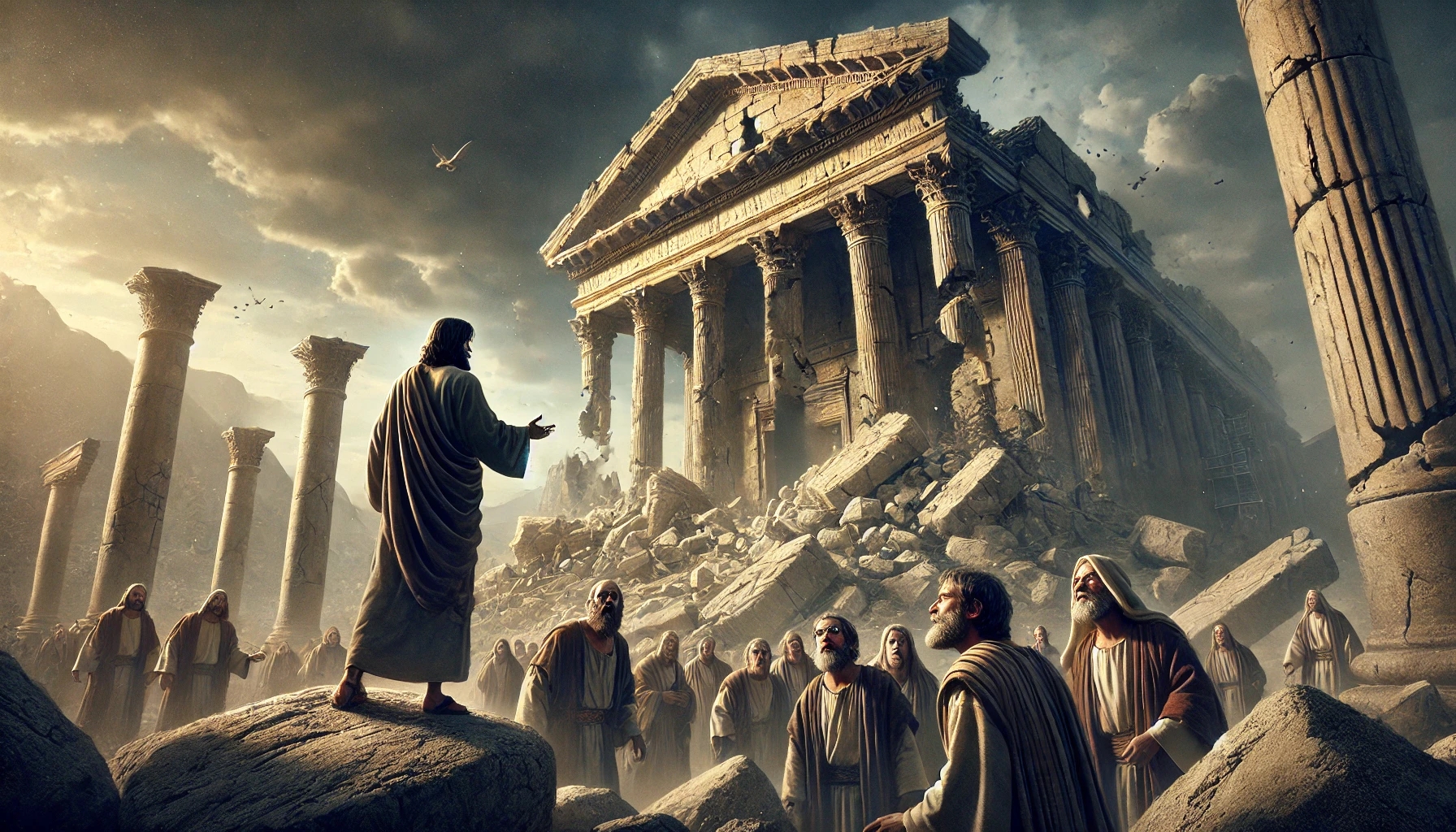
Jesus said, "All that you see here-- the days will come when there will not be left a stone upon another stone that will not be thrown down."


Then they asked him,

"Teacher, when will this happen?

And what sign will there be when all these things are about to happen?"

He answered,

"See that you not be deceived, for many will come in my name, saying, 'I am he,' and 'The time has come.'

Do not follow them!

When you hear of wars and insurrections, do not be terrified; for such things must happen first, but it will not immediately be the end."

Then he said to them,

"Nation will rise against nation, and kingdom against kingdom.

There will be powerful earthquakes, famines, and plagues from place to place; and awesome sights and mighty signs will come from the sky.


"Before all this happens, however, they will seize and persecute you, they will hand you over to the synagogues and to prisons, and they will have you led before kings and governors because of my name.

It will lead to your giving testimony.

Remember, you are not to prepare your defense beforehand, for I myself shall give you a wisdom in speaking that all your adversaries will be powerless to resist or refute.

You will even be handed over by parents, brothers, relatives, and friends, and they will put some of you to death.

You will be hated by all because of my name, but not a hair on your head will be destroyed. By your perseverance you will secure your lives."

~Lk 21:5-19


Bishop Barron gives an incredibly insightful homily explaining it so well.  The end of times means a shaking up of the old order in all its facets.  Watch this, it’s super.


“Nature itself is giving way to something new.  Something has been shaken and now unveiled to us.”  I found that so profound.

For the pastoral homily, I turn to someone I have never heard before, Fr. Michael Adebote from the Parish of the Resurrection of the Lord in Maine.  Clearly he is an African priest who has come to the United States to serve.  He draws the spiritual fruit right out of this passage.


“We are more aware now, brothers and sisters, that the true sacred temple was not just the physical building anywhere but Jesus Himself!”  This is that the pastoral take away from today’s Gospel.

That says it all!


Sunday Meditation: "By your perseverance you will secure your lives."


Let’s return to a John Michael Talbot hymn.  Enjoy “Behold Now the Kingdom.”


“For you shall see with new eyes!”

Sunday, November 9, 2025

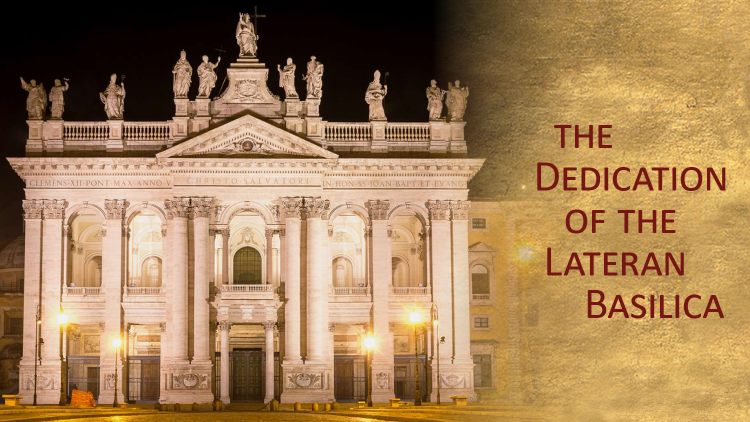
Sunday Meditation: Feast of the Dedication of the Lateran Basilica in Rome

Last week we were deprived of the Thirty-First Sunday in Ordinary Time in lieu of All Souls Day.  This week we are deprived of the Thirty-Second Sunday in Ordinary Time Year C for the Feast of the Basilica of Rome, that is, St. John Lateran.  When the Feast of St. John Lateran  (Nov 9th) falls on a Sunday, just as with All Souls Day last week, it supersedes the regular Sunday readings.

Why are we celebrating a church and why St. John’s Lateran Basilica.  You will have to wait for the excellent homilies.  The Gospel reading is of Jesus cleansing the temple, and the supporting readings also speak of temples. 


Here is the Gospel passage.


Since the Passover of the Jews was near,

Jesus went up to Jerusalem.

He found in the temple area those who sold oxen, sheep, and doves,

as well as the money-changers seated there.

He made a whip out of cords

and drove them all out of the temple area, with the sheep and oxen,

and spilled the coins of the money-changers

and overturned their tables,

and to those who sold doves he said,

"Take these out of here,

and stop making my Father's house a marketplace."

His disciples recalled the words of Scripture,

Zeal for your house will consume me.

At this the Jews answered and said to him,

"What sign can you show us for doing this?"

Jesus answered and said to them,

"Destroy this temple and in three days I will raise it up."

The Jews said,

"This temple has been under construction for forty-six years,

and you will raise it up in three days?"

But he was speaking about the temple of his Body.

Therefore, when he was raised from the dead,

his disciples remembered that he had said this,

and they came to believe the Scripture

and the word Jesus had spoken.

~Jn 2:13-22


Fr. Geoffrey Plant gives a superb explanation of the significance of St. John’s Lateran basilica, the Biblical implications, and ties it to the readings of Ezekiel and St. Paul’s First Letter to the Corinthians. 


That was Fr. Geoffrey at his best.  Do not fail to watch the entire 32 minutes of the homily.  It was perfection.

The pastoral homily is again here embedded from Archbishop Edward Weisenberger from the Archdiocese of Detroit, who provides most excellent photos of the Basilica to go along with his excellent homily,


“We celebrate, I would even say crave sacred space.  Building upon that foundation our churches, chapels, cathedrals, and other places of worship are further made sacred by prayer, sacrament, and faith life that we witness there.  We don’t walk into a building where our grandchildren were baptized, where our parents married, or we celebrated funerals of our loved ones the same way we walk into a grocery store.” 

That says it all!


All Saints Day Meditation: "Take these out of here, and stop making my Father's house a marketplace."


I will not post a hymn for a second week in a row.  Last year when this reading came up during Lent, I posted the Cleansing of the Temple scene from the movie Jesus of Nazareth.  Today I will post the Cleansing of the Temple from the series, The Chosen.


Both renditions are well done but with some differences.  Which one did you think best?

Sunday, October 26, 2025

Sunday Meditation: What God Most Values

Once again Jesus in the Gospel of Luke teaches us about prayer.  We had learned about prayer in Chapter 11 where Jesus tells the disciples how to pray the Lord’s Prayer.  In the same chapter He then teaches on persistence in praying by the parable of the man urging his friend for bread in the middle of the night.  Last Sunday we were given the parable of the persistent widow pleading with the unjust judge.  Again Jesus taught on persistence in prayer.  Today, on the Thirtieth Sunday in Ordinary Time in Year C, Jesus, by comparing the prayers of the Pharisee and tax collector, teaches us on what He values most in prayer.


Here is the Gospel passage.


Jesus addressed this parable to those who were convinced of their own righteousness and despised everyone else.

"Two people went up to the temple area to pray; one was a Pharisee and the other was a tax collector.

The Pharisee took up his position and spoke this prayer to himself, 'O God, I thank you that I am not like the rest of humanity -- greedy, dishonest, adulterous -- or even like this tax collector. I fast twice a week, and I pay tithes on my whole income.'

But the tax collector stood off at a distance and would not even raise his eyes to heaven but beat his breast and prayed,

'O God, be merciful to me a sinner.'

I tell you, the latter went home justified, not the former; for whoever exalts himself will be humbled, and the one who humbles himself will be exalted."

~Lk 18:9-14


Fr. Joseph Mary shines again this week with a homily explaining the passage.


“Who do we look down on?  Who do we judge?  Who do we raise ourselves above?  People with hair dyed red and body piercings?  Gamblers and junkies, pregnant teenagers and lapsed Catholics, those who only attend on Easter and Christmas.  On whose broken backs have we climbed to enshrine our own piety?  We are often not too different than the Pharisee.”  -Fr. Joseph Mary at his most convicting.

The pastoral homily from Archbishop Edward Wiesenberger is equally penetrating.


We can also add St. Catherine of Siena’s quote to the Archbishop’s list of humility where God tells Catherine, "I am the one who is and you are the one who is not."  What Jesus values most is humility. 


Sunday Meditation: "Jesus addressed this parable to those who were convinced of their own righteousness and despised everyone else.”


Let us be conscious to whom Jesus addressed this parable, lest it be you.

This is a good Sunday for “Amazing Grace.”  Here’s a lovely version by someone named Rosemary Siemens.


I have never heard of her, but lovely.

Sunday, October 19, 2025

Sunday Meditation: The Unrighteous Judge

The Twenty-Ninth Sunday in Ordinary Time in Year C brings us to another teaching of Jesus.  Today He will teach through another parable the need for persistent prayer.  Three years ago I meditated on the last line https://ashesfromburntroses.blogspot.com/2022/10/sunday-meditation-will-he-find-faith-on.html of Jesus finding faith on earth.  Today I want to focus on the dishonest judge.  Why is Jesus brining up a dishonest judge and why does the judge fear the widow will strike him?  Yes, strike him physically.


Here is the Gospel passage.


Jesus told his disciples a parable about the necessity for them to pray always without becoming weary.

He said, "There was a judge in a certain town who neither feared God nor respected any human being.

And a widow in that town used to come to him and say,

'Render a just decision for me against my adversary.'

For a long time the judge was unwilling, but eventually he thought,

'While it is true that I neither fear God nor respect any human being, because this widow keeps bothering me

I shall deliver a just decision for her lest she finally come and strike me.'"

The Lord said, "Pay attention to what the dishonest judge says.

Will not God then secure the rights of his chosen ones who call out to him day and night? Will he be slow to answer them?

I tell you, he will see to it that justice is done for them speedily.

But when the Son of Man comes, will he find faith on earth?"

~Lk 18:1-8


Let’s let Fr. Terrance Chartier of the Franciscan Immaculate explain the passage through his homily.


So if the dishonest judge relents through nagging persistence and threat of a punch, how will the Righteous Judge of heaven react through simple prayer? 


I’ll let one of my favorites, Fr. Joseph Mary of the Franciscan Capuchins give his pastoral homily. 


Goodness, two Franciscans in one day?  I may receive a call from my Dominican hierarchy…lol.  Just kidding.  Fr. Joseph and Fr. Terrance are among my favorite homilists.


Sunday Meditation: "Pay attention to what the dishonest judge says.”


Prayer is putting one’s life in the Lord.  Here is one of my favorite John Michael Talbot hymns, “Father I Put My Life in Your Hands.”


“In you, O Lord, I take refuge.”


Sunday, October 12, 2025

Sunday Meditation: The Compassion of the Great Healer

For the Twenty-Eighth Sunday in Ordinary Time in Year C, we get Jesus healing of the ten lepers.  Three years ago I pointed out important healing was in Christianity.  We see Jesus the healer in this passage.  But there is also Jesus the priest.  Part of the duties of an Old Testament priest was to determine what was ritually pure and what wasn’t.  Those with a skin disease were not ritually pure, and the priests had the authority to exclude anyone with a skin disease and then accept them back when cured.  And so, having heard of the miraculous powers of this Jesus of Nazareth, ten lepers appeal to Jesus to be cured.


Here is the Gospel passage.


As Jesus continued his journey to Jerusalem,

he traveled through Samaria and Galilee.

As he was entering a village, ten lepers met him.

They stood at a distance from him and raised their voices, saying,

"Jesus, Master! Have pity on us!"

And when he saw them, he said,

"Go show yourselves to the priests."

As they were going they were cleansed.

And one of them, realizing he had been healed,

returned, glorifying God in a loud voice;

and he fell at the feet of Jesus and thanked him.

He was a Samaritan.

Jesus said in reply,

"Ten were cleansed, were they not?

Where are the other nine?

Has none but this foreigner returned to give thanks to God?"

Then he said to him, "Stand up and go;

your faith has saved you."

~Lk 17:11-19


There are several twists in this passage.  The first is that the lepers know of Jesus as having the power to cure.  Second that the one who is grateful is a Samaritan.  I’ll save the third for below.

Let Fr. Geoffrey Plant explain the passage and how it connects to the First Reading.


I think it particularly important that the healing allowed the diseased to return to society.  The healing makes them whole in various ways.

The pastoral homily is from a Dominican Friar from the Western Province, Br. John Vianney Russell, O.P.  Br. John Vianny, and yes he is not even a priest yet, provides the third twist that blew my socks off.


Is that impressive!  The third twist is that the cured leper does go to the priest.  He returns to Jesus, the Great High Priest who can make anyone pure.

Now one last thing.  The pastor (Fr. Anthony Gonzales) at this morning’s Mass at my parish in his homily said all ten were healed but only one was saved.  Do you think that true? 


Sunday Meditation: "Go show yourselves to the priests."


Let’s return to John Michael Talbot with “Healer of My Soul” for the hymn.


That lovely melody heals as well.


Sunday, October 5, 2025

Sunday Meditation: Me, the Unprofitable Servant

On the Twenty-Seventh Sunday in Ordinary Time in Year C, the apostles ask Jesus to increase their faith.  And Jesus tells them they only need a little bit of faith to do miracles.  But then that leads him to something else, to what it means to be a humble servant of God.  Why does one lead to the other? 


Here is the Gospel passage.


The apostles said to the Lord, "Increase our faith."

The Lord replied,

"If you have faith the size of a mustard seed, you would say to this mulberry tree, 'Be uprooted and planted in the sea,' and it would obey you.


"Who among you would say to your servant who has just come in from plowing or tending sheep in the field, 'Come here immediately and take your place at table'? Would he not rather say to him, 'Prepare something for me to eat. Put on your apron and wait on me while I eat and drink. You may eat and drink when I am finished'?  Is he grateful to that servant because he did what was commanded?  So should it be with you.

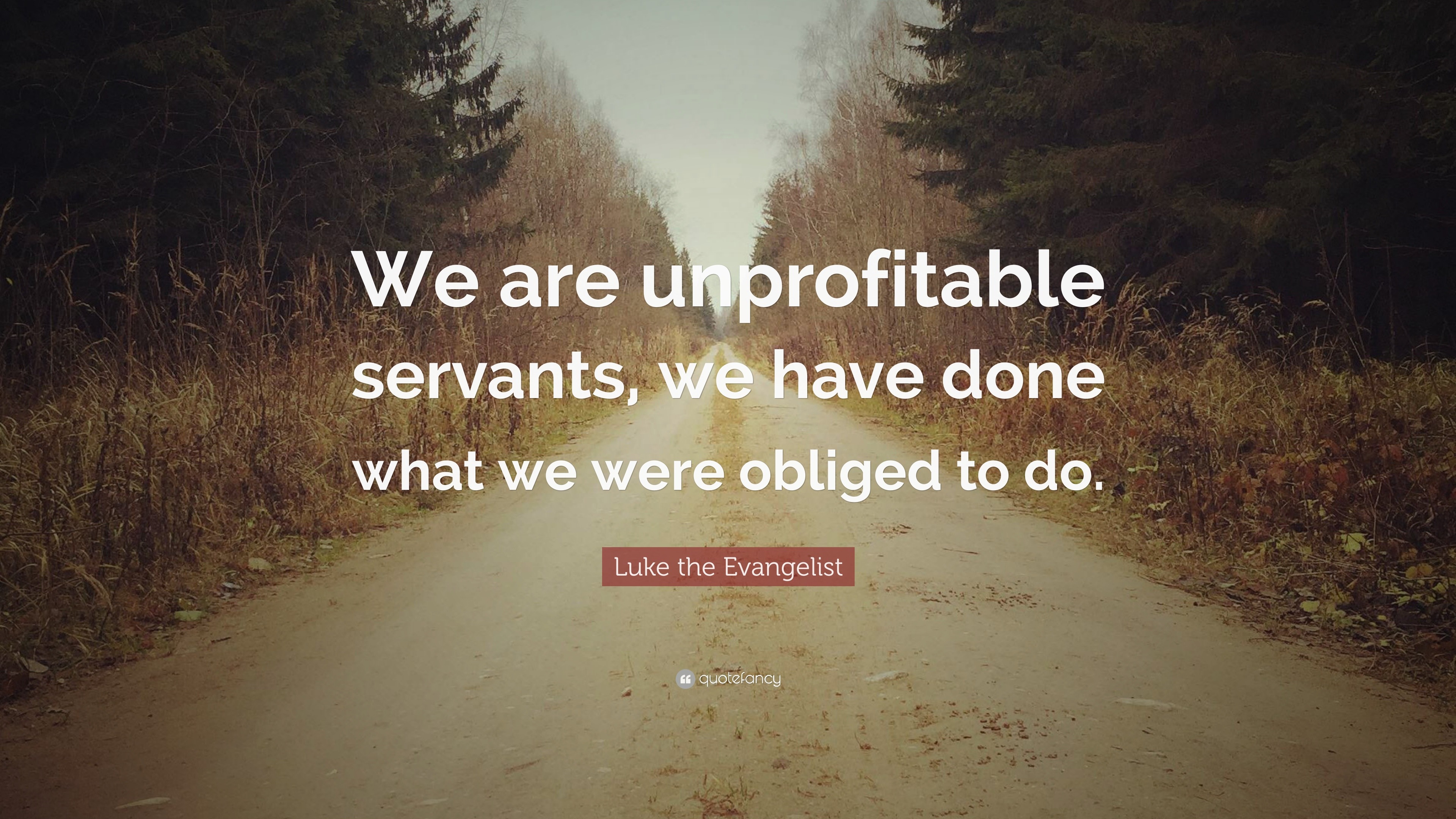
When you have done all you have been commanded, say, 'We are unprofitable servants; we have done what we were obliged to do.'"

~Lk 17:5-10

What may confuse you in the parable is that the worker out in the field is asked to do more work when he walks in, and the worker, we are told, would prefer to do more work.  The expectation would be to have the worker “take his place at the table.”  Jesus expects more work, not a reward.  But that is the twist of the parable.  The Master of the house is God and we should be willing to do more and more work for the Lord, and have the humility to not be rewarded.   

Fr. Terrance Chantier of the Franciscan Friars of the Immaculate explains the passage.


I liked this from Fr, Terrance: pride has “I” in the center while trust has “U” in the center.  Lord, please increase not just my faith but my humility.  Perhaps what Jesus detected from the apostles was a show of spiritual pride when they asked Him to increase their faith.

I chose for the pastoral Pope Leo XIV from this day’s homily which was coordinated with a celebration for the Jubilees for World Missionaries and for Migrants.


I have become impressed with Pope Leo’s homilies.  You can read it here.  There are so many heartfelt ideas in this homily.  Let me quote a couple.

“This is a salvation that is fulfilled when we take responsibility and, with the compassion of the Gospel, care for the suffering of others; it is a salvation that leads the way, silently and apparently without success, in daily words and actions, which become precisely like the tiny seed of which Jesus speaks; it is a salvation that slowly grows when we become “unworthy servants”, namely when we place ourselves at the service of the Gospel and of our brothers and sisters, not seeking our own interests but only bringing God’s love to the world.”

And the first line of his concluding paragraph: “I entrust all of you to the intercession of Mary, the first of her Son’s missionaries, who went in haste to the hill country of Judea, carrying Jesus in her womb and putting herself at the service of Elizabeth.”  If there was ever a perfect example of an unprofitable servant, it was our Blessed Mother,


Sunday Meditation: “When you have done all you have bee commanded, say, 'We are unprofitable servants; we have done what we were obliged to do.'"


The wonderful “Servant Song” for our hymn.


What do you want of me, Lord?

Where do you want me to serve you?

Where can I sing your praises.

I am your song.

Sunday, September 21, 2025

Sunday Meditation: The Parable of the Unjust Stewart

After that brief interlude last Sunday with the Exaltation of the Cross, today on the Twenty-Fifth Sunday in Ordinary Time in Year C we return to Jesus’s journey to Jerusalem.  Today we get one of the most misunderstood parable in the entire New Testament.  Today, Jesus offers us the Parable of the Unjust Stewart or sometimes called the Dishonest Stewart.  No, He is not giving us permission to steal.  Three years ago I posted on this very Gospel passage with an embedded video from Dr. Brant Pitre explaining the cultural context and the nuanced theme of the passage.  In summary, the gist is that “you are to pay off spiritual debts—sins—with the Lord’s money, so that those you whose debts you pay off will welcome you into eternal happiness.”  It’s rather complex and I urge you to go back and read that post and listen to Dr. Pitre.


Here is the Gospel passage.


Jesus said to his disciples,

"A rich man had a steward who was reported to him for squandering his property.

He summoned him and said,

'What is this I hear about you?

Prepare a full account of your stewardship, because you can no longer be my steward.'

The steward said to himself, 'What shall I do, now that my master is taking the position of steward away from me?

I am not strong enough to dig and I am ashamed to beg.

I know what I shall do so that, when I am removed from the stewardship, they may welcome me into their homes.'

He called in his master's debtors one by one.

To the first he said,

'How much do you owe my master?'

He replied, 'One hundred measures of olive oil.'

He said to him, 'Here is your promissory note.

Sit down and quickly write one for fifty.'

Then to another the steward said, 'And you, how much do you owe?'

He replied, 'One hundred kors of wheat.'

The steward said to him, 'Here is your promissory note; write one for eighty.'

And the master commended that dishonest steward for acting prudently.


"For the children of this world are more prudent in dealing with their own generation than are the children of light.

I tell you, make friends for yourselves with dishonest wealth, so that when it fails, you will be welcomed into eternal dwellings.

The person who is trustworthy in very small matters is also trustworthy in great ones; and the person who is dishonest in very small matters is also dishonest in great ones.

If, therefore, you are not trustworthy with dishonest wealth, who will trust you with true wealth?

If you are not trustworthy with what belongs to another, who will give you what is yours?

No servant can serve two masters.

He will either hate one and love the other,

or be devoted to one and despise the other.

You cannot serve both God and mammon."

~Lk 16:1-13


Dr. Pitre explained it one way.  Fr. Tim Peters does a magnificent job of explaining it another way.  I think this is the fullest, most complete explanation.


The moral is actually to use your shrewdness, all of your gifts to help those in need.  Those gifts don’t belong to you.  They are the Lord’s lent out to you, the unrighteous mammon.  Using your wisdom and prudence, you solve matters for those in debt, and then you will be part of the children of the light.

I was so happy to find that one of my favorite homilists, Fr. Joseph Mary of the Capuchin Franciscans, recorded a homily on this passage.  This is incredibly entertaining.


So who is your master?  If all homilies were like that, we would all be waiting in line to listen to Fr. Joseph. 


Sunday Meditation: “"For the children of this world are more prudent in dealing with their own generation than are the children of light.”


Fr. Tim’s exhortation to serve somebody recalled Bob Dylan’s “Gotta Serve Somebody.”  I have posted that heart convicting song before, so instead I am going to post a rendition by the Melbourne Mass Gospel Choir, featuring Suzannah Espie.  This is wonderful.


I don’t know Suzannah Espie but man can she sing.  Kudos to the entire choir.  They are wonderful.