"Love follows knowledge."
"Beauty above all beauty!"
– St. Catherine of Siena

Showing posts with label Rolling Stones. Show all posts

Tuesday, August 31, 2021

Music Tuesday: Charlie Watts and Stones’s Song Composition

I don’t usually follow up one music Tuesday with another along the same lines, but Charlie Watt’s death, which I commemorated last Tuesday here, inspired a conversation on a politically and culturally conservative social media board I participate at called Ricochet.  One has to pay to participate at Ricochet, but I find it worth it.  It keeps out all the obnoxious riff raff that you get on free comment boards and it pulls together a group of really intelligent people with whom I constantly challenged intellectually. 

A member, KirkianWanderer, wrote a wonderful tribute to Charlie Watts a few days ago, well worth reading.  Non-members can read articles that get selected for Main Feed, and that did, so you can read it if you like.  But KirkianWanderer had a very interesting paragraph concerning the relationship between Charlie Watt’s drumming and Keith Richards’ rhythm guitar in Rolling Stones song composition.  He says:


The 1960s saw the Stones at their chart-topping peak, and experimenting with a range of styles, from the blues that first brought them success to Beatles-esque psychedelia. It was also in this era that the unique rhythm section pattern of the band was cemented. In the vast majority of rock bands, everyone, from the guitarist and bassist to the singer and (possibly) keyboard player, follows the drummer. That wasn’t their formula. Instead, the drums followed the rhythm guitar player, i.e. Keith Richards. It’s something most drummers would have bristled over at best (if Jack Bruce had suggested that Ginger Baker follow him there would have been one less bassist in the world in short order), but Watts went along with it because he saw what it contributed to the band’s sound. Namely, a sense of tension, as the drummer was always chasing the beat, and an unmistakable musical signature.

I wanted to follow up on this insightful paragraph which I think gets at the heart of Rolling Stones song composition.

That’s an interesting observation that the drums follow the rhythm guitar.  I think for the most part that is true but I would not say universally.  I have notice the opening intro to Stones songs falls into four main patterns depending on where the drums enter the song.  There may be other patterns, but I would say these four are the overwhelming majority: (1) Songs where the riff (melody, but I’ll call it riff for rock songs) is established fully and then the drums enter. (2) Songs where the beat is ahead of the riff.  (3) Songs where the beat is held back significantly from the introduction of the riff.  And (4) songs where the beat comes in the middle of the riff. 

I think each of the above permutation will give the song a particular aesthetic, and I think it’s very much part of the Stones’ composition process.  Let me take each one of these permutations and give what I think is the aesthetic effect that comes as a result.  I’m only going to embed one or two videos per permutation.  I’ll list other songs of that type.  You can look them up on YouTube.

A. Let me start with the easy one, songs where the beat is held back significantly from the introduction.  These are usually ballads.  The classic is Angie, where drums don’t come in until the second verse.  These songs allow the drums to really fade into the background and allow the tone and cadence and pitch of the various instruments to create a sound effect to accentuate the ballad mood.  Here’s Wild Horses where drums don’t enter until the first chorus at about 1:20 into the song.


Other songs in this category would be Ruby Tuesday, Memory Motel, You Can’t Always Get What you Want (though it’s not Charlie on drums), She’s Like A Rainbow.  Also you could include in this category songs with no drums at all: As Tears Go By and Lady Jane.

B. Songs where the beat comes before the melody seem to have the opposite effect of the beat chasing the rhythm.  There are a fair number of songs in this category: Under My Thumb, Get off My Cloud, Hang Fire, One Hit to the Body, Emotional Rescue, Time Waits for No One, Dance (Pt1), Undercover of the Night.

Now in this category I think there are one of two possible aesthetics the Stones are after.  One aesthetic is the sense of the music and the singer chasing the beat.  A perfect song for this aesthetic is Time Waits for No One where the music is trying to catch the ticking time of the beat, time always moving forward. 


That aesthetic accentuates songs like Hang Fire where the narrator character is lazy and so falls behand the beat or Hand of Fate where the character is on the run and you get the feel of the narrator running.

The other aesthetic from songs with the beat ahead of the riff is that it highlights the drummer.  I know Charlie eschews solos and attention, but sometimes the band does ask him to show off his virtuosity.  Get Off My Cloud is an early song where drums come in first to showcase the drummer.  Undercover, Dance, even Emotional Rescue, which I think is such an underrated song.  But I think the best example of showcasing Charlie’s virtuosity is If You Can’t Rock Me.


C. The category where the riff comes ahead of the beat is the most common, and supports the claim that the beat feels like it’s chasing the rhythm.  Many of their great songs fall into this category.  Satisfaction, Brown Sugar, Paint It Black, Let’s Spend the Night Together, Jumping Jack Flash, Gimme Shelter, Last Time, Rough Justice, Midnight Rambler, Beast of Burden, and so on and so on.  The list is endless.  But I think Not Fade Away illustrates it well.


In some ways having the riff be laid down ahead of the beat makes perfect sense musically.  It establishes the melody on which the rest of the song will develop and reach a conclusion.  It’s classical in a way.  This is such a huge category that perhaps a second song should embedded for an example, one off a more recent album, Rough Justice.


That’s a great example of rhythm ahead of drums.  That’s identifiably Stones.

Before I get to the final category, I want demonstrate a song that combines the riff ahead of the beat and then in the same song the beat ahead of the riff.  It may be the only song in their opus that actually does that and it’s one of their finest compositions, Can’t You hear Me Knocking.  First listen.  It starts off with the melody clearly defined before the drums.


\Yeah, you can feel the drums chasing the riff until the 2:45 mark and then the song shifts.  This song has been criticized as being two songs forced together, but in my humble opinion that is flat out wrong.  Some say the first two and a half minutes is supposed to be one song, a hard rocker, and the balance of the song some sort of pasted-on jazz rock instrumental that has nothing to do with the first half.  No I disagree.  The melody from the second half is a variation from the first.  It’s not a separate melody.  The second melody seems like an inversion of the first.  And the percussion is also inverted.  Where in the first half the drums trail the riff, in the second the riff trails the percussion.  When you listen to this song it almost feels like you are looking into a mirror.  Great composition.

So I think you can see how the aesthetic can be altered when the beat comes after the riff is established and when the beat comes before the riff.  There is always a sense of chasing, and whichever comes first alters the listener’s perception of who is chasing who.  But what about songs where the beat comes in the middle of the riff? 

D. Now there are just a hand full of Stones songs that bring in the beat in the middle of the riff.  In a way it’s kind of odd.  Doing a quick survey I only found four songs, but I didn’t listen to everything.  But some of these are great songs: Tumbling Dice, It’s Only Rock and Roll, Miss You, and the fourth is the one that just came out last year, Living in a Ghost Town.  I’m not sure what to make of these.  Living in a Ghost Town feels more like it’s in the riff chasing the beat category.  But listen to Tumbling Dice with this in mind.


The beat came in before the initial completion of the melody.  Overall the song feels more harmonious, more integrated.  Neither seem to be chasing the other.  I think the same holds for It’s Only Rock and Roll.  I don’t know if I would say that for Miss You.  There it feels like the riff is chasing the beat.  Not sure. 

Anyway, I hope you found this interesting.  Perhaps it’s just my imagination but it does strike me that the Stones compose around this relationship between riff and beat, and who is chasing who.

Tuesday, August 24, 2021

In Memoriam: Charlie Watts

As some of you may know, I was a huge fan of the Rolling Stones.  They were part of my adultescence and beyond.  Sad day today.  Their great drummer, Charlie Watts, passed away and with it part of my youth.  The Stones are not known for being reserved, but not Charlie.  He did not dress rock-n-roll outrageous.  He wore suits, very much like a British gentleman.  He was married to the same woman his whole life.  Some might disagree, but I consider him among the greatest drummers of rock music.  His greatness I think is in his wonderful timing and subtle shifts.

First a remembrance.


I’m just going embed a few Stones songs where I think Charlie excelled.  Here’s one mentioned in that remembrance, Hang Fire. Just listen to the little shifts while still keeping the beat.


Honkey Tonk Women.  Charlie makes this song. 


Here’s a rocker, When the Whip Comes Down.  Listen to how he with his fills and shifts makes the song accelerate.


But frankly Charlie best work in my opinion was on slow tempo ballads.  His little subtleties really accentuate the song.  Listen to Angie.  Wait for the drums to come in on the second verse, at about the 47 second mark, and then how he keeps adding pieces to the drumming, high hat, flourishes, all without ever drawing attention to himself.  It makes the song.


Finally the one song I always think of when I think of Charlie is Get Off My Cloud.  I just love those rapid fire flourishes.


Some live Charlie with an interview explaining his playing.


Charlie interviewed on 60 Minutes,


Eternal rest in peace, Charlie Watts.  You have given me immense pleasure over the years.

Tuesday, June 16, 2020

Music Tuesday: Living in a Ghost Town by the Rolling Stones

A week and a half ago I posted a personal essay, “Covid-19, My New YorkExperience,” on what it has been like here in New York City over this virus shutdown.  

As it turns out, the rock group, The Rolling Stones put out a single on the subject of our new living conditions.  It’s called “Living in a Ghost Town,” and it’s pretty cool.  For those that don’t know or don’t remember, I happen to be a Rolling Stones fan, so maybe I’m biased.  Here’s the single for Music Tuesday.

First, here's the official video. 


I love those “whoah whoah.”  And Jagger’s harmonica is just great.

And I liked the clips in this video as it took you around the world to various cities.  This version also has an extra verse.


I couldn’t make up my mind as to which video to embed, so I did both.  Which do you prefer?

Tuesday, November 21, 2017

Music Tuesday: Beast of Burden by the Rolling Stones

I guess readers here remember I’m a Rolling Stones fan when it comes to rock music.  I decided to play the Rolling Stones’ Some Girls album on my ipod, a truly great album, but one of the album songs is “Beast of Burden.”

Wikipedia has an interesting background to the song.

Jagger says, "Lyrically, this wasn't particularly heartfelt in a personal way. It's a soul begging song, an attitude song. It was one of those where you get one melodic lick, break it down and work it up; there are two parts here which are basically the same." The song can be seen as allegorical, with Richards saying in 2003, "When I returned to the fold after closing down the laboratory [referring to his drug problems throughout the 1970s], I came back into the studio with Mick... to say, 'Thanks, man, for shouldering the burden' - that's why I wrote "Beast of Burden" for him, I realise in retrospect."

Man, if this isn’t perfection when it comes to rock and roll, I don’t know what is.  The bluesy melody, the wonderful interweaving guitars, the lyrics of song of male insecurity, and Mick Jagger’s lamentation filled vocals.  Here’s what Wikipedia says about the composition.

"Beast of Burden" was recorded from October–December 1977. Although basic lyrics were written before the Stones entered the studio, many of the lyrics on the recording were improvised by Jagger to fit with the smooth running guitars of Richards and Ronnie Wood. Characteristically, Richards and Wood trade off rolling, fluid licks. Neither is really playing lead or rhythm guitar; they both slip in and out, one playing high while the other is low. The song is another famed Some Girls song that features each band member playing his respective instrument without any outside performers; both Richards and Wood play acoustic and electric guitars, with Wood performing the solo.

You just cannot beat this.


Here are the lyrics, with credit to Keno’s Rolling Stones Web Site. 

BEAST OF BURDEN
(M. Jagger/K. Richards)

I'll never be your beast of burden
My back is broad but it's a hurting
All I want is for you to make love to me
I'll never be your beast of burden
I've walked for miles my feet are hurting
All I want is for you to make love to me

Am I hard enough
Am I rough enough
Am I rich enough
I'm not too blind to see

I'll never be your beast of burden
So let's go home and draw the curtains
Music on the radio
Come on baby make sweet love to me

Am I hard enough
Am I rough enough
Am I rich enough
I'm not too blind to see

Oh little sister
Pretty, pretty, pretty, pretty, girl
You're a pretty, pretty, pretty, pretty, pretty, pretty girl
Pretty, pretty
Such a pretty, pretty, pretty girl
Come on baby please, please, please

I'll tell ya
You can put me out
On the street
Put me out
With no shoes on my feet
But, put me out, put me out
Put me out of misery

Yeah, all your sickness
I can suck it up
Throw it all at me
I can shrug it off
There's one thing baby
That I don't understand
You keep on telling me
I ain't your kind of man

Ain't I rough enough, ooh baby
Ain't I tough enough
Ain't I rich enough, in love enough
Ooh! Ooh! Please

I'll never be your beast of burden
Never, never, never, never, never, never, never be

I don't need no beast of burden
I need no fussing
I need no nursing

Never, never, never, never, never, never, never be

Monday, August 1, 2016

Matthew Monday: Future Lazy Slob

We were getting ready to go out to a little cousin’s one year old birthday party, and I was pushing Matthew to get ready.  I don’t know if all children do this, but Matthew dilly-daddles  (slang, I know, but defined here) and takes the longest time to do things.  He needed to brush his teeth, and so I put toothpaste on his toothbrush and he climbs onto his stool we keep in the bathroom for him. 

“I can’t wait to grow up,” he says.

“Why,” I ask.

“Because then I can do whatever I want.”

“No you can’t.  You’ll have to go to work, you’ll have to clean the house, you’ll have to do all sorts of things you won’t want to.  It’s not fun to be an adult.”

Matthew is brushing his teeth and looking in the mirror and thinking.

“We don’t get play time or go to camp for the summer,” I continue.  “It’s much more fun to be a kid, so don’t wish for things you won’t want.”

Matthew continues brushing.  Thinking that I’ve cornered him I say, “You’ll have lots more things to do that you don’t want to when you’re an adult.”

Matthew then takes the brush out of his mouth and declares, “I won’t do them.”

That response actually surprised me.  “What?  Then how are you going to earn money so you can have a house and food?  Who’s going to get everything done?”

And with dead pan timing, Matthew says, “My wife.”

I stared at him for a second and then doubled over in laughter.  And he starts laughing too.


Which reminds me of a really good Rolling Stones song, “Hang Fire.”  Here’s the song: 


Here are the lyrics, if you can’t quite make them out:

HANG FIRE
(M. Jagger/K. Richards)

In the sweet old country where I come from
Nobody ever works
Yeah nothing gets done
We hang fire, we hang fire

You know marrying money is a full time job
I don't need the aggravation
I'm a lazy slob
I hang fire, I hang fire
Hang fire, put it on the wire

We've got nothing to eat
We got nowhere to work
Nothing to drink
We just lost our shirts
I'm on the dole
We ain't for hire
Say what the hell
Say what the hell, hang fire
Hang fire, hang fire, put it on the wire
Doo doo doo

Take a thousand dollars go have some fun
Put it all on at a hundred to one
Hang fire, hang fire, put it on the wire


I love that song, but I hope Matthew doesn’t grow up to be a lazy slob. 

Tuesday, July 28, 2015

Music Tuesday: Miss You by The Rolling Stones

As some may remember, I’m a big Rolling Stones fan.  This past Sunday was Mick Jagger’s 72nd birthday.  What a life this man has lived.  And they’ve still been touring now. So much Stones news lately.  In addition to the tour, which seems to be doing fabulously, especially when you consider they age, Keith Richards has a new solo album coming out in September.  A single has been released and you hear it here.     But the really big news is that once the Richards solo album is out, the Stones will gather and record a new album!  Oh yeah!!  Their last one was A Bigger Bang in 2005.  That was ten years ago.  Goodness how time flies. 

For Mick’s birthday, I wanted to post a very Jagger-esk song, the wonderful “Miss You.”  This song and the summer of 1978 will forever be linked together for me.  This is the only song all summer on my mind and lips. 

I’m going to embed video with the lyrics because I think they are so great.  Most pop songs are three verses divided by a chorus.  "Miss You" just takes you on a journey into central character’s dejection.  Notice the emotional range, from melancholy, dejection, acceptance.  There’s a contrasting voice of the friend who calls him, there’s a drunken induced walk, and there’s that wonderful melody that pulls the whole song together.  The song starts with anticipation—waiting on that call—and ends with the realization that she’s “been fooling with [his] time.”  And let’s not forget the funky, interweaving guitars, the sax that carries so much emotion two thirds of the way into the song, and that layer of the high pitched harmonica.  And special kudos must go to the rhythm section, Bill Wyman (bass) and Charlie Watts (drums); they were at their best. 


There are also extended versions of this song, which add lyrics and instrumental solos.  They are as good as the final studio.  You can find them on youtube.  The Stones have had so many great songs, but I think “Miss You” was their greatest composition.

Tuesday, December 9, 2014

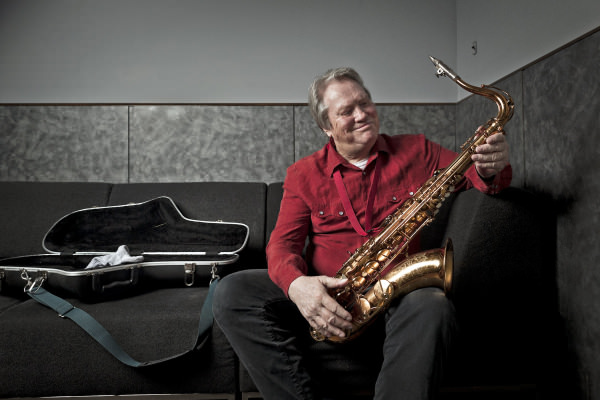
Music Tuesday: In Memoriam, Bobby Keys

For those that have never heard of him, Bobby Keys was arguably the most important saxophone sideman in rock and roll history.  From Wikipedia:

Robert Henry "Bobby" Keys (December 18, 1943 – December 2, 2014) was an American saxophone player who performed with other musicians as a member of several horn sections of the 1970s. He appears on albums by The Rolling Stones, Lynyrd Skynyrd, The Who, Harry Nilsson, Delaney Bramlett, George Harrison, Eric Clapton, Joe Cocker and other prominent musicians. Keys played on hundreds of recordings and was a touring musician from 1956 until his death in 2014.

And that’s only a short list.  If you go to the bottom of the page you’ll see a longer list of  almost every who’s who in pop music.  He passed away last week at the remarkable age of 70.  I say remarkable because given the amount of alcohol and drugs he was supposed to have ingested over his life time, you would say he lived a long life.

Of all those groups and musicians, there is no doubt he was most associated with the Rolling Stones.  While the Stones have used other saxophonists over the years on their albums, some of the Stones’ biggest hits scored with a sax had Bobby Keys on the instrument.  I only know of Keys because I’m a big Rolling Stones fan and I pay attention to band credits and personnel.  Of the band members, he was particularly close to Keith Richards, who besides the love of rock and its history, besides partaking in certain illegally encapsulated stimulates, also shared the same exact birth date of December 18th, 1943.  Keith always said he didn’t have to worry about dying until something happened to Bobby.  I think I remember Keith saying he considered Bobby a sort of twin, which is quite funny because Bobby is a sort of Texas “good-ole-boy” and Keith is from London. 

Here’s Keith remembering Bobby, just published in Rolling Stone magazine.  

Bobby Keys was built for fun. When we were making Exile on Main Street in France, we were there for several months, and I had a good ole speedboat. In the afternoons, before we went down the basement to record, we'd sort of zoom around, creating mayhem from Monte Carlo to Cannes. Bobby also bought a huge motorcycle, which he used to roar around the hills and pick up a few girlfriends. He'd always come back with a different chick on the back. He was that kind of guy.
He was the epitome of the rock & roll sax-playing man. He used to tell me about listening to Buddy Holly rehearse in his garage just down the road from his house. That's one of the reasons he wanted to get into music. That's pretty early rock & roll, so he was right in there at the very beginning. He was playing on the road by the time he was 15. He was a piece of history in himself, and had a deep knowledge of it. 
When we brought Bobby in, we were listening to the great soul bands of the Sixties. We wanted to give the band a bigger sound and were influenced by all of the beautiful R&B records with the Memphis horns — the Otis and the Pickett bands — so adding saxes seemed quite natural to us. When I first met him, he had Jim Price with him on trumpet and they were a hot little duo themselves. I think they were with Delaney & Bonnie at the time. 
When he cut "Live With Me," his first record with us, I immediately thought of great players like Plas Johnson or Lee Allen, who played for Little Richard and Fats Domino. He had that same Southern feel on the way he played. I guess that's not too astounding, since he does come from Texas [laughs]. He never let anybody forget he was from Texas. 
Being in a guitar band, Bobby had an incredible knack of making horns melt in. He always knew the right part to play. I remember when we cut "Happy." One afternoon, I just had this idea and the rest of the boys hadn't turned up yet. It was just Bobby and Jimmy Miller, our producer at the time, who also plays drums. We cut the finished track in about an hour. Bobby was amazing on that, because instrumentation-wise, that started off just guitar, a baritone sax and some drums. Bobby's baritone part just picked it up. Usually, Bobby would just wail in first on the baritone, then he'd add the tenor, sometimes an alto.

There’s more to read, and it’s all interesting but I love the way Keith ends the discussion.

His love of music, I think, is his other defining attribute. If we got interested in something, like a piece of music, we'd stay up until we'd killed it. I think he must have turned on millions of people, even though a lot of them don't know who he was. He's one of those hidden geniuses, 10 feet from stardom and all of that. 
Bobby took everybody as they came. He wouldn't be weary of people. He had a large heart. He told me, "I got a heart as big as Texas" and I said, "Bobby, I think it's a bit larger." He was just a barrel of laughs to be around. I very rarely saw him down, and if I did, it was usually about a young lady who dumped him or something. And he soon got over that, you know. He probably wouldn't want us to be too solemn right now. Basically when it's all said and done, I'm looking upon this now as a celebration of life rather than a memorial for his death. He'd like a big wake. 
It's a sad thing, but not totally unexpected. I've been speaking to him for the last couple of weeks and he was still laughing, but he was getting weak. I just wanted to cheer him up.
As Bob said, "It's time for the last roundup."
Now this website, Ultimate Classic Rock, put together a list of the “Top Ten Bobby Keys Rolling Stones Songs” and I think they mostly got it right with two exceptions.  They left off lovely textured song with a soft Bobby Keys tenor sax solo, “Coming Down Again,” from off the 1973 Goats Head Soup album.  And then I would include a great funky song called “Dance (Part 1)” from the 1980 Emotional Rescue album.  I know I took “Happy” off the website’s list, and while it may be overall a better song than some of those on the list, I don’t think Bobby Keys’ sax plays as an important a role as in these other songs.  I also don’t quite agree with hierarchy of the ten songs on that list.  Here’s how I would rate the Top Ten Bobby Keys Stones songs:

1. Brown Sugar
2. Can’t You Hear Me Knocking
3. Sweet Virginia
4. Emotional Rescue
5. Rip This Joint
6. Coming Down Again
7. All About You
8. Live With Me
9. Casino Boogie
10. Dance (Part 1)


Here’s a couple of clips.  Listen to how his solo transforms Brown Sugar at the 1:40 mark.


Here’s a live version of “Sweet Virginia.”  Bobby Keys comes in at the 2:45 mark.


You can easily find clips of all those ten songs on youtube.  I love those songs.  It feels like I’ve lost a part of my youth.  It will really hurt when a core member of the Stones goes.  Finally Keith penned a note to Bobby on hearing of his passing and posted it I think on his Facebook page.  I’m not on Facebook to verify.


Rest in peace Bobby.  You were the best damn rock sax player ever.


Tuesday, February 11, 2014

Music Tuesday: “Salt of the Earth” by The Rolling Stones

This past Sunday’s Gospel reading at mass was the passage where Jesus calls his followers, the salt of the earth.  From Matthew 5:13-16.

Jesus said to his disciples:
“You are the salt of the earth.
But if salt loses its taste, with what can it be seasoned?
It is no longer good for anything
but to be thrown out and trampled underfoot.
You are the light of the world.
A city set on a mountain cannot be hidden.
Nor do they light a lamp and then put it under a bushel basket;
it is set on a lampstand,
where it gives light to all in the house.
Just so, your light must shine before others,
that they may see your good deeds
and glorify your heavenly Father.”

I happen to be a big Rolling Stones fan, if I haven’t mentioned it in the past.  Whenever I come across that biblical passage I instantly think of the wonderful Stones’ song, “Salt of the Earth.”    This is such an underappreciated song, and it comes from one of their greatest albums, Beggars Banquet. 


This is such a fine song, you really should have the lyrics before you as you listen.
 
SALT OF THE EARTH
M. Jagger/K. Richards)

Let's drink to the hard working people
Let's drink to the lowly of birth
Raise your glass to the good and the evil
Let's drink to the salt of the earth

Say a prayer for the common foot soldier
Spare a thought for his back breaking work
Say a prayer for his wife and his children
Who burn the fires and who still till the earth

And when I search a faceless crowd
A swirling mass of gray and black and white
They don't look real to me
In fact, they look so strange

Raise your glass to the hard working people
Let's drink to the uncounted heads
Let's think of the wavering millions
Who need leaders but get gamblers instead

Spare a thought for the stay-at-home voter
His empty eyes gaze at strange beauty shows
And a parade of the gray suited grafters
A choice of cancer or polio

And when I look in the faceless crowd
A swirling mass of grays and black and white
They don't look real to me
Or don't they look so strange

Let's drink to the hard working people
Let's think of the lowly of birth
Spare a thought for the rag taggy people
Let's drink to the salt of the earth

Let's drink to the hard working people
Let's drink to the salt of the earth
Let's drink to the two thousand million
Let's think of the humble of birth

Lets raise our drink
To the salt of the earth
Lets raise our drink
To the salt of the earth.......

From Keno’s Rolling Stone Lyrics. 

 
If you’re only going to own a couple of Stones albums, the 1968 Beggars Banquet is a must.  It’s one of those albums where every song reflects another either thematically or musically, and every song is near perfection.  I love in this song the arrangement of acoustic and slide guitars and piano, backed up with a gospel choir.  This is the Stones at their best.

Finally a note.  You can read in the Wikipedia entry that Mick Jagger and Keith Richards  performed this song post 9/11 for the fallen in New York City, replacing the line “Let’s drink to the good and the evil” which I assume was meant as an embrace of all humanity, with the line “Let’s drink to the good NOT the evil” which was meant to repudiate the terrorist’s actions.  You can see that performance on youtube as well, here. 


Let's drink to the hard working people
Let's think of the lowly of birth
Spare a thought for the rag taggy people
Let's drink to the salt of the earth

Tuesday, May 7, 2013

Music Tuesday: Emotional Rescue by The Rolling Stones


The big news from the new Rolling Stones tour is that they have included the song “Emotional Rescue” into their set list.  You may wonder why that is such big news, especially since the song reached number three on the US charts when it came out as a single back in 1980.  It’s certainly not every song that breaks the top ten.  The album, also called “Emotional Rescue” broke to number one.  Not bad for an album where the band doesn’t follow it up with a tour.  I remember that summer it came out.  I loved the song the moment I heard it. 

The reason it’s news is because in the thirty-three years since the song was written the Stones have never played it live.  Well why not if the song was fairly successful?  Well there was no immediate tour.  It would have been natural to play your top song off the current album.  But if I remember correctly Mick Jagger and Keith Richards had one of their famous spats, and according to Wikipedia Jagger just refused:

“The recording of the album was reportedly plagued by turmoil, with Jagger and Richards' relationship reaching a new low. Richards, though still using heroin according to former keyboardist of The Small Faces, Ian McLagan, wanted to tour in summer or autumn of 1980 to promote the new album, which Jagger declined.”

So why didn’t they play the song on subsequent tours?  Well first off, the song did and still does divide a lot of Stones fans who at the time felt that the band had turned disco.  It’s got a dance beat, and in the late 70’s and early 80’s there was this rivalry between traditional rock and dance music.  A real rocker had to remain pure. But more important than that Keith Richards has always detested the song.  Yes, he was more the pure rocker and Jagger has always experimented with dance music.  But I have to say that “Emotional Rescue” is a very quirky song (more on that further down), and I can see how Keith (and others) just don’t get it.  Keith once famously punned on the title, calling it “Emotional Doo-Doo.”  Yes, he’s got writing credit for the song, but that’s because Jagger/Richards is a contractual (not sure if that’s the correct term) song writing team, and anything either writes for the Stones is a shared credit, whether one contributed or not.  But if you check out the studio credits, he’s got no part in playing on the song, no guitar or bass or even backing vocal, except for a quick mention of a backing vocal at “song’s close.”  That was probably something desperately needed to polish off the song at album mixing, since he’s always intimately involved with the final production.  He has not ever wanted to have anything to do with it, and I'm sure he's squashed any suggestion of playing it live.

I can understand why some don’t like the song.  It doesn’t have a big sound, either in dynamics or range (except for the vocal).  It’s minimalist.  It’s really hard to categorize.  It’s got a disco beat but no big disco drum sound, and guitar phrasing sounds more like reggae.  Even the drums seem to alternate between a disco beat and a reggae rhythm.  The melody is driven by the bass, as is the musical “hook.”  Listen to the song.


The most apparent musical interest is Jagger’s vocals.  He starts with a falsetto, part way moves to his natural voice, and concludes with a echo inflated, lowered register, which gives his tone a peculiar pomposity.  I love the way the drums shift rhythms and the sax imbues the chorus section with so much suggestion.  Jagger has said the song is about "a girl who's in some sort of manhood problems", not that she was going crazy but she's "just a little bit screwed up and he wants to be the one to help her out.”  Perhaps that’s part of it, but really the person who is mentally off is the male narrator persona as he fluctuates between “you could be mine,” “you should be mine,” and “you will be mine.”  He’s the emotionally disturbed one, going from fantasy ("knight in shining armour") to breaking down into tears “like a child.”  The irony is that the person who is here to bring the girl emotional rescue is the one in most need of emotional rescue.  That sax just drives home the disturbed inner nature, and the changing vocal register fragments the verse sections, further suggesting a fragmented, disturbed mind.  All the elements of this song work masterfully together.  I love it!
 
The lyrics are just so supple and dexterous. It’s not easy writing a song around a four syllabic word, “emotional,” and who would think the word “Pekinese” could fit into a rhythmic phrase. I just love this verse, “I come to you, so silent in the night /So stealthy, so animal quiet /I'll be your savior, steadfast and true /I'll come to your emotional rescue.” This song is Jagger the lyricist at his best.

Here are the song’s lyrics, taken from Keno’s Rolling Stones Website.
 
EMOTIONAL RESCUE
(M. Jagger/K. Richards)
Is there nothing I can say
Nothing I can do
To change your mind
I'm so in love with you
You're too deep in
You can't get out
You're just a poor girl in a rich man's house
Yeah, baby, I'm crying over you
Don't you know promises were never made to keep?
Just like the night, dissolve in sleep
I'll be your savior, steadfast and true
I'll come to your emotional rescue
Yeah, the other night, crying
Crying baby, yeah I'm crying
Yeah I'm like a child baby
I'm like a child baby
Child yeah, I'm like a child, like a child
Like a child
You think you're one of a special breed
You think that you're his pet Pekinese
I'll be your savior, steadfast and true
I'll come to your emotional rescue
I was dreaming last night
Last night I was dreaming
How you'd be mine, but I was crying
Like a child, yeah, I was crying
Crying like a child
You will be mine, mine, mine, mine, mine, all mine
You could be mine, could be mine
Be mine, all mine
I come to you, so silent in the night
So stealthy, so animal quiet
I'll be your savior, steadfast and true
I'll come to your emotional rescue
Yeah, you should be mine, mine, whew
Yes, you could be mine
Tonight and every night
I will be your knight in shining armour
Coming to your emotional rescue
You will be mine, you will be mine, all mine
I will be your knight in shining armour
Riding across the desert with a fine Arab charger

So here’s a bootleg video of the live song from a couple of days ago someone uploaded to Youtube.  There are several versions, but I think the sound quality is best on this one, though you can find other videos who had a better angle.


They better produce a live album out of this tour because I want a live version in my collection.  Fantastic!