"Love follows knowledge."
"Beauty above all beauty!"
– St. Catherine of Siena

Showing posts with label Fr. Greg Friedman. Show all posts

Tuesday, June 30, 2026

Sunday Meditation: Demand and Reward

On the Thirteenth Sunday of Ordinary Time for Year A, Jesus in His ongoing Missionary Discourse stipulates some hard demands but offers some worthy rewards.  The Gospel reading can be seen as being divided into two elements, requirements for His discipleship and rewards for the care of those disciples.

Does Jesus really expect you to love Him above you parents or your children?  He must be referring for those in religious life and not for the layman, right?  Well, technically He does mean it and it’s for everyone who follows Him.  Some things to consider as you meditate on this.  Love is a complicated word.  In one sense, perhaps the simplest of senses, love is just natural affection.  In a more complicated sense, love is directed at what we worship.  We have natural affection for our parents and children, but we don’t worship them.  Worship, which I will make the claim is the highest order of love, is reserved for God. 


Today’s Gospel:


Jesus said to his apostles:

“Whoever loves father or mother more than me is not worthy of me,

and whoever loves son or daughter more than me is not worthy of me;

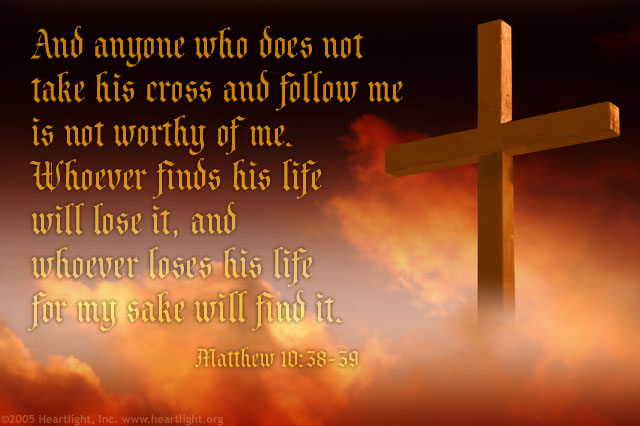
and whoever does not take up his cross

and follow after me is not worthy of me.

Whoever finds his life will lose it,

and whoever loses his life for my sake will find it.  Whoever receives you receives me,

and whoever receives me receives the one who sent me.

Whoever receives a prophet because he is a prophet

will receive a prophet’s reward,

and whoever receives a righteous man

because he is a righteous man

will receive a righteous man’s reward.

And whoever gives only a cup of cold water

to one of these little ones to drink

because the little one is a disciple—

amen, I say to you, he will surely not lose his reward.”

~Mt: 10:37-42


I’m going to go to another YouTube channel that provides explanations of Gospel passages to explain this hard saying, My Catholic Life.


My Catholic Life:

When a scribe approached Jesus and asked him which of the commandments was the greatest, he replied, "You shall love the Lord your God with all your heart, with all your soul, with all your mind, and with all your strength." The second is this. You shall love your neighbor as yourself.  There is no other commandment greater than these. Mark 12:30-31.  Today's gospel offers a similar teaching. We must love God above all else, even more than father, mother, son, or daughter.  By contrasting love for God with love for family, Jesus is not diminishing familial affection. Rather, he is revealing that the only way to truly love others is by loving God first.  St. Thomas Aquinas teaches, "God must be loved above all things and before all others out of charity. For he is loved as the source of happiness, whereas our neighbor is loved as one who shares in that happiness along with us.  In other words, God must be loved first because he is the ultimate cause and source of beatitude, the only true happiness.  Though we are called to love our families and our neighbors, Christian charity dictates that we love them in relation to God as fellow recipients of divine happiness.


When Jesus speaks of loving father or mother or son or daughter more than him, he is addressing the inner conflict we sometimes experience in our emotions.  When natural affection is not transformed by spiritual charity, the love we offer another can do more harm than good. Disordered affection replaces the ultimate good, God, with the lesser good of emotional attachment and human consolation.  The real danger arises when our loved ones stray from God's will and we out of misguided affection affirm them in their error thereby confirming them in a state lacking true beatitude.  The foundation of true love is this. God alone is the source of perfect happiness for us and for our loved ones.  Our belief in God transforms the way we love others.  No longer do we merely seek their earthly comfort or emotional well-being.  Rather, we direct them to the eternal good, God himself, who alone fulfills every longing.  When we love God first, all our relationships are purified.

So our natural affections “not transformed by spiritual charity” become disordered, which become idolatry.  “When we love God first”—through worship I might add—“our relationships are purified. 

This week for the pastoral homily, speaking for the United States Conference of Catholic Bishops, I turn to Fr. Greg Friedman OFM who combines the demand and rewards elements of the passage.


Fr. Greg:

Matthew seems to want the shock value to hit home.  Putting love of parents and children second. Following Jesus on the way of the cross, giving up one's life for the sake of Jesus. What are we to make of this tough language of discipleship?  But then immediately come three descriptions of simple acts of love from Jesus. Welcome a prophet, a righteous person, a little one with acts of hospitality and compassion.  I'm reminded of visiting a poor man's home in New Mexico years ago when I was a seminarian taking census on a hot, dusty afternoon. I spoke no Spanish, but the helper who interpreted for me told me that the elderly gentleman wanted to offer me a glass of water. And he's sorry, the interpreter said that he can't offer you anything else. That rich act of welcome has stayed with me for over 40 years.  But be careful of thinking that hospitality is anything but simple. When we truly carry through on real hospitality, real compassion, it means readjusting our priorities.


But be careful of thinking that hospitality is anything but simple. When we truly carry through on real hospitality, real compassion, it means readjusting our priorities.  When we put Christ first in the person of another who is in need, we're committing ourselves to losing our lives for the sake of Christ and walking with him on the way of the cross, the way of love.

The hospitality comes as a result of putting Christ first.  St. Matthew lumps these saysings together because there is a relationship between them.


Sunday Meditation: “Whoever receives you receives me,

and whoever receives me receives the one who sent me.”


I love the hymn, “Lord You Have Come to the Seashore,”  here performed by Tim Lewis.  I don’t know who that is but he sings it well.


Lord you have come to the seashore, neither searching for the rich nor the wise

Desiring only that I should follow


REFRAIN:

Oh Lord with Your eyes set upon me, gently smiling You have spoken my name

All I longed for I have found by the water, at Your side I will seek other shores


Lord, see my goods my possessions, in my boat you find no power, no wealth

Will You accept then, my nets and labor?


REFRAIN


Lord, take my hands and direct them, help me spend myself in seeking the lost

Returning love for the love you gave me


REFRAIN


Lord, as I drift on the waters, be the resting place of my restless heart

My life's companion, my friend and refuge


REFRAIN


That hymn speaks to me deeply.


Sunday, April 19, 2026

Sunday Meditation: On the Road to Emmaus

For the Third Sunday of Easter in Year A we have the notable “Road to Emmaus” passage.  It is the Sunday of the Resurrection, and two disciples, dejected and unbelieving that Christ has risen, are walking from Jerusalem to a town seven miles away called Emmaus.  Suddenly a man joins them on the route, and in dialogue the man explains to them how the scriptures had foreshadowed a messiah who would undergo suffering and death and resurrection.  Who are these two disciples?  The passage names one as Cleopas but leaves the other unnamed. Among the theories of the identity of the unnamed disciple, I favor the other being Mary the wife of Cleopas.  Mary the wife of Cleopas is mentioned being at the crucifixion in three Gospels: Jn 19:25, Mt 27:56, and Mk 15:40.  It would make perfect sense that Cleopas would be traveling home with his wife.  Fr. Geoffrey Plant will developed this further in his homily below.

One important aspect of this passage is that it depicts both the Liturgy of the Word and the Liturgy of the Eucharist together.  I don’t think there is anywhere else in the New Testament where the two are so brought together.


Today’s Gospel:


That very day, the first day of the week,

two of Jesus' disciples were going

to a village seven miles from Jerusalem called Emmaus,

and they were conversing about all the things that had occurred.

And it happened that while they were conversing and debating,

Jesus himself drew near and walked with them,

but their eyes were prevented from recognizing him.

He asked them,

"What are you discussing as you walk along?"

They stopped, looking downcast.

One of them, named Cleopas, said to him in reply,

"Are you the only visitor to Jerusalem

who does not know of the things

that have taken place there in these days?"

And he replied to them, "What sort of things?"

They said to him,

"The things that happened to Jesus the Nazarene,

who was a prophet mighty in deed and word

before God and all the people,

how our chief priests and rulers both handed him over

to a sentence of death and crucified him.

But we were hoping that he would be the one to redeem Israel;

and besides all this,

it is now the third day since this took place.

Some women from our group, however, have astounded us:

they were at the tomb early in the morning

and did not find his body;

they came back and reported

that they had indeed seen a vision of angels

who announced that he was alive.

Then some of those with us went to the tomb

and found things just as the women had described,

but him they did not see."

And he said to them, "Oh, how foolish you are!

How slow of heart to believe all that the prophets spoke!

Was it not necessary that the Christ should suffer these things

and enter into his glory?"

Then beginning with Moses and all the prophets,

he interpreted to them what referred to him

in all the Scriptures.

As they approached the village to which they were going,

he gave the impression that he was going on farther.

But they urged him, "Stay with us,

for it is nearly evening and the day is almost over."

So he went in to stay with them.

And it happened that, while he was with them at table,

he took bread, said the blessing,

broke it, and gave it to them.

With that their eyes were opened and they recognized him,

but he vanished from their sight.

Then they said to each other,

"Were not our hearts burning within us

while he spoke to us on the way and opened the Scriptures to us?"

So they set out at once and returned to Jerusalem

where they found gathered together

the eleven and those with them who were saying,

"The Lord has truly been raised and has appeared to Simon!"

Then the two recounted

what had taken place on the way

and how he was made known to them in the breaking of bread.

~Lk:24:13-35


Fr. Geoffrey Plant provides a thorough exegesis of this passage, including proposing that the unnamed disciple is Mary of Clopas.


Fr. Geoffrey:

Let us briefly consider two important themes that have emerged here. Firstly, the risen Lord is neither a spirit nor a ghost; he has a physical body that can be touched. And secondly, the risen Lord emphasizes that his death and resurrection are the fulfilment of Scripture. The Gospels of Luke and John stress the physical reality of the risen Jesus in strikingly similar ways, especially through the themes of touch and eating, as we have heard in today’s Gospel. Jesus invites the disciples to touch him, and he then asks for something to eat. And yet the risen body of Jesus is not simply restored to ordinary earthly life. Jesus is not merely resuscitated, like Lazarus was. The body of Jesus is transformed, belonging to the new creation. He is no longer subject to the ordinary limitations of space and time.


This second theme — the fulfilment of Scripture — runs through Luke’s whole work. The overall design of Luke’s two-volume narrative — the Gospel and the Acts of the Apostles — is to show that the story of Jesus constitutes the fulfilment of the story of Israel. God has bound himself to Israel and can therefore be trusted to rescue his people and bring his saving purposes to completion. In Luke’s Gospel, the idea that Scripture is being “fulfilled” means that what God promised long ago is now actually happening — and to express this idea Luke often uses the Greek verb πληρόω (plēroō), which means “to fulfil, to fill up, or to bring to completion.”… God’s plan has been unfolding across centuries, and in Jesus the promises of Scripture reach their goal. But Luke is not only telling us what  God has done; he is also shaping his Gospel so that we learn how to see what God is doing.


And so, when you see the parallels of between the eating of the bread in this passage with that of eating the fruit in the Garden of Eden (“their eyes were opened”), does it not make sense that the unnamed disciple was a woman, the wife of the man?

For the pastoral homily, let’s once again turn to Fr. Greg Friedman OFM who provides a homily for the U.S. Conference of Catholic Bishops.


Fr. Greg:

The 24th chapter of Luke's gospel might have been written by a busy pastor and his pastoral team. There the biblical author presents the very first Easter day as one of non-stop action. It begins with the women then Peter coming to the tomb.  Next, today's gospel story of the road to Emmas. The two disciples walk 7 miles from Jerusalem, share a meal with the risen Jesus, then head back to Jerusalem. There all the disciples are visited by the Lord. But the day doesn't end. Jesus leads them out to Bethany where he blesses them and is carried up to heaven. If you read it straight through, the action seems to take place all on one day. Now, that's what I call a busy Easter. While we're focused today on that well-known story on the road to Emmas, allow me to reflect a bit on Luke's long Easter day. Why would the evangelist choose to group all the stories about the risen Jesus together into what appears to be 24 hours?  Well, I suspect Luke isn't concerned about real time here. Rather, his non-stop Easter Day takes place in salvation time, sometimes called by the Greek word Kairos.  Thanks to the resurrection of Jesus, his disciples are experiencing through faith and teaching what life as church is all about…Luke does have a point by inviting us to live our lives in a timeless Easter day.


What a wonderful insight.


Sunday Meditation: "Were not our hearts burning within us

while he spoke to us on the way and opened the Scriptures to us?"


This was played at my parish today.  “Two Were Bound for Emmaus.”


Two were bound for Emmaus, disheartened and lost

All their hope for the future had been nailed to a cross

Love unknown then walked beside them, come back from the dead

And they knew he was risen in the breaking of bread


On the Sea of Tiberius, when the night was nearly gone

And their toil seemed so useless, not one fish had they caught

From the shore, the stranger called to them

"Cast your net, friends, once more"

And they filled it to bursting, but the net was not torn


Then they knew it was Jesus and they hastened in to shore

Bread and fish for their breakfast from the hands of their Lord

"O Peter, if you love me you must care for my sheep

If you follow your Shepherd, then a shepherd you'll be"


When the road makes us weary, when our labor seems but loss

When the fire of faith weakens and too high seems the cost

Let the Church turn to its risen Lord who for us bore the cross

And we'll find our hearts burning at the sound of his voice


Two were bound for Emmaus, disheartened and lost

All their hope for the future had been nailed to a cross

Love unknown then walked beside them, come back from the dead

And they knew he was risen in the breaking of bread


Sunday, April 12, 2026

Sunday Meditation: Receive the Holy Spirit

For the Second Sunday of Easter we have the same Gospel passage every year, though the other readings change with the liturgical calendar.  Every year we hear how the Apostle Thomas doubted Christ’s bodily Resurrection only to have Jesus show up and let Thomas touch the wounds.  In the year 2000, Pope St. John Paul II instituted for the Second Sunday of Easter as Divine Mercy Sunday.  Last year we were in mourning over the passing of Pope Francis who had died Easter Monday.  Pope Francis had a very strong devotion to Divine Mercy. 

The Gospel reading is famous for the Doubting Thomas story, but perhaps more important is the fact that the Risen Christ breathes on the apostles to pass on the Holy Spirit.  “Receive the Holy Spirit,” he tells them and with that He creates them anew.  This of course is an allusion to Genesis chapter 2, “Then the LORD God formed the man out of the dust of the ground and blew into his nostrils the breath of life, and the man became a living being” (Gen 2:7).  Man is formed with the breath of life in Genesis, and Jesus reforms them with the breath that is the Holy Spirit upon His resurrection.  Jesus’s Resurrection begins the new creation. 


Today’s Gospel:


On the evening of that first day of the week,
when the doors were locked, where the disciples were,
for fear of the Jews,
Jesus came and stood in their midst
and said to them, “Peace be with you.”
When he had said this, he showed them his hands and his side.
The disciples rejoiced when they saw the Lord.
Jesus said to them again, “Peace be with you.
As the Father has sent me, so I send you.”
And when he had said this, he breathed on them and said to them,
“Receive the Holy Spirit.
Whose sins you forgive are forgiven them,
and whose sins you retain are retained.”


Thomas, called Didymus, one of the Twelve,
was not with them when Jesus came.
So the other disciples said to him, “We have seen the Lord.”
But he said to them,
“Unless I see the mark of the nails in his hands
and put my finger into the nailmarks
and put my hand into his side, I will not believe.”


Now a week later his disciples were again inside
and Thomas was with them.
Jesus came, although the doors were locked,
and stood in their midst and said, “Peace be with you.”
Then he said to Thomas, “Put your finger here and see my hands,
and bring your hand and put it into my side,
and do not be unbelieving, but believe.”
Thomas answered and said to him, “My Lord and my God!”
Jesus said to him, “Have you come to believe because you have seen me?  Blessed are those who have not seen and have believed.”


Now, Jesus did many other signs in the presence of his disciples
that are not written in this book.
But these are written that you may come to believe
that Jesus is the Christ, the Son of God,
and that through this belief you may have life in his name.

~Jn:20:19-31


There is a lot going on in this passage.  Resurrection, breath, peace, wounds, faith, Fr. Cajetan Cuddy O.P. of the Encyclopedia of Catholic Theology pulls it all together.


Fr. Cajetan:

“Nothing can be a barrier to union with Jesus.”  “The Gospel reveals that nothing can prevent Christ from reaching those He loves—not fear, not suffering, not even sin. In His mercy, Jesus passes through every barrier and gives Himself to us, especially through the sacrament of confession.”  “The wounds of Christ are not signs of defeat, but of a love that transforms all things. Even our brokenness can become a place of healing when brought to Him.”  “It is in the sacrament of penance that Jesus gives us mercy, His peace, reconciliation to Him.”  “Whatever Jesus touches, bears, becomes holy.”  “The wounds Jesus bore show that He can transform any disorder.”  “He assimilated the pain and suffering of the world so that when we go through pain and suffering our pains and sufferings in Jesus can become a means of sanctification, of holiness, and of salvation.


Listen to it all. 


For the pastoral homily, let’s turn to a Franciscan, Fr. Greg Friedman OFM who appropriately quotes Pope Francis.


Fr. Greg:

Grace always precedes us, Pope Francis declared, and takes on the face of mercy that affects our reconciliation and pardon. God makes us understand the great love for us precisely when we recognize that we are sinners. Grace is stronger than sin. It overcomes every possible form of resistance because love conquers all.  I think Thomas realized his need for Jesus at that moment in the story. His humble prayer says it all. My God and my Lord. We who hear this gospel centuries later are included in this scene as well. Jesus blesses us who have not seen and yet believe. Our faith assures us as Pope Francis said that in our risen Lord, love conquers all.


What grace Thomas received.  What peace Thomas must have felt when Christ allowed him to put his fingers into Christ’s wounds.  What Divine Mercy.  And what grace we have by believing.  What Divine Mercy.


Sunday Meditation: “Peace be with you.”


I have played this lovely song before, “Divine Mercy Flood My Soul” by Annie Karto.  I have to post it again.  It seems so perfect.


All I could see, all I could feel

Was swept away in a river of his love

I felt so weak I rested in his arms

Washed clean, His gaze now feels so warm.


Divine Mercy like a river

Oh flood my soul

Wash me clean

And make me whole.


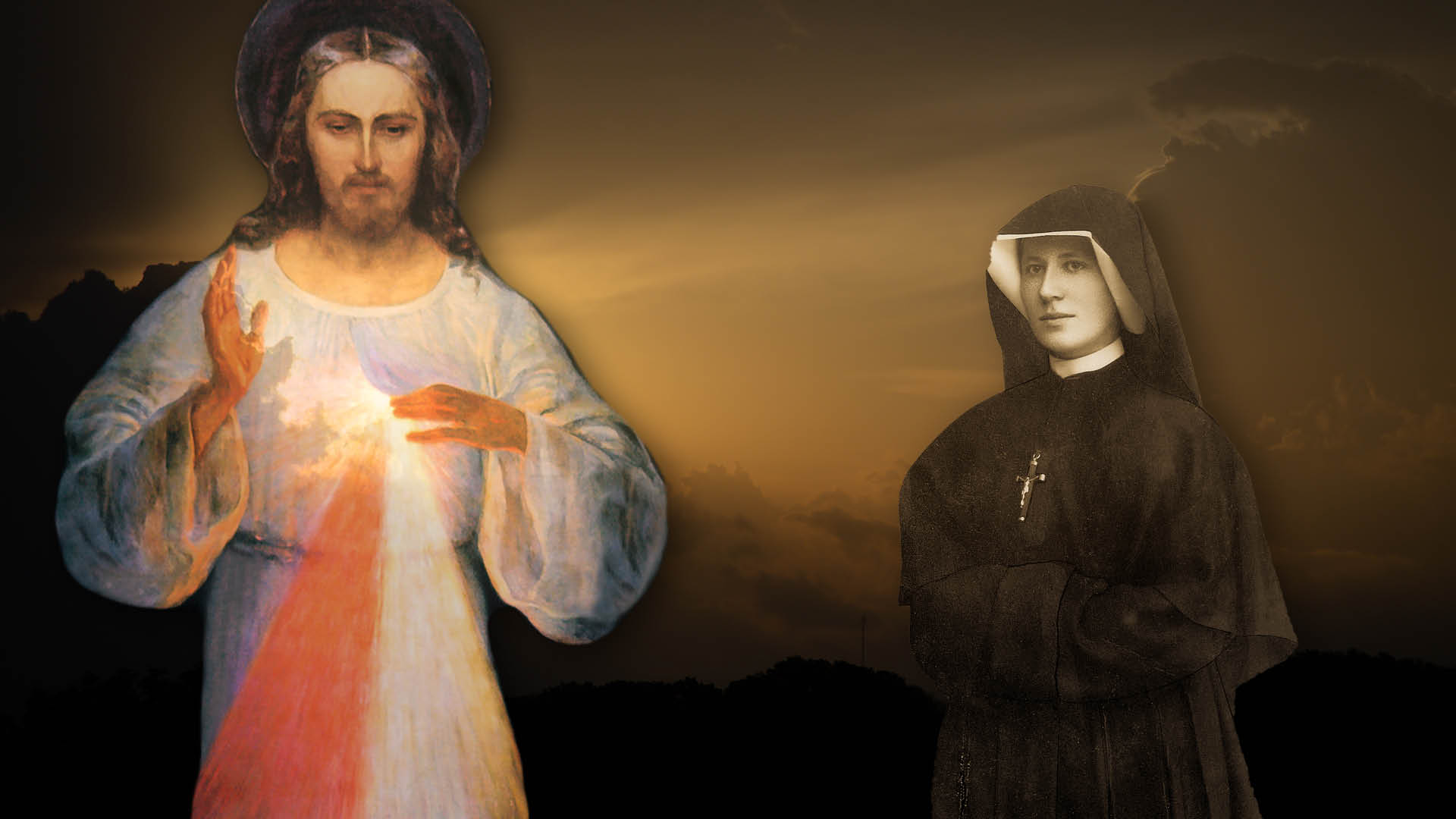
Finally we had a special praying of the Divine Chaplet at our parish at the three o’clock hour with the Blessed Sacrament exposed.  Off to the side we had a first class relic and beside that our replica of the Divine Mercy painting.  Let me share pictures.


For the sake of his sorrowful passion, have mercy on us and on the whole world.

Sunday, December 28, 2025

Sunday Meditation: Jesus, Mary, and Joseph

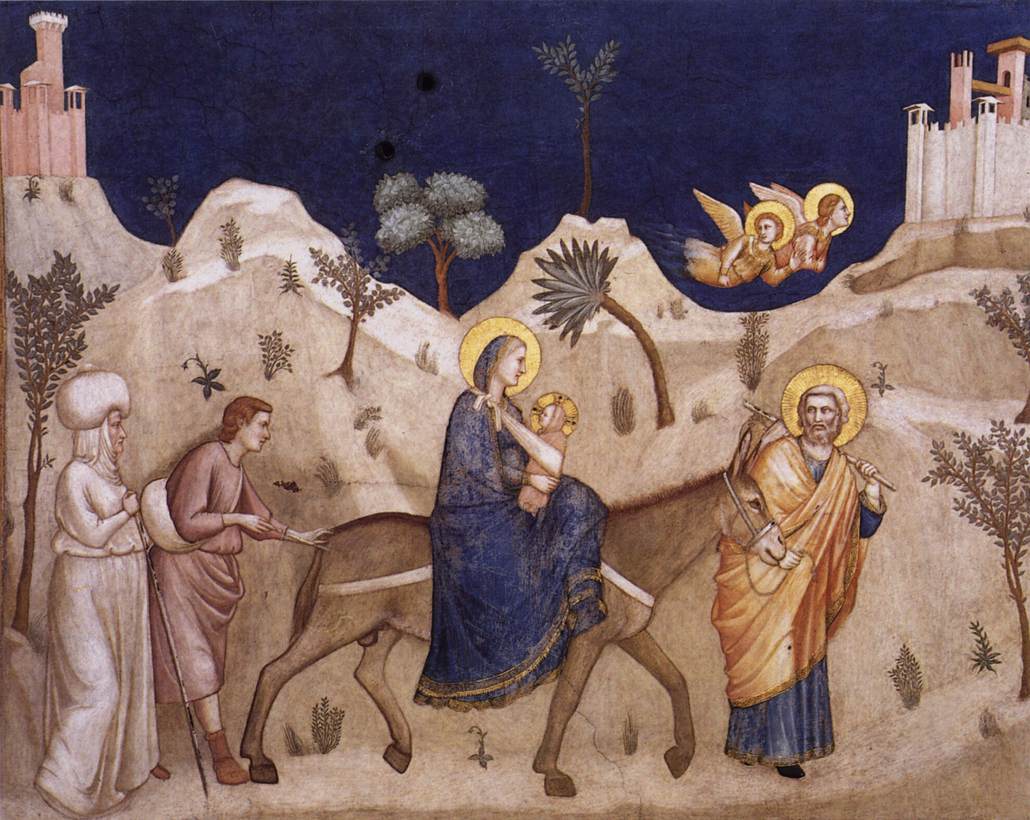
Today is the Feast of the Holy Family of Jesus, Mary, and Joseph, and in Year A we hear of Joseph’s swift, fatherly action of taking his family away from danger.  Once again Joseph follows the will of God when asked to do something.  He travels eastward to Egypt.  I have never heard this comparison made, but Joseph is in analogy here with Abraham who travels eastward when God asks him in Genesis.  What is most interesting is that Joseph ultimately settles in Nazareth, an obscure little town in the north.  Matthew quotes some prophesy that the Messiah “shall be called a Nazorean.”  But where exactly is this prophesy?  It’s no where in the Old Testament.  Just read on.


First, here is the Gospel passage.


When the magi had departed, behold,
the angel of the Lord appeared to Joseph in a dream and said,
“Rise, take the child and his mother, flee to Egypt,
and stay there until I tell you.
Herod is going to search for the child to destroy him.”
Joseph rose and took the child and his mother by night
and departed for Egypt.
He stayed there until the death of Herod,
that what the Lord had said through the prophet might be fulfilled,
Out of Egypt I called my son.

When Herod had died, behold,
the angel of the Lord appeared in a dream
to Joseph in Egypt and said,
“Rise, take the child and his mother and go to the land of Israel,
for those who sought the child’s life are dead.”
He rose, took the child and his mother,
and went to the land of Israel.
But when he heard that Archelaus was ruling over Judea
in place of his father Herod,
he was afraid to go back there.
And because he had been warned in a dream,
he departed for the region of Galilee.
He went and dwelt in a town called Nazareth,
so that what had been spoken through the prophets
might be fulfilled,
He shall be called a Nazorean.

~Mt 2:13-15, 19-23


Goodness, Fr. Geoffrey Plant does an amazing job explaining this passage.


Some fantastic quotes from Fr, Geoffrey:

“Jesus gathers up the whole story of Israel, fulfills it, and brings it to its true purpose.” 

“By shaping Jesus’ early life to mirror Israel’s journey, Matthew is saying that in Jesus the whole drama of salvation is being lived again but this time brought to its fulfillment.” 

“The royal tree will be cut down...and a future king from David’s line would arise like a shoot from the stump of Jesse.” 

But how does Matthew get the prophesy that the Messiah will be a Nazorean?  As Fr. Geoffrey points out, Nazareth puns on the Hebrew word for shoot, and that’s where Matthew derives the prophesy that Jesus will be called a “Nazorean.”  That is something I had never heard before.  Now you know too.

For the pastoral homily, I am going back to the USCCB homily of the day, today given by Fr. Greg Friedman, OFM from The Franciscan Province of Our Lady of Guadalupe in Albuquerque, NM.  I have never seen Fr. Greg before.  Obviously he is a Franciscan friar.


Fr. Greg provides the Catholic connection g of the Holy Family’s flight to Egypt with the plight of migrants.  He mentions Pope Francis’s characterization of this flight as an archetype of refugees but actually as I explained in my analysis of the Flannery O’Connor short story, “The Displaced Person,” the characterization of that archetype goes back Pope Pius XII Apostolic Constitution, Exsul Familia.  Pope Pius XII:

The émigré Holy Family of Nazareth, fleeing into Egypt, is the archetype of every refugee family. Jesus, Mary and Joseph, living in exile in Egypt to escape the fury of an evil king, are, for all times and all places, the models and protectors of every migrant, alien and refugee of whatever kind who, whether compelled by fear of persecution or by want, is forced to leave his native land, his beloved parents and relatives, his close friends, and to seek a foreign soil.

The Feast of the Holy Family of Year A is a reminder of the Catholic understanding of migrants and their fair treatment.


Sunday Meditation: "Joseph rose and took the child and his mother by night and departed for Egypt.”


Not a hymn today but sacred oratorio, “The Flight Into Egypt” composed by John Harbison and performed by the Los Angeles Philharmonic, Cantata Singers and Ensemble, Sanford Sylvan and Roberta Anderson.


This piece is rather modern and I have no idea how lasting it will be.  You can read its Wikipedia entry.  I rather like it.