"Love follows knowledge."
"Beauty above all beauty!"
– St. Catherine of Siena

Showing posts with label Spiritual Guide. Show all posts

Thursday, May 28, 2020

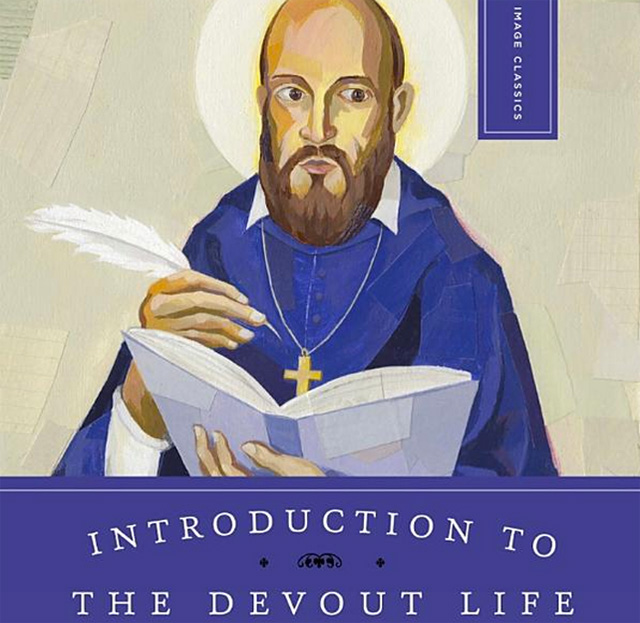
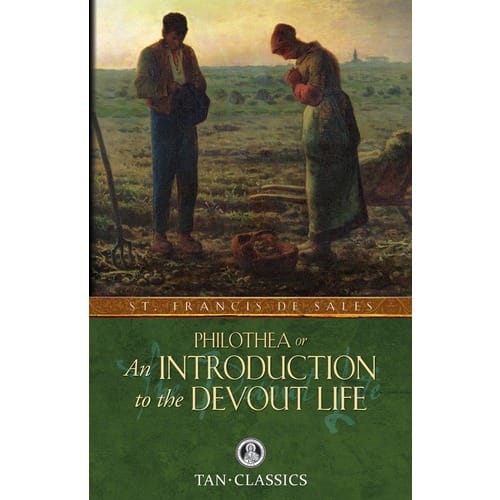
Introduction to the Devout Life, Part 5


This is part of a series on St. Francis de Sales’ Introduction to the Devout Life.  You can read Part 1 here.  
Part 2 here.  
Part 3 here. 
Part 4 here 

Part V: Renewing and Confirming the Soul in Devotion
1. It is Well Yearly to Renew Good Resolutions by Means of the Following Exercises
2. Meditation on the Benefit Conferred on us by God in Calling us to His Service
3. Examination of the Soul as to its Progress in the Devout Life
4. Examination of the Soul's Condition as Regards God
5. Examination of your Condition as Regards Yourself
6. Examination of the Soul's Condition as Regards our Neighbour
7. Examination as to the Affections of the Soul
8. The Affections to be Excited After Such Examination
9. Reflections Suitable to the Renewal of Good Resolutions
10. First Consideration - On the Worth of Souls
11. Second Consideration - On the Excellence of Virtue
12. The Example of the Saints
13. The Love Which Jesus Christ Bears to Us
14. The Eternal Love of God for Us
15. General Affections Which Should Result From These Considerations, and Conclusion of the Exercise
16. The Impressions which should remain after this Exercise
17. An Answer to Two Objections Which may be Made to This Book
18. Three Important and Final Counsels

Part V offers more exercises to strengthen one’s resolution to the devout life, an annual personal examination to assess status, progress, or backsliding, and final concluding counsels. 

Some notable quotes from Part V

From Chapter 1:
The first point in these exercises is to appreciate their importance. Our earthly nature easily falls away from its higher tone by reason of the frailty and evil tendency of the flesh, oppressing and dragging down the soul, unless it is constantly rising up by means of a vigorous resolution, just as a bird would speedily fall to the ground if it did not maintain its flight by repeated strokes of its wings. In order to this, my child, you need frequently to reiterate the good resolutions you have made to serve God, for fear that, failing to do so, you fall away, not only to your former condition, but lower still; since it is a characteristic of all spiritual falls that they invariably throw us lower than we were at the beginning.

From Chapter 4:
With respect to Jesus Christ as God and Man--how does your heart draw to Him? Honey bees seek their delight in their honey, but wasps hover over stinking carrion. Even so pious souls draw all their joy from Jesus Christ, and love Him with an exceeding sweet Love, but those who are careless find their pleasure in worldly vanities.

From Chapter 8:
When you have quietly gone through each point of this examination, and have ascertained your own position, you will excite certain feelings and affections in your heart. Thank God for such amendment, however slight, as you may have found in yourself, confessing that it is the work of His Mercy Alone in you.

From Chapter 10:
Consider how noble and excellent a thing your soul is, endowed with understanding, capable of knowing, not merely this visible world around us, but Angels and Paradise, of knowing that there is an All-Mighty, All-Merciful, Ineffable God; of knowing that eternity lies before you, and of knowing what is necessary in order so to live in this visible world as to attain to fellowship with those Angels in Paradise, and the eternal fruition of God.

From Chapter 18:
Finally, my beloved child, I intreat you by all that is sacred in heaven and in earth, by your own Baptism, by the breast which Jesus sucked, by the tender Heart with which He loves you, and by the bowels of compassion in which you hope--be stedfast and persevere in this most blessed undertaking to live a devout life. Our days pass away, death is at hand. "The trumpet sounds a recall," says Saint Gregory Nazianzen, "in order that every one may make ready, for Judgment is near." When Saint Symphorian was led to his martyrdom, his mother cried out to him, "My son, my son, remember life eternal, look to Heaven, behold Him Who reigns there; for the brief course of this life will soon be ended." Even so would I say to you: Look to Heaven, and do not lose it for earth; look at Hell, and do not plunge therein for the sake of this passing life; look at Jesus Christ, and do not deny Him for the world's sake; amid if the devout life sometimes seems hard and dull, join in Saint Francis' song,--

"So vast the joys that I await,
No earthly travail seemeth great."

Glory be to Jesus, to Whom, with the Father and the Holy Ghost, be honour and glory, now and ever, and to all Eternity. Amen.


###

Final Goodreads Review:

First and foremost, this book is a manual, a manual on how seek, find, and create a devout life, a life devoted to God.   The book speaks to what is devotion and why we need devotion.  Saint Frances de Sales, great saint that he is and patron saint of writers, leads you through a purification of the soul, the purging of sin in one’s life and, indeed, in the cleansing of one’s soul.  He teaches on how to perfect one’s lifestyle to make these changes permanent.  He takes the reader through the finer points of meditation, establishing a prayer life, integrating with church life, connecting with saints, the use of frequent confession, mass, and partaking of the Eucharist.  He delves into the maintenance, practice, and perfection of various virtues.  He provides insight and guidance for the virtues of patience, humility, gentleness, obedience, purity, poverty, and friendship.  St. Francis discusses the nature of temptation, what constitutes succumbing to temptation, how to fight off temptation, and how to strengthen oneself so that temptations never penetrate.  He goes on to also discuss how one can become spiritually dry, and strategies to combat that dryness.  He offers exercises to strengthen one’s resolution to the devout life, an annual personal examination to assess one's status, progress, or backsliding, and finally offers concluding counsels.    

It's an incredible handbook to spiritual direction.  If you don’t have or want a spiritual director, get this book.  If you want to give spiritual direction, this book is the go-to-guide on how to do it.  It is a marvel of clarity.  Still, I don't know how much of the book will stick with me.  There’s a lot in there.  One can’t absorb it all.  You need to digest it in stages and let it work in you.  It's probably good to keep the book at arm’s reach and randomly peruse it every so often.  I made the mistake of buying the Kindle version.  A hardcover handbook to keep on one’s night stand is the perfect role for this treasure.  I found this book way more enriching than Thomas à Kempis’ The Imitation of Christ.

Wednesday, May 20, 2020

Introduction to the Devout Life, Part 4


This is part of a series on St. Francis de Sales’ Introduction to the Devout Life.  You can read Part 1 here.  
Part 2 here.  
Part 3 here. 


Part IV: “Some Ordinary Temptations”

1. We Must Not Trifle with the Words of Worldly Wisdom
2. The Need of a Good Courage
3. Temptations, and the Difference Between Experiencing Them and Consenting to Them
4. Two Striking Illustrations of the Same
5. Encouragement for the Tempted Soul
6. When Temptation and Delectation are Sin
7. Remedies for Great Occasions
8. How to Resist Minor Temptations
9. How to Remedy Minor Temptations
10. How to Strengthen the Heart Against Temptation
11. Anxiety of Mind
12. Sadness and Sorrow
13. Spiritual and Sensible Consolations, and How to Receive Them
14. Dryness and Spiritual Barrenness
15. In Illustration

In Part IV, St. Francis discusses the nature of temptation, what constitutes succumbing to temptation, how to fight off temptation, and how to strengthen oneself so that temptations never penetrate.  He goes on to also discuss how one can become spiritually dry, why one becomes spiritually dry, and strategies to combat that dryness.


Some notable quotes from Part IV

From Chapter 1:
Directly that your worldly friends perceive that you aim at leading a devout life, they will let loose endless shafts of mockery and misrepresentation upon you; the more malicious will attribute your change to hypocrisy, designing, or bigotry; they will affirm that the world having looked coldly upon you, failing its favour you turn to God; while your friends will make a series of what, from their point of view, are prudent and charitable remonstrances. They will tell you that you are growing morbid; that you will lose your worldly credit, and will make yourself unacceptable to the world; they will prognosticate your premature old age, the ruin of your material prosperity; they will tell you that in the world you must live as the world does; that you can be saved without all this fuss; and much more of the like nature.

From Chapter 3:
Picture to yourself a young princess beloved of her husband, to whom some evil wretch should send a messenger to tempt her to infidelity. First, the messenger would bring forth his propositions. Secondly, the princess would either accept or reject the overtures. Thirdly, she would consent to them or refuse them. Even so, when Satan, the world, and the flesh look upon a soul espoused to the Son of God, they set temptations and suggestions before that soul, whereby--1. Sin is proposed to it. 2. Which proposals are either pleasing or displeasing to the soul. 3. The soul either consents, or rejects them. In other words, the three downward steps of temptation, delectation, and consent. And although the three steps may not always be so clearly defined as in this illustration, they are to be plainly traced in all great and serious sins.

From Chapter 10:
Examine from time to time what are the dominant passions of your soul, and having ascertained this, mould your life, so that in thought, word and deed you may as far as possible counteract them. For instance, if you know that you are disposed to be vain, reflect often upon the emptiness of this earthly life, call to mind how burdensome all mere earthly vanities will be to the conscience at the hour of death, how unworthy of a generous heart, how puerile and childish, and the like. See that your words have no tendency to foster your vanity, and even though you may seem to be doing so but reluctantly, strive to despise it heartily, and to rank yourself in every way among its enemies. Indeed, by dint of steady opposition to anything, we teach ourselves to hate even that which we began by liking. Do as many lowly, humble deeds as lie in your power, even if you perform them unwillingly at first; for by this means you will form a habit of humility, and you will weaken your vanity, so that when temptation arises, you will be less predisposed to yield, and stronger to resist.

From Chapter 11:
Examine yourself often, at least night and morning, as to whether your soul is "in your hand;" or whether it has been wrested thence by any passionate or anxious emotion. See whether your soul is fully under control, or whether it has not in anywise escaped from beneath your hand, to plunge into some unruly love, hate, envy, lust, fear, vexation or joy. And if it has so strayed, before all else seek it out, and quietly bring it back to the Presence of God, once more placing all your hopes and affections under the direction of His Holy Will.


From Chapter 14:
So much for what is to be done in times of spiritual consolations. But these bright days will not last for ever, and sometimes you will be so devoid of all devout feelings, that it will seem to you that your soul is a desert land, fruitless, sterile, wherein you can find no path leading to God, no drop of the waters of Grace to soften the dryness which threatens to choke it entirely. Verily, at such a time the soul is greatly to be pitied, above all, when this trouble presses heavily, for then, like David, its meat are tears day and night, while the Enemy strives to drive it to despair, crying out, "Where is now thy God? how thinkest thou to find Him, or how wilt thou ever find again the joy of His Holy Grace?"


Monday, May 18, 2020

Introduction to the Devout Life, Part 3

This is part of a series on St. Francis de Sales’ Introduction to the Devout Life.  You can read Part 1 here.  
Part 2 here.  


Part III: “The Practice of Virtue,” Chapters 1 through 22

1. How to Select That Which We Should Chiefly Practise
2. The Same Subject Continued
3. Patience
4. Exterior Humility
5. Interior Humility
6. Humility Makes Us Rejoice in Our Own Abjection
7. How to Combine Due Care for a Good Reputation with Humility
8. Gentleness Towards Others and Remedies Against Anger
9. Gentleness Towards Ourselves
10. We Must Attend to the Business of Life Carefully, but Without Eagerness or Over-Anxiety
11. Obedience
12. Purity
13. How to Maintain Purity
14. Poverty of Spirit Amid Riches
15. How to Exercise Real Poverty, Although Actually Rich
16. How to Possess a Rich Spirit Amid Real Poverty
17. Friendship: Evil and Frivolous Friendship
18. Frivolous Attachments
19. Real Friendship
20. The Difference Between True and False Friendship
21. Remedies Against Evil Friendships
22. Further Advice Concerning Intimacies

Part III delves into the maintenance, practice, and perfection of various virtues.  In the first half of the chapter, he provides insight and guidance for the virtues of patience, humility, gentleness, obedience, purity, poverty, and friendship. 

I haven't commented much on the book.  That's because I don't really don't have much to say.  It's an incredible handbook to spiritual direction.  I don't know how much of the book will stick with me.  It's probably good to keep the book at arms reach and randomly peruse it every so often.  I am finding this book way more enriching than The Imitation of Christ.


Some notable quotes from Part III

From Chapter 1:
When we are beset by any particular vice, it is well as far as possible to make the opposite "En son beau vestement de drap d'or recame, Et d'ouvrages divers a l'aiguile seme." virtue our special aim, and turn everything to that account; so doing, we shall overcome our enemy, and meanwhile make progress in all virtue. Thus, if I am beset with pride or anger, I must above all else strive to cultivate humility and gentleness, and I must turn all my religious exercises,--prayer, sacraments, prudence, constancy, moderation, to the same object.

From Chapter 3:
Be patient, not only with respect to the main trials which beset you, but also under the accidental and accessory annoyances which arise out of them. We often find people who imagine themselves ready to accept a trial in itself who are impatient of its consequences. We hear one man say, "I should not mind poverty, were it not that I am unable to bring up my children and receive my friends as handsomely as I desire." And another says, "I should not mind, were it not that the world will suppose it is my own fault;" while another would patiently bear to be the subject of slander provided nobody believed it. Others, again, accept one side of a trouble but fret against the rest--as, for instance, believing themselves to be patient under sickness, only fretting against their inability to obtain the best advice, or at the inconvenience they are to their friends. But, dear child, be sure that we must patiently accept, not sickness only, but such sickness as God chooses to send, in the place, among the people, and subject to the circumstances which He ordains;--and so with all other troubles. If any trouble comes upon you, use the remedies with which God supplies you.

From Chapter 9:
One important direction in which to exercise gentleness, is with respect to ourselves, never growing irritated with one's self or one's imperfections; for although it is but reasonable that we should be displeased and grieved at our own faults, yet ought we to guard against a bitter, angry, or peevish feeling about them. Many people fall into the error of being angry because they have been angry, vexed because they have given way to vexation, thus keeping up a chronic state of irritation, which adds to the evil of what is past, and prepares the way for a fresh fall on the first occasion. Moreover, all this anger and irritation against one's self fosters pride, and springs entirely from self-love, which is disturbed and fretted by its own imperfection. What we want is a quiet, steady, firm displeasure at our own faults.

From Chapter 13:
Be exceedingly quick in turning aside from the slightest thing leading to impurity, for it is an evil which approaches stealthily, and in which the very smallest beginnings are apt to grow rapidly. It is always easier to fly from such evils than to cure them.

From Chapter 19:
Do you, my child, love every one with the pure love of charity, but have no friendship save with those whose intercourse is good and true, and the purer the bond which unites you so much higher will your friendship be. If your intercourse is based on science it is praiseworthy, still more if it arises from a participation in goodness, prudence, justice and the like; but if the bond of your mutual liking be charity, devotion and Christian perfection, God knows how very precious a friendship it is! Precious because it comes from God, because it tends to God, because God is the link that binds you, because it will last for ever in Him. Truly it is a blessed thing to love on earth as we hope to love in Heaven, and to begin that friendship here which is to endure for ever there. I am not now speaking of simple charity, a love due to all mankind, but of that spiritual friendship which binds souls together, leading them to share devotions and spiritual interests, so as to have but one mind between them. Such as these may well cry out, "Behold, how good and joyful a thing it is, brethren, to dwell together in unity!"


###

Part III: “The Practice of Virtue,” Chapters 23 through 41

23. The Practice of Bodily Mortification
24. Society and Solitude
25. Modesty in Dress
26. Conversation; and, First, How to Speak of God
27. Unseemly Words, and the Respect Due to Others
28. Hasty Judgments
29. Slander
30. Further Counsels as to Conversation
31. Amusements and Recreations: What are Allowable
32. Forbidden Amusements
33. Balls, and Other Lawful but Dangerous Amusements
34. When to Use Such Amusements Rightly
35. We Must be Faithful in Things Great and Small
36. A Well-Balanced, Reasonable Mind
37. Wishes
38. Counsels to Married People
39. The Sanctity of the Marriage Bed
40. Counsels to Widows
41. One Word to Maidens

St. Frances continues to explain the practice of virtues in the second half of Chapter III.  Here he delves into the topics of mortifications, dress, conversation and slander, amusements, and purity again, this time for married people and widows.

Some more notable quotes from Part III.

From Chapter 23:
If you are able to fast, you will do well to observe some days beyond what are ordered by the Church, for besides the ordinary effect of fasting in raising the mind, subduing the flesh, confirming goodness, and obtaining a heavenly reward, it is also a great matter to be able to control greediness, and to keep the sensual appetites and the whole body subject to the law of the Spirit; and although we may be able to do but little, the enemy nevertheless stands more in awe of those whom he knows can fast. The early Christians selected Wednesday, Friday and Saturday as days of abstinence.

From Chapter 27:
Saint James says, "If any man offend not in word, the same is, a perfect man." Beware most watchfully against ever uttering any unseemly expression; even though you may have no evil intention, those who hear it may receive it with a different meaning. An impure word falling upon a weak mind spreads its infection like a drop of oil on a garment, and sometimes it will take such a hold of the heart, as to fill it with an infinitude of lascivious thoughts and temptations. The body is poisoned through the mouth, even so is the heart through the ear; and the tongue which does the deed is a murderer, even when the venom it has infused is counteracted by some antidote preoccupying the listener's heart. It was not the speaker's fault that he did not slay that soul. Nor let any one answer that he meant no harm. Our Lord, Who knoweth the hearts of men, has said, "Out of the abundance of the heart the mouth speaketh." And even if we do mean no harm, the Evil One means a great deal, and he will use those idle words as a sharp weapon against some neighbour's heart. It is said that those who eat the plant called Angelica always have a sweet, pleasant breath; and those who cherish the angelic virtues of purity and modesty, will always speak simply, courteously, and modestly. As to unclean and light-minded talk, Saint Paul says such things should not even be named among us, for, as he elsewhere tells us, "Evil communications corrupt good manners."

From Chapter 35:
When I read in the Life of Saint Catherine of Sienna of her ecstasies and visions, her wise sayings and teaching, I do not doubt but that she "ravished" her Bridegroom's heart with this eye of contemplation; but I must own that I behold her with no less delight in her father's kitchen, kindling the fire, turning the spit, baking the bread, cooking the dinner, and doing all the most menial offices in a loving spirit which looked through all things straight to God. Nor do I prize the lowly meditations she was wont to make while so humbly employed less than the ecstasies with which she was favoured at other times, probably as a reward for this very humility and lowliness. Her meditations would take the shape of imagining that all she prepared for her father was prepared for Our Lord, as by Martha; her mother was a symbol to her of Our Lady, her brothers of the Apostles, and thus she mentally ministered to all the Heavenly Courts, fulfilling her humble ministrations with an exceeding sweetness, because she saw God's Will in each.

From Chapter 38:
Therefore, husbands, do you preserve a tender, constant, hearty love for your wives. It was that the wife might be loved heartily and tenderly that woman was taken from the side nearest Adam's heart. No failings or infirmities, bodily or mental, in your wife should ever excite any kind of dislike in you, but rather a loving, tender compassion; and that because God has made her dependent on you, and bound to defer to and obey you; and that while she is meant to be your helpmeet, you are her superior and her head. And on your part, wives, do you love the husbands God has given you tenderly, heartily, but with a reverential, confiding love, for God has made the man to have the predominance, and to be the stronger; and He wills the woman to depend upon him,--bone of his bone, flesh of his flesh,--taking her from out the ribs of the man, to show that she must be subject to his guidance. All Holy Scripture enjoins this subjection, which nevertheless is not grievous; and the same Holy Scripture, while it bids you accept it lovingly, bids your husband to use his superiority with great tenderness, lovingkindness, and gentleness. "Husbands, dwell with your wives according to knowledge, giving honour unto the wife as unto the weaker vessel."

From Chapter 40:

A devout widow should chiefly seek to cultivate the graces of perfect modesty, renouncing all honours, rank, title, society, and the like vanities; she should be diligent in ministering to the poor and sick, comforting the afflicted, leading the young to a life of devotion, studying herself to be a perfect model of virtue to younger women. Necessity and simplicity should be the adornment of her garb, humility and charity of her actions, simplicity and kindliness of her words, modesty and purity of her eyes,--Jesus Christ Crucified the only Love of her heart.

Friday, May 8, 2020

Introduction to the Devout Life, Part 2


This is part of a series on St. Francis de Sales’ Introduction to the Devout Life.  You can read Part 1 here.  

Part II: “Prayer and the Sacraments”

1. The Necessity of Prayer
2. A Short Method of Meditation, and first, the Presence of God, the First Point of Preparation
3. Invocation, the Second Point of Preparation
4. The Third Point of Preparation, Representing the Mystery to be Meditated to Your   
     Imagination
5. Considerations, the Second Part of Meditation
6. The Third Part of Meditation, Affections and Resolutions
7. The Conclusion and Spiritual Bouquet
8. Some Useful Hints as to Meditation
9. Concerning Dryness in Meditation
10. Morning Prayer
11. Evening Prayer and Examination of Conscience
12. Spiritual Retirement
13. Aspirations, Ejaculatory Prayer, and Holy Thoughts
14. Holy Communion, and How to Join in It
15. The Other Public Offices of the Church
16. How the Saints are United to Us
17. How to Hear and Read God's Word
18. How to Receive Inspirations
19. Confession
20. Frequent Communion
21. How to Communicate

Part II takes the reader through the finer points of meditation, establishing a prayer life, integrating with church life, connecting with saints, the use of frequent confession, mass, and partaking of the Eucharist. 

###

Some notable quotes from Part II.

From Chapter 1:
But especially I commend earnest mental prayer to you, more particularly such as bears upon the Life and Passion of our Lord. If you contemplate Him frequently in meditation, your whole soul will be filled with Him, you will grow in His Likeness, and your actions will be moulded on His. He is the Light of the world; therefore in Him, by Him, and for Him we shall be enlightened and illuminated; He is the Tree of Life, beneath the shadow of which we must find rest;--He is the Living Fountain of Jacob's well, wherein we may wash away every stain.

From Chapter 6:
Meditation excites good desires in the will, or sensitive part of the soul,--such as love of God and of our neighbour, a craving for the glory of Paradise, zeal for the salvation of others, imitation of our Lord's Example, compassion, thanksgiving, fear of God's wrath and of judgment, hatred of sin, trust in God's Goodness and Mercy, shame for our past life; and in all such affections you should pour out your soul as much as possible. If you want help in this, turn to some simple book of devotions, the Imitation of Christ, the Spiritual Combat, or whatever you find most helpful to your individual wants.

From Chapter 12:
There are few social duties of sufficient importance to prevent an occasional retirement of the heart into this sacred solitude. When Saint Catherine of Sienna was deprived by her parents of any place or time for prayer and meditation, Our Lord inspired her with the thought of making a little interior oratory in her mind, into which she could retire in heart, and so enjoy a holy solitude amid her outward duties. And henceforward, when the world assaulted her, she was able to be indifferent, because, so she said, she could retire within her secret oratory, and find comfort with her Heavenly Bridegroom. So she counselled her spiritual daughters to make a retirement within their heart, in which to dwell.

From Chapter 13:
We retire with God, because we aspire to Him, and we aspire in order to retire with Him; so that aspiration after God and spiritual retreat excite one another, while both spring from the one Source of all holy thoughts. Do you then, my child, aspire continually to God, by brief, ardent upliftings of heart; praise His Excellence, invoke His Aid, cast yourself in spirit at the Foot of His Cross, adore His Goodness, offer your whole soul a thousand times a day to Him, fix your inward gaze upon Him, stretch out your hands to be led by Him, as a little child to its father, clasp Him to your breast as a fragrant nosegay, upraise Him in your soul as a standard. In short, kindle by every possible act your love for God, your tender, passionate desire for the Heavenly Bridegroom of souls.

From Chapter 18:
Let me make use of an illustration of my meaning. In contracting a marriage, the bride must be a party to three separate acts: first, the bridegroom is proposed to her; secondly, she entertains the proposal; and thirdly, she gives her consent. Just so when God intends to perform some act of love in us, by us, and with us; He first suggests it by His inspiration; secondly, we receive that inspiration; and thirdly, we consent to it: for, like as we fall into sin by three steps, temptation, delectation, and consent, so there are three steps whereby we ascend to virtue; inspiration, as opposed to temptation; delectation in God's inspiration, as opposed to that of temptation; and consent to the one instead of to the other.

He mentions St. Catherine of Siena in that quote from chapter 12.  He seems to mention her frequently.  I'm not the only person, I guess, who adores that little lady.


Tuesday, May 5, 2020

Introduction to the Devout Life, Part 1


Born in France in 1567, St. Francis de Sales became a Bishop of Geneva in 1602 and therefore was at the epicenter of Catholic/Protestant conflicts over theology.  As a young man he considered himself brash, but in time was able to discipline himself to have the temperament of Christ, and his patience, knowledge, and communication skills enabled him to bring back many to the Church.  Francis died in 1622 and was beatified in 1665.  Among other patronages, he is regarded as the patron saint of writers.

His Introduction to the Devout Life, published in 1609, is regarded as one of the best spiritual guides.  He states the need for the book in the first chapter:

You aim at a devout life, dear child, because as a Christian you know that such devotion is most acceptable to God's Divine Majesty. But seeing that the small errors people are wont to commit in the beginning of any under taking are apt to wax greater as they advance, and to become irreparable at last, it is most important that you should thoroughly understand wherein lies the grace of true devotion;--and that because while there undoubtedly is such a true devotion, there are also many spurious and idle semblances thereof; and unless you know which is real, you may mistake, and waste your energy in pursuing an empty, profitless shadow.

The book aims to show how true devotion can be best obtained.  You can find the book online in English, here.    


###

Part I: Attaining a Firm Resolution to the Devout Life

The best way to give a summary for each part of the book is to list the chapters.  There are twenty-four chapters in Part 1.

Part I: Attaining a Firm Resolution to the Devout Life
1. What True Devotion Is
2. The Nature and Excellence of Devotion
3. Devotion is Suitable to Every Vocation and Profession
4. The Need of a Guide for Those Who Would Enter Upon and Advance in the Devout Life
5. The First Step Must be Purifying the Soul
6. The First Purification, Namely, From Mortal Sin
7. The Second Purification, From All Sinful Affections
8. How to Effect This Second Purification
9. First Meditation - On Creation
10. Second Meditation - On the End for Which We Were Created
11. Third Meditation - On the Gifts of God
12. Fourth Meditation - On Sin
13. Fifth Meditation - On Death
14. Sixth Meditation - On Judgment
15. Seventh Meditation - On Hell
16. Eighth Meditation - On Paradise
17. Ninth Meditation - On the Choice Open to You Between Heaven and Hell
18. Tenth Meditation - On How the Soul Chooses the Devout Life
19. How to Make a General Confession
20. A Hearty Protest Made with the Object of Confirming the Soul's Resolution to Serve God, as     
      a Conclusion to its Acts of Penitence
21. Conclusion of This First Purification
22. The Necessity of Purging Away All Tendency to Venial Sins
23. It is Needful to Put Away All Inclination for Useless and Dangerous Things
24. All Evil Inclinations Must be Purged Away

The first four chapters are in essence an introduction to the book.  It speaks to what is devotion and why we need devotion.  Chapters five through eight gives us instruction on purifying the soul.  Chapters nine through eighteen provide ten meditative exercises to strengthen yourself for purifying oneself.  Chapters nineteen twenty-one provide the culmination of Part 1, what each chapter has been building to, that is the act of penitence as the means of purging mortal sins.  Chapters twenty-two through twenty-four provide reason to do away with either venial sins and harmful inclinations. 

In short, Part 1 provides the instruction for the first step to a devout life, the cleansing of one’s soul.

###

It never occurred to me to specifically define devotion.  It seems like it would have been a rather  obvious word not requiring definition.  But as a superb writer of non-fiction, de Sales defines the key word in the very first chapter on which his book hinges.

…all true and living devotion presupposes the love of God;--and indeed it is neither more nor less than a very real love of God, though not always of the same kind; for that Love one while shining on the soul we call grace, which makes us acceptable to His Divine Majesty;--when it strengthens us to do well, it is called Charity;--but when it attains its fullest perfection, in which it not only leads us to do well, but to act carefully, diligently, and promptly, then it is called Devotion…. In short, devotion is simply a spiritual activity and liveliness by means of which Divine Love works in us, and causes us to work briskly and lovingly; and just as charity leads us to a general practice of all God's Commandments, so devotion leads us to practise them readily and diligently. And therefore we cannot call him who neglects to observe all God's Commandments either good or devout, because in order to be good, a man must be filled with love, and to be devout, he must further be very ready and apt to perform the deeds of love.

There’s a lot to unpack in that partial paragraph.  (1) Devotion is a reflection from the love of God that we shine back to Him.  (2) It stems from the grace that God sends out to us.  (3) Devotion is a spiritual activity of the Divine Love working in us. (4) And it makes us “ready and apt” to perform the works of love. 

In essence, he goes on to say, love and devotion are inextricably linked. 

The difference between love and devotion is just that which exists between fire and flame;--love being a spiritual fire which becomes devotion when it is fanned into a flame;--and what devotion adds to the fire of love is that flame which makes it eager, energetic and diligent, not merely in obeying God's Commandments, but in fulfilling His Divine Counsels and inspirations.

How does one conceptualize fire and flame?  Isn’t fire composed of flames?  Aren’t flames fire?  So love and devotion are to de Sales the same as fire and flame.  What a brilliant rhetorical flourish. 

###

I have to say Chapter 23 struck a dagger into my heart.  Here’s how he starts it:

SPORTS, balls, plays, festivities, pomps, are not in themselves evil, but rather indifferent matters, capable of being used for good or ill; but nevertheless they are dangerous, and it is still more dangerous to take great delight in them.  Therefore, my daughter, I say that although it is lawful to amuse yourself, to dance, dress, feast, and see seemly plays,—at the same time, if you are much addicted to these things, they will hinder your devotion, and become extremely hurtful and dangerous to you.

Gee, there is so many interests I have that are not religiously oriented.  I love sports.  I love literature.  I love festivities.  There is no way I can give up my beloved baseball.  He goes on to say:

The harm lies, not in doing them, but in the degree to which you care for them. It is a pity to sow the seed of vain and foolish tastes in the soil of your heart, taking up the place of better things, and hindering the soul from cultivating good dispositions.

This is my biggest fear of actually getting a spiritual director.  The degree of commitment could wipe away all your other interests.

Some notable quotes from Part I.

From Chapter 1:
But, in fact, all true and living devotion presupposes the love of God;--and indeed it is neither more nor less than a very real love of God, though not always of the same kind; for that Love one while shining on the soul we call grace, which makes us acceptable to His Divine Majesty;--when it strengthens us to do well, it is called Charity;--but when it attains its fullest perfection, in which it not only leads us to do well, but to act carefully, diligently, and promptly, then it is called Devotion…The difference between love and devotion is just that which exists between fire and flame;--love being a spiritual fire which becomes devotion when it is fanned into a flame;--and what devotion adds to the fire of love is that flame which makes it eager, energetic and diligent, not merely in obeying God's Commandments, but in fulfilling His Divine Counsels and inspirations.

From Chapter 2:
Ponder Jacob's ladder:--it is a true picture of the devout life; the two poles which support the steps are types of prayer which seeks the love of God, and the Sacraments which confer that love; while the steps themselves are simply the degrees of love by which we go on from virtue to virtue, either descending by good deeds on behalf of our neighbour or ascending by contemplation to a loving union with God. Consider, too, who they are who trod this ladder; men with angels' hearts, or angels with human forms. They are not youthful, but they seem to be so by reason of their vigour and spiritual activity. They have wings wherewith to fly, and attain to God in holy prayer, but they have likewise feet wherewith to tread in human paths by a holy gracious intercourse with men; their faces are bright and beautiful, inasmuch as they accept all things gently and sweetly; their heads and limbs are uncovered, because their thoughts, affections and actions have no motive or object save that of pleasing God; the rest of their bodies is covered with a light shining garment, because while they use the world and the things of this life, they use all such purely and honestly, and no further than is needful for their condition --such are the truly devout. Believe me, dear child, devotion is the sweetest of sweets, the queen of virtues, the perfection of love. If love is the milk of life, devotion is the cream thereof; if it is a fruitful plant, devotion is the blossom; if it is a precious stone, devotion is its brightness; if it is a precious balm, devotion is its perfume, even that sweet odour which delights men and causes the angels to rejoice.

From Chapter 5:
The very first step towards spiritual health is to be purged from our sinful humours. Saint Paul received perfect purification instantaneously, and the like grace was conferred on Saint Magdalene, Saint Catherine of Genoa, Saint Pelagia, and some others, but this kind of purgation is as miraculous and extraordinary in grace as the resurrection of the dead in nature, nor dare we venture to aspire to it. The ordinary purification, whether of body or soul, is only accomplished by slow degrees, step by step, gradually and painfully.

From Chapter 7:
Be sure, my child, that if you seek to lead a devout life, you must not merely forsake sin; but you must further cleanse your heart from all affections pertaining to sin; for, to say nothing of the danger of a relapse, these wretched affections will perpetually enfeeble your mind, and clog it, so that you will be unable to be diligent, ready and frequent in good works, wherein nevertheless lies the very essence of all true devotion.

Chapter 19:
When you come to your spiritual father, imagine yourself to be on Mount Calvary, at the Feet of the Crucified Saviour, Whose Precious Blood is dropping freely to cleanse you from all your sin. Though it is not his actual Blood, yet it is the merit of that outpoured Blood which is sprinkled over His penitents as they kneel in Confession. Be sure then that you open your heart fully, and put away your sins by confessing them, for in proportion as they are put out, so will the Precious Merits of the Passion of Christ come in and fill you with blessings.