Matthew’s
school put on their annual show for the school families. It’s a combination orchestral performances
and lip synch dancing. Matthew
participated in both this year.
I
got there late, so I didn’t get a very good seat. I’m in the back and the pictures didn’t come
ut the best. Here’s a picture of violin
orchestra. Matthew is there on the left
in the front.
Now
here is a clip I was able to video. It’s
called Allegro from some composer named Suzuki.
That will be their music teacher who will lead the class, and at about
the 59 second mark she will point to Matthew for a solo. The solo is only about five seconds long and
then she’ll point to a couple of others.
So
cute.
As
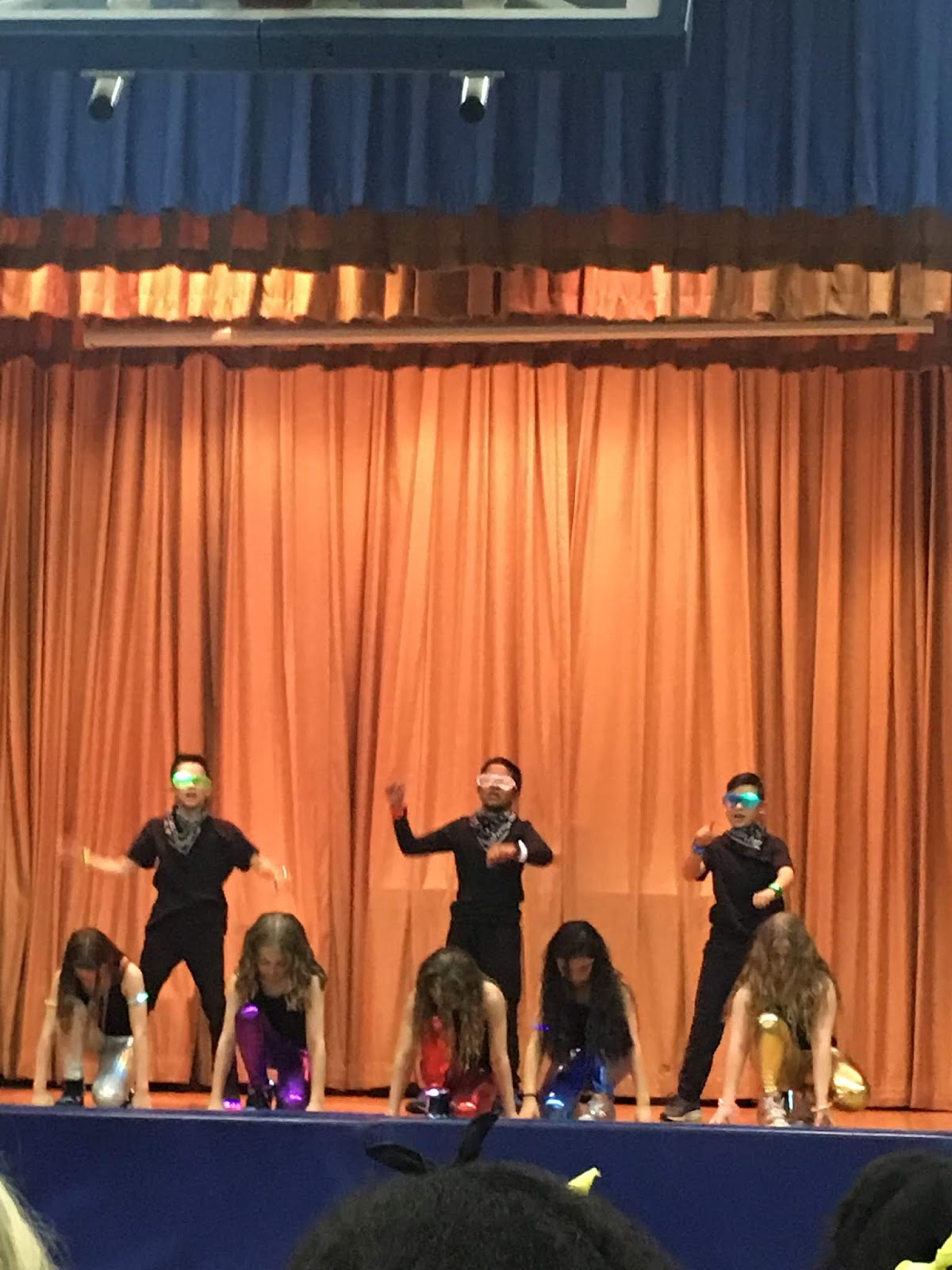
to the lip synch, I have no clue what song they were performing. I lost the program. I didn’t get any video but here are a few
pictures. Matthew is the boy on the
right.
Personally
I didn’t care for any of the lip synch performances but the kids had fun. Isn’t he cute? My little boy is growing too fast!
It’s been such a hard winter around here.I don’t know if this makes it as the coldest
on record, but if it isn’t it’s close.I
know it’s not the snowiest on record, but we’ve had a good share of that
too.Every time we think spring is
finally here, the weather regresses back.Most people are begging for spring to come.
Well, if you’re begging, here it is, the “Spring”
Concerto from the set of concertos by Antonio Vivaldi named The Four Seasons.
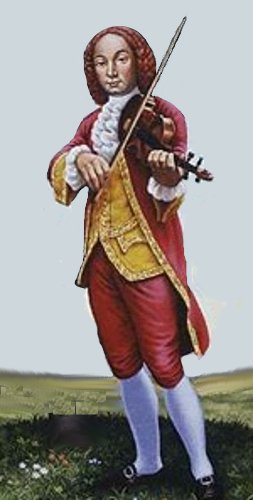
Here’s some background information.Vivaldi is considered one of the great
composers of the Baroque era, a favorite of Johann Sebastian Bach.His nickname was the il Prete Rosso, “the red priest” because he was a priest and
had red hair.A Venetian and the the
musical director of at an woman’s orphanage where many women went on to be
musicians, he reached notariety from his violin virtuosity and then as a
composer.
Vivaldi wrote many violin concerti, and one factoid that surprised me
in my research was that Vivaldi in his conceretos established the
fast/slow/fast tempos of a concerto’s three movements.This became a general rule, and not just for
concertos.So many pieces of music are
set to a fast/slow/fast pattern, down to our very day.
The Four Seasons (Le quattro stagioni) are
a set of concerti where each of the seasons are an individual concerto.Each concerto is rendered to reflect a sense
of its respective season.It has been
claimed that each season was based on a series of sonnets, also respective to a
season, but the sonnets are so dreadful as literary works, a counter claim has
been made that the sonnets were backformed from the musical work.Nonetheless whether the music was based on
the sonnet or on elements of the season, it does make the concerti program music.
Here is the Spring Sonnet from which the composition was supposedly
based on.
Allegro
Springtime
is upon us.
The birds celebrate her return with festive song,
and murmuring streams are softly caressed by the breezes.
Thunderstorms, those heralds of Spring, roar, casting their dark mantle over
heaven,
Then they die away to silence, and the birds take up their charming songs once
more.
Largo
On the flower-strewn meadow, with leafy branches rustling overhead, the goat-herd
sleeps, his faithful dog beside him.
Allegro
Led by the festive sound of rustic bagpipes, nymphs and shepherds lightly dance
beneath the brilliant canopy of spring.
So in the first Allegro movement, which is in
ritornello form, birds singing make up the theme while stream and thunder motifs
offer a contrast.In the slow Largo we
have a picture-scape with goats and dogs.And in the final Allegro we have a folk spring time dance.I’ve never been a fan of program music.I hardly ever see the pictures or drama they
are supposed to be represent.
But this
is such a joyful work. Here is the great Itzhak Perlman with the israel Philharmonic.
So did you catch the birds singing, the thunder
resonating, and the dogs barking?
I love this Violin Concerto. I know there are others
that are ranked greater. Mozart composed his violin concertos when he was
young, this his last at 19 years old. All five are bright and vivacious and
written in a major key. This one does have its own Wikipedia entry.
Its full title is Violin Concerto No. 5, K. 219
"Turkish.”The nickname “Turkish”
comes from the third movement’s deviation from a minuet into an exotic melody
associated with Turkish music, though not necessarily truly from Turkey.
I'm not going to post the entire concerto, just the
third movement.That’s where the Turkish
excursion takes place.I think it
transforms the entire last movement.The
rondo form is based on a returning melody alternating with a cadenza.This third movement uses a very stately minuet
as its rondo melody, and then at about 3:45 transitions into the Turkish
section, and that lasts for two and a quarter minutes, returning da capo to the minuet.
The finale is an urbane
minuet that unfolds, at first, in a perfectly rondo form. But just
when the end seems nigh, Mozart interpolates an episode even more astonishing
than the Adagio in the first movement: a hundred and thirty bars of the
sort of tongue-in-cheek “Turkish” music he used in works like The Abduction
from the Seraglio. All of the conventional building-blocks of
eighteenth-century “Turkish”music are here: the key of A minor, march-like 2/4
time, drone basses, “gypsy” violin writing, leaping themes, pervasive
chromaticism, “exotic” melodic intervals like the augmented second, repeated
notes, frequent ornamentation, and grotesque, and percussive scoring. This
episode has a handful of melodies of its own, several borrowed from folk music,
arranged to form a separate little movement—a rondo within the rondo. When it’s
over, the minuet returns to complete its appointed rounds, and like the first
movement the finale ends quietly, wittily, with a little arpeggio decorated
with grace notes—a wink and a smile.
Yes, “rondo within a rondo” is the perfect way
to describe it.Besides the structural peculiarity,
what really gets me is the sharp contrast between a reserved 18th
century European classism with an exotic, exuberant, and wild foreignism.
Here is the third movement with Gideon Kremer (soloist),
Nicholas Harnoncourt (conductor), Wiener Philharmoniker orchestra. Listen for the transition at just after 3:45, and after listening to the entire movement, try to answer this question: Is the "Turkish" excursion integral to the entire piece or does it sound like two separate pieces yoked together?
If you go to Youtube you’ll be able to find both the
first and second movements.If you have
a half hour, listen to all three movements in succession as meant to be
heard.The recording I own is with ItzhakPerlman (soloist), James Levine (conductor), and also with the Wiener Philharmoniker orchestra
and I highly recommend it.