"Love follows knowledge."
"Beauty above all beauty!"
– St. Catherine of Siena

Showing posts with label The Virgin Mother. Show all posts

Friday, December 19, 2025

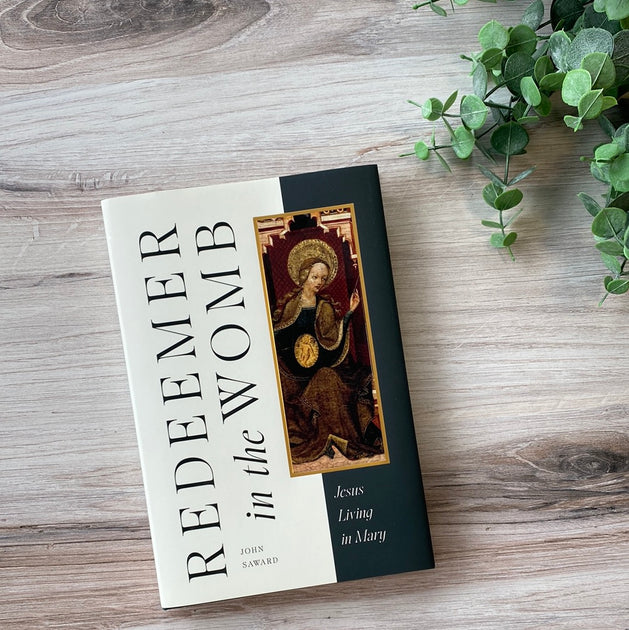
Redeemer in the Womb: Jesus Living in Mary by John Saward, Post #2

This is the second post of several posts on Redeemer in the Womb: Jesus Living in Mary by John Saward.

You can find Post #1 here. 


Kerstin’s Introduction to Chapter 2: How Can the Ark of the Lord Come to Me? The Gospels:

Seward:

“He is not only the inhabitant of the womb; he is also its “fruit” (Luke 1:42). His body does not come down from heaven; it is fashioned out of his Virgin Mother’s flesh and blood. Indeed, since she is made fruitful by the Holy Spirit, not by male seed (see Matt. 1:20), he is physically more indebted to her than any other child could be to his mother.”

My Comment:

The second chapter meditates on what the Gospels say of Mary’s carrying of Jesus in her pregnancy.


The key Biblical event of Mary’s pregnancy is the Visitation, her travel to assist her cousin Elizabeth in her pregnancy.  Much of the chapter is taken up with meditations on the Visitation.


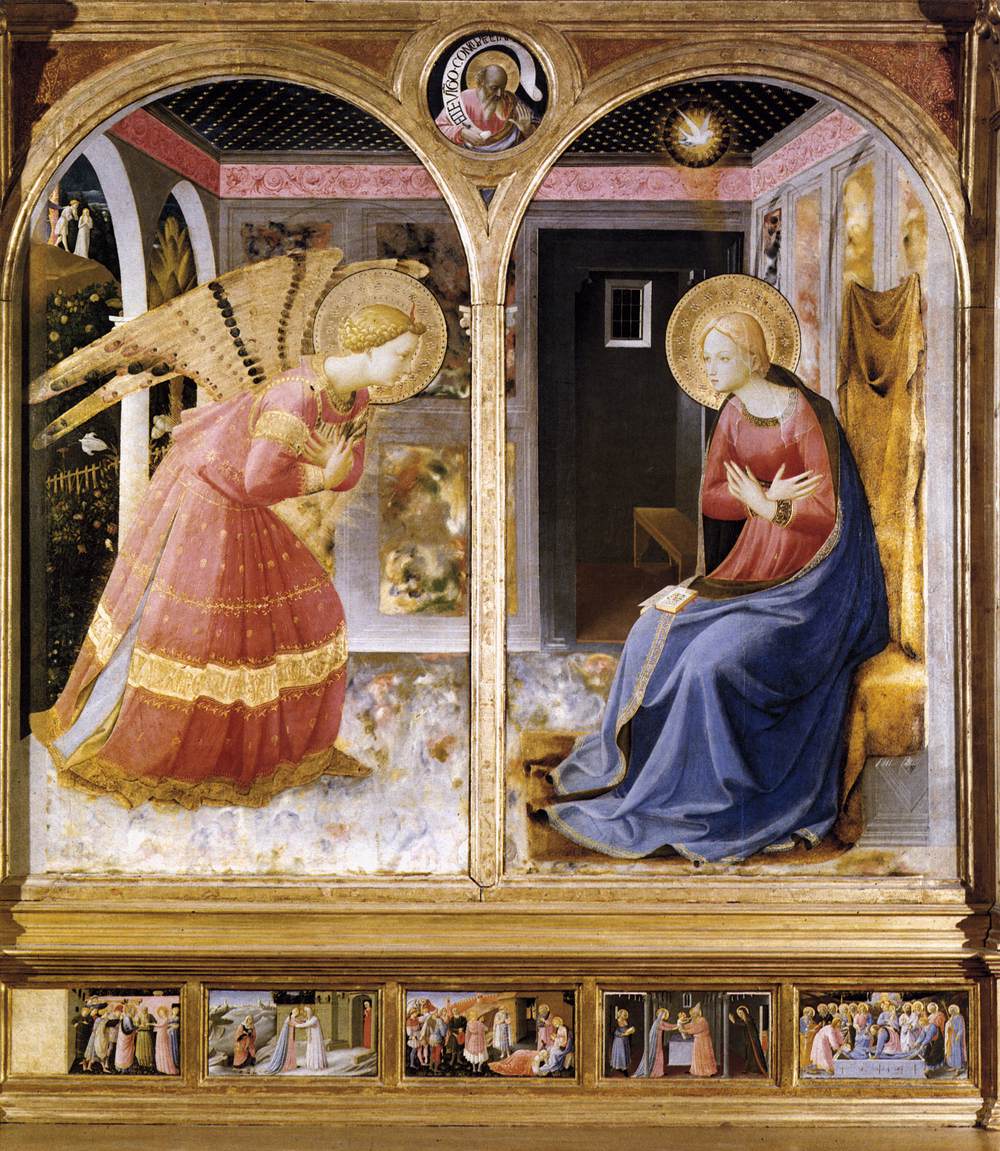
Apart from the journey to Bethlehem, St. Luke records only one event during Our Lady’s pregnancy: the Visitation. “In those days,” after the departure of Gabriel, Mary hastened to visit her cousin Elizabeth in the hill country of Judaea (Luke 1:39–56), probably in the neighborhood of Ain-Karim, six kilometers to the west of Jerusalem. The Evangelist says that, in going south, Mary “arose” (anastasa), the verb used to designate the Resurrection. This strong and suggestive word, one of Luke’s favorites, heightens the drama of the Blessed Virgin’s journey: it is an ascent, a climb into the high country. Similar language is used to report the three other southward expeditions of Jesus, Mary, and Joseph (Luke 2:4, 22, and 42).2 It is as if Luke wants Theophilus to lift up his eyes to the mountains (see Ps. 120:1), to the heights of Mount Zion. Later, he will show how, in his public ministry, Jesus kept his sights on Jerusalem: “When the days drew near for him to be received up, he set his face to go to Jerusalem” (Luke 9:51). The message of Luke 1:39 is that the first time the Savior ventured south, presaging his later journey, was as an unborn child. Mary carries Jesus on the road that later he will purposefully tread.


Saward quite rightly points out that as one travels southward from Israel’s north country (Nazareth and the towns about the Sea of Galilee) toward Jerusalem, one is traversing uphill, and in some places very steeply up hill.  I have never been there, but I have seen topographic representations of the geography.  Quite nice how the word “arose” is used here and tied to the Resurrection.  Mary’s life is frequently portrayed as in communion with Christ’s life.


###

Kerstin’s Comment:

When Mary visits her cousin Elizabeth, pregnant with John the Baptist, she walks the same path as Jesus would later leading up to the crucifixion. Even unborn, John is Christ’s herald; by his infant joy, he is prophet. As St. Ambrose says, “Before his father or mother had done anything wonderful, he leapt in his mother’s womb and preached the good news of the advent of the Lord.”


Even before his birth, the Child Jesus is at his saving, sanctifying work. While still in the womb, the Savior consecrates the forerunner for his mission. What is more, grace comes to John from Jesus through Mary, who, in Gerard Manley Hopkins’ words, “this one work has to do—Let all God’s glory through.”10 Already, at Ain-Karim, Our Lady is at her handmaidenly, motherly work of mediating the grace of her Son.


Mary is the New Ark of the Covenant. Just like the Ark of old had been carried up the hills toward Jerusalem, so Mary carries Jesus.
The Baby in the womb is God, and so the expectant Mother is the definitive Ark, and hereby God is made present in a very tangible way. Before God has shown Himself in a cloud, an entity that eludes physical grasp. Now, in a very real way, God makes Himself known in person without losing his transcendent reality.


This New Testament revelation of Jesus in Mary presupposes the Old Testament belief that the womb of woman is the stage on which the first scenes of the human drama are played out. The Lord forms, “knits together,” every man from the womb (see 2 Macc. 7:22–23; Ps. 139:13–16; Is. 44:2, 24). Indeed, “He-who-fashions-you-in-the-womb” is one of the divine names in Deutero-Isaiah (Isa. 49:5). The nakedness of the human person as he comes from the womb foreshadows the nakedness with which he goes into the tomb: both signal his utter dependence upon his Creator (see Job 1:21) … Thus in Mary, who conceives her Son by the Holy Spirit, not by human seed, two major themes of the Old Testament converge and are surpassed: the hidden presence of God and the secret beginnings of man.


Mary speaks her sublime Magnificat. A hymn of praise to God. Unfortunately modern scholars do not think the lowly and uneducated Mary to be capable of uttering such beautiful poetry spontaneously. What they do not acknowledge is that she has been immersed into Scriptures her whole life, probably knowing much of it by heart, as many did at the time. From this perspective her composing the Magnificat is entirely plausible.

If the Annunciation narrative reveals the faith and love with which the Holy Virgin welcomed God’s Son into her flesh, the Magnificat expresses the joy and gratitude with which she sheltered him. These religious acts are more than simply individual. Mary of the Magnificat is Israel in person. Her ‘I’ recapitulates the ‘we’ of her people. What God has done for her, he has done for all Israel (see Luke 1:54). The grace poured out on the lowly Handmaid is a blessing for all the poor of the Lord (vv. 48 and 53). In the Child in Mary’s womb, every promise made to Abraham is fulfilled (v. 55).


There is a long tradition wherein Joseph already knew of the Virginal Conception before the angel appeared to him in a dream. The angel’s message told him not to leave her but to protect her. We’ve all heard the translated words of Joseph wanting to “divorce her quietly” which is, when one thinks about it, nonsensical. All divorces are public then as now. A better translation would be that he decided to leave her quietly. Joseph is in awe and fear of the holy occurrence happening in front of his eyes, and like we see in the Bible so often, he is afraid and wants to withdraw. The angel tells him not to withdraw but to protect the Holy Child concealed in the Virgin’s womb. 


###

Michelle’s Comment:

What stood out to me the most in this chapter was the comparison of the Ark of the Covenant to Mary as the new Ark. She traveled to the hill country of Judea where David was with the OT ark. And Elizabeth and David both basically said the same thing regarding their respective encounters with the ark:


Elizabeth: And why is this granted me, that the Mother of my Lord should come to me? (Luke 1:43)


David: How can the Ark of the Lord come to me? (2 Sam. 6:9) 

###

My Comment:

It is so fitting that today, the fourth Sunday of Advent of Year C we are in this chapter.  Today’s Gospel reading was the Visitation scene where Mary after the Annunciation and “in haste” travels to visit Elizabeth who is pregnant with John the Baptist.  Saward does a nice job of explaining the Marian theology connecting her to the Ark of the Covenant. 


The chief actors in the drama of the Visitation are two babies in the womb—Jesus in Mary and John in Elizabeth, the Prince and the Prophet, the Word and the Voice. Luke says that the unborn Baptist “skipped” (eskirtêsen) in his mother’s womb when she heard the greeting of the Christ-carrying Virgin (Luke 1:41). Elizabeth is overwhelmed. Her baby’s inward dance—he jumps “for joy,” says Elizabeth, en agalliasei (v. 44)—fills her with the Holy Spirit. She recognizes her cousin’s unborn baby, the blessed fruit of her womb, as God, “my Lord” (v. 43),3 and declares Mary to be “blessed among women,” blessed in body and in soul, blessed because of the One she carries, blessed because she believed (v. 45).


Saward goes on to point out the Old Testament connections to the Ark, King David’s moving of the Ark, and David’s jumping for joy.  Every word used in the Visitation narrative has allusions to the Old Testament, which provides the significance of the Blessed Virgin. 


But I’m not sure I quite agree with Saward that the “chief actors in the drama of the Visitation are two babies in the womb.”  On the one hand, I could see that Jesus is always the central character, but Mary is also quite central to this scene.  Can one minimize the Blessed Virgin here as a supporting character?  I wouldn’t.


Saward quotes Origen who make this remarkable connection of the Visitation as foreshadowing Pentecost. 


The God-man sanctified his forerunner while they were both being carried by their mothers. At the Visitation, the promise made to Zechariah comes true: “[John] will be filled with the Holy Spirit even from his mother’s womb” (Luke 1:15). The grace of the Holy Spirit flows from Jesus through Mary to John and from John to Elizabeth. Origen (c. 185–c. 254) describes this cascade of the Spirit, this proto-Pentecost,


I would never had made that connection but it is apropos.  Saward then quotes Gerard Manly Hopkins how Christ’s graces flow through Mary.


Even before his birth, the Child Jesus is at his saving, sanctifying work. While still in the womb, the Savior consecrates the forerunner for his mission. What is more, grace comes to John from Jesus through Mary, who, in Gerard Manley Hopkins’ words, “this one work has to do—Let all God’s glory through.”10 Already, at Ain-Karim, Our Lady is at her handmaidenly, motherly work of mediating the grace of her Son.


Make sure you point that out to your Protestant friends! 


But Saward doesn’t go far enough.  In listening to a bunch of homilies on the internet (I do this every Sunday) for today’s Gospel reading, a certain Fr. Anthony Craig (no one famous that you would know) pointed out that Christ’s first action incarnate in the world while still in the womb is an act propelling the bearer to service and charity.  I don’t know if Fr. Anthony came up with that himself (probably not) but I had never heard it before.  I found that really worth contemplating.  You can read my blog post on understanding today’s Gospel reading of the Visitation here:    


The Visitation is one of my favorite scenes in the New Testament.  There is so much one can meditate upon. 

Kerstin Reply:

Manny wrote: "The Visitation is one of my favorite scenes in the New Testament. There is so much one can meditate upon."

Very much so. Our priest had a beautiful homily today with the theme of letting Christ in, letting Him dwell within us just like Mary.


###

 From the film, Jesus of Nazareth.


Friday, December 5, 2025

Redeemer in the Womb: Jesus Living in Mary by John Saward, Post #1

Happy First Week of Advent!

This is the first post of several posts on Redeemer in the Womb: Jesus Living in Mary by John Saward, a book which our Goodreads Catholic Book Club chose as our Advent/Christmas read in 2024.  This is a devotional book meditating on the nature and implications of the nine months of Jesus conception and gestation in the Blessed Virgin Mother’s womb.  These posts will coincide nicely with this year’s Advent.


From the book’s Introduction:


This book is an essay in reclamation. First, with the aid of the Church’s Fathers and chief Doctors, drawing on Christian philosophy, liturgy, poetry, and iconography, it seeks to recover and reconsider a forgotten pearl from the treasury of revelation: the nine months of Jesus’ life as an unborn child in Mary. Secondly, since the Incarnation of God the Son in the Virgin’s womb reveals the greatness of man’s dignity, I am inviting my readers to look again, this time in the light of the incarnate Son of God, at the womb-weeks of their own and every human life. I am going to suggest that we re-read this first chapter of the human story and find afresh its beauty, truth, and goodness. It is only our estranged faces that have missed this many-splendored thing.

That statement of objective is split in two.  First it presents the conception and gestation of our Lord within His mother’s womb, but it also stops to meditate on the significance of the various stages leading to the birth.  I think the book is first a meditation on Christ in the womb and second a book of theology. 

A good question is how do we approach meditations?  I think we approach them knowing there are insights we glean to deepen our devotion, deepen our understanding, and deepen our faith. 

###

From Kerstin’s Introduction to Chapter 1: The Moment God Became Man:

Chapter 1 – The Moment God Became Man

…according to the Church’s teaching, we can be precise about the moment of the Incarnation: it took place when the Virgin Mary said to the angel, “Be it done unto me according to thy word” (v. 38). It was exactly then that, by the overshadowing of the Holy Spirit, a body was fashioned from the Virgin’s flesh and blood, a rational soul created and infused into the body and, in the same instant, the complete human nature united to the divine Word. There were no successive stages in this taking of manhood; the body did not come into being before the soul, nor the soul before the body, nor were either ever other than his, God the Son’s: the flesh was conceived, ensouled, and assumed simultaneously.


When exactly was Christ conceived in the Virgin’s womb? There was a debate in the Church from early on spanning many centuries about it as well as to when Christ’s body and soul was fully formed in the Virgin’s womb. Did he have a soul prior to conception as Origin proposed? Was there first the body and then it was infused with a soul? It was Maximus the Confessor (580 – 662) who ultimately determined that the intellectual soul is created by God and infused into the body in the very instant of conception. He teaches that man is a synthesis of body and soul. One cannot exist without the other. St. Thomas Aquinas added that Christ’s body was perfectly formed from the moment of conception. This conclusion, while wholly logical for his time, is now outdated given our current understanding of the mechanisms of conception and the developmental stages of the human baby in the womb. 

Michelle’s Comment:

Thank you, Kerstin. I really liked this from pg. 18:


"Maximus suggests that, were soul not wedded to body from the beginning, there would be no reason why it should not, so to speak, divorce and remarry at the end: reincarnation would be as reasonable a human destiny as resurrection."

Michael’s Comment:

I don't think that the mystery of Christ's birth can be seen only in biological or logical terms. Mary's virginity already shows us that is not a conventional conception. We're outside any other conception that has ever taken place, and any other conception that will take place between the beginning and the end of the world. Christ and his Blessed Mother are a unique and unrepeatable event.

Ellie’s Comment:

I loved the comparison of Elizabeth to King David: How can the Ark of the Lord come to me? I don't think such a similarity is accidental - nothing is accidental with the Lord, and so it's such a wonder. I also put down some notes on how Mary might be the redeeming quality of Eve. I'm not a theologian and I don't want to say the wrong thing, but still I'd like to share these two notes I made:


"The greatest miracle of humanity is that God came to dwell among us. And He did it through a humble woman. There is this striking difference between Eve and Mary – Mary’s obedience was absolute, even to the point of her life being in danger. She, in some sense, is the redeeming quality of Eve."


"Corinthians 22:15 “For as in Adam all die, so also in Christ shall all be made alive.” Can we also apply this to Eve and Mary? Mary is exempt from labour pains for her holiness, she is holy."


(Here I would also love to draw from Vita Consecrata by st. John Paul II. when he described how Mary is the first consecrated person - she has been, since Jesus' conception)

My Comment:

Saward makes the doctrine clear up front.


The coincidence of the Virginal Conception and the hypostatic union is a defined doctrine of the Catholic faith. In the words of the ‘Formula of Union’ agreed between St. Cyril of Alexandria and the Antiochene bishops in 433 and canonized by the General Council of Chalcedon in 451, “We confess the holy Virgin to be Mother of God, because God the Word was made flesh and became man and from the very moment of conception united to himself the temple he had taken from her.”


###

My Comment:

“This book is an essay in reclamation. First, with the aid of the Church’s Fathers and chief Doctors, drawing on Christian philosophy, liturgy, poetry, and iconography, it seeks to recover and reconsider a forgotten pearl from the treasury of revelation: the nine months of Jesus’ life as an unborn child in Mary. Secondly, since the Incarnation of God the Son in the Virgin’s womb reveals the greatness of man’s dignity, I am inviting my readers to look again, this time in the light of the incarnate Son of God, at the womb-weeks of their own and every human life. I am going to suggest that we re-read this first chapter of the human story and find afresh its beauty, truth, and goodness. It is only our estranged faces that have missed this many-splendored thing.


That statement of objective is split in two. First it presents the conception and gestation of our Lord within His mother’s womb, but it also stops to meditate on the significance of the various stages leading to the birth. I think the book is first a meditation on Christ in the womb and second a book of theology.

A good question is how do we approach meditations? I think we approach them knowing there are insights we glean to deepen our devotion, deepen our understanding, and deepen our faith.


###

My Comment:

Chapter 1 is a meditation on the conception of Christ within the Blessed Virgin’s womb. Saward goes on to say that at the very moment, that is with no lapse of time, the Blessed Mother gave her yes was the physical conception generated.

There were no successive stages in this taking of manhood; the body did not come into being before the soul, nor the soul before the body, nor were either ever other than his, God the Son’s: the flesh was conceived, ensouled, and assumed simultaneously


It was at this very moment, and again with no lapse of time, that the full nature of Christ became incarnate.

The coincidence of the Virginal Conception and the hypostatic union is a defined doctrine of the Catholic faith. In the words of the ‘Formula of Union’ agreed between St. Cyril of Alexandria and the Antiochene bishops in 433 and canonized by the General Council of Chalcedon in 451, “We confess the holy Virgin to be Mother of God, because God the Word was made flesh and became man and from the very moment of conception united to himself the temple he had taken from her.


This also provides insight as how a natural person is ensouled during typical conception. Saward takes from St. Maximus the Confessor:

One of the questions concerns the moment at which soul and body are united. Does the soul exist before the body (as the Origenists teach)? Or does the body exist before the intellectual soul (as Aristotle and the Stoics, in their different ways, teach)? Both hypotheses are to be rejected, says Maximus: the intellectual soul is created by God and infused into the body in the very instant of conception.


So when the pro-abortion crowd try to sell you that a fetus has no soul until some distant point in the gestation, you can utterly reject that out of hand. It is not what the Catholic Church teaches.

Maximus goes on to conceptualize, and again this is Catholic Church teaching, that the body and soul are integral to each other.

Maximus insists that man is not a soul using a body but a unity of body and soul, a “synthesis,” a “complete figure” (eidos holon). This “completeness” (ekplêrôsis) of the human person enjoys a physical as well as metaphysical priority. If a man is essentially
a whole, then he must be a whole from the beginning: the genesis of body and soul must be simultaneous. This soul is defined in relation to this body; that body in relation to that soul. Each must, therefore, belong to the other from the outset. After all, even after separation in death, they do not lose their reference to each other. Maximus suggests that, were soul not wedded to body from the beginning, there would be no reason why it should not, so to speak, divorce and remarry at the end: reincarnation would be as reasonable a human destiny as resurrection.


So there is a knitted relationship between one’s body and one’s soul that are linked even after death and reunited at the end of time. All of this seems to be derived from Christ’s incarnation and resurrection.

The miraculous how of Christ’s conception reveals who he is; it does not make him any the less what we are. This is the doctrine of Pope St. Leo the Great (d. 461) in his Tome. The Son of God becomes man, he says, “in a new order, generated in a new birth,” but this newness—so “singularly wonderful and wonderfully singular”—has not abolished the nature of our race.


Saward goes on to conclude:

Apart from the saving novelty of its virginal manner, the conception of Christ is in all respects like ours. For us, then, as for him, it is the moment from which we are fully and completely human, endowed with rational soul as well as body.


Some in the pro-abortion crowd will argue that St. Thomas Aquinas did not believe in that the soul was formed at conception, and this is true. Saward fully provides Aquinas’ argument that a rational being required organs to be rational, and so could not be ensouled until they had formed. On this Thomas Aquinas is wrong, and the Church has never accepted that argument.


###

Ellie Reply to My Comment:

Manny wrote: "So when the pro-abortion crowd try to sell you that a fetus has no soul until some distant point in the gestation, you can utterly reject that out of hand. It is not what the Catholic Church teaches. "

I was actually thinking exactly that!! To be Catholic is to be, first and foremost, pro-life and I love how this book subtly emphasizes. It will come up in the third chapter, too, so I don't want to get ahead, but some of the things the Church Fathers dealt with are so eerily similar to what we have to deal with in today's society, including the dignity of human life.

Kerstin’s Reply to My Comment:

Manny wrote: "This also provides insight as how a natural person is ensouled during typical conception."

There is a natural phenomenon that occurs when the two gametes join to form a new human being, there is a flash of light. With frog eggs, which are quite large and the laying and fertilizing is outside the body, one can observe it with the naked eye.

My Reply to Kerstin:

Yes, I had forgotten about that. That is true and I think represents God's involvement in the creation of life. 

###

My Comment:

One aspect of Christ’s conception that Saward does not contemplate upon is the interaction of the male and female DNA at conception. Twenty-three pairs of chromosomes come together at conception, half from the father and half from the mother. Christ’s conception did not have a human father. So what DNA did Christ have? This is something I’ve contemplated over the years, and unfortunately have not come to any conclusion. It’s too bad Saward doesn’t take this up; I would have loved to have seen some speculation. As I have thought on this, there are a myriad of possibilities that I can come up with. Here are some.


1. Christ could have received the female contribution from his Blessed Mother and God could have infused a divinely inspired male side. This would dovetail with Christ’s two natures.


2. Christ could have received the female contribution from his Blessed Mother and God could have infused the DNA of Joseph, Mary’s spouse and Christ’s foster-father as a fitting formation of their family.


3. Christ could not have had any human DNA and had a uniquely set of divinely inspired chromosomes.


4. Christ could have had some general Jewish DNA formulated from his genealogy.


5. Christ could have had his Blessed Mother’s DNA from the female side and King David’s from the male side. Or Abraham’s from the male side. Or Adam’s from the male side.


Anyone think of any other possibility? Which one do you think is most likely?


###

Ellie’s Reply:

Manny wrote: "Anyone think of any other possibility? Which one do you think is most likely?"

This is such a complicated idea and much too big for me to even attempt to unravel, but I would probably point to the Shroud of Turin or the Eucharistic miracles. The DNA found on the Shroud might have been from people touching it, but what about the blood of the miracles? It would be awesome if we could amplify the DNA samples from the blood, then the mystery would be solved, but I guess some things have to remain a mystery because they are too great for us to understand? That's my understanding.

But I think all the options you laid out, Manny, are interesting. I guess Jesus would probably have to have some DNA from the Davidic line, and subsequently, Adam's, since he is the Son of Man, completely human as well as God.

It's a wonderful question for contemplation, though!

Kerstin’s Reply:

Many years ago, when our bishop came to visit the parish, he spoke on the very same thing. He didn't know how the "missing" human father's contribution was accomplished. It is still in my memory how my immediate reaction was: we're dealing with God here, I think He can manage!


What was my gut reaction here? We in the West have a tendency to explore things into minute details often at the expense of the great mystery before us. Unlike our Orthodox brothers and sisters we are not very good at keeping a mystery a mystery, we have to dissect it as much as possible. Yes it is fun to play around with the possible permutations, but in the end we should not lose sight of the wonder and mystery.

Frances’s Reply to Kerstin:

Thank you for such beautiful contributions, Kerstin. I don’t remember his words in their entirety, and so this is only part of a quotation, but at the ceremony celebrating the re-opening of Notre Dame Cathedral, Gabriel Macron said that one reason the cathedral has so much significance for us is the human longing for “meaning and transcendence.’’ I think that is exactly what you are stressing in reminding us not to lose sight of ‘’the wonder and mystery” as we read.


Sunday, December 22, 2024

Sunday Meditation: Blessed is the Virgin

The fourth and final Sunday of Advent is reserved for the honor of the Blessed Virgin Mary, and in Year C we read of Mary’s visitation to her kinswoman Elizabeth.  Here Mary has just been given this startling news of her supernatural conception, which undoubtedly is going to put her life at risk since it is a pregnancy without a human father, and the first thing she does is “in haste” rush to care for her elderly cousin who is also pregnant.  I find this one of the most touching scenes in all the New Testament. 


Mary set out

and traveled to the hill country in haste

to a town of Judah,

where she entered the house of Zechariah

and greeted Elizabeth.

When Elizabeth heard Mary’s greeting,

the infant leaped in her womb,

and Elizabeth, filled with the Holy Spirit,

cried out in a loud voice and said,

“Blessed are you among women,

and blessed is the fruit of your womb.

And how does this happen to me,

that the mother of my Lord should come to me?

For at the moment the sound of your greeting reached my ears,

the infant in my womb leaped for joy.

Blessed are you who believed

that what was spoken to you by the Lord

would be fulfilled.”

~Lk 1:39-45


First, Kimberly Hahn, Scott’s wife, provides a detailed exegesis of this passage.


Fabulous sermon.  Kimberly is a better preacher than her husband!

Next Bishop Barron provides a wonderful homily on the importance of the Blessed Mother in our spiritual life.


Next I am going to give you a third clip, a homily from a Fr. Anthony Craig that takes the meaning of the passage and the significance of the Blessed Mother as we have heard in the first two clips, and provides the moral on which we can be transformed.


Did you catch that at the beginning?  Check the 40 second mark.  Christ’s first action incarnate in the world while still in the womb is an act propelling the bearer to service and charity.  How important is that to contemplate?  I don’t think I have ever heard that before.

Finally if you still have the energy, a couple of months ago I provided an analysis of Thomas Merton’s poem, “The Quickening of John the Baptist” which is a meditation on the Visitation and St. John’s the Baptist’s leap for joy.  It’s a wonderful poem well worth reading and very fitting for today's Gospel passage.  l


Sunday Meditation: “And how does this happen to me that the mother of my Lord should come to me?”


John Michael Talbot put the “Hail Mary” to music and it’s outstanding.


I had never heard it before.  My goodness, that is just so lovely.  It should be more widely played.


Saturday, February 1, 2020

Treasure in Clay: The Autobiography of Fulton J. Sheen, Part 4

This is my fourth and final posts on Treasure in Clay. 

Part 1 of my posts on Treasure in Clay can be found here.  
Part 2 can be found here.  
Part 3 here.


Summary, Chapters 17 thru 20

Chapter 17, “The Second Vatican Council”:
Sheen discusses his involvement with the Second Vatican Council and the Council’s objectives, events, and outcome.

Chapter 18, “The Lighter Side”:
Bishop Sheen speaks of his sense of humor and of a number of amusing events in his life.

Chapter 19, “Things Left Unsaid”:
Bishop Sheen provides his view of internal conflicts and of the importance of silence and restraint. 

Chapter 20, “The Woman I Love”:
Bishop Sheen speaks of his love for the Blessed Mother and of her importance in the spiritual life of a Christian.

###

Comment 1:
The chapter on the Vatican II was interesting.  I have to learn more about Vatican II.  I was surprised at how monolithic the voting turned out.  The voting ran roughly 97% yes for all articles.  Would we have that today?  The recent Amazonian Synod vote was 128-41, which was roughly 76% yes.  Perhaps Vatican II was just not as controversial as I thought.  The Amazonian Synod was definitely controversial.  I thought this paragraph was insightful.

The Vatican Council was held at that period of history when it was necessary to strike a balance between two extremes both in the world and in the Church: individualism and socialism. By individualism I mean the emphasis on the right of the individual either to develop his own spirituality or economically to increase his own capital without much concern for the social good. By socialism I mean the stress on social welfare with little concern for either the individual's religion or his morals.

Here is his summary of the Council's accomplishments:

What the Council did was establish equilibrium or balance between these extremes-between evangelization and human progress, between soul-winning and society-saving, between divine salvation and human liberation. It made both inseparable. The Council decided that we must beget children of God through evangelization but not without giving witness to fraternal love and a sensitiveness to humanity's desire for freedom and justice. For the first time in the history of all the Councils of the Church, there was a chapter on "The World" in which there was stressed the unity of creation and redemption; and the truth that the dignity and freedom of the human person is inseparable from salvation. It was a master stroke under the inspiration of the Holy Spirit, that bishops gathered from all over the world could see the new direction the Church must take-which actually was nothing else than the old direction that Christian salvation has an earthly and historical dimension, namely, the relation of the love of God and love of neighbor.

That last sentence kind of make me wince a little.  It seems to be implying that the love of neighbor was missing.  So the Church did not advocate a love of neighbor before?  The Church did not set up hospitals, take care of orphans and feed the hungry before Vatican II?  From what I've seen historically it seems to me it did quite a bit of it.  After all there were no welfare programs.  It was the religious institutions, Catholic and others, that took care of the poor.  It would not surprise me that as a percentage of money and effort spent, the Churches did more before Vatican II and welfare systems than they do now.  That responsibility for the poor has been relieved from the religious institutions with the creation and expansion of welfare programs.

But I'm not going to say I'm an expert.


Comment 2:
I also loved the chapter on the Blessed Mother.  He is so spot on when he says this:

I think one of the major defects in world religions has been the absence of the feminine. The absence becomes more striking in a study of Christian sects where so little attention is paid to the Mother of Christ.

It has been pointed out to me that Catholicism has so much more of a feminine touch as compared to an overly masculine perspective of the Protestants, Jews, and Muslims.  I really believe it’s because we have our Blessed Mother in so prominent a role in our faith. 

I loved this quote as a parry to the criticism we worship Mary:

God Who made the sun also made the moon. The moon does not take away from the brilliance of the sun. The moon would be only a burned-out cinder floating in the immensity of space, were it not for the sun.  All its light is reflected from that glowing furnace. In like manner, Mary reflects her Divine Son, without Whom she is nothing.

This was great.

While I was still in the first grade, a suggestion was made by a good nun that we put at the top of every page the initials J.M.J., standing for dedication to “Jesus, Mary and Joseph.” In the course of my life I have written tens of thousands of pages. I do not believe I ever set my pen or pencil to paper without having put the seal of dedication on my work.

Wow, I would love to take up that habit.  I don’t know if I can at my age, but that is something that should be more promoted.  I’ll have to give it a try.

And this was very insightful. 

Devotion to the Blessed Mother brought me to the discovery of a new dimension in the sacredness of suffering. I do not believe that I ever in my life said to the Good Lord: “What did I do to deserve all these trials?” In my own heart I knew that I received fewer blows than I deserved. Furthermore, if Christ the Lord had summoned His Mother, who was free from sin, to share in the Cross, then the Christian must scratch from his vocabulary the word “deserve.”

And he elaborates on this theme further in the chapter:

If the Lord called her, who “deserved” no pain, to stand at the foot of the Cross, why should He not call me? If I had expressed a love for her as the Mother of the Priesthood, why should she not, in maternal love, make me more like her Son by forcing me to become a victim?

So if she suffered along with her Son, then we are privileged to suffer along with both.  That is quite a statement on suffering.


###

Chapter 21, “The Three Stages of My Life”:
Bishop Sheen in summation divides his life into three stages: the call, the profession, the second look.

Epilogue, “Bye Now, Fulton Sheen, and God Love You Forever”:
We are provided the homily delivered at Bishop Sheen’s Funeral Mass on December 13th, 1979.  We are also given a summation of his life, and a chronology of the events in his life.

###

Comment from Celia:

Here is a quote that will stay with me a long time:

"Peter did what he did not plan to do—what he did not wish to do—what he had been warned against doing—what he declared he would never do. And they were both brought face to face with their guilt. Judas had only remorse, but Peter showed sorrow. If Judas had returned to the Lord he would have been saved by that second look, but in him there was a total and final rejection of Christ; in Peter, a loving return."

How will WE react to Christ's Second Look?

My Reply:

I noticed that quote too Celia. Good point about the tone of that last chapter. Yes I sensed it too but I couldn’t put my finger on it until you pointed it out. Is it possible that the first twenty chapters were written before his heart operation and that last chapter after. It seemed like he was so much less jovial and sensing his mortality after the heart issue. It does feel like something dramatic changed him in that last chapter. Just a thought.

###

My Goodreads Review:

In a way, Archbishop Fulton Sheen spans the Catholic Church in the 20th century.  The soon-to-be canonized saint takes us through his life, his career in the media, his evangelization, his take on various theological arguments, his relationships with the various popes, his spirituality, and his engagement with the world.  All the while he passes on wonderful wisdom.  For instance, here he sums up what he learned as a teacher:

I felt a deep moral obligation to students; that is why I spent so many hours in preparation for each class. In an age of social justice one phase that seems neglected is the moral duty of professors to give their students a just return for their tuition. This applies not only to the method of teaching but to the content as well. A teacher who himself does not learn is no teacher. Teaching is one of the noblest vocations on earth, for, in the last analysis, the purpose of all education is the knowledge and love of truth.

In this autobiography, Bishop Sheen shows you all sides of his personality.  He was a funny man, and there is humor.  He was an introspective man, and he shares his inner thoughts.  He was a compassionate man, and there is much gentility, understanding, and reaching out to all who need help.  This is a wonderful read.  Four and a half stars actually.