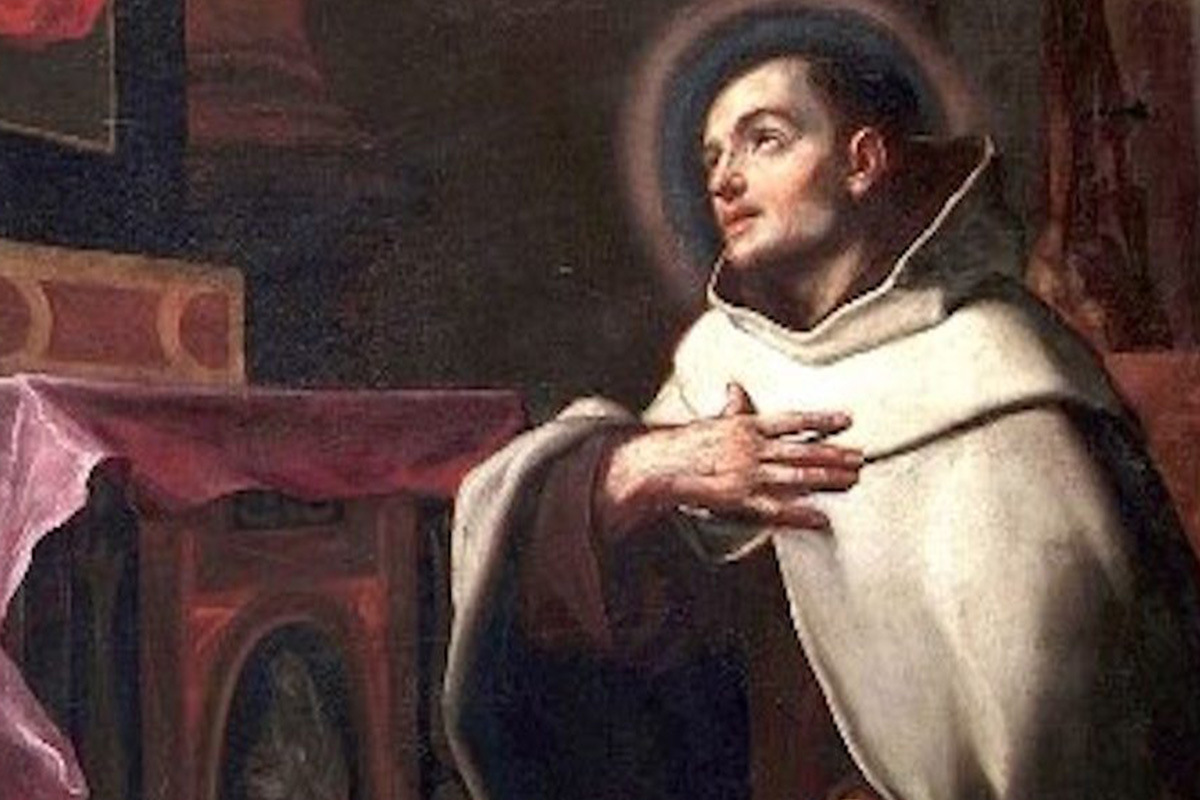
"Love follows knowledge."
"Beauty above all beauty!"
– St. Catherine of Siena

Showing posts with label Mysticism. Show all posts

Monday, February 10, 2025

Personal Note: I got Covid, Urgh

Today is Monday the 10th.  So last Wednesday night (the 5th) it felt a little funny in my chest.  I thought I might be coming down with something.  I woke up Thursday nauseous with dry heaves.  I even teleworked in the morning and took the afternoon sick.  Eventually I was just out of it.  It became hell.  The fever wasn’t high (less than 101F) but I wonder if I was even reading it right.  I was in a delirious state.  Waking up at one point I thought it was the next day. I noticed on Friday morning from my daily pill box that I had already taken Friday's meds.

It felt like my body was encircled by some electric charge and was just trying to survive.  He was ready to have me go to Emergency Room. My screaming out scared Matthew, who had come in the bedroom to check on me. Probably should have sent me to the ER. If it were me watching someone else in that state I would have too. I don’t think my wife ever realized what state I was in.  I had crawled into bed in the middle of the day and time seemed to vanish. 

I felt better on Friday morning but someone suggested I check for Covid. I had my wife pick up a test kit and sure enough I tested positive. I called my doctor and we set up a telehealth visit as they call it. He asked about my temperature (which was oscillating between normal and 101F), looked over my recent blood test on file, asked when I felt it come on, and prescribed Paxlovid.  Doctor said I should quarantine through Tuesday.  I still had recurring chills but after the first dose of Paxlovid that night I started to feel better. There was no fever on Saturday, Sunday, nor today, but a general weakness. 


Today even the nasal congestion seems to have let up.  I feel pretty well.  I happen to speak to a nurse today—about something else actually—and she said that today the flu might be harsher than Covid.  Hmm, I would agree except for what I experienced on Thursday afternoon.  When I spoke to the doctor on Friday, he seemed surprised this was my first time getting Covid.  Is it that common that everyone gets it now?

###

The story has more to it than my experience.  My wife had been sick before me and was still coughing and occasionally feeling run down.  I told her she should check herself for Covid, so she got herself a test kit and also tested positive.  So this was beginning to make sense.  Her mother has been in a nursing home for over a month and a half.  More on that below.  But the floor of my mother-in-law’s room had a Covid outbreak last week, and still does.  My mother-in-law didn’t get Covid but my wife must have picked it up in one of her daily visits.  Nursing homes are just germ magnets, depositories, and dispensaries. 

My wife’s symptoms were nothing as severe as mine, though hers seem to be lasting longer, probably because she has not been prescribed Paxlovid.  This makes me wonder why my body reacted so to the Covid initially.  It reminds me of my first reaction to the Covid-19 vaccine which I detailed here several years ago.  That post was titled, “Knocked on My Butt By the Vaccine.”  Perhaps I’m more reactive to Covid than others.

###

My mother-in-law fell at the beginning of the December.  She fractured her skull, had a brain bleed, they resolved the bleed, but that developed into blood clots, blood clots got into her lungs which nearly killed her, but they resolved that.  You can see I've honed that story down to its bare elements from frequent retelling.  She was three weeks in the ICU.  The day before Christmas Eve she was discharged to a nursing home, and she's been there since.  As you can imagine, this was pretty challenging, especially for my wife, and it still is. 

As it happens, the nursing/rehab facility is very close to our house.  It's less than a mile.  We go back and forth regularly.  The first time she seemed out of it but in time her brain seemed to be getting sharper. Initially she responded very slow and deliberately but now seems to have total comprehension. It took her a while to get up out of bed.  There was nothing physically wrong with her body but perhaps atrophy from being in bed so long.  After a good month of rehab now she has been able to walk up and down the floor with a walker and a cane, go up and down stairs, and fully function as a solitary person.  Today we even got the great news she will be discharged from rehab facility at the end of next week.

###

So let’s end with a song that came to mind as I reflected on my Thursday afternoon delirium.  It’s a song that came off the Rolling Stones’ album that came out last year, “Sweet Sounds of Heaven” of the album Hackney Diamonds.   Many of you know I’m a big Rolling Stones fan, and, while I would agree their later years have been of mixed quality, this album is a glorious return to what I think is just short of their all time great ones.  I highly recommend Hackney Diamonds and perhaps one day I’ll have a post on it.

For now I’m going to highlight “Sweet Sounds of Heaven,” a gospel tune that is uncharacteristically Christian in outlook for the Stones.  Featured on the record are Lady Gaga (vocals), Stevie Wonder (piano and organ), and saxophonist James King.  Wow is not nearly expressive enough.  Here’s the song first, but then I’ll explain why this song came to mind after.


Here are most of the lyrics as well.


Sweet Sounds of Heaven

(Jagger/Richards)


I hear the sweet, sweet sounds of Heaven

Fallin' down, fallin' down to this Earth

I hear the sweet, sweetest sounds of Heaven

Driftin' down, driftin' down to this Earth


Bless the father, bless the son

Hear the sound of the drums

As it echoes through the valley

And it bursts, yeah

Let no woman or child

Go hungry tonight

Please protect us from the pain

And the hurt, yeah


I smell the sweet scents, sweet

Sweet scents of Heaven, Heaven

Tumblin' down, tumblin' down

Tumblin' down to the Earth (Oh)

I hear the sweet sounds, sweet sounds

The sweet sounds, ooh, the sweet sounds of children

And they're praisin', praisin'

The land of their birth (No)


No, I'm not, not goin' to Hell

In some dusty motel

And I'm not, not goin' down

In the dirt (Yes, yes, yes)

I'm gonna laugh, I'm gonna laugh, I'm gonna cry, I'm gonna cry

Eat the bread, drink the wine

'Cause I'm finally, finally quenchin'

My thirst, yeah


You can't have a light without a little shadow, yeah

Always need a target for your bow and arrow

I want to be drenched in the rain of your heavenly love

Oh, yeah, c'mon (Oh)


Let the music, let the music play loud, play loud

Let it burst, let it burst through the clouds, through the clouds

And we all feel the heat

Of the sun, yeah

Yeah, let us sing, let us shout, let us shout

Let us all stand up proud

Let the old still believe

That they're young, yeah


Sweet, sweet sound


Sounds so sweet, oh, so sweet

Sounds so sweet, so sweet

Heaven, Heaven

Down

Fallin' down, fallin' down

To this Earth


That’s pretty religious for Mick Jagger.  You know he supposedly had converted to Catholicism for his first wife, though he’s never spoken about any religious upbringing, so I doubt it was much.

So why am I reminded of this song?  Well, lying in bed in a delirious state felt so isolating, so other worldly that it felt the end was a possibility.  The verses, “No, I'm not, not goin' to Hell/In some dusty motel/And I'm not, not goin' down/In the dirt” resonate.  If you’ve ever been a way alone (business trips for me) in some crappy hotel, the isolation feels overwhelming with perhaps a sense that if I died here no one would really know.  It’s actually a horrible feeling that I’ve had more than once.  Perhaps in that delirious state, eyes half open in a darkened bedroom, alone and feeling almost out of body, might be as close to a premonition of death as one gets.  At least as I’ve gotten.

But then the sweet grace, the sweet sounds, the sweet sense of heaven came down and revived me.  Thank you Lord.


Edit: It's unclear whether Mick Jagger converted to Catholicism or even had a need to convert.  From what I found on the internet, Mick Jagger's father, Basil Fanshawe “Joe” Jagger, had a Catholic funeral.  There are places that claim Mick was raised Catholic.  Still I doubt religion was a big part of his upbringing.

Friday, March 3, 2023

What to Make of the Asbury Revival

Perhaps you’ve heard of the religious spiritual phenomena—or should I call it a religious experience?—that occurred at Asbury University from February 8th to the 21st just a few weeks ago, referred to as the Asbury Revival .  You can read about it here.  I’m not sure what to make of it.  Let me say up front that I tend to be skeptical of even Catholic supernatural events.  (I’m sorry, but I find it impossible to believe that Padre Pio bi-located.)  Did the Holy Spirit come to the Protestant college to bring about this awakening?  I’m not going to say no, but my natural skepticism doesn’t let me dive right into this belief. 

It should be noted that Asbury University is associated with the Methodist and Wesleyan-Holiness tradition, which believes in personal holiness and sanctification.  Wesleyan Protestantism was in many ways antithetical to the Lutheran and Calvinist notions against works for salvation.  John Wesley agreed with Protestant Arminianism, which denounced the predestination of the Calvinists.  On this theological issue Jacobus Arminius and John Wesley were heading back toward a Catholic notion of sanctification and salvation.  So if these students at Asbury University were practicing spiritual holiness, I could see how they may have tapped into something mystical. 

Still I don’t know how much is this self-induced spirituality, which is what I see in Pentecostal experiences, both Protestant and Catholic Pentecostalism.  I’m not saying anyone at these Pentecostal (again both Protestant and Catholic, and I’ve been to at least one Catholic Pentecostal Mass with follow-on healing service) events are faking their experiences.  I just think there is a psychological state these people put themselves in that feels like they are receiving direct interaction with the Holy Spirit.  And to clarify, I’m also not saying they aren’t receiving any graces from the Lord in that state.  They may well be.  The evidence of grace will be the fruits of their lives.  But are they really responding to the Holy Spirit? 

Now here’s an interesting little detail from the Wikipedia entry on 2023 Asbury Revival.  When you look into the background of Asbury University and revivals, the “University has a history of revivals, dating back in 1905, 1908, 1921, 1950, 1958, 1970, 1992, and 2006.”  What?  This is the ninth revival in 120 years at the same college?  Is the Holy Spirit then singling out Asbury University or is the college campus subculture one where there is a predisposition for revivals from identity to its heritage?  Now this doesn’t mean the phenomena is not legit.  The Holy Spirit is more likely going to come to those who ask, but it does raise questions.

Enough of my skepticism.  There is a Catholic response to the Revival and it’s not skepticism.  I’ve seen positive comments across the Catholic world, and I can’t say I’ve seen any skeptical.  Apparently even a Catholic priest or two partly participated during the thirteen days it went on.  Here is the EWTN news show, In Depth, reporting and interviewing on the phenomena.  Only the first fifteen minutes concern the Revival.


And then I found a “Catholic Response” to the Asbury Revival, specifically from Fr. Ignatius Schweitzer, O.P..  Let me say I happen to tangentially (I haven’t met him in person yet, only through Zoom) know Fr. Ignatius.  He is the Provincial Priest of the Province of my Lay Dominican chapter.   Now in my opinion he strikes me as a bit different than your typical contemporary Dominican priest.  He is much more into the mystical tradition than the stereotypical Dominican philosopher.  The Dominicans do have a mystical tradition, but it mostly goes back to the 14th and 15th centuries (St. Catherine of Siena, Meister Eckhart, Henry Susso, and others).  If you search on YouTube for Fr. Ignatius, a number of videos will come up put out by the Dominican House of Prayer with Fr. Ignatius explaining the mystics and their works.  So this spiritual phenomena is part of his expertise.  Here is Fr. Ignatius’ Catholic Response to the Asbury Revival.


He reminds me more of a Carmelite than a Dominican, and he brings up Carmelite saints often.  Let me also add, if you wondered, that he is definitely orthodox and not one of the liberals trying to change the faith.  I was also surprised to find him interviewed on Edify today.  Coincidences again!  Edify is a conservative Catholic podcast associated with Catholic Vote, with a focus on news and cultural issues.  Today’s episode, “Revival through the Eucharist,” host Mary FioRito interviews Fr. Ignatius. 


Now, I’ve given you my more skeptical view of the Asbury Revival, and I’ve given you the more endorsing view by Fr. Ignatius.  What do you make of it?  Any thoughts?

Wednesday, May 19, 2021

Dark Night of the Soul by St. John of the Cross, Post 4

This is the fourth and final post in a series on St. John of the Cross’ Dark Night of the Soul. 

Post #1 can be found here.  

Post #2 here

Post #3 here


Summary

Part 2

Chapter 7: Describes the afflictions on the soul during the dark night of the spirit..

Chapter 8: Associates Biblical passages with the dark night of the spirit.

Chapter 9: Explains how the purgative passage leads to an illumination.

Chapter 10: Describes the purgative passage with the analogy of the burning log.

Chapter 11: Explains the second line of the first stanza.

Chapter 12: Explains how the illumination of men on earth is the same as the illumination of angels in heave.

Chapter 13: Explains the divine love that enkindles in the soul from the illumination.

Chapter 14: Explains the last three lines of the first stanza.

###

 Notable Quote:

These souls turn back at such a time if there is none who understands them; they abandon the road or lose courage; or, at the least, they are hindered from going farther by the great trouble which they take in advancing along the road of meditation and reasoning. Thus they fatigue and overwork their nature, imagining that they are failing through negligence or sin. But this trouble that they are taking is quite useless, for God is now leading them by another road, which is that of contemplation, and is very different from the first; for the one is of meditation and reasoning, and the other belongs neither to imagination nor yet to reasoning. (Pt 2, Chpt 10, Para 2)

###

I think my favorite part of the book is when St. John brings up examples from the Bible to support his argument.  I’ve been trying to track references to Biblical personages who St. John identifies as going through this dark night.  He mentions King David, Job, St. Paul, Tobias, Jerimiah, and even Mary Magdalene.  He quotes from Ezekiel, Psalms, Exodus, the Gospels, Paul’s letters, Isaiah.  I’m sure there are more personages and Biblical books quoted. 

If he had pointed to examples like this more often, I think I would understand the book better.

### 

Casey Commented:

"it suffers great pain and grief, since there is added to all this ... the fact that it finds no consolation or support in any instruction nor in a spiritual master. For, although in many ways its director may show it good reason for being comforted because of the blessings which are contained in these afflictions, it cannot believe him. For it is so greatly absorbed and immersed in the realization of those evils wherein it sees its own miseries so clearly, that it thinks that, as its director observes not that which it sees and feels, he is speaking in this manner because he understands it not; and so, instead of comfort, it rather receives fresh affliction, since it believes that its director’s advice contains no remedy for its troubles." (VII. 3.)


This chapter really struck me. In my early 20s I went through a period of what I now know was depression. I understand it now as losing my rose colored glasses. And everyone who still wore their glasses would try to cheer me by telling me to look at life's rosiness. But that just made me feel worse because I knew they couldn't see what the world really looked like without the glasses. What I really needed was someone who understood what I was seeing.


I think that's why I am drawn to this book. St. John is speaking to me and confirming that what I'm seeing is accurate. But he's also showing me that when my eyes adjust, the world will be rosier than it was with the glasses.

My Reply to Casey:

That's great Casey. For me it seems I can almost reach that moment of connection but alas it falls short. I don't think it's St. John's fault. There's just something I'm not getting or perhaps better put blocking me from connecting.


It has to be me because Casey's experience seems to be echoed with others. Let me share a comment in an email exchange I had with a young friend (who I will leave nameless) who fell in love with this book. Her comments to me about it was the major reason for me to nominate the book. Mind you she is not Catholic, but of late has been falling in love with Catholicism. This from her email to me about the book.


"However, the way it clicked for me was in the sense of recognition; not only do I, as a young American woman in the 21st century, recognize what he's talking about as something I've experienced and seen in my own walk as a believer, but also I love how what he talks about constellates through so much of literary history. I think you can argue for St. John of the Cross as a literary descendant of Dante's (though I don't know if he ever actually read him), and I see echoes of his ideas in Donne, Herbert, T.S. Eliot, perhaps even Auden and Yeats, and I'm sure there are others with a connection that I don't know about. He works in my mind as a sort of bridge between literature and belief."


And later in that email she says,


"In another way, this whole year has also been a dark night of the soul for me and my family (I think I've told you about all the horrible things that have happened over the past year?). But looking back and thinking and processing through it all, I've again felt that sense of kinship with St. John--of being able to look back over it and read it as God shepherding us closer to him and showing us more of his heart for us, and really feeling like I know God more intimately because of it."


She's a very bright young lady and a sensitive one. Clearly she connected with the book as Casey has. I'm wondering if anyone else reading with us has had this same connection with the book.

My Reply to Bruce:

I think we discussed who the intended audience was, but I can't seem to find it. I think we said it was mostly Carmelite religious (monks and nuns) but I think he is also speaking to anyone who is devout. I don't think he's limiting. However, I don't know about competition between people in monasteries. I've never met a religious person I thought was competing for who was the most devout.

The more I read, the more Biblically based I'm finding St. John's ideas. I wouldn't have thought that at the beginning.

### 


Summary

Part 2

Chapter 15: Expounds on the poem’s second stanza.

Chapter 16: Describes how the soul, though in darkness, makes progress.

Chapter 17: Explains how the how the dark contemplation leads to secret wisdom.

Chapter 18: Explains how this secret wisdom is actually a ladder of mystical steps.

Chapter 19: Describes the first five steps of the mystical ladder.

Chapter 20: Describes the second five steps of the mystical ladder.

Chapter 21: Explains why the soul is disguised during its mystical journey.

Chapter 22: Explains the third line of the second stanza.

Chapter 23: Explains the fourth line of the second stanza and the soul’s concealment.

Chapter 24: Explains how the soul reaches a state of rest.

Chapter 25 Expounds on the poem’s third stanza.

###

The ending chapters cleared up a number of things for me, though it perhaps muddied other things.  First the things it cleared up.  For instance, the very first sentence of the last chapter:


The soul still continues the metaphor and similitude of temporal night in describing this its spiritual night, and continues to sing and extol the good properties which belong to it, and which in passing through this night it found and used, to the end that it might attain its desired goal with speed and security.

Ha!  So the dark night and the journey through it was a metaphor.  You guys were right!  I was wrong.  Now he tells us in the last chapter.

I particularly liked the ten steps of the mystical ladder as presented in chapters nineteen and twenty.  I wound up putting them into bullet summary. 


1. The soul languishes.

2. The soul seeks God without ceasing.

3. The soul works in fervor so as to fail not.

4. The soul goes into a habitual suffering because of the beloved.

5. The soul desires and longs for God impatiently.

6. The soul runs swiftly to God and repeatedly touches Him.

7. The soul becomes vehement in its boldness of love.

8. The soul seizes God and holds Him without letting go.

9. The soul burns perfectly, sweetly in God.

10. The soul becomes holy, assimilated to God.

So a question for those who are understanding better than me, so in the first step where the soul languishes, is that both the dark night of the senses and the spirit, or just one of the two?

###

My Comment:

Some other concepts that St. John brings up that I don't get. What is he talking about when he speaks of the soul as "disguised" and "concealed"? I don't get this?

My Reply to Bruce:

Bruce wrote: "I do not know if anyone is monitoring the discussion, but anyway, here this post is:."

I'm tracking! Very good comments Bruce. Normally I'm more active in discussions but I have to admit I found Dark Night a difficult read. I think I get the overall gist of the work but I can't say that any given paragraph I get what St. John is after. It always feels like I'm not fully connected, and so I'm reluctant to say much on this book.

Yes, it is interesting that purgation for St. John is a darkness. Normally we think of purgation as a fire, and fire implies light. But not so here. The only light is the light of Christ which lights up the dark.

The ten steps of a ladder that St. John speaks of seems analogous to St. Teresa of Avila's rooms of the interior castle. I think she had eight rooms if I remember correctly, but it's been some time since I read it. I wonder if they exchanged thoughts at some point. I understood St. Teresa's work much better than this one. Personally I think she's a better writer.

My Reply to Frances:

Frances wrote: "Bishop Barron, in his You Tube video, asks, "How many people write a poem and then add a 200 page treatise explaining it -- as if T.S.Eliot wrote The Wasteland" and then a 500 page commentary to ac..."

No one but St. John of the Cross...lol. I'm actually more confused from the two works than if I had read each without being aware of the other.

My Reply to Gerri:

Gerri wrote: "I just want to say a big thank you to everyone for their comments, thoughts, and explanations about St. John and 'Dark Night' and for suggestions of additional tools for deeper understanding. It's ..."

Me too! When I told my friend that I quoted in one of these discussions on the book that I had a hard time understanding she was taken aback. I don't know why but this book does not seem like it communicates well to me. The concepts are not all that hard. It's the way St. John expounds on them.

Frances Comment:

In John Paul II’s letter (above) one sentence stood out as a possible source of contemporary confusion: “The term dark night is now used of all of life and not just one phase of the spiritual journey.” St. John of the Cross, however, wasn’t attempting to address the problem of human suffering.

My Reply to Frances:

That disconnect between the common notion that has developed of "dark night of the soul" and what St. John really means hindered me from a greater understanding of the book. I need to be dispelled of that notion before I could understand.

Casey Comment:

“I am the true vine, and my Father is the vine grower.

He takes away every branch in me that does not bear fruit, and every one that does he prunes so that it bears more fruit."

That's really what this was all about, right? The dark nights are just prune jobs. It seems harsh, it seems drastic. Cut down to nothing. But when it comes back it's better and stronger than it was before.

My Reply to Casey:

Yes! Casey, you are so on top of this book. I'm so glad you were part of this discussion.

###

My Goodreads Review:

This is a difficult book but certainly a valuable book in discerning your spiritual journey.  Once someone explains the concepts, they are not very hard to grasp: there is a denial of sensual consolations and then there is a higher order of denial, the denial of spiritual consolations.  Both are steps toward union with God.

So what makes this a hard read?  (1) There is a disconnect between the common understanding of “dark night of the soul” and what St. John of the Cross really means.  Try not to start with expectations.  (2) There are times where St. John is not clear.  Perhaps it was me, but I could not understand why a soul would be disguised or hidden.  There are concepts like that that baffled me.  (3) Half the time it feels like he’s repeating himself with an ever so subtle a nuance that I can’t make a distinction from one chapter to another or even one paragraph to another.  St. John gets rather tedious. 

I think my favorite part of the book is when St. John brings up examples from the Bible to support his argument.  At some point I started tracking references to Biblical personages who St. John identifies as going through this dark night.  He mentions King David, Job, St. Paul, Tobias, Jerimiah, and even Mary Magdalene.  He quotes from Ezekiel, Psalms, Exodus, the Gospels, Paul’s letters, Isaiah.  I’m sure there are more personages and Biblical books quoted.  If he had pointed to examples like this more often, I think I would understand the book better and made it a more enjoyable read.

I gave the book four stars.  It is an important work, and many find this work resonates with their experience.  It didn’t resonate with me.  Perhaps my spirituality is much more analytical.  But once I understood what St, John of the Cross was articulating, I did see the importance of it.  I for one found St. Teresa of Avilla’s The Interior Castle, a work that covers similar ground, to be better articulated and a finer work.  But Dark Night of the Soul may be the greater work.


Saturday, May 15, 2021

Dark Night of the Soul by St. John of the Cross, Post 3

This is the third post in a series on St. John of the Cross’ Dark Night of the Soul. 

Post #1 can be found here.  

Post #2 here


Summary

Part 1

Chapter 10: One should conduct themselves with patience, perseverance, and contemplation during a dark night.

Chapter 11: Exposition of lines two, three, and four of the poem’s first stanza.

Chapter 12: On the benefits that the dark night causes on the soul.

Chapter 13: More benefits the soul experiences from the dark night.

Chapter 14: Exposition of the last line of the poem’s first stanza.

Part 2

Chapter 1: Explains the dark night of the spirit.

Chapter 2: Describes the two imperfections of those undergoing the dark night of the spirit.

Chapter 3: Expounds on the need to purge the imperfections.

Chapter 4: An interpretation of the poem’s first stanza as it reflects the dark night of the spirit.

Chapter 5: Expounds on the first two purgations of the dark night of the spirit.

Chapter 6: Expounds on the third and fourth purgation of the dark night of the spirit.

### 

My Comment:

I'm now finished with Book 1, which I guess is about 40% of the book, but what I find stunning is that Christ has to my awareness not been mentioned once! Can you have a Christian classic without Jesus Christ? ;)

My Comment:

I'm having a hard time in those early chapters of Book 2. Has it suddenly gotten more difficult? He talks so indirectly I'm having a hard time following. Purging, dark night, path. It can be so abstract. Are others finding Book 2 more difficult as well?

Casey Replied:

Book 2, Ch 5 is a key chapter. the fulcrum. Spend some time there.


I'm trying to think of an analogy that might help some folks.... here's a gardening analogy:


Let's say you are planting your tomato or pepper seeds right now. That seed sits in your house in artificial heat and sprouts. It spreads its roots looking for the water you give it and it stretches out for the light of a lamp or window. In doing so it gets all leggy and spindly. As the weather warms the plant needs to be hardened off for outside conditions. So you take it out a little at a time. The sun burns the leaves, the wind and rain bash it about, and then you bring it back in. Then a little longer tomorrow. The little thing was doing just fine and now its getting all burned and beat up. Then it gets planted in unfamiliar soil. But as the weeks pass the plant settles in and discovers that the rain and the wind and the sun that consistently wash down upon it are making it stronger. It grows and grows without reaching and stretching. It has everything it needs to bear great fruit.


The hardening off period is "the dark night." The beginner period isn't a worse period than the others. The seedling is being what it ought to be at its time. It is a necessary period before the next and the next. We need to sprout and reach and stretch first so that we present ourselves to God. But there's this transition period where we learn to relax our will (because it is insufficient) and let God's will take over.


Does that help at all?

My Reply:

Yes, that makes sense Casey. My trouble is distinguishing a difference between a purgation of sense and a purgation of spirit.

Casey’s Reply:

OK, so like we initially desire the pleasures of the sense instead of God Himself, we now desire God's love instead of God Himself. I'm thinking something like a child learning to ride a bike to impress mom rather than riding a bike for riding a bike's sake.

Irene’s Reply:

Manny, Here is how I understand the difference, but I could be wrong.


The purgation of the sense is usually taken on by the individual deliberately to detach from bodily pleasures or psychological pleasures that we might desire sufficiently that they distract us from God. Food and alcohol, TV or other entertainment, social status or wealth accumulation, the pursuit of learning or excitement, sex or the affirmation of friends, etc., we let go of anything so we can approach God with open hands. It is not that any of these things are necessarily bad, but, like Job, if they were stripped from us, would they lessen our peace in God? People relinquish various attachments so that their truest love is God and God alone. Of course, sometimes these things are stripped from a person by illness or misfortune or war or whatever. But even in these situations, the individual can rage against or mourn the loss or willingly relinquish what is stripped away.


The purgation of the spirit is largely done by God as God withdraws the pleasurable experiences associated with initial religious fervor. Early in the spiritual life, most people experience peace or a sense of intimacy with God or joy or something else with their turning to God in prayer. If they did not, they would quickly lose interest, doubt that God was anything more than a figment of other people's psyche. But the joy, the peace, the sense of well-being, none of this is God. These sweetnesses might entice a spiritual novice to continue, but they are not God. So, when the soul is ready, God begins to remove these things so that the soul comes to desire and love God, not the promises of God or the sweetness God has bestowed.


For me, it is like a marriage. Early in the dating, the person needs something to validate the relationship. Some of this might be the physical attraction to the other person, the affirmation of peers that you make a great couple, and it is also the sweetness’s done, the thrill of the special Friday night dates, the gifts, the constant compliments and terms of endearment. But, over time, much of this will fade. Looks don't last, friends stop remarking on your relationship, Friday night dates turn into dirty diapers and broken water pipes and bills that can't be paid, compliments are replaced by pet peeves. If it is not love, the marriage often does not last, or if it does, it lasts under duress. If you loved the endearments more than the person, what will happen when the partner goes through a prolonged depression and can't offer them? If you loved the fun things you did together more than the person, what happens when the partner is felled by a stroke? None of us wants to think that the only reason our partner married us was because of our salary or our figure. We want to be loved because of who we are. In the same way, God asks that we do not love God because of the physical blessings God bestows, the pleasures we enjoy or because of the spiritual sweetness’s we have in prayer. God asks that we love God because God is God, the only true center of our life.

Casey’s Reply to Irene:

Irene wrote: "Manny, Here is how I understand the difference, but I could be wrong.

The purgation of the sense is usually taken on by the individual deliberately to detach from bodily pleasures or psychological..."


Actually, it is God who detaches us in both cases. What is being purged is not those things that distract us from God but those pleasures that we confuse for God.

So in our secular culture we may hear how science shows us that prayer is good for our emotional well-being. But praying for our well-being is the wrong aim for prayer.

God removes the emotional benefit and it seems to us that something is wrong but he's revealing something greater. And we now experience God's great love and we are spurred on.

But praying to receive God's love is not exactly right either. It is God Himself at which we ought to aim. This is the realm of the Saints.


Here's an article (“Musings On The Dark Night Of The Soul: Insights From St. John Of The Cross On A Developmental Spirituality”) I found that is a great and thorough explanation.  

My Reply to Irene & Casey:

In theory I understand the difference between the purgation of the senses and the purgation of the spiritual, but what I took from your comment and left above is also confusing me. I said I understand in theory, but someone has to give me examples. St. John never provides examples of anything, and such amorphous concepts require tangible examples. What is a tangible example of purging of the spiritual? Is he saying we shouldn't be praying? Or going to Mass? Or receiving communion? I doubt he's saying any of that. So what is he saying? In practice I have no idea.

Casey’s Reply:

The ultimate tangible example of the "final stage" (so to speak) would be the Blessed Virgin Mary. She did not have to go through these dark nights as we do but rather she was gifted with a simplicity of heart that allowed her to fully and totally cooperate with the will of God. There is no ego or desire or rebellion or pride etc in her. It is perfect cooperation.


Examples of the passage through the dark nights would be St. Paul in a linear sense or St. Peter in a seasonal sense. (linear and seasonal idea in the linked article.)


Thomas Merton's Seven Story Mountain is a tale about this very journey.


In a Lenten context, think of it this way. Say you gave up beer for Lent. On Ash Wednesday you are feeling very good about that. 10 days in you've not touched a drop and are thinking this isn't as hard as you thought. 10 days after that, still a perfect record, and you start thinking about how great it will be to sip that cold beer with Easter dinner. You see, you've given up the thing and you are doing good but you haven't given up the desire of the thing. By the end of Lent, you hope to have purged that desire for the thing such that you have a right relationship with it. You have that relationship with the beer that God himself has with the beer. You approach that beer the way Mary would approach it.


Maybe think of it like, in the dark night of the sense God is dealing with our sin. In the spirit, he is dealing with our original sin.

My Reply to Casey:

Casey that's brilliant. I think I get it now. It also shows how hopeless I'll be. I can't imagine ever giving up the desire for a good glass of wine. Thanks. It definitely helps.

Casey’s Reply:

"Create in me a clean heart, O God, and put a new and right spirit within me." Psalm 51:10


Imagine a young man in his 20s who it taken with strong drink. In his 30s he moves away from the drink and by 40 drinks no more. In his 40s, however, he longs for the days of his youth and wishes he could have those wild nights again. You see, he's no longer drinking but he still has the longing for drink. That root is still alive in his heart. This is what need to be purged in the second night.


Here is another article I found that might work better. Haven't read all of this one either but it seems good:  Chapter Four—A Third Conversion—ThePassive Night of the Spirit.”    

My Reply to Casey:

Casey, you've saved the book for me! I don't think I would have gotten this without your help. And that website really helps too. I can identify with that young man. Perhaps as we read on it will say, but how does one purge that past out of the heart?

Casey’s Reply:

Great, I'm glad. This has really struck a chord with me. I had never even heard of it before. It's been amazing.


I think the idea is that God purges the roots of desire from our hearts with his blinding love. We cannot will ourselves to deserve it. We can only learn to cooperate with His will.

My Comment:

I know Casey, its taking me a while to get through it. Half the time it feels like he’s repeating himself with an ever so subtle a nuance that I can’t make a distinction from one chapter to another or even one paragraph to another.

Casey’s Reply:

Regarding the seeming repetitiveness:


"For the most important part of my task, and the part which chiefly led me to undertake it, was the explanation of this night to many souls who pass through it and yet know nothing about it," (XXII 2.)


I think it's something like painting the same bowl of fruit from different angles through time. From the north angle we see more grapes and less banana and from the south more banana and now an orange etc. So there's a repetitiveness in that it is always the same bowl of fruit. But when you get to a depiction of your particular angle, then you say "A-Ha! That's it!"


And then through time meaning like an artist's eye continually improves. You see more than bananas and grapes. You see shadow and texture etc.


So I do think that one individual reader is likely to "get" the book up to that point where one is in their journey. A saint would get the whole book and the beginner would see this as entirely intangible. To a newly excited convert, the idea of aridity and a coming dark night would be like the idea of desert air to a fish.

My Reply to Casey:

Casey wrote: "I have a question regarding the terms "soul" and "spirit." An example here from Book 2, Chapter 2:

"Are those terms theologically distinct or is soul being used like we might say "the poor soul" and spirit like the soul soul?"


I don't know Casey. I have been reading it as if they are synonymous. I don't see a distinction but I'm not confident I've been understanding him throughout the book.

Casey’s Reply:

Regarding soul and spirit - here's a clue:


"For, when there is a naked contact of spirit with spirit, the horror is intolerable which the evil spirit causes in the good spirit (I mean, in the soul), when its tumult reaches it." (XXIII - 5.)