"Love follows knowledge."
"Beauty above all beauty!"
– St. Catherine of Siena

Showing posts with label 2016 Reads. Show all posts

Sunday, February 12, 2017

My 2016 Reads

Completed: First Quarter

“Master and Man,” a short story by Leo Tolstoy.
Interior Castle, a non-fiction book on spirituality by St. Teresa of Avila.
“A Cup of Cold Water,” a short story by Edith Wharton.
Feline Catastrophes, a collection of humorous anecdotes by Victor S. E. Moubarak.
“In the Garden of the North American Martyrs,” a short story by Tobias Wolff.
To Kill a Mockingbird, a novel by Harper Lee.
Prayer for Beginners, a non-fiction book of devotion by Peter Kreeft.
“Saint Dymphna,” a short story by Mary O’Connell.

Completed 2nd Quarter:

“A House of Gentlefolks,” a short story by Evelyn Waugh. 
The Noonday Devil: Acedia, the Unnamed Evil of Our Times, a non-fiction book by Jean-Charles Nault, O.S.B.
White Fang, a novella by Jack London.
The Book of Psalms, (Psalms 51-100) KJV and Ignatius RSV Translations.
“Hallelujah, Family,” a short story by Ludmilla Petrushevkaya, translated by Anna Summers.
“Wingstroke,: a short story by Vladimir Nabokov. 
“A House of Gentlefolks,” a short story by Evelyn Waugh.
“Miles City, Montana,” a short story by Alice Munro. 
“The Cabuliwallah,” a short story by Rabindranath Tagore. 
“1933,” a short story by Mavis Gallant.
“The Man Born Blind,” a short story by C. S. Lewis. 
“After the Storm,” a short story by Earnest Hemingway.

Completed 3rd Quarter:

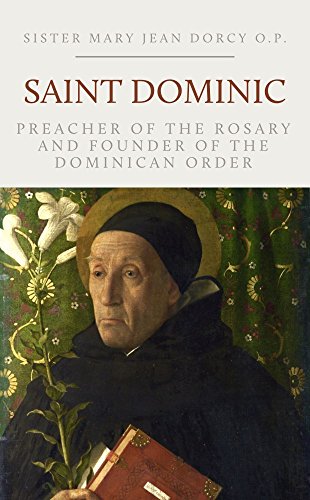
Saint Dominic, a biography by Sr. Mary Jean Dorcy, O.P.
“Clair de Lune,” a short story by Guy de Maupassant. 
“The Crucifix across the Mountains,” a personal essay by D. H. Lawrence.
“The Woman In White: Emily Dickinson and Friends,” an essay by Joyce Carol Oats.
“The State of Grace,” a short story by Harold Brodkey.
The Book of Psalms, (Psalms 101-150) KJV and Ignatius RSV Translations.
Learning the Virtues That Lead You to God, a non-fiction book of Christian devotion by Romano Guardini.

Completed 4th Quarter:

First Letter to the Corinthians, an epistle from the New Testament by St. Paul the Apostle in both the KJV and Ignatius RSV translations.
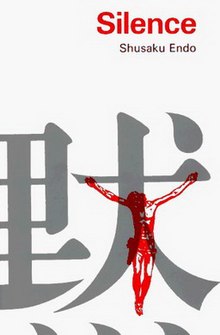
Silence, a novel by Shūsaku Endō. 
“Unzen,” a short story by Shūsaku Endō. 
“The Stampeding of Lady Bastable,” a short story by Saki (H. H. Munro).
“The Jesting of Arlington Stringham,” a short story by Saki (H. H. Munro).
Second Letter to the Corinthians, an epistle from the New Testament by St. Paul the Apostle in both the KJV and Ignatius RSV translations.
Buddenbrooks: The Decline of a Family, a novel by Thomas Mann.
“The Demilitarized Zone,” a short story by Anthony Doerr.
“The Flying Stars,” a Father Brown mystery short story by G. K. Chesterton.
 “The Red-Headed League,” a Sherlock Holmes short story by Sir Arthur Conan Doyle.
“In a Grove,” a short story by Ryūnosuke Akutagawa.
“Clay,” a short story by James Joyce.
Two Gentlemen from Verona, a play by William Shakespeare.
Artful Sentences: Syntax as Style, a non-fiction book on writing by Virginia Tufte.


Unfinished Reading:

Julius Caesar: Life of a Colossus, a biography by Adrian Goldsworthy.
Some Desperate Glory: The First World War the Poets Knew, a book of history and collected poetry by Max Egremont.


I’m late on summarizing last year’s reads.  Really late.  On balance I would say this was again not a great year for reading, perhaps just short of average.  But more importantly I was distracted from my plans.  I don’t think I read half of what I planned to read at the beginning of the year.  Two reasons I think.  First the Thomas Mann novel Buddenbrooks taken up in May but not completed until the end of summer was so long that I did not plan accordingly and once I fell behind it destroyed the pace and plan I envisioned.  Second belonging to Goodreads book clubs forces one to accommodate the poll winner for the reading selection,  I don’t get to decide all the time.  Before I summarize, if you wish to read my beginning-of-the-year plans and the quarterly updates for 2016 you can find them here:


As you break down my reads you will find twelve full length works, six books of non-fiction, five books of fiction, and one play, maintaining the one book per month goal I set out every year.  The fact that there were more works of non-fiction than fiction is not typical of my reading patterns, but I think this may have been a function of being part of a Catholic Book Club on Goodreads, where the book selections tend to be Catholic devotional works or about Catholic theology.  There were four such books on the list: St. Teresa of Avila’s Interior Castle, Peter Kreeft’s Prayer for Beginners, Jean-Charles Nault’s The Noonday Devil, and Romano Guardini’s Learning the Virtues that Lead You to God.  I have to say I thought the Kreeft book and the Guardini book were so-so.  I didn’t dislike them, but I didn’t think they were that insightful.  Interior Castle is a great classic and well worth the read, and Nault’s book on acedia—a complicated emotional state of boredom, sloth, and inertia—is fascinating and perceptive.  Nault makes the case that acedia is what drives people to lose devotion and perseverance, both in religious life and even every day activity, and Nault points out is particularly problematic in today’s hyper distracting world.  It’s a rather heavy read, but interesting.

Another non-fiction work, also with a Catholic subject was the biography of St. Dominic de Guzmán by Sr. Mary Jean Dorcy.  This read was not associated with the book club but was something I did to honor the 800th anniversary of the founding of the Order of Preachers.  And the last non-fiction book I read was my annual read on the art of writing, this year being Virginia Tufte’s Artful Sentences: Syntax as Style.  Tufte’s book is a magnificent work.  It goes through every possible sentence structure and their rhetorical implications.  I meant to post some of the grammatical points here, but unfortunately I haven’t been so consistent in my blogging.  Perhaps on occasion I still will post something from this wonderful book.

The four full length fiction works were all outstanding and all four classics.  Harper Lee’s To Kill A Mockingbird from mid-20th century American South dealt with issues of racism through the eyes of a young girl.  Jack London’s White Fang is an early 20th century American novel from the point of view of a wolf-dog as he goes from wild to domesticate.  Shūsaku Endō’s Silence is a 20th century Japanese historical novel set in the 16th century of Catholic persecution.  And Thomas Mann’s Buddenbrooks is an early 20th century German epic set in the 19th century of a family’s decline.  I immensely enjoyed all four novels.  The fifth fiction work, Feline Catastrophes, is Victor Moubarak’s humorous collection of anecdotes—somewhere between short stories and jokes—centered on the house cat and the trouble he causes.  Victor you may realize is a frequent reader of this blog.  As with his many other publications, Feline Catastrophes, was a fun read.

The one play I read was one of Shakespeare’s early comedies, Two Gentlemen from Verona.  While the plotting seemed a little awkward and the character’s conversions too convenient, the play was still enjoyable and worthwhile, least of all for Shakespeare’ language.   It was a play obviously where he was learning his craft, but his poetry had already developed into the Bard that he would be.  This play checks off another of the ones I’ve read from the Shakespeare opus.  That makes 28 plays read of Shakespeare’ 37 officially credited plays.  I’m getting there.

I also made headway on my track through the Bible.  From the Old Testament I read Psalms 50 through 150 both in the KJV an Ignatius RSV translations, and from the New Testament I read First and Second of Paul’s Letters to the Corinthians, also in both translations.  That puts me about half way on the Old Testament and significantly through the New.

I completed 22 short stories but if you add the two essays I’ve listed, which are about short story length, I read 24 short works this year.  That’s spot on the two per month I set as a goal.  I guess that’s not too bad.  Both essays were well worth reading, but Lawrence’s “The Crucifix Across the Mountains” is exceptional, a classic.  Not only was D. H. Lawrence a great novelist, great short story writer, and great poet, but he was a fine essayist as well.  “The Crucifix Across the Mountains” starts out as a travel essay where the author traverses across the Alps from Germany to Italy.  But near Innsbruck the author comes across a series of crucifixes, and as he goes from mountain to mountain he encounters more crucifixes.  The essay is a contemplation of art, Christ, and death.

This year I’ll rate the short stories as either exceptional, good, ordinary, or duds.  Of the duds there were two: “The Man Born Blind” by C. S. Lewis and “The State of Grace” by Harold Brodkey.  Lewis’s story was a posthumously published work and I suspect it was never refined, if it ever meant to be published.  It felt more like a sketch than a complete story.  Brodkey’s story was boring and depressing and was supposed to have all sorts of Freudian significance, which in today’s age is meaningless.  Six stories I considered ordinary: “Saint Dymphna” by Mary O’Connell, “Clare de Lune” by Guy de Maupassant, “The Jesting of Arlington Stringham” by Saki, “The Flying Stars” by G. K. Chesterton, “The Demilitarized Zone” by Anthony Doerr, and “Clay” by James Joyce.  The one surprise to some in those six I think would be Joyce’s “Clay.”  It’s about a spinster who going on a visit to the family of a man who she nursed when he was a child, forgets the cake she bought for the occasion on the train ride because she became flustered when a drunken man flirted with her.  It was well written but the lack of sympathy the author displays for the woman made it feel harsh and pitiless, and the theme wasn’t exactly profound.  I’m probably not with the majority, but I don’t find James Joyce that great a short story writer. 


Nine stories I’d rate in the good category:  Tobias Wolff’s “In the Garden of the North American Martyrs,” Ludmilla Petrushevkaya’s “Hallelujah, Family,” Vladimir Nabokov’s “Wingstroke,” Evelyn Waugh’s “A House of Gentlefolks,” Alice Munro’s “Miles City, Montana,” Rabindranath Tagore’s “The Cabuliwallah,” Mavis Gallant’s “1933,” Shūsaku Endō’s “Unzen,” Saki’s “The Stampeding of Lady Bastable,” I could probably distinguish a couple of those in a very good category (Gallant’s and Petrushevkaya’s ) since I had a hard time deciding if they were exceptional.  What’s notable about this group is just how international the group of writers are. 

Four stories I’d rate in the exceptional category: Leo Tolstoy’s “Master and Man,” Edith Wharton’s “A Cup of Cold Water,” Earnest Hemingway’s “After the Storm,” and Ryūnosuke Akutagawa’s “In a Grove.” “Master and Man” is a story of rich landlord and a peasant caught in a blizzard; “A Cup of Cold Water” is about a poor, young man in love with a rich lady but uses his last pocket money to save another lady.  “After the Storm” is about a scavenger who finds a sunken vessel after a hurricane and tries to steal the valuables.  “In a Grove” is a series of testimonies to the police about a murder, each account varying and telling us something about the witness.  When you add up the accounts you get to the heart of the murder.


As I do every year, I give a prize to the best short story read in that year.  First the honorable mention and runner up is…drum roll please… Ryūnosuke Akutagawa’s “In a Grove.”  Akutagawa is early 20th century Japanese writer known as the "Father of the Japanese short story.”  I had never read any of his stories, but was totally impressed with “In a Grove.”  The sequencing of accounts, varying and conflicting with each other, creates a complex situation where truth is distorted through perception.  Finally, the winner is…more drum roll…Tolstoy’s “Master and Man.”  This was an incredible story about a selfish landlord who faced with death of the peasant under him freezing to death saves him by using his body warmth.  While doing he has a mystical experience of meeting Christ, but while keeping the peasant warm he is exposed and dies.  The landlord maybe master over the peasant, but the Lord is master over him.  You can find both those stories on line if you want to read them.

Monday, October 24, 2016

2016 Reads, Update #3

I’m almost a month behind from posting my reads for the third quarter.  I had a massive shift in plans, which I’m afraid will cause me not to complete the plans from the beginning of the year.  Most of the summer was taken up by the planned read of Thomas Mann’s Buddenbrooks: The Decline of a Family.  This was the main read for my year of emphasizing German literature.  I’m a good 75% of the way completed, but it is a long book, and I have trouble keeping my attention on one book for that long.  So I added two unplanned books. 

One was a biography of St. Dominic de Guzmán, titled after the subject and written by the Dominican Sister, Mary Jean Dorcy.  2016 is the 800th anniversary of the founding of the Dominican Order, and I wanted to commemorate the occasion in some fashion.  The other iun[lanned book was Romano Guardini’s Learning the Virtures that Lead you to God, which was a selection for my Goodreads Catholic Thought Book Club.  When it was selected as the Book Club read, I decided to join in despite my busy schedule.  It was a book that had count my attention a while back.  Actually Guardini, despite his Italian name, is actually German, so it kept with the German literature based theme.

I read a couple of short stories—neither all that interesting—and two essays, which each are about the length of a short story.  One was a a personal essay by D. H. Lawrence about traversing through the German Alps and coming across crosses at the peaks, and the other by Joyce Carol Oats on Emily Dickenson’s crush on a particular pastor who she traded letters with.  Both very good reads.

I also finished reading all the Psalms in both the King James Version and in the modern Ignatius RSV translations.  I am also continuing this year’s poetry read, Some Desperate Glory.

I don’t know what of my original plans I will be able to complete in the remaining couple of months.  I’ve taken another excursion by reading Shūsaku Endō’s novel, Silence.  It too is a Catholic Thought Book Club choice, but I’m afraid I was the one who pushed this book to be read. It will be coming out in December as a major motion picture directed by Martin Scorsese and I wanted to reread it before the movie.   Please join me in reading Silence.  I've been posting quite a bit on it.  I will certainly be able to complete Buddenbrooks, and then I will have to choose between some of the remaining planned reads.  I am still working on works from last year. 


Here are my completed reads for the third quarter.

Completed 3rd Quarter:

Saint Dominic, a biography by Sr. Mary Jean Dorcy, O.P.
“Clair de Lune,” a short story by Guy de Maupassant. 
“The Crucifix across the Mountains,” a personal essay by D. H. Lawrence.
“The Woman In White: Emily Dickinson and Friends,” an essay by Joyce Carol Oats.
“The State of Grace,” a short story by Harold Brodkey.
The Book of Psalms, (Psalms 101-150) KJV and Ignatius RSV Translations.
Learning the Virtues That Lead You to God, a non-fiction book of Christian devotion by Romano Guardini.


Currently Reading:

Julius Caesar: Life of a Colossus, a biography by Adrian Goldsworthy.
Artful Sentences: Syntax as Style, a non-fiction book on writing by Virginia Tufte.
Some Desperate Glory: The First World War the Poets Knew, a book of history and collected poetry by Max Egremont.
Buddenbrooks: The Decline of a Family, a novel by Thomas Mann.
Silence, a novel by Shūsaku Endō. 


Upcoming Plans:

 “Gods,” a short story by Vladimir Nabokov.
 “A Clean, Well-Lighted Place,” a short story by Ernest Hemingway.
“The Light of the World,” a short story by Ernest Hemingway.
“Marius,” Volume III of Les Misérables, a novel by Victor Hugo.


My completed works from earlier in the year are the following:

Completed: First Quarter

“Master and Man,” a short story by Leo Tolstoy.
Interior Castle, a non-fiction book on spirituality by St. Theresa of Avila.
“A Cup of Cold Water,” a short story by Edith Wharton.
“In the Garden of the North American Martyrs,” a short story by Tobias Wolff.
To Kill a Mockingbird, a novel by Harper Lee.
Prayer for Beginners, a non-fiction book of devotion by Peter Kreeft.
“Saint Dymphna,” a short story by Mary O’Connell.


Completed 2nd Quarter:

“A House of Gentlefolks,” a short story by Evelyn Waugh. 
The Noonday Devil: Acedia, the Unnamed Evil of Our Times, a non-fiction book by Jean-Charles Nault, O.S.B.
White Fang, a novella by Jack London.
The Book of Psalms, (Psalms 51-100) KJV and Ignatius RSV Translations.
“Hallelujah, Family,” a short story by Ludmilla Petrushevkaya, translated by Anna Summers.
“Wingstroke,: a short story by Vladimir Nabokov. 
“A House of Gentlefolks,” a short story by Evelyn Waugh.
“Miles City, Montana,” a short story by Alice Munro. 
“The Cabuliwallah,” a short story by Rabindranath Tagore. 
“1933,” a short story by Mavis Gallant.
“The Man Born Blind,” a short story by C. S. Lewis. 
“After the Storm,” a short story by Earnest Hemingway.


If you wish, you can read my 2016 Plans, here.  

You can read my 1st quarter update, here.  


And my 2nd quarter update, here. 


Friday, July 22, 2016

2016 Reads, Update #2

We have now passed the second quarter of the year, meaning that half the year is over.  How time flies.  My update from last quarter is here and the initial plan at the beginning of the year can be found here.    

I guess I’m behind on my reading, though it’s hard to say since I’m in the middle of a number of works.  The big thing that has altered my schedule is that I started a new project at work, which has really sucked up my time and energy.  There’s a lot to do at the beginning of a project.  Once I get things in an orderly and rhythmic mode, I should have more time.  Plus I’ve been captivated by the baseball season, and since I decided this year to purchase Major League Baseball’s all games access, I can finally watch all the Baltimore Orioles games.  That’s usually what I do at night now, watch my beloved Orioles play.

I read two full length books this quarter.  One was a non-fiction book, The Noonday Devil: Acedia, the Unnamed Evil of Our Times by a Benedictine abbot, Dom Jean-Charles Nault.  As I mentioned in my last update, this was an unplanned read decided by the Catholic Thought book club at Goodreads where I participate.  Acedia is curtly defined as sloth or laziness, but really it’s a richer term.  Wikipedia gets at the definition as a “listlessness” that prevents one from performing one’s duties, or as with the Desert Fathers, where the term originated, prevents one from praying or performing one’s devotions.  Wikipedia notes that Aldous Huxley identifies acedia as one of “the main diseases of the modern age.”  Abbott Nault agrees, and his argument was convincing to me.  With all the free time we have in contemporary life, and this need for constant stimulation, acedia overcomes the soul to where one’s devotions and responsibilities become stale.  Failed marriages and subsequent divorce is a product of acedia.  This was a fascinating read.

The other full length work I read was Jack London’s novel, White Fang.  When I selected this work, I was under the impression it was a novella, like its complementary work, The Call of the Wild.   White Fang turned out to be around 250 pages, definitely a full scale work.  The reason these two works are considered complementary is because The Call of the Wild has a dog, Buck, go from domestication to wild while White Fang takes a wild wolfdog, White Fang, to domestication.  It was a real fun read to be inside the mind and point of view of a wolfdog—and London captures it well—and parts of the story were brutal and hard to take, but ultimately the story turns on the love of a man for the dog. The brutality shows how brutal nature can be, and the love shows how positive a civilizing effect can be, and how much love is at the heart of civilization.

What’s interesting is that I read nine short stories this quarter.  I do have posts on a good portion of them on my blog.  I’ve been reading my poetry read for the year (Some Desperate Glory) and have posted a couple of poems.  I read the middle fifty psalms (51-100) in two translations.  I have not made much headway on left over works from last year, the Julius Caesar biography and annual book on writing, Artful Sentences. 

The major read I’m undergoing right now is Thomas Mann’s Buddenbrooks: The Decline of a family, which I am finding to be a great novel.  I’m somewhere over a third of the way through.  I also posted my initial thoughts on this novel, here.  

I’ve also added a couple of unplanned reads.  They are both non-fiction works.  One is a biography, Saint Dominic by Sr. Mary Jean Dorcy, O.P. and the other a devotional book, Learning the Virtues that Lead You to God by Romano Guardini. 

2016 is the 800th anniversary of the Dominican Order, otherwise known as the Order of Preachers, and I needed to do something to commemorate the event.  The Dominicans mean a lot to me.  St. Catherine of Siena, the patron of this blog, was a Third Order Dominican, and of all the religious orders—and there are a lot of them, each with their own charism—the Dominican Order fits my nature best.  I’ll have to put out a blog to fully explain why.


RomanoGuardini was an Italian born priest who grew up in Germany and remained there.  He is a noted author of many spiritual works.  I believe I saw that Pope Emeritus Benedict XVI was his student at one time, but I am sure the Holy Father was a great admirer of Guardini’s work.  So this work fits the overall theme of this year’s reads of German authors.  Learning the Virtues was a book I had on my “to-read” list but when it became the Book Club read at Catholic Thoughts group at Goodreads this month, I had to make room in my reading schedule to fit it in. 


As you might imagine, I have now screwed up my annual reading plans.  Still I hope to get to the third volume of Victor Hugo’s Les Misérables, “Marius.”  I will certainly finish the psalms this quarter, and either I will finish the Julius Caesar biography or move to Dante’s Paradisio.  I’ll decide when I get to it.

Here’s what I have read so far this year and upcoming plans.


Completed 2nd Quarter:

“A House of Gentlefolks,” a short story by Evelyn Waugh. 
The Noonday Devil: Acedia, the Unnamed Evil of Our Times, a non-fiction book by Jean-Charles Nault, O.S.B.
White Fang, a novella by Jack London.
The Book of Psalms, (Psalms 51-100) KJV and Ignatius RSV Translations.
“Hallelujah, Family,” a short story by Ludmilla Petrushevkaya, translated by Anna Summers.
“Wingstroke,: a short story by Vladimir Nabokov. 
“A House of Gentlefolks,” a short story by Evelyn Waugh.
“Miles City, Montana,” a short story by Alice Munro. 
“The Cabuliwallah,” a short story by Rabindranath Tagore. 
“1933,” a short story by Mavis Gallant.
“The Man Born Blind,” a short story by C. S. Lewis. 
“After the Storm,” a short story by Earnest Hemingway.


Currently Reading:

Julius Caesar: Life of a Colossus, a biography by Adrian Goldsworthy.
The Book of Psalms, a book of the Old Testament, KJV and Ignatius RSV Translations.
Artful Sentences: Syntax as Style, a non-fiction book on writing by Virginia Tufte.
“A House of Gentlefolks,” a short story by Evelyn
Some Desperate Glory: The First World War the Poets Knew, a book of history and collected poetry by Max Egremont.
Buddenbrooks: The Decline of a Family, a novel by Thomas Mann.
Saint Dominic, a biography by Sr. Mary Jean Dorcy, O.P.
Learning the Virtues That Lead You to God, a non-fiction book of Christian devotion by Romano Guardini.
The Book of Psalms, (Psalms 101-150) KJV and Ignatius RSV Translations.


Upcoming Plans:

 “Gods,” a short story by Vladimir Nabokov.
 “A Clean, Well-Lighted Place,” a short story by Ernest Hemingway.
“The Light of the World,” a short story by Ernest Hemingway.
“Marius,” Volume III of Les Misérables, a novel by Victor Hugo.


Completed: First Quarter

“Master and Man,” a short story by Leo Tolstoy.
Interior Castle, a non-fiction book on spirituality by St. Theresa of Avila.
“A Cup of Cold Water,” a short story by Edith Wharton.
“In the Garden of the North American Martyrs,” a short story by Tobias Wolff.
To Kill a Mockingbird, a novel by Harper Lee.
Prayer for Beginners, a non-fiction book of devotion by Peter Kreeft.

“Saint Dymphna,” a short story by Mary O’Connell.


Sunday, April 10, 2016

2016 Reads, Update #1

We are now passed our first quarter of the year and I’m roughly on track having completed three books, four short stories, and started a couple of others and made progress in books that are long term projects.  

You can view my reading plans for 2016 here.  

Of the books read, the one novel was the excellent To Kill a Mockingbird by the recently deceased Harper Lee.  I know there are people who disparage this work—it doesn’t have a broad scope and it does rely on some stereotypical characterizations.  Well, Jane Austen never had a broad scope; perhaps women in general don’t write with a broad vision.  That doesn’t make them any less artistic.  As to the stereotypical characterizations such as the southern white trash, the sexually repressed woman, and sexually vibrant black man, they ring true in the novel.  Perhaps they have become overused for a reason.  I came away from To Kill a Mockingbird as having read a great American novel.  I provided one post on it and hopefully I’ll have a second in the near future.

The other two books were Lenten reads.  The first is the classic work on devotion and meditation, St. Teresa of Avila’s, Interior Castle.  This was a more difficult read than I anticipated.  Interior Castle was a late work by the saint and doctor of the church, and so there were a number of references to previous writings she had published which it assumed the reader had read.  It’s probably not the ideal work of hers to read first.  Nonetheless there is great wisdom in it and some beautiful passages.  This was a work that had been selected and discussed in my Goodreads Catholic Thoughts Book Club.  I’ve been posting on the blog my comments from the book club discussion, and you can read Part 1 and Part 2.  I anticipate a few more posted parts since I contributed quite a bit in the discussion.


The other Lenten read was Peter Kreeft’s Prayer for Beginners.  Someone in the Amazon Reviews for this book stated that the book was incorrectly titled.  It should have been titled Why We Pray instead of the implied How We Pray.  That strikes me as half correct.  Peter Kreeft is a philosopher, and this book spends about the half its length toward the reasons for prayer and half on building a prayer life.  Nonetheless, there were many insightful thoughts throughout the book and well worth a read.  If I may summarize the book, since I don’t intend to post on it, the overarching purpose of prayer is to reach a point where one experiences the immediate and constant presence of God. 

The four short stories were all interesting.  I posted an analysis of Wharton’s “A Cup of Cold Water”   and Tolstoy’s “Master and Man” is a true classic.  I intend to post an analysis of that as well.  Tobias Wolff is one of the leading living American short story writers, and I had never read one before.  “In the Garden of the North American Martyrs” is an admirably well written story about college professors and needing to be politically correct.  It was an early story of Wolff’s, so I may try another from his collection, Our Story Begins: New and Selected Stories.  The “Saint Dymphna” story is by Mary O’Connell, a writer I had never heard of before, but I bought her collection Living with Saints based on its premise.  Each story has in some way a connection to a female saint.  This story deals with Dymphna Malone, Catholic high schooler, who struggles with a decision to have an abortion, has the abortion, and is revealed to her entire school to her great shame.  Her shame is supposed to endow her with a sort of martyrdom, in line with that of her namesake, which, in my opinion, falls flat given the death of the unborn child who really was martyred.


I’ve already added an extra work that I didn't plan.  The Catholic Thoughts Book Club has selected what strikes me as an obscure book by a Benedictine abbot, Dom Jean-Charles Nault, The Noonday Devil: Acedia, the Unnamed Evil of Our Times.  The book description says, “The noonday devil is the demon of acedia, the vice also known as sloth. The word “sloth”, however, can be misleading, for acedia is not laziness; in fact it can manifest as busyness or activism. Rather, acedia is a gloomy combination of weariness, sadness, and a lack of purposefulness. It robs a person of his capacity for joy and leaves him feeling empty, or void of meaning.”  That weariness and lack of purpose is “the unnamed evil of our times” sounds fascinating and perhaps insightful.  If you’re interested in reading along with us, come join the Bookreads Catholic Thoughts Book Club.  


I’ve also started one of my poetry reads for the year, a book on the famous poets of World War I, Max Egremount’s Some Desperate Glory.  This book combines the historical background, the poet’s biography, and a sampling of their poems. 

Upcoming reading plans includes the German novel Buddenbrooks by Thomas Mann, the novella White Fang by Jack London, and “Marius,” the third part of Victor Hugo’s classic work which I’ve been reading one volume at a time.  I’ll be reading the middle 50 psalms for my Biblical read, both in the KJV and a modern translations.  I’ll also be reading the next few Hemingway short stories as I continue my sequential read through them, four or five per year.  Last year I started the same type of sequential read through Vladimir Nabakov’s short stories, and I’ll be reading a few of them.  And then I’ll just randomly pick other stories as occasion and impulse dictate. 


Completed:

“Master and Man,” a short story by Leo Tolstoy.
Interior Castle, a non-fiction book on spirituality by St. Theresa of Avila.
“A Cup of Cold Water,” a short story by Edith Wharton.
“In the Garden of the North American Martyrs,” a short story by Tobias Wolff.
To Kill a Mockingbird, a novel by Harper Lee.
Prayer for Beginners, a non-fiction book of devotion by Peter Kreeft.
“Saint Dymphna,” a short story by Mary O’Connell.


Currently Reading:

Julius Caesar: Life of a Colossus, a biography by Adrian Goldsworthy.
The Book of Psalms, a book of the Old Testament, KJV and Ignatius RSV Translations.
Artful Sentences: Syntax as Style, a non-fiction book on writing by Virginia Tufte.
“A House of Gentlefolks,” a short story by Evelyn
The Noonday Devil: Acedia, the Unnamed Evil of Our Times, a non-fiction book on Acedia by Jean-Charles Nault, O.S.B.
Some Desperate Glory: The First World War the Poets Knew, a book of history and collected poetry by Max Egremont.

  
Upcoming Plans:

Buddenbrooks: The Decline of a Family, a novel by Thomas Mann.
White Fang, a novella by Jack London.
 “Gods,” a short story by Vladimir Nabokov.
“Wingstroke,” a short story by Vladimir Nabokov.
Waugh.
“After the Storm,” a short story by Ernest Hemingway.
“A Clean, Well-Lighted Place,” a short story by Ernest Hemingway.
“The Light of the World,” a short story by Ernest Hemingway.
“Marius,” Volume III of Les Misérables, a novel by Victor Hugo.


If there is anything in this list you particularly want me to write a post on, please ask, and I’ll see if I can accommodate.