"Love follows knowledge."
"Beauty above all beauty!"
– St. Catherine of Siena

Showing posts with label All Souls Day. Show all posts

Sunday, November 2, 2025

Sunday Meditation: The Commemoration of All the Faithful Departed (All Souls Day)

There is no Thirty-First Sunday in Ordinary Time this year.  When All Souls Day falls on a Sunday, the current rule—it has not always been this way—is to drop the Sunday in Ordinary Time and switch to a feast day.  The readings of Year C that would have been scheduled will have to come up another year.  There are special readings for All Souls Day.


Readings for All Souls Day vary.  There are options pastors may choose from.  I was to lector today and I studied what I thought were the readings.  When I got to Mass early to practice, I realized I had studied in vein.  Luckily I managed it. 

For the Gospel reading, we shift over to John’s Gospel, chapter six.

Here is the Gospel passage.


Jesus said to the crowds:

“Everything that the Father gives me will come to me,

and I will not reject anyone who comes to me,

because I came down from heaven not to do my own will

but the will of the one who sent me.

And this is the will of the one who sent me,

that I should not lose anything of what he gave me,

but that I should raise it on the last day.

For this is the will of my Father,

that everyone who sees the Son and believes in him

may have eternal life,

and I shall raise him on the last day.”

~Jn 6:37-40


Fr. Terence Chartier gives the theological homily, and he really explains it all.


Praying for the dead is a spiritual work of mercy, so that it benefits the deceased and the one praying!

Here is a new homilist to my blog for the pastoral homily, Bishop Frank Caggiano of Bridgeport Connecticut.  He came recommended.  He has a podcast called “Let’s Be Frank.”  His Wikipedia entry say  he grew up in Brooklyn from the neighborhood one over from where I grew up.  He was a pastor at St. Athanasius parish, and that’s about half mile from where I lived growing up.  He’s only two years older than me, so it’s possible we crossed paths as youths.  His accent is pure Brooklyn Italian-American.  This is a wonderful homily he delivered celebrating Mass at a cemetery.


How appropriate he quotes Frank Sinatra!  So this is not just an exercise in remembrance but a prayer in hope of a future reunion.


All Saints Day Meditation: "I will not reject anyone who comes to me.”


Instead of a hymn today, I wish to give another homily, but this one is transcendent.  It comes from Fr. Brice Higginbotham.  He is from the Diocese of Houma-Thibodaux in south Louisiana.  I have never seen or heard him before but this sermon he delivers while walking through a graveyard is as pious as any hymn.


“Because it is a holy and pious thing to pray for the dead.”  That was poetic! 

Thursday, November 2, 2017

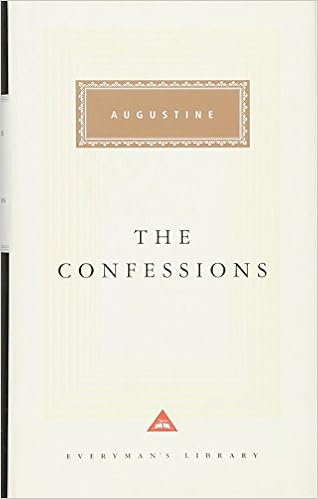
Lines I Wished I’d Written: On the Passing of a Friend, by St. Augustine from The Confessions.

At Goodreads Catholic Thought Book Club we are currently reading The Confessions by St. Augustine of Hippo, and given today is All Souls Day, I thought this passage from Chapter Four was very fitting to commemorate today’s feast day.  The passage consists of three chapters, identified as 4.3.7-9. 

 
To set the context, Augustine is in his early twenties, a teacher of rhetoric in his home town of Thagaste, where he had made a friend of approximate age and who dies.  If you haven’t read The Confessions before, it is an autobiographical work where Augustine confesses to God the various parts of his sinful life.  He is still here a pagan, and you can see how he ridicules the ritual of baptism.

It was during those years, when I had first begun to teach in my home town, that I made a friendship.  My friend shared in my studies, and was very dear to me; we were contemporaries, both blooming in the flower of youth.  He had grown up with me as a boy; we had been to school together, and played together.  But at that time he was not such a friend of mine—although not even at that time I am speaking of was he a friend in the true sense, for it is only true friendship when you glue together those who cleave to you by diffusing your love in our hearts through the Holy Spirit (Rom 5.5), which you have given us.  Nevertheless, it was indeed a sweet friendship, fired in the heart of our shared studies.  While he was still a schoolboy, I had turned him away from true faith, which by reason of his years he did not cling to truly or with any depth, and towards the superstitious and pernicious tales which made my mother weep for me.  Now, as a man, he strayed in spirit with me, and my soul could not be without him.  And behold, you stood over the backs of these fugitives from you, O God of vengeance (Ps. 94.1 [Ps. 93.1]) and fount of mercy alike, who turn who turn us again to you (Ps. 51.15 [Ps. 50.15]) in wondrous ways; and behold, when he had reached manhood you took him from this life, when he had been my friend for barely a year—a friendship sweeter to me than all the sweetness of my life, as it then was.

Who can alone tell all your praises (Ps. 106.2 [Ps. 105.2]), all the works of yours that he has known in himself alone?  What did you do then for me, my God, and how unsearchable are the depths of your judgements (Ps. 36.6 [Ps. 35.7]; cf Rom. 11.13)?  My friend fell ill with a fever, and for a long time lay unconscious in a mortal sweating fit.  When those around him had abandoned hope of his recovery, he was baptized without his knowing.  I was indifferent to this, confident that his soul would retain what he had learnt from me, not what was done to his body without his knowing.  But the truth was far different.  My friend rallied and recovered, and as soon as I could talk to him—and that was not long, no longer than it took for him to be able to talk to me, since I would not leave his side, and we were inseparable from one another—I tried to tease him about it, thinking that he would join me in laughing at a baptism he had received while wholly unconscious and insensible.  He, however, had learnt beforehand of the baptism he had received, and shrank from me as if from an enemy.  In a remarkable and sudden burst of plain speaking he warned me that if I wanted to be his friend, I would have to stop talking to him like that.  For my part, I was astonished and upset at this, and put all my own feelings on one side until he had recovered and had regained full vigour of health; then, I thought, I would be able to deal with him as I wished.  But he was rescued from my madness, so that in you he might be reserved for my consolation; a few days later, when I was away, the fever struck again, and he died.

What pain darkened my heart! (Lam. 5.17).  All that I saw was death.  My home town was a torment to me, my home strangely cursed; all the things I had shared with him were, without him, transformed into grievous tortures.  My eyes looked expectantly for him everywhere, but he was denied to their sight.  I hated everything, because it did not contain him; nor could anything now say to me, ‘Look, he is coming,’ as they could when he had been absent during his life.  I became the object of my own investigation, and asked my soul repeatedly why it was sorrowful, and why did it trouble me so deeply; and it did not know what to say in return.  And if I said, Hope in God (Ps. 42.05, 11, Ps. 43.5 [Ps. 41.6, 12, Ps. 42.5]), it would not obey, and rightly; for the friend I had lost, though a man, a thing more real and better than the illusion in which I bade my soul trust.  Weeping alone was sweet to me, and took the place of my friend among the pleasure of my mind.
            -Translation and quote identification by Philip Burton from the Everyman’s Library edition, p. 69-70.

Troubled by his grief, Augustine goes on to leave his home town and move to the big city of Carthage.  I think one here sees the seeds of the importance and vitality of baptism being planted in him.  But I’m struck with how skillfully Augustine tells us in three paragraphs of his friendship, the death of his friend, and the grief over it. 


Say a prayer for you beloved departed on this All Souls Day.


Friday, November 4, 2016

Faith Filled Friday: Litany for the Holy Souls in Purgatory

This past Wednesday, November 2nd, was All Souls Day, a day of commemoration for our departed.  Katrina Fernandez at her Catholic Advice page on the Catholic website, Aleteia,  was asked about what to do to stay connected with the departed in our lives.  She provides a number of ideas, which I’ll let you go over to read, but I also added two in a comment box:

Here are two more things you can do Katrina.  (1) Save those funeral cards they hand out at a person's wake.  Keep them in a rubber band and every so often go through them with a little prayer.  (2) Keep a list of your dead.  My memory being what it is, I forget those who are not immediate family members.  I think praying for the dead is one of our biggest obligations as Catholics.

I thought I’d pass that along.  Now once you take out that cluster of funeral cards or open to your list, here’s a litany I just came across to use as a prayer.  As it turns out there are a number of Litanies for those in Purgatory, and you can do a search and they’ll come up.  But I really like this one, and so I’ll share it.


LITANY FOR THE HOLY SOULS IN PURGATORY

O Jesus, Thou suffered and died that all mankind might be saved and brought to eternal happiness.  Hear our pleas for further mercy on the souls of:

My dear parents and grandparents, my Jesus mercy!
My brothers and sisters and other near relatives, my Jesus mercy!
My godparents and sponsors of confirmation, my Jesus mercy!
My spiritual and temporal benefactors, my Jesus mercy!
My friends and neighbors, my Jesus mercy!
All for whom love or duty bids me pray, my Jesus mercy!

Those who have offended me, my Jesus mercy!
Those who have suffered disadvantage or harm through me, my Jesus mercy!

Those who are especially beloved by Thee, my Jesus mercy!
Those whose release is near at hand, my Jesus mercy!
Those who desire most to be united to Thee, my Jesus mercy!

Those who endure the greatest sufferings, my Jesus mercy!
Those whose release is most remote, my Jesus mercy!
Those who are least remembered, my Jesus mercy!

Those who are most deserving on account of their services to the Church, my Jesus mercy!
The rich, who now are the most destitute, my Jesus mercy!
The mighty, who now are powerless, my Jesus mercy!
The once spiritually blind, who now see their folly, my Jesus mercy!
The frivolous, who spent their time in idleness, my Jesus mercy!
The poor, who did not seek the treasures of heaven, my Jesus mercy!
The tepid, who devoted little time to prayer, my Jesus mercy!
The indolent, who neglected to perform good works, my Jesus mercy!
Those of little faith, who neglected the frequent reception of the Sacraments, my Jesus mercy!
The habitual sinners, who owe their salvation to a miracle of grace, my Jesus mercy!
Parents who failed to watch over their children, my Jesus mercy!
Superiors who were not solicitous for the salvation of those entrusted to them, my Jesus mercy!
Those who strove for worldly riches and pleasures, my Jesus mercy!
The worldly-minded, who failed to use their wealth and talents in the service of God, my Jesus mercy!
Those who witnessed the death of others, but would not think of their own, my Jesus mercy!
Those who did not provide for the life hereafter, my Jesus mercy!
Those whose sentence is severe because of the great things entrusted to them, my Jesus mercy!

The popes, kings and rulers, my Jesus mercy!
The bishops and their counselors, my Jesus mercy!
My teachers and spiritual advisors, my Jesus mercy!
The deceased priests of this diocese, my Jesus mercy!
The priests and religious of the Catholic Church, my Jesus mercy!

The defenders of the holy faith, my Jesus mercy!
Those who died on the battlefield, my Jesus mercy!
Those who fought for their country, my Jesus mercy!
Those who were buried in the sea, my Jesus mercy!
Those who died of apoplexy, my Jesus mercy!
Those who died of heart attacks, my Jesus mercy!
Those who suffered and died of cancer, my Jesus mercy!
Those who died suddenly in accidents, my Jesus mercy!
Those who died without the last rites of the Church, my Jesus mercy!
Those who shall die within the next twenty-four hours, my Jesus mercy!
My own poor soul when I shall have to appear before Thy judgment seat, my Jesus mercy!

Eternal rest grant unto them, O Lord, and let perpetual light shine upon them: For evermore with Thy saints, because Thou art gracious.

May the prayer of Thy suppliant people, we beseech Thee, O Lord, benefit the souls of Thy departed servants and handmaids: that Thou mayest both deliver them from all their sins, and make them to be partakers of Thy redemption. Amen.

Eternal rest grant unto them, O Lord.
And let the perpetual light shine upon them.
May their souls and the souls of the faithful departed, through the mercy of God, rest in peace. Amen.


Saturday, November 2, 2013

Faith Filled Friday: All Souls Day with Poem, “Service of All the Dead” by D. H. Lawrence

Last week I used my Faith Filled Friday to commemorate All Saints Day, which is on November 1st.  This week I’ll commemorate All Souls Day which is on November 2nd. 

 
I’m going to celebrate it with a poem by D. H.Lawrence.  It’s not overtly religious, and Lawrence was not a Catholic.  But I think the poem captures extremely well the spirit of All Souls Day.
 

Now full disclosure.  I did my Master’s Thesis on D. H. Lawrence, so I probably know more about this particular writer than just about any.  He only lived to forty-four years old, but he wrote and wrote and wrote.  He published eleven novels, four short novels, several collections of short stories and poetry, scores of essays, travel writings, and other non-fiction, and his collection of written letters amount to seven volumes.  I’ve read a lot of his works, but I certainly haven’t read all or probably even half. 

 
As a poet, he’s amazingly underrated.  I think that is so because he’s such a  great fiction writer that his poetry gets pushed out of the fore ground.  If he hadn’t written fiction he probably would be known as one of England’s leading poets of his day.
 

Service of All the Dead
 
Between the avenue of cypresses
All in their scarlet capes and surplices
Of linen, go the chaunting choristers,
The priests in gold and black, the villagers. 

And all along the path to the cemetery
The round dark heads of men crowd silently;
And the black-scarfed faces of women-folk wistfully
Watch at the banner of death, and the mystery. 

And at the foot of a grave a father stands
With sunken head and forgotten, folded hands;
And at the foot of the grave a mother kneels
With pale shut face, nor neither hears nor feels 

The coming of the chaunting choristers
Between the avenue of cypresses,
The silence of the many villagers,
The candle-flames beside the surplices.


Lawrence’s poetry is categorized as part of the Imagist movement of the early 20th century.  Reducing Imagism down to its essence, one could say that it attempts to create poetry by solely, or at least predominantly, using images to carry meaning, the poet refraining from editorializing or commenting. 

 
This is an excellent example of an imagist poem.  There are four stanzas.  In the first we have this wonderful image of a procession of choristers, priests, and villagers through a lovely backdrop of autumn-colored cypresses.  In the second we see they are heading to a cemetery where apparently someone has died.  At the grave to which one assumes they are proceeding to, a father and mother are in the middle of mourning their loss; apparently their child has died.  In the fourth stanza, the focus is back to the procession, perhaps now come closer, and three of the four lines are nearly identical to those in the first stanza, creating a circular pattern of return.  The final line is unique to the stanza, now bringing in the image of the candle flames beside the surplices.

 
While this is not overtly religious, it most definitely has a religious core.  The procession is “chaunting” which is an outdated alternative word for religious chant.  There are priests, vestments (surplices), candles, and death is a “mystery.”  It is set in nature, and the season is one associated with death.  The pantomime (if I can call it that) is labeled a “service” in the title, and of course that implies a religious ritual.  The poem, then, captures the religious ritual in all its depth and mystery.

 
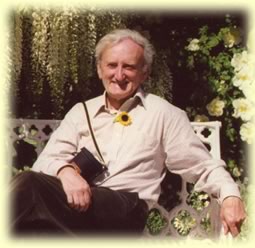
I hope you enjoyed the poem.  I also want to dedicate this post to Keith Sagar, who was a D. H. Lawrence scholar.  He wrote many books on Lawrence, several of which I used as support for my Master’s Thesis.  Professor Sagar passed away a little over two weeks ago.  Here is his web page.  When you read someone’s books, you feel a connection with them, especially when you share a love of the subject.  We both loved D. H. Lawrence’s writing.


O good Jesus, have mercy on the soul of Keith Sagar and grant to him eternal rest.