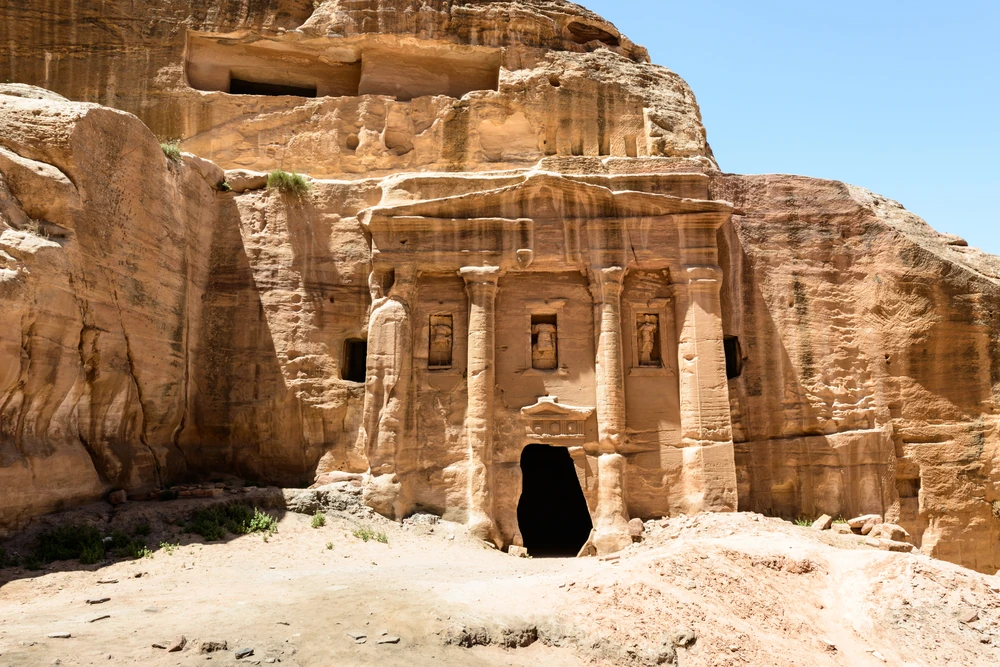
This is the fourth and final post of a series on Dwight Longenecker’s The Mystery of the Magi: The Quest to Identify the Three Wise Men. You can read Post #1 here.
Post
#2 here.
Post
#3 here.
Summary
Chapter 10, “The Star of Bethlehem”
Next
Fr. Longenecker takes on the legend of the Magi following the star to
Jesus. Fr. Longenecker evaluates various
theories: a supernatural phenomenon, a natural astronomical event, or an
astrological reading of the night sky.
Each of these generic theories have specific possibilities. First Longenecker attempts to understand how
Matthew understood the star?
Matthew, of course, never says that a supernatural star guided the wise men across the desert. He mentions the star twice. First the wise men say to Herod, “Where is the one who has been born king of the Jews? We saw his star when it rose and have come to worship him” (Matthew 2:2). A few verses later Matthew continues, “After they had heard the king, they went on their way, and the star they had seen when it rose went ahead of them until it stopped over the place where the child was” (Matthew 2:9). [p. 113]
I’m not going to summarize each of the theories but some of them considered are a comet, a meteor, a supernova, an alignment of planets, celestial divination, the helical rising and falling of Jupiter, and astrological reading of the stars.
Chapter 11, “Wise Men from the East”
Here Longenecker explores the understanding of Matthew’s use of the term “wise men” for the Magi and what Matthew meant by “from the East.” In so doing Longenecker recapitulates the theory that the Magi were Nabateans star gazers, that the “East” referred to the land of the Nabateans, and how the legends of the Magi developed into what it has become. Longenecker then goes into some of the very earliest of Christian writings—when the legends had not developed yet—and located passages from the Church fathers substantiating his theory. Longenecker then proposes how the real knowledge of the Magi was lost as the Church center of gravity moved from the Middle East to the European continent.
###
One
theory on the star of Bethlehem that Fr. Longenecker did not consider, though
it would fall under the supernatural category, is that of St. John Chrysostom
back in the fourth to fifth century was that the star was an angel. I came across this theory from Aleteia, the Catholic online magazine,
the other day. Chrysostom proposed in his Homily on the
Gospel of Matthew. (Link is provided in
the article.) First he rejects the
scientific phenomena theory because he does not believe there are stars that move
from east to west.
[W]hether it was a star by nature or a star in appearance only, we shall easily know the other things also. Whence then will these points be manifest? From the very things that are written. Thus, that this star was not of the common sort, or rather not a star at all, as it seems at least to me, but some invisible power transformed into this appearance, is in the first place evident from its very course. For there is not, there is not any star that moves by this way, but whether it be the sun you mention, or the moon, or all the other stars, we see them going from east to west; but this was wafted from north to south, for so is Palestine situated with respect to Persia.
Second
he points out that no star could have been visible in the daytime.
In the second place, one may see this from the time also. For it appears not in the night, but in mid-day, while the sun is shining; and this is not within the power of a star, nay not of the moon; for the moon that so much surpasses all, when the beams of the sun appear, straightway hides herself, and vanishes away. But this by the excess of its own splendor overcame even the beams of the sun, appearing brighter than they, and in so much light shining out more illustriously.
Third he points out that it would be impossible for a star to come to rest above a single child, and concludes it had to be an angel.
For it did not, remaining on high, point out the place; it not being possible for them so to ascertain it, but it came down and performed this office. For you know that a spot of so small dimensions, being only as much as a shed would occupy, or rather as much as the body of a little infant would take up, could not possibly be marked out by a star…How then, tell me, did the star point out a spot so confined, just the space of a manger and shed, unless it left that height and came down, and stood over the very head of the young child? And at this the evangelist was hinting when he said, Lo, the star went before them, till it came and stood over where the young Child was ... Therefore after He has brought them, leading them by the hand, and has set them by the manger; it is no longer by a star, but by an angel that He now discourses unto them.
I do lean to Fr, Longenecker’s theory of an astrological prediction, but if I had to go with a supernatural theory, I do like Chrysostom’s angel theory. If angels individually visited Joseph and Mary then why not the Wise Men? For me none of the natural astronomical event theories make sense.
My
Comment:
I subscribe to The St.
Paul Center for weekly emails on the Sunday Mass readings. This is Scott Hahn's
organization and he usually provides a short explanation of the readings akin
to a homily. This coming Sunday (Jan 2) is the Epiphany of the Lord, where we
get the readings on the Magi, and you can listen to Scott give his thoughts on
these readings here.
It's apparent Scott has not read Fr. Longenecker's book. He says the Magi "probably came from Persia." Well we now know otherwise! They came from the Nabatean Kingdom. Is n't it something that we know something about Catholicism that the great Scott Hahn doesn't? ;) At least Scott says "probably."
My
Comment:
An article today by Fr.
Longenecker essentially summarizing his book: "TWELVE REASONS WHY THE MAGIWERE ARABIANS NOT PERSIANS"
I guess it's from his personal blog.
###
Summary
Chapter 12, “What Happened to the Wise Men?”
This chapter divides into two parts. The first part, Longenecker goes line by line of the Magi passage in Matthew and provides his final response to all he has walked us through in the book. The second half of the chapter Longenecker speculates what happened to the Magi after the Nativity event and how they may have shaped Christianity afterward. Could the Magi have settled with the Essenes of the Dead Sea Scroll community? Could the Magi or their next generation have shaped St. Paul’s theology when St. Paul after his conversion spent three years in the desert meditating on the significance of Christ? Longenecker provides some evidence that support those claims.
Conclusion, “Why Does it Matter?”
Here Longenecker justifies why knowing the true history of the Magi should be known. Because it supports the facts of the life of Jesus Christ, and knowing that the Magi were not mythical weakens the skeptic’s arguments against Christianity.
Epilogue, “What Happens to the Epiphany?”
Longenecker spends a few concluding pages on contemplating what de-mystifying the Magi implies to our understanding of the Feast of the Epiphany. He feels it doesn’t alter it much.
###
Gerri
Commented:
I didn't realize Fr.
Longenecker was a priest. I knew he was a convert and thought he was a deacon.
In his closing pages, he,
too, wants what we discussed earlier - for other scholars to take up the topic
and continue the research he started.
And I agree with him: de-mystifying the Magi doesn't alter my understanding or appreciation of the Feast of the Epiphany.
My
Reply to Gerri:
It didn't alter mine. If anything it enhanced it. What seemed like a made up story made it real for me, and in that reality it deepened my faith. Truth be told, I'm not keen on hagiographic stories, including saints' lives.
###
Before
we leave this book, I wanted to discuss the second half of chapter 12, the speculative
section on the Magi going to Damascus, joining with the Essenes, and then years
later St. Paul spending three years learning from the Essenes and the next
generation Magi. This theory resonated
quite strongly with me. I don’t know if
you have known about the three years St. Paul spent in Arabia after his
conversion. It’s in Arabia that Paul
seems to discern what Christianity is all about. Remember before his conversion experience he
was a strict Pharisee. He has his
conversation on the road to Damascus where he goes blind, is taken to
Christians in Damascus, has his sight returned, gives himself up to Christ, and
is baptized. Fr. Longenecker then quotes
Paul.
“But when God . . . was pleased to reveal his Son in me so that I might preach him among the Gentiles, my immediate response was not to consult any human being. I did not go up to Jerusalem to see those who were apostles before I was, but I went into Arabia. Later I returned to Damascus. Then after three years, I went up to Jerusalem to get acquainted with Peter and stayed with him fifteen days.” (Galatians 1:11–18) [p. 148]
I’ve always been intrigued by those three years. I always took it as he spent three years “in the desert” contemplating how Jesus fits into Judaism and what Jesus as a crucified, “failed” messiah means. The messiah to the Pharisees was supposed to be a conquering hero who was going to overthrow the earthly shackles on the Jewish people. But Jesus didn’t do that. But Paul clearly had a supernatural experience encountering Christ, and so he could not deny Christ wasn’t who He said He was. So how did this all fit together? We see from Paul’s letters he more than any of the apostles derives the theology from the Old Testament and from Christ’s life and teachings. Was this theology all from Paul’s contemplative three years in Arabia?
Fr.
Longenecker lays out some important questions.
[Jean] Daniélou mentions [in
Primitive Christian Symbols] an
ancient tradition that Paul was converted at Castle Kokhba, the name of which
means “Star Tower.” If there is truth to the ancient tradition, then Paul was
blinded by a radiant light at Kokhba, which means “star.” Was his sudden
illumination seen as a sign of direct divine revelation similar to the star
that had led the Magi to Christ?
Immediately after his
conversion Paul went into Arabia for three years. What prompted him to do that?
His sojourn in Arabia has mystified scholars. Some suggest he went there to
begin his missionary work, but this seems unlikely so soon after his sudden
conversion. Others suggest that he went into Arabia for a meditative retreat,
like Jesus’ forty days in the wilderness.
The New Testament scholar Margaret Barker observes, “After his conversion, Paul went to Arabia, and his visit may help to identify the magi. He came back better informed about his new faith and able to explain that Christianity was rooted in something older than the law of Moses. Who instructed him?” (p. 149)
I don’t know about that blinding light being connected with the Magi star, but what exactly did Paul do in the Arabia and how did he become so insightful to Christianity? I think it’s generally acknowledged that Christian thought more directly derives from Essenes’ Judaism and not the Pharisee’s understanding of Judaism.
One
could quote almost all of Longenecker writing from page 148 to 154, but that
would be too extensive. Let me just
quote these paragraphs which kind of pulls together his theory:
We find in Paul’s
theology a synthesis of the same three cultural and religious strains that we
find in the Nabateans. The first strain is Abrahamic Judaism. This is the
Judaism from before the destruction of Solomon’s temple by Nebuchadnezzar in
586 BC. The Arabian tribes claimed descent from Abraham, and Nabatean religion
had its roots in the earlier Abrahamic religion. This earlier form of Judaism
was also the religion of the Jewish refugees who fled into Arabia in the sixth
century BC.
The second strain in
Paul’s theology is the mystery religions that had grown out of Mesopotamian
culture and were the second source of Nabatean culture and religion. Paul warns
his followers of the dangers of mystery religions, but he also uses the
language and imagery of the mystery religions, correcting them and using them
to point to the mystery of redemption in Jesus Christ.
Paul also understands
Greek philosophy, which he integrates successfully into his theology. The
Nabateans had also absorbed and integrated elements of Greek culture, religion,
and philosophy.
Somewhere and somehow, Paul learned how these three elements could be fused to explain the gospel of Jesus Christ to a non-Jewish audience. Did he develop his theology during his three years in Arabia and Damascus? Who were his teachers? Did Paul learn from a school of Nabatean wise men? Was he taught by the Magi themselves? (p. 150-1)
Longenecker goes on to expand on each of these strains teasing out the theology Paul formulates from them. I don’t know if Longencker is perfectly correct on what Paul formulates from these strains but I do think he is on to something as to Paul’s sources. What cannot be argued against is that Christianity is not Pharisaic Judaism, and Paul’s Christian theology is much more than what comes from the Pharisees. I’m a supporter of Longenecker’s theory here.
###
Kerstin
Commented:
Fr. Longenecker is
definitely on to something. He is connecting the story of the Magi with the
larger cosmology. On the last page, p. 164, he writes:
The Magi's whole world
view and cosmology were predicated upon a belief that the "heavens declare
the glory of God and the firmament shows his handiwork."
We in the West have
gotten lost in the weeds over the past centuries in materialism, functionalism,
legalism, etc., etc. We have looked less and less to the heavens and wondered
at the Cosmological Order as a whole. In contrast, Eastern Orthodoxy has
retained this sense of wonder and mystery of the Cosmological Order.
On page 154 Fr.
Longenecker writes:
The foundation of the
Jewish religion is the covenant of faith that was established with Abraham and
his descendants. Margaret Barker suggests that this Abrahamic religion was
considered the original by the refugees from the destruction of Jerusalem and
that they considered the legalistic religion that emerged after the exile to be
an illicit development
Immediately I thought of
the division between the more legalistic Roman Rite and the more mystical
Eastern Rite. What a parallel!
Here is a 16 minute video
from the Christian artist Jonathan Pageau who has a You Tube channel called
"The Symbolic World". Jonathan is a convert to Eastern Orthodoxy. In
this recent video he goes into detail of How Christmas Reorganizes the Gods by
the example of an Orthodox hymn called the Nativity Troparion. You will find it
has everything to do with what we've read here. It will give a deeper
understanding of what Fr. Longenecker is getting at. He didn't pluck any of
this out of thin air.
Also, Jonathan had an
hour-long conversation with Bishop Robert Barron on A Return to Cosmic
Christianity. It dovetails nicely here.
My
Reply to Kerstin:
Do you mean
"legalistic" or more based on "reason" for the Roman Rite?
There's faith and reason and one needs both. I do see the Eastern Rite as less
based on reason and more on mysticism than the Latin Rite. But frankly too far
to the mystical turns me off. It feels superstitious or disconnected from basic
science. There needs to be a balance of faith and reason. I'm not sure the
Latin Rite has it about right but whenever I listen to Eastern Rite speakers it
feels like they are disconnected from reason. For me, Pope Benedict XVI has it
perfectly.
By the way, by reason I don't mean to support Enlightenment rationalism as Fr. Barron denounces in the second video. There is a balance between faith and reason and an imbalance in either direction is disturbing.
Frances
Replied to My Comment:
Manny, I am not trying to speak for Kerstin -- she can do that quite beautifully on her own! -- but as I read her post I thought of the word "transcendence." The Roman Rite has lost somewhat a sense of the transcendent; Bishop Robert Barron has referred to this condition at times as a "flattening out." I think the yearning for that sense lies behind the hunger for the Latin Mass. We want "The Other," a sense of the transcendent.
Kerstin
Replied:
By "legalistic"
I was thinking in the direction of splitting hairs too much, of
overcomplicating things, being too rationalistic. Jesus fought the Pharisees on
this all the time.
We are all products of
our own culture, and hence the Roman Rite is what fits me, and I would imagine
many of us here. At the same time I find the Eastern Rites fascinating, how
they have preserved liturgical rituals and hymnody over the centuries. There is
a very pronounced sense of reverence and the holy. I delight in their artistry.
What I think is important for us to remember is that the Christian faith
emerged in a cultural space that is far more eastern than we are. We may not be
used to or comfortable with to move in the mystical space they do, but we have
to know about it for better understanding. That's my take.
Going back to our book and the mystery of the star, Jonathan Pageau says that for the ancients and the cosmic order they lived in, a star and an angel is the same thing! The stars were the gods, or angels, or beings of the higher order. With this mystical element in mind, that a star/angel showed the Magi where to find Jesus makes perfect sense.
My
Reply to Kerstin:
Well said Kerstin. I think we're saying the same thing. I lean toward Thomas Aquinas and Pope Benedict XVI who are just as mystical and transcendence but can support the mystery through reason. I'm not saying the Eastern Orthodox can't support it but I haven't seen it and in a number of places (like in writings of Dostoyevsky) I've seen ridicules of Latin reason. But Dostoyevsky is not a theologian, so I probably shouldn't link Orthodox theologians to him.
Joseph
Replied:
Manny, if you haven't read St. Maximus the Confessor, he's a good example of how eastern theologians meld mysticism and reason. Weighing in on Kerstin, Frances, and Madeleine's point, as a priest who celebrates both the Mass of the Ages and the Mass of Paul VI there is a tangible difference in how the two relate to the Divine. My first time attending the Ancient Mass I was just as lost as could be, but as I was exposed to it more I learned how to enter into the prayer and see what goes on. This is not to discount the New Rite, I have also had mystical experiences there, but the Ancient Mass is more in tune with our mystical senses than is the New.
Kerstin
Replied:
Manny wrote: " I'm
not saying the Eastern Orthodox can't support it but I haven't seen it and in a
number of places (like in writings of Dostoyevsky) I've seen ridicules of Latin
reason. But Dostoyevsky is not a theologian, so I probably shouldn't link
Orthodox theologians to him."
I had to think on this a bit. The divergence goes all the way back to the
"filoque" dispute in the Nicean Creed. What exactly is Dostoevsky
reacting to? He especially dislikes the Jesuits. I wonder if it had to do with
modernism and even secularism seeping into the Latin Rite, and this posed a
danger of Orthodoxy being susceptible to the same erosion of Tradition.
My
Reply to Kerstin:
I don' think it has
anything to do with the filioque. He was xenophobic, like a good number of
Russians. Don't get me wrong, he's a great novelist, among the handful of
greatest, but he was anti western, and that involved the Catholic Church. I
remember a good number of gibes directed toward Poles and Germans. There is a
section of his greatest novel, The Brothers Karamzov called The Grand
Inquisitor. Read about that here:
He has a Catholic Bishop put Jesus through an inquisition and ultimately condemns Jesus to death. Now there is a lot of psychological and theological stuff going on. It's a great scene. But he didn't have to have a Catholic Bishop be the inquisitor. It didn't have anything to do with Catholicism.
###
When driving home yesterday afternoon from shopping, I had Relevant Radio, a Catholic radio channel around the country, on my radio and on the Drew Moriani show he had Fr. Dwight Longenecker on to discuss his Magi book. It was a twenty-ish minute conversation, and while he didn’t say anything that was not in the book, it was still a blessing to listen to it. Now that all radio shows get turned into podcasts, you can access the show and listen for yourself. So the Relevant Radio podcasts get broken into hour long units. Fr. Longenecker’s portion was the first half of the hour. The second half was a discussion about the guiding star with Fr. Chris Corbally, a priest astronomer. That was interesting and is worth listening to. Here is the link to the “Hour 3 of The Drew Mariani Show 12-22-21.”
###
Well,
tomorrow Jan 6th is the Feast of the Epiphany of the Lord,
the day we readers of this book have been waiting for. I'm almost sure you will
have this hymn played at Mass tomorrow. It was my hymn for my Vespers prayer
this evening, which would make it the vigil of the feast.
We Three Kings
Composer: Rev. John Henry
Hopkin (1857)
We three kings of Orient
are
Bearing gifts we traverse
afar
Field and fountain, moor
and mountain
Following yonder star.
O Star of wonder, star of
night
Star with royal beauty
bright
Westward leading, still
proceeding
Guide us to thy Perfect
Light.
Born a King on
Bethlehem's plain
Gold I bring to crown Him
again
King forever, ceasing
never
Over us all to reign.
O Star of wonder, star of
night
Star with royal beauty
bright
Westward leading, still
proceeding
Guide us to thy Perfect
Light.
Frankincense to offer
have I
Incense owns a Deity nigh
Prayer and praising, all
men raising
Worship Him, God most
high.
O Star of wonder, star of
night
Star with royal beauty
bright
Westward leading, still
proceeding
Guide us to thy Perfect
Light.
Myrrh is mine, its bitter
perfume
Breathes of life of
gathering gloom
Sorrowing, sighing,
bleeding, dying
Sealed in the stone-cold
tomb.
O Star of wonder, star of
night
Star with royal beauty
bright
Westward leading, still
proceeding
Guide us to thy Perfect
Light.
Glorious now behold Him
arise
King and God and
Sacrifice
Alleluia, Alleluia
Earth to heav'n replies.
O Star of wonder, star of
night
Star with royal beauty
bright
Westward leading, still
proceeding
Guide us to thy Perfect Light.
Here is a beautiful version by the opera singer, Mario Lanza.
###
My Goodreads Review:
More precisely, four and a half stars. This is a book that locates the historical roots of the story that has become the legend of the three “wise men/kings” who come to the nativity of Christ offering Him gifts. Mind you, what is in the Bible, more precisely, the Gospel of Matthew, is not the legend. The legend has been built up from elaborations and folklore, built up so much that hardly anyone believes the legend. But the Biblical story is there in Matthew, and so what are we to make of it?
Fr. Dwight Longenecker—the author is a Roman Catholic priest—breaks down the parts of what is actually in the Bible and finds their historical basis, and in so doing saves the story for we believers. What seemed like a made up story made it real for me, and in that reality it deepened my faith. Truth be told, I'm not keen on hagiographic stories, including saints' lives. The legend of the Magi went beyond hagiography.
So Fr. Longenecker goes on to show the Magi were not from Persia or some disparate region of the world. They were not kings. And they probably didn’t even ride camels. So who were these mysterious men who have been linked to the exotic? Were they exotic? Yes, but not in ways you expect. Read the book. It was methodically argued and quite compelling.
###
This
may be the final post on Fr. Longenecker’s book, but there will be two related
posts on the Magi, two famous poems, T.S. Eliot’s “The Journey of the Magi” and
G.K. Chesterton’s “The Wise Men.” I will
link them after I post them.