"Love follows knowledge."
"Beauty above all beauty!"
– St. Catherine of Siena

Showing posts with label A Christmas Carol. Show all posts

Sunday, December 3, 2023

Sunday Meditation: Be Watchful!

Today we start Year B of the liturgical calendar with the Gospel of Mark as the centerpiece of the readings.  Today also starts a new season, Advent.  The USCCB explains the season: “Advent (from, "ad-venire" in Latin or "to come to") is the season encompassing the four Sundays (and weekdays) leading up to the celebration of Christmas.”  But, the closing of one year with the merging of the new signal both the coming of Christ at the end of times and the coming of His incarnation.  It really has a double meaning, and so we get this Gospel reading.


Jesus said to his disciples:

“Be watchful! Be alert!

You do not know when the time will come.

It is like a man traveling abroad.

He leaves home and places his servants in charge,

each with his own work,

and orders the gatekeeper to be on the watch.

Watch, therefore;

you do not know when the lord of the house is coming,

whether in the evening, or at midnight,

or at cockcrow, or in the morning.

May he not come suddenly and find you sleeping.

What I say to you, I say to all: ‘Watch!’”

~Mk 13:33-37

What are you to watch for?  The Lord’s arrival!  As Jeff Cavins so eloquent says: “The Lord is coming.  He came, His is coming, He will come.” 


I say He is coming into your heart, and so be prepared for Him to stay.

Meditation: "Watch, therefore; you do not know when the lord of the house is coming.”

As a bonus, I offer “O Come Emmanuel” arranged and performed by Chris Tomlin.


That is just lovely.


Tuesday, February 28, 2023

George MacDonald: My Little King, Part 1

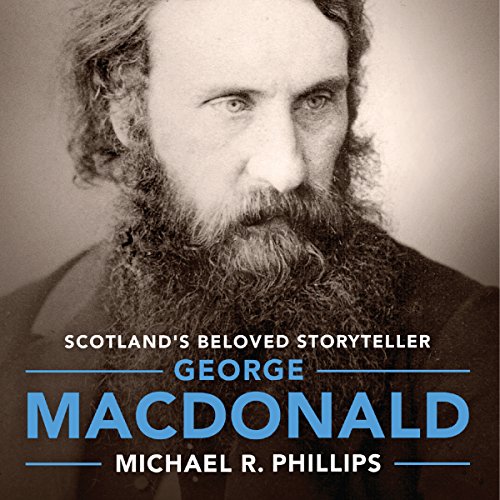
For our Christmas read, the Catholic Thought book club selected the Christmas poems and short stories of George MacDonald collected under the title My Little King.  George MacDonald was a Scottish author writing in many different mediums who had a theological bent to his writings, writing in the Victorian era.  In time he left the Presbyterianism that he grew up with and embraced what I will characterize as a more High Church character to Christianity.  He rejected pre-destination and penal substitution, and believed in a merciful than was envisioned by Calvin.  That is my reading of MacDonald’s theology, and I’m no expert.  So take it with a grain of salt. 


We took on three works from this collection: the poem “A Christmas Carol,” and the short Pstories “The Gifts of the Child Christ” and “Uncle Peter.”  I’ll start with the poem first.


A Christmas Carol

By George MacDonald


(Also known as “Mary’s Lullaby” to avoid confusion with the classic Christmas story by Charles Dickens)


Babe Jesus lay in Mary's lap,

The sun shone in his hair;

And this was how she saw, mayhap,

The crown already there.


For she sang: "Sleep on, my little king;

Bad Herod dares not come;

Before thee sleeping, holy thing,

The wild winds would be dumb."


"I kiss thy hands, I kiss thy feet,

My child, so long desired;

Thy hands will never be soiled, my sweet;

Thy feet will never be tired."


"For thou art the king of men, my son;

Thy crown I see it plain!

And men shall worship thee, every one,

And cry, Glory! Amen!"


Babe Jesus he opened his eyes wide--

At Mary looked her lord.

Mother Mary stinted her song and sighed;

Babe Jesus said never a word.


My Comment:

I went searching on YouTube for the melody to this but alas I couldn't find one. It sounds like it would make a lovely song. I'm sure it was intended as a song. If someone finds this put to music, please post it.


My Comment:

Anyone else find this stanza perplexing?


"I kiss thy hands, I kiss thy feet,

My child, so long desired;

Thy hands will never be soiled, my sweet;

Thy feet will never be tired."


I know MacDonald is focused on the Lord's kingship but he is also a carpenter. His hands will definitely be soiled. But more ironic perhaps is his feet will never get tired. That seems to ignore the passion carrying of the cross where Christ is beyond tired. He even needed the help of Simon the Cyrene.


So is this an oversight by MacDonald or is he being ironic?


Michelle’s Reply:

Yes! What came to my mind was how He walked all over Judea to heal and preach. I can't imagine how tiring that must have been, and His poor sacred feet must have hurt!


My Reply:

Yes. MacDonald must have realized it when he wrote. He's just capturing a mother's wish, but with irony. The reality will be different.


Kerstin’s Reply:

I don't think it is meant in the physical sense, of the realities of living. It is meant metaphorically. Jesus will never use his hands for ill, they will never be instruments for sin. His feet are instruments for spreading the Good News, and he will never tire to fulfill his mission.


My Reply to Kerstin:

That is possible Kerstin. I didn’t think of that.


My Comment:

Reading this over and over again, now I'm stuck on this verse: "My child, so long desired." Now that is coming out of Mary's voice. But Mary had taken a vow of celibacy. She couldn't have "long desired" a child. She had intended to live childless with Joseph.


Michelle’s Reply:

I thought it meant how Israel longed for the Messiah.


My Reply to Michelle:

Ah yes. Not her personal desire but the Jewish people’s desire. Very good Michelle.


Friday, December 19, 2014

Faith Filled Friday: Oh Holy Night by Eisley

This year "Oh Holy Night" has become my favorite Christmas song.  While there are many lovely versions, this version by a group named Eisley really captures me.  I don't even know this group.  The lead singer, Sherri DuPree-Bemis, doesn't exactly have a classical singing voice, but lower female register combined with a sort of scratchy voice makes this rendition distinct.  It sounds so true.


O Holy Night! The stars are brightly shining,
It is the night of the dear Saviour's birth.
Long lay the world in sin and error pining.
Till He appeared and the Spirit felt its worth.
A thrill of hope the weary world rejoices,
For yonder breaks a new and glorious morn.
Fall on your knees! Oh, hear the angel voices!
O night divine, the night when Christ was born;
O night, O Holy Night , O night divine!

Truly He taught us to love one another,
His law is love and His gospel is peace.
Chains he shall break, for the slave is our brother.
And in his name all oppression shall cease.
Sweet hymns of joy in grateful chorus raise we,
With all our hearts we praise His holy name.
Christ is the Lord! Oh praise His name forever,
O night divine, the night when Christ was born;
Fall on your knees! Oh, hear the angel voices!
O night divine, the night when Christ was born;
O night, O Holy Night , O night divine!

Saturday, December 7, 2013

Lines I Wished I’d Written: Old Marley Was as Dead as a Door-Nail

Here’s a new feature for my blog, Lines I Wished I Had Written.  These are passages that captivate me as someone that just appreciates great writing.  When I was younger I would write down such passages in the hopes that I would absorb the skill that went into the passage.  Plus I love to capture really fine writing.  Even when I read I highlight with my trusty mechanical pencil passages that are exceptional.  I either underline them or if they run an extended length I’ll run a curvy line down the margin along that length and write an exclamation mark beside it.  And if it’s really something special, I’ll put a couple of exclamation marks!

So why not share such passages with readers of my blog.  Actually I got the idea for this feature from Will Duquette’s blog, Cry ‘Woof’…andlet slip the dogs of whimsy where he has a feature “Words I’d Wish I’d Written.”  I’m not sure why I prefer “Lines” over “Words” I Wished I’d Written but I do.  I know “words” adds to the alliteration of the phrase, and so may have a snappier sound, but “lines” suggest a passage rather than a sentence, and perhaps, at least to me, a certain eloquence since it alludes to poetry.  So there, I’m not completing stealing.   

Note also, this is not the same as my feature, “Notable Quotes.”  A notable quote has a certain depth of wisdom to it isolated from where it might come.  It also might be a thought outside of a creative work.  “Lines I Wish I’d Written” strictly come from a creative written work and are presented solely for its compositional beauty and interest.

For my first post in this feature, I’m going to offer the opening paragraphs from Charles Dickens’ A Christmas Carol.  Well, it is the holiday season, but this came to mind because our parish last night invited the performers from Quicksilver Radio Theater to perform the radio play version of Dickens’ classic.  As it turns out our music director at St. Rita’s parish, Deborah Williams, has performed with the theater group and somehow was able to bring the full cast over to our church for a performance.  Here’s the press release for the group:


QUICKSILVER RADIO THEATER (founded in 1995) is a group of seasoned New York performing artists, who are dedicated to using the classic Radio Drama form (full cast, layered sound effects, and musical score) to present stories worth telling, executed with both talent and heart.  Quicksilver’s work has aired nationally, and been heard internationally on the World Wide Web.  Quicksilver has earned awards from the National Federation of Community Broadcasters and the National Audio Theatre.  It has performed by invitation at the Museum of Television and Radio’s Annual Radio Festival, and its shows are in the collection of the Museum.

They had just about the full cast in attendance and performed with full sound effects and score.  It was a great treat.  You can actually buy a performance from iTunes if you look, but I was able to find a free listen at PRX(Public Radio Exchange).  You just have to sign up and it’s free.  So give it a listen.  You’ll enjoy it.  I took Matthew, and while he didn’t quite get everything, Marley’s ghost with his clinking chains and woeful  holler, really got his attention.

Now here are the opening lines from A Christmas Carol.

Marley was dead: to begin with. There is no doubt whatever about that. The register of his burial was signed by the clergyman, the clerk, the undertaker, and the chief mourner. Scrooge signed it. And Scrooge's name was good upon 'Change, for anything he chose to put his hand to.

Old Marley was as dead as a door-nail.

Mind! I don't mean to say that I know, of my own knowledge, what there is particularly dead about a door-nail. I might have been inclined, myself, to regard a coffin-nail as the deadest piece of ironmongery in the trade. But the wisdom of our ancestors is in the simile; and my unhallowed hands shall not disturb it, or the Country's done for. You will therefore permit me to repeat, emphatically, that Marley was as dead as a door-nail.

Scrooge knew he was dead? Of course he did. How could it be otherwise? Scrooge and he were partners for I don't know how many years. Scrooge was his sole executor, his sole administrator, his sole assign, his sole residuary legatee, his sole friend, and sole mourner. And even Scrooge was not so dreadfully cut up by the sad event, but that he was an excellent man of business on the very day of the funeral, and solemnised it with an undoubted bargain. The mention of Marley's funeral brings me back to the point I started from. There is no doubt that Marley was dead. This must be distinctly understood, or nothing wonderful can come of the story I am going to relate. If we were not perfectly convinced that Hamlet's Father died before the play began, there would be nothing more remarkable in his taking a stroll at night, in an easterly wind, upon his own ramparts, than there would be in any other middle-aged gentleman rashly turning out after dark in a breezy spot -- say Saint Paul's Churchyard for instance -- literally to astonish his son's weak mind.

Scrooge never painted out Old Marley's name. There it stood, years afterwards, above the warehouse door: Scrooge and Marley. The firm was known as Scrooge and Marley. Sometimes people new to the business called Scrooge Scrooge, and sometimes Marley, but he answered to both names. It was all the same to him.

Oh! But he was a tight-fisted hand at the grind- stone, Scrooge! a squeezing, wrenching, grasping, scraping, clutching, covetous, old sinner! Hard and sharp as flint, from which no steel had ever struck out generous fire; secret, and self-contained, and solitary as an oyster. The cold within him froze his old features, nipped his pointed nose, shrivelled his cheek, stiffened his gait; made his eyes red, his thin lips blue; and spoke out shrewdly in his grating voice. A frosty rime was on his head, and on his eyebrows, and his wiry chin. He carried his own low temperature always about with him; he iced his office in the dogdays; and didn't thaw it one degree at Christmas.

External heat and cold had little influence on Scrooge. No warmth could warm, no wintry weather chill him. No wind that blew was bitterer than he, no falling snow was more intent upon its purpose, no pelting rain less open to entreaty. Foul weather didn't know where to have him. The heaviest rain, and snow, and hail, and sleet, could boast of the advantage over him in only one respect. They often `came down' handsomely, and Scrooge never did.

Nobody ever stopped him in the street to say, with gladsome looks, `My dear Scrooge, how are you? When will you come to see me?' No beggars implored him to bestow a trifle, no children asked him what it was o'clock, no man or woman ever once in all his life inquired the way to such and such a place, of Scrooge. Even the blind men's dogs appeared to know him; and when they saw him coming on, would tug their owners into doorways and up courts; and then would wag their tails as though they said, `No eye at all is better than an evil eye, dark master!'

But what did Scrooge care! It was the very thing he liked. To edge his way along the crowded paths of life, warning all human sympathy to keep its distance, was what the knowing ones call `nuts' to Scrooge.
 
Excerpt cited from The Literature Network. 

 
Isn’t that just a great characterization?  It’s so important to Dickens that the reader know Marley is dead that he uses such a distinct phrase, and drills the reader with “d” consonant alliteration in those first few paragraphs: dead, no doubt, door-nail, deadest, not disturb it, done for, dreadfully, distinctly.  I’ve always thought that Dickens created the phrase “dead as a doornail” but as it turnsout he didn’t.  But I always associate this.  It has forever stuck in my mind from reading A Christmas Carol.

And notice the “s” alliterations in the paragraph the starts with “Oh.”  Isn’t this a marvelous list of adjectives?  “Scrooge! a squeezing, wrenching, grasping, scraping, clutching, covetous, old sinner!”  In rhetoric that's called synathroesmusAnd then that seventh paragraph with all those negative characteristics in parallel sequence to describe him (there’s a rhetorical term for that too, but I can’t remember or find it) is possibly the height of the passage.  It needs to be repeated:
 

External heat and cold had little influence on Scrooge. No warmth could warm, no wintry weather chill him. No wind that blew was bitterer than he, no falling snow was more intent upon its purpose, no pelting rain less open to entreaty. Foul weather didn't know where to have him. The heaviest rain, and snow, and hail, and sleet, could boast of the advantage over him in only one respect. They often `came down' handsomely, and Scrooge never did.

Oh that’s a double exclamation mark!!