I
realized that over the course of the past year or so I’ve promised several
photo essays from pictures I took. I’m
sorry, I’ve been delinquent. And I bet
many of you would actually prefer pictures to my “stodgy” old literary
analyses.
Here’s
one I had promised after last year’s vacation to central Pennsylvania where we
went to Amish country, Dutch Wonderland, the railroad Museum, and to the Wolf
Sanctuary of PA. I didn’t post any
pictures from the Wolf Sanctuary because I said I would reserve a photo essay post
especially for it. Here is that post.
I
think the vacation was about thirteen months ago, so I’m afraid a bit has been
lost in my memory. When I found out
there was a wolf sanctuary nearby, it was a must to visit. Matthew didn’t really care for it, I have to
admit. He was just under four years old
at the time. I loved it, and I think my
wife did as well. I don’t remember if it
was actually free, but it was very inexpensive, and they kind of twist your arm
for a donation. It was not pricey.
If
you’re a reader of my blog, you know I’m a lover of canines, and the wolf is
the preeminent canine. Now I don’t claim
to be an expert, but here’s what knowledge I’ve gathered on wolves and
dogs. Dogs and humans exist in a very
similar wave length. We are so
compatible that I don’t think any other creature comes close. I’m convinced we evolved together. We are both social creatures, and we
socialize with each other. At least we
do with dogs. Wolves, while nearly a dog
and can interbreed with a dog, is wired in the brain just a little differently. A wolf can’t become domesticated. It seems to as a pup, but once it reaches a
certain age it will separate from its human bond. It may even turn on you, but to some degree
it does seem to respect your being as some sort of simpatico. Many people have tried to domesticate them
but it’s a rare thing for it to have worked out. So there are a number of wolf sanctuaries
across the country where people can give up the creature and let him live in an
environment he is accustomed to.
This
sanctuary in Pennsylvania seems to be a particularly good one. It’s run completely by volunteers and you
have to be schooled to an astonishing high level of training to become a
trainer (?). Actually that’s not the
title given to those who assist but I can’t remember what it was. Wolves there are separated into packs, and
they had a very deliberate process on introducing wolves to packs. Packs don’t necessarily accept outside
wolves.
The
one thing I absolutely remember was the smell.
Wolves do not smell like dogs. I
was surprised. It was a very sharp,
penetrating, wild aroma, not pleasant at all. I don't know how to describe it. At first I think I wanted to vomit, but then I got used to it. Here are some pictures.
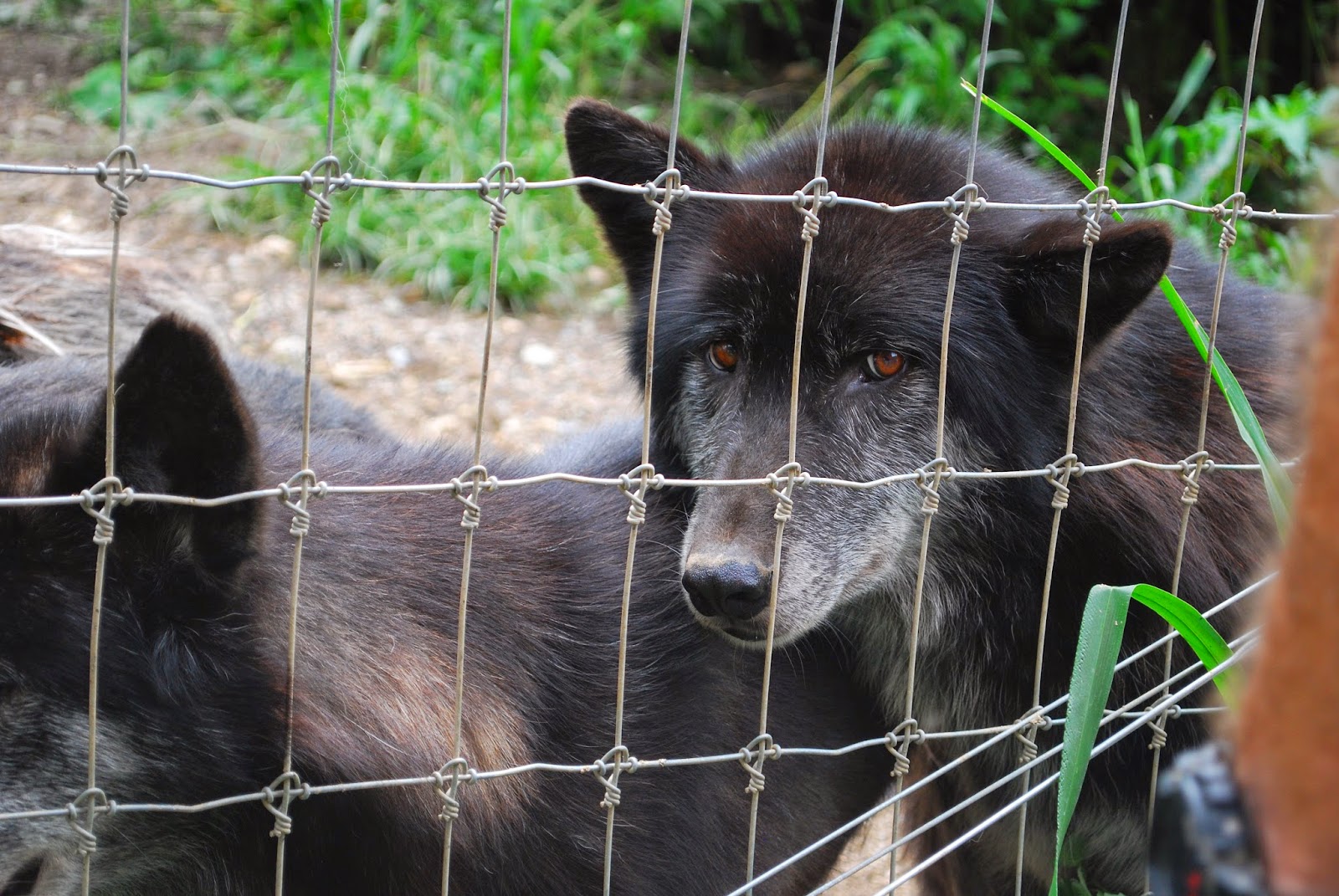
Here
is a small pack of three. If you go to
the Wolf Sanctuary of PA website, you might find the names of the various packs
and individual wolves. There is no way I
can remember now.
And
a close up of one of them.
Here’s
another pack, but I think this one is mostly of hybrids. By the way, there is ample room behind for each pack; I think they are given natural amount of territory. A large number of the wolves at the sanctuary
are mixes of dog and wolf. People think
they can breed out the wolf biology, but it takes more than a few generations.
This
one in the front seems to have the color of a Golden Retriever, clearly a mix.
Here
are some more.
Here’s
a rather large pack.
By
the way, the reason they have congregated to the fence is because the trainer
is feeding them.
Here’s
an older one.
Finally
I want to post a few pictures of Billy.
I distinctly remember this one, though I had to look his name up on the
website. Billy was the model of the
wolves. Whenever you see a wolf in a
movie or picture, there is a good chance Billy was used. He has the size and coloring of what we all
imagine a wolf to look like. Unfortunately
I found out that Billy died during the course of this past year. He died from canine bloat, which is a circumstance where the stomach and
intestines twist and cut off the blood supply.
It happens in large dogs.
But
wasn’t he magnificent?