"Love follows knowledge."
"Beauty above all beauty!"
– St. Catherine of Siena

Showing posts with label Goodreads. Show all posts

Wednesday, February 4, 2026

The Lighthouse: A Novel by Michael D. O’Brien, Post #6

This is the sixth and final post on Michael D. O’Brien’s novel, The Lighthouse: A Novel.

You can find Post #1 here. 

Post #2 here. 

Post #3 here. 

Post #4 here.

Post #5 here. 


My chapter by chapter thoughts and discussions can be found in my previous five posts.  This post consists solely of my review of the book at Goodreads.


Goodreads Review


I gave this only two stars.  I did very much want to enjoy and praise this book.  This is my first Michael D. O’Brien novel, and frankly I did not know what to expect.  I had heard of him and had wanted to read one of his novels.  After all he may be the most distinguished Catholic writer of fiction writing today.  But his more well-known works can run anywhere from 500 to 1000 pages, I never had the time to commit to such a long read.  This read was a very manageable 200 pages.


This review will have spoilers.


As you can read in the novel’s blurb, the premise of the novel is we follow the adult life of Ethan McQuarry, a young man in charge of taking care of a lighthouse off the coast of Cape Breton Island in Canada.  Ethan lives with a childhood trauma of having his father abandon him before he was born, raised poorly by a solitary mother, who once he reached an age where he can fend for himself, abandons him too.  When the solitary job of a lighthouse keeper becomes available, he takes it, seeing it as a natural fit for his loner sensibility.  Notably, the lighthouse is situated on a strip of land that is an island at high tide but connected with a walkable strip on low tide.

As a lighthouse keeper he has the time to develop the skill of carpentry and woodworking.  When a dilapidated boat washes up on his island after a storm, Ethan refurbishes the boat.  The boat will eventually become significant.  Ethan also starts sculpting wooden statues from washed up driftwood, most significantly he sculpts men, women, and children who he calls his family.

The plot of the novel can be seen as Ethan’s encounters to what may be called intruders to his island.  There is an iconic, even parablelike, quality to the story.  Two intruders are significant.  Both are doppelgangers to Ethan’s character.  One is Skillsaw Hurley (Skillsaw because he cut off three of his fingers with a power saw), also with childhood trauma, who is Ethan’s double if he had not grown to be societally functional.  Ross, Ethan’s other doppelganger, is a young man who is Ethan’s double because he too has had his father abandon him, but has grown with a good adopting father so that his trauma has not affected his personality.  Unlike Ethan he is very jovial, gregarious, and socially adjusted.

Now on the surface, this all sounds interesting, and the premise of the novel is great.  Alas the execution is terrible.  The flaws just mounted on top of each other.  First, the characters, despite their premises, are really cartoon figures.  There is no depth to them.  O’Brien gives us the exposition of their background with no dramatic or narrative backing.  Second for the central character to be credibly traumatized such trauma requires some narrative development, either through flashback (think Faulkner), through character interplay (think Dickens), or through straight narrative (think of Jane in the early chapters of Charlotte Brontë’s Jane Eyre).  We have to understand his experience, not just be told.  The whole novel rests on Ethan’s personality, and we have only cursory exposition to know how he was formed.

Third, the central theme of the modern world having degenerated because of its lack of Christianity, while a theme having weight and importance, is delineated in a superficial way.  Characters who represent the modern world are even more cartoonish than the central characters.  The freakish, rude granddaughter, with the blue spiked hair, nose ring, and startling clothes, of a conservative elderly Japanese couple is contrasted against her grandparents for us to show the generational decay.  Really?  How many people in the modern world walk around with blue spiked hair and nose rings?  A good writer should be “steel manning” the opposition argument, not “straw manning.”  The contrasts between the characters with traditional values against those who have “modern” values are not very compelling.  Frankly, and I don’t know if the author intended this or not, the motif of mothers in the novel not able to function without husbands borders misogyny.

Fourth, the characterization of showing the hole in Ethan’s heart from his abandonment as a child, is poorly executed.  Ethan’s wooden carvings of family figures is an interesting detail, but when he starts talking to them and calling the mother figure his “wife” and the boy his “child” that calls him “papa,” it just comes across as creepy.  I don’t think O’Brien intends to portray Ethan as creepy.  He is supposed to be a hero with perhaps his childhood trauma as a flaw.  If O’Brien had just left the story with Ethan psychologically compelled to create family figures, I think the reader would have gotten the psychological connection, and it would have been appropriate.  But he takes it a step too far.  The strangest is when Ethan has an imaginary conversation with a real-life woman he met several years earlier and then when “glancing across the room at his artificial wife, he felt a momentary guilt of infidelity.”  Infidelity to a wooden stature?  That’s just silly and awful.  If O’Brien was after some sort of psychological insight to Ethan’s character, this is just poorly done.

Fifth, large swaths of the novel are boring.  The Skillsaw chapter was fascinating because O’Brien interweaved fascinating details that brought out Skillsaw’s distinct personality.  But that was just one chapter.  There were four chapters, nearly forty percent of the novel, where Ross and Ethan were seen working together, first repairing and then launching the boat and then building a workroom for Ethan’s woodworking.  There is an emphasis on the manual labor, and I understand the narrative goal of showing male bonding and even the father/son type relationship between the two.  The narrative goal was proper, but again the execution was lacking.  Unlike the Skillsaw chapter, the details were tedious without opening up elements of their characters.  Perhaps this is subjective on my part but given the lack of narrative to their early formative lives I found I really didn’t care about the manual work.  I do realize that the manual work, even the craftsmanship, carries added significance in this novel, but I have to care about the characters first before I find interest in the work.

Lastly, I could not believe this is how O’Brien brought the story to a conclusion: by having Ethan drown in a happenstance storm?  There are so many unfulfilled lines of narrative.  What about Catherine MacInnis, or some other woman to be Ethan’s wife?  What about that hole in his heart for a spouse and children?  What about his carvings and artistry?  What about that work room he and Ross spent a quarter of the novel constructing?  What about his life in the just purchased lighthouse that he spent his life savings on and now has ownership?  What about his relationship to his biological son that he discovered and now loves?  What about Ethan’s nascent Catholicism?  All of these threads could have been tied together by a religious conversion and perhaps wedding.  All his internal demons brought about by that childhood trauma that governed the length of the story could have been brought to rest.

This ending had nothing to do with the story of the novel.  It is simply a Deus ex machina ending where the author by shear plot device brings the novel to a conclusion.  In addition, it is purely a Hollywood movie type ending, packed with schmaltzy heroic action and a self-sacrificing final act that makes the hero into a Christ figure.  Ethan unintentionally even leaves behind a note that Ross will one day read and learn the secret of their relationship.  This is Hollywood sentimentality.

If you want to read this novel, there are enough positive reviews to justify picking it up.  I for one did not find this worthy.  Perhaps I’m just an outlier.  Perhaps I’m just wrong.  If you read it and you disagree, let me know.  Maybe you can change my mind.


Wednesday, January 10, 2018

Blog Note: The Divine Comedy

I have not posted yet on my reading plans for the year, but we do know that at my Goodreads Catholic Though book club we are reading Dante Alighieri’s The Divine Comedy.  If you’ve ever wanted to read it, either make plans to read it along with me or come and join our book club here.  It doesn’t cost anything.

Now The Divine Comedy will be read as a recurring read.  A long, recurring read is one that is too long for the group to read in one straight effort, so it gets broken up into segments. After completing a segment, we move on to other reads, and then return to the next segment, and so on until completed. Since The Divine Comedy naturally breaks up into three segments called canticas, Inferno, Purgatorio, and Paradisio, I plan on a cantica for each segment. So then we will start with Inferno.

In the meantime, obtaining a book will require a decision on which translation to select. Before I get to translations, let me give you forewarning that more than likely you will have to get a separate book for each of the canticas. Most editions come with notes and facing original Italian, and so that usually means that the entire Comedia does not fit into a single binding. For the immediate future, Inferno is what you need to obtain.

So which translation? This Wikipedia page lists all the English translations that have ever been published. Good translations try to balance capturing the aesthetic of the author’s writing with precision of translation. This makes it doubly difficult for the Comedia because it is a poetic work, and the poetry is of the most sublime possible, and it incorporates a rhyme scheme that is near impossible in English for a poem of this length (longer than most novels), the terza rima. You can go with a prose translation but that would strip the sublimity out of the poem. You can go with an English attempt at the rhyme scheme or any rhyme scheme, but that would undoubtedly sacrifice precision of translation as a translator has to make many compromises to force a rhyme. What you want is a poetic translation that doesn’t care about the rhyme.

Since I’ve either partly read or completely read a few of these translations, here’s what I recommend in: (1) The Robert and Jean Hollander, (2) Anthony Esolen, or (3) Mark Musa in that order. Both the Hollander and the Esolen translations combine precision with the sublimity of the poetry. I lean toward the Hollander because it provides extensive notes, much more so than Esolen. Think of it this way: the Esolen is more for undergraduates while the Hollander might be more for graduate students. The Musa is also a fine translation, but it doesn’t capture the poeticism as well as the other two. It also has a great section of notes. You can’t go wrong with any of the three but there is an added reason to go with the Hollander. The Hollander and Hollander (husband and wife team) is also online at the Dante Project from Princeton University, here. That Princeton and the Hollanders would put up this great translation free for people to use is a real blessing, and we should provide a prayer of thanks.

More recently the Mandelbaum translation has been popular. I have not read it extensively, so I can’t speak from personal experience. My side by side quick and simple comparison with the Hollander left it lacking for me. But it has become popular.

As to a more detailed reading plan for the Inferno, let me propose the following. First some background terminology as it pertains to the work. As I mentioned above, the whole Divine Comedy – Dante only named it La comedia, the “divinia” part was added later – is divided into three sections, Inferno, Prugatorio, and Paradisio, each referred to as a “cantica.” Each cantica is divided into 33 cantos, which you can think of as chapters. The premise of the Comedia is that Dante is forced to journey through the sections of the afterlife, hell (Inferno), purgqtory (Purgatorio), and heaven (Paradisio). So Dante becomes a character in his own work of fiction, so you will need to keep straight Dante the writer and Dante the character. (Who says that metafiction started in the 20th century?) Dante the writer is writing from having completed the journey and gained wisdom, while we see Dante the character stumble and learn.

The one exception to the 33 cantos per cantica is Inferno, which has an additional one, an introductory canto. So 1 + 33 + 33 + 33 equals 100 Cantos. Numerology is particularly important to the construction of the Comedia, but you don’t need to pick up on the numerology to understand the work. I think of the number links as a pulling together the work into a harmony. 100 is a perfect number and 33 is the age of Christ at His death. Each canto probably averages about 150 lines, which amounts to three or four pages. Each canto is not long but it’s incredibly compact, and you will probably want to peruse the four or five pages of notes that go with each canto.

So for Inferno, we have 34 cantos and if we go with the six week maximum preference for a Catholic Thought read, that divides to six cantos per week for four weeks and five cantos per week for two weeks. So here’s what I’m proposing. This week is set aside to obtain the book. And the following will be reading schedules.

Wk 1: Jan 7 – 13, Cantos 1 thru 5
Wk 2: Jan 14 – 20, Cantos 6 thru 11
Wk 3: Jan 21 – 27, Cantos 12 thru 17
Wk 4: Jan 28 – Feb 3, Cantos 18 thru 23
Wk 5: Feb 4 – 10, Cantos 24 thru 29
Wk 6: Feb 11 – 17, Cantos 30 thru 34

This way we’ll have five cantos to read on the first and last weeks, and six for each of the four weeks in between. I’ll provide a new folder for each of the weekly group with a little summary.


This will be a great read!


Friday, June 16, 2017

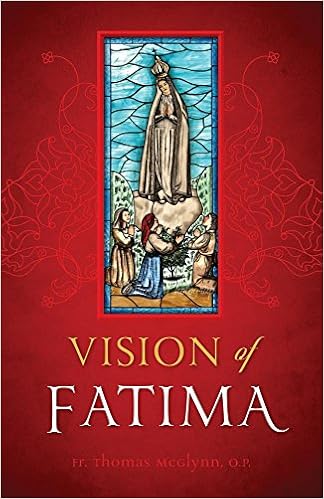
Lines I Wished I’d Written: The Trip to the Chapel of the Apparitions, from Vision of Fatima by Fr. Thomas McGlynn, O.P.

I’ve mentioned I participate at the Catholic Thought book club on Goodreads.  For those that don’t know, Goodreads is a “social catalogue” website for books. It’s a place to catalogue the books you’ve read, provide a rating or review for others to read, and discuss books.  I didn’t know it was owned by Amazon until now, but that makes sense.  In addition people can gather themselves into book clubs of whatever shared interest you may have.  There are all sorts of classics book clubs, history book clubs, romance novel book clubs, and whatever book genre you can imagine, and some you’ve never imagined.  There are several Catholic oriented book clubs and for the last few years I’ve belonged to Catholic Thought.  It’s really the only book club I participate in, and now I’ve become one of the moderators. 

Goodreads is free to participate in, and I’m always looking for new members for the Catholic Thought club.  Some of the books we have recently read (and I have not participated in all the reads) are “The Spiritual Exercises of St. Ignatius of Loyola,” The Interior Castle by St. Teresa of Avila, Amoris Laetitia by Pope Francis, Treatise on the Love of God by St. Francis de Sales, The Future Church: How Ten Trends are Revolutionizing the Catholic Church by John Allen, Silence by Shūsaku Endō, and Learning the Virtues: That Lead You to God by Romano Guardini.  If you want to build an intellectual basis for your faith, then come join us.  Here’s our book club mission statement:

This group is dedicated to the great enjoyment derived from Catholic theological and spiritual reading when combined with the outlooks and opinions of many friends. We are not an apologetics group. Our goal is to find comfort in the teachings of the Catholic Church.

Currently we are reading Vision of Fatima by Fr. Thomas McGlynn, O.P.   Fr. McGlynn (1906-77) was a Dominican priest, sculptor, professor at Providence College, and writer.  /  He sculpted many saints and Popes, and in 1947 was commissioned to make a statue of Our Lady of Fatima.  After building a prototype, he decided he would bring it to the one remaining, living child of the famed Fatima Apparitions of 1917, Lúcia de Jesus dos Santos, at the time a Carmelite nun, to get her approval and possible revisal for the large scale sculpture he intends to create.  This book recounts his journey to Lucy, as he refers to her at the beginning of the book (later he refers to her as Irmã Dores, her name at the convent), Lucy’s rejection of the prototype statue, and the recreation of the new statue based on her vision.  To be clear, this is not the more renown Our Lady of Fatima statue carved by José Thedim that is more familiar.  Sister Lucy did not approve of that statue either; it did not fit the apparition.  Fr. McGlynn intended to make a statue to correspond with Lucy’s perspective, her vision.  And that is what this book is about, as well as filling in the complex messages of the apparition as Fr. McGlynn learns about them.

As it turns out, EWTN’s show Bookmarks with Doug Keck recently broadcast an episode discussing this very book.  Typically Doug on his show discusses the book with the author, but in this case he will not be calling Fr. McGlynn back from the dead. ;) He discusses the book with Fr. Gabriel Gillen O.P.  Fr. Gillen had researched the history of how Fr. McGlynn had sculpted the various statues that he discusses in the book.  You can watch this episode on youtube, here.  


The lines from Vision of Fatima I wish to highlight come from Chapter 4, simply titled, “Fatima.”  Fr. McGlynn and his interpreter and traveling companion in Portugal, Fr. Gardiner, here drive out from Lisbon to the town of Fatima for the first time.  Along the journey they stop at the Dominican Monastery in Batlahla, and then to the shrine at the south rim of the Cova, which is the actual location of the apparitions.  They settle in at a near-by hostel, all the while trying to understand the perplexing details of the Fatima apparitions, and the directives that were given by the Blessed Mother.  Finally they reach their goal, the Chapel of the Apparitions. 


We stopped at a green wooden building near the edge of the village, an inn called Pousada de Nossa Senhora do Rosário da Fátima.  Mr. Petracchi, the proprietor, welcomed us.  I tried speaking to him in Italian, but learned that despite his name and appearance he was English and about as familiar with Italian as I was with Gaelic.  He showed us through the dining room, which occupied the front of the building, to our rooms, off the narrow hall that divided the remainder of the one-story structure.  There was no heating.  The cold, the unpainted woodwork, and the springless beds confirmed the reputation of severe simplicity that visitors remark of Fatima.  There were no luxuries and few comforts at this shrine of penance. 

The few peasants along the road, as others I had seen on the way from Leiria, were short and sturdy of stature, with firm, regular features.  They were poorly and somberly clothed.  Women wore black dresses and veils, and, along with their children, were generally barefoot; the men had well-worn suits, usually brown or grey, collarless shirts, and nearly always the bone, a long, black stocking cap that falls to the shoulder. 

Gathering impressions of the people in the vicinity of Fatima, I found that curiosity was unilateral.  This might have been because they were accustomed to visitors from many lands; but my feeling, bourne out of future contacts, was that, beyond their black eyes, there are self-assured and independent personalities.  They have wrested a living from the stubborn soil of the Serra, and in the process they seemed to have acquired a strange likeness to their surroundings: austere, solid, and uncommunicative.  They were always courteous but never obsequious; friendly, but reserved. 

The panorama of the Sanctuary of Our Lady of the Rosary of Fatima fans out to the north at the west end of the village.  It is dominated by the graceful spire of the basilica, which rises more than two hundred feet on the hill, about a quarter of a mile from the road.  The church is made of cream-colored stone, lighter than the other buildings, and stands as on a pedestal on a great stairway that leads down to the saucer-shaped hallow.  Beneath the cross, a dark-green bronze crown tops the mounting movement of the tower.  There is an empty niche over the doorway.  Scaffoldings made of rough logs were leaning against the sides of the huge nave.  The tower was standing against a magnificent billowing cloud that had been turned a red-gold in the light of the setting sun.

We went through the gateway, down a wide gravel walk, toward the fountain, which is the hub of the Cova.  To the right and left of the walk, retaining walls drop down to irregular depressions, which are sprinkled with small trees and rough rock formations.  These quarter segments of the circle are the only unaltered remains of the original Cova. 

The fountain in the center is a gray circular stone structure, surrounded by arches, from whose roof a column rises to sustain a gilded statue of the Sacred Heart.  Between the fountain and the basilica is the expansive semicircle of sandy, graded fill, where the hundred thousands gather on the days of pilgrimage. 

On the right, the shell of a new hospital was rising; the old hospital is on the ridge to the left.  Beyond it, and not seen from the Cova, is the hospice, which is used for retreatants and for the offices of the Sanctuary.

However, I took note of the hospital, at first, only as the yellow background for a deep-red tile roof of a small structure about twenty yards up the slope of the fountain.  The roof, at the far end, covers a tiny white-walled chapel with room enough for only the celebrant and a few worshippers; but most of the roof is over a porch of rough cement.  This is the goal of every pilgrim’s journey—the Chapel of the Apparitions.  Outside and a little to the left of the doorway of the chapel, a stone column, seven feet high, marks the spot where the Blessed Virgin appeared to the children.

As we arrived at the steps in front of the chapel the great bells of the basilica were ringing out the Angelus.

I find that such an engaging passage.  Even though this is from personal experience, and therefore non-fiction, Fr. McGlynn has a keen creative and organizing eye as he brings the reader to the climatic monument—the Chapel of the Apparitions—to the end of chapter.  And then he provides the lovely touch of the ringing bells of the Angelus, the mid-day prayer to the Blessed Virgin.


Here’s how the Chapel looks in more recent times. 


And here is the basilica: