"Love follows knowledge."
"Beauty above all beauty!"
– St. Catherine of Siena

Showing posts with label 2015. Show all posts

Thursday, January 14, 2016

My 2015 Reads

Completed:

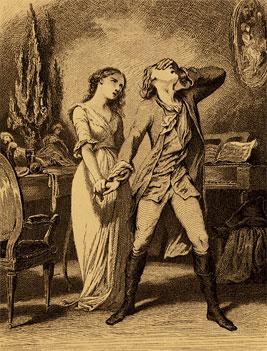
The Sorrows of Young Werther, a novel by Johan Wolfgang von Goethe.
“Give Me Your Heart,” a short story by Joyce Carol Oates.
“The Triumph of Night,” a short story by Edith Wharton.
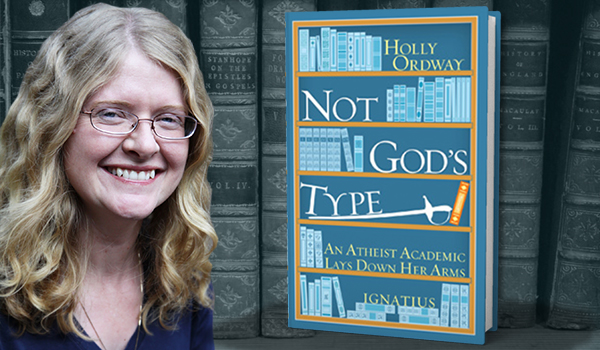
Not God’s Type: A Rational Academic Finds a Radical Faith, a non-fiction memoir by Holly Ordway.
“Master Misery,” a short story by Truman Capote.
Jesus of Nazareth: The Infancy Narratives, a non-fiction book of theology by Pope Benedict XVI.
“Bartleby the Scrivener: A Story of Wall Street,” a short story by Herman Melville.
The Book of Job, a book of the Old Testament, KJV Translation.
“Little Miracles, Kept Promises,” a short story by Sandra Cisneros. 
“The Portobello Road,” a short story by Muriel Spark.
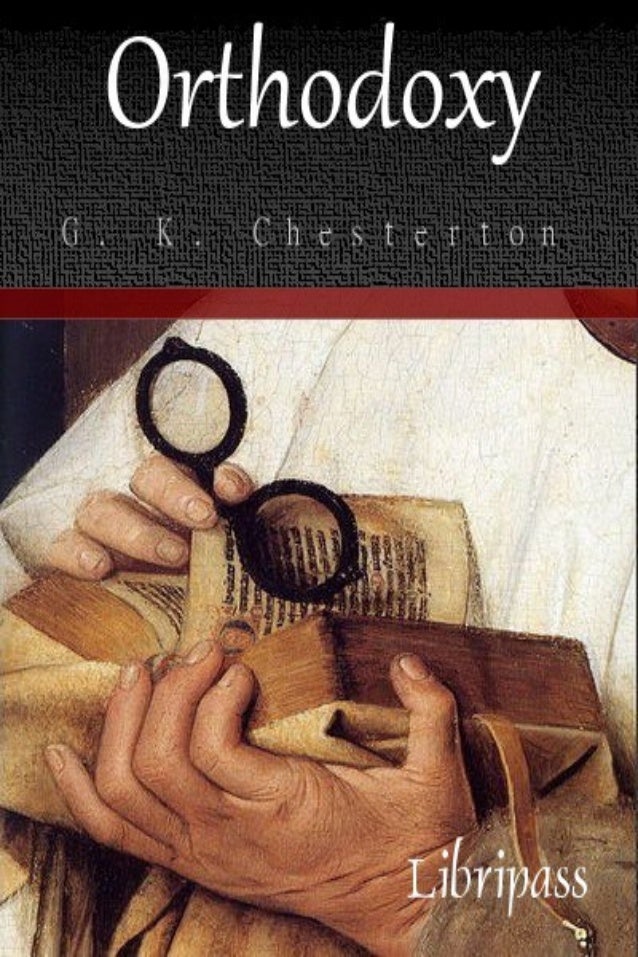
Orthodoxy, a non-fiction book of philosophy by G. K. Chesterton.
“Queen of the Tyrant Lizards,” a short story by John C. Wright.
“The Key,” a short story by Eudora Welty.
“Extricating Young Gussie,” a Jeeves Collection short story P. G. Wodehouse.
Vol 2 of Les Misérables, “Cosette,” a novel by Victor Hugo.
“An Alpine Idyll,” a short story by Ernest Hemingway.
Dare We Hope that All Men be Saved? With a Short Discourse on Hell, a non-fiction work of theology by Hans Urs von Balthasar.
“Henry Lee Remembers George Washington,” from Lend Me Your Ears: Great Speeches in History, selected by William Safire.
“A Pursuit Race,” a short story by Ernest Hemingway.
“Today is Friday,” a short story by Ernest Hemingway.
ASPCA Complete Guide to Cats: Everything You Need to Know About Choosing and Caring for Your Pet, a non-fiction work by James Richards.
“Banal Story,” a short story by Ernest Hemingway.
Maggie: A Girl of the Streets, a novella by Stephen Crane.
Feline Catastrophe, a collection of short stories by Victor S E Moubarak.
“Now I Lay Me,” a short story by Ernest Hemingway.
“Sounds,” a short story by Vladimir Nabokov.
Crime and Punishment, a novel by Fyodor Dostoevsky. 
“The Quest,” a short story by Saki (H. H. Munro).
“Tobermory,” a short story by Saki (H. H. Munro).
“Mrs. Packletide’s Tiger,” a short story by Saki (H. H. Munro).
“The Secret Sin of Septimus Brope,” a short story by Saki (H. H. Munro).
“The Sisters,” a short story by James Joyce.
No More Parades, the 2nd novel of the Parade’s End Tetralogy by Ford Madox Ford.
Death in the Afternoon: Meditations on the Last Seven Words of Jesus from the Cross, a non-fiction work of theology by Richard John Neuhaus.
Comedy of Errors, a play by William Shakespeare.
“The Human Fly,” a short story by T. C. Boyle.
Robert Lowell: Collected Poems, an anthology of poetry edited by Frank Bidart and David Gewanter.
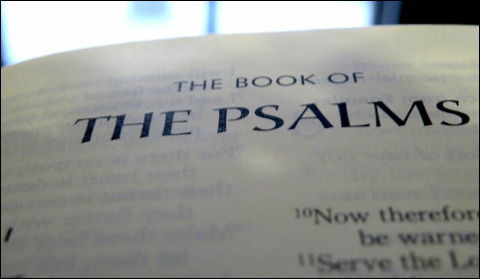
Psalms 1-50 from The Book of Psalms, a book of the Old Testament, KJV and Ignatius RSV Translations.


Unfinished Reading:

Julius Caesar: Life of a Colossus, a biography by Adrian Goldsworthy.
The Book of Psalms, a book of the Old Testament, KJV and Ignatius RSV Translations.
Artful Sentences: Syntax as Style, a non-fiction book on writing by Virginia Tufte.


Let me start by saying that this was not a good year for my reading, though as I put together this summary it turned out to be not as disastrous as I had speculated.  Here are the links to the various milestone updates I provided:


As you can see, there was no Third Quarter Update, which would have come sometime after the end of September.  Between the end of June and the October was almost a black hole of reading, and so I did not feel a quarterly update was warranted.  What happened?  I started Crime and Punishment somewhere while I was on vacation in that last week of June, but after vacation my reading was completely sporadic.  It had nothing to do with the novel—it was a great and intense read.  I read it in spurts, which means I had gaps where I did not pick it up.  In these gaps I did pick up a few less mind consuming reads, but I was kind of burnt out over the summer.  I guess I can give excuses: we now had a cat to go along with the dog, which required adapting, this dog was and still is more time consuming than past dogs, Matthew was a year older and now needs more attention, the baseball season preoccupied me more than other summers, and I had one of those intense periods at work where a project was culminating.  Sigh, I just couldn’t keep up with my plans.

In the end, though, I approximated my usual average number of reads.  But it’s somewhat deceiving.  Though the completion numbers were not far from average, the works tended to be on the shorter side, so if I were to calculate the number of pages read I don’t think I came close to average.  But I don’t know what my average number of pages read per year would be.  Last year I estimated I read somewhere over 4300 pages.  This year I estimate I read about 3600 pages, a good 700 pages less than last year.

Perhaps I should start with what I had intended to read and never got done.  The fiction works, I had planned to read were Dante’s Paradisio, Thomas Mann’s Buddenbrooks, Virginia Woolf’s To The Lighthouse, Thomas Berger’s Crazy in Berlin, and D. H. Lawrence’s The Virgin and the Gypsy.  I had intended to have a German literature theme to the 2015 reads, but I only got a few of the German works I planned read.  I am embarrassed to say that for the second year I did not complete the Adrian Goldsworthy Julius Caesar biography.  I was about a hundred pages in at the end of last year and I read another 200 pages this year.  200 more pages to go: do you think I’ll finish it this year?  That’s sarcasm.  It’s a really good biography.  I also didn’t finish my one work on writing that I read every year, this year being Virginia Tufte’s Artful Sentences: Syntax as Style.  I’m about 40 percent through, and it is fine work.  It shows you how to use every element of grammar to craft fine sentences.  I’m going to post a few times this year on various things that caught my attention from this book.  I only read the first third of the Psalms.  I have to say I got caught up on how I should analyze and categorize them, and wound up letting perfection tie me up in knots.  I should have just read them.  And since I didn’t finish the Psalms, I never got to the two Epistles to the Corinthians.  Even under the best of conditions, I could never have completed all I planned.

Interestingly and not intentional, the novels I completed had a 19th century bias.  Four of the five works were from the 19th century, and they were all what would be deemed classic novels: von Goethe’s The Sorrows of Young Werther, Volume 2 of Hugo’s Les Misérables, “Cosette” (I’m treating each volume as a separate novel in this huge tome), Dostoyevsky’s Crime and Punishment, and Crane’s short novel, Maggie: A Girl of the Streets.  Crane’s Maggie was a disappointment.  I believe it was his first novel, and it showed.  Though there were moments of brilliant prose, it was not up to his more well-known works.  Unless you’re a Stephan Crane scholar or aficionado, I don’t recommend it.  Goethe’s Young Werther was also his first novel, and though I could quibble with elements of the work, overall it was enjoyable and interesting.  It was a huge international sensation in its day, one of the foundations of the Romantic era, and so an important work to have read if one wants to complete the important works of literature.  Les Misérables and Crime and Punishment are also important works, but they are truly great works.  Dostoyevsky’s novel just could be rated in the top five of the greatest novels ever written, which would give Dostoyevsky two of the greatest novels ever written.  The one work not of the 19th century was Ford Madox Ford’s No More Parades, which is the second novel of his tetralogy, Parade’s End.  This is a very modernist work (stream of conscious, time dislocations, psychological theories, disjointed narrative), and you have to enjoy modernism to like this novel.  It’s difficult but worth it if you enjoy high artistry in literature.

I had made it a goal to read more non-fiction works in 2015, and I did; I read six, more than the novels.  Three of the non-fiction works were theological works, all of them excellent: Pope Benedict XVI’s third in his series on Jesus of Nazareth, The Infancy Narratives, Richard John Neuhaus’ Death in the Afternoon, and Hans Urs von Bathalsar’s, Dare We Hope All Men Be Saved.  I have to say that all three are great theologians, offering incredible insight.  The Infancy Narratives focus on just that, the Christ child sections of the New Testament, Death in the Afternoon focus on the seven last words of Christ on the cross, and von Balthasar’s book delves on the possibility that salvation is universal, meaning that eventually everyone could be saved.  Urs von Balthasar took a lot of criticism for this very controversial position.  The Catholic Church, as most Christian denominations, do not support such a notion.  I have to say that I have always been sympathetic to the notion of universalism, and this book reinforced my thinking.  I’ve been meaning to write a detailed essay on the subject, but I don’t know if I want to be so controversial.  I never planned at the beginning of the year to read the Neuhaus and the von Balthasar but things happen that inspire me to improvise.

Also as a non-fiction read was G. K. Chesterton’s brilliant philosophic work, Orthodoxy.  Its central theme is that tradition and the western intellectual heritage is the proper basis philosophic underpinnings.  It stands in complete opposition to modernism.  This is a must read for anyone interested in the intellectual development of the 20th century, no matter which side of the issue you stand on, and it has all the Chesterton hallmarks of sharpness and humor. Holly Ordway’s Not God’s Type is a memoir conversion story of how Ordway went from being a fierce atheist to a believing Christian, and she did through her love of literature.  It was a really enjoyable read.  Finally since in May we found and adopted a little kitten, and since we had no experience raising cats, I read the ASPCA’s Complete Guide to Cats.  That was unplanned.

I did not read the entire tome of Robert Lowell’s Collected Poetry, nor did I intend to at the beginning of the year.  I did read enough to sample through and enjoy his most famous poems.  I posted on four of his poems throughout the year, and I think you would appreciate his work by reading those posts.  At the end of December I snuck in William Shakespeare’s The Comedy of Errors, which is one of his earliest plays, shortest plays, and funniest plays.  It was a play I had never read before, and so I have now read 27 of the 37 officially accredited plays to Shakespeare.  I had not clicked off one in a few years.  It’s one of my goals to read them all.  As to my annual Biblical reads, I read the Book of Job (KJV) and the first fifty Psalms (KJV and Ignatius RSV translations).  The Book of Psalms is so rich that I read it in two translations and I decided I wanted to learn them in a much more detailed way than just a read through.  I tried hand copying each Psalm into a notebook, but after the first 19 I realize it would take forever.  I did pick up a lot of nuance by hand writing down each word, nuance that you gloss over as one reads.  Since that was too time consuming, I’ve decided to create a database of types, themes, length, and important images and phrases Psalm by Psalm.  Perhaps that will be more fruitful.

I meant to read several famous speeches from history this year from Safire’s Lend Me Your Ears, but I only read one, Henry Lee’s eulogy of George Washington.  I enjoyed it, and one gets to observe great speech craft, the art of oration.  A speech is roughly the length of a short story.  Another work I read that doesn’t easily fit into a category was Victor Moubarak’s Feline Catastrophe.  You may have noticed that Victor is a frequent visitor to this blog, and I have now read a couple of his books.  Feline Catastrophe is a collection of fictional vignettes centered on a house cat.  The cat outwits the master at every turn.  It’s hilarious, and well worth a read.  It’s one of those books I needed to have as break when I was burnt out from intense literature.  I think you can get it for free as a PDF at his website.

I read twenty-one short stories this year, which was only three short of my annual goal of two per month.  But since the Henry Lee speech was approximately the length of a short story, then I was only two short.  Still, these short stories were mostly on the shorter side which makes it look more impressive than it really is.  There were a number of authors I had never read before: Wright, Spark, Wodehouse, Boyle, all very good writers with distinct styles.  I hope in the future to read more of their work.  The short stories can be classified as good, exceptional, or duds.  There were three duds in the group that I would tell you don’t ever bother: Joyce Carol Oats’ “Give Me Your Heart,” Edith Wharton’s “The Triumph of the Night,” and Hemingway’s “Today is Friday.”  The exceptional were Melville’s “Bartleby the Scrivener,” Spark’s “The Portobello Road,” Welty’s “The Key,” two by Hemingway, “An Alpine Idyll,” and “Now I Lay Me,” Nabokov’s “Sounds,” Joyce’s “The Sisters,” Boyle’s “The Human Fly,” and two  by Saki, “Tobermory” and “The Secret Sin of Septimus Brope.”  There were four stories by Saki in the year’s read and one could make a case that all four could make the exceptional category.  It probably depends on my impulse of the moment.  He’s that good a short story writer.  “Bartleby the Scrivener” and “The Sisters” were both stories I had read in the past and are classics.  It’s always good to re-read a few classics every year.  You tend to see so much more.  Throughout the year I posted analyzes on “The Portobello Road,” “The Key,” Now I Lay Me,” and “Tobermory.”  You can find them by scrolling down the Labels list.  I read five stories from Hemingway, as I make my way through his entire collection.  I’ve now read more than two thirds.  T. C. Boyle is one of the current top American short story writers and I really wanted to read one of his stories.  “The Human Fly” does not disappoint, and I will try to do one of my analyses on it in the near future.  “Sounds” is my third or possibly fourth Vladimir Nabokov short story that I’ve read.  What is notable about all the Nabokov stories I’ve read so far is that they are perfection in form and style.  There isn’t a word out of place; they are economic in delineation, and perfectly structured.  He may be the most skilled fiction writer I have ever read. 

So which of the stories gets the annual prize for best read story of the year?  Of the exceptional listed above, I would say…drum roll please… Let’s Start with the honorable mentions and runner’s up: Muriel Spark’s “The Portobello Road,” and Ernest Hemingway’s “Now I Lay Me.”  Both stories had nuance, depth, and created an interesting experience for the reader.  The winner for 2015 is Herman Melville’s “Bartleby the Scrivener: A Story of Wall Street.”  There’s a reason why “Bartleby” is a classic.   The social implications, the psychological insight, and the religious connotations make it a profound story, and Melville’s prose is always sparkling. 

Now one last thing, I have to apologize to one of my commenters who had a request and I didn’t follow through.  A friend, Mary Sue, asked me back in the spring to write up specific posts for Melville’s “Bartleby” and Chesterton’s Orthodoxy.  I said I would and I worked up thoughts for both but never put pen to paper – or fingers to keyboard.  Orthodoxy is just too large to do.  When sometime in the future I read it again—and it’s worth another read—I’ll put together some sort of detailed post.  Since I can’t renege twice to the same person, and since “Bartleby” won my annual best short study read, I owe it to Mary Sue to post an analysis of it.  So stay tuned for that Mary Sue.


If there is anything that caught your eye in my 2015 Reads, let me know.  I can discuss it further.


Friday, August 28, 2015

On Language: 2015 New Words in Oxford Dictionary

Actually this was only the a quarterly update of new words added to the great Oxford English Dictionary but for some reason this quarter seems to be make the news headlines.  A thousand words were added in this go around and here are a few highlights.

I think the word that’s making the most waves is “manspreading.”  Now I know a woman must have come up with this term.  I’ve heard so many women complain about it, including my wife.  “Do you need to do that?” my wife once said.  “Do you need to display them as if their some sort of prize?”  Why is it that men have to sit that way?  I don’t know, but it just comes natural.  Here’s the definition.
Manspreading, n.: the practice whereby a man, especially one travelling on public transport, adopts a sitting position with his legs wide apart, in such a way as to encroach on an adjacent seat or seats.

“Brain fart” made the list and I have to say that’s been around a while.  People use it at work all the time. 

Brain fart, n.: (informal) a temporary mental lapse or failure to reason correctly.

Brain farts happen more frequently with age.

Then there’s “hangry,” a perfect word blend of which I know exactly how it feels.

Hangry, adj.: (informal) bad-tempered or irritable as a result of hunger.

Don’t get in my way when I’m hangry.  A perfect reason for meetings not to extend into lunchtime. 

I came across “fat-shame” a few months ago on The Anchoress’s blog.  Apparently someone was fat-shamed and Anchoress took offense.

Fat-shame, v.: cause (someone judged to be fat or overweight) to feel humiliated by making mocking or critical comments about their size

I agree with Anchoress.  That’s not very kind.

Now “butt dial” is one I would never have guessed.  I don’t keep my cell in my back pocket and I try to avoid keeping it close to my body.  (Aren’t people afraid of getting butt cancer from the radio waves?)

Butt dial, v.: calling someone accidentally with your mobile phone in a rear pocket.

Now combine that with brain fart and you get a telepathic phone call that gives off a malodorous scent.

Now “spear phishing” is one I’ve come across at work as they try to provide computer and information protection training.

Spear phishing, n.: the fraudulent practice of sending emails ostensibly from a known or trusted sender in order to induce targeted individuals to reveal confidential information.

With the attempt to eliminate gender in this oh so wonderful, brave, new world, I guess I shouldn’t be surprised with “Mx.”

Mx, n.: a title used before a person’s surname or full name by those who wish to avoid specifying their gender or by those who prefer not to identify themselves as male or female.

And with my statement above, then I can sense some of you want to get me through a “deradicalisation” process.

Deradicalisation, n.: the action or process of causing a person with extreme views to adopt more moderate positions on political or social issues.
No sir, it won’t work.  I’m a fixed radical to this secular culture.  I’m a Christian.  The horror.

Now really, do “cat cafes” really exist?

Cat cafe, n.: a cafe or similar establishment where people pay to interact with cats housed on the premises.

If anyone out there has the sudden need to play with a cat and wants to pay for it, I can charge a reasonable amount for you to come to my house.

Now I can go on and on with some of these new words.  I have to stop.  But there are more interesting words.  Go over to the Daily Mail’s article, who seemed to have the best piece on this,to see what fatberg, cakeage, fur baby, rando, and beer o’clock mean.  OK, one more, the sister word to beer o’clock.

Wine o’clock, n.: an appropriate time of day for starting to drink wine.


It’s always an appropriate time at my house to drink wine.  In fact I’m going over now for a glass.  Cheers.

Wednesday, July 15, 2015

2015 Reads, Update #2

We are passed the midyear mark and into the year’s second quarter.  As I look over this passed quarter’s reads, I guess I’m still on a solid pace to read my usual year’s allotment.  I don’t know how far into Chesterton’s Orthodoxy I was at the end of last quarter when I hadn’t completed it, but it’s now in the complete column, and I’ve completed two other full length books, the “Cosette” volume of Hugo’s novel Les Misérables and non-fiction work of theology by Hans Urs von Balthasar, Dare We Hope that All Men be Saved?  I also completed Stephen Crane’s short novel, Maggie: A Girl of the Streets, seven short stories, as well as started up The Book of Psalms and Dostoevsky’s Crime and Punishment while continuing on in reading Robert Lowell’s poetry and the biography of Julius Caesar. 

Orthodoxy is a great work, one that has amplified the way I think on the world.  It is the great intellectual dissent to the trajectory of modern culture.  Actually one could say that at the time of its publication (1908) it was dissenting to the trajectory of the culture but today, especially with the recent legalization of same sex marriage, it is now fully dissenting with the established culture.  It makes a passionate argument against secular modernism and why a Christian worldview is both coherent and culturally beneficial.  It’s really a must read whether you agree with a Christian world view or against it.  At a minimum you should know what you’re against.  If I can get to it, I want to have at least two posts on the book. 


The second volume of Les Misérables, “Cosette,” was just as good as the first volume, though I think the digressions in “Cosette” didn’t seem to fit like those in “Fantine.”  But more than likely it’s me not getting it.  Still Hugo’s novel is a pleasure to read. 

Dare We Hope that All Men be Saved? by the great Catholic theologian Hans Urs von Balthasar was an unplanned read.  It takes on the subject of universal salvation, certainly a controversial subject, and something the Catholic Church rejects.  Universal salvation is the idea that in time and by some process everyone is eventually saved.  It does not mean an absence of hell as some who strongly oppose the notion characterize, but either hell is not eternal or that on one actually goes to hell.  I was challenged to read this when I commented on a discussion board that I have strong sympathies to universalism.  Urs von Balthasar was severely criticized for his sympathies, and so has Fr. Robert Baron who wrote the introduction to this current publication.  I hope to write a full essay on universal salvation, though I know this is a touchy subject.

Maggie: A Girl of the Streets is one of Crane’s very first works, written before The Red Badge of Courage, and I’m afraid not a good one.  One could describe Crane’s writing as having two impulses, one toward Naturalism and one toward Impressionism, and ideally he combines the two.  Personally I don’t like Naturalism (it selects subjects and details that distorts realism) but I can respect it as an aesthetic movement.  Crane is clucky in Maggie with the Naturalism, and he really hadn’t develop his brilliant impressionistic writing yet.  Yes, there are a few brilliant flashes, but Maggie is a juvenescent work.


I can’t say any of the seven short stories were classics, except possibly Hemingway’s “An Alpine Idyll.”  I might do post on that one.  Eudora Welty’s “The Key” was touching, and I posted an excerpt a few months ago.  The Wodehouse story was the first I have ever read, and it was funny and enjoyable.  I’m not a big science fiction fan, but Johnny Wright’s story was interesting.  It comes from a collection called The Book of Feasts and Seasons and each story in the collection is a scifi piece with an association to feast on the Catholic calendar.  “Queen of the Tyrant Lizards” is associated with the Epiphany.  “Banal Story” was another worthwhile Hemingway story. It was very short (two pages, I think) and it was a work of metafiction and it reminded me of something Jorge Luis Borges might write.  The other two Hemingway stories were trite.

I started Dostoevsky’s Crime and Punishment, and wow!  That is one intense novel.  This has the reputation of being one of the greatest novels of all time, and by the time I’m finished I may agree.  I’m about a quarter of the way through.  I hope to do a few posts on this great work.  Because I’m new to cat ownership, I decided to read the ASPCA’s Complete Guide to Cats.  It’s fast reading with a lot of pictures, but it’s interesting.  I really know little about cats.


I also started The Psalms as my Old Testament read and I’m having a difficult time making up my mind on how to proceed to span them.  I could just read them through like I did the other Old Testament reads, but the Psalms are so incredibly rich as literature and as theology that I wanted to do close readings of all 150.  I’m finding that doing close readings of that many takes an awfully long time.  And then there’s the question of how I perform the close reading.  I started by writing out by hand each one into a notebook, and got to Psalm 19 and realized this is taking forever.  But I noticed so much as I wrote.  There’s nothing like word by word copying to pick up what the reading eye just scans over.  For example, I was surprised at how martial the metaphors and subjects were in them.  In addition I picked up a couple of courses on understanding the Psalms and picked up Robert Alter’s translation with commentary.  Alter is a scholar of Hebrew literature and provides almost line by line commentary.  I’m learning so much about them: form, genre, themes, poetic style, allusions.  In three months I’ve only gotten to Psalm 25, which is a horrendously slow pace.  I’ll have to figure out a way to pick up the pace while continuing to learn.  I may have to drop my New Testament read this year and devote the entire year with the Psalms.


Finally I’m soldiering on with Julius Caesar and reading Robert Lowell’s poetry.

You can read my 2015 Reads inception post here and 2015 Update #1 post here.


Completed First Quarter:

The Sorrows of Young Werther, a novel by Johan Wolfgang von Goethe.
“Give Me Your Heart,” a short story by Joyce Carol Oates.
“The Triumph of Night,” a short story by Edith Wharton.
Not God’s Type: A Rational Academic Finds a Radical Faith, a non-fiction memoir by Holly Ordway.
“Master Misery,” a short story by Truman Capote.
Jesus of Nazareth: The Infancy Narratives, a non-fiction book of theology by Pope Benedict XVI.
“Bartleby the Scrivener: A Story of Wall Street,” a short story by Herman Melville.
The Book of Job, a book of the Old Testament, KJV Translation.
“Little Miracles, Kept Promises,” a short story by Sandra Cisneros. 
“The Portobello Road,” a short story by Muriel Spark.

Completed Second Quarter:
Orthodoxy, a non-fiction book of philosophy by G. K. Chesterton.
“Queen of the Tyrant Lizards,” a short story by John C. Wright.
“The Key,” a short story by Eudora Welty.
“Extricating Young Gussie,” a Jeeves Collection short story P. G. Wodehouse.
Vol 2 of Les Misérables, “Cosette,” a novel by Victor Hugo.
“An Alpine Idyll,” a short story by Ernest Hemingway.
Dare We Hope that All Men be Saved? With a Short Discourse on Hell, a non-fiction work of theology by Hans Urs von Balthasar.
“A Pursuit Race,” a short story by Ernest Hemingway.
“Today is Friday,” a short story by Ernest Hemingway.
“Banal Story,” a short story by Ernest Hemingway.
Maggie: A Girl of the Streets, a novella by Stephen Crane.


Currently Reading:

Julius Caesar: Life of a Colossus, a biography by Adrian Goldsworthy.
“The Book of Psalms,” a book of the Old Testament, KJV & NIV Traslations.
Robert Lowell: Collected Poems, an anthology of poetry edited by Frank Bidart and David Gewanter.
The Book of Psalms, a book of the Old Testament, KJV and Ignatius RSV Translations.
Crime and Punishment, a novel by Fyodor Dostoevsky. 
ASPCA Complete Guide to Cats, a non-fiction book by James R. Richards, D.V.M.

Upcoming Plans:

The Virgin and the Gypsy, a novella by D. H. Lawrence.
No More Parades, the 2nd novel of the Parade’s End Tetralogy by Ford Madox Ford.
“Now I Lay Me,” a short story by Ernest Hemingway.
“Sounds,” a short story by Vladimir Nabokov.
“Wingstroke,” a short story by Vladimir Nabokov.


Wednesday, April 15, 2015

2015 Reads, Update #1

The first quarter of the year has passed, and so it’s time to assess how my reading is going.  Despite all the crazy computer problems I’ve had for the past several months, I am remarkably on track.  Three books read—one a novel and two non-fiction works—six short stories, and one Biblical book.  And I’ve made progress in the Julius Caesar biography, I’m half way through Chesterton’s Orthodoxy, and I’ve perused the Robert Lowell poetry anthology. 

The Goethe novel, The Sorrows of Young Werther, is the first of several German novelists I plan to read this year.  I had started a post on it and it was one of the documents that got wiped out when I had to reinstall the operating system on this new computer.  Instead of recreating any analysis, perhaps I’ll just try to highlight a passage or two that were memorable for me.  I have to say the novel was rather melodramatic, but it did have some highlights.  I don't know if I'd consider it as great a work as its reputation but it was an important work in its day.  It's one of those classics that should be read.


I had also started a post on Pope Benedict’s third book in the Jesus of Nazareth series, The Infancy Narratives that also got wiped out.  It was one of my Lenten reads this year, along with Chesterton’s Orthodoxy, which I haven’t finished yet.  Perhaps I’ll post something from The Infancy Narratives around Christmas, if I can remember, since it will be more relevant.  Again, though I doubt I can reproduce what I had.  

Holly Ordway’s Not God’s Type memoir is a conversion story from a hardened atheist into a believing Christian, a general Protestant at first, and then ultimately into Roman Catholicism.  What makes this book so interesting is that she really documented her thought processes as she went from step to step.  It’s a fascinating read if you’re into philosophic thought processes.  My returned to the faith followed a different path.  For me atheism didn’t make scientific sense, or better put, God made much more sense than random chance.  So I got to see a different thought approach, and I love conversion stories.  They are so inspiring.


I had a really thoughtful post put together on The Book of Job, and that too disolved into the vapors of the virtual world.  The first two short stories (Oats’ “Give Me Your Heart” and Wharton’s “The Triumph of the Night”) I read were pretty much forgettable, but the rest were either excellent—Melville’s “Bartleby” is truly one of the best short stories ever written—or good.  I’m currently in the middle of a short story analysis of Sparks’ “The Portobello Road.”  I posted once on that and I’ll complete the analysis with another shortly.  I would like to do an analysis of “Bartleby” since it’s included in so many anthologies. 


My standing offer always is here: If there is anything I’ve read or plan to read that you want my thoughts on, just ask.  I’ll see if I can accommodate.  The post on my 2015 reading plans are here.  


Completed:

The Sorrows of Young Werther, a novel by Johan Wolfgang von Goethe.
“Give Me Your Heart,” a short story by Joyce Carol Oates.
“The Triumph of Night,” a short story by Edith Wharton.
Not God’s Type: A Rational Academic Finds a Radical Faith, a non-fiction memoir by Holly Ordway.
“Master Misery,” a short story by Truman Capote.
Jesus of Nazareth: The Infancy Narratives, a non-fiction book of theology by Pope Benedict XVI.
“Bartleby the Scrivener: A Story of Wall Street,” a short story by Herman Melville.
The Book of Job, a book of the Old Testament, KJV Traslation.
“Little Miracles, Kept Promises,” a short story by Sandra Cisneros. 
“The Portobello Road,” a short story by Muriel Spark.


Currently Reading:

Julius Caesar: Life of a Colossus, a biography by Adrian Goldsworthy.
“The Book of Psalms,” a book of the Old Testament, KJV & NIV Traslations.
Orthodoxy, a non-fiction book of philosophy by G. K. Chesterton.
Robert Lowell: Collected Poems, an anthology of poetry edited by Frank Bidart and David Gewanter.
The Book of Psalms, a book of the Old Testament, KJV and Ignatius RSV Translations.


Upcoming Plans:

Vol 2 of Les Misérables, “Cosette,” a novel by Victor Hugo.
The Virgin and the Gypsy, a novella by D. H. Lawrence.


Tuesday, February 3, 2015

Plans for 2015 Reads

We’re well into another year and I haven’t shared my plans for the coming year.  Actually I’ve already started.  I’ve completed one novel that was planned for last year and didn’t make it.  It’s from the great German writer, Johan Wolfgang von Goethe.  It’s his first major work, published when he was just 23 I think, the novel that catapulted him to fame, The Sorrows of Young Werther.  Started from last year and making them a priority at the beginning of the year are Dante’s Paradisio and Adrian Goldsworthy biography of Julius Caesar.  For Dante’s Paradisio I am going to do what I did back in 2013, that is read two different translations simultaneously.  I have already read the first fifteen cantos using the fine husband and wife team Robert and Jean Hollander, but because I enjoyed Anthony Esolen’s Purgatorio translation a year and a half ago, I’m going to read his Paradisio as well.  Plus it was on sale and inexpensive.


For novels I am going to pick up where I left off in two lengthy works.  I’m going to read Volume 2 of Hugo’s Les Misérables, “Cosette” and the second novel, No More Parades, in Ford’s tetrarchy, Parade’s End.  On my desire list for the past three years has been Dostoyevsky’s Crime and Punishment, and, come hell or high water—I love that expression—I am going to read it this year.  I am going to continue on a German theme this year.  In addition to Goethe’s Young Werther, and Goethe being the greatest German novelist of the 19th century, I am going to read a novel from Thomas Mann, arguably the greatest German novelist of the 20th century.  Now my impulse had been to read Mann’s Magic Mountain, but my German friend Barbara recommended Mann’s Buddenbrooks.  I think she said it was her all-time favorite novel and when I saw Hemingway listed Buddenbrooks in the top five or ten greatest novels of all time, well that convinced me.  So I have an early German novel, an early 20th century German novel, and I’m thinking of picking a contemporary German novel, perhaps by the recent winner of the Nobel Prize, Herta Müller.  I haven’t picked one out yet, but I think it will get me rich in German literature.


I haven’t read that many comic novels, and so I decided to try reading Thomas Berger, who’s prose style has been lauded.  Berger just died over last summer.  I could have gone with one of his more well-known novels but when his first novel, Crazy in Berlin, came on sale on Amazon I grabbed it.  It’s a satiric novel of an American stationed in post WWII Germany, and so it fits with the Germany theme of the year.  I promised another friend, Belinda (who blogs at Bii’s Books) that I would provide my thoughts on Virginia Woolf’s great novel, To the Lighthouse.  I also placed two novellas on my list, Stephan Crane’s Maggie: A Girl of the Streets, and D. H. Lawrence’s The Virgin and the Gipsy.  Crane’s work continues my progression through American novels and Lawrence’s work came up in a conversation on a Lawrence group that I belong to.  I did my Master’s thesis on D. H. Lawrence, so I’ve kept a links to scholars who study him, and this is a work I’ve never read.

Besides completing the Julius Caesar bio, I have a few other nonfiction books I plan to read.  I’m already reading one of Pope (Emeritus) Benedict XVI’s sequence of books on Jesus.  I belong to the Catholic Group at Goodreads, a book discussion site, and as a book club we’re reading Jesus of Nazareth: The Infancy Narratives.  Benedict XVI’s Jesus of Nazareth books are an exegeses on Christ’s life and the Biblical text.  I’m a good thirty pages and really impressed.  Pope Benedict XVI, born Joseph Ratzinger in Bavaria, is another German connection to this year’s reads.  For lent I’m finally reading G. K. Chesterton’s Orthodoxy, a work of Christian apologetics.  And also on my list is conversion memoir, Not God’s Type: A Rational Academic Finds a Radical Faith, by Holly Ordway.  This came highly recommended, and I enjoy conversion stories.  I’ve read a number of conversion stories of scientific oriented people—I can relate to that journey since I’m an engineer who also went from atheism to Catholicism, but Ordway is a Literature professor who goes from atheism to evangelical Christianity and ultimately to Catholicism.  So I assume she writes well.  This year’s book on writing will be Artful Sentences: Syntax as Style by Virginia Tufte.

My poetry read this year will be Robert Lowell’s Collected Poems.  I’m not going to read all 1000 pages or even most of them, but I’ll poke around his life’s work to get a good feel.  He’s got a very distinct style, a difficult one.  But I have like the several poems I’ve read of his in the past.  My Shakespeare read will not be exciting.  I’m going to read on of his first plays, The Comedy of Errors.  There aren’t that many plays I haven’t read yet, and I want to get to where I’ve read them all.  As to Bible reads, I’m up to Job and the Psalms, which is going to be fantastic.  I’m going to have to read the Psalms in both King James and NAB translations.  And for the New Testament read, I’m up to Paul’s epistles to the Corinthians; I’ll try to get both in.


I’m not going to overly plan my short story reads, but I’ll aim for the same two per month average.  I have bought some collections of writer’s short stories that I’ve been dying to read,  Muriel Spark for instance and Evelyn Waugh.  I’ll continue my survey through Hemingway’s collection; I’m not up to any well-known ones, but perhaps I’ll be surprised.  Last year I started through Vladimir Nabakov’s collection, and I want to continue that since I really want to absorb his prose.  I already completed a short story by Edith Wharton, “The Triumph of the Night,” and I have Truman Capote’s “Master Misery” ready as the next one. 

One new feature I want to try this year and that's post on a famous speech.  I think fine oratory is the epitome of great rhetoric, and rhetoric I define as the application of words to a medium.  What I’ll do is highlight a speech from William Safire’s compendium of great speeches, Lend Me Your Ears: Great Speeches in History and break down its construct.


And who knows what else I'll impulsively add into the mix as the year goes along.  Should be another great year for reading.