
I
found this article interesting. Frieda
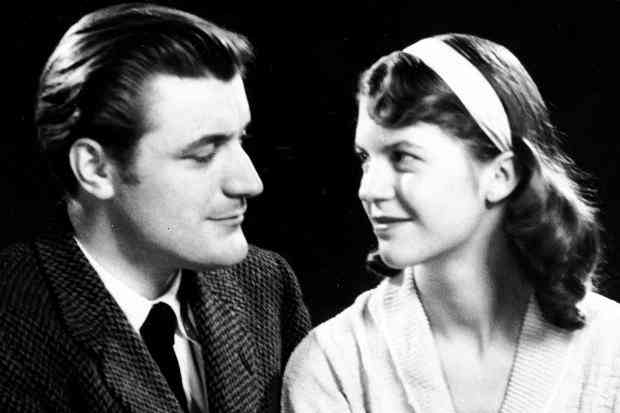
Hughes, who is the daughter of poets Sylvia Plath and Ted Hughes, criticized
the feminists who idolized her mother’s work but who condemned her father
because of their belief that he was responsible for Plath’s suicide. Here’s a quick background for those who are
not familiar. Plath and Hughes were
young poets married to each other from 1956 to her death in 1963. Sylvia Plath had a history of mental illness and suicide attempts, and finally did kill
herself. It is true Ted Hughes cheated on her and had a mistress, and five months before the suicide had
separated from Plath. With that, here
is Frieda Hughes’ claim as published in The Telegraph:
The
feminists who exploited Sylvia Plath's death to accuse her husband Ted Hughes
of mistreating her committed an "abuse" and a "horrible form of
theft", the couple's daughter has said.
Frieda
Hughes, the oldest of Plath and Hughes' two children, said she had been
"appalled" by the appropriation of her family's tragedy to suit a
cause.

Appearing
in her first ever television interview, she said she deplored the judgment of
"outsiders" who mistakenly believed they had an insight into her
family's life.
What
I didn’t realize was that the mistress Hughes took up with, also eventually committed suicide. From the article:
Her
father, the former poet laureate Hughes, went on to a relationship with his
mistress Assia Wevill, who killed herself and their child in the same way six
years later.
The
incidents, which left Hughes unable to write his Crow collection, was taken up
by furious feminists, who idolised Plath and accused the poet of mistreating
both women.
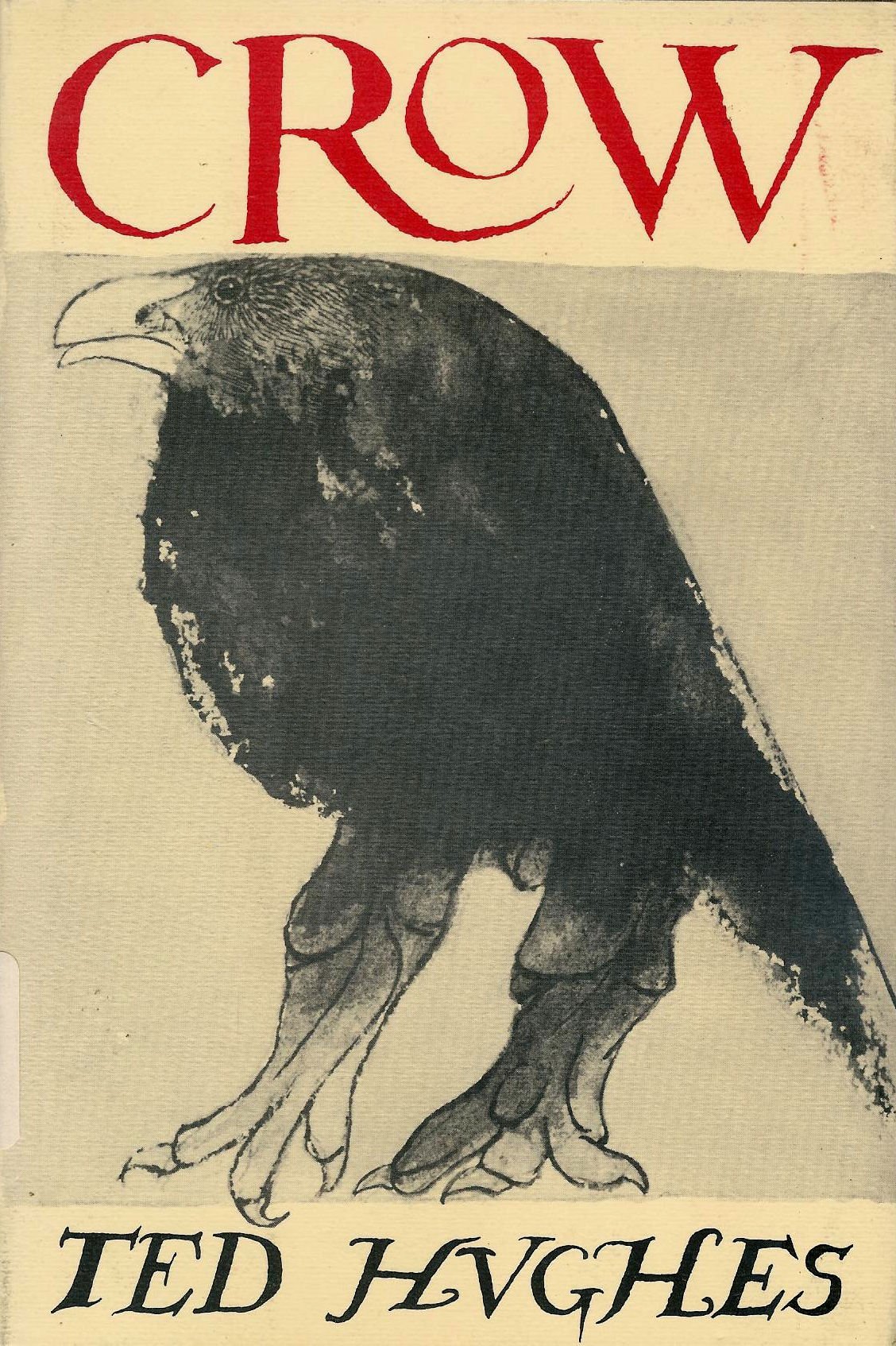
Crow,
mentioned above, is perhaps Hughes’ most famous collection of his poems. I am not knowledgeable enough oh the
Plath/Hughes history to know how substantive the feminists’ charge are, but
given Plath’s mental illness history I can’t see how Hughes is more than just a
bad husband. And Frieda Hughes is right,
who can really know a relationship from the outside. She is quoted:
Speaking
in the documentary, to be broadcast on BBC Two, she said the links made between
the two tragedies were a form of "abuse" in themselves.
"I
was appalled that something that happened in 1963 could be carried
forward," she told programme-makers.
"What
an easy way out for somebody to think, yes, we’re right, we have got the real
story, we know what really happened, and we are going to punish this complete
stranger for something we weren’t around to witness, we know nothing about, but
we’re the ones with the answer.
"For
outsiders - because that’s what they are, outsiders - to make judgements that
affect somebody in their life, for all of their life, is a sort of horrible
form of theft.
"It’s
an abuse."
The
charges against Ted Hughes—he was even accused of outright murdering Plath—colored
his entire career. Plath unfortunately
died young, so she never did reach her potential. Hughes, who was already a more mature poet
than Plath, on the other hand, developed into one of the leading British poets
of his generation, even titled as the Poet Laureate of Britain, the feminists
did all they could to destroy his career.
Since
I’m on the subject of Sylvia Plath and Ted Hughes, let me give an example of
their poetry. First from Plath. I’ve always thought highly of this poem,
though I can’t completing comprehend it all.
Fever
103?
Pure? What does it
mean?
The tongues of hell
Are dull, dull as the triple
Tongues of dull, fat
Cerebus
Who wheezes at the gate. Incapable
Of licking clean
The aguey tendon, the
sin, the sin.
The tinder cries.
The indelible smell
Of a snuffed candle!
Love, love, the low smokes roll
From me like Isadora's scarves, I'm in a
fright
One scarf will catch
and anchor in the wheel.
Such yellow sullen smokes
Make their own element. They will not rise,
But trundle round the
globe
Choking the aged and the meek,
The weak
Hothouse baby in its
crib,
The ghastly orchid
Hanging its hanging garden in the air,
Devilish leopard!
Radiation turned it white
And killed it in an hour.
Greasing the bodies of
adulterers
Like Hiroshima ash and eating in.
The sin. The sin.
Darling, all night
I have been flickering, off, on, off, on.
The sheets grow heavy as a lecher's kiss.
Three days. Three
nights.
Lemon water, chicken
Water, water make me retch.
I am too pure for you
or anyone.
Your body
Hurts me as the world hurts God. I am a
lantern --
My head a moon
Of Japanese paper, my gold beaten skin
Infinitely delicate and infinitely expensive.
Does not my heat
astound you. And my light.
 All by myself I am a huge camellia
Glowing and coming and going, flush on flush.
I think I am going up,
I think I may rise --
The beads of hot metal fly, and I, love, I
Am a pure acetylene
Virgin
Attended by roses,
By kisses, by cherubim,
By whatever these pink things mean.
Not you, nor him.
Not him, nor him
(My selves dissolving, old whore petticoats)
--
To Paradise.
I’m
not going to do a close analysis, but don’t get too hung up on understanding
every line. Bear in mind it’s a
confessional poem, and unless you’re a Plath scholar (and I’m not) you probably
won’t get the immediate situation. Plus
there are some obscure details which obfuscates the meaning. For instance that “Isadora’s scarves” in line
12 refers to the dancer Isadora Duncan and her accidental strangling death with
one of her scarves. The poem goes from a sexual desire she
considers sinful to being redeemed by it, from hell to paradise, from
adulteress to virgin. I’m not sure, but
it could be the poem moves from the sexual sin to a blessed motherhood.
Ted
Hughes is quite a different poet. Here’s
one from his Crow collection.
Crow
Communes
"Well," said
Crow, "What first?"
God, exhausted with
Creation, snored.
"Which way?"
said Crow, "Which way first?"
God's shoulder was the
mountain on which Crow sat.
 "Come," said
Crow, "Let's discuss the situation."
"Come," said
Crow, "Let's discuss the situation."
God lay, agape, a great
carcass.
Crow tore off a
mouthful and swallowed.
"Will this cipher
divulge itself to digestion
Under hearing beyond
understanding?"
(That was the first
jest.)
Yet, it's true, he
suddenly felt much stronger.
Crow, the hierophant,
humped, impenetrable.
Half-illumined.
Speechless.
(Appalled.)

