"Love follows knowledge."
"Beauty above all beauty!"
– St. Catherine of Siena

Friday, May 3, 2024

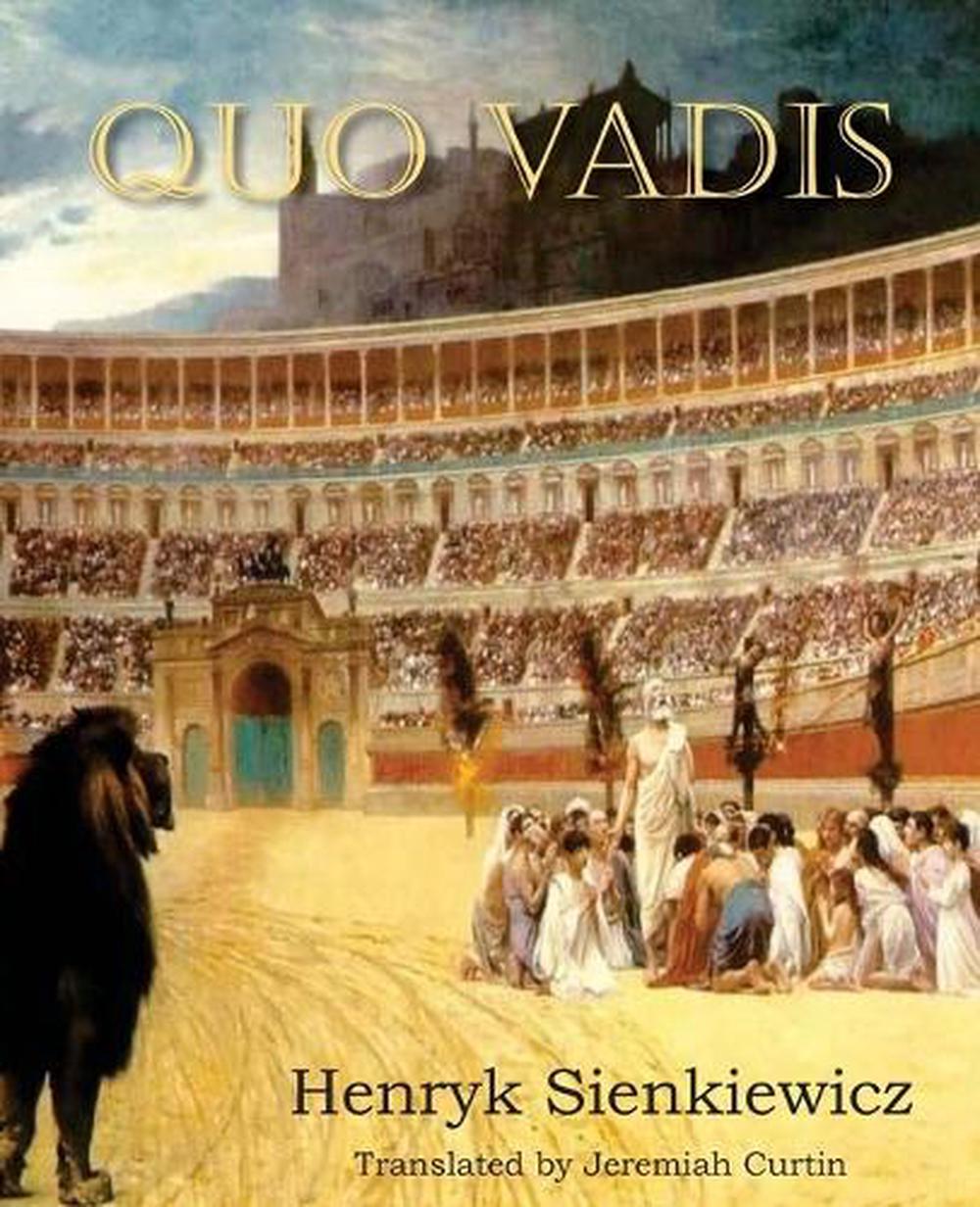
Quo Vadis: A Narrative of the Time of Nero by Henryk Sienkiewicz, Part 9

This is the ninth post of Henryk Sienkiewicz’s historical novel, Quo Vadis.

You can find Post #1 here.  

Post #2 here

Post #3 here.  

Post #4 here

Post #5 here. 

Post #6 here.  

Post #7 here

Post #8 here


Chapters 57 thru 63

Summary

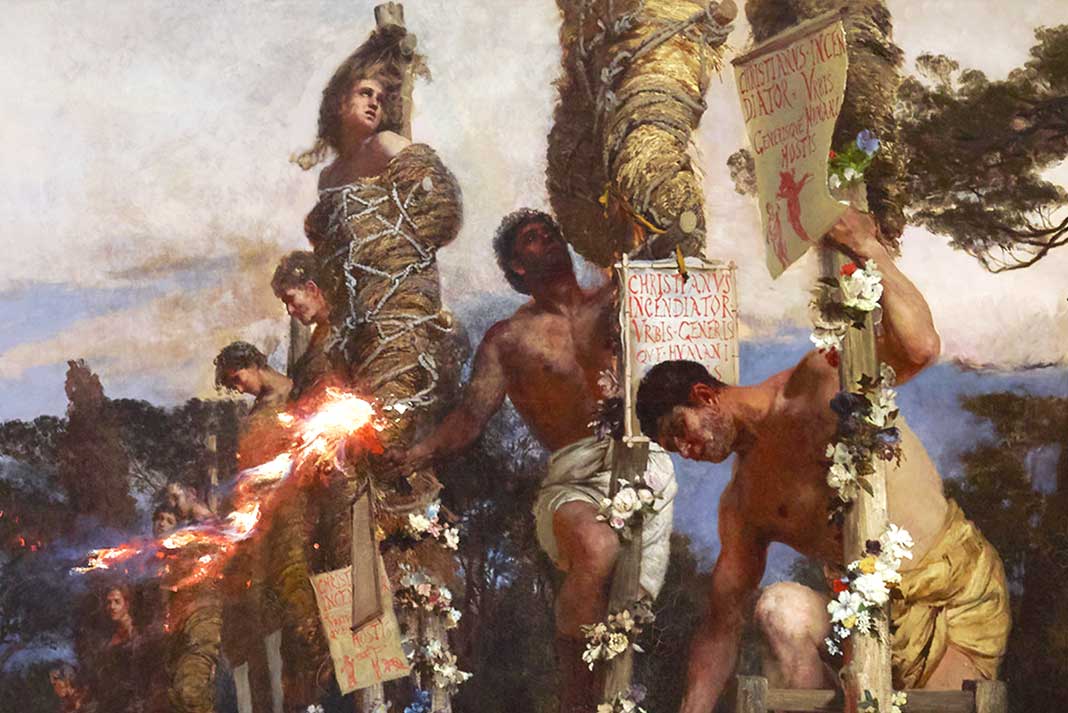
The games are interrupted by three days of rain and hail.  Once they resume, Nero wants to arm Christians to fight each other to the death in the arena.  The Christians refuse, throw their weapons to the ground, and kneel in prayer.  Nero is forced to put an end to them by having real gladiators come in and slaughter the Christians as they passively kneel.  Then Nero, inspired to exceed all past games, creates enactments of mythic and historic stories where the Christians will be raped and killed per the legends.  Another spectacle put on in the arena is real crucifixions, and so Christians are nailed to crosses and lifted up, the arena filled with so many crosses it looks like a forest with the audience enjoying the slow deaths of the crucified.  One such Christian is the old man Crispus, preaching the wrath of God as he is nailed and dies on the cross.  The cross on which Crispus is nailed stood opposite the emperor’s podium, and Crispus and Nero faces look on each other.  Crispus in his dying breath denounces Nero.

Chilo, trying to leave the games, tries to persuade Nero to leave for Greece, but Nero says not until after the games are over.  Chilo insists he will no longer attend the games, but Nero stipulates that he be forced to sit next to him.  Chilo feels that death is coming for him through the vengeance of the Christian God.  Petronius says that the Christians in their passive deaths are actually arming and with patience will bring down Rome.  Tigellinus says that this is insane.

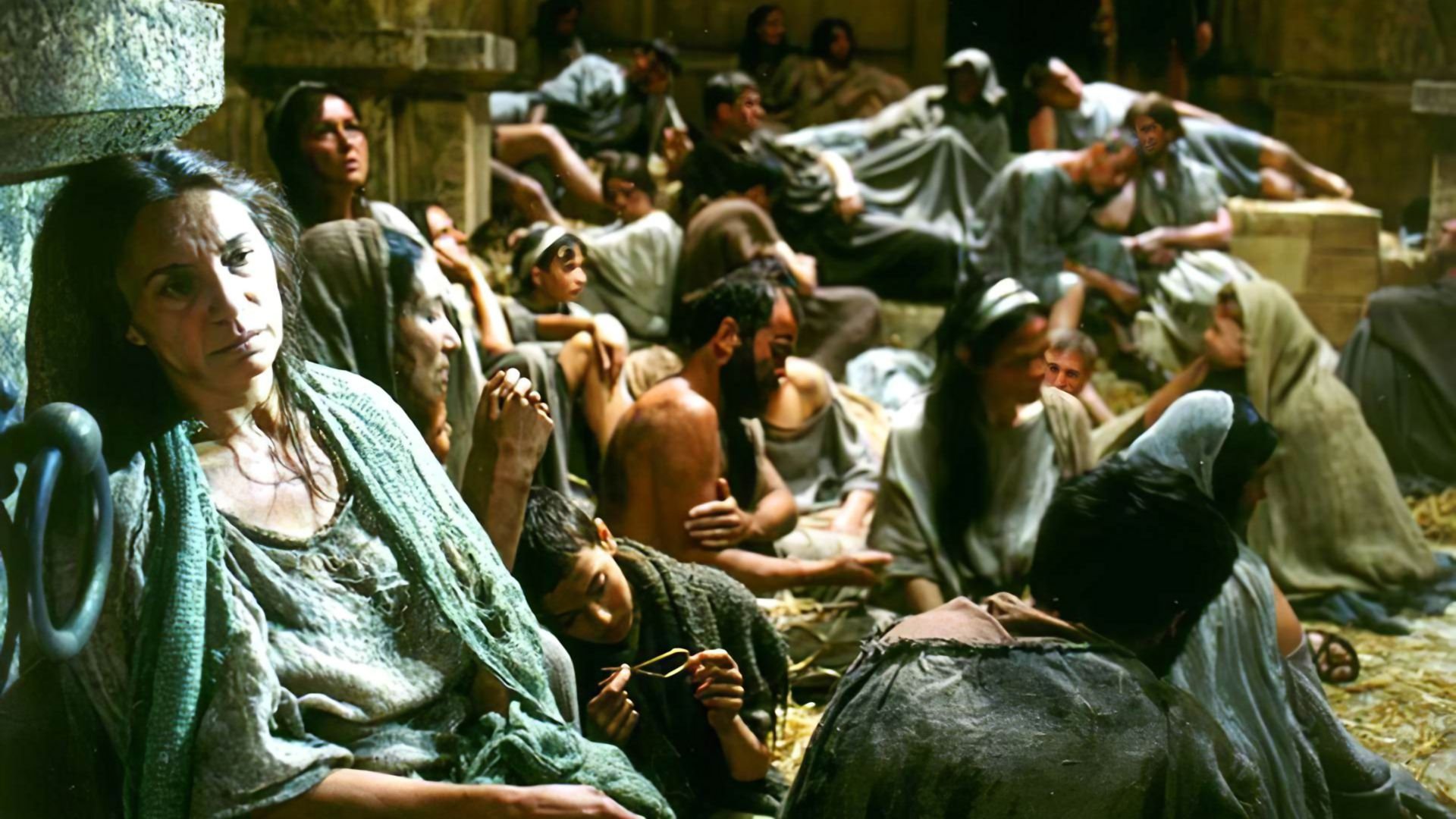
Petronius believes that Vinicius is devising a new plan to free Lygia, but Vinicuis has lost hope.  Still Vinicius decides to try to enter the new prison, just to see Lygia.  Dressed as a slave the guards do not recognize him and he goes in.  The prison is vast and he hears the groans of all those infected with fever.  Deep in the dungeons he finally finds Lygia and Ursus.  Lygia, asleep on the floor, is emaciated.  He kneels by her and she awakes.  She is weak but grateful to see her beloved.  He tells her Christ will save them, but she believes she will die, either in the arena or in prison. 

For three nights Vinicius similarly comes to the prison to be with Lygia.  They talk about how they will love and live with each other beyond the grave.  Petronius is astonished that Vinicius is at peace with the situation.  Petronius informs him that the Christians will be human torches for Nero’s garden the next day.  Vinicius again dresses as a slave and heads over to the prison.  He gets there in time to see Christians being led out to go to Nero’s garden.  Scanning their faces he does not find Lygia or Ursus, but he does notice Glaucus. 

The Roman people have grown tired of the games, and Nero and Tigellinus are hoping with the last of the Christians to bring the spectacle to an end.   In Nero’s garden, Christians are tied to poles and plastered with pitch.  At a given command, a slave beneath each pole sets fire to a pile of straw.  The fire climbs the pole and ignites the pitch.  As the fire climbs the poles and up the bodies of the Christians, screams can be heard, smell of burnt flesh can be smelled, and the garden is as bright as day.  Chilo is forced to attend with Caesar, and is horrified at the distorted burning bodies, some still in agony, some frozen in a death gaze.  As Nero’s entourage stroll through the garden they come to the pole where Glaucus is strapped.  Chilo lets out a cry upon recognizing him.  Nero laughs at the shock he sees in Chilo’s face.  Chilo begs Glaucus to forgive him, and Glaucus does before he dies.  Chilo drops to the ground in tears and the Romans wonder what is happening to him.  Chilo gets up and pointing a finger at Nero and in a loud voice screams that Nero had been responsible for the fire.  The Roman people within earshot believe him and question why the need for the murderous games.  In the chaos, Chilo wanders away and comes across Paul the Apostle.  Chilo makes a confession and Paul baptizes him into Christianity.  Tigellinus finds Chilo, and Chilo announces that he has become a Christian too.  Tigellinus has guards apprehend Chilo who torture him to retract what he said about Nero.  Chilo refuses, and Tigellinus has his tongue pulled out.

Tigellinus comes up with a new idea for a spectacle.  He will have a Christian hang on a cross while devoured by a real life bear.  The Roman audience has begun to believe the Christian divinity will conquer Rome.  When it is time for the bear scene, to the audience’s surprise two guards drag out Chilo, naked and decrepit from his broken bones.  He lay calm, awaiting his fate with peace.  They nail him to a low cross so a bear can reach up to him.  The bear is curious but does not attack Chilo, as if in pity for the man.  As Chilo looks up, he smiles as if in a vision of wonder, and then dies.  A voice from the top of the amphitheater yells out, “Peace to the martyrs,” silencing the audience.

After the burning of the Christians as torches in Nero’s garden, there are not many Christians left.  The Roman population is convinced the Christian God will take revenge.  The rumors that Nero and Tigellinus are the real culprits of the fire spread through the city.  To calm the populace more free food is provided.  Vinicius is reassured that when Lygia dies he will be given her remains.  He too has become emaciated from his stress.  The thought of reuniting with her in the afterlife consoles him.  Ursus too is consoled in the thought of serving Lygia in the afterlife.  The prison guards admire the mild good temper of the gentle giant. 

###

My Comment:

Good Lord, the degradation on the Christians sinks lower and lower. The crowd is bored with the slaughter, so the powers have to devise more disgusting spectacles to hold the audience's interest. The slaughter of the Christians is a holocaust, which reminded me of Nazi Germany. The book, however, was published in 1896, well before WWII.

Michelle’s Reply:

This was so very hard to read about! It's hard to fathom how people could watch the Christians brutalized in the "games" and see them as entertainment. It's very disturbing.


On a lighter note, the reconciliation between Chilo and Glaucus was unexpected but touching, wasn't it? I was really glad that it happened.

My Reply to Michelle:

It was very hard to read Michelle. The blackness of the Roman people’s hearts to watch and be entertained by this is chilling. I don’t believe the author is exaggerating. I do think the Roman people were numb to cruelty.


Chilo surprised me at every turn. I did not expect him to betray the Christians nor convert to Christianity nor stand up for Christianity and accept martyrdom. He was a weak man who was strengthened by the grace of God and did the right thing in the end

Frances’s Comment:

Over the weekend my husband and I watched the movie “Gladiator,” which as many of you who saw it when it first came out about 20 years may remember well. It takes place during the reign of the Emperor Commodus (177-192 A.D.), while the events in Quo Vadis occurred during the reign of Nero, around 54-68 A.D. (Christians were persecuted, tortured and martyred during the first through fourth centuries, as you doubtless know.)


Two observations: 1). After seeing the film, I looked up reviews of it.

I was not that surprised to read in one review that all mention of Jesus and Christianity were deliberately left out. The hero, played by the actor Russell Crowe, dies a martyr’s death; the afterlife he goes to resembles the Elysian Fields of ancient mythology. Above, Manny referred to the blackness of the Roman people’s hearts, to watch such cruelty as entertainment. This is not apparent in “Gladiator.” Spectators are watching “the games.” We can deduce their attitudes, but they aren’t highlighted by the filmmaker.


2) Now go to Tom Holland’s brilliant book, Dominion. In it Holland stresses he was surprised to learn what a savage and alien place the ancient world was. And he discovered there was a certain innocence about the citizens’ callousness: they lived with it, not aware of their attitudes toward savagery and slavery. Caring, sensitivity, respect for human rights: these were the gifts of Christianity. Our culture at large doesn’t recognize that the values of Western civilization trace their roots to early Christianity, but they do. I find it particularly sad that the makers of the movie “Gladiator” chose to ignore this. Quo Vadis did not.

My Reply to Frances:

Oh I love the movie Gladiator and caught a scene that same day you were watching Frances. My wife was watching it. Unfortunately I had to go out.


I think the Roman people were probably mixed on the gladiatorial games. But the fact that they were a big source of entertainment suggests that most supported them. As with anything, repetition without challenge will normalize all sorts of hideous behavior. There are many things in society today that is accepted as normal that would have been disgraceful 100 years ago. You can probably make a list resulting from the sexual revolution.

Kerstin’s Comment:

I found these scenes very disturbing too. I actually skipped much of it, it was too much.

From the beginning Sienkiewicz has been very consistent in depicting the Romans as people without the gentling influences of Christianity. It exposes the inner tension that must exist in a person who will love those close to him and not care one whit about anyone else.

###
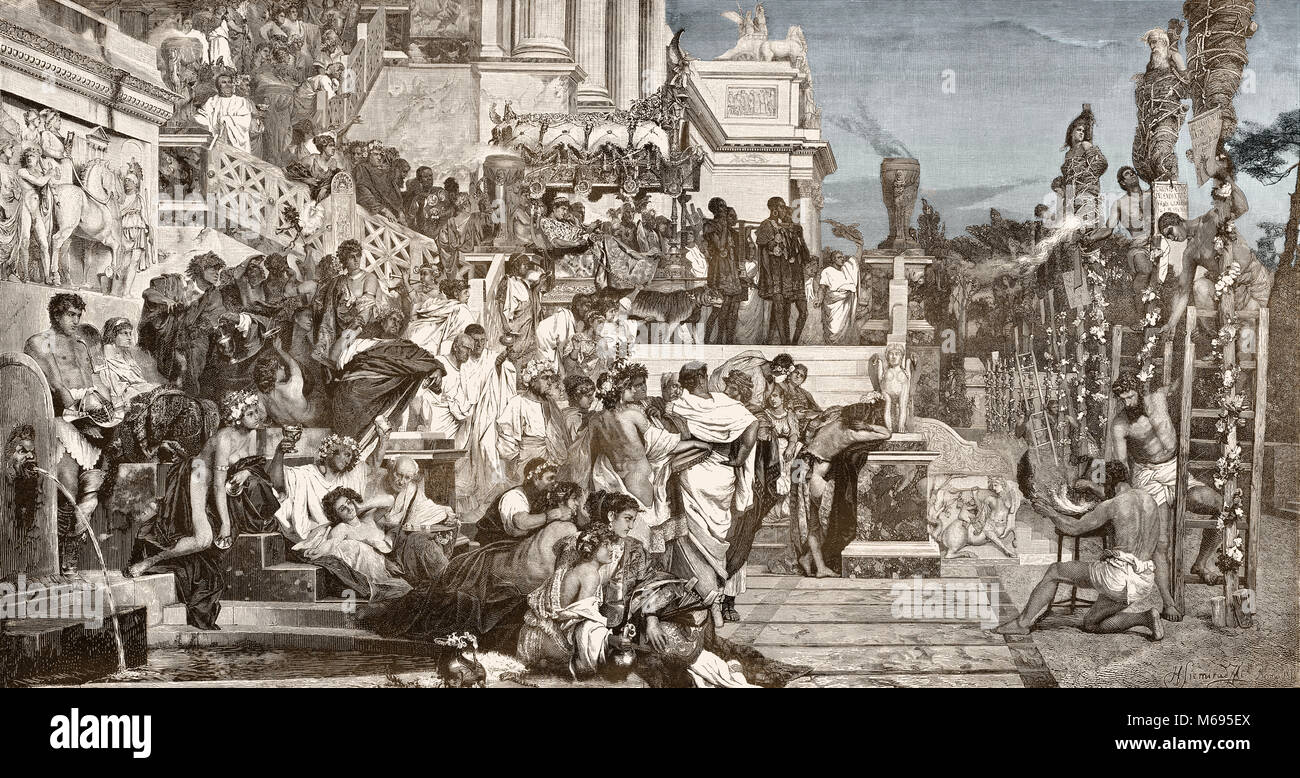

The first excerpt I’ll post is from Chapter LXI; Nero, Tigillianus, and Chilo are walking through Nero’s garden with the Christians hung on poles as human torches.


Darkness had not come when the first waves of people began to flow into Cæsar's gardens. The crowds, in holiday costume, crowned with flowers, joyous, singing, and some of them drunk, were going to look at the new, magnificent spectacle. Shouts of "Semaxii! Sarmentitii!" were heard on the Via Tecta, on the bridge of Æmilius, and from the other side of the Tiber, on the Triumphal Way, around the Circus of Nero, and off towards the Vatican Hill. In Rome people had been seen burnt on pillars before, but never had any one seen such a number of victims.


Cæsar and Tigellinus, wishing to finish at once with the Christians and also to avoid infection, which from the prisons was spreading more and more through the city, had given command to empty all dungeons, so that there remained in them barely a few tens of people intended for the close of the spectacles. So, when the crowds had passed the gates, they were dumb with amazement. All the main and side alleys, which lay through dense groves and along lawns, thickets, ponds, fields, and squares filled with flowers, were packed with pillars smeared with pitch, to which Christians were fastened. In higher places, where the view was not hindered by trees, one could see whole rows of pillars and bodies decked with flowers, myrtle, and ivy, extending into the distance on high and low places, so far that, though the nearest were like masts of ships, the farthest seemed colored darts, or staffs thrust into the earth. The number of them surpassed the expectation of the multitude. One might suppose that a whole nation had been lashed to pillars for Rome's amusement and for Cæsar's. The throng of spectators stopped before single masts when their curiosity was roused by the form or the sex of the victim; they looked at the faces, the crowns, the garlands of ivy; then they went farther and farther, asking themselves with amazement, "Could there have been so many criminals, or how could children barely able to walk have set fire to Rome?" and astonishment passed by degrees into fear.


Meanwhile darkness came, and the first stars twinkled in the sky. Near each condemned person a slave took his place, torch in hand; when the sound of trumpets was heard in various parts of the gardens, in sign that the spectacle was to begin, each slave put his torch to the foot of a pillar. The straw, hidden under the flowers and steeped in pitch, burned at once with a bright flame which, increasing every instant, withered the ivy, and rising embraced the feet of the victims. The people were silent; the gardens resounded with one immense groan and with cries of pain. Some victims, however, raising their faces toward the starry sky, began to sing, praising Christ. The people listened. But the hardest hearts were filled with terror when, on smaller pillars, children cried with shrill voices, "Mamma! Mamma!" A shiver ran through even spectators who were drunk when they saw little heads and innocent faces distorted with pain, or children fainting in the smoke which began to stifle them. But the flames rose, and seized new crowns of roses and ivy every instant. The main and side alleys were illuminated; the groups of trees, the lawns, and the flowery squares were illuminated; the water in pools and ponds was gleaming, the trembling leaves on the trees had grown rose-colored, and all was as visible as in daylight. When the odor of burnt bodies filled the gardens, slaves sprinkled between the pillars myrrh and aloes prepared purposely. In the crowds were heard here and there shouts,—whether of sympathy or delight and joy, it was unknown; and they increased every moment with the fire, which embraced the pillars, climbed to the breasts of the victims, shrivelled with burning breath the hair on their heads, threw veils over their blackened faces, and then shot up higher, as if showing the victory and triumph of that power which had given command to rouse it.


At the very beginning of the spectacle Cæsar had appeared among the people in a magnificent quadriga of the Circus, drawn by four white steeds. He was dressed as a charioteer in the color of the Greens,—the court party and his. After him followed other chariots filled with courtiers in brilliant array, senators, priests, bacchantes, naked and crowned, holding pitchers of wine, and partly drunk, uttering wild shouts. At the side of these were musicians dressed as fauns and satyrs, who played on citharas, formingas, flutes, and horns. In other chariots advanced matrons and maidens of Rome, drunk also and half naked. Around the quadriga ran men who shook thyrses ornamented with ribbons; others beat drums; others scattered flowers.


All that brilliant throng moved forward, shouting, "Evoe!" on the widest road of the garden, amidst smoke and processions of people. Cæsar, keeping near him Tigellinus and also Chilo, in whose terror he sought to find amusement, drove the steeds himself, and, advancing at a walk, looked at the burning bodies, and heard the shouts of the multitude. Standing on the lofty gilded chariot, surrounded by a sea of people who bent to his feet, in the glitter of the fire, in the golden crown of a circus-victor, he was a head above the courtiers and the crowd. He seemed a giant. His immense arms, stretched forward to hold the reins, seemed to bless the multitude. There was a smile on his face and in his blinking eyes; he shone above the throng as a sun or a deity, terrible but commanding and mighty.


At times he stopped to look with more care at some maiden whose bosom had begun to shrink in the flames, or at the face of a child distorted by convulsions; and again he drove on, leading behind him a wild, excited retinue. At times he bowed to the people, then again he bent backward, drew in the golden reins, and spoke to Tigellinus. At last, when he had reached the great fountain in the middle of two crossing streets, he stepped from the quadriga, and, nodding to his attendants, mingled with the throng.


He was greeted with shouts and plaudits. The bacchantes, the nymphs, the senators and Augustians, the priests, the fauns, satyrs, and soldiers surrounded him at once in an excited circle; but he, with Tigellinus on one side and Chilo on the other, walked around the fountain, about which were burning some tens of torches; stopping before each one, he made remarks on the victims, or jeered at the old Greek, on whose face boundless despair was depicted.


At last he stood before a lofty mast decked with myrtle and ivy. The red tongues of fire had risen only to the knees of the victim; but it was impossible to see his face, for the green burning twigs had covered it with smoke. After a while, however, the light breeze of night turned away the smoke and uncovered the head of a man with gray beard falling on his breast.


###

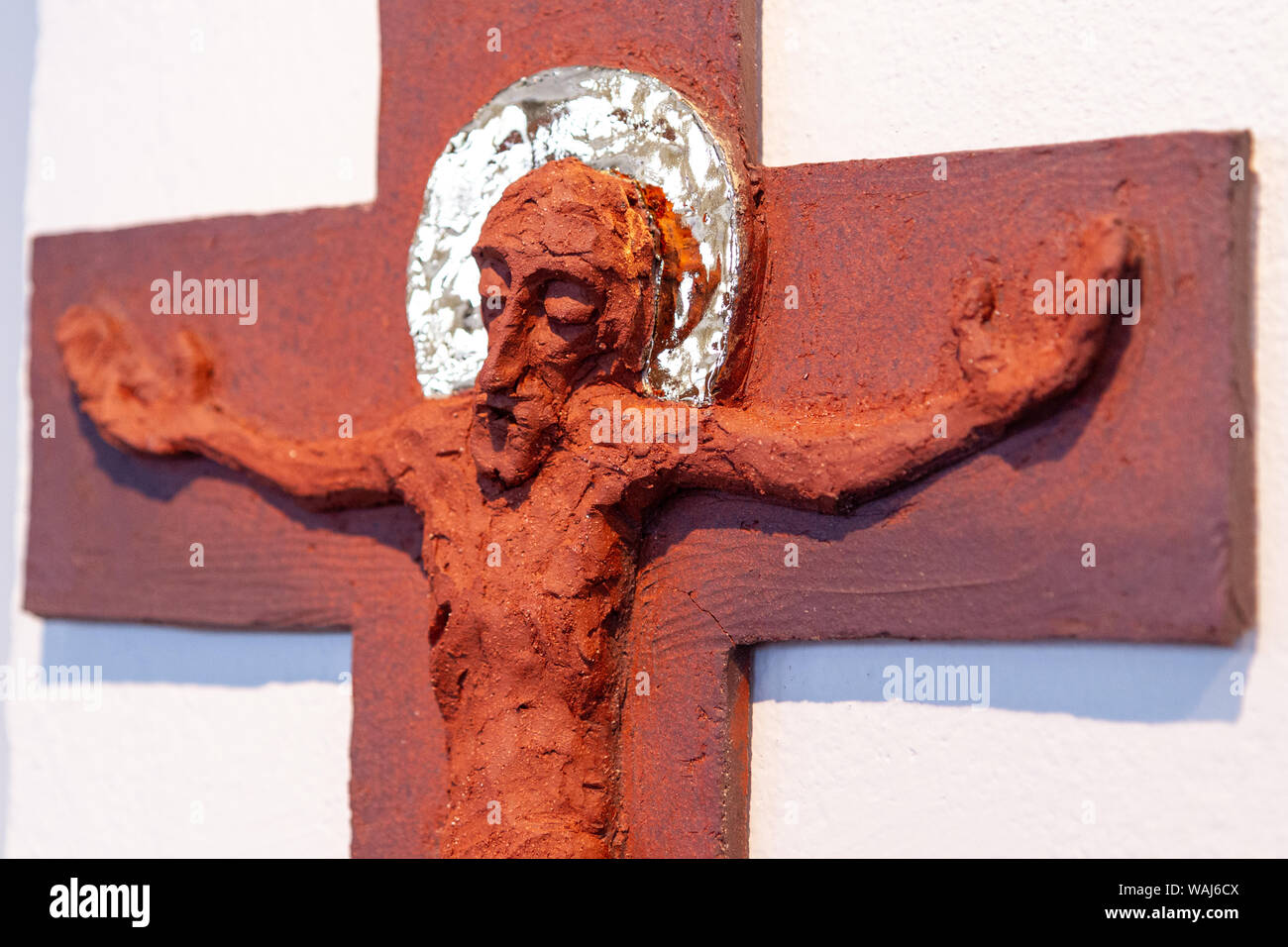
The second excerpt is from Chilo’s crucifixion and death in Chapter LXII.


But others spoke of Chilo.


"What has happened to him?" asked Eprius Marcellus. "He delivered them himself into the hands of Tigellinus; from a beggar he became rich; it was possible for him to live out his days in peace, have a splendid funeral, and a tomb: but, no! All at once he preferred to lose everything and destroy himself; he must, in truth, be a maniac."


"Not a maniac, but he has become a Christian," said Tigellinus.


"Impossible!" said Vitelius.


"Have I not said," put in Vestinius, "'Kill Christians if ye like; but believe me ye cannot war with their divinity. With it there is no jesting'? See what is taking place. I have not burned Rome; but if Cæsar permitted I would give a hecatomb at once to their divinity. And all should do the same, for I repeat: With it there is no jesting! Remember my words to you."


"And I said something else," added Petronius. "Tigellinus laughed when I said that they were arming, but I say more,—they are conquering."


"How is that? how is that?" inquired a number of voices.


"By Pollux, they are! For if such a man as Chilo could not resist them, who can? If ye think that after every spectacle the Christians do not increase, become coppersmiths, or go to shaving beards, for then ye will know better what people think, and what is happening in the city."


"He speaks pure truth, by the sacred peplus of Diana," cried Vestinius.


But Barcus turned to Petronius.


"What is thy conclusion?"


"I conclude where ye began,—there has been enough of bloodshed."


Tigellinus looked at him jeeringly,—"Ei!—a little more!"


"If thy head is not sufficient, thou hast another on thy cane," said Petronius.


Further conversation was interrupted by the coming of Cæsar, who occupied his place in company with Pythagoras. Immediately after began the representation of "Aureolus," to which not much attention was paid, for the minds of the audience were fixed on Chilo. The spectators, familiar with blood and torture, were bored; they hissed, gave out shouts uncomplimentary to the court, and demanded the bear scene, which for them was the only thing of interest. Had it not been for gifts and the hope of seeing Chilo, the spectacle would not have held the audience.


At last the looked-for moment came. Servants of the Circus brought in first a wooden cross, so low that a bear standing on his hind feet might reach the martyr's breast; then two men brought, or rather dragged in, Chilo, for as the bones in his legs were broken, he was unable to walk alone. They laid him down and nailed him to the wood so quickly that the curious Augustians had not even a good look at him, and only after the cross had been fixed in the place prepared for it did all eyes turn to the victim. But it was a rare person who could recognize in that naked man the former Chilo. After the tortures which Tigellinus had commanded, there was not one drop of blood in his face, and only on his white beard was evident a red trace left by blood after they had torn his tongue out. Through the transparent skin it was quite possible to see his bones. He seemed far older also, almost decrepit. Formerly his eyes cast glances ever filled with disquiet and ill-will, his watchful face reflected constant alarm and uncertainty; now his face had an expression of pain, but it was as mild and calm as faces of the sleeping or the dead. Perhaps remembrance of that thief on the cross whom Christ had forgiven lent him confidence; perhaps, also, he said in his soul to the merciful God,


"O Lord, I bit like a venomous worm; but all my life I was unfortunate. I was famishing from hunger, people trampled on me, beat me, jeered at me. I was poor and very unhappy, and now they put me to torture and nail me to a cross; but Thou, O Merciful, wilt not reject me in this hour!" Peace descended evidently into his crushed heart. No one laughed, for there was in that crucified man something so calm, he seemed so old, so defenceless, so weak, calling so much for pity with his lowliness, that each one asked himself unconsciously how it was possible to torture and nail to crosses men who would die soon in any case. The crowd was silent. Among the Augustians Vestinius, bending to right and left, whispered in a terrified voice, "See how they die!"  Others were looking for the bear, wishing the spectacle to end at the earliest.


The bear came into the arena at last, and, swaying from side to side a head which hung low, he looked around from beneath his forehead, as if thinking of something or seeking something. At last he saw the cross and the naked body. He approached it, and stood on his hind legs; but after a moment he dropped again on his fore-paws, and sitting under the cross began to growl, as if in his heart of a beast pity for that remnant of a man had made itself heard.


Cries were heard from Circus slaves urging on the bear, but the people were silent.


Meanwhile Chilo raised his head with slow motion, and for a time moved his eyes over the audience. At last his glance rested somewhere on the highest rows of the amphitheatre; his breast moved with more life, and something happened which caused wonder and astonishment. That face became bright with a smile; a ray of light, as it were, encircled that forehead; his eyes were uplifted before death, and after a while two great tears which had risen between the lids flowed slowly down his face.


And he died.


At that same moment a resonant manly voice high up under the velarium exclaimed,—


"Peace to the martyrs!" Deep silence reigned in the amphitheatre.


This video clip is not from any of the movies but a historical retelling of the events. 


As you can see, the novel follows the historical events very closely.


Monday, April 29, 2024

St. Catherine of Siena: Letter to a Layman

Today, April 29th, is St. Catherine of Siena’s feast day.  As you may know, she is the patron saint of this blog and my personal patron saint.

The magazine Magnificat has a meditation with today’s Mass readings by St. Catherine for her feast day.  The meditation is an excerpt of one of her letters, one of 380 letters that have survived.  The magazine does not give any details of the letter, so I looked through my volumes of her letters and after an hour of searching I found it!  The letter can be found in Volume 1 of the four volume complete collection of her letters titled, The Letters of Catherine of Siena, translated and annotated by Suzanne Noffke, O. P.  It is a magisterial collection that is a prize in my library.

So the letter is identified as T60, written in the summer of 1375 from Catherine’s stay in Pisa.  The addressee is unidentified and Sister Noffke deduces from the comments in the letter that he is a layman and a parent.  Catherine exhorts him to keep the commandments and embrace the virtues.  Her image two wings is as striking as is the image earlier in the letter of the fountain sprinkling out the blood of Jesus.  Here is the excerpt as published in Magnificat.


I long to see you a true servant of Jesus Christ, an observer of his commandments.  No one can have the life of grace who is not the keeper of those commandments….Once we see that of ourselves we are nothing at all, we are completely humbled at the knowledge of what our benefactor has done for us.  We so grow in love when we recognize God’s great goodness at work in us that we would rather die than transgress our dear Creator’s command.  This holy trembling brings us to tremendous love, a love we draw from the fountain of the blood of God’s Son, which was shed for our redemption just to wash away the guilt of sin….


I beg you then to make use of these two wings that will help you keep God’s commandments and, once you have managed the commandments, will enable you to fly into everlasting life.  The first wing is hatred and contempt for sin and for selfish self-love, the source of every vice.  The second wing is being the lover of virtue.  Once we see that virtue is essential for us, we love it; we see God wants us to be lovers of virtue and despisers of vice.  Oh how sweet it will be for you to have this virtue!  It frees you from slavery to the devil and gives you liberty, delivers you from death and gives you life, relieves you of darkness and gives you light.  Sin is just the opposite: it leads one into every sort of misery.


I beg you, for love of Christ crucified, let your soul’s eye be directed toward God in all that you do.  Oh what great joy and happiness you will feel when the time comes for you to be called by First Truth, knowing you are in company of the virtues, supported by the staff of the most holy cross from which you have learned God’s holy commandments!  And you will hear at the end those sweet words: Come, my blessed son, and possess the kingdom of heaven, because you conscientiously cast aside desire and affection for conformity to the world, and reared and nurtured your family in holy fear of me.  Now I am giving you perfect rest, for I am the one who repays you for all you have suffered for me (cf. Mt 25:34).

She ends with a quote from Matthew’s Gospel, chapter 25, where Jesus where Jesus welcomes onto the kingdom those who taken care of the least but improvises her ow theology onto it.  This is so Catherinian.  We do keep the commandments for love of God because God has done so much for us, including the shedding of the blood of His beloved Son.  And the great sin, the sin that leads to all other sins, she identifies as “self-love,” that is, selfishness.  She is just brilliant.

Happy Feast of St. Catherine of Siena.


###

Monday is my Adult Faith Formation class and we’ve been reading Sigrid Undset’s biography of St. Catherine.  I have covered this book extensively here on the blog.  Since Catherine’s feast day fell on a Monday night class, we had a little celebration.  I brought in black and white cookies, the colors of the Dominican Order.  Fr. Eugene, our pastor, had a cake ordered and we had a special writing on top of the cake. 


Beloved Catherine, I hope you’re smiling on us.  Pray for us.


Sunday, April 28, 2024

Sunday Meditation: The True Vine

On the fifth Sunday of Easter in Year B, we get another “I Am” passage from the Gospel of John.  Today we get one of my favorites, the pruning of the grapevine in John’s chapter 15.  This is one of my favorite passages because right around this time of year I am pruning my own grapevine.  As it so happens, I pruned last week, a little late in the season, but it’s tough to find a day.  Every year as I prune I mutter “I am the vine, and you are the branches!”  And just as I snip the dead wood and the long extended vines that will not bear fruit, so Jesus says His Father will prune as well.


Jesus said to his disciples:

"I am the true vine, and my Father is the vine grower.

He takes away every branch in me that does not bear fruit,

and every one that does he prunes so that it bears more fruit.

You are already pruned because of the word that I spoke to you.

Remain in me, as I remain in you.

Just as a branch cannot bear fruit on its own

unless it remains on the vine,

so neither can you unless you remain in me.

I am the vine, you are the branches.

Whoever remains in me and I in him will bear much fruit,

because without me you can do nothing.

Anyone who does not remain in me

will be thrown out like a branch and wither;

people will gather them and throw them into a fire

and they will be burned.

If you remain in me and my words remain in you,

ask for whatever you want and it will be done for you.

By this is my Father glorified,

that you bear much fruit and become my disciples."

~Jn 15:1-8

Notice, Jesus doesn’t just say “I am the vine,” He says “I am the true vine.”  So let’s unpack the metaphor.  God the father is the gardener who prunes; Jesus is the vine; we who are in Him are the branches; the fruit are the good works we do to glorify the Father.  Here are some visuals from my vine.

The vine is the stem and the main vertical branches.  You can see it growing against my fence.


You can see the branches growing off the vine trained to go up toward my deck.


And here’s a top view where you can see the blossoming leaves. 


The fruit will come later in the summer.  I love gardening, but I think the most difficult of my gardening activities is pruning and maintaining a grapevine. 

Dr. Brant Pitre will explain the theology of this passage.


That is a great apologetics comment by Dr. Pitre at the end.  Make sure you listen to the end.  I also like Jeff Cavins more pastoral application of the passage.  It’s short enough to include.


Sunday Meditation: "Just as a branch cannot bear fruit on its own unless it remains on the vine, so neither can you unless you remain in me.”


And another John Michael Talbot song appropriate for the reading.


Oh how lovely!

Wednesday, April 24, 2024

Quo Vadis: A Narrative of the Time of Nero by Henryk Sienkiewicz, Part 8


This is the eighth post of Henryk Sienkiewicz’s historical novel, Quo Vadis.

You can find Post #1 here.  

Post #2, here

Post #3 here.  

Post #4 here

Post #5 here. 

Post #6 here.  

Post #7 here


Chapters 50 thru 56

Summary

After Petronius returns to his home, which out of fortune had been spared from the fire.  He is convinced his life will be taken by Nero, and he weighs the moral depravity of his enemies.  If his life must end, he concludes he will do what he can to save Vinicius and Lygia.  He tells Vinicius what transpired at Nero’s, and impels him to go save Lygia before she is rounded up.  He is also determined to stifle the plans of Tigellinus and Nero.  Petronius rests with Eunice, who he will dearly miss when his life is taken.  A centurion arrives with a letter from Caesar, an invitation to listen to Nero’s new composition.  The centurion also tells him he’s on the way to round up Christians for the games.  Petronius goes off to listen to Caesar and he and Tigellinus are clearly in tension.  But Petronius as the great arbiter of elegance is back to his advantage listening to Nero’s composition.  On the way back he stops at Vinicius’ home.  Through the streets he hears the chants of “To the Lions the Christians.”  Vinicius is home in a desperate mood.  He did not reach Lygia in time.  She has been carted to the prison.  He and Petronius decide to go to the prison.  On the way, Petronius kills an abusive drunk, and from Petronius’s familiarity with the guards they are led in where the Christians are singing hymns.

For the games, an enormous wooden amphitheater is being built.  Wild animals are sought from within and beyond the empire and then caged in Rome.  Christians are being violently rounded up across the city.  Petronius has Acte visit Lygia in prison where she brings Lygia clothing and food.  Guards are bribed to prevent Lygia from being raped and other violence.  Nero is fixated on providing the greatest spectacle ever seen in Rome.  Vinicius does all he can to save Lygia, bribing everyone in the prison.  He even wants to beg Caesar but Petronius advises against it.  It would only harden Nero’s heart further.  Vinicius offers himself as a sacrifice to Christ and cannot understand why Christ would let this tragedy happen.

Everything Vinicius attempts in trying to save Lygia fails.  Finally the amphitheater’s construction is complete.  It is finally coming to a head.  The prisons are overfilled with Christians and disease was spreading.  Vinicius passed whole nights outside the prison, kneeling and praying.  He finds out that Peter was not imprisoned and where he is staying.  He goes to Peter and finds him praying with other Christians.  Vinicius asks where is Christ in this evil?  Peter tries to comfort everyone and strengthened them with his prayers.  Peter reminds them that Christ was crucified, and yet he rose from the dead.  Raising his hands and his eyes fixed into a vision, Peter continues to pray and bless.  When he finishes, Vinicius falls to his knees at Peter’s feet and implores him to pray for Lygia.  He offers his life to spare her’s. 

After, Vinicius once again goes to the prison, this time with new hope from the power of prayer.  He finds out that Lygia has taken ill and that one of the Pretorian guards is a Christian himself.  Filled with a little more hope, Vinicius goes to Petronius’s house.  Petronius tells him of an incident that happened that day at Nero’s.  Poppaea had brought her child from a previous marriage to Nero performance, and the boy fell asleep in the middle of it.  Nero hurled a goblet at the boy and injured him.  Petronius believes that he and Poppaea can come to an agreement, Petronius saving her son Rufius if she saves Lygia.  The first of the games are scheduled in ten days, so there is a little time to work the deal.  In the meantime, Lygia is with fever, which has spared her from being defiled.  Vinicius writes a letter to Lygia and delivers it himself to the prison.  He spends another night outside where he has a terrible dream.  When he wakes, he finds a retinue with Chilo at the center.  Chilo has been highly rewarded and is an aristocrat himself now.  Vinicius accuses him of betraying Lygia, and Chilo responds that when he was in need Vinicius had him flogged.

Lygia writes back to Vinicius, telling him no matter what happens she will always be his.  She does not fear what might happen to her.  Vinicius writes back that he will go every day to the walls of the prison and that he believes Christ will save her.  Petronius meets with Poppaea, who he finds caring for Rufius who is now in a fever.  He proposes the deal to her, and she says the only way to convince Nero to release Lygia is for the head Vestal Virgin to persuade Caesar.  Poppaea leaves that evening to go to the Virgin, but when she was out two hired men carried out Nero’s orders to strangle the boy and toss his body into the sea.  When Poppaea returns and finds the boy disappeared, she screams in agony.

The day of the Morning Games is here but these games will last all day given all the Christians that need to be killed.  The amphitheater is packed, and the audience is amazed at the sound of the Christians singing hymns.  Vinicius ventures down to the Christian cell where he finds many sewn into animal skins to be attacked by the wild animals.  He finds Crispus there preaching repentance for their upcoming day of wrath.  Two well-known gladiators were to open the games with a match.  In the fight one makes a misstep and falls and asks for mercy.  Nero, having lost previously with this gladiator refuses mercy, and the gladiator is killed.  Next small armies of soldiers fight battles, and there is so much killing that the bodies are piled up and the blood runs across the entire arena.  The audience is enthralled with the bloodbath.  Chilo, on the other hand, not used to these games is repulsed by the slaughter.  The Romans laugh at his innocence.  Next the Christians are up to be slaughtered.  They are led out dressed in animal skins, women with children and unarmed men.  They kneel in prayer and look to heaven.  Wild dogs are let loose upon them and they tear human flesh limb from limb and satiate themselves on the carcasses.  Up above in the elevated section, Peter has been snuck in and, visibly moved, prays and blesses the martyrs below.  Chilo watching flesh being torn off bodies faints from the revulsion.  The lions were to be kept for the next day, but the audience in their bloodlust call for them now.  Nero wishing to please and with more Christians on hand he gives the order to let the lions in.  The lions storm the arena and gorge on the Christians.  Blood is everywhere.  Nero then lets all the wild beasts enter, and the spectacle becomes an orgy of blood.  To clear the arena, Nero orders archers to kill the animals after all the Christians have been slaughtered.  Bodies of Christians and beasts cover the arena.  After the bodies are cleared, Nero steps down into the arena and with his harp sings his composition.  Peter up above is seen crying.

At evening while the crowds are departing, Nero disappointed at not being praised for his song asks Petronius why the song was not appreciated.  Petronius explains it was the wrong time and place, the crowd gorged on the bloodbath.  Still he compliments the song and mentions a line that needs improving.  Chilo, recovered, obsequiously compliments Nero’s song.  They all talk about the Christians that in their dying moments are looking as if in a vision toward heaven.  Petronius and Vinicius depart and they find Nazarius, the son of Miriam, at Vinicius’s home.  He confirms that Lygia is still in prison, ill from fever, and he has been assigned to load caskets of the dead.  Petronius comes up with a plan to place Lygia, simulating being dead, into a casket and have her taken out with the dead, where Vinicius will take her out of the casket.  That evening they try the plan and as they wait for the procession Nazarius comes up to say she was taken to another prison, the Esquiline dungeons, before they could put her in the casket.


###

Michelle Comment:

It was even more striking having St. Peter witness this.

Kerstin Comment:

The scenes in the arena are hard to read. So much blood and gore.

###

The first excerpt from these chapters is from chapter 51 where we see the frenzy the Roman people were seized with against the scapegoated Christians as they wanted to purify themselves of whatever malediction the gods had given them. 


The cry, "Christians to the lions!" was heard increasingly in every part of the city. At first not only did no one doubt that they were the real authors of the catastrophe, but no one wished to doubt, since their punishment was to be a splendid amusement for the populace. Still the opinion spread that the catastrophe would not have assumed such dreadful proportions but for the anger of the gods; for this reason "piacula," or purifying sacrifices, were commanded in the temples. By advice of the Sibylline books, the Senate ordained solemnities and public prayer to Vulcan, Ceres, and Proserpina. Matrons made offerings to Juno; a whole procession of them went to the seashore to take water and sprinkle with it the statue of the goddess. Married women prepared feasts to the gods and night watches. All Rome purified itself from sin, made offerings, and placated the Immortals. Meanwhile new broad streets were opened among the ruins. In one place and another foundations were laid for magnificent houses, palaces, and temples. But first of all they built with unheard-of haste an enormous wooden amphitheatre in which Christians were to die. Immediately after that consultation in the house of Tiberius, orders went to consuls to furnish wild beasts. Tigellinus emptied the vivaria of all Italian cities, not excepting the smaller ones. In Africa, at his command, gigantic hunts were organized, in which the entire local population was forced to take part. Elephants and tigers were brought in from Asia, crocodiles and hippopotamuses from the Nile, lions from the Atlas, wolves and bears from the Pyrenees, savage hounds from Hibernia, Molossian dogs from Epirus, bisons and the gigantic wild aurochs from Germany. Because of the number of prisoners, the games were to surpass in greatness anything seen up to that time. Cæsar wished to drown all memory of the fire in blood, and make Rome drunk with it; hence never had there been a greater promise of bloodshed.


The willing people helped guards and pretorians in hunting Christians. That was no difficult labor for whole groups of them camped with the other population in the midst of the gardens, and confessed their faith openly. When surrounded, they knelt, and while singing hymns let themselves be borne away without resistance. But their patience only increased the anger of the populace, who, not understanding its origin, considered it as rage and persistence in crime. A madness seized the persecutors. It happened that the mob wrested Christians from pretorians, and tore them to pieces; women were dragged to prison by the hair; children's heads were dashed against stones. Thousands of people rushed, howling, night and day through the streets. Victims were sought in ruins, in chimneys, in cellars. Before the prison bacchanalian feasts and dances were celebrated at fires, around casks of wine.


In the evening was heard with delight bellowing which was like thunder, and which sounded throughout the city. The prisons were overflowing with thousands of people; every day the mob and pretorians drove in new victims. Pity had died out. It seemed that people had forgotten to speak, and in their wild frenzy remembered one shout alone: "To the lions with Christians!" Wonderfully hot days came, and nights more stifling than ever before; the very air seemed filled with blood, crime, and madness.


And that surpassing measure of cruelty was answered by an equal measure of desire for martyrdom,—the confessors of Christ went to death willingly, or even sought death till they were restrained by the stern commands of superiors. By the injunction of these superiors they began to assemble only outside the city, in excavations near the Appian Way, and in vineyards belonging to patrician Christians, of whom none had been imprisoned so far. It was known perfectly on the Palatine that to the confessors of Christ belonged Flavius, Domitilla, Pomponia Græcina, Cornelius Pudens, and Vinicius. Cæsar himself, however, feared that the mob would not believe that such people had burned Rome, and since it was important beyond everything to convince the mob, punishment and vengeance were deferred till later days. Others were of the opinion, but erroneously, that those patricians were saved by the influence of Acte. Petronius, after parting with Vinicius, turned to Acte, it is true, to gain assistance for Lygia; but she could offer him only tears, for she lived in oblivion and suffering, and was endured only in so far as she hid herself from Poppæa and Cæsar.


###

The second excerpt comes from chapter 50, the start of the Morning Games.  After opening the ceremonies and a gladiatorial bout which ended in a thumbs-down death dictum from Nero, the Christians are led into the amphitheater covered in animal hides.  Wild dogs are let in for the slaughter of the kneeling and praying Christians.


The turn of the Christians was at hand. But since that was a new spectacle for people, and no one knew how the Christians would bear themselves, all waited with a certain curiosity. The disposition of the audience was attentive but unfriendly; they were waiting for uncommon scenes. Those people who were to appear had burned Rome and its ancient treasures. They had drunk the blood of infants, and poisoned water; they had cursed the whole human race, and committed the vilest crimes. The harshest punishment did not suffice the roused hatred; and if any fear possessed people's hearts, it was this: that the torture of the Christians would not equal the guilt of those ominous criminals.


Meanwhile the sun had risen high; its rays, passing through the purple velarium, had filled the amphitheatre with blood-colored light. The sand assumed a fiery hue, and in those gleams, in the faces of people, as well as in the empty arena, which after a time was to be filled with the torture of people and the rage of savage beasts, there was something terrible. Death and terror seemed hovering in the air. The throng, usually gladsome, became moody under the influence of hate and silence. Faces had a sullen expression.


Now the prefect gave a sign. The same old man appeared, dressed as Charon, who had called the gladiators to death, and, passing with slow step across the arena amid silence, he struck three times again on the door.


Throughout the amphitheatre was heard the deep murmur,—


"The Christians! the Christians!"


The iron gratings creaked; through the dark openings were heard the usual cries of the scourgers, "To the sand!" and in one moment the arena was peopled with crowds as it were of satyrs covered with skins. All ran quickly, somewhat feverishly, and, reaching the middle of the circle, they knelt one by another with raised heads. The spectators, judging this to be a prayer for pity, and enraged by such cowardice, began to stamp, whistle, throw empty wine-vessels, bones from which the flesh had been eaten, and shout, "The beasts! the beasts!" But all at once something unexpected took place. From out the shaggy assembly singing voices were raised, and then sounded that hymn heard for the first time in a Roman amphitheatre, "Christus regnat!" ["Christ reigns!"]


Astonishment seized the spectators. The condemned sang with eyes raised to the velarium. The audience saw faces pale, but as it were inspired. All understood that those people were not asking for mercy, and that they seemed not to see the Circus, the audience, the Senate, or Cæsar. "Christus regnat!" rose ever louder, and in the seats, far up to the highest, among the rows of spectators, more than one asked himself the question, "What is happening, and who is that Christus who reigns in the mouths of those people who are about to die?" But meanwhile a new grating was opened, and into the arena rushed, with mad speed and barking, whole packs of dogs,—gigantic, yellow Molossians from the Peloponnesus, pied dogs from the Pyrenees, and wolf-like hounds from Hibernia, purposely famished; their sides lank, and their eyes bloodshot. Their howls and whines filled the amphitheatre. When the Christians had finished their hymn, they remained kneeling, motionless, as if petrified, merely repeating in one groaning chorus, "Pro Christo! Pro Christo!" The dogs, catching the odor of people under the skins of beasts, and surprised by their silence, did not rush on them at once. Some stood against the walls of the boxes, as if wishing to go among the spectators; others ran around barking furiously, as though chasing some unseen beast. The people were angry. A thousand voices began to call; some howled like wild beasts; some barked like dogs; others urged them on in every language. The amphitheatre was trembling from uproar. The excited dogs began to run to the kneeling people, then to draw back, snapping their teeth, till at last one of the Molossians drove his teeth into the shoulder of a woman kneeling in front, and dragged her under him.


Tens of dogs rushed into the crowd now, as if to break through it. The audience ceased to howl, so as to look with greater attention. Amidst the howling and whining were heard yet plaintive voices of men and women: "Pro Christo! Pro Christo!" but on the arena were formed quivering masses of the bodies of dogs and people. Blood flowed in streams from the torn bodies. Dogs dragged from each other the bloody limbs of people. The odor of blood and torn entrails was stronger than Arabian perfumes, and filled the whole Circus.


At last only here and there were visible single kneeling forms, which were soon covered by moving squirming masses.


Sunday, April 21, 2024

Sunday Meditation: The Good Shepherd Among the Sheep

The fourth Sunday of Easter is assigned to be The Good Shepherd Sunday.  In each of the three years of the liturgical calendar we get a Gospel reading from chapter ten of John’s Gospel where Jesus uses the extended metaphor of being a Good Shepherd.  In Year A we get the metaphor of Jesus being the gatekeeper of the sheep pen.  In Year C we get the metaphor of sheep hearing the Shepherd’s voice.  But we are in Year B, where the metaphor of the Good Shepherd protecting His sheep, even laying down His life for the sheep.


Jesus said:

"I am the good shepherd.

A good shepherd lays down his life for the sheep.

A hired man, who is not a shepherd

and whose sheep are not his own,

sees a wolf coming and leaves the sheep and runs away,

and the wolf catches and scatters them.

This is because he works for pay and has no concern for the sheep.

I am the good shepherd,

and I know mine and mine know me,

just as the Father knows me and I know the Father;

and I will lay down my life for the sheep.

I have other sheep that do not belong to this fold.

These also I must lead, and they will hear my voice,

and there will be one flock, one shepherd.

This is why the Father loves me,

because I lay down my life in order to take it up again.

No one takes it from me, but I lay it down on my own.

I have power to lay it down, and power to take it up again.

This command I have received from my Father."

~Jn 10:11-18

Again this week Bishop Barron has the best homily that I could find on this reading, but this time it’s with a little help from Pope Francis.


As Bishop Barron points out, the word “pastor” is an import from Latin.  From Online Etymology Dictionary


pastor (n.)

late 14c. (mid-13c. as a surname), "shepherd, one who has care of a flock or herd" (a sense now obsolete), also figurative, "spiritual guide, shepherd of souls, a Christian minister or clergyman," from Old French pastor, pastur "herdsman, shepherd" (12c.) and directly from Latin pastor "shepherd," from pastus, past participle of pascere "to lead to pasture, set to grazing, cause to eat," from PIE root *pa- "to feed; tend, guard, protect."


The spiritual sense was in Church Latin (e.g. Gregory's "Cura Pastoralis"). The verb in the Christian sense is from 1872.

That the verb use is only from 1872 is rather surprising.  You would think a verb would have formed from the noun rather quickly. 

Pope Francis’s three functions of a shepherd is rather interesting.  In the front, in the midst, and behind the flock.  I think one can see it implied by Jesus in the Gospel reading.

Sunday Meditation: "I have other sheep that do not belong to this fold.  These also I must lead, and they will hear my voice, and there will be one flock, one shepherd.”

What do you think Jesus means by that?

John Michael Talbot has a number of songs with shepherd themes.  I will select “I Am The Good Shepherd.”


Tuesday, April 16, 2024

Music Tuesday: Imagine (by John Lennon) But the Fr. Francis Version

You know the John Lennon original, “Imagine.”  He and his wife Yoko Ono wrote it and produced it in 1971.  It’s a good song but one that irritates me.  While it imagines a world of peace and materiality, it also imagines a world without religion, as if religion were the cause of unrest.  It has become an anthem for atheists.  Here are the lyrics.


Imagine there's no heaven

It's easy if you try

No hell below us

Above us only sky

Imagine all the people

Living for today... Aha-ah...


Imagine there's no countries

It isn't hard to do

Nothing to kill or die for

And no religion, too

Imagine all the people

Living life in peace... You...


You may say I'm a dreamer

But I'm not the only one

I hope someday you'll join us

And the world will be as one


Imagine no possessions

I wonder if you can

No need for greed or hunger

A brotherhood of man

Imagine all the people

Sharing all the world... You...


You may say I'm a dreamer

But I'm not the only one

I hope someday you'll join us

And the world will live as one

What’s silly about the song is to expect that peace and disparity can only come by the removal of religion from the culture.  While it’s true there are some religions that promote violence and selfishness, the only way that peace and prosperity can come is through Christianity, true and self-sacrificing Christianity.  We who are Christians know this.

Along comes Fr. Francis Maple OFMCap, a Franciscan Capuchin friar from England who has recorded many Christian hymns and written quite a few books which can be found on Amazon.  Keeping with good Franciscan humility, Fr. Francis doesn’t say much about himself on his website, which contains a wealth of Catholic information and his homilies.  If you go to YouTube and search his name, you will come up with a whole host of videos of his recordings. 

I came across Fr. Francis’s music from the Time for Reflections blog, authored by Victor S E Moubarak, who is a frequently comments on my blog and I sometimes comment on his.  I have highlighted a couple of Victor’s books on my blog: The Priest and the Prostitute and his collection of short stories, Feline Catastrophes.  Both are very funny.

Occasionally Victor, who has known Fr. Francis for a long time, embeds Fr. Francis’s song videos on Time for Reflections.  I never thought about asking if Fr. Francis was a real person.  Victor is great at creating characters (such as Fr. Ignatius, who is a fictional character in several of Victor’s novels and stories) and I jumped to the erroneous conclusion that Fr. Francis was another creation and that it was Victor himself singing in those Fr. Francis’s videos.  Well Victor set me straight when he posted Fr. Francis’s version of John Lennon’s Imagine, and I asked about Fr. Francis.  Fr. Francis Maple is real! 

So I want to share Fr. Francis’s version of Imagine.  Of course it is the opposite of an atheist’s day dream.


Father Francis changes are just in the first two stanzas.  Here is what Fr. Francis did with the lyrics.


Imagine there's a heaven

It's easy if you try

There’s a hell below us

You’d better choose before you die

Imagine all the people

Finding the right way... Aha-ah...


Imagine there's no countries

It isn't hard to do

Nothing to kill or die for

The love of God shines through

Imagine all the people

Living life in peace... You...

Now that is so much more appealing than the original version.  It eliminates the distasteful part of the song and makes God shine through!  Now whenever I come across the original Imagine, I will remember the Fr. Francis version.  Thank you Father Francis!