"Love follows knowledge."
"Beauty above all beauty!"
– St. Catherine of Siena

Sunday, July 19, 2026

Sunday Meditation: Jesus the Divine Farmer

For the Sixteenth Sunday of Ordinary Time in Year A, Jesus continues His Parables Discourse.  Last Sunday He spoke of the Parable of the Sower.  Today he gives three parables, two continuing with the agricultural motif, and the third using the fruits of the produce to bake bread.  In a sense, these three are interrelated.  First is the parable of the Weeds among the Wheat, second the Parable of the Mustard Seed that grows into a huge tree, and third the Parable of the Leaven that makes the flower from the wheat grow.  All three parables begin with “The Kingdom of Heaven can be compared with…”  So in the first, the wheat must persevere over the weeds.  In the second, in persevering the seed grows to its glory.  In the third, the fruit from the perseverance, the flower, expands into the bread of life, and even, after consecration, the Eucharist.

The first parable is perhaps the most difficult to fathom.  Why would a farmer allow weeds to grow?  He wouldn’t, and that perhaps could be the illogical twist of this parable that Jesus often plants (excuse the pun!) in His parables.  However, I am told there was a particular weed that looked identical to the wheat, and one couldn’t tell until harvest.  If that is so, then the parable is more straight forward but I still think the twist is the point.

As some have pointed out, this parable explains Salvation History.  Evil is allowed to grow alongside the good.    If one follows the analogy, God does not want to disturb the good by destroying the evil.  But then, how many people are all good and how many people are all evil?  Not many, so then as others point out, the parable speaks to the good “wheat” and the bad “weeds” in our hearts.  We contain both, and with patience God is allowing our good to persevere over our bad.

And so, the Kingdom of God is within us!


Today’s Gospel:


Jesus proposed another parable to the crowds, saying:

"The kingdom of heaven may be likened

to a man who sowed good seed in his field.

While everyone was asleep his enemy came

and sowed weeds all through the wheat, and then went off.

When the crop grew and bore fruit, the weeds appeared as well.

The slaves of the householder came to him and said,

'Master, did you not sow good seed in your field?

Where have the weeds come from?'

He answered, 'An enemy has done this.'

His slaves said to him,

'Do you want us to go and pull them up?'

He replied, 'No, if you pull up the weeds

you might uproot the wheat along with them.

Let them grow together until harvest;

then at harvest time I will say to the harvesters,

"First collect the weeds and tie them in bundles for burning;

but gather the wheat into my barn."'"


He proposed another parable to them.

"The kingdom of heaven is like a mustard seed

that a person took and sowed in a field.

It is the smallest of all the seeds,

yet when full-grown it is the largest of plants.

It becomes a large bush,

and the 'birds of the sky come and dwell in its branches.'"


He spoke to them another parable.

"The kingdom of heaven is like yeast

that a woman took and mixed with three measures of wheat flour

until the whole batch was leavened."


All these things Jesus spoke to the crowds in parables.

He spoke to them only in parables,

to fulfill what had been said through the prophet:

I will open my mouth in parables,

I will announce what has lain hidden from the foundation

of the world.


Then, dismissing the crowds, he went into the house.

His disciples approached him and said,

"Explain to us the parable of the weeds in the field."

He said in reply, "He who sows good seed is the Son of Man,

the field is the world, the good seed the children of the kingdom.

The weeds are the children of the evil one,

and the enemy who sows them is the devil.

The harvest is the end of the age, and the harvesters are angels.

Just as weeds are collected and burned up with fire,

so will it be at the end of the age.

The Son of Man will send his angels,

and they will collect out of his kingdom

all who cause others to sin and all evildoers.

They will throw them into the fiery furnace,

where there will be wailing and grinding of teeth.

Then the righteous will shine like the sun

in the kingdom of their Father.

Whoever has ears ought to hear."

~Mt: 13:24-43


Here is someone new to my embedded homilies.  Deacon Malcolm Louis Concessao O.P. from St. Charles Seminary in Nagpur, India.  The seminary is run by Dominicans, and Dn. Malcolm has an “O.P.” at the end of his name which is dear to my heart.  I thought highly of this preaching.


Dn. Malcolm:

Dear brothers and sisters, there is something about God that often confuses us. We know that he is all powerful, all knowing, and perfectly just. Yet, when we look at the world, we ask, why does God allow evil to exist?  Why do the wicked seem to flourish while the innocent suffer? Why does God not remove sin immediately?  These are not new questions. They are as old as humanity itself.  Today's readings invite us [music] to look beyond appearances and discover the mysterious wisdom of God. The book of wisdom gives us a remarkable insight into the heart of God. It says, "Though you are sovereign in strength, you judge with mildness and with great forbearance you govern us."


Human beings often associate power with domination. The more powerful a person is, the more they tend to control others.  God reveals a completely different kind of power. His only potence is not expressed first through punishment but through mercy. Because he is infinitely powerful. He does not need to prove his strength.  Instead, he patiently waits for sinners to return to him. As the sacred author says, "You have given your children good ground for hope because you permit repentance for their sins." Wisdom 12 19.


This divine patience becomes even clearer in the gospel. Jesus tells the parable of a farmer who sows good seeds sin his field.  During the night, an enemy comes and sws weeds among the wheat. When the servants discover them, they immediately ask, "Do you want us to go and gather them?" Their reaction is understandable.  We want evil removed immediately. We want justice now.  But the master's answer [music] surprises us. He says, "No, for in gathering the weeds, you would uproot the wheat along with them. Let both of them grow together until the harvest."  At first, this seems strange. [music] Why allow the weeds to remain? The answer reveals the heart of God. The master is not indifferent to evil.  Rather, he sees something that the servants cannot see. Wheat and weeds look remarkably similar in their early stages. If the servants act too quickly, they may destroy the very crop they hope to protect.  This parable is not simply about good people and bad people. It is about every human heart. Within each one of us there is wheat and there are [music] weeds.  There is generosity and selfishness.  There is faith and doubt, love and pride. If God judged us only by our weakest moments, none of us would stand before him. Yet he patiently continues his work within us. This is where St. John of the Cross offers a profound insight. He teaches that God transforms the soul gradually through purification.  God does not destroy the soul.  He removes everything that prevents it from loving him perfectly.  God patiently uproots the hidden weeds of attachment, pride, self-reliance, and disordered desires so that the wheat of divine love mature.


Often we become discouraged because we still discover weaknesses within ourselves. We expect instant holiness. But God works as a farmer, not as a mechanic. A mechanic repairs a machine in a few hours. A farmer cannot force wheat to grow overnight. Growth requires time, seasons, [music] rain, sunlight, and patient care. So it is with the spiritual life.  God's grace works quietly, often invisibly deep within the soul. Jesus continues with two short parables, my friends, the mustard seed and the yeast.

God works as a farmer, not as a mechanic!  That is so profound and worth remembering.

For the pastoral homily I’m going to go to the chief honcho himself, Pope Leo XIV.  In today’s Angelus, the Holy Father opened my eyes in his explanation of this Gospel.  The video will be filtered through Catholic Snack with their commentary, but the quotes will come from the Holy See’s posting of the sermon.


Pope Leo XIV:

These three short parables recall the coming of the Kingdom of God in history, its action in human lives, and the way it grows, expands and transforms the world from within.Through these images, Jesus warns us against the temptation of thinking that God is a powerful figure who imposes himself by force, who takes over and dominates, or who arrives triumphantly. Instead, God favors smallness, a sign of his discreet love, by which he leaves us free to accept or reject him. His love makes its presence felt even among the weeds, acts in a hidden and invisible way like the smallest of all seeds, and leavens the dough without making a sound.


Brothers and sisters, through these parables, Jesus reveals something important about the manner in which God works in our lives and in history. We sometimes expect God to do something spectacular; we want him to intervene from on high, immediately uprooting the weeds of evil. We imagine a strong and powerful God, and, unfortunately, we also model our way of being Christians and way of being the Church on this image. However, the Kingdom of God spreads even amidst the weeds, requiring us to train our vision so we can discern the good that sprouts despite the darkness of evil, and avoiding rash judgments. It comes like the smallest of seeds and thus calls for patience in accompanying these processes, so that we can recognize it in the little things of daily life and in the simplicity of ordinary existence. It grows invisibly like yeast in flour, and so we are freed from discouragement and invited to have faith even when it seems that God is absent. In fact, he is always with us, and his love is always ready to help us.


God’s way of acting must also become the way in which we live, both as individuals and as the Church, amidst the reality that surrounds us. We are called to adopt a Gospel-centered approach, without hastily opposing others through arrogant judgments, without imposing ourselves through power and force, and without losing trust in God’s work. As the then-Cardinal Ratzinger said, it is a matter of submitting ourselves to the logic of the seed — which is not that of success and greatness, but that of making ourselves small and serving others (cf. Address to Catechists and Religion Teachers, 10 December 2000). In this way, we will become like small seeds of the Gospel that sprout, and leavens of love that transform the dough of the world.

If we are to be channels for God to work through, we must “adopt a Gospel-centered approach, without hastily opposing others through arrogant judgments, without imposing ourselves through power and force, and without losing trust in God’s work.”  The Kingdom of God “spreads even among the weeds”!


Sunday Meditation: “I will announce what has lain hidden from the foundation of the world.”


Finally, the hymn for today will be “As Grains of Wheat” by Laurence Rosania. 


As grains of wheat are gathered

we come together from lives apart.

We bring our hearts to make one whole.

For many are we and broken we come.

But we shall become one.


Each grain must fall and give itself.

It first is broken, then joined with others,

makes one body and one bread.

For many are we and broken we come.

But we shall become one.


Tuesday, July 14, 2026

Handmaids and Warriors Newsletter: July 2026

This is Alice’s July newsletter.  I explained Alice’s monthly newsletter here.  This month focuses on the Sacred Heart of Jesus.

Before the newsletter, let us pray: For Pope Leo XIV

Hail Mary, full of grace…

Hail Mary, full of grace…

Hail Mary, full of grace…

St. Michael the Archangel, defend us in battle; be our protection against the wickedness and snares of the devil; may God rebuke him, we humbly pray, and do thou, O Prince of the Heavenly Host, by the power of God, thrust into hell Satan and all the evil spirits who prowl about the world seeking the ruin of souls.


Handmaids of Mary
    St. Michael’s Warriors


                                                                 July 2026 Newsletter


“The scapular will be for all the sign of our Consecration to the Immaculate Heart of Mary.”

              ~Pope Pius XII


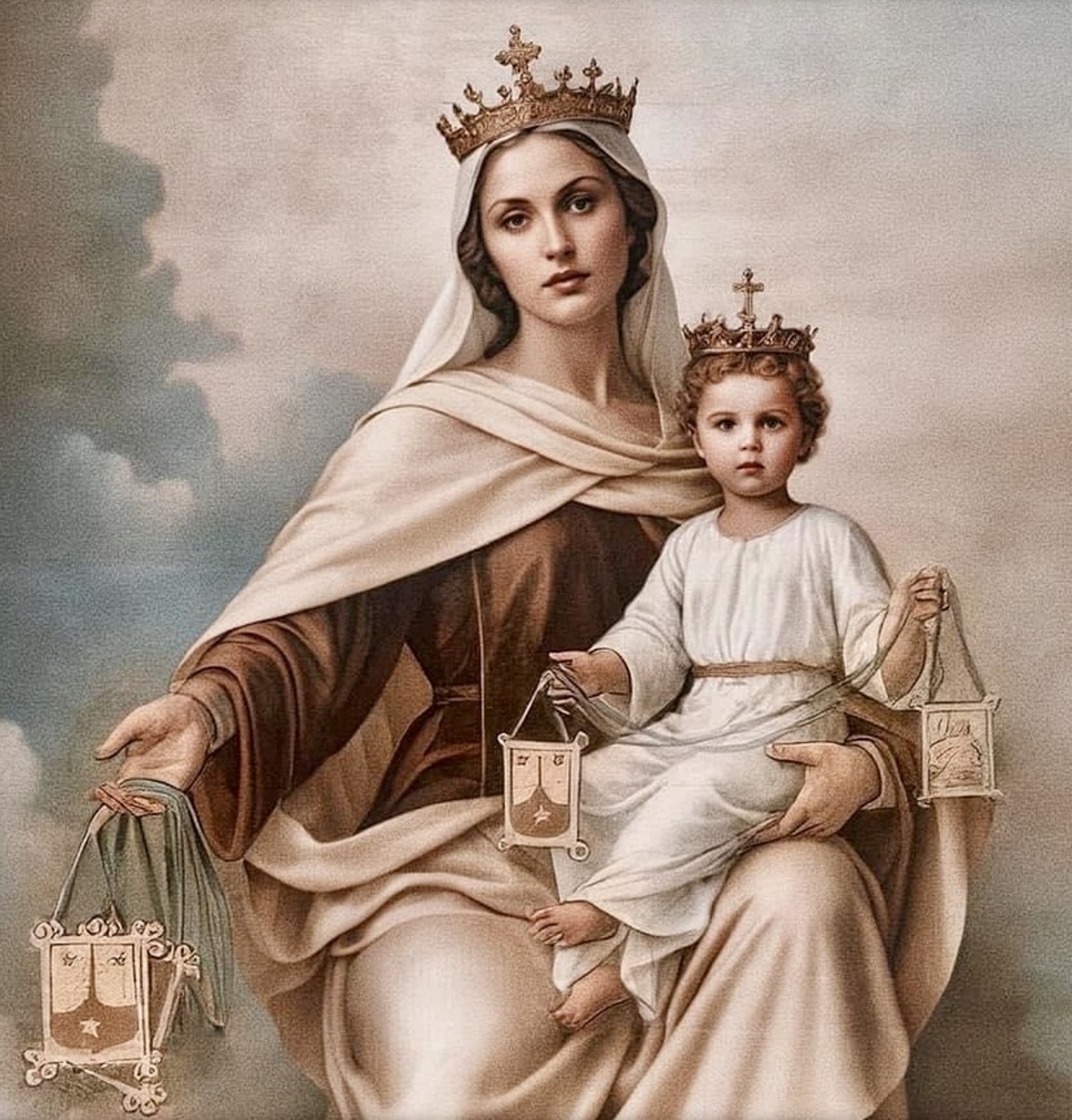
This month on the 16th is the feast of Our Lady of Mt. Carmel, when Our Lady appeared to St. Simon Stock and gave him the brown scapular.

Mt. Carmel is in northern Israel near the city of Haifa.  It is also where Elijah challenged the pagan prophets and revealed the true God (1 Kings 18:16-45).

It is written on the Scapular, “whoever dies while wearing this scapular shall not suffer eternal fire.”

This, the Sabbatine Privilege, was added to the Brown Scapular by Pope John XII, making it an official church belief that Mary will intercede and rescue those who die wearing the Brown Scapular on the first Saturday after their death. 

The Brown Scapular not only spares us the fires of hell, but we will be quickly delivered from purgatory!!!!

Sursum corda. Can we wonder that the church whose mission is to soothe the sorrows of our time is always seeking to lift up our hearts by the treasures we have in the Catholic faith?   One of the means by which the Church enables us to participate in her treasures of grace is with sacramentals.


The Holy Spirit guided me this month to these sacramentals.

1. The Crucifix

One of our most treasured sacramentals is the crucifix.  It is the image of Christ on the cross as the victim for our sins, the price of our redemption.  Meditation on the crucifix is one of the most powerful means of awakening sentiments of sorrow for sin.

The crucifix should be place in a fitting and proper place in the home, where each may glance at it frequently and think, if only for an instant, of the love of Him whom it represents and the instrument of our salvation.  

“O Holy Cross, be my victor over all hostile powers, the remedy for all my ills, my support in my weariness and the guarantee of the resurrection of my body” Amen.


2. The Sign of the Cross

For Catholics the sign of the cross is a shield and a safeguard against temptations and dangers that threaten the life of the soul. St Cyril of Jerusalem said that when we make the sign of the cross the demons see it, they are reminded of the crucified, and they take flight and hide themselves and leave us. 

All sacraments are administered with the sign of the cross: in baptism fourteen times, and in the Sacrament of the Sick (Extreme Unction) twelve times.  In the mass no less than 45 times. It occurs with great frequency in the recitation of the Divine Office.  In addition, the Church grants an indulgence of three years as often as one makes the sign of the cross, and, as often as the sign of the cross is made with holy watery, an indulgence of seven years.


3. Holy Water

Water was one of the first objects to be blessed by the church for use as a sacramental.

It is the common teaching of theologians that holy water confers actual graces, remits venial sin, and restrains the power of Satan.  It is also an efficacious means for the relief of the souls in purgatory.  As often as we use it devoutly, our good Mother, the church, implores for us aid, consolation, and strength to do good and avoid evil.

Every Christian home should have a holy water font.  These should be placed in convenient places so that holy water may be taken frequently by the members of the family.  May fear of ridicule never deter us from making use of so a means of grace, both for ourselves and our dear ones, and for the faithful departed.


Through the sacramentals:

“The lord will grant you love, holy and pure.  You will forget the world’s fears.  Ah much more, the devil too.  Now the demon is manacled today.”

              ~St. Therese of Avila


Handmaids of Mary and men of St. Michaels Warriors are called to greater faith in the Blessed Mother, believing that She will defeat the devil and bring unity and peace to our beloved Catholic Church.  All Mary had to do at Cana was mention to Jesus “they have no wine,” and Jesus filled all the water jugs with wine.  Our part is to trust in Her Power.

“Who is She that comes forth as the Dawn…Terrible as an army set in battle array…”


Handmaid of the Handmaids,
Alice 


Monday, July 13, 2026

Sunday Meditation: Whoever Has Ears Ought to Hear

For the Fifteen Sunday of Ordinary Time in Year A, Jesus begins His Parables Discourse, the third of five discourses in Matthew’s Gospel.  He begins the discourse with the Parable of the Sower.

In the July 2026 (Vol 28, No. 5) issue of the magazine Magnificat, Fr. Philip Nolan, O.P. in his editorial has this to say about this parable:


The sower, says Jesus, is the Son of Man (Mt 13:37).  In the beginning of time, the Son of Man the Word of the Father, brought life not merely to a barren landscape, but to a void of absolute nothingness.  All things came to be through him, and without him nothing came to be (Jn 1:3).  Then, after the influence of evil stunted the growth of that first gift of life, in the fullness of time the Son of Man, the Incarnate Word of the Father, graced with his footsteps the hills of Galilee and the streets of Jerusalem, scattering with abandon his words of new life for the people of his time and the people of every time.

This puts the Word that is being sown into perspective.  He is the Word that brought forth life in abundance from the beginning, and is the Word which saves life now.  What is being scattered is the Word and words are the communicative constituents that are transmitted and received.  As Jesus says in this passage, “Whoever has ears ought to hear.”


Today’s Gospel:


On that day, Jesus went out of the house and sat down by the sea.  Such large crowds gathered around him that he got into a boat and sat down, and the whole crowd stood along the shore.

And he spoke to them at length in parables, saying:

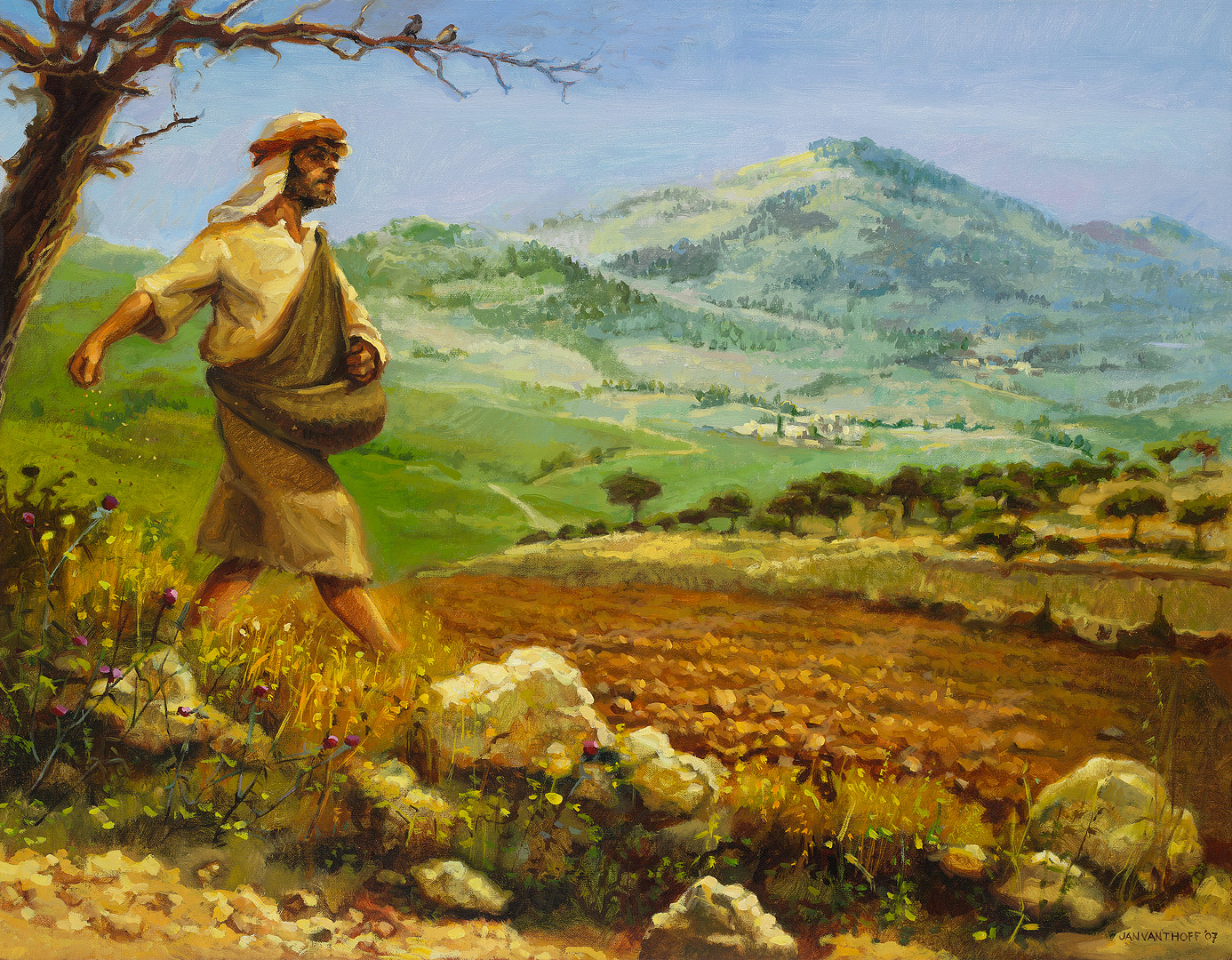
“A sower went out to sow.

And as he sowed, some seed fell on the path,

and birds came and ate it up.

Some fell on rocky ground, where it had little soil.

It sprang up at once because the soil was not deep,

and when the sun rose it was scorched,

and it withered for lack of roots.

Some seed fell among thorns, and the thorns grew up and choked it.

But some seed fell on rich soil, and produced fruit,

a hundred or sixty or thirtyfold.

Whoever has ears ought to hear.”


The disciples approached him and said,

“Why do you speak to them in parables?”

He said to them in reply,

“Because knowledge of the mysteries of the kingdom of heaven

has been granted to you, but to them it has not been granted.

To anyone who has, more will be given and he will grow rich;

from anyone who has not, even what he has will be taken away.

This is why I speak to them in parables, because

they look but do not see and hear but do not listen or understand.

Isaiah's prophecy is fulfilled in them, which says:

You shall indeed hear but not understand,

you shall indeed look but never see.

Gross is the heart of this people,

they will hardly hear with their ears,

they have closed their eyes,

lest they see with their eyes

and hear with their ears

and understand with their hearts and be converted,

and I heal them.


“But blessed are your eyes, because they see,

and your ears, because they hear.

Amen, I say to you, many prophets and righteous people

longed to see what you see but did not see it,

and to hear what you hear but did not hear it.


"Hear then the parable of the sower.

The seed sown on the path is the one

who hears the word of the kingdom without understanding it,

and the evil one comes and steals away

what was sown in his heart.

The seed sown on rocky ground

is the one who hears the word and receives it at once with joy.

But he has no root and lasts only for a time.

When some tribulation or persecution comes because of the word  he immediately falls away.

The seed sown among thorns is the one who hears the word,

but then worldly anxiety and the lure of riches choke the word

and it bears no fruit.

But the seed sown on rich soil

is the one who hears the word and understands it,

who indeed bears fruit and yields a hundred or sixty or thirtyfold.”

~Mt: 13:1-23


I found Fr. Cajetan Cuddy’s explanation of this passage to be most insightful.  Other homilies focus on the sowing and the four soils, but Fr. Cajetan explores the element of hearing involved in the four types of reception. 


Fr. Cajetan:

The Gospel's opening line reads Jesus said to his disciples hear, hear the parable of the sower.  This parable and this dynamic of hearing serves as the gospel's meta context. The disciples hear Jesus.  And what do they hear? They hear a command to hear. Jesus commands them to hear the parable of the sower.  Our Lord then exposits, he explains, he unpacks the dynamics of hearing the word in each of the four disciplines. 


Thus, if we were to diagram, to frame, to outline this gospel, we could say that today's gospel comprises three degrees of hearing.  The disciples hear from Jesus, a command to hear, a parable, about hearing the word.  Hearing, hearing, hearing. This is the dynamic of today's gospel.  And each of the four seeds in the parable found in today's gospel, each of the four seeds hears the word. We note, however, what also attends or doesn't attend their hearing of the word.  The evangelical prepositions with and without With and without these prepositions, these words, play critical roles in today's gospel.  And perhaps most interestingly, the seed that's most significant is the second seed, the one, quote, sown on rocky ground.  Each of the other three seeds here's the word either with or without something else.  The first without understanding. The third with worldly preoccupations, the fourth with understanding.  Notice the withouts and the withs that punctuate these different scenarios vis-a-vis the seeds.


But it's the second scenario. The second is the only seed framed in terms of both a with and a without.  The one who hears the word and receives it at once with joy, but he has no root.  In other words, he is without root and lasts only for a short time, with joy, but without root, the paradoxical and distinguishing complexity of the second seed.  So evidently this second seed understands something. Of the word it hears.  If it lacked all understanding, there would be no basis for its initial joy.  The seed rejoices precisely because it does understand to a degree.  What it lacks, however, is root. And thus the joy of its, the seeds, the second seeds, limit under understanding, limited understanding is short-lived.  In contrast, the fourth seed. Who hears the word and understands it, bears fruit and yields a hundred or sixty or thirty fold.  This final seed who hears and understands is rooted.  So now we see as we progress through the gospel, in addition to the theme, the dynamic of hearing, we also have the theme and dynamic of understanding.  And the theme and the dynamic of rootedness.  Understanding and rootedness are essential attributes in the contemplative life in the theologian's contemplation.  As we know, understanding implies a certain intimate knowledge.


Notice what Fr. Cajetan points out.  In the first soil, “the seed sown on the path is the one

who hears the word of the kingdom without understanding it.”  In the second soil, “the seed sown on rocky ground is the one who hears the word and receives it at once with joy. But he has no root [without] and lasts only for a time.”  In the third soil. “the seed sown among thorns is the one who hears the word, but then [with] worldly anxiety and the lure of riches choke the word and it bears no fruit.”  In the fourth soil, “the seed sown on rich soil is the one who hears the word and understands it.”  The soil metaphor is related to the dynamic of hearing.

For the pastoral homily I’m going to turn to a Franciscan Friar, Fr. Jonathan St. André, TOR of Franciscan University of Steubenville.


Fr. Jonathan:

In the gospel for the 15th Sunday in ordinary time, we hear the marvelous parable of the sower and the seed. It's a beautiful parable that I think uh has so much to instruct us in in our tradition and spirituality. And actually, it's a parable that was close to St. Francis of Assi's heart. I've got my writings of St. Francis here, which are dogeared and beat up because I love reading them. And in his early rule chapter 22 in a section in admonition to the brothers he actually includes this parable in its entirety and gives some commentary on it. St. Francis writes, "We have nothing else to do but to follow the will of the Lord and to please him. Let us be careful that we are not earth along the wayside or that which is rocky or full of thorns." In keeping with what the Lord says in the gospel, the word of God is a seed.  So Francis of Assi is really imploring us, cautioning us, asking us, what kind of earth are you? How are you going to be receiving the seed of the word of God?


And I think if you're like me and you're honest and you look at your own heart, you look at your own soul, you look at your own spiritual life, that you are all of those different kinds of earth in the parable.  Sometimes parts of our heart are the wayside and the seed, the word of God, the message that we hear hits our heart, but it's too shallow. It can't really take root. Sometimes it's the rocky ground and we're all gung-ho and we're excited to move forward in faith and follow Jesus and then the trials come and it's like okay things slip away, slide away, we pull back. Sometimes it's the ground where the thorns have grown alongside the word and they choke out the word and the thorns in the scripture passage really relate to the allure of the world the temptations also anxieties for many of us we're just we get so anxious about many things that it can choke out the truth of God's word in our life so the constant pursuit of the spiritual life is to ask what kind of earth am I for the word for the seed that is the word?


So, at different moments in our lives we can be any of the four soils.  The Word of God as seed is constantly being sown, and our hearts have the capacity to plant the seed in any of the four ways.  May our hearts be of rich soil more often than not.


Sunday Meditation: “But blessed are your eyes, because they see,

and your ears, because they hear.”


This is a lovely hymn that matches today’s Gospel perfectly, “Seed, Scattered and Sown.”


Seed, scattered and sown,

wheat, gathered and grown,

bread, broken and shared as one,

the living bread of God.


Vine, fruit of the land,

wine, work of our hands,

one cup that is shared by all;

the Living Cup, the Living Bread of God.


Is not the bread we break,

A sharing in our Lord?

Is not the cup we bless,

The blood of Christ outpoured?


Lovely.


Thursday, July 9, 2026

Literature in the News: Pope Leo XIV Quotes Gandalf

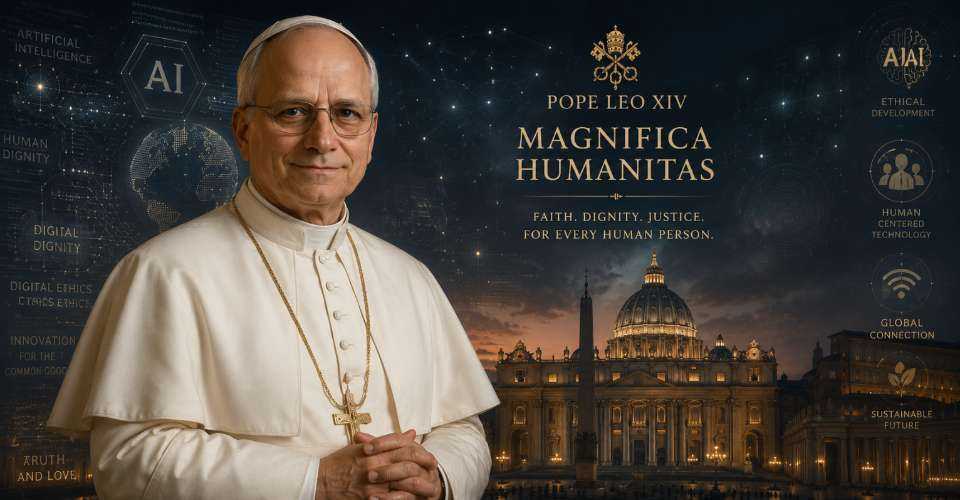
As many of you know on May 25th, Pope Leo published his first encyclical, Magnifica Humanitas, on the cautions and moral use of artificial intelligence (AI).  The encyclical established the Catholic Church’s social teaching on the use of AI, especially in regard to human dignity and the common good.  Let me say up front, I have not read the encyclical but I have read summations and excerpts.  The details of the encyclical are not the concern of this post.  What I do what to point out is the starting quote within the document.


Magnifica Humanitas contains a quote from J.R.R. Tolkien’s epic novel, Lord of the Rings.    More specifically it quotes from a piece of dialogue from one of its main characters, the character who represents wisdom and moral rectitude of the wizard, Gandalf the Grey.  After his sacrificial act of saving the fellowship at the expense of his life, Gandalf will later in a “resurrection” of sorts, return as Gandalf the White, the name change reflecting a process of purification.  But as “Gandalf the Grey” he symbolizes a man of wisdom.  Indeed, grey has long been associated with wisdom and prudence, alluding to the ancient Greek “grey-eyed” goddess of wisdom, Athena.  But I think it also associates with those of us in a particular age group of grey-haired or grey-bearded.  (Ha, that’s one of the few benefits of reaching my age!)  Where I work we sometimes refer to the experience “old-timers” as “the grey beards.” 

With that context, let’s turn to the quote:

It is not our part to master all the tides of the world, but to do what is in us for the succour of those years wherein we are set, uprooting the evil in the fields that we know, so that those who live after may have clean earth to till.


There has been several commentaries in the public domain on why Pope Leo chose this quote.  I’m going to draw on two.

James T. Keane in writing in the Catholic magazine, America, “Why Pope Leo’s new encyclical quotes Gandalf: Literary images of hope and faith in ‘Magnifica Humanitas’ “ first offers surprise:

Of all the startling things one might find in a papal encyclical, a quote from J. R. R. Tolkien might take the cake. It’s not the first time a novel has made an appearance in such a format, as The Brothers Karamazov showed up in Pope Francis’ “Dilexit Nos,” but who would ever have thought The Lord of the Rings would appear in a magisterial document?

But there it is—a quote from Gandalf right smack in the middle of the text…As for the horrifically mixed metaphor, blame Tolkien, not the pope.

Ha!  The mixed metaphor he refers to is the “tide” metaphor which opens the quote with the tilling of soil as to the solution the tides present.  That is a mixed metaphor but Tolkien has put the quote into the mouth of Gandalf, so it would follow common speech patterns of dialogue rather than formal prose.  But even in formal prose, I personally do not find mixed metaphors problematic per se.  They become problematic if they confuse or contradict.  I don’t find that to be the case here.

Also interesting is that Pope Francis had used a quote from a novel, The Brothers Karamazov.  Over the years I had found Pope Francis to have a very good knowledge of literature.  I think recall the Holy Father quoting Dante and Borges and Cervantes.  There are others I’m sure but my memory is faulty.  He actually wrote a letter on the use of literature in the formation of priests and religious.  I published my reading of it here.  Pope Francis also had an Apostolic Letter commemorating the passing of Dante Algheri, and I published two posts on reading through it, here and here.  I don’t know if Pope Leo is as knowledgeable of literature as Pope Francis, but he is following in his footsteps on drawing from classic literature. 

Kean provides the context of Leo’s Magnifica Humanitas to show how the Tolkien (through Gandalf) quote is relevant.

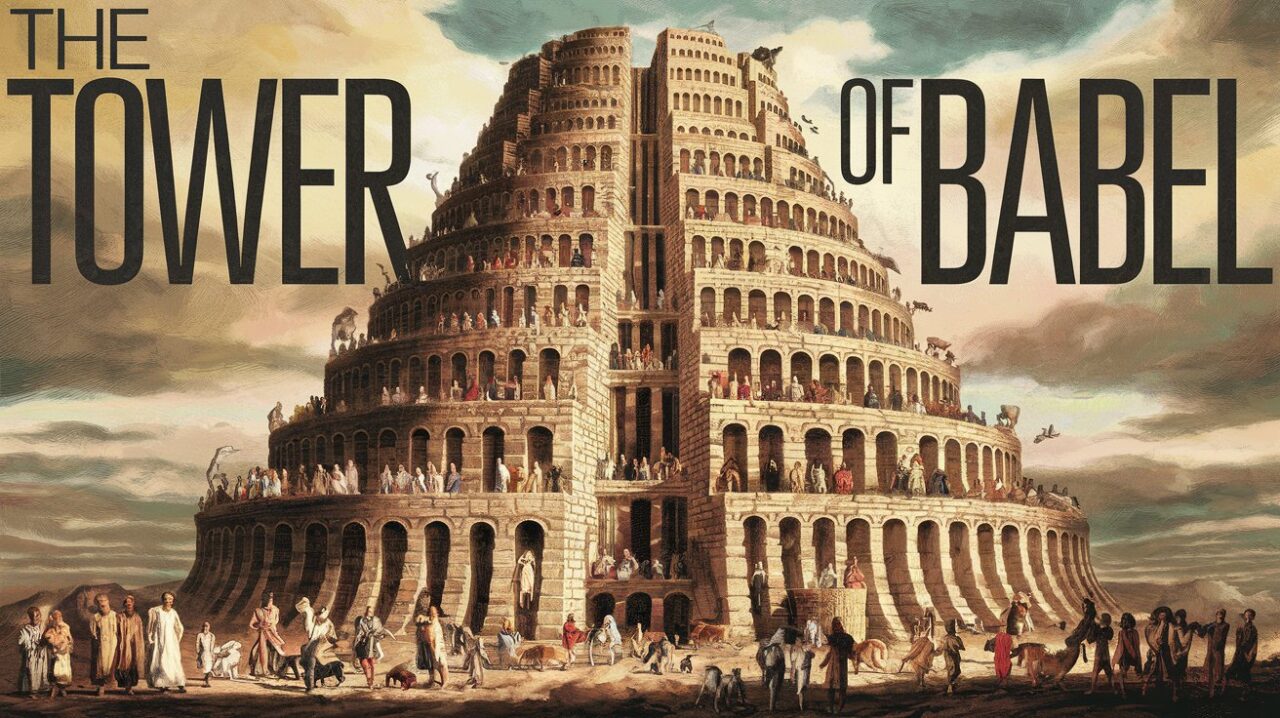
Paragraph 90 [of Magnifica Humanitas] gives us the most important question: “We are called to reflect on the great ‘construction sites’ of our era and ask: What are we building?” Throughout “Magnifica Humanitas,” the two images he uses to represent the choice before us are of the Tower of Babel from Genesis and Nehemiah’s slow reconstruction of Jerusalem from the Book of Nehemiah: The first story tells of the thoughtless arrogance taken on by a humanity that sees its own glorification as the goal of existence; the second tells of the humble and painstaking act of constructing something holy, brick by brick. You can guess which one our Augustinian pope prefers.

So, concerning artificial intelligence, the central subject matter of the encyclical, Pope Leo is not innately opposed to AI, but he calls into question the manner of its use and the implications of its purport.  Pope Leo uses two opposing Biblical images to present the possibilities.  With AI, we could be building a Tower of Babel, a prideful challenge to God’s providence.  Or we could be rebuilding Jerusalem after the destruction of the Temple from the Babylonian siege.  The first is degradation of human dignity; the second is working with God for the building of human institutions.  Kean consolidates Pope Leo’s thesis.

What are we building? What are the great construction sites of our era? A tower to the heavens, the A.I. enthusiasts tell us, whether you want it or not. It can’t be stopped. Perhaps not, “Magnifica Humanitas” concedes, but it certainly doesn’t have to be a folly that destroys human solidarity forever. It could be a new work of a magnificent humanity, holy and built on the ideas and images and labors of a humanity that seeks more than simply efficiency or profit.

Could it be possible that artificial intelligence would be holy and transcend efficiency or profit?  Highly unlikely.


Joseph Pearce, writing in the National Catholic Register, “Why Pope Leo Quoted Tolkien’s Gandalf,” has a little different perspective on Pope Leo’s quote of Gandalf.

Essentially, Gandalf is saying that localism is the only effective response to globalism. None of us, as individuals, as mere pint-sized hobbits in a world of great and largely dark powers, can defeat the power of global corporations and the invasive technology that they are trying to impose upon us. “It is not our part to master all the tides of the world.”

On the other hand, we are called “to do what is in us for the succour of those years wherein we are set.” We are only called to attend to the times in which we live and to work to make the world in which we find ourselves a better place by loving and serving those around us. It is pointless worrying about how evil our own time is and equally pointless to vainly wish that things were different.

“I wish it need not have happened in my time,” Frodo complains to Gandalf.

“So do I,” Gandalf replies, “and so do all who live to see such times. But that is not for them to decide. All we have to decide is what to do with the time that is given us.”

Other than Pearce’s touch of contemporary ideology (“localism is the only effective response to globalism”), he is identifying that Gandalf is stating that resolving the immediate needs of your neighbors will cure what is wrong with the world at large.  If everyone paid attention to one’s neighbors, the aggregate attention would bring about the Kingdom of God.  And it’s not the geographic restrictions that Pearce identifies.  He sees Gandalf’s quote temporally as well.

No, we cannot choose the time in which we are born. We might wish to have lived, as Frodo does, in more peaceful and virtuous times, unravaged by war and wickedness, but that is not for us to decide. What we do need to decide is what to do with the time that is given us in the times in which we find ourselves. In the words that Pope Leo quotes, Gandalf tells us that we cannot stop all the wars and all the wickedness, we cannot “master all the tides of the world,” but we can decide to fight wickedness where we find it in our own small sphere of influence, “uprooting the evil in the fields that we know, so that those who live after may have clean earth to till.”

In the context of the situation, Pearce sees Gandalf’s quote as containing a moral directive to Frodo.

Our calling, our responsibility, is to be good and faithful stewards of the good things we’ve been given and to be good and faithful servants of the Lord our God and of those who are our neighbors in the Shire in which we live, and of those who will be born after us.

And so, this I think is where Pope Leo is coming from.  Artificial Intelligence requires a moral responsibility to not use it in a prideful, self-centered way, and to consider the benefits to the common good that it could contain as a glorification of God. 


Monday, July 6, 2026

Matthew Monday: Father’s Day 2026

I’m only now getting the chance to post on our annual Father’s Day, father/son adventure.  This is an annual event we do for Father’s Day.  We do some “adventure” together, just the two of us.  I first wrote about this in 2014 when Matthew was four years old.  And if you’re interested, you can scroll through all the annual Father’s Day adventures using this link. 

This year we decided to hike and explore one of Staten Island's many parks, a lesser known park called Wolf’s Pond.  It’s not a very large park, but it’s eclectic.  It has woods and hiking trails as one would expect with fresh water ponds but it also runs up to the Raritan Bay, which is part of the Atlantic Ocean.  So it also has ocean front and beach.  Here is a map of the park.


I don’t think any of the hiking tails are more than two miles, so that should give you a perspective.  The long tear-drop shaped pond on the southwest corner is Wolf’s Pond, and you can see that only a sliver of land separates it from the bay.  Major hurricanes have caused the ocean water to breach into the pond and kill all the fresh water pond life.  Several times in the last century they have had to fix the damage and restore normal pond life.

The real adventure of this day was not so much the hiking and exploring, but the drive.  Matthew has his driving permit and been taking driving lessons.  The adventure was for him to drive us there and back.  Not using highways, which he has not learned to do yet, it’s about a ten mile drive through the streets.  I took one picture of him driving.


I will say he drives pretty well in the streets, but I have to say he needs work on his parallel parking and managing parking lots.  But we went there and back with no problems.

Here are some pictures of Matthew on the hiking trail.


Here are some pictures of Wolf’s Pond.


The Canadian geese had monopolized this but there were ducks and turtles and people fishing.  It’s actually a very lovely park for those who live by here.

Once you come out of the woods, you can see ocean.


We explored a remote area of the shore for a bit as well. 


There was lots of fallen trees, washed-up stuff from the ocean, and a seaweed stinky smell.  It was not somewhere you wanted to hang out. 


That’s yours truly, with his camera. 

I should mention, Wolf’s Pond Park has a very nice memorial to those who fought in the Battle of the Bulge.  I took several pictures, but I’m only going to share one.


On the way home, I had Matthew stop at what I thought was an upscale pizza place.  It turned out to be an expensive Italian restaurant.


Matthew wound up getting a prime rib that was enough for three servings and I had cavatelli in a Bolognaise sauce.  Delicious!  We took home the left overs.

Finally, a father and son picture.


Matthew is good at selfies.  I’m not.