"Love follows knowledge."
"Beauty above all beauty!"
– St. Catherine of Siena

Friday, December 19, 2014

Faith Filled Friday: Oh Holy Night by Eisley

This year "Oh Holy Night" has become my favorite Christmas song.  While there are many lovely versions, this version by a group named Eisley really captures me.  I don't even know this group.  The lead singer, Sherri DuPree-Bemis, doesn't exactly have a classical singing voice, but lower female register combined with a sort of scratchy voice makes this rendition distinct.  It sounds so true.


O Holy Night! The stars are brightly shining,
It is the night of the dear Saviour's birth.
Long lay the world in sin and error pining.
Till He appeared and the Spirit felt its worth.
A thrill of hope the weary world rejoices,
For yonder breaks a new and glorious morn.
Fall on your knees! Oh, hear the angel voices!
O night divine, the night when Christ was born;
O night, O Holy Night , O night divine!

Truly He taught us to love one another,
His law is love and His gospel is peace.
Chains he shall break, for the slave is our brother.
And in his name all oppression shall cease.
Sweet hymns of joy in grateful chorus raise we,
With all our hearts we praise His holy name.
Christ is the Lord! Oh praise His name forever,
O night divine, the night when Christ was born;
Fall on your knees! Oh, hear the angel voices!
O night divine, the night when Christ was born;
O night, O Holy Night , O night divine!

Tuesday, December 16, 2014

Chanuka, Oh Chanukah

Today is the first night of Chanukah.  What a blessing to have a Jewish side of the family.  Here is the blessing over the candles in English.  You can read it in Hebrew.

Blessed are you, Lord, our God, sovereign of the universe
Who has sanctified us with His commandments and commanded us
to light the lights of Chanukkah. (Amen)


There are so many ways to spell Hanukkah in English that I just don't which to pick.  And now for your listening pleasure, here is a Hanukkah song, "Chanuka, Oh Chanukah, sung by a Theodore Bikel.  I've never heard of him, but he sings this wonderfully.  I've been to synagogue for some family affair, and I have to say the Jewish Cantors out do our Catholic choruses.


May God bless you all.

Wednesday, December 10, 2014

On Writing: Word Repetition

Just about a year ago I had an exchange on the internet with Anthony Esolen, the excellent translator and Renaissance Literature professor, concerning use of diction.  Professor Esolen was at the time maintaining a blog on writing and word use and etymology at Patheos Catholic forum, called Word of the Day.  I really enjoyed it, but unfortunately he seems to have given it up, or at least it’s on pause.  I was actually surprised he could keep up with a blog, given the time it takes for all the things he writes and his teaching, if he still teaches.  His bio line says he teaches at Providence College.

I generally agreed with whatever writing insight he provided, but a year ago, almost to the day, I had a little disagreement with him.  It has stuck in my mind for three reasons.  (1) I think it convinced him and (2) I articulated one of my unwritten rules of writing for which I want to document and preserve and (3) it led to a further insight on writing.

I’ve mentioned Anthony Esolen before on this blog before.  He was the translator of one of the Dante Alighieri’s Purgatorios I read and blogged on earlier this year. http://ashesfromburntroses.blogspot.com/2014/01/book-excerpt-purgatorio-by-dante.html 

The point of disagreement had to do with word repetition and searching out synonyms (typically through the use of a Thesaurus).  Here’s what he said on his post titled “Grammar Lesson of the Day: Bury the Thesaurus”:  

 Sometimes my college freshmen tell me that they use a thesaurus to find synonyms, so that they don’t have to use the same word all the time. Using the same word, they’ve been told, is repetitive, and repetition is bad. Well, that’s complete nonsense. I’ll turn to repetition in later lessons. For now, I imagine Jesus saying:

 Blessed are the poor in spirit, for theirs is the kingdom of heaven.
 Those who mourn are going to be happy too, because they will be comforted.
 The inheritance of the earth will belong to the meek, and that will be most fortunate for them.
 People who hunger for righteousness will experience a favorable state of affairs …
 
Anyway, Thesaurus polytropus is a wily old dinosaur. He doesn’t attack head on. He baits his prey by leaving in open view the carcasses of words, and just when you think you’re going to enjoy an easy meal – no hunting, no skinning – pounce! He’s got you by the throat.

 The thing is, very few words are really synonymous with one another. This makes English especially baffling for non-native speakers. English is phenomenally rich in words, from the Germanic foundations, from the Viking variants, from the French by way of the Norman Conquest; words borrowed or invented from Latin and Greek from the Renaissance to this day; we even borrow ways of making new words. No language has as many words as English does. No language is even close.

 So we use words that are sort-of-synonymous, but assign them to special areas of meaning, with differences in nuance.

You can go over and read the rest and follow his examples.  Prof. Esolen’s editing of the Beatitudes eliminated the repetitive words and provided alternatives to avoid the repetition.  He’s got a point, but he’s generally wrong here.  Here was my reply, which was echoed by others commenting.

I don't fully agree with you on this one. Yes most college students don't know how to use a thesaurus, and being precise is paramount, so if one uses alternative words at the expense of precision then you have reduced your writing. And yes repetition, especially anaphora as in the Beatitudes (as well as other rhetorical uses of repetition), can have a beneficial effect to one's prose. [Notice how I just used the word "prose" instead of repeating "writing" in that last sentence.] But the use of an alternative word that does not sacrifice precision most definitely makes the writing fresher. Repetition without rhetorical construction bores the reader and dulls the composition. [See I used another word there at the end instead of "writing" or "prose."] Knowing how to use synonyms comes with experience.

In a reply to someone who said something similar, Professor Esolen said this:

I do understand your point, though -- and Manny's below. But teachers who believe that a thesaurus is any help for a student who hasn't read broadly are fooling themselves, or don't really understand how people learn to write well.

His point is not that you shouldn’t strive to freshen one’s writing, but that most people don’t use a Thesaurus correctly and wind up using an alternative word when it doesn’t fit.  Fair enough.  As I said: precision is paramount.  Take that as a quote.  But here’s the key: repetition without rhetorical construct bores the reader.  In Prof. Esolen’s edited Beatitudes, eliminating the repetition also eliminated the rhetorical structuring.  Here are the actual first four Beatitudes.

Blessed are the poor in spirit, for theirs is the kingdom of heaven.
Blessed are they who mourn, for they will be comforted.

Blessed are the meek, for they will inherit the land.
Blessed are they who hunger and thirst for righteousness, for they will be satisfied.

The repetition of “Blessed are” at the beginning and “for” at the caesura parts of the sentence creates a rhetorical structure, which in this case is called anaphora.  

But here’s something just as important that came to me as I’ve given this thought these past twelve months.  Repetition with rhetorical construct livens writing.  There are several rhetorical constructs that use repetition and they are worth looking into.  

Wikipedia gives some fine examples of anaphora, but let me end with this one.  This is from Ezra Pound’s poem Canto XLV of his opus collection of poetry titled, The Cantos,   Canto XLV subtitled, “With Usura.”  d 


Canto XLV
 By Ezra Pound

With Usura
 
With usura hath no man a house of good stone
each block cut smooth and well fitting
that design might cover their face,
with usura
hath no man a painted paradise on his church wall
harpes et luz
or where virgin receiveth message
and halo projects from incision,
with usura
seeth no man Gonzaga his heirs and his concubines
no picture is made to endure nor to live with
but it is made to sell and sell quickly
with usura, sin against nature,
is thy bread ever more of stale rags
is thy bread dry as paper,
with no mountain wheat, no strong flour
with usura the line grows thick
with usura is no clear demarcation
and no man can find site for his dwelling.
Stonecutter is kept from his stone
weaver is kept from his loom
WITH USURA
wool comes not to market
sheep bringeth no gain with usura
(ll. 1-24)

You can read the rest of the poem at Poetry Foundation, though I corrected a typo in the copied passage above.   This is not one of my favorite Pound poems, but for some reason it’s much anthologized, and as you can see he makes his point with the anaphoric repetition of “with usura.”  What’s usura, you might ask?  It’s Spanish or Italian for usury, which was Pound’s way of criticizing modern day commercialism.   


So what’s the overall writing moral here?  Repetition can help writing and it can hurt writing.  Learn to distinguish the difference.

Tuesday, December 9, 2014

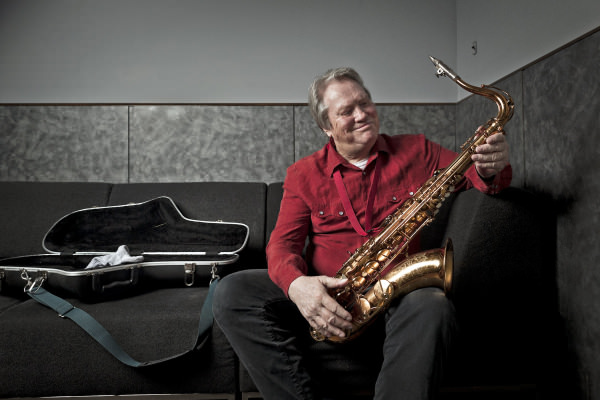
Music Tuesday: In Memoriam, Bobby Keys

For those that have never heard of him, Bobby Keys was arguably the most important saxophone sideman in rock and roll history.  From Wikipedia:

Robert Henry "Bobby" Keys (December 18, 1943 – December 2, 2014) was an American saxophone player who performed with other musicians as a member of several horn sections of the 1970s. He appears on albums by The Rolling Stones, Lynyrd Skynyrd, The Who, Harry Nilsson, Delaney Bramlett, George Harrison, Eric Clapton, Joe Cocker and other prominent musicians. Keys played on hundreds of recordings and was a touring musician from 1956 until his death in 2014.

And that’s only a short list.  If you go to the bottom of the page you’ll see a longer list of  almost every who’s who in pop music.  He passed away last week at the remarkable age of 70.  I say remarkable because given the amount of alcohol and drugs he was supposed to have ingested over his life time, you would say he lived a long life.

Of all those groups and musicians, there is no doubt he was most associated with the Rolling Stones.  While the Stones have used other saxophonists over the years on their albums, some of the Stones’ biggest hits scored with a sax had Bobby Keys on the instrument.  I only know of Keys because I’m a big Rolling Stones fan and I pay attention to band credits and personnel.  Of the band members, he was particularly close to Keith Richards, who besides the love of rock and its history, besides partaking in certain illegally encapsulated stimulates, also shared the same exact birth date of December 18th, 1943.  Keith always said he didn’t have to worry about dying until something happened to Bobby.  I think I remember Keith saying he considered Bobby a sort of twin, which is quite funny because Bobby is a sort of Texas “good-ole-boy” and Keith is from London. 

Here’s Keith remembering Bobby, just published in Rolling Stone magazine.  

Bobby Keys was built for fun. When we were making Exile on Main Street in France, we were there for several months, and I had a good ole speedboat. In the afternoons, before we went down the basement to record, we'd sort of zoom around, creating mayhem from Monte Carlo to Cannes. Bobby also bought a huge motorcycle, which he used to roar around the hills and pick up a few girlfriends. He'd always come back with a different chick on the back. He was that kind of guy.
He was the epitome of the rock & roll sax-playing man. He used to tell me about listening to Buddy Holly rehearse in his garage just down the road from his house. That's one of the reasons he wanted to get into music. That's pretty early rock & roll, so he was right in there at the very beginning. He was playing on the road by the time he was 15. He was a piece of history in himself, and had a deep knowledge of it. 
When we brought Bobby in, we were listening to the great soul bands of the Sixties. We wanted to give the band a bigger sound and were influenced by all of the beautiful R&B records with the Memphis horns — the Otis and the Pickett bands — so adding saxes seemed quite natural to us. When I first met him, he had Jim Price with him on trumpet and they were a hot little duo themselves. I think they were with Delaney & Bonnie at the time. 
When he cut "Live With Me," his first record with us, I immediately thought of great players like Plas Johnson or Lee Allen, who played for Little Richard and Fats Domino. He had that same Southern feel on the way he played. I guess that's not too astounding, since he does come from Texas [laughs]. He never let anybody forget he was from Texas. 
Being in a guitar band, Bobby had an incredible knack of making horns melt in. He always knew the right part to play. I remember when we cut "Happy." One afternoon, I just had this idea and the rest of the boys hadn't turned up yet. It was just Bobby and Jimmy Miller, our producer at the time, who also plays drums. We cut the finished track in about an hour. Bobby was amazing on that, because instrumentation-wise, that started off just guitar, a baritone sax and some drums. Bobby's baritone part just picked it up. Usually, Bobby would just wail in first on the baritone, then he'd add the tenor, sometimes an alto.

There’s more to read, and it’s all interesting but I love the way Keith ends the discussion.

His love of music, I think, is his other defining attribute. If we got interested in something, like a piece of music, we'd stay up until we'd killed it. I think he must have turned on millions of people, even though a lot of them don't know who he was. He's one of those hidden geniuses, 10 feet from stardom and all of that. 
Bobby took everybody as they came. He wouldn't be weary of people. He had a large heart. He told me, "I got a heart as big as Texas" and I said, "Bobby, I think it's a bit larger." He was just a barrel of laughs to be around. I very rarely saw him down, and if I did, it was usually about a young lady who dumped him or something. And he soon got over that, you know. He probably wouldn't want us to be too solemn right now. Basically when it's all said and done, I'm looking upon this now as a celebration of life rather than a memorial for his death. He'd like a big wake. 
It's a sad thing, but not totally unexpected. I've been speaking to him for the last couple of weeks and he was still laughing, but he was getting weak. I just wanted to cheer him up.
As Bob said, "It's time for the last roundup."
Now this website, Ultimate Classic Rock, put together a list of the “Top Ten Bobby Keys Rolling Stones Songs” and I think they mostly got it right with two exceptions.  They left off lovely textured song with a soft Bobby Keys tenor sax solo, “Coming Down Again,” from off the 1973 Goats Head Soup album.  And then I would include a great funky song called “Dance (Part 1)” from the 1980 Emotional Rescue album.  I know I took “Happy” off the website’s list, and while it may be overall a better song than some of those on the list, I don’t think Bobby Keys’ sax plays as an important a role as in these other songs.  I also don’t quite agree with hierarchy of the ten songs on that list.  Here’s how I would rate the Top Ten Bobby Keys Stones songs:

1. Brown Sugar
2. Can’t You Hear Me Knocking
3. Sweet Virginia
4. Emotional Rescue
5. Rip This Joint
6. Coming Down Again
7. All About You
8. Live With Me
9. Casino Boogie
10. Dance (Part 1)


Here’s a couple of clips.  Listen to how his solo transforms Brown Sugar at the 1:40 mark.


Here’s a live version of “Sweet Virginia.”  Bobby Keys comes in at the 2:45 mark.


You can easily find clips of all those ten songs on youtube.  I love those songs.  It feels like I’ve lost a part of my youth.  It will really hurt when a core member of the Stones goes.  Finally Keith penned a note to Bobby on hearing of his passing and posted it I think on his Facebook page.  I’m not on Facebook to verify.


Rest in peace Bobby.  You were the best damn rock sax player ever.


Friday, December 5, 2014

Faith Filled Friday: Advent, Waiting in Silence

This week started Advent, as you all know.  This Advent song is just so beautiful.  Oh how I long for silence.  With both a five year old and an exuberant pup everything has been so hectic.  I haven’t been on the computer as much, and I’ve even fallen behind on my reading goals.  Silence right now would be like a fresh glass of ice water.  Speaking of thirst, that’s one of the main longings of the Advent season, the thirst for Jesus.  “As the deer longs for streams of water, my soul longs for you, O God.”

"Waiting in Silence" by Carey Landry.  Hope you enjoy it, and have a blessed Advent.


Come Lord Jesus.

Tuesday, December 2, 2014

Notable Quote: Pain in a Poem by Mark Strand

In my research for yesterday’s reflection on the passing of poet Mark Strand, I found this wonderful quote attributed to him.

“Pain is filtered in a poem so that it becomes finally, in the end, pleasure.”

            -Mark Strand


Sunday, November 30, 2014

Literature in the News: Mark Strand, RIP

 A bit of sad news today.  The renown poet and former American Poet Laureate, Mark Strand, passed away yesterday.  From the New York Times Obituary:


Mark Strand, whose spare, deceptively simple investigations of rootlessness, alienation and the ineffable strangeness of life made him one of America’s most hauntingly meditative poets, died on Saturday at his daughter’s home in Brooklyn. He was 80.

His daughter, Jessica Strand, said the cause was liposarcoma, a rare cancer of the fat cells.

Mr. Strand, who was named poet laureate of the United States in 1990 and awarded the Pulitzer Prize for Poetry in 1999 for his collection Blizzard of One, made an early impression with short, often surreal lyric poems that imparted an unsettling sense of personal dislocation — what the poet and critic Richard Howard called “the working of the divided self.”

The Wikipedia entry states that people confused Strand’s poetry with that of Robert Bly, another leading contemporary American poet, and it’s true for me.  As I went researching for a Strand poem, what I thought was a Starnd poem turned out to be a Bly poem.  Still, as I read through a number of Strand poems this evening, I do think they are quite distinct.  More from the NY Times, this on Strand’s style:

Echoes of Wallace Stevens and Elizabeth Bishop could be heard in his compressed, highly specific language and wintry cast of mind, as could painters like Giorgio de Chirico, René Magritte and Edward Hopper, whose moody clarity and mysterious shadows dovetailed with Mr. Strand’s own sensibility.

I’m not sure how a poet compares to a painter, but I think Liam Grimes (the author of the NYT Obit) has it quite right on comparing Strand to Wallace Stevens and Elizabeth Bishop.  They share a metaphysical style, especially in the way they jump from the abstract to the concrete and vice versa.  Another poet that comes to mind for me that recalls Strand’s style is Marianne Moore, but that’s a momentary gut reaction without any side by side comparison.  

A couple of things stood out for me in his biographic details.  Either I didn’t remember or I didn’t know Strand was Canadian born.  But apparently because his father relocated a number of times for his work Strand spent his defining years on American soil and in other nations.  He definitely sounds American, as you can see by the poets listed above that are similar in voice and style, though I’m not sure there is a distinction between American and Canadian voices.  The other thing that I didn’t realize was that he was Jewish, though I can’t find anything that says he was observant.  His emphasis on death does push him to religious themes, though I have no idea if he was a believer of any sort.  The Obit highlights this poem, titled “The Remains” because it seems to compose his own epitaph.  

I empty myself of the names of others. I empty my pockets.
I empty my shoes and leave them beside the road.
At night I turn back the clocks;
I open the family album and look at myself as a boy.
What good does it do? The hours have done their job.
I say my own name. I say goodbye.
The words follow each other downwind.
I love my wife but send her away.
My parents rise out of their thrones
into the milky rooms of clouds.
How can I sing? Time tells me what I am.
I change and I am the same.
I empty myself of my life and my life remains.


I’ll highlight this poem because I think it’s a better one and because it sounds so much like Wallace Stevens, who I adore as a poet.


The Idea
by Mark Strand

For us, too, there was a wish to possess
Something beyond the world we knew, beyond ourselves,
Beyond our power to imagine, something nevertheless
In which we might see ourselves; and this desire
Came always in passing, in waning light, and in such cold
That ice on the valley's lakes cracked and rolled,
And blowing snow covered what earth we saw,
And scenes from the past, when they surfaced again,
Looked not as they had, but ghostly and white
Among false curves and hidden erasures;
And never once did we feel we were close
Until the night wind said, "Why do this,
Especially now? Go back to the place you belong;"
And there appeared , with its windows glowing, small,
In the distance, in the frozen reaches, a cabin;
And we stood before it, amazed at its being there,
And would have gone forward and opened the door,
And stepped into the glow and warmed ourselves there,
But that it was ours by not being ours,
And should remain empty. That was the idea


Here's a reading of "The Idea" if you want to hear it before you.  I don't know if the reader is Strand himself, but it's well read.


If you want to read an adorable and funny poem by Mark Strand, go over to the Poetry Foundation and read “Eating Poetry.”   


Eternal rest and peace for Mr. Strand.  He seems like a good soul.