"Love follows knowledge."
"Beauty above all beauty!"
– St. Catherine of Siena

Friday, March 17, 2023

St. Patrick’s Day 2023

I’m ethnically Italian but I have a devotion to St. Patrick, the real St. Patrick, not the distorted silly festival St. Patrick that is dressed in what is supposed to pass as green bishop garb.  Why is it that festivals left to secular devices almost all lead to bacchanals?  I remember as a college kid meeting up with other students in Manhattan for the St. Patrick’s Day parade, drinking green beer, and then sitting at an Irish pub named Molly Bloom—named after a character in James Joyce’s novel Ulysses—and talking Irish literature.  I can still quote a few of Yeats’ poems!  [“Turning and turning in the widening gyre/The falcon cannot hear the falconer…”]

And I remember in the years after college meeting up with some of my boyhood friends—none of which were actually Irish—every St. Patrick’s Day at a local Brooklyn tavern named Pippin’s Pub, where on St. Patrick’s Day they would give out free corned beef sandwiches all night.  We’d drink Guinness—our tastes had developed beyond green beer—and later in the night swing down Irish whiskies and listen to Steely Dan on the jukebox.  [“They got a name for the winners in the world/I want a name when I lose/They call Alabama the Crimson Tide/Call me Deacon Blues”] I’m not sure why Steely Dan felt appropriate for March 17th, but it was hip, and I think Irish was hip back then in New York City, at least on St. Patrick’s Day.  There was certainly Irish music played on the juke, but I remember Steely Dan.  I can tell you the hangovers weren’t hip.

But such is New York City’s version of St. Patrick’s Day. 

By the way, I discovered a wonderful podcast from Ireland called The Brendan Option, hosted by Fr. Brendan Kilcoyne who from a Catholic perspective gives his opinions on the new Ireland, and they are not very positive.  Here he laments at what has happened to the St. Patrick’s Day parades in Ireland where he wants to cancel the parade altogether.


Besides agreeing with his many opinions, I just love his gift of gab that apparently so many Irish have.  And I love his accent.  If you don’t watch it, here’s a little quote from the episode he put on the description pages:


I want this vulgar, drink-sodden, bullsh!t that is commonly called St. Patrick's Day to stop so that the celebration of a major Catholic figure in the Irish Catholic experience is not ruined.

Since those days attending Irish pubs I got married and became religious.  Not that marriage and developing faith necessarily follow or are connected, but I will attest that in marriage God does actually call you, and whether you listen or not is up to the individual.  Be that as it may, I discovered my Catholic faith, assessed it against other faiths and other versions of Christianity, and came down solidly on Catholicism. 

One of the many blessings of Catholicism are the lives of the saints.  They are our models and our heroes.   Reading about saint’s lives can be a real pleasure to faithful Catholics, and I encourage it.  Yes, some of the hagiography can be hard to believe, but the moral instruction is the critical element, and moral instruction is missing from much of our contemporary literature.  Or perhaps to say it in another way, much of the moral instruction we get from contemporary literature is frankly immoral.  Flannery O’Connor, the Catholic American writer, has a great quote that shows Catholic’s admiration of saint’s lives where she says this about a character: “She could never be a saint, but she thought she could be a martyr if they killed her quick.”  I forget which novel or story that came from but it shows that even in a satirical line that Catholic’s measure their lives against those of saints. 

Which brings me to St. Patrick, the real St. Patrick.  I don’t go to the St. Patrick’s Day Parade in Manhattan any more, but one of the pleasures of this day is to read the story of St. Patrick.  And every year I seem to discover something new about him.  We know more of his life than people probably realize.  I’m sure most have heard how as a teenager he was kidnapped from what is now England or Wales and brought to Ireland as a slave, and in time e escaped and after six years made his way back home.  You probably also know he had a calling to evangelize the very people who enslaved him, and so with great risk went back to Ireland and in time converted the island to Christianity. 

That’s the short version, but there is a lot in-between that has been glossed over, and it’s not just the hagiographic Patrick driving the snakes out of Ireland.  I particularly enjoyed reading Catholic League’s Bill Donohue’s post on St. Patrick’s life.  The calling to go back to Ireland came in Patrick’s sleep, and while still a young man realized he needed to be a priest to fully answer the call, and so went to France and was tutored under monks at a monastery, and after two decades was made a bishop of the diocese of Ireland.  His dream of finally answering the call was realized.  This probably put him in his forties, but he went on to live into his seventies or eighties (the actual length disputed) which would have given him a good thirty to forty years evangelizing in Ireland.

How do we know so much of St. Patrick’s life?  Beside he being included in historical annals, two documents have been preserved which he wrote.  His autobiography, Confessio, and a letter to a Roman war lord (or nobleman) named Coroticus and apparently a Christian denouncing his enslavement of Irish in Britain.  The letter is referred to as the Letter to the soldiers of Coroticus.  This is how the letter opens.


I declare that I, Patrick, – an unlearned sinner indeed – have been established a bishop in Ireland. I hold quite certainly that what I am, I have accepted from God.  I live as an alien among non-Roman peoples, an exile on account of the love of God – he is my witness that this is so. It is not that I would choose to let anything so blunt and harsh come from my mouth, but I am driven by the zeal for God. And the truth of Christ stimulates me, for love of neighbours and children: for these, I have given up my homeland and my parents, and my very life to death, if I am worthy of that. I live for my God, to teach these peoples, even if I am despised by some.

Donohue points out that no public person in history had ever publically denounced slavery.  Patrick was the first.  Coroticus had apparently raided, plundered, killed and enslaved, and Patrick was furious.  Paragraph 15


I do not know what to say, or how I can say any more, about the children of God who are dead, whom the sword has touched so cruelly. All I can do is what is written: ‘Weep with those who weep’; and again: ‘If one member suffers pain, let all the members suffer the pain with it’. This is why the church mourns and weeps for its sons and daughters whom the sword has not yet slain, but who were taken away and exported to far distant lands, where grave sin openly flourishes without shame, where freeborn people have been sold off, Christians reduced to slavery: slaves particularly of the lowest and worst of the apostate Picts.

Donohue also points out that Patrick particularly identified the crime of enslaving women: “So where will Coroticus and his villainous rebels against Christ find themselves – those who divide out defenceless baptised women as prizes, all for the sake of a miserable temporal kingdom, which will pass away in a moment of time” (par. 19).  Donohue identifies Patrick as being ahead of his time when it came to human rights.


What makes this all the more dramatic is the way the pagan world thought about women: the idea that women were equal to men was totally foreign to them. But the women understood what Patrick was saying, and gravitated to him in large numbers. The Christian tenet that all humans possess equal dignity had taken root.

And so, when Fr. Brandan denounces the drunken debauchery that has become the St. Patrick’s Day festivities, he is upset at the besmirching of a great man and holy saint.  

Saint Patrick pray for us.


Monday, March 13, 2023

Matthew Monday: Sleeping Lotus

In the past I’ve posted on Matthew’s learning to play the piano.  He was so cute at his first recital when he was six years old.  And then when he was learning on his own I posted his playing of Für Elise.  Since the summer however he has been taking lessons and has gotten good. 

His piano teacher recorded him playing this piece, “Sleeping Louts” by a Dutch composer, Joep Beving.   Here is Matthew playing, but you will catch his piano teacher’s voice at the beginning and end.


Not bad!  The piece has such a contemplative feel to it.  Matthew selected it himself to learn.  He seems drawn to contemplative music.  This is going to count as both a Matthew Monday and a Music Tuesday entry!

Sunday, March 12, 2023

Sunday Meditation: The Woman at the Well

Today Jesus reveals His divine nature again, only this time to the outside world.  Who is the recipient of such a blessing?  A woman, no less, and a Samaritan, the religious adversaries of the Jews.


Jesus came to a town of Samaria called Sychar,

near the plot of land that Jacob had given to his son Joseph.

Jacob’s well was there.

Jesus, tired from his journey, sat down there at the well.

It was about noon.


A woman of Samaria came to draw water.

Jesus said to her,

“Give me a drink.”

His disciples had gone into the town to buy food.

The Samaritan woman said to him,

“How can you, a Jew, ask me, a Samaritan woman, for a drink?”

—For Jews use nothing in common with Samaritans.—

Jesus answered and said to her,

“If you knew the gift of God

and who is saying to you, ‘Give me a drink, ‘

you would have asked him

and he would have given you living water.”

The woman said to him,

“Sir, you do not even have a bucket and the cistern is deep;

where then can you get this living water?

Are you greater than our father Jacob,

who gave us this cistern and drank from it himself

with his children and his flocks?”

Jesus answered and said to her,

“Everyone who drinks this water will be thirsty again;

but whoever drinks the water I shall give will never thirst;

the water I shall give will become in him

a spring of water welling up to eternal life.”

The woman said to him,

“Sir, give me this water, so that I may not be thirsty

or have to keep coming here to draw water.”


Jesus said to her,

“Go call your husband and come back.”

The woman answered and said to him,

“I do not have a husband.”

Jesus answered her,

“You are right in saying, ‘I do not have a husband.’

For you have had five husbands,

and the one you have now is not your husband.

What you have said is true.”

The woman said to him,

“Sir, I can see that you are a prophet.

Our ancestors worshiped on this mountain;

but you people say that the place to worship is in Jerusalem.”

Jesus said to her,

“Believe me, woman, the hour is coming

when you will worship the Father

neither on this mountain nor in Jerusalem.

You people worship what you do not understand;

we worship what we understand,

because salvation is from the Jews.

But the hour is coming, and is now here,

when true worshipers will worship the Father in Spirit and truth;

and indeed the Father seeks such people to worship him.

God is Spirit, and those who worship him

must worship in Spirit and truth.”

The woman said to him,

“I know that the Messiah is coming, the one called the Christ;

when he comes, he will tell us everything.”

Jesus said to her,

“I am he, the one speaking with you.”


At that moment his disciples returned,

and were amazed that he was talking with a woman,

but still no one said, “What are you looking for?”

or “Why are you talking with her?”

The woman left her water jar

and went into the town and said to the people,

“Come see a man who told me everything I have done.

Could he possibly be the Christ?”

They went out of the town and came to him.

Meanwhile, the disciples urged him, “Rabbi, eat.”

But he said to them,

“I have food to eat of which you do not know.”

So the disciples said to one another,

“Could someone have brought him something to eat?”

Jesus said to them,

“My food is to do the will of the one who sent me

and to finish his work.

Do you not say, ‘In four months the harvest will be here’?

I tell you, look up and see the fields ripe for the harvest.

The reaper is already receiving payment

and gathering crops for eternal life,

so that the sower and reaper can rejoice together.

For here the saying is verified that ‘One sows and another reaps.’

I sent you to reap what you have not worked for;

others have done the work,

and you are sharing the fruits of their work.”


Many of the Samaritans of that town began to believe in him

because of the word of the woman who testified,

“He told me everything I have done.”

When the Samaritans came to him,


they invited him to stay with them;

and he stayed there two days.

Many more began to believe in him because of his word,

and they said to the woman,

“We no longer believe because of your word;

for we have heard for ourselves,

and we know that this is truly the savior of the world.”

~Jn 5:4-52


Here is a wonderful dramatization from the series The Chosen. 


Here is an explanation from the producers of The Chosen.


This is one of my favorite stories too.  Let us drink the Living Water in Spirit and Truth!

Thursday, March 9, 2023

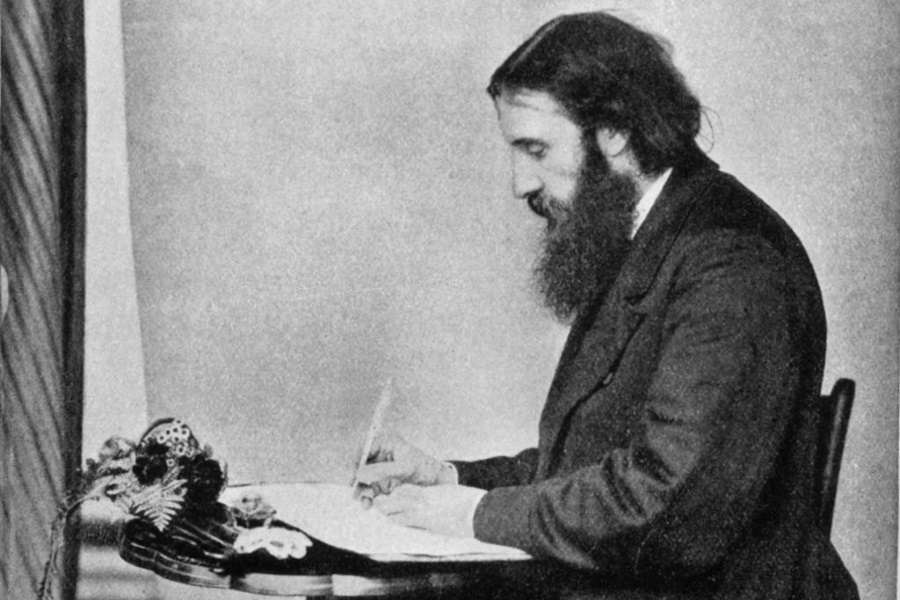
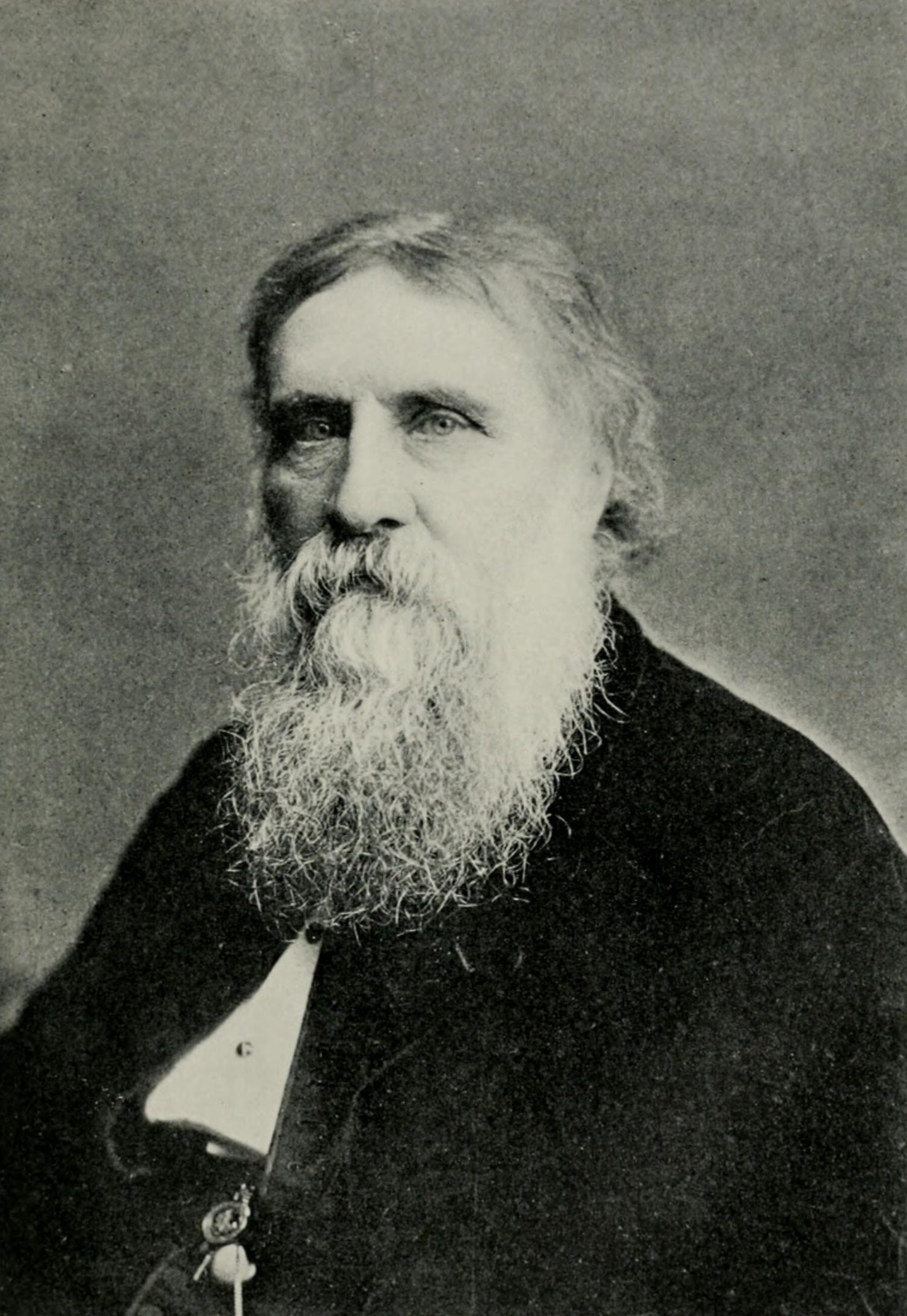
George MacDonald: My Little King, Part 2

This is the second post of George MacDonald’s collect of Christmas poems and short stories under the book title, My Little King.

You can read Post #1, on the poem, “A Christmas Carol,” here.  


This post will focus on the short story, “The Gifts of the Child Christ.”  You can read the story online at The Literature Network, here.  Or you can hear it being read through Librovox.


The following summary was put together in collaboration with my co-moderator at the Catholic Thought Book Club, Kerstin.

Summary


Mr. Greatorex is a widower of about 30 and remarried. The couple is unhappy. He has a daughter from his previous marriage, Sophy, who is neglected by the couple and most of the household. Even her nurse, Alice, is pre-occupied with the prospect of inheriting a large sum of money.


Sophy is a pious child. Their preacher has a recurring theme in his Sunday sermons, “the chastening of the Lord”, which makes a deep impression on her innocent mind. She wishes that the Lord would chasten her.


Mrs. Greatorex is pregnant and on Christmas night she gives birth to a stillborn boy. Early in the morning the household finds Sophy with her lifeless brother on her lap in a Pietà–like position.


In a parallel sub-plot, Alice, the  Greatorex’s servant, anticipates a large inheritance from her uncle and leaves the service of the Greatorexes. Her new found wealth creates a change in her that now she feels above her fiance John and breaks up with him. In a twist of the plot, her “inheritance” turns out to be a ruse, and now 'chastened', returns to John and her employers. She will be at the Greatorex’s home when the stillborn child is found.

###

Celia Commented:

This story, though sad, does end up on a positive note. Especially noteworthy is Sophy's attitude about Christmas: she is looking for the Christ Child, not presents. A very wise 9 year old.

My Reply to Celia:

I thought Sophy was five years old. Where did you see nine?

Celia’s Reply:

I looked again and she is 7.  How did I get Sophy's age? From this excerpt.


"Some six years before, he had married to please his parents; and a year before, he had married to please himself."


I assume Sophy is 7, maybe 6.

Kerstin Commented:

Now we have to tie in how the "chastening of the Lord" fits in.


Sophy, who is the most innocent of all and desires this correction - even though she may not even understand what is meant here - really has no need of it. It is the family around her who have fallen into dysfunctional behavior patterns.


Mr. and Mrs. Greatorex live parallel lives, they are absorbed and closed off to each other with their own selfishness. It is not a relationship of mutual giving. The repercussions of this self-isolation is spilling over in how they neglect Sophy.


Alice is so self-absorbed and blinded by the promise of monetary riches and social status that she no longer recognizes the intangible riches of marrying a good man.


It is a household barren of love. Letty's child dies because there is no love, the self-giving necessary to nurture life. It is fitting that all this happens during Christmas night, for during this night Love is born. The coming of the Savior marks a demarcation line of what was before and what comes after. Only now can Love break in and heal this family from their self-destruction. But there is a real cost too. The sins of this previous life truly happened, and the pain and suffering they brought need to be transformed and redeemed. Sophy's Pietà–like posture points to this.

###

My Comment:

I think everyone has mentioned all the bright spots of the story. Let me mention a couple of negatives.


(1) The baby was relatively a surprise. You have to search to find that Letty might even be pregnant. There is no detail of of Letty's pregnancy. The most I could find is that she wanted to give her husband a son.


(2) Where is any detail of the birth? If the baby was still born, who cleaned it up? Where were the post birth fluids? Was the baby still born or just died in infancy? I cannot tell. At first I thought Sophy had smothered it by accident. But that couldn't be it.


(3) Once the dead baby has been found, where is the horror and shock? For a moment Alice runs to her boyfriend crying, but once the baby is taken away, they have a conversation about her inheritance as if nothing has happened. There was a dead baby in the room moments before and they are talking about inheritance?


(4) Where is Letty's reaction to the dead baby? She's in her room crying and when her husband comes in and sooths her, it's all alright, just like that? It's all ok after an hour or two?


I found the ending of the story bizarre and lacking and really unclear in detail.

My Comment:

This is not a criticism, but something I can't understand how it fits. The name "Greatorex" is unusual, definitely not an English/Scottish name, and almost certainly contrived to have some significance. But what? "Rex" is Latin for king. So "Great king"? Why? Ironic? Alluding to the king who will be born at Christmas?

Kerstin Replied:

I was wondering about this too. If it is a play on words, were they making themselves greater than God?

Keith Replied:

Hello everyone. Just joining in this read. I wonder if the almost casual nature of the response to the baby’s death reflects how much more common it was in the 19th century for babies to die at birth or to be born dead.


And perhaps the reticence about Letty’s pregnancy and the specifics of the birth reflects how one did not speak of such things in those days. I wonder how MacDonald speaks of pregnancy in his other works? This is the first I’ve read of his.

My Reply to Keith:

Well, that could be about infant mortality being more common then. It's still rather bizarre to me. I thought about the reticence of bodily things in Victorian times, but still there has to be some detail, even if it's oblique or a euphemism. I didn't see any.

Kerstin Replied:

George MacDonald was a protestant minister. Six of his eleven children died before he did, five in infancy. Looking at the passage more closely, I think we find that the tragedy that has befallen the Greatorex household is felt very keenly.


Her mistress was again taken ill. Doctor and nurse were sent for in hot haste; hansom cabs came and went throughout the night, like noisy moths to the one lighted house in the street; there were soft steps within, and doors were gently opened and shut. The waters of Mara had risen and filled the house.


Towards morning they were ebbing slowly away. Letty did not know that her husband was watching by her bedside. The street was quiet now. So was the house. Most of its people had been up throughout the night, but now they had all gone to bed except the strange nurse and Mr. Greatorex.


The “waters of Mara” are out of Exodus 15:22 – 27. Israel had just crossed the Red Sea and they couldn’t find any fresh water for three days. Then at Marah the water they found was bitter. Moses threw a piece of wood into the water and it was made fresh. This reference not only points at the Passion, but is also about suffering at its most dire, the lack of life-giving water.

My Reply to Kerstin:

Yes, I remember reading that. Did anyone realize she was pregnant then? I think she was ill frequently in the story but it went unexplained.


That's an interesting detail from MacDonald's bio. Yes, I can see how he might be projecting into the scene.


By criticizing the casualness of the baby's death in the story, I don't mean to imply that MacDonald was not compassionate to babies dying. I'm criticizing the way he rushed to conclude his story. It felt he was just trying to bring it to a close and provided a simplified wrapping up of the story.

Kerstin Replied:

I had a hunch Liddy was pregnant, though it wasn't confirmed until Sophy finds the baby. Her not feeling well again - for a young married woman that usually means morning sickness - and then the activity going on in the house during the night, made me wonder.


###

My Comment:

So here’s an interesting question.  The story is titled “The Gifts of the Christ Child.”  Now who is the “Christ child”?  Is it simply the Christ whose birth they are celebrating?  Is it Sophy?  Is it the dead baby?


Certainly it’s Christmas Day, so baby Jesus does enter the scene metaphysically.  But I think you could make the case that both Sophy and the dead baby are Christ figure types.


The dead baby is probably most obvious.  Sophy’s discovery of the child is worth quoting.


The room next the foot of the stair, and opposite her step-mother's, was the spare room, with which she associated ideas of state and grandeur: where better could she begin than at the guest-chamber?—There!—Could it be? Yes!—Through the chink of the scarce-closed door she saw light. Either he was already there or there they were expecting him. From that moment she felt as if lifted out of the body. Far exalted above all dread, she peeped modestly in, and then entered. Beyond the foot of the bed, a candle stood on a little low table, but nobody was to be seen. There was a stool near the table: she would sit on it by the candle, and wait for him. But ere she reached it, she caught sight of something upon the bed that drew her thither. She stood entranced.—Could it be?—It might be. Perhaps he had left it there while he went into her mamma's room with something for her.—The loveliest of dolls ever imagined! She drew nearer. The light was low, and the shadows were many: she could not be sure what it was. But when she had gone close up to it, she concluded with certainty that it was in very truth a doll—perhaps intended for her—but beyond doubt the most exquisite of dolls. She dragged a chair to the bed, got, up, pushed her little arms softly under it, and drawing it gently to her, slid down with it. When she felt her feet firm on the floor, filled with the solemn composure of holy awe she carried the gift of the child Jesus to the candle, that she might the better admire its beauty and know its preciousness. But the light had no sooner fallen upon it than a strange undefinable doubt awoke within her. Whatever it was, it was the very essence of loveliness—the tiny darling with its alabaster face, and its delicately modelled hands and fingers! A long night-gown covered all the rest.—Was it possible?—Could it be?—Yes, indeed! it must be—it could be nothing else than a real baby! What a goose she had been! Of course it was baby Jesus himself!—for was not this his very own Christmas Day on which he was always born?—If she had felt awe of his gift before, what a grandeur of adoring love, what a divine dignity possessed her, holding in her arms the very child himself! One shudder of bliss passed through her, and in an agony of possession she clasped the baby to her great heart—then at once became still with the satisfaction of eternity, with the peace of God. She sat down on the stool, near the little table, with her back to the candle, that its rays should not fall on the eyes of the sleeping Jesus and wake him: there she sat, lost in the very majesty of bliss, at once the mother and the slave of the Lord Jesus.


That is perhaps the best written passage in the entire story.  The baby is described in Christ allusions: “Through the chink of the scarce-closed door she saw light.”  “…she concluded with certainty that it was in very truth a doll…”  “…filled with the solemn composure of holy awe she carried the gift of the child Jesus to the candle…”  “Of course it was baby Jesus himself!—for was not this his very own Christmas Day on which he was always born?”  “If she had felt awe of his gift before, what a grandeur of adoring love, what a divine dignity possessed her…”  “then at once became still with the satisfaction of eternity, with the peace of God…” and finally, “there she sat, lost in the very majesty of bliss, at once the mother and the slave of the Lord Jesus.” 


And then when Sophy awakes to realize the dead baby, she proclaims Christ’s death.


“Jesus is dead,” she said, slowly and sadly, but with perfect calmness. “He is dead,” she repeated. “He came too early, and there was no one up to take care of him, and he’s dead—dead—dead!”


The thrice pronouncement of “dead—dead—dead” echoes the thrice incantation of the Agnus Dei.  It’s a reference to Christ’s sacrifice and the redemption of the world.  Through the baby’s death, all the characters are redeemed.


So how is Sophy a Christ figure? 


But she did not read far: her thoughts went back to a phrase which had haunted her ever since first she went to church: "Whom the Lord loveth, he chasteneth."


Later she thinks, “I wish he would chasten me.”  To chasten is “to correct by punishment or suffering.”  (Webster’s Dictionary) with the connotation of purifying.  And frequently she says, "If the Lord would but chasten me!"  The frequency of Sophy’s wish to be chastened is a leitmotif, a recurring phrase that accompanies her and characterizes her.  When Alice is struggling because of her humiliation, Sophy turns to her: "Is the Lord chastening Alice? I wish he would chasten Phosy."  Sophy becomes the “suffering servant,” taking on the sins of the world, or at least those around her.  And so when she sits with the lifeless baby she associates with being chastened:


 She sat for a time still as marble waiting for marble to awake, heedful as tenderest woman not to rouse him before his time, though her heart was swelling with the eager petition that he would ask his Father to be as good as chasten her. And as she sat, she began, after her wont, to model her face to the likeness of his, that she might understand his stillness—the absolute peace that dwelt on his countenance.


She for a moment becomes Jesus.  Indeed through Sophy her father is transformed.


And every day, as he looked in her face and talked to her, it was with more and more respect for what he found in her, with growing tenderness for her predilections, and reverence for the divine idea enclosed in her ignorance, for her childish wisdom, and her calm seeking—until at length he would have been horrified at the thought of training her up in his way: had she not a way of her own to go—following—not the dead Jesus, but Him who liveth for evermore?


Her childish wisdom is divine wisdom.  She too is a child Christ.