"Love follows knowledge."
"Beauty above all beauty!"
– St. Catherine of Siena

Friday, October 15, 2021

Faith Filled Friday: The Law Written on Your Heart

This is a very moving monologue from Ben Domenech of The Federalist.  Ben sat in to FoxNews’ 7 PM show as a guest host a week or so ago and dedicated that show to the ending abortion.  This was one of the most moving opening monologues I have ever heard. 


I caught that show live when he delivered that monologue and it choked me up.  It’s must see.  I don’t really participate on social media.  If you do, please share the video.  This is something that needs to go viral.

“Look to the law written on your heart.  You know this to be true.”


Monday, October 11, 2021

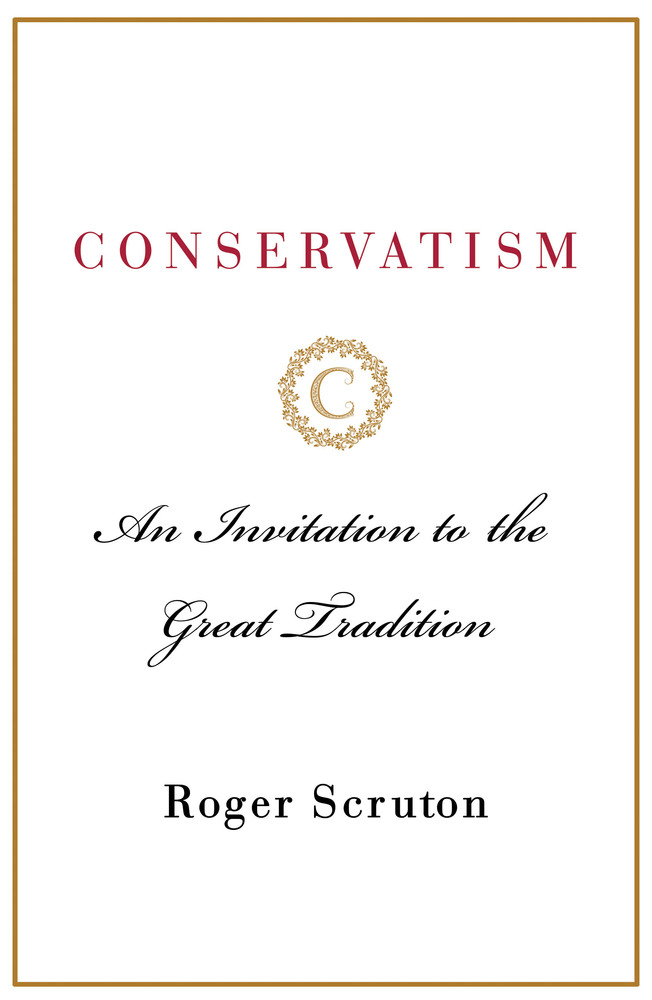
Conservatism: An Invitation to the Great Tradition by Roger Scruton

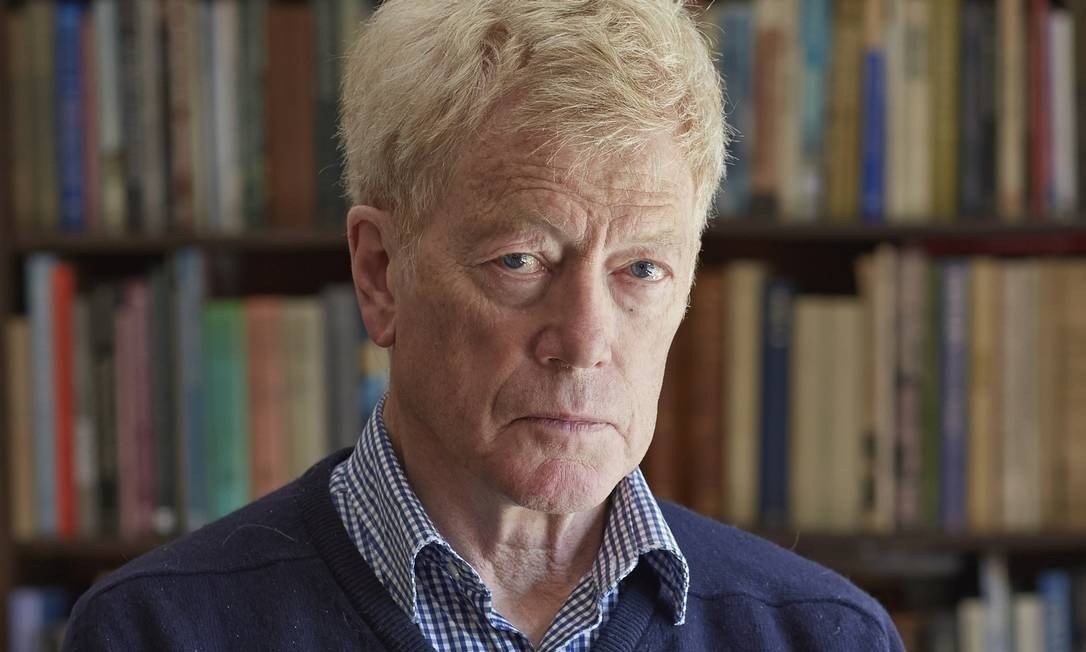
Published in 2017, a little over two years before his death, this I think was Roger Scruton’s last published work devoted to conservatism proper.  He has written other books on music and art, albeit as seen through a conservative lens, but their primary focus were aesthetic and not civic.  Conservatism: An Invitation to the Great Tradition summarizes a great career of a man who has lived his life in the public square with a particular philosophy that runs against the current of contemporary ethos.  Roger Scruton (1944-2020) was a conservative in the paleo conservative sense, not some neoconservative rebranding of once Liberal thought.  He is British, though has had a voice in European and American conservative circles, a professor of philosophy, has published over 50 books on a wide range of subjects, and for almost twenty years was chief editor at the conservative quarterly, The Salisbury Review.  Prior to the collapse of the Soviet Union, Scruton helped establish underground academic networks in communist controlled countries.


This is an excellent and concise book on the history of modern conservatism by an author who lived through most of the debates of the last fifty years.  When Scruton identifies modern conservatism, he says it is “a product of the Enlightenment,” although acknowledging that conservatism dates back in every era of history.  Conservatism for Scruton is a set of customs, values, and institutions built by a community over time that have proven to sustain, preserve and “ensure [the] community’s long-term survival” and that give it a sense of identity and unity.  Conservatism in the modern sense is a counter to the Liberal emphasis of reshaping society as radical individualism that rose out of the Enlightenment.  “Tradition,” as Scruton observes from Edmund Burke, “is a form of knowledge.”

Scruton walks us through the philosophical ideas that have shaped conservatism going back to Edmund Burke, who argued against a notion of society as a “social contract” (from Jean-Jacques Rousseau) but as a “shared inheritance for the sake of which we learn to circumscribe our demands, to see our own place in things as part of a continuous chain of giving and receiving, and to recognize that the good things we inherit are not ours to spoil but ours to safeguard for our dependents” (p. 45).  Indeed I never signed a social contract but I was certainly born into a shared inheritance.


This is not a book of the ins and outs of political battle over the course of 250 years, but the philosophic developments over that time in Western culture.
  Scruton takes us from the Enlightenment, through the British conservative counter-reaction, through the American founding, through continental European developments, and finally as a reaction to socialism in the twentieth century.  Conservatism for Scruton—and for me, since this has been my view too—is not so much a political philosophy or an economic theory or an intellectual construct, but more a desire to preserve one’s culture and traditions in the face of forced change.  Yes, there is intellectual process which ultimately undergirds that inclination, but foremost is that our culture is our home, which we have ordered through love, and to tear down that home is to violate that love.  Perhaps a summary paragraph of the book is stated as Scruton brings the reader into contemporary times:


Modern conservatism began as a defense of tradition against the calls of popular sovereignty; it became an appeal on behalf of religion and high culture against the materialist doctrine of progress, before joining forces with the classical liberals in the fight against socialism.  In its most recent attempt to define itself it has become the champion of Western civilization against its enemies, and against two of those enemies in particular: political correctness (notably its constraints on freedom of expression and its emphasis in everything on Western guilt) and religious extremism, especially the militant Islamism promoted by Wahhabi-Salif sects.  In all these transformations something has remained the same, namely the conviction that good things are more easily destroyed than created, and the determination to hold on to those good things in the face of politically engineered changed.  (p. 127)

Scruton brings us through a lot of material and personages in such a short book: Burke, Locke, Hume, Blackstone, Adam Smith (and not just for his economic theories), Samuel Johnson, Jefferson, Madison, Tocqueville, Maistre, Chateaubriand, Coleridge, Arnold, Ruskin, Chesterton, Hayak, even T.S. Eliot, Simone Weil, and D.H. Lawrence.  And of course there is William F. Buckley, Russell Kirk, and Scruton himself.  I can’t name them all, but it is quite a journey.  This is a gem of a book.


Notable quotes from the book:

“We human beings live naturally in communities, bound together by mutual trust.  We have a need for a shared home, a place of safety where our claim to occupancy is undisputed and where we can call on others to assist us in times of threat.  We need peace with our neighbors and the procedures for securing it.  And we need the love and protection afforded by family life.  To revise the human condition in any of those respects is to violate imperatives rooted in biology and in the needs of social reproduction.  But to conduct a political argument as though these factors are too far from the realm of ideas to deserve a mention is to ignore all the limits that must be borne in mind, if our political philosophy is to be remotely believable.  It is precisely the character of modern utopias to ignore these limits – to imagine societies without law (Marx and Engels), without families (Laing), without borders or defenses (Sartre).”  (p. 10)

"The most important input into conservative thinking is the desire to sustain the networks of familiarity and trust on which a community depends for its longevity. Conservatism is what the name says it is: the attempt to conserve the community that we have - not in every particular since as Edmund Burke put it, 'we must reform in order to conserve,' but in all matters that ensure our community's long-term survival."  (12)

“What [Samuel] Johnson believed he also exemplified, which was a firm moral sense combined with a robust eccentricity of manner and a deep respect for aesthetic values.  For Johnson, the established church, which brought people together in a shared recognition of God’s presence in their daily lives, was the heart of political order.  Tolerance should be extended to dissenters and unbelievers, but not at the expense of orthodoxy.” (30)

“Liberals saw political order as issuing from individual liberty; conservatives saw individual liberty as issuing from political order.  What makes a political order legitimate, in the conservative view, is not the free choice that create it, but the free choices that it creates, The question of which comes first, liberty or order, was to divide liberals from conservatives for the next two hundred years.”  (31)

“Conservatism is about freedom, yes.  But it is also about the institutions and attitudes that shape the responsible citizen, and ensure that freedom is a benefit to all.  Conservatism is therefore also about the limits to freedom.  And here, in the potential conflict with the extreme liberal view that values freedom above all other things and refuses to set limits to its exercise, we encounter one of the principal political issues of our times.”  (39)

 "For Maistre, obligation to the sovereign can have no basis in contract or consent, but only piety towards established things.  The true object of political obligation is not the state, but God, and it is in religious duty that the obligation towards all human institutions must ultimately be founded. Moreover, it is God, not man, who is the maker of constitutions, and the ultimate legislator, all French revolutionary thought on this subject being nothing but blasphemy designed to fortify human incompetence." (69)

"Thus in a celebrated essay, ‘Tradition and the Individual Talent’ (1919)…[T.S.] Eliot argued that the originality and sincerity demanded of the artist cannot be reached in isolation, that each new work acquires its expressive power through the tradition that makes room for it, and that in every sphere tradition is a process of continuous adaptation of the old to the new and the new to the old. Without tradition, originality is neither significant nor truly perceivable, and this evolutionary view of tradition is clearly applicable to civil society as a whole.  This essay left a profound mark on literary criticism and also on the practice of poetry.  But its lesson has been learned and repeated by political philosophers too." (93)

“But by the end of the nineteenth century the political philosophy of conservatism had turned in another direction.  In its original form, as described in the first two chapters, conservatism was a response to classical liberalism, a kind of ‘yes, but…’ in answer to the ‘yes’ of popular sovereignty.  It was a defense of inheritance against radical innovation, an institution that the liberation of the individual could not be achieved without the maintenance of customs and institutions that were threatened by a single minded emphasis on freedom and equality.  By the end of the nineteenth century conservatism had begun to define itself in another way, as a response to the gargantuan schemes for a ‘just’ society, to be promoted by a new kind of managerial state.  In this battle conservatism became, to a great measure, the true defender of liberty, against what was at best a rising system of bureaucratic government, at worst, as in the Soviet Union, a tyranny yet more murderous than that of the Jacobins in revolutionary France.” (104)

"Throughout its growth as a modern nation America has been built from below, through the free association of its citizens - a point noted and praised by Tocqueville in Democracy in America.  This has offered scope for conservatism as a philosophy of civil society - a philosophy that outlines and justifies the intrinsic form of civil order, against the attempt to control and amend them through the institutions of the state."  (137)

“This led [Samuel Huntington] to raise, in Who Are We? (2002), the question of American identity.  Written in the wake of the atrocities of 11 September 2001 (the 9/11 attacks on New York and Washington DC), the book argues that it will be impossible to respond in a coherent way to the Islamist threat without regaining confidence in our own identity.  This means confidence not in our political institutions only, but in the spiritual inheritance on which they ultimately rest.  The correct response to Islamist belligerence is, therefore, not simply the reaffirmation of the liberal order and the secular state.  It is the rediscovery of ourselves, in a systemic policy of cultural conservatism.”  (149-50)

This is a great interview shortly after this book was published.


Roger Scruton is one of my idols. 


Sunday, October 10, 2021

Sunday Meditation: The Spirit of Wisdom

I absolutely adore this passage from the Book of Wisdom.


I prayed, and prudence was given me;

I pleaded, and the spirit of wisdom came to me.

I preferred her to scepter and throne,

and deemed riches nothing in comparison with her,

nor did I liken any priceless gem to her;

because all gold, in view of her, is a little sand,

and before her, silver is to be accounted mire.

Beyond health and comeliness I loved her,

and I chose to have her rather than the light,

because the splendor of her never yields to sleep.

Yet all good things together came to me in her company,

and countless riches at her hands.

       -Wisdom 7:7-11


Of course, on the surface the woman referred is Lady Wisdom.  One step deeper, it is a good and loving wife.  One step beyond that, it is the Blessed Mother. 


Friday, October 8, 2021

Faith Filled Friday: Our Lady of the Rosary

Well it’s not quite Friday yet, but it is October 7th 2021 and besides it being the birthday of my beloved, departed father—he would have been 86 today—it is the anniversary of the Battle of Lepanto, the 450th anniversary (1571) of perhaps the greatest naval battle in history and defeat of the Ottoman Turks from overtaking Christian Europe. 

So why is today called the Feast of Our Lady of the Rosary?  It wasn’t initially.  Originally it was called the Feast of Our Lady of Victory but within two years (1573) Pope Gregory XIII changed it to the Rosary.


Christopher Check at Catholic Answers has an excellent article, “The Battle that Saved the Christian West,” outlining the stakes.  


During the five-decade reign of Soleiman the Magnificent, the Ottoman Empire grew to its fullest glory, encompassing the Caucuses, the Balkans, Anatolia, the Middle East, and North Africa. Soleiman had conquered Aden, Algiers, Baghdad, Belgrade, Budapest, Rhodes, and Temesvar. His war galleys terrorized not only the Mediterranean Sea, but the Red Sea and  the Persian Gulf as well. His one defeat was at the gates of Vienna in 1529… Soleiman’s greatest dream, however, the dream of all Turks, the dream his soldiers toasted before setting off on every campaign, was the conquest of Rome. There the Turks could transform Michelangelo’s St. Peter’s, then under construction, into a mosque, just as they had Constantinople’s Hagia Sophia more than a century before.

But the resistance was coordinated by Pope Pius V in what would be called The Holy League.


In a papacy of great achievements, the greatest came on March 7, 1571, on the feast of his fellow Dominican, St. Thomas Aquinas. At the Dominican Church of Santa Maria Sopra Minerva in Rome, Pope Pius formed the Holy League. Genoa, the Papal States, and the Kingdom of Spain put aside their jealousies and pledged to assemble a fleet capable of confronting the sultan’s war galleys before the east coast of Italy became the next front in the war between the Christianity and Islam… As the Pope prayed for Venice to answer a higher call, a new breed of fiery priests led by stirring preachers like St. Francisco Borgia, superior general of the Jesuits, inflamed the hearts of Christian Europeans throughout the Mediterranean with their sermons against Islam. Enough Venetians must have been listening, because on May 25 Venice at last joined the Holy League. By fits and starts, with hesitation and quarreling on the part of a few of the principal players, the fleet of the Holy League was forming.

But Pope Pius needed a commander and chose a most dashing soldier.


The man chosen by Pius V to serve as Captain General of the Holy League did not falter: Don John of Austria, the illegitimate son of the late Holy Roman Emperor, Charles V, and half-brother of Philip II, King of Spain. The young commander had distinguished himself in combat against Barbary corsairs and in the Morisco rebellion in Spain, a campaign in which he demonstrated his capacity for swift violence when the threat called for it and restraint when charity demanded it.

There is a lot in Check’s article I’m skipping over, but at the day of the battle divine intervention took place.


It was. At dawn on October 7, 1571, the Holy League rowed down the west coast of Greece and turned east into the Gulf of Patras. When the morning mist cleared, the Christians, rowing directly against the wind, saw the squadrons of the larger Ottoman fleet arrayed like a crescent from shore to shore, bearing down on them under full sail.


As the fleets grew closer, the Christians could hear the gongs and cymbals, drums and cries of the Turks. The men of the Holy League quietly pulled at their oars, the soldiers stood on the decks in silent prayer. Priests holding large crucifixes marched up and down the decks exhorting the men to be brave and hearing final confessions.


Then the Blessed Virgin intervened.


The wind shifted 180 degrees. The sails of the Holy League were filled with the Divine breath, driving them into battle. Now heading directly into the wind, the Turks were forced to strike their sails. The tens of thousands of Christian galley slaves who rowed the Turkish vessels felt the sharp sting of the lash summoning them up from under their benches and demanding they take hold of their oars and pull against the wind.

So why is it called the Feast of Our Lady of the Rosary?  Fr. Reginald Martin, O.P. has an article at the Dominican Friars website titled, “The Battle Of Lepanto And The Holy Rosary” which explains.  


Pius V, a Dominican friar, prayed the rosary throughout the battle and attributed the victory to the intercession of the Blessed Virgin. Hence the feast of Our Lady of the Rosary (which was first called the feast of Our Lady of Victory) on October 7. Naturally, the feast is dear to Dominicans and their friends. But the Pontiff’s were not the only prayers addressed that day to the Mother of God. The Christian troops are said to have prayed the rosary throughout the night before the battle, and some sources say that the rhythmic repetition of the prayer thoroughly frightened and demoralized the Turkish host.

And so through the Blessed Mother’s intervention Christendom was saved.  If the Turks had won that battle, Europe may have become Muslim.

Some side notes. 

(1) Miguel de Cervantes, the author of Don Quixote, fought in the battle and lost his left hand.  If he had lost his right hand he may never have been able to write.

(2) Pope Pius V was a Dominican as mentioned above.  Up until that time, Popes wore the same red robes as bishops and cardinals.  But Pope Pius V insisted on wearing his Dominican white, and so ever since Popes have worn white.

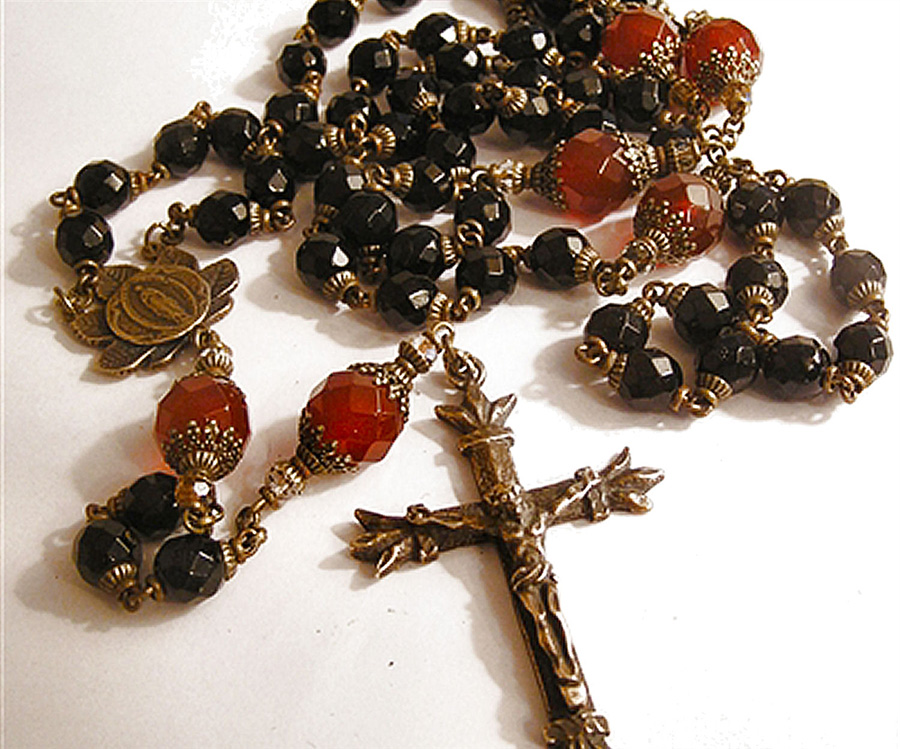
(3) Pope Pius V instituted the traditional 15 (three sets of five each) mysteries of the rosary.  It became the standard and skyrocketed as a Catholic devotion until it is now the premier Catholic devotion.  Pope John Paul II added a fourth set of five mysteries in 2002.

(4) My father, born on this day, happens to have a Marian first name, Mario.  I don't know if that was intentional or not on the part of his parents.  Either way it was Providential.  Please include his soul in your next rosary.  He passed away in 2006, fifteen years ago.

(5) Pope Pius V has a striking resemblance to my Uncle Valentino.  He too has passed away.   

(6) G. K. Chesterton’s most famous poem is on the Battle of Lepanto, titled “Lepanto.”  You can read it here.  Here is an excerpt.


The Pope was in his chapel before day or battle broke,

(Don John of Austria is hidden in the smoke.)

The hidden room in man’s house where God sits all the year,

The secret window whence the world looks small and very dear.

He sees as in a mirror on the monstrous twilight sea

The crescent of his cruel ships whose name is mystery;

They fling great shadows foe-wards, making Cross and Castle dark,

They veil the plumèd lions on the galleys of St. Mark;

And above the ships are palaces of brown, black-bearded chiefs,

And below the ships are prisons, where with multitudinous griefs,

Christian captives sick and sunless, all a labouring race repines

Like a race in sunken cities, like a nation in the mines.

They are lost like slaves that sweat, and in the skies of morning hung

The stair-ways of the tallest gods when tyranny was young.

They are countless, voiceless, hopeless as those fallen or fleeing on

Before the high Kings’ horses in the granite of Babylon.

And many a one grows witless in his quiet room in hell

Where a yellow face looks inward through the lattice of his cell,

And he finds his God forgotten, and he seeks no more a sign—

(But Don John of Austria has burst the battle-line!)

Don John pounding from the slaughter-painted poop,

Purpling all the ocean like a bloody pirate’s sloop,

Scarlet running over on the silvers and the golds,

Breaking of the hatches up and bursting of the holds,

Thronging of the thousands up that labour under sea

White for bliss and blind for sun and stunned for liberty.

Vivat Hispania!

Domino Gloria!

Don John of Austria

Has set his people free!


If you haven’t done it already, pray a rosary.  If you have, pray another!

Monday, October 4, 2021

Personal Essay: Eat Fast, Drink Slow

No that is not from some wisecracking character in a mobster movie.  Nor from a femme fatale in a hardboiled detective novel.  Nor did it come from an internet list of sayings roguishly attributed to some military hero who fought in three world wars.  It’s not even out of a beer commercial where a bearded guru offers sage sounding but meaningless advice. 

It can’t quite be attributed to my wife. 

I had finished breakfast and was sipping my coffee at the kitchen table while reading the newspaper.  I was semi-aware of my wife walking back and forth several times.  I was focused on the news, deliberate in my sips, weighty in my meditations as I read.

All of a sudden my wife stops and facing me with her hands on her hips impatiently says, “When are you getting up?  Why do you eat fast and drink slow?”

I was taken aback.  Obviously she wanted to get me out of the kitchen.  Perhaps she needed the entire kitchen table.  Perhaps she wanted the newspaper herself. 

I folded the newspaper, got up slowly with the cup of coffee in my hand, and said, “Here.”  I let her have the table, and as I walked out of the kitchen I said, “I drink slow because I want to savor the flavor.”

Which got me thinking.  It’s true.  I eat fast.  It’s been a point of discussion numerous times over our thirty year marriage.  She says it’s not healthy to eat fast.  She says it will catch up with me.  She says it will lead to heartburn, bloated intestines, a freaked out nervous system, constipation, maybe even cancer or a heart attack.  In thirty years it hasn’t happened.  Well, sometimes I do get heartburn. 

But why is it I eat fast?  I can understand drinking slow.  As I said drinking slow allows one to relish in the liquid’s essence; it lets the bouquet caress the palate.  A wonderful cup of coffee in the morning.  A glass of cabernet at dinner time.  A whiskey in the evening.  Man was made to contemplate fine liquids. 

Was he made to contemplate fine vittles?  I don’t know.  Perhaps eating brings out the inner wolf in me? I can be a ravenous beast swallowing an entire plate in one gulp.  Perhaps I just prefer food hot?  Eating fast gets it across the tongue before it gets tepid.  Or perhaps eating fast is a psychosomatic reflex of a fast paced day where the momentum of rapid daily activities carry over to the dinner table?  I just don’t  know.

Or perhaps I don’t eat fast at all.  “Where is the data that I eat fast?” I ought to ask my wife.  (I won’t because if I do she’ll find a way to twist it against me.)  Perhaps it’s she that eats slow.  And she does.  I’m finished and waiting, trying not to be rude by getting up, and she’s still not even half way.  Maybe she eats slow because she’s overly concerned with getting heartburn, or bloated intestines, or a freaked out nervous system, or constipation.  Here I am finished and sipping something while she nibbles slowly.  All the while hearing Brett Baier and some talking head on FoxNews discussing the demise of the country.  I need to get over and watch.  And she’s nibbling away slower than a church mouse. 

And so, this is not her quote.  No.  The quote may not be all that profound—it has all the calories of a head of lettuce—but it’s my quote.  Eat fast and drink slow, my friends. 


Note #1: This was written for a conservative social media website I belong to.  We discuss the issues of the day but we entertain each other with essays and such.  I hope people find it funny.  I had fun writing it.  Apologies to my wife.  Though everything in the piece is true, I did take poetic license for the sake of humor in the way I characterized her.

Note #2: The other night my son got up from the dinner table with ”Boy I ate that fast.”  His mother gave us a look. “You’re getting to be just like your father.”  :-)


Sunday, October 3, 2021

Sunday Meditation: A Suitable Partner

It is interesting how woman is born from bone and flesh of the man (Gen 2:21-23), and we see how in the Gospel reading Jesus confirms they have “become one flesh” (Mk 10:8).  But I think this is the more profound statement of the readings.


The Lord God Said: “It is not good for the man to be alone.  I will make a suitable partner for him.”

       -Genesis 2:18


Some translations say replace “suitable partner” with “helper.”  I don’t know the actual Hebrew, but from the context I would say “helper” is not accurate based on God declaring it not being good for man to be alone.  A suitable partner is one who one keeps good company with. 


Thursday, September 30, 2021

2021 Reads, Update #2

I don’t quite post an update every quarter any more.  This would be the third quarter update.  This is only my second update for the year.  But I do keep track of my reading by quarter.  Here’s what I’ve read these past three quarters, what I’m reading, and what I plan to read.


Completed First Quarter:

Prince Caspian, a novel from the Chronicles of Narnia series by C. S. Lewis.

Magnificat, January 2021, a monthly Catholic devotional.

“Baptism,” a (Don Camillio) short story by Giovanni Guareschi, translated by Adam Elgar.

Magnificat, February 2021, a monthly Catholic devotional.

In This House of Brede, a novel by Rumer Goddard.

“The Coffee-House of Surat,” a short story by Leo Tolstoy.

“The Presence,” a short story by Caroline Gordon.

Dark Night of the Soul, a non-fiction work of spirituality by St. John of the Cross.

Magnificat, March 2021, a monthly Catholic devotional.

“Nimram,” a short story by John Gardner.

“Screwball,” a short story by William Baer.


Completed Second Quarter:

Magnificat, April 2021, a monthly Catholic devotional.

Things Worth Dying For: Thoughts on a Life Worth Living, a non-fiction work by Charles J. Chaput.

Magnificat, May 2021, a monthly Catholic devotional.

“Swept Away,” a short story by T. Coraghessan Boyle. 

 “Wintry Peacock,” a short story by D. H. Lawrence. 

“Acts of God,” a short story by Ellen Gilchrist.

“Candor Lucis Aeternae,” an Apostolic Letter from Pope Francis.

A Devotional Journey into the Mass: How Mass Can Become a Time of Grace, Nourishment, and Devotion, a non-fiction devotional concerning the Catholic Mass by Christopher Carstens.

Magnificat, June 2021, a monthly Catholic devotional.


Completed Third Quarter:

Magnificat, July 2021, a monthly Catholic devotional.

Catholics: A Novel, a novel by Brian Moore.

Catholicism: A Journey to the Heart of the Faith, a non-fiction work by Robert Barron.

 “In the Walled City,” a short story by Sewart O’Nan.

“Granted Wishes: Unpopular Girl,” a short story by Thomas Berger.

Magnificat, August 2021, a monthly Catholic devotional.

Hail, Holy Queen: The Mother of God in the Word of God, a non-fiction work by Scott Hahn.

The Power and the Glory, a novel by Graham Greene.

“Gods,” a short story by Vladimir Nabokov.

Acts of the Apostles, a book of the New Testament, RSV translation.

“The Manager of ‘The Kremlin,’” a short story by Evelyn Waugh.

Conservatism: An Invitation to the Great Tradition, a non-fiction book by Roger Scruton.

“Dead Man’s Path,” a short story by Chinua Achebe. 

Magnificat, September 2021, a monthly Catholic devotional.


Currently Reading:

How Catholic Art Saved the Faith: The Triumph of Beauty and Truth in Counter-Reformation Art, a non-fiction book by Elizabeth Lev.

Dominican Life: A Commentary on the Rule of St. Augustine, a non-fiction work by Walter Wagner, O.P.

K: A History of Baseball in Ten Pitches, a non-fiction book by Tyler Kepner.

Charming Billy, a novel by Alice McDermott.

Four Quartets, an extended lyric poem by T. S. Eliot.

Hildegard of Bingen: Selected Writings, a collection translated and edited by Mark Atherton.


Upcoming Plans:

“A Matter of Chance,” a short story by Vladimir Nabokov.

Skunk Works: A Personal Memoir of My Years of Lockheed, a memoir on the development of stealth aviation technology by Ben Rich and Leo Janos.

The Red and the Black, a novel by Stendhal (Marie-Henri Beyle).

The Voyage of the Dawn Treader, a novel from the Chronicles of Narnia series by C. S. Lewis.

“A Sea Change,” a short story by Ernest Hemingway. 

“A Snowy Night on West Forty-Ninth Street,” a short story by Maeve Brennan.

The Book Of Hosea, a book of the Old Testament, KJV and RSV translations. 


I accomplished an incredible amount of reading in the third quarter: four full length books and completed finished Robert Barron’s Catholicism, which I had been dabbling for a couple of years.  I should be posting on The Power and the Glory shortly.  It’s a great novel.

The current read at the Goodreads Catholic Thought Book Club is Elizabeth Lev’s How Catholic Art Saved the Faith.  I’m also currently juggling a couple of books as well: Dominican Life, K: A History of Baseball in Ten Pitches, and the Hildegard of Bingen Selected Writings, which I just repacked up again.  I am woefully behind on my Biblical reading plans.  I’ve only read Acts.  There’s no way I’m going to come close to my plans, but I need to read at least one or two more. 

Plans always are greater than reality.  Happy reading.