"Love follows knowledge."
"Beauty above all beauty!"
– St. Catherine of Siena

Friday, June 11, 2021

Faith Filled Friday: The Sacred Heart of Jesus

Today is the Solemnity of the Most Sacred Heart of Jesus.  It may seem odd to devote a feast day to a body part, but this is Jesus and His Heart represents His love and compassion.  Wikipedia traces the devotion to Christ’sheart: 


“Devotion to the Sacred Heart of Jesus can be clearly traced back at least to the eleventh century. It marked the spirituality of Saint Bernard of Clairvaux in the twelfth century and of Saint Bonaventure and St. Gertrude the Great in the thirteenth. The beginnings of a devotion toward the love of God as symbolized by the heart of Jesus are found even in the fathers of the Church, including Origen, Saint Ambrose, Saint Jerome, Saint Augustine of Hippo, Saint Hippolytus of Rome, Saint Irenaeus, Saint Justin Martyr and Saint Cyprian, who used in this regard John 7:37-39 and John 19:33-37.”

I would also add St. Catherine of Siena to that list who in one of her mystically induced comas had an exchange of hearts with Christ.  Jesus took her heart out and replaced it with His.  Bishop Fulton Sheen in this magnificent quote traces all of redemption to Christ’s “eternal heart.”


“By a beautiful paradox of Divine love, God makes His Cross the very means of our salvation and our life. We have slain Him; we have nailed Him there and crucified Him; but the Love in His eternal heart could not be extinguished. He willed to give us the very life we slew; to give us the very Food we destroyed; to nourish us with the very Bread we buried, and the very Blood we poured forth. He made our very crime into a happy fault; He turned a Crucifixion into a Redemption; a Consecration into a Communion; a death into Life Everlasting.”

-Fulton J. Sheen

But it was St. Margaret Mary Alacoque of the Visitation Order who in the 17th century had a series of visions of Jesus and His sacred heart, and upon His request started a process of veneration to the Sacred Heart which ultimately led to this feast day.  

In today’s prefatory comment on the feast in this month’s Magnificat, it says: “Our Lord promised Saint Margaret Mary that ‘sinners shall find in my Heart the source and the infinite ocean of mercy’ and ‘those who shall promote this devotion shall have their names written in my Heart, never to be blotted out’” (p. 153).

This is my little effort to promote this devotion and thereby get written into Jesus’ Heart!  Do the same in some small way.  You should want to be so written.

I should say, of the many Catholic devotions, the devotion to the Sacred Heart resonates with me more than others.  Here is a beautiful traditional prayer on exchanging one’s heart with Jesus, published at Aleteia. 


O most holy Heart of Jesus, fountain of every blessing,

I adore you, I love you and with a lively sorrow for my sins.

I offer you this poor heart of mine.

Make me humble, patient, pure, and wholly obedient to your will.

Grant, good Jesus, that I may live in you and for you.

Protect me in the midst of danger; comfort me in my afflictions;

give me health of body, assistance in my temporal needs,

your blessings on all that I do, and the grace of a holy death.

Within your heart I place my every care.

In every need let me come to you with humble trust saying,

Heart of Jesus, help me.

Amen.


I highlight two sentences which is at the heart (pun intended!) of the prayer.  First, the offering of one’s heart to Christ for His use and refinement.  Second, the use of Christ’s Sacred Heart as a deposit for one’s adversities.  When I have a particular trial or problem, I imagine picking that “thing” up with my first two fingers and thumb and reaching over and dropping it into Christ’s Heart.  In there it will be made better.  I learned this the first Catholic blogger I ever regularly visited, Ros of Living in the Shadowlands.  She’s passed away and her blog no longer exists, but I posted a tribute many years ago here.    

And don't forget the Immaculate Heart of Mary that comes on Saturday.

Sacred Heart of Jesus,

I place all my trust in You.

Sunday, June 6, 2021

Sunday Meditation: Corpus Christi

Today is the Solemnity of the Most Holy Body and Blood of Christ otherwise known as the Feast of Corpus Christi.  It’s interesting to read that this most holy feast goes back to the 12th century and is technically supposed to be celebrated on a Thursday, replicating the institution of the Eucharist at the Last Supper on Holy Thursday.  It gets transferred to Sunday for convenience.  And so, meditate on this reading from today’s Gospel.


“While they were eating, he took bread, said the blessing, broke it, and gave it to them, and said, “Take it; this is my body.”  Then he took a cup, gave thanks, and gave it to them, and they all drank from it.  He said to them, “This is my blood of the covenant, which will be shed for many.  Amen, I say to you, I shall not drink again the fruit of the vine until the day when I drink it new in the kingdom of God.”

       -Mark 14:22-25

This year at my church, St. Rita in Staten Island, we started the ancient practice of processing with the Blessed Sacrament through the neighborhood after Mass.  We did this after the Saturday vigil Mass yesterday.  I took some pictures of the procession. 

Here we are coming out of the church.  There would be a canopy for Blessed Sacrament.


We went around the block, two by two, either praying out loud or signing some hymns.
 Our musical director brought in a trumpet player to accompany the hymns at Mass, and he followed with his trumpet too.  The kid there in the grey shirt is Matthew.


That’s the procession from behind me.  I was about a third from the front.  In front is our pastor Fr. Eugene with the altar servers carrying a crucifix. 


Our Assistant Pastor, Fr. Anthony, carried the monstrance with the Blessed Sacrament the whole way.  Apparently tradition is that the Blessed Sacrament goes in the rear of the procession under the canopy.


Finally we turned the corner and headed back into the church. 


But from here the angle I had was focused to the center of the canopy.  I had not wanted to go directly up to the Blessed Sacrament to take a picture.  It felt so irreverent.  But from here I could capture it and zoom in.  Here.


There!  There is Jesus, Body, Blood, Soul, and Divinity.  It is that which gives us everlasting life.

Edit:  I must add this in.  I just came across the most brilliant homily by Bishop Robert Barron explaining this feast.  It's almost 14 minutes long, but it's worth every second.


Tuesday, June 1, 2021

Notable Quote: Time in the Catholic Mass from Thomas Howard

Thomas Howard was a literary critic, author, and convert to Catholicism.  I wrote about his passing this past October.  I’ve started reading his book length exposition of T. S. Eliot’s great poem Four Quartets, a book called Dove Descending: A Journey into T. S. Eliot’s Four Quartets, and I came across this wonderful passage on describing time in the Catholic Mass.  Time in the Mass, as Eliot tries to capture in the great poem, is not temporal.  Eternity is not just time going on forever, but an eternal moment, all time present at the same time.  That is what happens at Mass.  Here’s Howard.

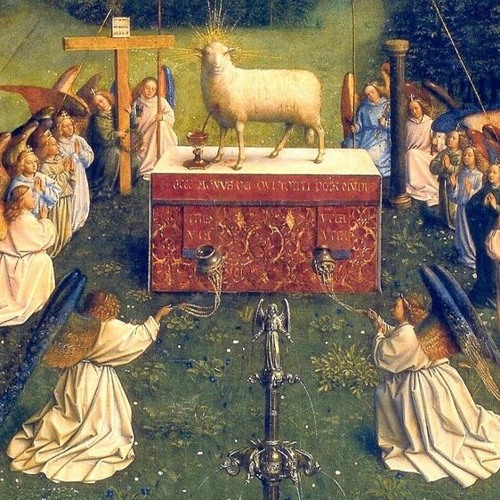
Eliot was a faithful communicant at Mass.  The notion at work in the Mass is that that which “was” eternally true (the Lamb of God “slain from the foundation of the world”), and which “will be” unveiled in the consummation of all things, namely, the eschatological appearance of the Mystic Lamb pictured in Saint John’s Apocalypse, is here—now—on this altar.  It may be ten o’clock on a Sunday morning at Saint Paul’s Gloucester Road (Eliot’s parish) in 1942: but all of eternity—“past”,  “present”, and “future”—is here, both in time and in this place.  Where are we—or, in what when are we—at Mass?  We are with God in a past eternity when the Redemption of the world was hatched; and we are in Eden when animals’ blood had to be spilled to clothe the guilty Adam and Eve; and we are in the Holy of Holies with Aaron with the blood of lambs; and we are at the Last Supper; and on Golgotha; and in the eschaton (heaven) before the Eternal Altar.  (p. 25)


From Howard, Thomas, Dove Descending: A Journey into T. S. Eliot’s Four Quartets, Sapientia Classics, Ignatius Press, San Francisco, 2006.

 All of salvation history conflates into one eternal moment at the Liturgy of the Eucharist: the Passover sacrifice of the Old Testament, the Last Supper, the crucifixion, the eternal Mass in heaven, and even John the Baptist’s meeting of Jesus at Christ’s Baptism. 

“Then the angel said to me, “Write this: Blessed are those who have been called to the wedding feast of the Lamb.” (Rev 19:9)


Saturday, May 29, 2021

List of Books I Wish I Had Read Earlier

I recently came across a book list where the creator of the list opined on wishing he had read those books earlier.  I thought that an interesting list.  So I decided to create my own. 

Now the first thing to decide was at what point would I consider as the dividing line as earlier?  I could say of any novel I really enjoyed and thought of highly should have been read earlier.  But “earlier” could be as early as a child.  No, the list had to be after a significant moment of my reading life.  Notice I said, “reading life.” 

I would say that the moment I got my Master’s Degree in English Literature to be such a dividing moment in my reading life.  Anything I read after would have been out of my mature years and from my free will.  Such books I read beyond that moment could have shaped my younger self, either as a person or as a lover of literature.

So finally, these books will be novels—I limit it to novels since novels are the art form I most enjoy—that I read since my 39th birthday that I wish I had read prior.  I’ll limit it to ten novels I have read in these past twenty years.  They are not necessarily the greatest novels I wished I had read earlier, but the most potentially impactful.  I’ll list them backwards, least wished to most wished.

10.  The Hobbit, by J.R.R. Tolkien. 

I was never a big Lord of the Rings fan, but I do acknowledge its greatness.  I read Lord of the Rings for the first time as a teenager, and then read it again in my twenties.  It’s a fun read, but I never saw the literary significance of it.  I know there is a core of Tolkien readers of good literary taste who rate it very high as a literary work.  I was never that passionate about it.  So I never read The Hobbit, the predecessor of LOTR, thinking it was along the same lines.  I finally read The Hobbit in 2012 and found it superb!  I think it’s a greater work than LOTR, perfectly written and not weighed down with stray adventures and characters.  It is a much more focused work, and so its moral is clearer and more direct.


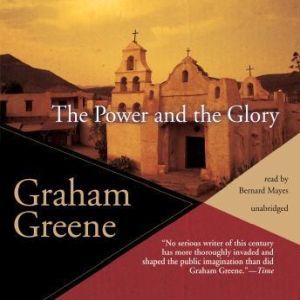
9. The Power and the Glory by Graham Greene.

It is possibly the greatest overtly Catholic novel ever written.  It is perfection in structure and storytelling.  It is powerful in its moral conception, capturing the weakness of man and man’s strength given a dedication to a higher cause.  The character of the “whiskey priest” is Everyman who feels caught between faith and doubt, between perseverance and cowardice.  It is tragic and heroic and will make you yearn for a life dedicated to a higher cause. 


8. Lord of the World by Robert Hugh Benson.

Famous Catholic convert, Catholic priest, and son of an Anglican Archbishop, Robert Hugh Benson was a gifted writer and wrote in different modes at the beginning of the twentieth century.  He wrote several novels, and this one praised by Popes Benedict XVI and Francis.  It’s an apocalyptic novel where a government of Freemasons have conquered the world and extinguished all religions except Catholicism.  The novel climaxes in a battle of Armageddon.  This is truly an underrated novel that should get more readership.  I read it last year and wished I read it as a young man.


7. Mariette in Ecstasy by Ron Hansen

This is another perfect gem of a novel by a writer who attempts various genres.  This novel is of a young lady entering a closed religious order as a novice at the turn of the 20th century and who experiences several ecstatic experiences.  The other sisters in the order divide between those who believe her and those who think she is faking them.  The novel brings into question the inability of science to understand religious experiences.  I read this novel in 2019 and was overwhelmed by the beauty of the writing, the psychological depth of the characters, and the profound modernist themes.


6. My Ántonia by Willa Cather.

This was my first Willa Cather novel, and it blew me away.  The depth of character, the beautiful prose, and perfect story structure should make this one of the great modernist novels.  My hunch is that Cather’s more traditional views holds this novel back from being more situated in the 20th century canon, but I would rank it with any American novel.  I don’t have a record of when I read it, but it should have been assigned in college.


5. Silence by Shūsaku Endō.

This too rivals for the greatest Catholic novel ever written.  A historical novel set in 16th century Japan where a Portuguese Jesuit priest sneaks into Japan to find out about an apostate priest and to serve the secret Catholic community.  He is captured and put into an existential situation where has to apostatize himself or have innocent peasants tortured and killed.  I read this in 2016, the year the movie version came out. 


4. Les Misérables by Victor Hugo.

My wife and I saw the musical many years ago on Broadway and loved it.  We’ve watched the PBS singing of the songs, and watched the movie.  I have the CD.  It’s been a particular favorite.  But I had not read the novel.  The novel is great!  Yes, it’s a tome of a book, and I read it over five years, one of the five parts of the novel in each year.  Yes, there is some expository digressions that interrupts the narrative.  That’s Victor Hugo.  But the narrative is fantastic.  The character of Jean Valjean captures my heart.  There are so many great moments.  The novel turns out to be much more religious than the modern adaptations.  I read Les Misérables from 2014 to 2019.  I wish I had read it earlier.


3. Crime and Punishment by Fyodor Dostoevsky.

I thought that The Brothers Karamazov was Dostoevsky’s great novel, and it is, but Crime and Punishment is its equal.  What a powerful all comprehensive work of art.  No one can better capture the psychological depth of characters than Dostoevsky.  And not just a momentary psychology but a psychology in development and transition.  This story is powerful for its Christian world view, its superb characters (I love Sonya!), and its intricate plot.  You know Raskolnikov is the killer.  It’s a question of whether he gets caught, and if you the reader want him to get caught.  I won’t spoil it.  For a novel that was written in 1866, it is so current today.  I read it in 2015. 


2. To Kill a Mockingbird by Harper Lee.

Another great novel.  You, dear reader, probably read this in high school.  For some reason I never was assigned this novel.  It’s also not one you would get assigned in college, and that is a pity.  I love the telling of the story from the point of view of a pre-teen girl, with all its implications of oncoming puberty.  I love the character of Atticus Finch, the heroic father and lawyer, and the implications of a little girl’s admiration for a moral and duty-bound hero.  I love the way Lee captures the South, both in its positive and negative attributes.  I read this in 2016 at the age of 54.  I should have read it forty years earlier.


1. The Chronicles of Narnia by C. S. Lewis.

The number one book I wish I had read earlier is not a single book but a series, C. S. Lewis’ great interlocking series of novels affectionately just referred to as Narnia.  Actually I haven’t even finished the whole series of seven.  I have been reading one per year and have completed the first four.  The main characters in each of the novels are children, and there is a strong Christian themes and symbolism.  I have been reading this with my son, who claims he doesn’t like it, but seems interested every time we get into it.  On one hand, Narnia is a set of children’s or young adults’ novels, but really anyone of any age can and should read them.  I should have read it as a pre-teen.  I’m joyfully reading them now!


I’ve have posts on most of these ten novels.  Just do a search in that little box at the upper left of the blog page.

What novels do you wish you had read earlier?

Sunday, May 23, 2021

Sunday Meditation: Tongues of Fire

Today is the most holy feast of Pentecost, one of the upmost importance.


“When the time for Pentecost was fulfilled,

they were all in one place together.

And suddenly there came from the sky

a noise like a strong driving wind,

and it filled the entire house in which they were.

Then there appeared to them tongues as of fire,

which parted and came to rest on each one of them.

And they were all filled with the Holy Spirit

and began to speak in different tongues,

as the Spirit enabled them to proclaim.”

       -Acts 2:1-4

 If you’ve ever felt the Holy Spirit in some small part, can you imagine what they must have felt in this powerful experience?


Wednesday, May 19, 2021

Dark Night of the Soul by St. John of the Cross, Post 4

This is the fourth and final post in a series on St. John of the Cross’ Dark Night of the Soul. 

Post #1 can be found here.  

Post #2 here. 

Post #3 here. 


Summary

Part 2

Chapter 7: Describes the afflictions on the soul during the dark night of the spirit..

Chapter 8: Associates Biblical passages with the dark night of the spirit.

Chapter 9: Explains how the purgative passage leads to an illumination.

Chapter 10: Describes the purgative passage with the analogy of the burning log.

Chapter 11: Explains the second line of the first stanza.

Chapter 12: Explains how the illumination of men on earth is the same as the illumination of angels in heave.

Chapter 13: Explains the divine love that enkindles in the soul from the illumination.

Chapter 14: Explains the last three lines of the first stanza.

###

 Notable Quote:

These souls turn back at such a time if there is none who understands them; they abandon the road or lose courage; or, at the least, they are hindered from going farther by the great trouble which they take in advancing along the road of meditation and reasoning. Thus they fatigue and overwork their nature, imagining that they are failing through negligence or sin. But this trouble that they are taking is quite useless, for God is now leading them by another road, which is that of contemplation, and is very different from the first; for the one is of meditation and reasoning, and the other belongs neither to imagination nor yet to reasoning. (Pt 2, Chpt 10, Para 2)

###

I think my favorite part of the book is when St. John brings up examples from the Bible to support his argument.  I’ve been trying to track references to Biblical personages who St. John identifies as going through this dark night.  He mentions King David, Job, St. Paul, Tobias, Jerimiah, and even Mary Magdalene.  He quotes from Ezekiel, Psalms, Exodus, the Gospels, Paul’s letters, Isaiah.  I’m sure there are more personages and Biblical books quoted. 

If he had pointed to examples like this more often, I think I would understand the book better.

### 

Casey Commented:

"it suffers great pain and grief, since there is added to all this ... the fact that it finds no consolation or support in any instruction nor in a spiritual master. For, although in many ways its director may show it good reason for being comforted because of the blessings which are contained in these afflictions, it cannot believe him. For it is so greatly absorbed and immersed in the realization of those evils wherein it sees its own miseries so clearly, that it thinks that, as its director observes not that which it sees and feels, he is speaking in this manner because he understands it not; and so, instead of comfort, it rather receives fresh affliction, since it believes that its director’s advice contains no remedy for its troubles." (VII. 3.)


This chapter really struck me. In my early 20s I went through a period of what I now know was depression. I understand it now as losing my rose colored glasses. And everyone who still wore their glasses would try to cheer me by telling me to look at life's rosiness. But that just made me feel worse because I knew they couldn't see what the world really looked like without the glasses. What I really needed was someone who understood what I was seeing.


I think that's why I am drawn to this book. St. John is speaking to me and confirming that what I'm seeing is accurate. But he's also showing me that when my eyes adjust, the world will be rosier than it was with the glasses.

My Reply to Casey:

That's great Casey. For me it seems I can almost reach that moment of connection but alas it falls short. I don't think it's St. John's fault. There's just something I'm not getting or perhaps better put blocking me from connecting.


It has to be me because Casey's experience seems to be echoed with others. Let me share a comment in an email exchange I had with a young friend (who I will leave nameless) who fell in love with this book. Her comments to me about it was the major reason for me to nominate the book. Mind you she is not Catholic, but of late has been falling in love with Catholicism. This from her email to me about the book.


"However, the way it clicked for me was in the sense of recognition; not only do I, as a young American woman in the 21st century, recognize what he's talking about as something I've experienced and seen in my own walk as a believer, but also I love how what he talks about constellates through so much of literary history. I think you can argue for St. John of the Cross as a literary descendant of Dante's (though I don't know if he ever actually read him), and I see echoes of his ideas in Donne, Herbert, T.S. Eliot, perhaps even Auden and Yeats, and I'm sure there are others with a connection that I don't know about. He works in my mind as a sort of bridge between literature and belief."


And later in that email she says,


"In another way, this whole year has also been a dark night of the soul for me and my family (I think I've told you about all the horrible things that have happened over the past year?). But looking back and thinking and processing through it all, I've again felt that sense of kinship with St. John--of being able to look back over it and read it as God shepherding us closer to him and showing us more of his heart for us, and really feeling like I know God more intimately because of it."


She's a very bright young lady and a sensitive one. Clearly she connected with the book as Casey has. I'm wondering if anyone else reading with us has had this same connection with the book.

My Reply to Bruce:

I think we discussed who the intended audience was, but I can't seem to find it. I think we said it was mostly Carmelite religious (monks and nuns) but I think he is also speaking to anyone who is devout. I don't think he's limiting. However, I don't know about competition between people in monasteries. I've never met a religious person I thought was competing for who was the most devout.

The more I read, the more Biblically based I'm finding St. John's ideas. I wouldn't have thought that at the beginning.

### 


Summary

Part 2

Chapter 15: Expounds on the poem’s second stanza.

Chapter 16: Describes how the soul, though in darkness, makes progress.

Chapter 17: Explains how the how the dark contemplation leads to secret wisdom.

Chapter 18: Explains how this secret wisdom is actually a ladder of mystical steps.

Chapter 19: Describes the first five steps of the mystical ladder.

Chapter 20: Describes the second five steps of the mystical ladder.

Chapter 21: Explains why the soul is disguised during its mystical journey.

Chapter 22: Explains the third line of the second stanza.

Chapter 23: Explains the fourth line of the second stanza and the soul’s concealment.

Chapter 24: Explains how the soul reaches a state of rest.

Chapter 25 Expounds on the poem’s third stanza.

###

The ending chapters cleared up a number of things for me, though it perhaps muddied other things.  First the things it cleared up.  For instance, the very first sentence of the last chapter:


The soul still continues the metaphor and similitude of temporal night in describing this its spiritual night, and continues to sing and extol the good properties which belong to it, and which in passing through this night it found and used, to the end that it might attain its desired goal with speed and security.

Ha!  So the dark night and the journey through it was a metaphor.  You guys were right!  I was wrong.  Now he tells us in the last chapter.

I particularly liked the ten steps of the mystical ladder as presented in chapters nineteen and twenty.  I wound up putting them into bullet summary. 


1. The soul languishes.

2. The soul seeks God without ceasing.

3. The soul works in fervor so as to fail not.

4. The soul goes into a habitual suffering because of the beloved.

5. The soul desires and longs for God impatiently.

6. The soul runs swiftly to God and repeatedly touches Him.

7. The soul becomes vehement in its boldness of love.

8. The soul seizes God and holds Him without letting go.

9. The soul burns perfectly, sweetly in God.

10. The soul becomes holy, assimilated to God.

So a question for those who are understanding better than me, so in the first step where the soul languishes, is that both the dark night of the senses and the spirit, or just one of the two?

###

My Comment:

Some other concepts that St. John brings up that I don't get. What is he talking about when he speaks of the soul as "disguised" and "concealed"? I don't get this?

My Reply to Bruce:

Bruce wrote: "I do not know if anyone is monitoring the discussion, but anyway, here this post is:."

I'm tracking! Very good comments Bruce. Normally I'm more active in discussions but I have to admit I found Dark Night a difficult read. I think I get the overall gist of the work but I can't say that any given paragraph I get what St. John is after. It always feels like I'm not fully connected, and so I'm reluctant to say much on this book.

Yes, it is interesting that purgation for St. John is a darkness. Normally we think of purgation as a fire, and fire implies light. But not so here. The only light is the light of Christ which lights up the dark.

The ten steps of a ladder that St. John speaks of seems analogous to St. Teresa of Avila's rooms of the interior castle. I think she had eight rooms if I remember correctly, but it's been some time since I read it. I wonder if they exchanged thoughts at some point. I understood St. Teresa's work much better than this one. Personally I think she's a better writer.

My Reply to Frances:

Frances wrote: "Bishop Barron, in his You Tube video, asks, "How many people write a poem and then add a 200 page treatise explaining it -- as if T.S.Eliot wrote The Wasteland" and then a 500 page commentary to ac..."

No one but St. John of the Cross...lol. I'm actually more confused from the two works than if I had read each without being aware of the other.

My Reply to Gerri:

Gerri wrote: "I just want to say a big thank you to everyone for their comments, thoughts, and explanations about St. John and 'Dark Night' and for suggestions of additional tools for deeper understanding. It's ..."

Me too! When I told my friend that I quoted in one of these discussions on the book that I had a hard time understanding she was taken aback. I don't know why but this book does not seem like it communicates well to me. The concepts are not all that hard. It's the way St. John expounds on them.

Frances Comment:

In John Paul II’s letter (above) one sentence stood out as a possible source of contemporary confusion: “The term dark night is now used of all of life and not just one phase of the spiritual journey.” St. John of the Cross, however, wasn’t attempting to address the problem of human suffering.

My Reply to Frances:

That disconnect between the common notion that has developed of "dark night of the soul" and what St. John really means hindered me from a greater understanding of the book. I need to be dispelled of that notion before I could understand.

Casey Comment:

“I am the true vine, and my Father is the vine grower.

He takes away every branch in me that does not bear fruit, and every one that does he prunes so that it bears more fruit."

That's really what this was all about, right? The dark nights are just prune jobs. It seems harsh, it seems drastic. Cut down to nothing. But when it comes back it's better and stronger than it was before.

My Reply to Casey:

Yes! Casey, you are so on top of this book. I'm so glad you were part of this discussion.

###

My Goodreads Review:

This is a difficult book but certainly a valuable book in discerning your spiritual journey.  Once someone explains the concepts, they are not very hard to grasp: there is a denial of sensual consolations and then there is a higher order of denial, the denial of spiritual consolations.  Both are steps toward union with God.

So what makes this a hard read?  (1) There is a disconnect between the common understanding of “dark night of the soul” and what St. John of the Cross really means.  Try not to start with expectations.  (2) There are times where St. John is not clear.  Perhaps it was me, but I could not understand why a soul would be disguised or hidden.  There are concepts like that that baffled me.  (3) Half the time it feels like he’s repeating himself with an ever so subtle a nuance that I can’t make a distinction from one chapter to another or even one paragraph to another.  St. John gets rather tedious. 

I think my favorite part of the book is when St. John brings up examples from the Bible to support his argument.  At some point I started tracking references to Biblical personages who St. John identifies as going through this dark night.  He mentions King David, Job, St. Paul, Tobias, Jerimiah, and even Mary Magdalene.  He quotes from Ezekiel, Psalms, Exodus, the Gospels, Paul’s letters, Isaiah.  I’m sure there are more personages and Biblical books quoted.  If he had pointed to examples like this more often, I think I would understand the book better and made it a more enjoyable read.

I gave the book four stars.  It is an important work, and many find this work resonates with their experience.  It didn’t resonate with me.  Perhaps my spirituality is much more analytical.  But once I understood what St, John of the Cross was articulating, I did see the importance of it.  I for one found St. Teresa of Avilla’s The Interior Castle, a work that covers similar ground, to be better articulated and a finer work.  But Dark Night of the Soul may be the greater work.