“Leaf
by Niggle,” a short story by J.R.R. Tolkien.
“The
Turkey,” a short story by Flannery O’Connor.
“The
Trouble,” a short story by J. F. Powers.
“Theft,”
a short story by Katherine Ann Porter.
Book
of Baruch, a book of the Old Testament, RSV Translation.
Completed
Second Quarter:
Gospel
of John, a book of the New Testament, RSV Translation.
Introduction
to the Devout Life, a non-fiction work by St. Frances de
Sales.
“The
Blue Hotel,” a short story by Stephan Crane.
“A
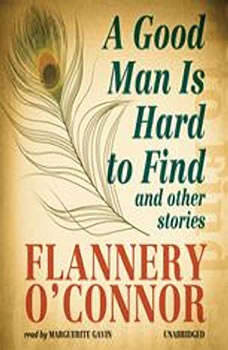
Good Man is Hard to Find, a short story by Flannery O’Connor.
Oronooko
or The Royal Slave, a novel by Aphra Behn.
Lord
of the World, a novel by Robert Hugh Benson.
The
Book Of Ezekiel, a book of the Old Testament, KJV and RSV
translations.
Currently Reading:
Last
Post,
the 4th novel of the Parade’s End Tetralogy by Ford Madox Ford.
Dominican
Life: A Commentary on the Rule of St. Augustine,
a non-fiction work by Walter Wagner, O.P.
Catholicism:
A Journey to the Heart of the Faith, a non-fiction work by
Robert Barron.
The
City of God Books 1-10, by Augustine of Hippo, translated
by William Babcock.
I
Am Going: Reflections on the Last Words of Saints,
a non-fiction devotional work by Mary Kathleen Glavich, SND.
Prince
Caspian, a novel from the Chronicles of Narnia series by C.
S. Lewis.
Upcoming Plans:
“God
Rest You Merry Gentleman,” a short story by Ernest Hemingway.
“The
Sea Change,” a short story by Ernest Hemingway.
“A
Matter of Chance,” a short story by Vladimir Nabokov.
“The Manager of ‘The Kremlin,’” a short story
by Evelyn Waugh.
“The
Magic Paint,” a short story by Primo Levi
Brideshead
Revisted, a novel by Evelyn Waugh.
Utopia,
a short novel by St. Thomas More.
Book
of Daniel, a book of the Old Testament,
###
While
this is my first update for the year, this is actually my mid-year review.I missed the first quarter update, mainly
because I was really late in getting my initial plans for the year out.Perhaps the output for the year doesn’t seem
like much for half a year’s reading.Three books—two of them novels—three books from the Bible, and six short
stories.
However,
there are six books that are in progress, and might all be completed by the
next quarter.Several of them are more
than half way.I think the output for
the third quarter will be much more substantial.
Upcoming
will be the Book of Daniel from the Old
Testament and the Book of Revelation
from the New Testament.Both these books
are apocalyptic visions of the end of times.Having just completed Robert Hugh Benson’s Lord of the World, which is a dystopian Catholic novel envisioning
an end of times scenario, I will be steeped in apocalyptic literature this
year.I will be posting quite a bit on
my reading of Lord of the World.It’s definitely a prophetic novel relevant to
our times.
In
addition, the Catholic Thought book club at Goodreads will be reading Evelyn
Waugh’s Brideshead Revisited next,
and it will add even more to the read list in the third quarter.Perhaps you may want to join us in this
read.It’s a great novel.
I
started the conversation with a question of what is similar and what is
different between the Misfit and the grandmother.I think there is a value in exploring this
contrast, especially since I see it as leading to another theological theme.
As
to how they are different, perhaps that is the easy side of the equation and we
can dispense with it quickly.First, the
grandmother is not a killer.Second, the
grandmother uses her verbal dexterity and her wits to get her way and not a
gun."She was a talker," Bobby
Lee says.Meanwhile the Misfit seems to
be rather reticent.He's the opposite of
his father who seems to have a "knack of handling" the authorities.The Misfit is the opposite; he seems to
succumb to the authorities.Interestingly the authorities claim the Misfit killed his father, the
talker, just as he will kill the grandmother, the talker.I think the suggestion is that the Misfit
really did kill his father.The
grandmother's entire interaction with the Misfit is her attempt to handle the
authority of the guy with the gun.She
fails.The guy with the gun gets his
way.
As
to how they are similar, that takes some close reading to reveal, but I think
it's more probing.They are both sinful
people, though I think the Misfit realizes his sins while the grandmother is
oblivious to them.But I think at the
heart of it, their sins stem from the same impulse.Committing crimes and especially murdering
people is imposing your will over God's will.What are the grandmother's chief sins?As I listed above, she's vindictive, childish, conniving, manipulative,
and devious.I said she was
"passive-aggressive" which at its core is not that different from the
Misfit's aggressive behavior, the difference being how they weaponized the
aggression.Notice the grandmother
aggressive behavior toward Bailey when she tries to change his mind about going
to Florida standing "with one hand on her thin hip and the other rattling
the newspaper at his bald head."Now the newspaper is not a gun, but the posturing is aggressive.Vindictive, conniving, manipulative, these
are sins where she is imposing her will onto people.Ultimately for both the Misfit and for Grandma,
it's not "thy will be done" but "my will be done."
And
the childishness is also a commonality between the two.We've seen the grandmother reduce herself to
the children's level.She banters on
their level and they feel free to continue the bantering because they see her
as a mental equal.The Misfit too is an
adult who appears to not have matured.He doesn't kill for gain; he kills for the heck of it.His problems seem to stem from when he was a
child.
"I never was a bad
boy that I remember of," The Misfit said in an almost dreamy voice,
"but somewheres along the line I done something wrong and got sent to the
penitentiary. I was buried alive," and he looked up and held her attention
to himby a steady stare.
"That's when you
should have started to pray," she said. "What did you do to get sent
to the penitentiary that first time?"
"Turn to the right,
it was a wall," The Misfit said, looking up again at the cloudless sky.
"Turn to the left, it was a wall. Look up it was a ceiling, look down it
was a floor. I forget what I done, lady. I set there and set there, trying to
remember what it was I done and I ain't recalled it to this day. Oncet in a
while, I would think it was coming to me, but it never come."
Not
remembering one's crime is actually what a child says and does.At the end when the grandmother hits a nerve
on whether Jesus existed that brings the Misfit into a childish emotion.
"I wasn't there so I
can't say He didn't," The Misfit said. "I wisht I had of been
there," he said, hitting the ground with his fist. "It ain't right I
wasn't there because if I had of been there I would of known. Listen
lady," he said in a high voice, "if I had of been there I would of
known and I wouldn't be like I am now." His voice seemed about to crack and the
grandmother's head cleared for an instant.
He
reverts back to his childhood here, and places blame at some outside
circumstance for his criminal behavior, making an excuse like a child.Even he seems to think at the heart of his
problem is some inability to piece the adult world together.
"I call myself The
Misfit," he said, "because I can't make what all I done wrong fit
what all I gone through in punishment."
No
child thinks his punishment is warranted.He is saying that about himself.And what criminal calls himself the "Misfit?"Al Capone called himself
"Scarface."The famous pirate
called himself "Blackbeard."Another criminal was called "Jack the Ripper."John Wesley and June Star in the story are
misfits.As is the grandmother.The name "The Misfit" is childish,
and suggests his problems are rooted in an arrested development.
Another
commonality between the two is a veneer of respectability.Yes, the Misfit is a psychopathic killer, but
he is respectful and kind.When the
grandmother recognizes the Misfit and Bailey shouts some unmentionable words to
his mother, the Misfit finds an excuse for Bailey: “Lady,” he said, “don’t you
get upset. Sometimes a man says things he don’t mean. I don’t reckon he meant
to talk to you thataway.”When the
misfit wants to send Bailey and John Wesley into the woods, he asks
kindly.He is even kinder when he asks
the children’s mother and the little girl, making sure one of his henchmen
helps the mother up.He even excuses
himself when he’s embarrassed to be shirtless in front of ladies.
” He put on his black hat
and looked up suddenly and then away deep into the woods as if he were embarrassed
again. “I’m sorry I don’t have on a shirt before you ladies,” he said, hunching
his shoulders slightly.“We buried our
clothes that we had on when we escaped and we’re just making do until we can
get better. We borrowed these from some folks we met,” he explained.
He’s
trying to make do “until we can get better,”That’s the language of one concerned with respectability.
The
grandmother’s veneer of respectability is on display throughout the story.She dresses fancy for a vacation ride because
“anyone seeing her dead on the highway would know at once that she was a lady.”She tells June Star she should be “ashamed”
for insulting the waitress but meanwhile moments before in private she used the
most horrid racist terms.And she is
obsessed with the notion of a “good man.”She tells Red Butts he’s a good man.Red Butts is essentially a lying slob who keeps a monkey chained to a
tree and bosses his wife around.And
what does she tell the Misfit?
“I just know you’re a
good man,” she said desperately. “You’re not a bit common!”
Not
being “common” seems to be her definition of what is a good man.I’m sure she considers herself a good lady,
after all she does think of herself as a lady and not common.But is this the Christian definition of a
good man?Isn’t the definition of a good
man one who acts like Jesus Christ, who has the heart of Jesus Christ, or at
least tries to?Neither Red Butts nor
the Misfit nor the grandmother even come close to acting like Christ.That is why a good man is hard to find.
###
Let
me just add that there is nothing wrong with being respectable.We all should be respectable.Respectability is a way of being
neighborly.The issue is that that for
the grandmother (and the Misfit) it is only a veneer.Just as the Misfit on the surface is
respectable while inside he's a cold hearted murderer, the grandmother is only
respectable on the outside while on the inside she's a selfish racist.
So
why are all these similarities between the Misfit and the grandmother
important?Ultimately the story is about
the grandmother.The similarities
between the two provide a projection into each one.So what is at the core of the Misfit, can be,
with some reasonable consideration, attributed to the grandmother.This I think is important to grasp the
theological implications of the story.We are allowed into the Misfit's theological understanding of life, and
so with reasonable deliberation, we can project that theological world view to
the grandmother.Let's look at some of
the theological points.Let’s look at
the easiest one first, not needing help.
"If you would
pray," the old lady said, "Jesus would help you."
"That's right,"
The Misfit said.
"Well then, why
don't you pray?" she asked trembling with delight suddenly.
"I don't want no
hep," he said. "I'm doing all right by myself."
Is
he really doing alright by himself?He’s
been locked up in jail.He’s not doing
alright.He could use a lot of
help.Now project this into the
grandmother, and let’s consider the state of her soul.Is her soul doing alright by herself?She doesn’t seem to want help and she is
extraordinarily willful.It’s been her
will, not “thy will.”From what we have
seen of her sinfulness, I would say right now she’s heading for hell, the
metaphysical equivalent of the Misfit’s jail.
Second,
let’s look at how the Misfit can’t seem to recall sins.
"Turn to the right,
it was a wall," The Misfit said, looking up again at the cloudless sky.
"Turn to the left, it was a wall. Look up it was a ceiling, look down it
was a floor. I forget what I done, lady. I set there and set there, trying to remember
what it was I done andain't recalled it
to this day. Oncet in a while, I would think it was coming to me, but it never
come."
Consider
that as a metaphor for sitting at judgment day in front of Christ the
judge.None of us will be able to recall
all the sins of a lifetime.Most of the
time we aren’t even aware of the sins we commit that moment.Look at all the sins the grandmother has
committed on that morning’s journey.She’s oblivious to them.
Third,
let’s look at what the Misfit says about matching the punishment to the crime.
"Jesus thown
everything off balance.It was the same
case with Him as with me except He hadn't committed any crime and they could
prove I had committed one because they had the papers on me. Of course,"
he said, "they never shown me my papers. That's why I sign myself
now.I said long ago, you get you a
signature and sign everything you do and keep a copy of it. Then you'll know
what you done and you can hold up the crime to the punishment and see do they
match and in the end you'll have something to prove you ain't been treated
right.
Again,
take that as a metaphor for facing the Judge and He going down a list of your
sins to decide what your eternal fate will be.This is how the Misfit conceptualizes eternal judgement.But that’s not theologically correct, at
least from a Catholic perspective.It’s
not a list but the state of your soul at death.We all commit sins, but is your soul clean and absolved and in a state
of grace?I think we get further insight
when the Misfit talks about his name.
I call myself The Misfit,"
he said, "because I can't make what all I done wrong fit what all I gone
through in punishment."
The
implication I think is that he can’t fit the theology together.It doesn’t make sense to him.I think O’Connor is contrasting a Protestant
world view against a Catholic.We the
reader know the Catholic view, and we’re watching the Protestants live out
their dislocations that result from their world view.It’s O’Connor who solicits Protestant and Catholic
distinctions by naming the boy “John Wesley,” the same as a famous Protestant
theologian.
For
O’Connor, it seems to me that what drives her Protestant characters to this
sort of tension and anxiety is the lack of graces we Catholics receive from the
sacraments and from a church that provides authority.We don’t have to make it fit.The Church and the Magisterium has made it
fit for us.For the Misfit, and the
grandmother presumably, it’s him and his bible.They have to make it fit on their own.Second, the sacrament of penance on a regular basis would have done both
the Misfit and the grandmother a world of good.Neither would be experiencing the anxiety of a final judgement if their
sins had been taken care of sacramentally.
So
when the grandmother implores the Misfit to “pray, pray” and call on Jesus for
help, she is symbolically telling herself to pray and to call on Jesus.Notice how many times she calls on Jesus in
that encounter.Notice, when she reaches
her moment of crises, she falls “down in the ditch with her legs twisted under
her.”Are her legs twisted supposed to
suggest the crossed legs of Christ on the cross?Is O’Connor giving her a spiritual communion
with Christ as the grandmother seems to emotionally breakdown?I think so.It comes just before her moment of compassion.A spiritual communion is as close as one can
come to actually receiving the sacrament.We have been living with spiritual communions watching Mass on TV during
this virus.
I
would also venture to say that the three bullets the Mistfit fires into her is a
spiritual sacrament too.One could name
the bullets Father, Son, and Holy Spirit.
I’m
not one hundred percent sure on the theology.If anyone has other thoughts, please feel free to correct me.I don’t claim to be a theologian.
###
Madeleine
Commented:
I like your analysis,
Manny, although I think it may be a bit of a reach to imagine the Misfit
administering sacraments.
My
Reply:
LOL, I didn't quite
phrase it that way, but that is a startling thought.
###
I
found this nice three and a half minute video biography of O’Connor. It gives you the basic facts and displays some
nice photographs.
I
was sadden to hear that Charlie Daniels passed away the other day from a stroke.He was 83.I mostly knew Charlie
Daniels from one song, but in reading about him at this Rolling Stone magazine obituary he had a very long career.He wrote songs for Elvis, played with Bob
Dylan, and was a sort of hippie southerner before he became a right wing
southerner.He played for the Jimmy
Carter presidential campaign in the 1970s and for the NRA afterward.Some highlights from the obituary.
Singer-songwriter and
multi-instrumentalist Charlie Daniels, who played bass and guitar on Bob
Dylan’s 1969 Nashville Skyline LP and would go on to pioneer the burgeoning
Southern rock movement with his namesake Charlie Daniels Band, died Monday at
83. His publicist confirmed Daniels’ death from a hemorrhagic stroke to Rolling
Stone.
With his fiery fiddle at
the forefront of much of his recorded output, the leader of the Charlie Daniels
Band paved the way for the mainstream country-rock success of that group and
others, including Alabama and Lynyrd Skynyrd, and crossed over into the pop
charts with his best-known song, 1979’s Grammy-winning “The Devil Went Down to
Georgia.” A country chart-topper about a fiddle contest between a boy named
Johnny and Satan, the song also spent a pair of weeks at Number Three on
Billboard‘s Hot 100.
Charles Edward Daniels
was born October 28th, 1936, in the seacoast town of Wilmington, North
Carolina, the only child of teenagers William and LaRue Daniel — the “s” at the
end of his name was the result of a mistake on his birth certificate. Two weeks
after Daniels started elementary school, his family moved to Valdosta, Georgia,
bouncing between there and Elizabethtown, North Carolina, until finally moving
back to Wilmington. A feverish bout with childhood measles forced Daniels to
wear eyeglasses for most of his life, making him a target of school bullies,
but the youngster, who grew up on Saturday matinees of Western films and
Saturday nights spent listening to the Grand Ole Opry, would soon find his
niche performing and writing songs.
You
should read the entire obituary.I bet
there’s a lot you didn’t know about him.For instance, that he played quite a number of instruments: bass guitar,
mandolin, violin.
Here
is first hit, “Uneasy Rider,” a hippie tour de force.
Perhaps
my second favorite Charlie Daniels song is “Simple Man.”I don’t endorse the vigilantism message of
the song, but I do love that guitar riff and the passion against our
contemporary evils.
And
then there is the great, “The Devil Went Down to Georgia.”This from the obituary is what Daniels says on
how the song came about.
“I don’t know where the
phrase ‘The Devil Went Down to Georgia’ came from or why it entered my mind
that day in the rehearsal studio,” Daniels wrote in his 2017 memoir Never Look
at the Empty Seats. “I don’t even know where the song idea came from… But when
it started coming, it came in a gush. The band grabbed ahold, and when Taz
[DiGregorio] came up with the signature keyboard lick behind the devil’s fiddle
part, we knew we were on to something.”
Finally
let’s end this retrospective with a rollicking patriotic song that is so
relevant today and perhaps fits the campaign of one of the presidential
candidates.I’ll let you guess who.;)
Eternal
rest, Lord, grant onto Charlie Daniels, and your eternal light shine upon him, a
man who by appearances loved God, family, and country.
This
may be a new category for the blog.Call
this “interesting trivia.”I subscribe
to a trivia site, which floods me with advertisements and emails.But I enjoy trying to answer the trivia
questions.
This
question listed the top five cities in the world with the most bridges.The introduction actually started off with Portland Oregon’s claim they are the
“City of Bridges” having a grand total of twelve.Ha!I
laughed.Here in New York City we
probably have twelve in one borough.After all we are on a harbor with two rivers coming together and a host
of islands.Still I wondered if NYC
would make the top five.There are a lot
of cities with harbors and rivers.
So
here are the top five in reverse order with a count of the bridges.
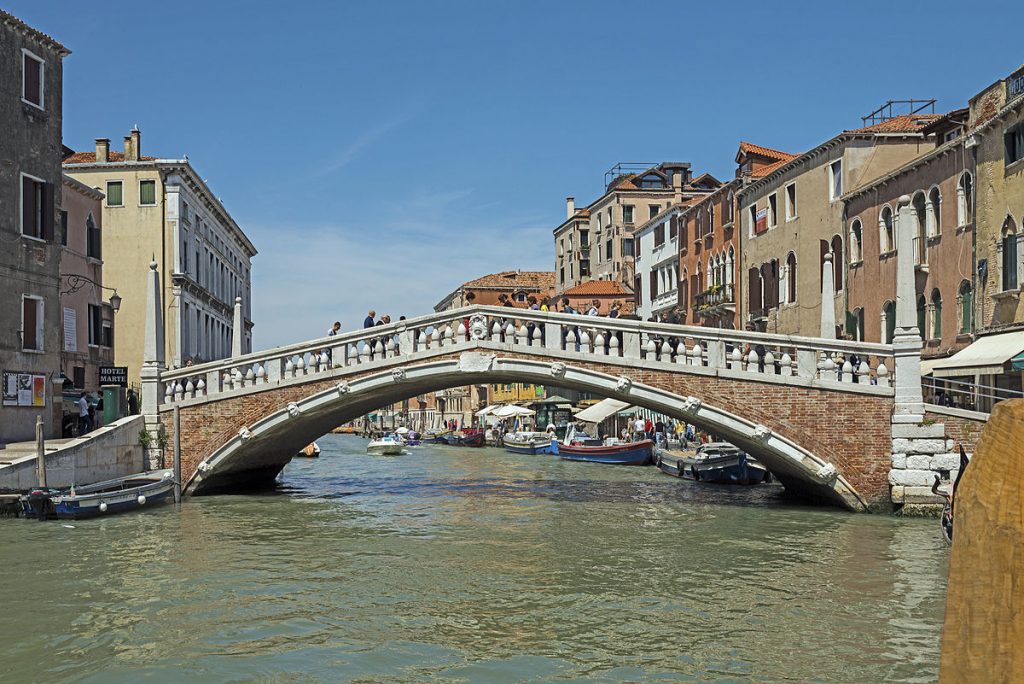
5. Venice, Italy, 391 bridges.
That
doesn’t surprise me.After all,
everybody has at least one bridge on their block.If anything the number seems low.But Venice is not a very big city.It is a very beautiful city though.I’ve been there.It may be the most beautiful city in the
world.
4. Pittsburgh, Pennsylvania, USA, 446
bridges.
Now
that surprised me.I would not have
guessed.I have been to Pittsburg and it
does have a confluence of three rivers.It’s
not that big a city, but I guess they love to build bridges there.It used to be one of the world’s steel making
capital.The certainly had lots of
I-Beams to build with.
3. New York City, New York, USA, 789
bridges.
There
we are!We made the list.Now that’s a lot of bridges.I didn’t think we had that many, but they are
around.I’ve posted plenty of pictures
of my walks over the Brooklyn Bridge.Here’s one.And I’ve also posted pictures of the Verrazano Bridge, here.
2. Amsterdam, Netherlands, 1281
bridges.
That
would make sense.Amsterdam is built on
water.I wonder if they are floating
bridges.Could they have modular
bridges?Nonetheless I bet they are not
very big bridges.
1. Hamburg, Germany, 2300 bridges.
Hey,
I’ve been there too!I posted on my
business trip to Hamburg, here.Oh wow, it’s been almost seven years
now.I didn’t think it was that long
ago.That’s a city with at least one
river and a big harbor.I am surprised
it has that many bridges, but I did notice quite a few.
Now
that is a weird-looking bridge.Only
German engineering.;)
So
I have been in four of the five cities with the most bridges.I would never have guessed.
This is the second part of a series on Flannery O'Connor's short story, "A Good Man is Hard to Find." You can find Part 1 here.
Let
me push the discussion a little further, into a reading that perhaps no one has
considered.Let’s look at the encounter
between the grandmother and the Misfit not from realism, but from a
metaphorical, even symbolic, perspective.You might even call this reading a metaphysical perspective.Keep in mind, this reading doesn’t undermine
the realism, but amplifies it.It
creates another level to action than the immediate.
By
all rights, when a car flips 360 degrees into a ten foot deep ditch and
passengers are not even wearing seatbelts as they wouldn’t in the 1950s, it is very
likely people in the car would have died.You don’t walk away from accidents like that.Let’s say, metaphysically, they have died and
unbeknownst to them they are dead and waiting for what comes next.The family is sitting in a ditch, ten feet
deep, which is not exactly the six feet of a burial, but O’Connor may not want
to make it obvious.But they are below
ground.Behind the ditch are woods.O’Connor describes them as “tall and dark and
deep.”That language is an allusion to a
famous poem by Robert Frost, “Stopping by Woods on a Snowy Evening.”That poem is ultimately about death (silence
of isolation, snow as symbol for death, frozen lake recalls the lake in Dante’s
Inferno).Read the last stanza:
The woods are lovely,
dark and deep,
But I have promises to
keep,
And miles to go before I
sleep,
And miles to go before I
sleep.
O’Connor’s
echo of “dark and deep” is not accidental.The grandmother has gone on a journey of many miles, her vacation as we
have seen; you can even stretch that to her life time, and now she has come to a
stop.Along comes a “big black battered
hearse-like automobile” which contains beings (angels?) who are going to bring her
and the family to their final end.“There
was not a cloud in the sky nor any sun.”We hear that several times.How
could there be no cloud in the sky and no sun?We are in a state of another world.They look up and it’s the heavens.They are in another plane, somewhere in between earth and heaven.They are going before the final judge.
So
that would make the Misfit, the executer of that judgement, and that would be
Jesus Christ.The Misfit even compares
himself to Jesus at one point.“Jesus
thown everything off balance,” the Misfit says.“It was the same case with Him as with me except He hadn’t committed any
crime…”Well, the Misfit has thrown
everything off balance too, and he clearly links himself to Jesus.Just before that connection to Jesus Bobby
Lee throws him the shirt with the parrots on it.Parrots have been used as representative for
the Holy Spirit at least since Gustave Flaubert’s story “A Simple Heart,” about a hundred years prior to O’Connor writing hers.We saw parrots as suggestive of the Holy
Spirit in Willa Cather’s novel Death of
the Archbishop.O’Connor was very
conscious of great writers, and I’m sure she read Flaubert’s story since it had
a Catholic dimension to it.So the
tossed shirt with the parrots flying onto the Misfit is certainly suggestive of
the Holy Spirit coming onto him.And
then the Misfit puts on the shirt.This
is all very symbolic action.
But
it goes even beyond that.Notice that
the Misfit is squatting down the whole time he is speaking to the
grandmother.“The Misfit squatted down
to the ground,” we are told early in the encounter.The whole time the Misfit is speaking to her
he is doodling on the ground with the butt of his gun.“The Misfit kept scratching in the ground with
the butt of his gun as if he were thinking about it.”Even just before the end he hits the ground
with his fist. The Misfit squatting and writing on the ground parallels Jesus
in John chapters seven and eight with the woman taken in adultery to be stoned.There too a woman’s fate hangs in the balance
while Jesus writes in the sand.If Jesus
agrees with the men who intend to stone her, she is doomed.
What
we see in this symbolic reading is the grandmother coming before judgement, and
the fate of her soul hanging in the balance.
No,
the Misfit is not Jesus, but O’Connor is using the Misfit to expand the meaning
of the story.Remember in this reading,
she is already dead from the car accident. The bullets are not what causes the
death, but what decides her judgement.The question then that beckons us is, what is her judgement: Saved or
damned?
###
My
Reply to Susan Margret to why the other characters don’t receive
a judgemtn like the grandmother;
Susan,
as a short story, the focus is usually on one or two characters. There just
isn't space enough to develop and bring to a conclusion secondary characters.
The rest of the family are there to move the plot. Each successive execution in
the woods is a means for the author to "turn the screw," as Henry
James would say, tighter on the grandmother's moment of truth. We should talk
about her moment of truth. Something changes in the grandmother. Notice what
happened at the story’s climax:
“I wasn’t there so I
can’t say He didn’t,” The Misfit said. “I wisht I had of been there,” he said,
hitting the ground with his fist. “It ain’t right I wasn’t there because if I
had of been there I would of known. Listen lady,” he said in a high voice, “if
I had of been there I would of known and I wouldn’t be like I am now.” His
voice seemed about to crack and the grandmother’s head cleared for an instant.
She saw the man’s face twisted close to her own as if he were going to cry and
she murmured, “Why you’re one of my babies. You’re one of my own children!” She
reached out and touched him on the shoulder. The Misfit sprang back as if a
snake had bitten him and shot her three times through the chest. Then he put
his gun down on the ground and took off his glasses and began to clean them.
At
the cracking of the Misfit’s voice and then seeing him almost cry, the
grandmother has a transcendent vision. With each shot, she has called out
“Bailey boy,” as if recalling her son as a child. This has been on her mind,
but has had to focus on the tension-filled situation and the preservation of
her life. When the Misfit pounds the ground with his fist—something I can see
John Wesley doing—and nearly coming to a cry, the grandmother's social pretense
of proper decorum falls away, her selfish sense of preservation falls away, and
she has what O’Connor is always aiming for in her stories, a moment of grace.
“Why you’re one of my babies. You’re one of my own children!” she says. All of
a sudden she no longer sees a murderer but a child, a child perhaps who has
gone wrong, but nonetheless a child of God and as a mother herself sees in him
her own child. This is in complete opposition to everything we have seen of
her. That litany of sins I enumerated above dissolve, fade into a memory. The
willful striving to be socially respectable also dissolves, and the compassion
of her heart is laid bare, honest and forthright.
This
is why the Misfit at the end says, “She would of been a good woman, if it had
been somebody there to shoot her every minute of her life.”
Samuel
Johnson, the 18th century writer and intellectual has a famous quote: “When a
man knows he is to be hanged in a fortnight, it concentrates his mind
wonderfully.” The grandmother needed that moment of impending death to
concentrate her mind and accept God’s grace. This was her moment of truth.
###
Irene
Comment:
"When the
grandmother reaches out to the Misfit in recognition that he could be one of
her babies, is she having her first moment in the story of moving away from her
narcisistic inward obsession?
My
Reply:
Irene, we posted nearly
the same time. Yes, it is a moment of repressing her natural narcissism. I
don't know if she's recognizing her sins. If somehow she would have survived
and lived on, I could see her return to her previous way of life. But then it
could be life altering. On that we'll never know. However, for the state of her
soul at death, I would say this was enough of a repentance to be saved. With a
heck of a lot of time in Purgatory!
Today
after fifteen weeks, I returned to Mass since the Coronavirus caused the
lockdown.It was the first Sunday Mass allowed in New
York City, the first Mass had been allowed this past Monday.I had not the opportunity to go the entire
week.
Yes,
we had to wear masks.Yes every other
row was cordoned off from sitting, and there were tape marks on the pews
locating a six foot distance.My church
has two center aisle sets of rows of pews and one set on each side.The two outer set could be used for families where
one was not required to sit six feet apart.
People
were, however, required to fill out from the front of the church towards the
back.As it is my habit to get there a
half hour early, I sat in the first row on the family side with my son.There would be no collection at offertory,
but everyone should drop their envelope or offering in the basket at the rear
of the church.That is how I know we
missed fifteen weeks of Mass. I had
fifteen envelopes at home before I got to the one with today’s date.
Everyone
wore masks, even our music director, Ms. Williams.There was no choir and she sang alone with
the mask on.We were actually surprised
to see her.We thought it would be a bare-bones,
no music Mass.There were no altar
servers or readers.The priest had to do
all the readings.But there was precious
music.
Father
Eugene was alone in procession on the opening hymn, wearing a mask, but
thankfully took it off once he got behind the altar.Before Mass, when he came out to ensure the
altar was set proper, I was able to speak to him.If you remember I mentioned he lost hismother to the virus early on.I passed
my sympathies to him, and then he told me between family and friends he had
lost six to the virus.Oh my, I was
stunned.What a cross he has had to bear
through this.My son said he had a tear
in his eye when he was retelling it.I
was so stunned I had looked away and not noticed.
There
were no missals to avoid sanitizing them, but I knew this would be, so I took with
me my monthly Magnificat which has
all the readings.
And
then we stood for the opening hymn, “Table of Plenty.”
Come to the feast of
heaven and earth!
Come to the table of
plenty!
God will provide for all
that we need,
Here at the table of
plenty.
As
the organ played and Ms. Williams, opera voiced trained, sang, Father Eugene in
green vestments walked down the nave, genuflected as he faced the tabernacle,
held that genuflection on his knee for a good moment, walked up the altar
steps, got behind the altar, took off his black mask, bent over and kissed the
top of the altar as is custom, and stood facing the congregation.“Welcome back home,” were his first words.
And
for the next hour, all the troubles of the last fifteen weeks, the virus, the
lockdown, the ventilators, the deaths, the protests, the riots, the statues,
the cops, the cancel culture, the controversies all disintegrated into
particles one by one before one’s eyes and fell from the air like dust mites.Time suddenly transformed into the timeless
time of heaven, and peace settled into the sacred space.









.jpg)