"Love follows knowledge."
"Beauty above all beauty!"
– St. Catherine of Siena

Thursday, July 15, 2021

Blog Note: The 1000th Post

It’s hard to believe but this post is the one thousandth post of Ashes From Burnt Roses.  It’s hard to believe that my first post was published on December 29th, 2012.  That’s about eight and a half years ago.  That’s a 103 months ago.  That’s 9.7 posts per month, averaging 116.5 posts per year. 


That first year, 2014, had an incredible 183 posts, but I suspect there were a lot of short and easy ones thrown in there.  From then I slowly dropped in my pace year by year to a low of 81 in 2017, but from that low I have steadily climbed back up.  I realized at some point after 2017 that what I comment and post at my book club at Goodreads (Catholic Thought Book Club, for anyone interested in joining) I can post here on the blog.  So that has allowed me to pick up my pace.  I’m now up to over a 100 per year.

I don’t delude myself that I have a great following.  I know I don’t.  What is it that Jan, one of my readers, calls this, a “stuffy old blog?”  She says it in good humor though.  There isn’t a great following for the stuffy blog of one person’s reading and faith interests.  That last part is probably the greatest change over the years with my posts, my increasing faith in Christ and His Church.  I think in 2012 I was in a budding stage of my faith, and now it has blossomed.  I probably ought to revise the “About” section to reflect that.  I keep meaning to do it, but add that to my increasing list of things to do.


It’s interesting to see how the type of posts on this blog breakdown.  Because I cultivated the habit of identifying the type of post in the title, it’s easy to see how the types number.  Here are the top twelve post types as it currently stands today.


Faith Filled Friday (148)

Matthew Monday (137)

Music Tuesday (89)

Notable Quote (73)

Poetry (65)

Dante Alighieri (59)

The Divine Comedy (56)

Literature In The News (53)

Short Story (43)

Lines I Wished I'd Written (41)

Personal Story (35)

Memorial (33)

Faith Filled Friday and Matthew Monday are clearly the most frequent, followed by Music Tuesday and Notable Quote.  Dante Alighieri is the single most frequent author I have commented on, and his The Divine Comedy is the most frequently commented work.

I should highlight my Short Story Analysis post type.  Of all the most frequented posts, the various short story analyses seem to get the most traffic, if you can believe the statistics.  It does make sense though.  A well-known novel or book will have a lot of pop ups on a search, but short stories are so much less written on that I probably come to the fore in a search. 

I should point out that there is a little search engine on the very top left hand corner.  If you ever want to see if I’ve commented on a particular book or author, type it in there and a search of this blog will ensue.  I don’t know if people realize that.  Truth be told, I frequently use it myself to see if I have commented on something or someone before.  I don’t usually remember.

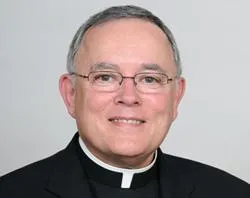
Well, I thank you all my readers for still following me.  If you have any suggestions to improve this blog, I’m always willing to listen.  I love the quote from Archbishop Charles Chaput I posted in the very previous post: “We rarely see the full effects of the good we do in this life.”  I hope I’ve been able to add to your reading and spiritual life in some way.  God bless.


Monday, July 12, 2021

Notable Quote: The Good We Do In This Life by Archbishop Charles J. Chaput

I really love this quote from Archbishop’s Chaput’s book, Things Worth Dying For: Thoughts on a Life Worth Living.


 We rarely see the full effects of the good we do in this life.  So much of what we do seems a tangle of frustrations and failures.  We don’t see—on this side of the tapestry—the pattern of meaning that our faith weaves.  But one day we’ll stand on the other side.  And on that day, we’ll see the beauty that God has allowed us to add to the great story of creation, the richness we’ve added to the lives of our family and friends, the mark for the better we’ve left the world, and the revelation of his love that goes from age to age no matter how good or bad the times.  We are each an unrepeatable, infinitely treasured part of the story.  (p. 239-40)


I pray that my life will have served people well, and that I have done more good than wrong.


Friday, July 9, 2021

Faith Filled Friday: St. Catherine on Fastening to the Cross

There was a marvelous meditation in the June 2021 Magnificat taken from a letter of St. Catherine of Siena.  The Magnificat editors pull parts of that letter to form this wonderful quote:


In the name of Jesus Christ crucified and of gentle Mary.  I Caterina, useless servant of Jesus Christ, send you my greetings.  I long to see us united with and transformed into the gentle pure eternal truth, the truth that rids us of all falsehoods and lies…I shudder at the thought of the devil’s deceptiveness.  My only trust is in God’s goodness.  I do not—I know that I cannot—trust in myself…


I am always fearful of my own weakness and the devil’s cleverness.  For I realize that though the devil lost beatitude he did not lose his intelligence—or better, cleverness—I know, as I said, that he could deceive me.  But then I turn to the tree of the most holy cross of Christ crucified; there I lean; there I want to nail myself fast.  I have no doubt that if I am nailed fast with him in love and in deep humility, the devils will have no power over me.  And this is not because of my own power but because of the power of Christ crucified.


Keep living God’s holy and tender love.  Gentle Jesus!  Jesus love!  O fire, oh abyss of charity!  You are a fire ever burning but not consuming.  You are filled with gladness, with rejoicing, with gentleness.  To the heart pierced by this arrow, all bitterness seems sweet.  Oh sweet love the feeds and fattens our soul!


Yet even though we said it burns without consuming, I say also that it burns and consumes: it dissolves and destroys all sin, all ignorance, all indifference in the soul, for charity is not inactive; no, it does great things.  (Magnificat, June 2021, p. 421-2)

That is such an incredible quote, and the entire letter can be found in Suzanne Noftke’s The Letters of Catherine of Siena: Volume I.  Indeed, I found it and it’s identified as “Letter T92/G305/DT19” for those who understand that numbering scheme, and the letter is addressed to “a religious person in Florence.”  There was no name provided of the addressee but from the contents of Catherine’s letter we can tell she was responding to a religious person, that is, one with religious orders.  Also from the entire content of Catherine’s letter we can see that the religious person has written to her criticizing what he sees as her severe fasting, which he suggests can be at the result of the devil.  The letter is dated as being between “July 1375 to early 1376.”  This would put St. Catherine as being twenty-eight to twenty-nine years old.  She died in 1380.

For those that may not know, St. Catherine did subject herself to severe fasting, especially from her late teens to her early twenties, which in time caused her digestive system to shut down.  And in this letter, which I think is the central intent of the letter, is to explain her situation and that she no longer can hold food down and that she prays for this to change. 

So in the quoted part from Magnificat, we see that in the first stanza, after her typical way of opening a letter, she acknowledges she cannot trust herself.  In the second paragraph she acknowledges that the devil is capable of deceiving her.  But then in that paragraph she identifies what ultimately saves her: “But then I turn to the tree of the most holy cross of Christ crucified; there I lean; there I want to nail myself fast.  I have no doubt that if I am nailed fast with him in love and in deep humility, the devils will have no power over me.  And this is not because of my own power but because of the power of Christ crucified.”

The third paragraph is one of her typical disjointed digressions—but which are so poetic—where she starts speaking to Christ.  Notice that she ends that it is Jesus who “fattens her soul.”  So while addressing the thinning of her physical body, she refers to the fattening of her soul.

She concludes by modifying her metaphor to say that by grasping the cross with crucified Jesus, it consumes sin, ignorance, indifference, and leads her to holy charity.

St. Catherine of Siena, pray for us!


Monday, July 5, 2021

Things Worth Dying For by Archbishop Charles J. Chaput, Post 4

This is the fourth post on Things Worth Dying by Archbishop Chaput. 

You can find post #1 here.

Post #2 here.  

Post #3 here.  


Here’s how I breakdown chapter eight.

(1) We Die For What We Value—Christian Persecution—Historical Church Positives—Church Negatives—Church as Body of Christ—Church as Mother—Positive Impact of Catholic Church—Hostility to Church—Restrictions to Religious Liberty.

(2) Witness of Martyrs—Thomas More—John Fisher—Survey of Lay People: Dysfunctional Family—Mother—The Eucharist—Good Priests—Communion of Saints—Beauty—Truth—Kingdom of God—Relationship with Jesus—Redemption.

(3) Survey of Priests: Prayer—Love for the Church—Bringing Sacraments to laity—Configuration to Christ the Shepherd—Apostolic Structure—History of the Church—Source of Unity—Inheritance—Coherence—Problem of Money—Mixed Results of Vatican II—Activity Has Overwhelmed Contemplative.

(4) Abp Chuput Answers to Survey: Church as Mother—Church as Spouse—Church as Community—Sacraments—Bureaucracy Not Important—Faith—Disappointments: Sex Abuse—Those Who Try To Remake the Church—Bishops Who Are Cowards—Joy: Faith of Those With Adversity—Most Admired: Popes JPII and Benedict XVI—Mixed Reactions to Higher Institutions of the Church—Make the Church Holier, Less Wordly, Simpler—History as Work of Remembering.

Given the nature of this chapter, I don’t think it makes sense to summarize each section.  The overall gist of the chapter could be summed up as that most laity, priests, and the Archbishop himself love the Catholic Church and want to make it holier.

### 

Given the “basic questions about the church” in chapter 8 put to laity, priests, and the author himself, I want to pull out the questions that apply to me and answer them.  In some cases I had to speculate at an unprinted question from the response, but here’s what I identified, twelve questions and an open forum.

How do you think of the church?

What gives me the most joy about the church?

What troubles me most about the church?

Why have you stayed in the church?

What do you love most about the church?

What troubles you about the church?

Why is history of the church important?

Was Vatican II too optimistic?

What disappoints you the most about the church?

Who in the church have you admired most?

What needs to change in the church?

How should we think of the role of the pope?

Any other thoughts?

Feel free to answer them too.  I would be curious as to how the book club members answer.  I’m going to answer them in my next post as a standalone. 

###

How do you think of the church?

I think of the church as home, that is mother, father, grandfather, grandmother.  All the familial attributes are wrapped into one.  Going to church is like returning home and having a family meal.


What gives me the most joy about the church?

The blessings, that is feeling blessed when I am within her doors, when I have some role to play to make her beautiful, receiving the sacraments, when listening to church music or looking at the beautiful art, when praying, when attending Mass, when watching her charitable arms provide works of mercy, when having a discussion with a parishioner or the pastor, when feeling connected.


What troubles me most about the church?

Those that feel the need to change her.


Why have you stayed in the church?

Because it is the Truth!  Where else can I go?  Anywhere else would not be the truth.


What do you love most about the church?

Her universality, which includes not just the horizontal time plane of today but the vertical plane of the historical past and the future to come.  She embraces and loves all in time and space.


What troubles you about the church?

The political factions that have formed, those on the encrusted right and those on the deconstructing left.


Why is history of the church important?

It is the history of western culture.  There is no concept of western culture without the Catholic Church.


Was Vatican II too optimistic?

I’m not knowledgeable enough to say, but I think it came at the wrong time in history and it was its follow through was abused by people with a political agenda.


What disappoints you the most about the church?

Bad priests.  I didn’t believe the sex abuse scandals when they first came out because I didn’t think priests could act that way.  People go to priests in times of crises and need their trust.  Violations of that trust may be among the worst sins possible.


Who in the church have you admired most?

Great priests that would be here meaningless to name.  Great orthodox theologians.  And I too love Popes JPII and Benedict XVI because they are both great priests and great theologians.


What needs to change in the church?

Corruption. 


How should we think of the role of the pope?

Protector of the Magisterium, of orthodoxy, of the deposit of faith.  As the explainer of the faith.  Look at Pope St. John Paul II, he is the model of the ideal pope.


Any other thoughts?

The Catholic Church needs to step out more, have processions in the streets, pray in the public, present our faith to the culture at large, on the TV, on the radio, at public displays.  We need to do what St. Dominic did in the Twelfth Century, preach to the public for the salvation of souls. 


Friday, July 2, 2021

Things Worth Dying For by Archbishop Charles J. Chaput, Post 3

This is the third post on Things Worth Dying by Archbishop Chaput. 

You can find post #1 here. 

Post #2 here.  


Here’s how I breakdown chapter six.

(1) Ideology as Religion—Zamyatin’s novel, We—A Noble Idea Turned Poisonous—American Idea Anchored in Pragmatism—French Revolution Anchored in Secular Ideology—Human Reason Over Divine Revelation.

(2) Nazi Ideology in Opposition to Divine Revelation—Scientific Marxism of the Soviet Union—All Have Roots in the French Revolution—Tocqueville on the French Revolution—French Revolution as Anti Christian—Modern Revolutions are Shaped by Christianity—Ideologies Have Consequences.

(3) Supercomputing—Human Endeavor—Tools—Knowledge vs. Wisdom—Scientism as Modern Ideology—Yuval Noah Harari’s Decoupling—A World Ruled by Science.

(4) Rod Sterling’s “The Caterpillar”—Metaphor for Ideologies—Technology Driven Culture—World of Everything Here and Now—The Church and the Faults of the Past—The Church is Not an Ideology—Christianity is Alive Because of Jesus Christ.

The general gist of each of the sections can be articulated as thus:

(1) “The roots of modern revolutionary impulse” can be traced to the French Revolution and its antecedents. 

(2) “Ideas, and the ideologies and the system of thought they breed, have consequences,” and the mass killings from the French Revolution to the present are the horrible consequences.

(3) Scientism is the most current ideology, and equally holding the potential for human catastrophe.

.(4) The Christian faith is not an ideology because its “beating heart” is love, and that love is Jesus Christ.

And so a summing statement of chapter six cold be thus: Since the French Revolution to the present, ideologies have rested on the notion of perfecting human society and has had catastrophic consequences.  All these ideologies fail because they either fail to take the love that stems from God as its operating mode or reject that love outright. 

###

My Comment:

I did a search on YouTube for that Night Gallery story the Abp mentions, "The Caterpillar. I couldn't find it. But I did find this man's rating of the ten best Night Gallery stories and he had "The Caterpillar" as the tops by far. Worth watching.


If someone finds the actual full episode, please post a link; I would love to see it.

My Comment:

Perhaps it’s not controversial—or perhaps it is, and please discuss if you think it is—that all these modern ideologies stem from the French Revolution, with all of them leading to the mass killings of the centuries past.  It is also interesting that he concludes these panoply of “isms” with the current fad of scientism.  In my opinion all these “isms” are a version of scientism of their particular day.  All of them believed they had a new approach to managing human society that it was based on a scientific principle, either man as being an animal or human being as merely a biological device.  It reduced the soul and therefore the dignity out of man.  Remember the Enlightenment based their notions on experiment and the scientific method.  The metric system came out of the Enlightenment.  Certainly there are technological positives that have come out of that, but stripping God out of humanity and society has led to devastating consequences.  Science has always been at the heart of this.  Think of how much Freudian psychology, despite it being a complete fallacy and unscientific, has altered our notion of man and human sexuality.  They are still trying to alter human sexuality based on pseudo-scientific notions of sexuality.  Today’s modern world view can not only be traced to the French Revolution, but is itself the same world view.


By the way, I could never and still can’t understand why they celebrate Bastille Day.  This was the beginning of the French Revolution and its homicidal events, leading to tens of thousands of deaths under the Reign of Terror.  And then factor in the Napoleonic Wars that came afterward, and the deaths are in the millions.  Bastille Day should be a moment of national shame, not celebration.

Frances Replied:

Archbishop Chaput has a great fondness for the movie “Casablanca,” and I think most of us consider it one of the best movies of all time. Remember, however, one of the highlights of that film, the moment when Viktor Laszlo instructs the band to play “La Marseillaise,” one of the most familiar national anthems in history. It’s a wonderful, exhilarating scene — but have all of us read the English translation of the song’s lyrics? They’re quite a surprise.

My Reply to Frances:

Good heavens, I didn't know. Hitler could have written that. You can hear it with English subtitles here:


Catherine Replied to My Comment:

I agree with you, Manny, that the modern ideologies stem from the French Revolution. And while their beliefs of enlightenment based on scientific principle are what they tout as driving their ideology, they aren't without their human elements of avarice, manipulation, and egoism. At the beginning of the Revolution, the clergy were forced to sign the oath to the Civil Constitution of the Clergy in order to ensure the clergy's fidelity to the French government rather than the Church in Rome. In spite of some of the abuses that existed in the Church in France, the people were still faithful and devout in their Catholic beliefs. The Catholic priest in the villages played a central role in the lives of the people, much to the chagrin of the revolutionaries. So it was their intention to use the clergy, manipulating them to sign the oath and prohibiting them from preaching anything contrary to the tenets of the Revolution. The priests were no longer paid through the Church but rather through the revolutionary government. Those that didn't sign the oath faced severe chastisements such as removal of financial support and, in some cases, the ultimate sacrifice of martyrdom. While most religious orders were suppressed and disbanded, charitable orders were allowed to continue, which meant keeping the schools and hospitals functioning. These were purely selfish reasons as at that time the Church was the primary provider of these services. Of course restrictions were put in place. Schools were not allowed to teach the Faith but instead the glories of the Revolution. The sisters who served in the hospitals were not allowed to wear their habits. Then there was the financial component, where the greed comes in. The seizing of the Church properties wasn't just about trying to eradicate the Church. The French economy was in a terrible state, not only because of the famine in 1788 but their involvement in wars that they couldn't afford. The French Church was seen as this big cash cow that they now controlled and would use to fund the Revolution. It was only through this kind of manipulation and greed that they could attempt to push forth their ideology. To your point, this approach has repeated itself multiple times whether in the context of a revolution or simply a change to our society/culture. Our Christian brothers and sisters are experiencing this today in China, Hong Kong, the Middle East and Africa. Is it coming to the US? I do fear we will begin to see this in the US. That sounds a bit dramatic but doesn't the situation with the Little Sisters of the Poor sound a bit like this approach?

My Reply to Catherine:

Great comment Catherine. There is so much commonality between the French "Enlightenment" and it's progeny. There really is a direct line of thought that goes from the French Revolution to Nietzsche to Communism, Nazism, and all the contemporary ideologies that are running through our world now. And the common denominator is an application of pseudo science on the human condition. Yes, the hostility to religious people is real, especially in the universities. I don't think we have reached a point where they will start guillotining religious people or putting us in gulags, but they certainly have the impulse and historical precedent to do so.


Wednesday, June 30, 2021

Personal Note: My 30th Anniversary

Not bad for a picture off a picture, but they didn’t have digital photography back then.  That was 30 years ago today.  See, I really did have dark hair. 


To my wife, thank you for the life we’ve built.  I love you.


I had this post for our twenty-fifth.  The song embedded on that post still applies.

Monday, June 28, 2021

Matthew Monday: 2021 Baseball Champs

Last week I posted on our Father’s Day activity for Matthew Monday, but I could also have posted on Matthew’s little league conclusion.  So I’ll post it this week.  They won their league’s championship.  They went undefeated.  Here are the final standings.  His team is called the CCB Baseball.


Here is a video clip of the final out.  That is Matthew on the mound.  His nickname was Tanaka, who was a Japanese star pitcher for the Yankees the last few years.  The last out is a hard grounder to the first baseman who steps on the bag for the out. 


Here is a photo of Matthew with his coaches.


And finally here is the team.  Matthew is up front kneeling without a baseball cap. 


It was a great team and Matthew pitched great all season long.  It was a lot of fun being a spectator.  It must have been a real gas for the kids.