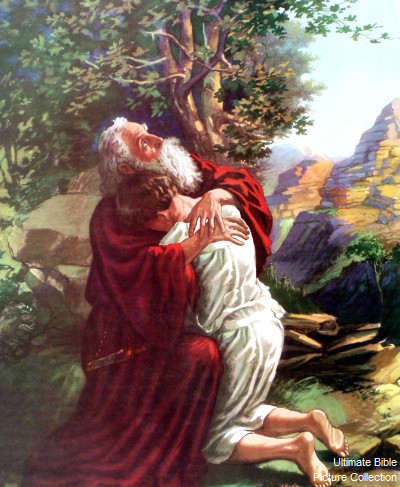
"Love follows knowledge."
"Beauty above all beauty!"
– St. Catherine of Siena

Monday, August 5, 2013

Matthew Monday: Matthew Gets Eye Glasses

Many of you may remember that Matthew was born with strabismus, or in laymen’s terms, severely cross eyed.  He underwent two operations to correct it, and it’s been remarkably successful.  We do have regular eye visits with the pediatric eye specialist, a wonderful doctor who has a way with children. 
 
We had a recent visit a couple of weeks ago, and I should have guessed by the silliness that went on in the waiting room that something was going to happen that day.  Of the four children waiting, three of them were named Matthew.  Every time one of them was called, either by a parent or the receptionist, all three would respond. 

 “Matthew?”

“What?” came from three voices.

My Matthew didn’t understand why other boys were also named Matthew.  I don’t think we had ever encountered another Matthew before.  And this didn’t just happen while we waited initially for almost an hour.  After the doctor initially examined him, he put drops in Matthew’s eyes to dilate them.  And we had to go back in the waiting room for another half hour and another round of three voices responding “what?” every five minutes.  It felt like I was in a Marx Brothers movie.

Now here’s what the doctor diagnosed.  Matthew’s vision is actually quite good.  Perfect in his right eye and only 20/40 in his left.  However, the doctor feels that Matthew is not actually using his left when he sees.  The brain is favoring his right eye.  The left was the much worse of his eyes and required the second operation.  So in order to make the brain want to use the left, he will have to wear glasses where the two eyes are of equal strength.  If that still doesn’t work, Matthew may have to go back to patching the good eye for a period of time.  He’ll assess that in three months.

In the meantime, my wife picked out a pretty snazzy frames.  Matthew seems to have taken to them well.  After all his father wears glasses all the time, and we did all we could to make this a positive experience for him.  Here are a couple of pictures of him with his new glasses.
 

And here's a close up.


Friday, August 2, 2013

Faith Filled Friday: Lumen Fidei, Part 2


You can read the first installment of my excerpts of Lumen Fidei here.  It includes an introduction and links to an overview. 

 
I’ll repeat the structure of the encyclical to orient you for the next excerpt.  Numbers in parentheses indicate the paragraph number.


Introduction (1-7)

Chpt 1: We Have Believed In Love (8-22)

Chpt 2: Unless You Believe, You Will Not Understand (23-36)

Chpt 3: I Delivered To You What I Also Received (37-49)

Chpt 4: God Delivers A City For Them (50-60)

 
The first blog I posted last week excerpted from the Introduction, which gave the rationale.  This blog I’ll post from Chapter 1, which traces the history of Judeo-Christian faith back to Abraham, through the national faith of Israel, including its occasional lack thereof, through the fullness of faith with the coming of Christ, and salvation through faith as revealed by St. Paul, and guided to faith by the established Church of Christ.  Chapter 1 is an incredible survey of how we have arrived at our faith in fifteen short paragraphs. 

 
The most remarkable passage from Chapter 1 is the paragraph where our Holy Father pulls together the full meaning of Abraham’s story and connects it with why faith is so important to our lives.  Here is the 11th paragraph:
 

11. A final element of the story of Abraham is important for understanding his faith. God’s word, while bringing newness and surprise, is not at all alien to Abraham’s experience. In the voice which speaks to him, the patriarch recognizes a profound call which was always present at the core of his being. God ties his promise to that aspect of human life which has always appeared most "full of promise", namely, parenthood, the begetting of new life: "Sarah your wife shall bear you a son, and you shall name him Isaac" (Gen 17:19). The God who asks Abraham for complete trust reveals himself to be the source of all life. Faith is thus linked to God’s fatherhood, which gives rise to all creation; the God who calls Abraham is the Creator, the one who "calls into existence the things that do not exist" (Rom 4:17), the one who "chose us before the foundation of the world… and destined us for adoption as his children" (Eph 1:4-5). For Abraham, faith in God sheds light on the depths of his being, it enables him to acknowledge the wellspring of goodness at the origin of all things and to realize that his life is not the product of non-being or chance, but the fruit of a personal call and a personal love. The mysterious God who called him is no alien deity, but the God who is the origin and mainstay of all that is. The great test of Abraham’s faith, the sacrifice of his son Isaac, would show the extent to which this primordial love is capable of ensuring life even beyond death. The word which could raise up a son to one who was "as good as dead", in "the barrenness" of Sarah’s womb (cf. Rom 4:19), can also stand by his promise of a future beyond all threat or danger (cf. Heb 11:19; Rom 4:21).

 
“For Abraham, faith in God sheds light on the depths of his being, it enables him to acknowledge the wellspring of goodness at the origin of all things and to realize that his life is not the product of non-being or chance, but the fruit of a personal call and a personal love.”


Tuesday, July 30, 2013

Music Tuesday: After Midnight by JJ Cale


I’m embarrassed to say that I had not heard of JJCale until he passed away toward the end of last week.  CBS News had a really fine obituary:
 

If musicians were measured not by the number of records they sold but by the number of peers they influenced, JJ Cale would have been a towering figure in 1970s rock `n' roll.

His best songs like "After Midnight," "Cocaine" and "Call Me the Breeze" were towering hits — for other artists. Eric Clapton took "After Midnight" and "Cocaine" and turned them into the kind of hard-party anthems that defined rock for a long period of time. And Lynyrd Skynyrd took the easy-shuffling "Breeze" and supercharged it with a three-guitar attack that made it a hit.

Cale, the singer-songwriter and producer known as the main architect of the Tulsa Sound, passed away Friday night at Scripps Hospital in La Jolla, Calif. His manager, Mike Kappus, said Cale died of a heart attack. He was 74.

While his best known songs remain in heavy rotation on the radio nearly 40 years later, most folks wouldn't be able to name Cale as their author. That was a role he had no problem with.

"No, it doesn't bother me," Cale said with a laugh in an interview posted on his website. "What's really nice is when you get a check in the mail."

And the checks rolled in for decades. The list of artists who covered his music or cite him as a direct influence reads like a who's who of the Rock and Roll Hall of Fame — Clapton, Neil Young, Tom Petty, Johnny Cash, Mark Knopfler, The Allman Brothers, Carlos Santana, Captain Beefheart and Bryan Ferry among many others.

Young said in Jimmy McDonough's biography "Shakey" that Cale and Jimi Hendrix were the two best guitar players he had ever heard. And in his recent memoir "Waging Heavy Peace," Young said Cale's "Crazy Mama" — his biggest hit, rising to No. 22 on the Billboard singles chart — was one of the five songs that most influenced him as a songwriter: "The song is true, simple, and direct, and the delivery is very natural. JJ's guitar playing is a huge influence on me. His touch is unspeakable."

It was Clapton who forged the closest relationship with Cale. They were in sync musically and personally. Clapton also recorded Cale songs "Travelin' Light" and "I'll Make Love To You Anytime" and included the Cale composition "Angel" on his most recent album, "Old Sock." Other songs like "Layla" didn't involve Cale, but clearly owe him a debt. The two also collaborated together on "The Road to Escondido," which won the Grammy Award for best contemporary blues album in 2008.

Clapton once told Vanity Fair that Cale was the living person he most admired, and Cale weighed the impact Clapton had on his life in a 2006 interview with The Associated Press: "I'd probably be selling shoes today if it wasn't for Eric."

That quote was typical of the always humble Cale. But while Clapton was already a star when he began mining Cale's catalog, there's no doubt the music they shared cemented his "Clapton is God" status and defined the second half of his career.

 
I also came across this endorsement of his genius on Youtube:


Based on all that I went and bought his “TheDefinitive Collection.”  The one thing that stands out is just how humble he sounds.  His songs run contrary to the show business need to hit people over the head with its ego.  He really is a fine guitarist, and he seems like a really good soul.  Yeah, I’m enjoying it.  May he rest in peace.


Here he is on stage with Eric Clapton performing “After Midnight.” 


Saturday, July 27, 2013

Literature In The News: Jane Austen to be Placed on a Ten Pound Note

Here's a new feature for my blog, Literature In The News. There have been a couple of instances I've come across where a news article on something literary would make a good blog post but didn't write it. So here's the first.

 
First off, let me give a hat tip to Tom McDonald who blogs at God and the Machine for bringing this news bit to my attention. 


The first Lit in the News post will highlight Jane Austen replacing Charles Darwin on a British Ten Pound Note.  From The Guardian:   

Jane Austen has been confirmed as the next face of the £10 note in a victory for campaigners demanding female representation – aside from the Queen – on the country's cash.

Sir Mervyn King, the Bank's former governor, had let slip to MPs that the author of Pride and Prejudice was "waiting in the wings" as a potential candidate to feature on a banknote, and his successor, Mark Carney, confirmed on Wednesday that she would feature, probably from 2017.

"Jane Austen certainly merits a place in the select group of historical figures to appear on our banknotes. Her novels have an enduring and universal appeal and she is recognised as one of the greatest writers in English literature," the new governor said.

He also announced that the Bank would carry out a review of the process for selecting the historical figures who appear on banknotes, to ensure that a diverse range of figures is represented.

"We believe that our notes should celebrate the full diversity of great British historical figures and their contributions in a wide range of fields. The Bank is committed to that objective, and we want people to have confidence in our commitment to diversity. That is why I am today announcing a review of the selection process for future banknote characters," Carney said. The review will be overseen by the chief cashier Chris Salmon, whose signature appears on banknotes.


I should say the feminists did agitate for a woman to make it onto the currency, and frankly they have a point.  If cultural figures make it onto the currency, then there is little reason women should not be represented.  I have to say I’m pleased they picked Jane Austen.   I love her work.  I’ve read three of her six novels, Pride and Prejudice, Emma,  and Persuasion.   I know Pride and Prejudice gets most of the notoriety, but I think Emma is her greatest work.  I guess I shouldn’t speak for the ones I haven’t read.  I do intend to read them, and it’s just about time for another.  I’ll have to put one on my 2014 list.  Any suggestions of the ones I haven’t read?

In that Guardian article the feminists admitted that Austen was not their personal choice, but they did ultimately try to put Austen in the best feminist light possible.  The truth is that Austen is not really a feminist by modern standards.  While her female characters are bright, energetic, and independent, they seek personal fulfillment in the context of traditional marriage and male/female roles.  And while her novels only tangentially address religion, religious and traditional morality color many of the decisions the characters make.  She was the daughter of an Anglican priest after all.  Despite the claims of some critics, there is nothing deconstructive or subversive about Austen.  I don’t see Austen in sympathy with modern day feminism at all.

Tom McDonald, who I gave the hat tip above, speculated what if we in the United States decided to put a writer on our money.  He suggested Washington Irving.  You can read through the comments, but it seems the most popular choice was Mark Twain.  I thought of Twain too, but ultimately I went with Walt Whitman.  I think Whitman is more universal American than Twain.  But that might be my opinion.  If you had to choose, which American author would you put on our twenty dollar bill?

Friday, July 26, 2013

Faith Filled Friday: Lumen Fidei


To my current reading I’ve added the Papal Encyclical, Lumen Fidei, that was just published earlier this month and have been slowly going through it.  If you don’t know what an Encyclical is, the Wikipedia entry is informative.  This is the first encyclical (you can read it here)  I have ever read, and it’s remarkably easy reading and clear to the layman.  There is certainly theology in there, but it’s presented with such clarity and absence of specialized jargon that so baffles people who don’t have advanced degrees in Christian theology.  So far I have found it a fascinating read.  Lumen Fidei, or in English, Light of Faith, is intended to teach why faith is critical to lives, how it gives meaning to our lives, especially in our modern disconnected and secular world.  Jimmy Aiken, in his usual precise and efficient manner, gives a fine short summary of the encyclical in his blog, “14 things you need to know about PopeFrancis’s new encyclical”.

 
As I read it, I want to provide certain passages that catch my attention here for my Faith Filled Fridays.  Just to orient one who has not read the encyclical, it is divided into an introduction and four chapters.  The structure is the following, numbers in parentheses signify the encyclical’s paragraph numbers:
 

Introduction (1-7)

Chpt 1: We Have Believed In Love (8-22)

Chpt 2: Unless You Believe, You Will Not Understand (23-36)

Chpt 3: I Delivered To You What I Also Received (37-49)

Chpt 4: God Delivers A City For Them (50-60)

 
So far I have read through Chapter 1.  Today I’m going to give what I found to be the most interesting passage in the Introduction, paragraph number 4.  It provides the central rationale for the encyclical.


4. There is an urgent need, then, to see once again that faith is a light, for once the flame of faith dies out, all other lights begin to dim. The light of faith is unique, since it is capable of illuminating every aspect of human existence. A light this powerful cannot come from ourselves but from a more primordial source: in a word, it must come from God. Faith is born of an encounter with the living God who calls us and reveals his love, a love which precedes us and upon which we can lean for security and for building our lives. Transformed by this love, we gain fresh vision, new eyes to see; we realize that it contains a great promise of fulfilment, and that a vision of the future opens up before us. Faith, received from God as a supernatural gift, becomes a light for our way, guiding our journey through time. On the one hand, it is a light coming from the past, the light of the foundational memory of the life of Jesus which revealed his perfectly trustworthy love, a love capable of triumphing over death. Yet since Christ has risen and draws us beyond death, faith is also a light coming from the future and opening before us vast horizons which guide us beyond our isolated selves towards the breadth of communion. We come to see that faith does not dwell in shadow and gloom; it is a light for our darkness. Dante, in the Divine Comedy, after professing his faith to Saint Peter, describes that light as a "spark, which then becomes a burning flame and like a heavenly star within me glimmers".[4] It is this light of faith that I would now like to consider, so that it can grow and enlighten the present, becoming a star to brighten the horizon of our journey at a time when mankind is particularly in need of light.


“A light this powerful cannot come from ourselves but from a more primordial source…from God.”

Monday, July 22, 2013

Matthew Monday: Cherry Vanilla Ice Cream


The family was sitting at dinner and mommy announced she was going to go visit her aunt right after dinner. I have no idea why but Matthew got one of his separation responses and started to cry that he didn’t want mommy to go.  He wanted her to put him to bed.  Mommy said no; she had promised her aunt.  Matthew was inconsolable.  Finally I said we’ll go play upstairs.  Finally he said OK. 

 
We played with his Hot Wheels cars upstairs for a bit.  I whispered we’ll have desert when mommy left.  "Shh," I said.  "It’ll be our secret."  Matthew put his index finger over his lips and said “shh.”  “What are we going to have,” he whispered.  “How about ice cream,” I whispered back.  “Shh,” I said putting my index finger over my lips.  He put his finger over his lips.

 
Mommy called from downstairs to say she was leaving.  “OK,” we said.  “Have fun.”  We heard the door close.  “Let’s make sure she left,” I whispered.  “What we gonna do?” he asked.  “Let’s look out the window.”  I pulled the blind up.  Matthew has his little table chair by the window so he can look out.  He climbed up and I stood beside him and we watched mommy walk down the front stairs and turn left and walk on.  “She’s gone,” I said.  “Let’s go get ice cream.”  “Yay,” Matthew said.  “We gonna be Indians.”  “We gonna be Indians,” I repeated. 
 

And then we started marching downstairs and singing.

 
One little, two little, three little Indians.
Four little, five little, six little Indians.
Seven little, eight little, nine little Indians.
Ten little Indian boys!
 

Then we looked in the freezer.  I said we had a choice.  Chocolate or Cherry Vanilla?  I thought for sure he would pick chocolate.  But he wanted Cherry Vanilla.

 
I started to scoop some out to put into a cup.  “Wait,” he said.  He wanted to watch.  He ran and brought over his little one step stool.  With it he’s able to look on the counter.  I put a few scoops into the cup and let him taste it.  “Here’s a spoonful with a cherry piece.  Do you like it?”  “Uh-ha,” he nodded.

 
We went over to the couch and watched one of his shows on the Nick Jr. channel.  It was Dora the Explorer.  We watch as we alternated a spoonful of ice cream for him and a spoonful for me.  He loved it.  Then we let Brandi (our Yellow Lab) lick the cup after we finished it. 

 
We did it.  And then when it was time for bed, we went back up marching and singing, “One little, two little, three little Indians…”

 
He was a happy camper going to bed.


Sunday, July 21, 2013

Notable Quote: Ernest Hemingway

Hemingway had so many great quotes on either writing or reading.  Perhaps this one is my favorite.


“All good books are alike in that they are truer than if they had really happened and after you are finished reading one you will feel that all that happened to you and afterwards it all belongs to you: the good and the bad, the ecstasy, the remorse and sorrow, the people and the places and how the weather was. If you can get so that you can give that to people, then you are a writer.”
         
            -Ernest Hemingway