"Love follows knowledge."
"Beauty above all beauty!"
– St. Catherine of Siena

Showing posts sorted by date for query the windhover. Sort by relevance Show all posts

Tuesday, June 14, 2022

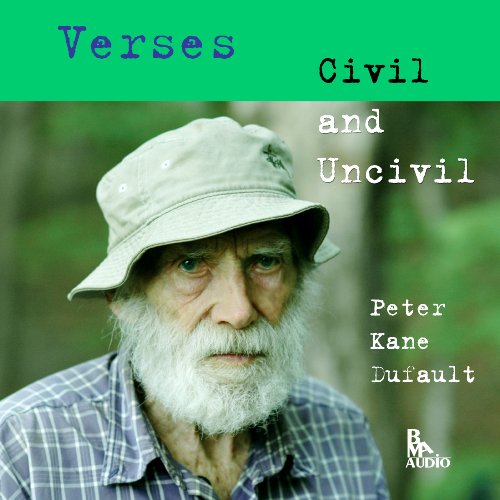
Poetry: “Goshawk” by Peter Kane Dufault

A friend of mine sent me an email the other day with an urging to check out a particular poem.  Here is her note:


When you have time, Manny, please look at this poem: 

       “Goshawk”   By poet Peter Kane Dufault

I happened upon it and was struck by its excellence yet violence. If you read it, tell me if it reminds you of a dark, shadowy likeness of Hopkins’ “The Windhover.’’ It really seems that way to me, a world without God.

I love it when friends ask me questions on literature.  It pricks something in me to investigate. 

First, you can find the poem at Poetry Nook,  but here’s the poem.


Goshawk

by Peter Kane Dufault


That harbinger of God's hardness, North

American Goshawk — storm-

grey above, ice-grey beneath — segment

of a winter azimuth — de-

tached herself from this morning and

seized a black hen and caromed

thirty yards through the soft snow, wrenching

feathers and flesh out, too

blood-crazy to kill clean. . . .


Tell me

if it's not hard how a haggard

hasn't even the hangman's mercy

but tears the heart out alive — that she

should have been made so;


and so, too, that when the dog

ran yapping and drove her off,

the grey crucifer levitated

in such a cold pride of windblown

lightness over the tines of the trees


you'd have forgiven her, even

if she could have torn

in that worse way there is:

with a word, never breaking the skin.


I had never heard of Peter Kane Dufault before.  He’s got a Wikpedia entry and a listing in Poetry Foundation, so he’s a poet of some merit.  He lived through most of the 20th century (1923-2013), fought in WWII, and even ran for Congress on an Anti-Vietnam War platform.  The Poetry Foundation bio note says he was highly thought of by some more well-known poets: “Poets such as Marianne Moore and Ted Hughes championed Dufault, as did New Yorker editor Howard Moss, who published the poet 44 times.”  Poetry Foundation lists six poems attributed to him, but none are as good as “Goshawk.”  Searching the internet you can find some two dozen poems of his.  Again, nothing I found as good as “Goshawk,” but of note you might want to read “After Boxing”  and “Paramath.”   

Perhaps the best of the obituaries is by Brad Leithauser in the New Yorker, published on June 7, 2013, several weeks after Dufault’s passing.  Here’s his opening:


A marvellous poet whom you’ve probably never heard of died some weeks ago. His name was Peter Kane Dufault, and at the time of his death he was a couple of days short of ninety. On the face of it, his lack of renown is surprising, for he had some prominent supporters, including Marianne Moore and Richard Wilbur and Ted Hughes and Amy Clampitt. He was also embraced by Howard Moss, the poetry editor of The New Yorker from 1948 until 1987. Dufault published forty-four poems in the magazine, nearly all of them during Moss’s tenure.

Leithauser characterizes Dufault as that poet we’d all wished we had known, a “pure poet” who lived his life in obscurity and simplicity.


It’s tempting to overstate the virtues of the recently dead, so I’ll resist declaring that, at the time of his death, Dufault was my favorite living American poet. But he was certainly among the five or six whose work counted most for me. In one way, he was preëminent: I came to think of him as the Pure Poet. If this was a romantic image, it was a romanticism he encouraged.

Perhaps if one had to reach for what Dufault’s themes centered around, I think this little characterization captures it.


He was constantly posing new theological questions, in an era often hostile to poetry of devotion. He looked hard at the natural world, then looked hard at its spiritual implications.

Here Leithauser captures Dufault’s style.


I first came upon him in the seventies, in “The New Yorker Book of Poems.” I fell hard for “In an Old Orchard,” with its abandoned farm “still pitifully gathering all / windfalls onto its damp lap of graves,” and looked up his two out-of-print collections, “Angel of Accidence” (1954) and “For Some Stringed Instrument” (1957). I didn’t know then that Marianne Moore had been a fan, but affinities between them were easy to spot: Dufault, too, had an eerily sharp eye for the more idiosyncratic dwellers of the animal kingdom. Manx cats and tarsiers and mud-dauber wasps and mastodons inhabited his stanzas. He was like her, too, in being quite fanciful in his imagery (an old turkey with a head “like a loading-hook from a drowned galleon,” a hefty starling seen as a “sampler-shape whose bid / to be a bird / suffers from thickness of the thread”) while always respecting his creatures’ fierce and inalienable reality: you never had the feeling that his was a denatured zoo, a menagerie of mere symbols. A reader was in danger of getting stung if he mistook one of Dufault’s wasps for an emblem.

It sounds like Dufault’s work is similar to Marranne Moore’s, who had a sharp eye for observation, a precise word or metaphor to capture it, and loved to write about animals for their wondrous nature.  Leithauser continues.


In 1993, a book of selected poems, “New Things Come Into the World,” appeared, published by a small press, Lindisfarne, which normally didn’t publish poetry. At that time, I’d never met Dufault, though we’d exchanged some letters. I reviewed “New Things Come Into the World” in the New York Review of Books, writing with that special charged eagerness that comes of introducing a little-known treasure to a potentially wide audience. I called him a “poet of vivid landscapes.” I called him “as fine an ‘animal poet’ as any American now going.” I compared him to Moore and Elizabeth Bishop and Clampitt and May Swenson.

Finally Leithauser felt a certain pride in knowing a poet of distinction that lived in obscurity.


Though he slowed down, creatively, in his last decade, he continued to write beautiful poems, and did so, nobly, in an undeserved obscurity. Now and then I’d come upon someone, in person or in print, who shared my enthusiasm, and I’d feel that clandestine bond which comes with membership in a small high-minded club. I felt this keenly when I read Ted Hughes’s blurb for a later Dufault collection, “Looking in All Directions” (2000): “So fresh and new and itself… wonderful stuff. Snatches those uncatchable moments—like snatching a butterfly out of the air—then letting it go undamaged. So nimble and delicate.”


###

Now to the poem. It’s an interesting poem.  It's not Gerard Manly Hopkins.  It's very visual, so it captures the reader.  Are there similarities to Hopkins?  This is a very different poem that “The Windhover.”  (I provided a detailedanalysis of Gerard Manly Hopkins’, “The Windhover.”)   It is quite possible Dufault is alluding to “The Windhover” but I just don’t see the interdependence.  Perhaps Dufault’s image of the goshawk “detaching herself from the “winter azimuth” is an allusion to the Hopkin’s image of  a “dapple-dawn-drawn Falcon,”  Or it’s coincidental imagery or Dufault just liked the image so much he reinvented it for his purpose.  An allusion is more than just reference; it requires significance, and I’m not getting the significance. 

Other than Dufault's use of alliteration I do not see other similarities.  Dufault does not use any real rhythm, sprung or conventional.  He's very prosaic, modernist, free verse, though his diction is terse, which gives it power, especially for a violent poem.  I'm baffled by Dufault's use of breaking words and phrases at the end of a line.  Hopkins does it to keep meter.  Not sure why Dufault does it.  Perhaps as an aesthetic capturing of the theme of ripping things apart?  That would be skillful on his part. 

Dufault's theme has been done many times: one finds in nature a certain viciousness, (he calls it a "hardness") and one points to God for it, either to condemn God, to "prove" God doesn't exist, or to point to some great spiritual meaning in the act of animals killing animals. 

Can you tell which of the three Dufault is expressing?  I think it's the latter but I'm not sure, and if it is the latter then what is this great spiritual meaning in the act of a hawk killing a chicken?  I've pondered it for a while.  He sees in the hawk gliding above a cross (“the grey crucifer levitated”), which is a nice metaphor, but what does it suggest?  Isn't Christ the one who gets killed and not the killer?

Why is the hawk the "harbinger" of God's hardness?  Is this an allegory?  A harbinger is one who comes ahead of another.  So is God going to come and destroy us?  Perhaps.  Or is the allegory a representation of the Calvinist interpretation of the crucifixion, where God's wrath is redirected on the Son and thereby satisfied?  I don't know.  And is that a reference to God at the end, imagining the hawk killing with a word instead of with violence (“if she could have torn/in that worse way there is:/with a word”)?  God creates with a word; Christ is the Word made flesh.  And why is killing through a word "the worse way"?  You got me. 

This may all hold together and be a great poem, but given that I have all these questions and still can't get beyond the surface events I wouldn't call this a great poem.  I do love how it reads.  Alliteration can be showy and stilted, but when done well as here it really drives the point as in the second stanza:


Tell me

if it's not hard how a haggard

hasn't even the hangman's mercy

but tears the heart out alive — that she

should have been made so

 And one marvels at the absolute power of the central violence in that opening:


          …de-

tached herself from this morning and

seized a black hen and caromed

thirty yards through the soft snow, wrenching

feathers and flesh out, too

blood-crazy to kill clean. . . .

The alliteration of “feathers and flesh” along with the hard C’s of “caromed,” “crazy,” “kill,” and “clean” adds to the very visual moment of struggle and brutality.  I am glad to have been introduce to Peter Kane Dufault.  I will have to remember him if I run across his work again.

 ###

In my search I found a couple of videos of Mr. Dufault.

First an extemporaneously composed poem criticizing America:


Second, here is a trailer to a documentary movie of his views” What I Meant to Tell You: An American Poet's State of the Union.”


He was definitely anti American, or of a different America to give him his due.  In his obituary Leithauser did say he would have edited out Dufault’s political poems.  They are not that good.  We would have disagreed vehemently, but still in my engagement on his life and this poem I grew to like Peter Kane Dufault.  Yes I can see how he was a “pure poet.”

 ###

Postscript:

I received a reply from my friend who had originally sent me the email on the poem. 

Her Comment:

I looked Peter Kane Dufault’s work up a little more and found that he wrote a poem called ‘’Peregrines,’’ and in that poem he quotes directly from ‘’The Windhover.’’ He had a rich imagination and an exceptional way with words but ‘’Peregrines‘ is not his best work. Unfortunately, this reader found it empty and meaningless. You mentioned that he was anti-American. Do you mean ‘’progressive left,’’ ‘’woke’’ anti-American?

My reply:

I really enjoyed "Peregrines"!  It's a poetic ramble, a jazzy improvisational piece that streams language around an emotion and theme.  It reminds me of the Beat poets, Lawrence Ferlinghetti in particular.  I have a secret crush for that poetry.  It's lesser poetry than more structured and sculpted but I find it fun.  My trash food addiction!  ;)


Dufault is an old time Liberal, someone of the Beat Generation.  I think that's a good analogy.  He’s definitely progressive and definitely "woke" but aren't they all?  In music he would be like the folk music types.  In fact he reminds me of Pete Seeger.  And amazingly they lived almost the exact same years (1919-2014).

Monday, June 26, 2017

List: 20 Classic Poems All Men Should Read

The website The Art of Manliness truly is one of the great website on the internet and one of my favorites.  Its mission statement claims it is “a blog dedicated to uncovering the lost art of being a man.”  It’s not about indulging in a hyper masculinity such as those ridiculous “professional” wrestlers or some other cartoon characterization of masculinity.  It’s about understanding and excelling at the various elements of a man’s life, such as clothing, shaving, family and fatherhood, sports, and manly skills.  If you’ve never surfed it, you should, and that goes for women too. 

The other week they had a post titled “20 Classic Poems Every Man Should Read” and it wanted to promote reading poetry as a manly pursuit.  From their post:

John Adams, one of the founding fathers of the United States, commended poetry to his son John Quincy. Both Abraham Lincoln and Theodore Roosevelt committed their favorite poems to memory. Ancient kings were expected to produce poetry while also being versed in warfare and statecraft. That poetry has fallen out of favor among men in the 21st century is a recent trend rather than the norm.

To help remedy this, we have compiled a list of 20 classic poems that every man should read. Spanning the past two thousand years, the poems on this list represent some of the best works of poetry ever composed. But don’t worry—they were selected for both their brevity and ease of application. Some are about striving to overcome, others about romantic love, and still others about patriotism. Whether you’ve been reading poetry for years or haven’t read a single line since high school, these poems are sure to inspire and delight you.

The list is somewhat questionable if you ask me.  Look it over.  Read them all.  I’m familiar with most of them.  I agree some are poems perfect for men.  A couple I don’t understand why they would be oriented toward manliness, and then some are rather testosterone filled that I think it does manliness a disservice.  Let me identify the ones I absolutely agree men should be familiar with:

1. "Ulysses" by Alfred, Lord Tennyson
2. "If-" by Rudyard Kipling
4. Sonnet 29 by William Shakespeare
6. "Mending Wall" by Robert Frost
15. "A Valediction: Forbidding Mourning" by John Donne
20. Ode 1.11 by Horace

So given I have read a fair amount of poetry in my life and given I consider myself a man—yes, in today’s world the biological fact of manhood doesn’t necessarily mean you consider yourself a man—I decided to create my own list of twenty classic poems for men.  These are poems I’ve been familiar with for most of my life, and somehow are endearing to me, and I think speak to the fullness of masculinity, true masculinity, not cartoonish masculinity.  Some you may be familiar with, some you may not.

Here is the list with links to the full poems.

1. “Do Not Go Gentle Into That Good Night” by Dylan Thomas

2. “The Wild Swans at Coole” by William Butler Yeats

3. “The Emperor of Ice Cream” by Wallace Stevens

4. “They Flee from Me” by Sir Thomas Wyatt

5. “At Melville's Tomb” by Hart Crane

6. “The Windhover” by Gerard Manley Hopkins

7. Henry Woos Katherine, Henry V, Act V, Scene II by William Shakespeare

8. “Upon Julia's Clothes” by Robert Herrick

9. “Gloire de Dijon” by D. H. Lawrence

10. “[Buffalo Bill 's]” by e. e. cummings

11. “The World Is Too Much With Us” by William Wordsworth

12. “Stopping by Woods on a Snowy Evening” by Robert Frost

13. “Water” by Robert Lowell

14. “La Belle Dame Sans Merci” by John Keats

15. “My Papa's Waltz” by Theodore Roethke

16. “The Death of the Ball Turret Gunner” by Randall Jarrell

17. “Canto I” by Ezra Pound

18. “The Collar” by George Herbert

19. “The Hunters in the Snow” by William Carlos Williams

20. “Mortal Limit” by Robert Penn Warren

So what makes these poems manly?  First they are all written from a man’s perspective, and all the authors are men. 

Second, they take on various aspects of a man’s life: fatherhood (“My Papa’s Waltz”) or hunting (“The Hunters in the Snow”) or a sailing voyage (Pound’s “Canto I”) or just a sort of mundane busyness (“Stopping by Woods on a Snowy Evening”).  They look at maturity from a male’s perspective, such as curbing one’s desire (“The Collar”) or the realization of time’s passage (“The Wild Swans at Coole”), and they look at a man’s relationship with God (“The World is too Much with Us” and “The Windhover”).  They look at various aspects of love, such as wooing of a young lady in Henry V or of a more Platonic friendship with a woman friend (“Water”), or of being captivated by a mysterious woman (“La Belle Dame Sans Merci”), or seduced (“Upon Julia’s Clothes) or aroused (“Gloire de Dijon”) or being used by women (“They Flee from Me”).  Finally there are a fair number of them that deal with death: a tragic death as a soldier (“The Death of the Ball Turret Gunner”) or the death of a gallant man (“Buffalo Bill’s” and “At Melville’s Tomb) or resisting death (“Do Not Go Gentle Into That Good Night”) or death represented as a brawny brute (“The Emperor of Ice Cream”).

Third, the language of the poems have a masculine tone, a masculine diction, or a masculine voice.  I don’t have the space to post every poem in entirety, but I want to give you a sampling from each, a sample I hope that captures that masculine diction or voice or just perspective.

From Dylan’s “Do Not Go Gentle Into That Good Night”:

Do not go gentle into that good night,
Old age should burn and rave at close of day;
Rage, rage against the dying of the light.

Though wise men at their end know dark is right,
Because their words had forked no lightning they
Do not go gentle into that good night. (l. 1-6)

From Yeats’ “The Wild Swans at Coole”:

But now they drift on the still water,
Mysterious, beautiful;
Among what rushes will they build,
By what lake's edge or pool
Delight men's eyes when I awake some day
To find they have flown away?  (l. 25-30)

From Stevens’ “The Emperor of Ice Cream”:

Call the roller of big cigars,
The muscular one, and bid him whip
In kitchen cups concupiscent curds.
Let the wenches dawdle in such dress
As they are used to wear, and let the boys
Bring flowers in last month’s newspapers.
Let be be finale of seem.
The only emperor is the emperor of ice-cream. (l. 1-8)

From Wyatt’s “They Flee from Me”:

They flee from me that sometime did me seek
With naked foot, stalking in my chamber.
I have seen them gentle, tame, and meek,
That now are wild and do not remember
That sometime they put themself in danger
To take bread at my hand; and now they range,
Busily seeking with a continual change. (l. 1-7)

From Crane’s “At Melville's Tomb”:

Compass, quadrant and sextant contrive
No farther tides ... High in the azure steeps
Monody shall not wake the mariner.
This fabulous shadow only the sea keeps. (l. 13-16)

From Hopkins’ “The Windhover”:

I caught this morning morning's minion, king-
   dom of daylight's dauphin, dapple-dawn-drawn Falcon, in his riding
   Of the rolling level underneath him steady air, and striding
High there, how he rung upon the rein of a wimpling wing
In his ecstasy! then off, off forth on swing,
   As a skate's heel sweeps smooth on a bow-bend: the hurl and gliding
   Rebuffed the big wind. My heart in hiding
Stirred for a bird, – the achieve of, the mastery of the thing. (l. 1-8)

From Shakepeare’s Henry Woos Katherine, Henry V, Act V, Scene II

[Henry] The princess is the better Englishwoman. I' faith,
Kate, my wooing is fit for thy understanding: I am
glad thou canst speak no better English; for, if
thou couldst, thou wouldst find me such a plain king
that thou wouldst think I had sold my farm to buy my        
crown. I know no ways to mince it in love, but
directly to say 'I love you:' then if you urge me
farther than to say 'do you in faith?' I wear out
my suit. Give me your answer; i' faith, do: and so
clap hands and a bargain: how say you, lady? (l. 121-130)

Herrick’s “Upon Julia's Clothes” (entire poem):

Whenas in silks my Julia goes,
Then, then (methinks) how sweetly flows
That liquefaction of her clothes.

Next, when I cast mine eyes, and see
That brave vibration each way free,
O how that glittering taketh me!

From Lawrence’s “Gloire de Dijon”:

When she rises in the morning
I linger to watch her;
She spreads the bath-cloth underneath the window
And the sunbeams catch her
Glistening white on the shoulders,
While down her sides the mellow
Golden shadow glows as
She stoops to the sponge, and her swung breasts
Sway like full-blown yellow
Gloire de Dijon roses. (l. 1-10)

From cummings’ “[Buffalo Bill 's]”:

Buffalo Bill ’s
defunct
               who used to
               ride a watersmooth-silver
                                                                  stallion  (l. 1-5)

From Wordsworth’s “The World Is Too Much With Us”:

….Great God! I’d rather be
A Pagan suckled in a creed outworn;
So might I, standing on this pleasant lea,
Have glimpses that would make me less forlorn;
Have sight of Proteus rising from the sea;
Or hear old Triton blow his wreathèd horn. (l. 9-14)

From Frost’s “Stopping by Woods on a Snowy Evening”:

My little horse must think it queer  
To stop without a farmhouse near  
Between the woods and frozen lake  
The darkest evening of the year.   (l. 5-8)

From Lowell’s “Water”:

Remember? We sat on a slab of rock.
From this distance in time
it seems the color
of iris, rotting and turning purpler,

but it was only
the usual gray rock
turning the usual green
when drenched by the sea. (l. 13-20)

From Keats’ “La Belle Dame Sans Merci”:

I met a lady in the meads
  Full beautiful, a faery’s child;
Her hair was long, her foot was light,
  And her eyes were wild.

I set her on my pacing steed,
  And nothing else saw all day long;
For sideways would she lean, and sing
  A faery’s song.  (l. 13-20)

From Roethke’s “My Papa's Waltz”:

The whiskey on your breath  
Could make a small boy dizzy;  
But I hung on like death:  
Such waltzing was not easy.

We romped until the pans  
Slid from the kitchen shelf;  
My mother’s countenance  
Could not unfrown itself.  (l. 1-8)

Jarrell’s “The Death of the Ball Turret Gunner” (entire poem):

From my mother’s sleep I fell into the State,
And I hunched in its belly till my wet fur froze.
Six miles from earth, loosed from its dream of life,
I woke to black flak and the nightmare fighters.
When I died they washed me out of the turret with a hose.

From Pound’s “Canto I”:

And then went down to the ship,
Set keel to breakers, forth on the godly seas, and
We set up mast and sail on that swart ship,
Bore sheep aboard her, and our bodies also
Heavy with weeping, and winds from sternward
Bore us out onward with bellying canvas,
Circe’s this craft, the trim-coifed goddess.
Then sat we amidships, wind jamming the tiller,
Thus with stretched sail, we went over sea till day’s end. (l. 1- 9)

From Herbert’s “The Collar”:

Away! take heed;
I will abroad.
Call in thy death's-head there; tie up thy fears;
He that forbears
To suit and serve his need
Deserves his load."
But as I rav'd, and grew more fierce and wild
At every word,
Me thoughts I heard one calling, "Child";
And I replied, "My Lord."  (l. 27-36)

From Williams’ “The Hunters in the Snow”:

The over-all picture is winter
icy mountains
in the background the return

from the hunt it is toward evening
from the left
sturdy hunters lead in

their pack the inn-sign
hanging from
a broken hinge is a stag a crucifix  (l. 1-9)

From Penn Warren’s “Mortal Limit”:

I saw the hawk ride updraft in the sunset over Wyoming.
It rose from coniferous darkness, past gray jags
Of mercilessness, past whiteness, into the gloaming
Of dream-spectral light above the lazy purity of snow-snags.

There—west—were the Tetons.  Snow-peaks would soon be
In dark profile to break constellations.  Beyond what height
Hangs now the black speck?  Beyond what range will gold eyes see
New ranges rise to mark a last scrawl of light?  (l. 1-8)


I hope the quotes from the poems were enticing enough to make you go read them all.  None of them are exceedingly long, except perhaps the Henry V scene.  Do you agree these all reflect masculinity in some way?  I know there are other aspects of masculinity, such as being a husband, which I did not cover.  Which poem would you exclude?  What other poems would you add?