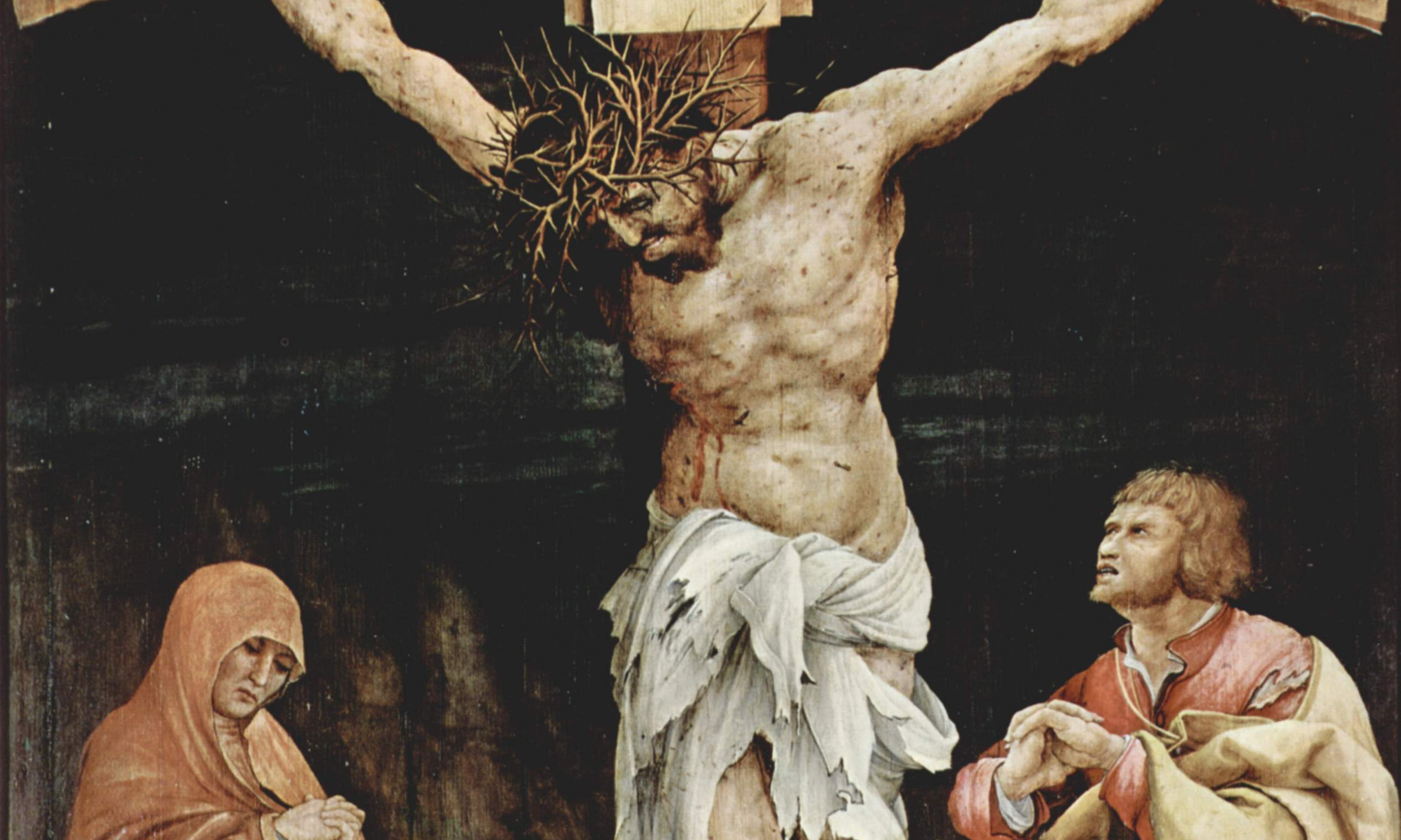
No, the Sermon of the Great Reversal is not
something you have missed in your learning of the New Testament.It’s my renaming of Luke’s Sermon on the
Plain, Luke’s version of the Beatitudes.On the Sixth Sunday of Ordinary Time, Year C, we are presented with
Jesus’s great sermon of Blessedness.I
call it the Sermon of the Great Reversal because Jesus reverses the values of
the world and presents us the values of the Kingdom of God.
Jesus came down with the Twelve
and stood on a stretch of level
ground
with a great crowd of his disciples
and a large number of the people
from all Judea and Jerusalem
and the coastal region of Tyre and
Sidon.
And raising his eyes toward his
disciples he said:
“Blessed are you who are poor,
for the kingdom of God
is yours.
Blessed are you who are now hungry,
for you will be
satisfied.
Blessed are you who are now
weeping,
for you will laugh.
Blessed are you when people hate
you,
and when they exclude
and insult you,
and denounce your name
as evil
on account of the Son
of Man.
Rejoice and leap for joy on that
day!
Behold, your reward will be great in
heaven.
For their ancestors treated the
prophets in the same way.
But woe to you who are rich,
for you have received
your consolation.
Woe to you who are filled now,
for you will be hungry.
Woe to you who laugh now,
for you will grieve and weep.
Woe to you when all speak well of
you,
for their ancestors
treated the false prophets in this way.”
~Lk 6:17, 20-26
Fr. Geoffrey Plant instructs
us on the language intricacies of this passage, and then enlightens us to the
Great Reversal.
This is going to seem odd that Dr. Brant
Pitre is going to provide the pastoral explanation of the passage, but he
does.In his explanation of the passage,
he connects it with the carrying of our daily crosses.
Where you find happiness is through the
detachment of earthly goods.Does Luke
mean to imply a spiritual detachment or an actual detachment?This might be more controversial, but I think
he means actual detachment, actual poverty, actual hunger, actual mourning, and
actual rejection.After all, isn’t that
Christ’s life?
Sunday Meditation: “Behold, your
reward will be great in heaven.”
John Michael Talbot’s “The Beatitudes” is the
proper hymn here.
I’m
not much of a movie goer, but when my Adult Faith Formation class at my parish
decided to skip our regular Monday meeting for a movie I didn’t have much of a
choice.So we canceled the class a
couple of Mondays ago to attend a movie at one of our local theaters dedicated
to Catholic Movie Night.I am not sure
if Catholic Movie Night is a once per month event or ad hoc, but they scheduled
a Catholic movie for this particular Monday night, and it wouldn’t be in the
theaters otherwise.The move was Looking
at Heaven: The Life of St. José Sánchez Del Rio, the life of a teenage
Catholic martyr during the The Cristero War in Mexico during the 1920s.
The
Cristero War was a rebellion/civil war within Mexico during a time the Civil
Government tried to squash and eliminate the Catholic faith.Churches were closed.Priests were hunted down and killed if caught
celebrating Mass.The rebellion became
known as the Cristo Rey (Christ the King) movement and their exclamation was Viva
Cristo Rey!A more comprehensive
movie of the rebellion was produced in 2012 titled For Greater Glory.
Looking
at Heaven has a narrower story of a young man, José Sánchez del Río, who at the age of fourteen joined the Cristero movement, was captured,
tortured, and martyred for his faith.The movie is in Spanish with subtitles, but I
will say I had no problem following the dialogue.José came from a devout Catholic family.His two older brothers had already joined the
Cristero soldiers, and when at the point that José could no longer tolerate the
persecution toward Catholics joined himself.The priest who led the Catholic group to the movie theater said the
movie depiction was very true to the known facts.
Let’s
go through a couple of video clips here.First there is a biographical clip on the life of José Sánchez del Río.
Next
is the Trailer for the movie.
Finally
if you want to see the whole two hour movie, it’s currently available on
YouTube.
Edit: It was taken down. Look for it every so often, you may find it back.
The movie is beautifully produced.The musical score was so perfect. The acting outstanding, especially given the
young actors.The cinematography was
beautiful, with interesting close in scenes and lavish outdoor vistas.And finally the story was wonderfully
rendered.It was a beautiful, heart
moving movie.I highly recommend
it.Five stars!
When
he was much younger I used to read to Matthew one book a year from The Chronicles of Narnia by C. S. Lewis.The Narnia series is comprised of seven books, and I read to Matthew
the first four.I was going in the newly
prescribed sequence as they have been currently laid out.This new sequence I have found out is
actually controversial, and, if I had to recommend a sequence, go by the order
in which they were written.The newly
prescribed order goes by chronological order of the time in Narnia.This new order doesn’t always have continuity
with the previous book of the sequence.It’s not a big deal since the stories are relatively self-contained but
a reader might miss a cue established in the previous book.Be that as it may, I read them in the new order
not knowing the logic of the sequencing.
The
fourth one, the last one I read to Matthew, Prince
Caspian, we finished in 2021.You
can see the links above in my annual reads.Matthew was ten years old at this point, and he rebelled.He rebelled on the start of the fifth book,
rebelled against me reading to him, rebelled against reading books in general,
and rebelled against stories!Was it me?LOL, it might have been.Reading to a child is supposed to be good for
them.And perhaps he have better grades
if he didn’t rebel.
The
fifth book was to be The Voyage of the Dawn Treader.I decided I have to
finish the Narnia series with or without him, and so it will have to be
without him.I started reading the The
Voyage of the Dawn Treader a few days ago, and I’m about half way through
already since I’ve had some forced time in bed.The books are fast and fun reads.This is the book that introduces Eustice, the Pevensie children’s
distempered cousin.The story begins
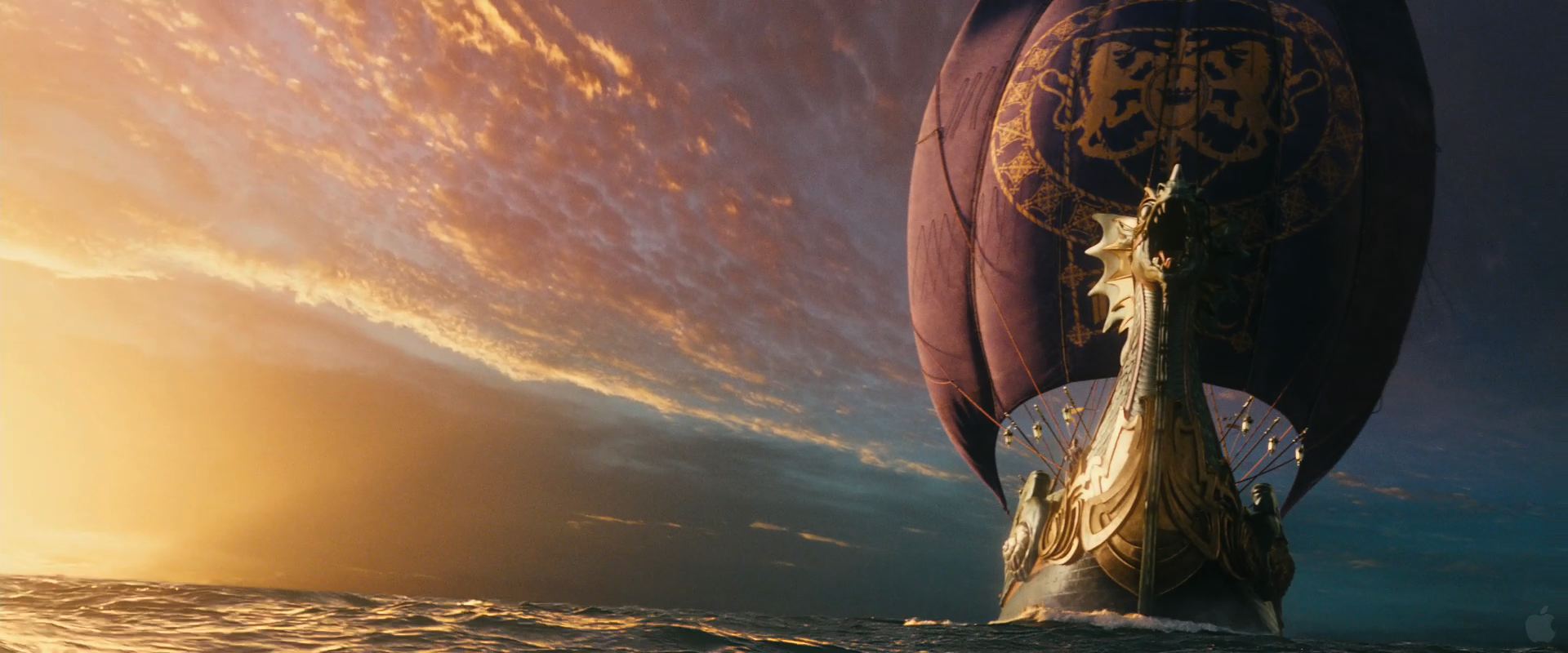
with Edmund, Lucy, and Eustice looking at a painting of an old sailing ship at
sea, and the painting soon becomes the portal into the Narnia world.The three are sucked into the ocean in the
image, rescued by the crew of the Dawn Treader, and find on board King
Caspian of Narnia sailing on an adventure to locate the seven lost lords of
Narnia.The three children, despite Eustice’s
objection (but what can he do) go on with King Caspian on this quest.
Early
in the quest there is a storm at sea, and I felt this was just marvelous writing
from C.S. Lewis.Let’s look at it.
But this pleasant time
did not last. There came an evening when Lucy, gazing idly astern at the long
furrow or wake they were leaving behind them, saw a great rack of clouds
building itself up in the west with amazing speed. Then a gap was torn in it
and a yellow sunset poured through the gap. All the waves behind them seemed to
take on unusual shapes and the sea was a drab or yellowish colour like dirty
canvas. The air grew cold. The ship seemed to move uneasily as if she felt
danger behind her. The sail would be flat and limp one minute and wildly full
the next. While she was noticing these things and wondering at a sinister
change which had come over the very noise of the wind, Drinian cried, "All
hands on deck." In a moment everyone became frantically busy. The hatches
were battened down, the galley fire was put out, men went aloft to reef the
sail. Before they had finished the storm struck them. It seemed to Lucy that a
great valley in the sea opened just before their bows, and they rushed down
into it, deeper down than she would have believed possible. A great grey hill
of water, far higher than the mast, rushed to meet them; it looked certain
death but they were tossed to the top of it. Then the ship seemed to spin
round. A cataract of water poured over the deck; the poop and forecastle were
like two islands with a fierce sea between them. Up aloft the sailors were
lying out along the yard desperately trying to get control of the sail. A broken
rope stood out sideways in the wind as straight and stiff as if it was a poker.
"Get below,
Ma'am," bawled Drinian. And Lucy, knowing that landsmen—and landswomen—are
a nuisance to the crew, began to obey. It was not easy. The Dawn Treader was
listing terribly to starboard and the deck sloped like the roof of a house. She
had to clamber round to the top of the ladder, holding on to the rail, and then
stand by while two men climbed up it, and then get down it as best she could.
It was well she was already holding on tight for at the foot of the ladder
another wave roared across the deck, up to her shoulders. She was already
almost wet through with spray and rain but this was colder. Then she made a
dash for the cabin door and got in and shut out for a moment the appalling
sight of the speed with which they were rushing into the dark, but not of
course the horrible confusion of creakings, groanings,
snappings, clatterings, roarings and boomings which only sounded more
alarming below than they had done on the poop.
And all next day and all
the next it went on. It went on till one could hardly even remember a time
before it had begun. And there always had to be three men at the tiller and it
was as much as three could do to keep any kind of a course. And there always
had to be men at the pump. And there was hardly any rest for anyone, and
nothing could be cooked and nothing could be dried, and one man was lost
overboard, and they never saw the sun.
The
short declarative sentences, the sensory nouns, the active verbs all create a
prose that puts the reader into the action.The nautical terms give it a sense of reality.I had to look up what “the poop” was on a
ship—the rear deck.I had to look up “reefing
the sail”—folding the sail over to reduce the area of the canvas to reduce the
force of the wind.I had to look up
“forecastle”—the raised cabin on the forward deck of the ship.And by the way, it’s not pronounced “fore
castle.”It’s pronounced “folk-sul.”I wonder how that came about.
The
great valley in the waves, the great hill of water higher than the mast, the
cataract of water over flooding the center of the ship, the listing of the
ship, the spray of waves, the pelting of rain, and Lucy holding onto the rail
struggling to get inside in the dark generates an intense scene.The “horrible confusion of creakings,
groanings, snappings, clatterings, roarings and boomings” adds sound to the
visual imagery.
This
havoc goes on for three days: “And all next day and all the next it went on. It
went on till one could hardly even remember a time before it had begun.”One could feel the immense weariness that the
characters had to undergo.It’s such a
well written scene.
Today
is Monday the 10th.So last Wednesday
night (the 5th) it felt a little funny in my chest.I thought I might be coming down with
something.I woke up Thursday nauseous with
dry heaves.I even teleworked in the
morning and took the afternoon sick.Eventually I was just out of it.It became hell.The fever wasn’t
high (less than 101F) but I wonder if I was even reading it right.I was in a delirious state.Waking up at one point I thought it was the
next day. I noticed on Friday morning from my daily pill box that I had already
taken Friday's meds.
It
felt like my body was encircled by some electric charge and was just trying to
survive.He was ready to have me go to Emergency
Room. My screaming out scared Matthew, who had come in the bedroom to check on
me. Probably should have sent me to the ER. If it were me watching someone else in that state I
would have too. I don’t think my wife ever realized what state I was in.I had crawled into bed in the middle of the
day and time seemed to vanish.
I
felt better on Friday morning but someone suggested I check for Covid. I had my
wife pick up a test kit and sure enough I tested positive. I called my doctor
and we set up a telehealth visit as they call it. He asked about my temperature
(which was oscillating between normal and 101F), looked over my recent blood
test on file, asked when I felt it come on, and prescribed Paxlovid.Doctor said I should quarantine through
Tuesday.I still had recurring chills
but after the first dose of Paxlovid that night I started to feel better. There
was no fever on Saturday, Sunday, nor today, but a general weakness.
Today
even the nasal congestion seems to have let up.I feel pretty well.I happen to
speak to a nurse today—about something else actually—and she said that today
the flu might be harsher than Covid.Hmm, I would agree except for what I experienced on Thursday
afternoon.When I spoke to the doctor on
Friday, he seemed surprised this was my first time getting Covid.Is it that common that everyone gets it now?
###
The
story has more to it than my experience.My wife had been sick before me and was still coughing and occasionally
feeling run down.I told her she should
check herself for Covid, so she got herself a test kit and also tested
positive.So this was beginning to make
sense.Her mother has been in a nursing
home for over a month and a half.More
on that below.But the floor of my mother-in-law’s
room had a Covid outbreak last week, and still does.My mother-in-law didn’t get Covid but my wife
must have picked it up in one of her daily visits.Nursing homes are just germ magnets,
depositories, and dispensaries.
My
wife’s symptoms were nothing as severe as mine, though hers seem to be lasting
longer, probably because she has not been prescribed Paxlovid.This makes me wonder why my body reacted so
to the Covid initially.It reminds me of
my first reaction to the Covid-19 vaccine which I detailed here several years
ago.That post was titled, “Knocked on My Butt By the Vaccine.”Perhaps I’m more reactive to Covid than
others.
###
My
mother-in-law fell at the beginning of the December.She fractured her skull, had a brain bleed,
they resolved the bleed, but that developed into blood clots, blood clots got
into her lungs which nearly killed her, but they resolved that.You can see I've honed that story down to its
bare elements from frequent retelling.She was three weeks in the ICU.The day before Christmas Eve she was discharged to a nursing home, and
she's been there since.As you can
imagine, this was pretty challenging, especially for my wife, and it still
is.
As
it happens, the nursing/rehab facility is very close to our house.It's less than a mile.We go back and forth regularly.The first time she seemed out of it but in
time her brain seemed to be getting sharper. Initially she responded very slow
and deliberately but now seems to have total comprehension. It took her a while
to get up out of bed.There was nothing
physically wrong with her body but perhaps atrophy from being in bed so
long.After a good month of rehab now
she has been able to walk up and down the floor with a walker and a cane, go up
and down stairs, and fully function as a solitary person.Today we even got the great news she will be
discharged from rehab facility at the end of next week.
###
So
let’s end with a song that came to mind as I reflected on my Thursday afternoon
delirium.It’s a song that came off the
Rolling Stones’ album that came out last year, “Sweet Sounds of Heaven” of the
album Hackney Diamonds.Many of you know I’m a big Rolling Stones fan,
and, while I would agree their later years have been of mixed quality, this
album is a glorious return to what I think is just short of their all time
great ones.I highly recommend Hackney Diamonds and perhaps one day I’ll
have a post on it.
For
now I’m going to highlight “Sweet Sounds of Heaven,” a gospel tune that is
uncharacteristically Christian in outlook for the Stones.Featured on the record are Lady Gaga (vocals),
Stevie Wonder (piano and organ), and saxophonist James King.Wow is not nearly expressive enough.Here’s the song first, but then I’ll explain
why this song came to mind after.
Here
are most of the lyrics as well.
Sweet
Sounds of Heaven
(Jagger/Richards)
I hear the sweet, sweet
sounds of Heaven
Fallin' down, fallin'
down to this Earth
I hear the sweet,
sweetest sounds of Heaven
Driftin' down, driftin'
down to this Earth
Bless the father, bless
the son
Hear the sound of the
drums
As it echoes through the
valley
And it bursts, yeah
Let no woman or child
Go hungry tonight
Please protect us from
the pain
And the hurt, yeah
I smell the sweet scents,
sweet
Sweet scents of Heaven,
Heaven
Tumblin' down, tumblin'
down
Tumblin' down to the
Earth (Oh)
I hear the sweet sounds,
sweet sounds
The sweet sounds, ooh,
the sweet sounds of children
You can't have a light
without a little shadow, yeah
Always need a target for
your bow and arrow
I want to be drenched in
the rain of your heavenly love
Oh, yeah, c'mon (Oh)
Let the music, let the
music play loud, play loud
Let it burst, let it
burst through the clouds, through the clouds
And we all feel the heat
Of the sun, yeah
Yeah, let us sing, let us
shout, let us shout
Let us all stand up proud
Let the old still believe
That they're young, yeah
Sweet, sweet sound
Sounds so sweet, oh, so
sweet
Sounds so sweet, so sweet
Heaven, Heaven
Down
Fallin' down, fallin'
down
To this Earth
That’s
pretty religious for Mick Jagger.You
know he supposedly had converted to Catholicism for his first wife, though he’s never spoken about any religious
upbringing, so I doubt it was much.
So
why am I reminded of this song?Well, lying
in bed in a delirious state felt so isolating, so other worldly that it felt
the end was a possibility.The verses, “No,
I'm not, not goin' to Hell/In some dusty motel/And I'm not, not goin' down/In
the dirt” resonate.If you’ve ever been
a way alone (business trips for me) in some crappy hotel, the isolation feels
overwhelming with perhaps a sense that if I died here no one would really
know.It’s actually a horrible feeling
that I’ve had more than once.Perhaps in
that delirious state, eyes half open in a darkened bedroom, alone and feeling
almost out of body, might be as close to a premonition of death as one
gets.At least as I’ve gotten.
But
then the sweet grace, the sweet sounds, the sweet sense of heaven came down and
revived me.Thank you Lord.
Edit: It's unclear whether Mick Jagger converted to Catholicism or even had a need to convert. From what I found on the internet, Mick Jagger's father, Basil Fanshawe “Joe” Jagger, had a Catholic funeral. There are places that claim Mick was raised Catholic. Still I doubt religion was a big part of his upbringing.
Having jumped over the Fourth Sunday in
Ordinary Time (because it was replaced with the Feast of the Presentation) we
come to Year C’s Fifth Sunday, and we see the apostles in their original
vocations as fishermen.The scene is
interesting.Jesus is standing by the
lake preaching and when two boats float by, He jumps into Simon Peter’s boat.He convinces Peter to go back out and cast
their nets into the deep.The lake is
referred to as Lake Gennesaret, which is another name for the Lake of Galilee.One
can get confused with the different names for the same places.The symbolism of a boat for the Church is
keen here.Jesus jumps into Peter’s boat
and guides Peter to catch fish.
While the crowd was pressing in on
Jesus and listening
to the word of God,
he was standing by the Lake of
Gennesaret.
He saw two boats there alongside the
lake;
the fishermen had disembarked and
were washing their nets.
Getting into one of the boats, the
one belonging to Simon,
he asked him to put out a short
distance from the shore.
Then he sat down and taught the
crowds from the boat.
After he had finished speaking, he
said to Simon,
"Put out into deep water and
lower your nets for a catch."
Simon said in reply,
"Master, we have worked hard
all night and have caught nothing,
but at your command I will lower the
nets."
When they had done this, they caught
a great number of fish
and their nets were tearing.
They signaled to their partners in
the other boat
to come to help them.
They came and filled both boats
so that the boats were in danger of
sinking.
When Simon Peter saw this, he fell
at the knees of Jesus and said,
"Depart from me, Lord, for I am
a sinful man."
For astonishment at the catch of
fish they had made seized him
and all those with him,
and likewise James and John, the
sons of Zebedee,
who were partners of Simon.
Jesus said to Simon, "Do not be
afraid;
from now on you will be catching
men."
When they brought their boats to the
shore,
they left everything and followed
him.
~Lk 2:22-40
I found that Fr.
Cajetan Cuddy’s exegesis to be more insightful than the typical reading of this
passage.Fr. Cajetan points out two
visions that come to head twice.That of
Peter and that of Jesus’s on fishing and then on the two visions of Peter’s potential.Notice how he points out the intersection of
the two visions.
For a pastoral homily I came across this very
young looking priest from Australia, Fr. Sam French.He gives a great homily.
He barely looks over twenty!Nice looking young man too.
Sunday Meditation: "Put out
into deep water and lower your nets for a catch."
Let’s get back to a John Michael Talbot
hymn.“The Jesus Prayer” is most
appropriate for today.
Two
months ago (Vol 26, No. 10, Dec 2024 issue) Magnificat magazine had a
super meditation in one of their post Christmas daily meditations.It came from Caryll Houselander (1901 -1953),
a British Catholic mystic who wrote in many Catholic publications.I have mentioned her before and posted
several posts on her book, The Way of the Cross.You can read my posts concerning Caryll Houselander here.
Houselander’s
insights are certainly devotional but I think her imagination can only be
described as mystical.This is no
different.What starts as an imagining
of what the innkeeper must have felt when he turned away the pregnant Mary in
Bethlehem turns into a contemplation of what we might all feel in our hearts
when Mary and the hidden Christ-child enter us.
I used to think how vexed
the innkeeper would have been had he found out who it was that he had turned
from his door, but I have learned to think that thankfulness would have
overcome vexation, because after all he had the quiet, dark stable outside and
he had lent that to the peasant girl in whom God was hidden.Anyway it was Christ himself who chose the
stable to be born in.He still chooses
unlikely places.In each of us, just
beyond the noise of our outward life, there is some place of silence and
darkness, an emptiness where, if we have courage enough, we are alone with
ourselves.There is this place of
silence, we know that God alone can content us, he alone is our peace.It is in this sacred place of the soul that
Christ wants to be born in us.He wants
to be born in us, that through us he may live in this world again and make it
new with his new life…young with his youngness, little with his littleness,
true with his truth, childlike with his childhood, pure with his purity.
It is in this dark place
of our heart that Christ wants the light of the world to begin to burn and from
its burning to radiate, until it shines back from the face of humanity.Here it is that he wants the light to begin
to shine in darkness and the life of the world to begin again…It is easy to see
the world is wounded, hard to see that its healing begins in our own
heart.We say, repeatedly and rather
pompously, that only a vital Christianity can save the world, but how do we
imagine that a vital Christianity begins?...Vital Christianity means a living
Christhood, a living Christ in man’s heart, and Christ can live in our hearts
only if he is born in them individually.He can be born in us only if we accept him in his own way, in
littleness, humility, secret, hidden and small, to be fostered and loved in us,
cradled and clothed in us, that he may grow naturally in our lives to his full
stature.
It requires faith to
believe that Christ will be born in man this Christmas, but much more faith to
believe that he will be born in our heart, that he could fulfill his will of
love in our own life, our life with so little radius for his light, so little
journeying for his feet, so small a distance for his hands to reach.(pp. 348-49)
“It
is in this dark place of our heart that Christ wants the light of the world to
begin to burn and from its burning to radiate, until it shines back from the
face of humanity.”Nothing starts without
Christ lighting up our hearts.
I
think there is also a message for all those who criticize the Mass or the
liturgical music or some other exterior form.
We say, repeatedly and
rather pompously, that only a vital Christianity can save the world, but how do
we imagine that a vital Christianity begins?...Vital Christianity means a
living Christhood, a living Christ in man’s heart, and Christ can live in our hearts
only if he is born in them individually.
Ultimately
it’s Christ in us, in the hearts of the vast majority of people that will
change the world, not some exterior form.Ultimately it’s conversion of heart—that light being turned on—is what
will bring the Kingdom of God.You can’t
force a conversion from exterior forms.It is the interior that must accept Christ.
I
love that last sentence with the image of the baby Jesus inside our hearts
reaching out to touch us, to be picked up.
With the Feast of the Presentation of the
Lord falling on a Sunday (it comes 40 days from Christmas Day and is
unmovable), the Fourth Sunday in Ordinary Time becomes the Feast.We do not push the Fourth Sunday to next
Sunday.The Fourth Sunday and the Feast
are one.
There is so much to this feast day that no
one homily can provide the full significance.Most homilies will touch on the holy family unit of fulfilling the law.Some homilies might focus on Christ being the
“light to the gentiles” and the cultural development of blessing of the
candles.Others will touch on Simeon’s
prophesy and the sword that will pierce Mary’s heart.Few will bring up the prophetess Anna, and
fewer will bring up the Holy Spirit that is all over the passage, even symbolized
in the sacrificial doves.The passage is
just so rich for meditation.
When the days were completed for
their purification
according to the law of Moses,
Mary and Joseph took Jesus up to Jerusalem
to present him to the Lord,
just as it is written in the law of the Lord, Every male that opens the womb shall be consecrated to the Lord,
and to offer the sacrifice of a pair of turtledoves or two young pigeons,
in accordance with the dictate in the law of the Lord.
Now there was a man in Jerusalem
whose name was Simeon.
This man was righteous and devout,
awaiting the consolation of Israel,
and the Holy Spirit was upon him.
It had been revealed to him by the Holy Spirit
that he should not see death
before he had seen the Christ of the Lord.
He came in the Spirit into the temple;
and when the parents brought in the child Jesus
to perform the custom of the law in regard to him,
he took him into his arms and blessed God, saying:
“Now, Master, you
may let your servant go
in peace, according to your word,
for my eyes have seen your salvation,
which you prepared in the sight of all
the peoples:
a light for revelation to the Gentiles,
and glory for your people Israel.”
The child’s father and mother were
amazed at what was said about him;
and Simeon blessed them and said to Mary his mother,
“Behold, this child is destined
for the fall and rise of many in Israel,
and to be a sign that will be contradicted
-and you yourself a sword will pierce-
so that the thoughts of many hearts may be revealed.”
There was also a prophetess, Anna,
the daughter of Phanuel, of the tribe of Asher.
She was advanced in years,
having lived seven years with her husband after her marriage,
and then as a widow until she was eighty-four.
She never left the temple,
but worshiped night and day with fasting and prayer.
And coming forward at that very time,
she gave thanks to God and spoke about the child
to all who were awaiting the redemption of Jerusalem.
When they had fulfilled all the
prescriptions
of the law of the Lord,
they returned to Galilee, to their own town of Nazareth.
The child grew and became strong, filled with wisdom;
and the favor of God was upon him.
~Lk 2:22-40
To explain the
passage, let’s turn to Dr. Brant Pitre.
The clip is
unfortunately cut off before Dr. Pitre addresses Anna’s role, but she is a prophetess
and the significance of prophesy is further emphasized.Here is the irony.Christ is being redeemed from a sacrificial
ritual at the Temple but we look ahead through the prophets of His actual
sacrifice on Calvery.
Fr. Joseph Mary of the Capuchin Franciscans
delivers a heart wrenching pastoral homily.
It doesn’t get better than that.
Sunday Meditation: “It had been revealed
to him by the Holy Spirit that he should not see death before he had seen the
Christ of the Lord.”
Since this passage is so rich Biblical,
theological, and cultural significance, I am going to present video clip that
captures the broad expression of the Feast.
Now when I get to that fourth mystery in the
Joyous Mysteries, I can appreciate the fullness of the mystery.I never really got all that before.I hope you can now appreciate it too.