
This is an
essay I put together to read to my Adult Faith Formation class at my parish a
few weeks ago. I found that many were
reading the Old Testament in a literal, denoted way as a fundamentalist Protestant
would read it. Actually this subject had
come up frequently over the years I led our Faith Formation. I decided to put it into an essay.

###
The Bible
is the inspired word of God. It is God
speaking to His people.
What does
inspired mean? It means that the Holy
Spirit had a hand in the writer’s generation of the work. It means that there is a Truth in the writing
and then under the Holy Spirit the work was selected because as St. Paul says it
“is useful for teaching, for refutation, for correction, and for training in
righteousness so that one who belongs to God may be competent, equipped for
every good work.” (2 Tim 3:14) No where does it say it has to be literally
true. It has to have truth.
God talks
to His people in various ways, in various forms of communication, that is in
various genres of literature. Some of
the genres included are legend, history, moral laws, liturgical rubrics,
prophecies, poetry, song, apocalyptic literature (dream states), maxims,
fables, and more. One of the most
frequently found in the Bible is history, but it is not a history as the modern
person would grasp. It is a history that
is focused on where the author prioritizes a moral to be learned over the exact
facts of what happened. The truth is the
moral, not necessarily the facts.
Every
genre speaks truth but it is the truth dictated by the form of the genre. Truth is in one of the four modes to read the
Old Testament: literal, spiritual (allegorical, moral, anagogical). The text does not always provide truth in all
four modes. The writer is writing in a
genre.
For a
Catholic to read and understand the Old Testament requires you to read it as
knowing the New Testament, that is in the light of Christ. You have to know and understand Jesus to know
what the meaning of the OT passage/book is, otherwise you will be reading it as
a Jew, and even then you will be missing the cultural context of Judaism. You cannot really understand the OT without
understanding Christ first.
Christ
overturns the OT Himself on more than one occasion.
-The woman
caught in adultery. By OT laws she
should have been stoned to death but Christ did not allow it. Jesus doesn’t exactly say there but the implication
was that the OT was lacking.
-But on
divorce not only does Jesus overturn the OT but He explains the theology.
Some
Pharisees approached him, and tested him,* saying, “Is it lawful for a man to
divorce his wife for any cause whatever?”
He
said in reply, “Have you not read that from the beginning the Creator ‘made them
male and female’
and
said, ‘For this reason a man shall leave his father and mother and be joined to
his wife, and the two shall become one flesh’?
So
they are no longer two, but one flesh. Therefore, what God has joined together,
no human being must separate.”
They
said to him, “Then why did Moses command that the man give the woman a bill of
divorce and dismiss [her]?”
He
said to them, “Because of the hardness of your hearts Moses allowed you to
divorce your wives, but from the beginning it was not so. (Mat 19:3-8)
The key words “Moses permitted you.” What Moses wrote down is not necessarily what God intended. But God allowed it to be written down. Why? At least two reasons: (a) it still contained truth. Marriage was still an important truth. (b) Because the people at the time were not ready to accept the hard truth of the real meaning of marriage. “Because of the hardness of your hearts…”
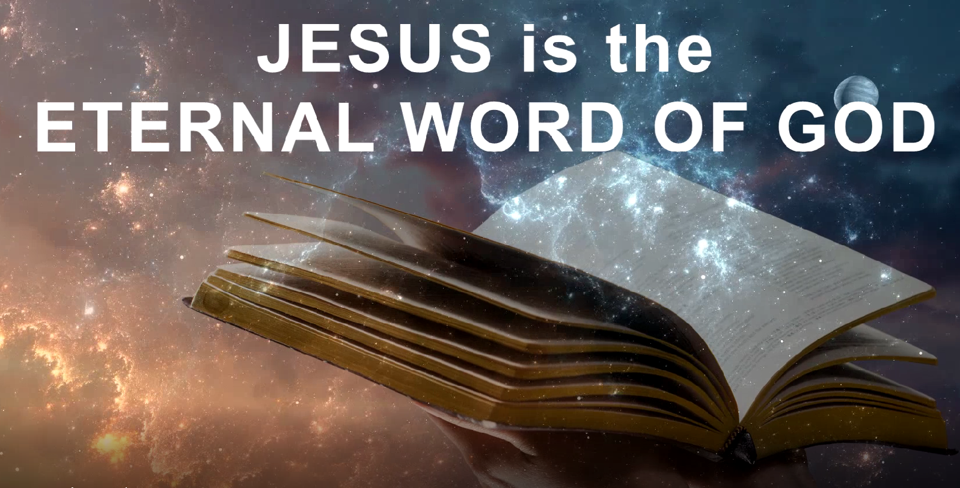
The Bible is a progression to Jesus, can only be understood in Jesus, and humanity needed to build to that understanding. Remember salvation history: Jesus came in the fullness of time: when the people of the covenant had experienced slavery, freedom, moral degradation, kingdom, civil war, fragmentation, and subjugation. It also required the development of the Greco-Roman world for the development of the language of philosophy and a stable government for the seeds of Christianity to grow. Christianity is not just an updated Judaism. It required the language of Greek philosophy to fully understand Christ. St. Augustine was a Platonist, St. Thomas Aquinas an Aristotelian.
Why is Genesis in the genre of legend and myth? Because the moral and religious concepts (a) would have been difficult if not impossible to convey if written into a non-fiction book form, (b) would not have been accessible to a people living in 1500 BCD, and (c) would not have been culturally integrated into a people’s heart. [Side note: Nothing against St. Paul but if we only had the letters of St. Paul to understand Christ and no Gospels, Christianity would never have taken root in people’s hearts.]
I remember hearing a Rabbi speak on Genesis and why it was written the way it was, especially the seven days of creation. His theme was, did you expect God to come to earth and present mathematical formulas, chemical equations, and astrophysics to the people living in the desert? He spoke to them with what they could understand.
As to legend in Genesis, what exactly is legend? Legend is a narrative that takes place in some distant history with some kernels of factual truths but the facts are vague. Adam and Eve and their children populated the world? It doesn’t match scientific history, and it doesn’t match evolution or genetic history.
So if Genesis is in the genre of legend and speaks in spiritual truths, why should I not believe in the Jesus and the Gospels as not just spiritual? Because the Gospels are not in the genre of legend. The Gospels are very specific as to their genre. They tell you. Here are a few places:
Luke 1:1-4
Since
many have undertaken to compile a narrative of the events that have been
fulfilled among us,
just
as those who were eyewitnesses from the beginning and ministers of the
word have handed them down to us,
I
too have decided, after investigating everything accurately anew, to
write it down in an orderly sequence for you, most excellent Theophilus,
so that you may realize the certainty of the teachings you have received.
John 1:6-7
A
man named John was sent from God.
He came for testimony, to testify to the light, so that all might believe through him.
John 21:24
It is this disciple who testifies to these things and has written them, and we know that his testimony is true.
1 John 1-5
What
was from the beginning,
what
we have heard,
what
we have seen with our eyes,
what
we looked upon
and
touched with our hands
concerns
the Word of life—
for
the life was made visible;
we
have seen it and testify to it
and
proclaim to you the eternal life
that
was with the Father and was made visible to us,
what
we have seen and heard
we
proclaim now to you,
so
that you too may have fellowship with us;
for
our fellowship is with the Father
and
with his Son, Jesus Christ.
We
are writing this so that our joy may be complete.
God
is Light.
Now this is the message that we have heard from him and proclaim to you: God is light, and in him there is no darkness at all.

This is not just the genre of biography. It is the genre of eyewitness testimony. It’s of facts, of witness, almost a testimony in a court room. People have analyzed the Gospels as evidence gathered by detectives for a courtroom process. You can still disagree with the validity of the testimony, but the genre speaks of witness. If you are a Christian, you are obligated to believe it. It is not legend or myth or even moral fable. Witnesses went to their death refusing to disavow that Christ lived and performed these miracles. This is very much different than anything in the Old Testament.
Faith and reason must align. The Catholic Church insists on it. You cannot have something true in faith but
untrue to reason. The primary reason we
know that God exists is through reason.
Remember the early paragraphs of the CCC—we know God exists through the
physical world in collaboration with reason.
Your whole theology would collapse if you denied reason in one case but
justified it in another. I gave the
example of St. Robert Bellarmine and Galileo:
“I say that if there were a true demonstration that the sun is at the center of the world and the earth in the third heaven, and that the sun does not circle the earth but the earth circles the sun, then one would have to proceed with great care in explaining the Scriptures that appear contrary, and say rather that we do not understand them than that what is demonstrated is false.”
Turn to Pope Pius XII in his
encyclical, Humani Generis—how
humanity was generated—addressed evolution and how to understand Genesis. Here is a key quote:
This letter, in fact, clearly points out that the first eleven chapters of Genesis, although properly speaking not conforming to the historical method used by the best Greek and Latin writers or by competent authors of our time, do nevertheless pertain to history in a true sense, which however must be further studied and determined by exegetes; the same chapters, (the Letter points out), in simple and metaphorical language adapted to the mentality of a people but little cultured, both state the principal truths which are fundamental for our salvation, and also give a popular description of the origin of the human race and the chosen people. If, however, the ancient sacred writers have taken anything from popular narrations (and this may be conceded), it must never be forgotten that they did so with the help of divine inspiration, through which they were rendered immune from any error in selecting and evaluating those documents. (paragraph 38)
This should not be leading you to a loss of faith as some have said to me. I am fortifying your faith. The reason we have such a growth in atheism is because of erroneous literal readings of scripture when they were not meant to be read that way in the first place.
This is not new nor is it “modernist,” if modernism is what you suspect. None of the great Catholic theologians Origen, Augustine, the Cappadocian Fathers, Thomas Aquinas, Robert Bellarmine read these passages in a literal way.
They read the scriptures understanding
the genre, the level of development of the people from a particular time and
place, and most importantly of a people who had not witnessed the incarnation—Jesus
Christ—to understand what the more important truths lay inside the narratives
of the OT.

No comments:
Post a Comment