"Love follows knowledge."
"Beauty above all beauty!"
– St. Catherine of Siena

Friday, November 4, 2016

Faith Filled Friday: Litany for the Holy Souls in Purgatory

This past Wednesday, November 2nd, was All Souls Day, a day of commemoration for our departed.  Katrina Fernandez at her Catholic Advice page on the Catholic website, Aleteia,  was asked about what to do to stay connected with the departed in our lives.  She provides a number of ideas, which I’ll let you go over to read, but I also added two in a comment box:

Here are two more things you can do Katrina.  (1) Save those funeral cards they hand out at a person's wake.  Keep them in a rubber band and every so often go through them with a little prayer.  (2) Keep a list of your dead.  My memory being what it is, I forget those who are not immediate family members.  I think praying for the dead is one of our biggest obligations as Catholics.

I thought I’d pass that along.  Now once you take out that cluster of funeral cards or open to your list, here’s a litany I just came across to use as a prayer.  As it turns out there are a number of Litanies for those in Purgatory, and you can do a search and they’ll come up.  But I really like this one, and so I’ll share it.



LITANY FOR THE HOLY SOULS IN PURGATORY

O Jesus, Thou suffered and died that all mankind might be saved and brought to eternal happiness.  Hear our pleas for further mercy on the souls of:

My dear parents and grandparents, my Jesus mercy!
My brothers and sisters and other near relatives, my Jesus mercy!
My godparents and sponsors of confirmation, my Jesus mercy!
My spiritual and temporal benefactors, my Jesus mercy!
My friends and neighbors, my Jesus mercy!
All for whom love or duty bids me pray, my Jesus mercy!

Those who have offended me, my Jesus mercy!
Those who have suffered disadvantage or harm through me, my Jesus mercy!

Those who are especially beloved by Thee, my Jesus mercy!
Those whose release is near at hand, my Jesus mercy!
Those who desire most to be united to Thee, my Jesus mercy!

Those who endure the greatest sufferings, my Jesus mercy!
Those whose release is most remote, my Jesus mercy!
Those who are least remembered, my Jesus mercy!

Those who are most deserving on account of their services to the Church, my Jesus mercy!
The rich, who now are the most destitute, my Jesus mercy!
The mighty, who now are powerless, my Jesus mercy!
The once spiritually blind, who now see their folly, my Jesus mercy!
The frivolous, who spent their time in idleness, my Jesus mercy!
The poor, who did not seek the treasures of heaven, my Jesus mercy!
The tepid, who devoted little time to prayer, my Jesus mercy!
The indolent, who neglected to perform good works, my Jesus mercy!
Those of little faith, who neglected the frequent reception of the Sacraments, my Jesus mercy!
The habitual sinners, who owe their salvation to a miracle of grace, my Jesus mercy!
Parents who failed to watch over their children, my Jesus mercy!
Superiors who were not solicitous for the salvation of those entrusted to them, my Jesus mercy!
Those who strove for worldly riches and pleasures, my Jesus mercy!
The worldly-minded, who failed to use their wealth and talents in the service of God, my Jesus mercy!
Those who witnessed the death of others, but would not think of their own, my Jesus mercy!
Those who did not provide for the life hereafter, my Jesus mercy!
Those whose sentence is severe because of the great things entrusted to them, my Jesus mercy!

The popes, kings and rulers, my Jesus mercy!
The bishops and their counselors, my Jesus mercy!
My teachers and spiritual advisors, my Jesus mercy!
The deceased priests of this diocese, my Jesus mercy!
The priests and religious of the Catholic Church, my Jesus mercy!

The defenders of the holy faith, my Jesus mercy!
Those who died on the battlefield, my Jesus mercy!
Those who fought for their country, my Jesus mercy!
Those who were buried in the sea, my Jesus mercy!
Those who died of apoplexy, my Jesus mercy!
Those who died of heart attacks, my Jesus mercy!
Those who suffered and died of cancer, my Jesus mercy!
Those who died suddenly in accidents, my Jesus mercy!
Those who died without the last rites of the Church, my Jesus mercy!
Those who shall die within the next twenty-four hours, my Jesus mercy!
My own poor soul when I shall have to appear before Thy judgment seat, my Jesus mercy!

Eternal rest grant unto them, O Lord, and let perpetual light shine upon them: For evermore with Thy saints, because Thou art gracious.

May the prayer of Thy suppliant people, we beseech Thee, O Lord, benefit the souls of Thy departed servants and handmaids: that Thou mayest both deliver them from all their sins, and make them to be partakers of Thy redemption. Amen.

Eternal rest grant unto them, O Lord.
And let the perpetual light shine upon them.
May their souls and the souls of the faithful departed, through the mercy of God, rest in peace. Amen.


Monday, October 31, 2016

Matthew Monday: A Knight’s Tale

No it’s not out of Chaucer’s Canterbury’s Tales, but Matthew went as a knight for Halloween this year.  People thought this was very original.  I think it was.

Here are some pictures. 


Here is he is running after making a stash of candy.  Man, he filled that bag up in less than an hour.  The dentist is not going to like this.


Finally I got a picture of him with my mother. 


Happy Halloween

Saturday, October 29, 2016

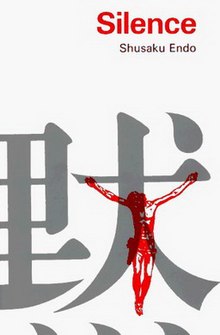
Silence by Shūsaku Endō, Part 3

You can read Part 1 of this series, here
You can read Part 2, here

Here’s an exchange Susan Margret and I had on the Goodreads Catholic Thought Book Club.

Susan Margret comments:

I just finished reading chapter two. I am anxious to learn the story behind the character, Kichijiro. When the priests first land on Japanese soil, Father Rodrigues suspects that Kichijiro may have betrayed them. He compares Kichijiro to Judas. He appears to be weak, lazy, and deceptive, possibly even hiding his Christian status from the priests. Kichijiro is an interesting character and I am wondering if he does turn out to be a Judas.

Also, I was not familiar with the painting that Endō described in chapter one. Father Rodrigues describes the painting as Christ having one foot on the sepulchre and holding a crucifix in his right hand. He says he saw the picture in Borgo San Sepulchro. I looked it up and it is a painting of The Resurrection by Piero della Francesca. I don't know if Endō made an error or I was looking at the wrong picture, but Christ is holding a flag, not a crucifix.

My Reply:

Susan, what page is that painting mentioned? I passed completely over it, and I now can't seem to find it. This book is so tightly packed that everything has significance. I'll look up the painting.

Susan Margret:

Manny, I think I am reading a different edition than you are. The painting is mentioned in the second to the last paragraph in Chapter one. The paintings of Christ as a shepherd, Christ as a King, and other descriptions of the face of Christ are mentioned in this paragraph.

Me:

Susan, you are absolutely right.  That is the painting.  I even had the paragraph highlighted in my book.  I don't know if I highlighted in this current read or when I first read it five years ago.  Here’s what I have highlighted:
(1) "What did the face of Christ look like?  This point the Bible passes over in silence."
(2) "his face bears the expression of encouragement it had when he commanded his disciples three times, 'Feed my lambs, feed my lambs, feed my lambs ... ' It is a face filled with vigor and strength. I feel great love for that face.”

The first note was over the word “silence.”  That’s the name of the novel, so it carries significance.  You’ll find that the word “silence” comes up frequently as we read.  I’ll get to that in a later chapter when it’s more important to the story.  But you can see how the sentence is worded intentionally tries to emphasize the word “silence.” 

The second note focused on the commandment to feed Christ’s lambs.  That is Rodrigues’ mission in going to Japan, to pastor (etymology: pasture) the lambs, the innocent new Christians of Japan. 

But I glossed over the painting completely.  And that is the painting, and here it is the Wikipedia entry:   


I have to say that is a magnificent painting.  I’ve seen it before but I never really thought about it until now.  And you’re right, he holds a banner, not a crucifix.  Is it an error by Endo or does Endo have Rodrigues make a mistake, and if so for what reason?   It is Christ triumphant.  My only hunch (on the painting, not the error) has to do with the ending, and I don’t want to spoil that yet for anyone.  Just a hunch, though, not sure. 

Rodrigues’ says that the face in the painting “is a face filled with vigor and strength. I feel great love for that face.”  That is a magnificent face.  If you Google Image “The Resurrection Piero della Francesca” you can get large details of the painting, especially the face.  Look here:  It does have vigor and strength. 

Kudos to you Susan for picking up on the painting. 


There’s a couple of more things I wanted to point out in these early chapters.  Sorry for being long winded in this first week, but I think the opening parts of a book are important to understand since it sets up reading the rest.  I shouldn’t be so intrusive in the other weeks.

In my first comment above, I highlighted that last paragraph in the prologue where the narrator says, “Today we can read…”  I asked, when is today?  And who is “we”?  Who is speaking there?

This brings us to identifying the narrative perspective, or more commonly referred to as the point of view.  No question, this is a modernist novel, and Endo using shifting perspective to achieve several objectives.  Chapters one through four are clearly in the epistolary form, that is letters home written by Sabastian Rodrigues.  Chapters five through nine, the point of view shifts to third person.  Chapter ten is in the form of a diary, written by a character who I think doesn’t even show up in the novel before this.  And the Epilogue is in the form of another diary of another character who also doesn’t show up before.  And then we have that authorial intrusion in the Prologue, “Today we can read…”  Discussing why the shifts and how they create a unified aesthetic is a discussion best held after completing the work.  But I do want to point out these shifts so you can see it as you read.

Another element in these early chapters that should be noted is ironyIrony plays an important part of the ending.  It’s subtly throughout the novel.  Here are three examples from Chapter 1.

First, Rodrigues repeats in his letter back home about the openness of the Japanese to Christianity:  “On this point Japan is undoubtedly, as Saint Francis Xavier said, 'the country in the Orient most suited to Christianity'.” (p. 16).   Further then he expresses his joy of meeting his first Japanese.  “Today I have wonderful news for you. Yesterday we at last succeeded in meeting a Japanese.”  So who does this Japanese who is open to Christianity turn out to be? 

What am I to say about this man, this first Japanese I ever met in my life? Reeling from excess of alcohol, a drunken man staggered into the room. About twenty-eight or nine years of age, he was dressed in rags. His name was Kichijiro.

The first Japanese turns out to be a drunken slob, hardly an ideal Christian.

Second, while the three Jesuits are stuck in Macau waiting for a ship that will take them to Japan, they finally get a Junk, a Chinese sailing ship, to take them. 

Anyhow, thanks to Father Valignano it looks as if we are going to get hold of a big junk. Yet how frail and passing are the plans of men! Today we got news that the ship is eaten up by white ants. And here it is terribly difficult to get hold of iron and pitch.  (p. 18)

“Frail and passing the plans of men” ironically will foreshadow the Jesuit’s plans.

Third, after Father Valignano expresses his belief that the situation in Japan has changed and that their mission should be aborted.  Juan de Santa Marta expresses his optimism:

'And yet our secret mission could with God's help turn out successful,' said Juan de Santa Marta, blinking his eyes fervently. 'In that stricken land the Christians have lost their priests and are like a flock of sheep without a shepherd. Some one must go to give them courage and to ensure that the tiny flame of faith does not die out.'  (p. 13)

That’s how the chapter opens.  But the chapter ends with the very person who expressed such optimism to die and not be able to make the trip at all.

At last our departure is only five days away. We have absolutely no luggage to bring to Japan except our own hearts. We are preoccupied with spiritual preparation only. Alas, I feel no inclination to write about Santa Marta. God did not grant to our poor companion the joy of being restored to health. But everything that God does is for the best. No doubt God is secretly preparing the mission that some day will be his.  (p. 22)


In all three cases the optimism is undercut with a harsh reality.  These subtle situational ironies set a rhythm and tone within the novel and foreshadow the ironic ending.  

Wednesday, October 26, 2016

Literature in the News: Christopher Marlowe Officially Credited as Co-Author of Shakespeare’s Three Henry VI Plays

This is big in the literature world. From NPR

Oxford University Press has announced that its new edition of the complete works of William Shakespeare will credit Christopher Marlowe as a co-author on the three Henry VI plays.

Despite years of controversy about the authorship of some of Shakespeare's work, this is the first time a major publishing house has formally named Marlowe as a co-author.

Christopher Marlowe is a 16th century British poet and playwright. The extent of his possible influence on (or even collaboration with) William Shakespeare is the subject of much academic scholarship, as NPR has reported, but for many years, mainstream academics had mostly derided efforts of independent scholars who challenged the authorship of plays attributed to Shakespeare.

Christopher Marlowe was a contemporary playwright to Shakespeare and a great poet in his own right.  Marlowe and Shakespeare were born the same year (1564) and Marlowe was a great playwright before Shakespeare.  But Marlowe died young at 29 years old, stabbed to death.  A lot of allegations swirled around Marlowe’s life, but it was uncertain if his murder was related.  It was alleged that Marlowe was an atheist and was to be arrested, but he died before that happened.  All those allegations are rather nebulous, if you ask me, so it’s hard to say what is true.  The NPR article goes on to say: 


Much of the authorship analysis is quite technical because it involves analyzing every word of entire plays, looking for patterns and clues.

I would love to see the analysis in some detail. However this is not a consensus opinion. The article continues:

Carol Rutter, a professor of Shakespeare and performance studies at the University of Warwick, told the BBC, "It will still be open for people to make up their own minds. I don't think [Oxford University Press] putting their brand mark on an attribution settles the issue for most people.

Rutter told the BBC, "I believe Shakespeare collaborated with all kinds of people ... but I would be very surprised if Marlowe was one of them."

As for how Marlowe's vocabulary and style could have made it into Shakespeare's work without direct collaboration, Rutter said: "It's much more likely that he started his career working for a company where he was already an actor, and collaborated not with another playwright but with the actors — who will have had Marlowe very much in their heads, on the stage, in their voices. ... They were the ones putting Marlowe's influence into the plays."


Either way, this is big in the Shakespeare criticism world. 

Here’s a little mini biography of Christopher Marlowe.


Monday, October 24, 2016

2016 Reads, Update #3

I’m almost a month behind from posting my reads for the third quarter.  I had a massive shift in plans, which I’m afraid will cause me not to complete the plans from the beginning of the year.  Most of the summer was taken up by the planned read of Thomas Mann’s Buddenbrooks: The Decline of a Family.  This was the main read for my year of emphasizing German literature.  I’m a good 75% of the way completed, but it is a long book, and I have trouble keeping my attention on one book for that long.  So I added two unplanned books. 

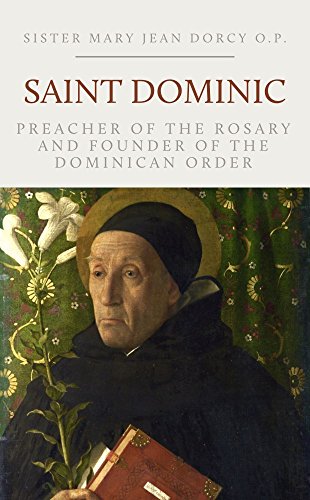
One was a biography of St. Dominic de Guzmán, titled after the subject and written by the Dominican Sister, Mary Jean Dorcy.  2016 is the 800th anniversary of the founding of the Dominican Order, and I wanted to commemorate the occasion in some fashion.  The other iun[lanned book was Romano Guardini’s Learning the Virtures that Lead you to God, which was a selection for my Goodreads Catholic Thought Book Club.  When it was selected as the Book Club read, I decided to join in despite my busy schedule.  It was a book that had count my attention a while back.  Actually Guardini, despite his Italian name, is actually German, so it kept with the German literature based theme.

I read a couple of short stories—neither all that interesting—and two essays, which each are about the length of a short story.  One was a a personal essay by D. H. Lawrence about traversing through the German Alps and coming across crosses at the peaks, and the other by Joyce Carol Oats on Emily Dickenson’s crush on a particular pastor who she traded letters with.  Both very good reads.

I also finished reading all the Psalms in both the King James Version and in the modern Ignatius RSV translations.  I am also continuing this year’s poetry read, Some Desperate Glory.

I don’t know what of my original plans I will be able to complete in the remaining couple of months.  I’ve taken another excursion by reading Shūsaku Endō’s novel, Silence.  It too is a Catholic Thought Book Club choice, but I’m afraid I was the one who pushed this book to be read. It will be coming out in December as a major motion picture directed by Martin Scorsese and I wanted to reread it before the movie.   Please join me in reading Silence.  I've been posting quite a bit on it.  I will certainly be able to complete Buddenbrooks, and then I will have to choose between some of the remaining planned reads.  I am still working on works from last year. 


Here are my completed reads for the third quarter.

Completed 3rd Quarter:

Saint Dominic, a biography by Sr. Mary Jean Dorcy, O.P.
“Clair de Lune,” a short story by Guy de Maupassant. 
“The Crucifix across the Mountains,” a personal essay by D. H. Lawrence.
“The Woman In White: Emily Dickinson and Friends,” an essay by Joyce Carol Oats.
“The State of Grace,” a short story by Harold Brodkey.
The Book of Psalms, (Psalms 101-150) KJV and Ignatius RSV Translations.
Learning the Virtues That Lead You to God, a non-fiction book of Christian devotion by Romano Guardini.


Currently Reading:

Julius Caesar: Life of a Colossus, a biography by Adrian Goldsworthy.
Artful Sentences: Syntax as Style, a non-fiction book on writing by Virginia Tufte.
Some Desperate Glory: The First World War the Poets Knew, a book of history and collected poetry by Max Egremont.
Buddenbrooks: The Decline of a Family, a novel by Thomas Mann.
Silence, a novel by Shūsaku Endō. 


Upcoming Plans:

 “Gods,” a short story by Vladimir Nabokov.
 “A Clean, Well-Lighted Place,” a short story by Ernest Hemingway.
“The Light of the World,” a short story by Ernest Hemingway.
“Marius,” Volume III of Les Misérables, a novel by Victor Hugo.


My completed works from earlier in the year are the following:

Completed: First Quarter

“Master and Man,” a short story by Leo Tolstoy.
Interior Castle, a non-fiction book on spirituality by St. Theresa of Avila.
“A Cup of Cold Water,” a short story by Edith Wharton.
“In the Garden of the North American Martyrs,” a short story by Tobias Wolff.
To Kill a Mockingbird, a novel by Harper Lee.
Prayer for Beginners, a non-fiction book of devotion by Peter Kreeft.
“Saint Dymphna,” a short story by Mary O’Connell.


Completed 2nd Quarter:

“A House of Gentlefolks,” a short story by Evelyn Waugh. 
The Noonday Devil: Acedia, the Unnamed Evil of Our Times, a non-fiction book by Jean-Charles Nault, O.S.B.
White Fang, a novella by Jack London.
The Book of Psalms, (Psalms 51-100) KJV and Ignatius RSV Translations.
“Hallelujah, Family,” a short story by Ludmilla Petrushevkaya, translated by Anna Summers.
“Wingstroke,: a short story by Vladimir Nabokov. 
“A House of Gentlefolks,” a short story by Evelyn Waugh.
“Miles City, Montana,” a short story by Alice Munro. 
“The Cabuliwallah,” a short story by Rabindranath Tagore. 
“1933,” a short story by Mavis Gallant.
“The Man Born Blind,” a short story by C. S. Lewis. 
“After the Storm,” a short story by Earnest Hemingway.


If you wish, you can read my 2016 Plans, here.  

You can read my 1st quarter update, here.  


And my 2nd quarter update, here


Thursday, October 20, 2016

Silence by Shūsaku Endō, Part 2

You can read Part 1 in this series, here.

It occurs to me that some people may have different introductions.  My edition, first published in 1980 by Taplinger Publishing Company, is the thirteenth printing and has a good size Preface written by the translator William Johnston.  If people have picked up the current edition that highlights the movie, you may not have the Translator’s Preface.  Does everyone’s edition have the Translator’s Preface? 

What I’ve seen is that some editions list a Forward by Martin Scorsese.  What I don’t know is if Scorsese’s Forward is in addition to the Translator’s Forward or in lieu of the Translator’s Forward.  I don’t know what Scorsese’s Forward says, but if you’re missing the Translator’s Forward, then you’re missing some information. 

The Translator’s Forward walks you through some of the history (which I’ve provided and gone beyond with my background post) but it also provides some context of Christianity in Endo’s life and in Japan.  For instance there is this statement Endo made in an interview:

“I received baptism when I was a child ..... in other words, my Catholicism was a kind of readymade suit ..... I had to decide either to make this ready-made suit fit my body or get rid of it and find another suit that fitted ..... There were many times when I felt I wanted to get rid of my Catholicism, but I was finally unable to do so. It is not just that I did not throw it off, but that I was unable to throw it off. The reason for this must be that it had become a part of me after all. The fact that it had penetrated me so deeply in my youth was a sign, I thought, that it had, in part at least, become coextensive with me. Still, there was always that feeling in my heart that it was something borrowed, and I began to wonder what my real self was like. This I think is the 'mud swamp' Japanese in me. From the time I first began to write novels even to the present day, this confrontation of my Catholic self with the self that lies underneath has, like an idiot's constant refrain, echoed and reechoed in my work. I felt that I had to find some way to reconcile the two. “

Johnston, the translator, goes on to explain:

'The mud swamp Japanese in me'.....Japan is a swamp because it sucks up all sorts of ideologies, transforming them into itself and distorting them in the process. It is the spider's web that destroys the butterfly, leaving only the ugly skeleton.

Besides Johnston’s point of how Japan transforms ideologies (which culture doesn’t?) the point I think is noteworthy in Endo’s comment is that Catholicism felt “in my heart that it was something borrowed,” that there was a real self “underneath.”  Well, that would be quite understandable, and I think it hints on understanding one of the themes in the novel.  That is, how does a religion from the other side of the world, take root in a vastly foreign culture? 

Johnston takes that theme and sets it beside another Shusaku Endo comment:

For a long time I was attracted to a meaningless nihilism and when I finally came to realize the fearfulness of such a void I was struck once again with the grandeur of the Catholic Faith. This problem of the reconciliation of my Catholicism with my Japanese blood ... has taught me one thing: that is, that the Japanese must absorb Christianity without the support of a Christian tradition or history or legacy or sensibility. Even this attempt is the occasion of much resistance and anguish and pain, still it is impossible to counter by closing one's eyes to the difficulties. No doubt this is the peculiar cross that God has given to the Japanese.

One of the themes in the novel is whether Japan is ready to receive Christianity, and how would it do so?  Was seventeenth century Japan ready for Christianity?  Well it was amazing how many converted in such a short order.  But obviously as will see in the end, the answer has to be no. 

Johnston also has a third quote which I think projects Endo’s thoughts on the future of Japan and Christianity:

 But after all it seems to me that Catholicism is not a solo, but a symphony ..... If I have trust in Catholicism, it is because I find in it much more possibility than in any other religion for presenting the full symphony of humanity. The other religions have almost no fullness; they have but solo parts. Only Catholicism can present the full symphony. And unless there is in that symphony a part that corresponds to Japan's mud swamp, it cannot be a true religion. What exactly this part is-that is what I want to find out.

What I think Endo is saying there is that Japan will one day have the grace of accepting Christianity—when it is ready—because whatever worldview it relies on now, is not the fullness of theology and humanity.  Only Catholicism can provide that.  As a Catholic, I find that the highest honor.  How wonderful. 


The Prologue formally starts the novel, and Endo starts with journeys in search of the Jesuit Christovao Ferreira, the leading evangelist in Japan, who if rumors are correct has apostatized.  There is the 1635 journey from Rome of five priests led by a Father Rubino (p. 7), and then the more central to the novel journey of 1637 of the three Portuguese Jesuits, Francisco Garpe, Juan de Santa Marta, and the protagonist of the novel, Sabastian Rodrigues (pp. 7-8).  These three had studied under Ferreira and could not believe their mentor had not chosen “glorious martyrdom” over apostatizing.  I don’t recall if the five Roman priests have any significance in the rest of the novel, but it’s interesting to note the different and contrasting rationales for their journeys.  While the Jesuits embark to investigate the Ferreira matter, the Roman priests go “to carry on an underground missionary apostolate and to atone for the apostasy.”  The priests go to atone while the Jesuits go for self-satisfaction.  I think it’s subtle, but there is a sense of egotism in the motivations of the Jesuits.

In broad strokes Endo outlines the Jesuits’ journey in the Prologue as they go from Europe to the Canary Islands then around the Cape of Good Hope to Gao in India and finally to Macau in China.  From Macau they will sneak into Japan (pp. 9-11).  But Juan de Santa Marta prematurely dies and while both Garpa and Rodrigues both make it onto Japanese soil, Garpa is soon split off, and so we have the journey of Rodrigues in search of Ferreira.  This journey constitutes the form of the novel, and it starkly—and I believe intentionally—recalls the form of the great early twentieth century novel, Joseph Conrad’s Heart of DarknessHeart of Darkness too has a journey of a European into a far different cultural world in search of, if not a spiritual leader, a man of incredible wisdom (“a very remarkable man”) who has deteriorated into depravity.  Charles Marlow goes up the Congo and into the heart of the African jungle to find the dissolute Mr. Kutz.  Sabastian Rodrigues goes into Japan to find the apostate Christovao Ferreira. 

And Heart of Darkness itself was modeled on a prior great work, Dante Alighieri’s Inferno section of his Divine Comedy.  In Dante’s Inferno, Dante the character travels into the heart of Hell, not to find a leader—though perhaps one could make the case he’s symbolically in search of his beloved Beatrice—but to find his way out of his midlife crises.  At the end of their journeys Marlow and Dante gain wisdom, and so too will Rodrigues.  It is interesting to note that in the Inferno hell is shaped in the form of a spiraling pit in which Satan is at the bottom.  Rodrigues too will come to a pit, though a very different type of pit, at the climax of his journey. 

But Endo doesn’t begin the Prologue with the journeys per se, but with Christovao Ferreira and his character before his apostasy.  

News reached the Church in Rome. Christovao Ferreira, sent to Japan by the Society of Jesus in Portugal, after undergoing the torture of 'the pit' at Nagasaki had apostatized. An experienced missionary held in the highest respect, he had spent thirty-three years in Japan, had occupied the high position of provincial and had been a source of inspiration to priests and faithful alike.

He was a theologian, too, of considerable ability, and in the time of persecution he had secretly made his way into the Kamigata region to pursue his apostolic work. From here the letters he sent to Rome overflowed with a spirit of indomitable courage. It was unthinkable that such a man would betray the faith, however terrible the circumstances in which he was placed. In the Society of Jesus as well as the Church at large, people asked themselves if the whole thing were not just a fictitious report invented by the Dutch or the Japanese.  (p. 3)

Endo needs to make clear up front what the goal of the journey is and why it is so startling that Ferreira has apostatized.  He was a man “of indomitable courage.”  The word courage and its antonym, cowardice, are important themes—or perhaps more accurately they are motifs—in the story.  The Jesuit’s courage to face “glorious martyrdom” is constantly contrasted with drunkard Kichijiro’s cowardice.  Apostatizing then is a failure to uphold one’s courage in the face of adversity, usually life risking adversity, and give into humiliating cowardice.  Here is probably a good point to understand why the central characters are Jesuits.  The Society of Jesus, started by St. Ignatius of Loyola, are the soldiers of the religious orders, soldiers not in the sense of martial arts, but of spiritual warfare.  Here are the opening two sentences of their rule:

Whoever desires to serve as a soldier of God beneath the banner of the Cross in our Society, which we desire to be designated by the Name of Jesus, and to serve the Lord alone and the Church, his spouse, under the Roman Pontiff, the Vicar of Christ on earth, should, after a solemn vow of perpetual chastity, poverty and obedience, keep what follows in mind. He is a member of a Society founded chiefly for this purpose: to strive especially for the defence and propagation of the faith and for the progress of souls in Christian life and doctrine, by means of public preaching, lectures and any other ministration whatsoever of the Word of God, and further by means of retreats, the education of children and unlettered persons in Christianity, and the spiritual consolation of Christ's faithful through hearing confessions and administering the other sacraments.

Notice the military analogies: “soldier of God,” “serve,” “defense,” “propagate, ‘”retreat.”  Their prayers are referred to as “exercises,” and their particular charism is to go out into hostile environment and preach and serve, knowing that they may be martyred.  And so Jesuits were sent out across the world to bring the Good News to places that had never heard it, such as Japan.  They were (and still are) tough men who were trained to go into inhospitable places.  They are the Navy Seals of the religious orders.  When I think of the Jesuit ethos, I’m reminded of the English Jesuit martyrs, who were trained on the Continent but inserted into anti-Catholic England to minister to the remaining Catholics.  I remember reading that when a particular group of Jesuits were ordained prior to entering England, those attending the ordination fell to their knees because they knew they were in the midst of sure martyrs and therefore future saints.  Many of the Jesuits expected martyrdom.  And so we hear Rodrigues refer to it as “glorious martyrdom.” 

We should also keep in mind that Ferreira and Rodrigues are based on actual historical figures.  Any changes from the historical facts that Endo makes in the novel is probably for some significant reason.  The details in the novel surrounding Ferreira seem to coincide with the historical facts.  The only possible change is the length of time Ferreira has spent in Japan.  In that opening paragraph of the Prologue I quoted above, it says he had been in Japan for thirty-three years.  According to his Wikipedia entry, Ferreira had been sent to Asia in 1609, which would make the year the Narrator is speaking 1642.  The novel is supposedly set in 1643, but I think that’s close enough for historical accuracy. 

Now with Rodrigues, Endo makes a significant change.  The character Rodrigues is based on is the person Giuseppe Chiara, an Italian Jesuit.  What is the significance of switching the central character’s nationality from Italian to Portuguese?  I can think of two.  One, the Jesuit Order was started by Spaniards and Portuguese, and so I think the switch emphasizes the Jesuit ethos of spiritual toughness.  I’m sure Italian Jesuits were just as tough, but Endo is trying to associate Rodrigues with the Order’s ideal.  Second, and perhaps more important, making the central character Portuguese links in the colonization context of the back story.  The Portuguese and Spaniards (and Dutch and English) were colonizers, while Italy not being unified until the nineteenth century, did not have colonies.  The fear the Japanese rulers had of being colonized is accentuated with Rodrigues being Portuguese.

There were a couple of other interesting tidbits I picked up in the Prologue.  One was repeated use of the number thirty-three.  As I mentioned Ferreira had spent thirty-three years in Japan, and two pages later in Ferreira’s letter to Rome he mentions six priests “remaining in the mountains for thirty-three days” (p. 6).  That’s hardly a coincidence.  Endo then mentions that Rodrigues was born in 1610 (p. 9), and if the novel is set in 1643 that would make him thirty-three years old when the events unfold.  Thirty-three is Christ’s age at the time of His passion, so to give Rodrigues the same age is to interconnect them.  In what way is Rodrigues Christ-like?  That’s something to explore, but it could also be to highlight a contrast.  In what way is Rodriguez not Christ-like might be as pertinent a question.  As to the repeated use of thirty-three, I’m not exactly sure what it’s supposed to suggest.  It does give the story a Christian aura.

The other tidbit comes at the end of the Prologue.

Today we can read some of the letters of Sebastian Rodrigues in the library of the Portuguese 'Institute for the Historical Study of Foreign Lands'. The first of these begins at the time when he and his companions heard from Valignano about the situation in Japan.  (p. 12)


This transitions into the novel’s first chapters which are epistles back home from Rodrigues.  But the narrator says “Today we can read…”  When is today?  And who is “we”?  Who is speaking there?  This leads to the question of the novel’s narrative perspective, which is complicated and for another discussion.  

Monday, October 17, 2016

Matthew Monday: Matthew Loses His First Tooth

It finally happened today at school.  It seemed that Matthew was late in losing his first baby tooth.  He’s seven years old and one and a half months.  Is that late?  I don’t know but it seemed the other kids lost theirs earlier.  The tooth had been loose for the longest time and today biting into an apple at school, it finally came out. 


And the school nurse put it in a baggy for him.  It’s there on the sticker by the shark’s tail.


Now it’s under his pillow and he expects money for it from the tooth fairy…LOL.  What should I give him?