"Love follows knowledge."
"Beauty above all beauty!"
– St. Catherine of Siena

Showing posts with label American Poetry. Show all posts

Friday, November 28, 2025

Poetry Analysis: "Fire Dreams" by Carl Sandburg

Today, a day to be thankful for many reasons, the least of which for friends and family, good health, dignified and stimulating work, we celebrate Thanksgiving.  This is truly an American holiday.  Over the years I’ve posted various types of Thanksgiving messages.  I’ve posted George Washington’s Thanksgiving Proclamation that is the root of the holiday, and I posted a heartfelt statement of gratitude to all my blogger friends, past and present.  I’ve posted on St. Paul’s prayer of gratitude at the beginning of his epistle to the Romans, and I posted on part of the Eucharistic prayer of thankfulness in the Mass.  There are other posts.  If you type in “Thanksgiving” in the little search box in the upper left of the blog you will pull them all up.

This year I wanted to post a Thanksgiving poem, and there are quite a few out there to select from.  It was hard choosing but I chose one that from the title one would not guess is on Thanksgiving.  It’s “Fire Dreams” by Carl Sandburg.  


At the time of Carl Sandburg’s death (1967) the United States was 191 years old if you consider 1776 as the birthdate of the country.  Sandberg lived to 89 years old, and so had lived through nearly half of the country’s lifespan.  And since he was born in 1878, he lived through the formative years of the United States entering the world stage and becoming the leader of the free world.  Sandburg saw the nation’s urbanization, the Spanish-American War, the two World Wars, the Great Depression, the African-American migration, the development of American music in Broadway musicals, Jazz, Gospel, and Rock and Roll, and so much more.  He was a distinctly American poet and, perhaps more specifically, a Midwestern and Chicagoan poet.  He won numerous awards in his lifetime and along with Robert Frost may have been seen as the two Great American poets in their day.  Sandburg’s poetry does not have the modernist sensibility, and so perhaps his reputation has come down after his life.  Still his poetry speaks to us simply and directly, especially as Americans. 


Fire Dreams

By Carl Sandburg


(Written to be read aloud, if so be, Thanksgiving Day)


I remember here by the fire,

In the flickering reds and saffrons,

They came in a ramshackle tub,

Pilgrims in tall hats,

Pilgrims of iron jaws,

Drifting by weeks on beaten seas,

And the random chapters say

They were glad and sang to God.


And so

Since the iron-jawed men sat down

And said, “Thanks, O God,”

For life and soup and a little less

Than a hobo handout to-day,

Since gray winds blew gray patterns of sleet on Plymouth Rock,

Since the iron-jawed men sang “Thanks, O God,”

You and I, O Child of the West,

Remember more than ever

November and the hunter’s moon,

November and the yellow-spotted hills.


And so

In the name of the iron-jawed men

I will stand up and say yes till the finish is come and gone.

God of all broken hearts, empty hands, sleeping soldiers,

God of all star-flung beaches of night sky,

I and my love-child stand up together to-day and sing: “Thanks, O God.”


It should be noted, the poem has a proem, an introductory line that sets the tone for the poem.  The proem stipulates the poem should be read aloud on Thanksgiving Day.

The poem body is in three stanzas of varying number of lines.  The first stanza has eight lines, the second eleven, and the third six.  The lines are in free verse of varying length, what I would call Whitman-esk lines.  Sandburg seems to have an affinity for Walt Whitman.  This poem is a very akin to Walt Whitman.

The situation is set in the first two lines: the poet sitting by a fire recalling the pilgrims of Plymouth Rock.  The poet imagines their ship which he refers to as a “ramshackle tub,” imagines the pilgrims in “tall hats,” and repeated three more times in the poem as “iron-jawed.”  Significantly, the poet imagines the pilgrims thanking God for the success of their voyage.  This is from where the tile, “Fire Dreams” comes from.  The poet is by what I imagine is a campfire (or perhaps a fireplace) and has images of the pilgrims come to mind.

In the second stanza the poet imagines the initial assistance the pilgrims received as they settled in the country.  The lines that imagines the assistance is superb: “For life and soup and a little less/Than a hobo handout to-day.”  Twice in the stanza they thank God and twice their “iron-jaw” disposition is referenced.  Interestingly, never in the poem does Sandburg allude to the Native-Americans who were the complementary half to the pilgrims’ feast.  The poet mentions his “Child of the West,” which I take is his child, and tells the child to remember the month of November and its association with the hunt that will provide for Thanksgiving, 

The third stanza brings the memory to a climax where the poet and his child stand up and “in the name of the iron-jawed men” and praise God in gratitude.  The pilgrim’s “iron-jaw” is referenced once more.

Several poeticisms should be highlighted.  First the imagery of the pilgrims stands in the foreground—the imagery of their hats, their sea voyage, their ship, Plymouth Rock, and the weather, and of course the pilgrim’s iron-jaw.”  The humility of accepting a “hobo” meal is also visually distinct.  In contrast, the image of the poet and his child by the fire stands in the background, and it seems that in the third stanza when the poet and child are ready to express their thanks they step into the foreground to take center stage.  That is a nice effect.

Second, the language of the poem is very American.  Hobo is an Americanism which seems to date to 1889.  The poem was published in 1918, about thirty years from when “hobo” was coined.  “Iron-jaw” is another Americanism and coined a little earlier than “hobo.”  Iron-jaw was coined in 1880.  While “pilgrim” and “ramshackle” are not Americanism, they have become much more frequent in the American lexicon.  They do feel American. 

Finally the “s” sound predominates the poem, and it does so to great effect.  We see and hear if spoken aloud the “s” alliteration of the words: saffrons, seas, soup, since, sleet, sang, says, sleep, so, spotted, star, and I think I may have missed a few still.  That is quite an amount in such a short poem.  Even more remarkable is the frequent ending of the words with the “s” sound.  Notice all the plurals: pilgrims, saffron, reds, seas, jaws, and so on.  I’m not going to list them all but Sandburg seems to go out of his way to make words plural.  He also chooses words that naturally end with “s”: less, West, and most importantly, “Thanks.”  The cumulative effect of all the “s” sounds prepares the listener for the climactic moment when the poet and child “stand” together and “sing,” “Thanks, O God.”  All those “s” prior to the last line prepare the reader/listener for the poet to stand into the foreground and repeat the words from the pilgrim’s lips.

What a wonderful poem.

Happy Thanksgiving all!


Monday, May 27, 2024

Poetry Analysis: “Rouge Bouquet” by Joyce Kilmer

I post this poem in honor of Memorial Day.  I don’t think I have ever heard of the poet Joyce Kilmer.  But I stumbled across this poem and thought it fitting for a Memorial Day commemoration. 

According to Wikipedia, Kilmer was born in New Jersey, published several books of poetry, volunteered for World War I in the United States Army, and was killed by a sniper in France in July of 1918, some three and a half months before the war would end.  Though relatively forgotten today, he was a poet of some distinction in his day.  He wrote on his Catholic faith and was compared to his contemporary in England, G.K. Chesterton.  The one poem he is remembered for today is a poem called “Trees,” but frankly I thought “Rouge Bouquet” to be much better poem. 


Rouge Bouquet

By Joyce Kilmer


In a wood they call the Rouge Bouquet

There is a new-made grave to-day,

Build by never a spade nor pick

Yet covered with earth ten metres thick.

There lie many fighting men,

    Dead in their youthful prime,

Never to laugh nor love again

    Nor taste the Summertime.

For Death came flying through the air

And stopped his flight at the dugout stair,

Touched his prey and left them there,

    Clay to clay.

He hid their bodies stealthily

In the soil of the land they fought to free

    And fled away.

Now over the grave abrupt and clear

    Three volleys ring;

And perhaps their brave young spirits hear

    The bugle sing:

“Go to sleep!

Go to sleep!

Slumber well where the shell screamed and fell.

Let your rifles rest on the muddy floor,

You will not need them any more.

Danger’s past;

Now at last,

Go to sleep!”


There is on earth no worthier grave

To hold the bodies of the brave

Than this place of pain and pride

Where they nobly fought and nobly died.

Never fear but in the skies

Saints and angels stand

Smiling with their holy eyes

    On this new-come band.

St. Michael’s sword darts through the air

And touches the aureole on his hair

As he sees them stand saluting there,

    His stalwart sons;

And Patrick, Brigid, Columkill

Rejoice that in veins of warriors still

    The Gael’s blood runs.

And up to Heaven’s doorway floats,

    From the wood called Rouge Bouquet,

A delicate cloud of buglenotes

    That softly say:

“Farewell!

Farewell!

Comrades true, born anew, peace to you!

And your memory shine like the morning-star.

Brave and dear,

Shield us here.

Farewell!”

The poem is wonderfully set to music in this video,  I really enjoyed this, and highlights the musicality of the poem.


The poem is divided into two halves.  The first half identifies the woods called Rouge Bouquet where a number of soldiers lost their lives in a battle.  The second half commemorates their sacrifice from the viewpoint of those in heaven.  Both halves end with a stream of bugle notes, endowing the melody with song lyrics.

The meter is roughly iambic, but the length of each line varies.  It has a ballad sense, coming I think from the alternating four and three feet lines.  I suspect the poem was written while Kilmer was a soldier and perhaps published posthumously without editing.  But I’m only speculating.  The poem is fine in its improvisational style.

The central image I think is the name given to the woods, Rouge Bouquet.  Rouge alludes to the red blood that is spilled, and bouquet imagines the trees of the woods as a bouquet of flowers, a bouquet that would be placed on grave sites.  So the woods become the cemetery of which the soldiers are buried.

The bugle plays two songs, one for each half of the poem.  Both are melancholic.  The first song coaxes the dead to eternal rest.


“Go to sleep!

Go to sleep!

Slumber well where the shell screamed and fell.

Let your rifles rest on the muddy floor,

You will not need them any more.

Danger’s past;

Now at last,

Go to sleep!”

The second song bids the fallen adieu and will be honored in our collective memory.


“Farewell!

Farewell!

Comrades true, born anew, peace to you!

And your memory shine like the morning-star.

Brave and dear,

Shield us here.

Farewell!”

Kilmer in the second half has St. Michael, the archangel, a sort of military angel himself, welcome the dead souls into heaven. 

I also loved this quatrain from the first half for its elegance:


For Death came flying through the air

And stopped his flight at the dugout stair,

Touched his prey and left them there,

    Clay to clay.

That is a nice, poetic way of saying unto dust you returned, the clay of flesh to the clay of earth. 

Perhaps the poem was apocryphal.  Joyce Kilmer himself would shortly be killed and returned to clay.


May we remember all those who have died for our country.


Tuesday, September 26, 2023

Poetry Analysis: “As Imperceptibly as Grief” by Emily Dickinson

I’ve been really captured by this Emily Dickinson poem, and I have been meditating on it for a while now.  Let me share my thoughts.  Like most of Dickinson’s poems, this poem is untitled.  The poems were ultimately numbered when published in the scholarly collection by Thomas H. Johnson in 1955.  Dickinson knew nothing of the numbering.  My Johnson edition reaches a number of 1775 poems, an incredible opus, all but ten unpublished in Dickenson’s lifetime.  If you are not familiar with Dickinson’s biography, you can read the Wikipedia entry.  In summary, she was a reclusive woman, unmarried, living in Amherst, MA, writing poetry all of her life and saving them in boxes with few people even aware of them.   Like all her untitled poems, which I believe were almost all, the opening line usually serve as the poem’s title.  “As Imperceptibly as Grief” is number 1540, written in 1865 when Emily was about 35 years old.  The numbering does not reflect a chronological ordering.  Here is the poem.


As Imperceptibly as Grief (1540)

By Emily Dickinson


As imperceptibly as Grief

The Summer lapsed away —

Too imperceptible at last

To seem like Perfidy —

A Quietness distilled

As Twilight long begun,

Or Nature spending with herself

Sequestered Afternoon —

The Dusk drew earlier in —

The Morning foreign shone —

A courteous, yet harrowing Grace,

As Guest, that would be gone —

And thus, without a Wing

Or service of a Keel

Our Summer made her light escape

Into the Beautiful.


So what initially captured me was this amazing simile in the poem’s first two lines: “As imperceptibly as Grief/The Summer lapsed away —“  That is a stunning enough simile but there’s more.  The rest of the poem is roughly a description of how summer ends but because Dickinson inverts the normal simile structure—here normal would be “the summer lapsed away as imperceptibly as grief”—the poem becomes just as much about the nature of grief as the end of summer. 

The poem is made up of sixteen lines, four quatrains in common meter.  This is also called a common measure in that the meter alternates between iambic tetrameter (four iambic feet) and iambic trimester (three iambic feet).  Common meter is used in a lot of English hymns such as “Amazing Grace, how sweet the sound,/That saved a wretch like me!//I once was lost, but now am found,/Was blind, but now I see.” 

Quite a few of Dickenson’s poems are written in this common measure form, and one can’t but help feel the allusion to the themes of hymns.  But there is one important distinction that Dickinson makes in her use of the form from hymns.  While the form calls for a rhyme in the second and fourth lines, Dickinson refuses to give us full rhymes, but ends the lines with slant rhymes, sounds which are of similar sound but not identical.  Here are the rhymed sounds of the four quatrains: away/perfidy, begun/afternoon, shone/gone, keel/beautiful.  Away/perfidy, keel/beautiful don’t even half rhyme but end in the same letter, the first a vowel, the second a consonant. 

One can write a book about Dickinson’s use of slant rhyme, and I would not be surprised if there are several, but to what end are her use of slant rhymes?  First they add tension.  Given the expected rhythm you expect a full sound rhyme, but the unfulfilled sound adds tension which she can either resolve as in a musical piece or leave in tension.  Second I think the slant rhymes provide a contrast to the idealism of hymnal subject matter and make her subjects less idealized and more grounded in a non-perfect reality. 

Her use of capitalization is also odd, and in this poem she capitalizes even more than typical.  There are fifteen capitalized nouns in the poem, one for each line but the third.  This use of capitalized nouns was common in the 17th and 18th centuries (see poems by John  Milton, George Herbert, or Alexander pope) and as far as I can tell there were four reasons for capitalizing nouns mid-sentence in those centuries.  (1) It was a cultural absorption from early European printing conventions; German still capitalizes some mid-sentence nouns.  Emily Dickinson is supposed to have known German, but this still doesn’t explain why she uses it.  (2) Nouns of personification were capitalized.  There are four or five nouns of personification in this poem: “Nature,” “Dusk,” “Morning,” “Grace,” and possibly “Guest,” which could ambiguously be a personification or the name as a proper noun.  (3) Nouns were capitalized because it emphasized important concepts, and, more specifically along that line of thinking, (4) nouns were capitalized because they had a religious association. 

By the 19th century this use of capitalized nouns mid-sentence had pretty much disappeared.  Dickinson is reverting back to something archaic and obsolete.  Why?  You could make the argument that Dickinson has all four points in mind, but I think the allusion to a religious dimension is paramount on her mind.  The capitalization of “Quietness,” “Twilight,” “Dusk,” and “Morning” I think is her attempt to elevate the nouns to a religious phenomenon.  She even calls the “Morning” a “courteous and harrowing Grace.”  So with that, I think the poem should be read within a hermeneutic of nature endowed with the numinous.  Even “Wing” or “Keel” or “Summer” itself, and, therefore, even “Grief” take on a religious connotation.

Her overly use of dashes are also idiosyncratic.  Here I think they are used not for thematic reasons but for mechanical reasons.  Her use of dashes are all at the end of lines—in other poems she uses them internal to lines as well—and function as a means to slow the reader down.  Where she places a dash, she wants to prevent the reader from reading the next line as if it were an enjambment, one line flowing into the next continuously.  Dickinson wants to ensure an end stop, for instance, at “the Summer lapsed away” before moving to “too imperceptible at last.”  The third quatrain has the most dashes, three of the four lines.  Here she is segregating parallel thoughts “The Dusk drew earlier in —The Morning foreign shone —A courteous, yet harrowing Grace…”  It’s not surprising that the first three quatrains all end with a dash, and that the fourth has no dashes because she wants the speed of the lines to accelerate to a climax.

The aesthetics of the poem is shaped around a duple rhythm.  Just as Dante’s aesthetics for his Divine Comedy is shaped around a scheme of three (for the Trinity and other reasons) Dickinson’s aesthetic form here revolves around two, not the twoness of duality (which would imply opposition) but the twoness of doublings which implies a yoking together of concepts.  The rhythm is a perfect unstressed/stressed iambic throughout, and each quatrain divides perfectly into two halves, and each half of a quatrain segments its thought in half.  You can find twos everywhere.  Even the image of a keel in her final quatrain implies a yoking together of two parts, whether she is drawing from the construction of a boat or more likely here the breastbone of a bird, also referred to as a “keel,” which anchors both sets of  a bird’s wing muscles.  This aesthetic of twoness—duple rather than dual—reflects and accentuates the yoking together of grief and of fading summer.

The poem is a dramaturgical unfolding of the dissipation of summer ending and simultaneously the dissipation of grief ending.  Let’s look at summer first.  The opening quatrain is a statement of theme: imperceptibly and with sudden awareness, summer has ended.  It has ended so gradually that one can’t even attribute a sense of betrayal (“Perfidy) or treachery.  Why should there have been betrayal?  Because one doesn’t typically want summer to end.  If spring is the budding of life, summer is the blossom of fulfillment.  As William Carlos Williams said, "In summer, the song sings itself."  As Wallace Stevens said, "The summer night is like a perfection of thought."  Or perhaps most simply as Brian Wilson of The Beach Boys said, "Summer means happy times and good sunshine."  And so, if summer leaves abruptly, it is a treachery; if summer leaves imperceptibly, the deceit is unnoticeable.

The next two stanzas dramatize the process of summer fading away.  Dickinson captures a perfect late summer moment: “a Quietness distilled.”  Can quietness actually be distilled?  It’s either quiet or not, but her use of “distilled” is her means of alluding to the sublime and to the transcendence.  There is a religious allusion to this moment, and perhaps to the process—"Nature spending with herself/[a]Sequestered Afternoon.”  Dickinson in three successive lines slips in the treachery.  The summer twilight moment goes from afternoon to dusk to morning.  Her use of verbs and gerunds emphasize the transience of the moment: “lapsed,” “distill,” “spending,” “drew,” and “gone.”  And so just as one day passes to the next, the summer has passed, as a “guest” that leaves in the morning.  And this passing is a “harrowing Grace,” which could be rephrased as an “acutely painful blessing,” an oxymoron.  What nature lovingly provides is a grace, but, to our heart’s discontent, it is transient, it has passed.

The final quatrain dramatizes the “Summer’s light escape” with a flight imagery, even though summer takes off without a wing or a keel.  (Keel could also be a boating image but keeping with the wing I think it coordinates best with bird flight.)  Dickinson offers a final surprise and projects in the last line the flight into the “Beautiful.”  This is to put the summer experience into its final transcendence, captured as a Keatsian (the poet John Keats) sublimity.  Indeed, Dickinson’s poem seems to owe something to Keats’ “Ode to a Nightingale.”  (“Away! away! for I will fly to thee,/Not charioted by Bacchus and his pards,/But on the viewless wings of Poesy”)  There too grief and summer and transcendent beauty come together, though grief there is in opposition to beauty,  Dickinson’s summer flight into the “Beautiful” enshrines the summer into memory.  How many songs are there about the memory of a summer love?  Many.

As I said, this poem is just as much about the passing of grief as the passing of summer.  Substitute grief in the poem for summer.  In the first stanza, the passing of grief is a perfidy just like that of summer.  How can the passing of grief be a treachery?  Wouldn’t you want the grieving to go away?  Not necessarily.  Often, maybe most often, people hold on to grief as a companion.  When we grieve, our grief is all we may have left of our loss. And once the loss is no longer felt, we are taken aback, and we might see that as a treachery.  The middle stanzas dramatize the transient nature of the passing of grief.  I don’t know if Dickinson could have been aware of the five stages of grief, but today we do understand that grief goes through temporal stages.  The poem is possibly suggesting the final stage—acceptance.  The acceptance of grief is also a “harrowing Grace,” a painful blessing.

Finally in the last quatrain, grief too takes flight into the beautiful.  It too, Dickinson suggests, moves into the sublime.  But how and why?  It comes down to love.  We only grieve for the loss of someone or something we love.  That love is tied to the grief, and so that love and grief is fixed in the heart and we do not want to lose it.  We ultimately hold it dear because the person we lost is dear.  Think of someone you’ve lost and grieved for.  In time that pain is consoled, and the beauty of that grief remains in some timeless space, forever to be cherished.

Here we are in late September, and the summer has passed, just as imperceptibly as grief.


Thursday, August 10, 2023

Notable Quote: “For with one shot the whole hunt is ended!”

This quote will require some context.  It comes from a poem by Thomas Merton, the Trappist monk, mystic, writer, and poet.  His prose writing is quite good, known for his spiritual biography, The Seven Story Mountain, but also known for his books on the contemplative life, social issues, literary works, and whole host of other topics.   His poetry in my opinion is hit and miss, but his hits can be exceptional.  I think this poem is exceptional. 

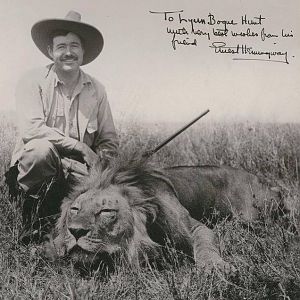
The first thing to keep in mind is that the poem was written subsequent to Ernest Hemingway’s suicide by self-inflicted shotgun shot.  The second thing to remember is that Merton was influenced by Hemingway as a young man.  Merton was born in 1915, and had wanted to be a writer from a very young man.  Hemingway was perhaps the central writer of the post WWI era, commonly called “the lost generation” which documented the trauma of the war.  Merton as a young man felt the post war angst and ultimately led him to reject his atheism, convert to Catholicism, and become a Trappist monk at the monastery, Abbey of Our Lady of Gethsemani in Kentucky.  His life perhaps flows in the opposite direction from Hemingway’s life.  The third thing to remember is that Merton, now twenty years a monk, and also a writer, can identify as Hemingway’s doppelgänger, his literary twin but with a very different side.


An Elegy For Ernest Hemingway

By Thomas Merton

.
Now for the first time on the night of your death
your name is mentioned in convents, ne cadas in
obscurum
.

Now with a true bell your story becomes final. Now
men in monasteries, men of requiems, familiar with
the dead, include you in their offices.

You stand anonymous among thousands, waiting in
the dark at great stations on the edge of countries
known to prayer alone, where fires are not merciless,
we hope, and not without end.

You pass briefly through our midst. Your books and
writing have not been consulted. Our prayers are
pro defuncto N.

Yet some look up, as though among a crowd of prisoners
or displaced persons, they recognized a friend
once known in a far country. For these the sun also
rose after a forgotten war upon an idiom you made
great. They have not forgotten you. In their silence
you are still famous, no ritual shade.

How slowly this bell tolls in a monastery tower for a
whole age, and for the quick death of an unready
dynasty, and for that brave illusion: the adventurous
self!

For with one shot the whole hunt is ended!


The poem is not written in meter but in straight prose, which I think is a nice tip of the cap to Hemingway’s great prose, which at its best could be poetic.  There are several references to monastery life that one should know to fully understand the poem.  In the first stanza, he mentions that now that Hemingway has died, the convents will be adding his name to the prayers for the dead, ne cadas in obscurum, “unless they fall into the darkness.”  It is a line from a Mass for the dead, and the line can be translated as “Deliver them from the lion's mouth, lest hell swallow them up, lest they fall into darkness.”  It is noteworthy that Hemingway had hunted lions and featured them in a couple of his short stories.

The second stanza is an elaboration of the first.  Now that Hemingway’s story has become final, he will be included in the monk’s daily “offices,” which refer to the Liturgy of the Hours which monastics pray seven times a day.

The third stanza I believe is an allusion to Dante’s Divine Comedy, where Hemingway’s soul stands among thousands of those entering the afterlife, especially referring to Purgatory here since he hopes the fires will end.  The fourth stanza refers to prayers prayed for the deceased, “pro defuncto,” N referring to a name to be added, Nominatim.  The interspersing of Latin and the slow prosaic lines gives the poem a praying quality, as if it were Gregorian chant.  I can see this poem being chanted.

The fifth stanza is Merton’s homage to Hemingway.  In the crowd of souls he is recognized, and a reference is made to Hemingway’s post WWI novel, The Sun Also Rises, and to Hemingway’s great prose that captured the trauma of the war.

If the fifth stanza is a homage, the sixth stanza captures the tragedy of Hemingway’s life.  It also alludes to another of Hemingway’s novels, For Whom the Bell Tolls, and to the unquenchable desire for adventure that consumed Hemingway’s life.  It alludes to a morbid fascination that Hemingway had with death, both with killing animals in hunts or in bull fights and with killing people in wars, and with his own death which in his adventures could be seen as a death wish.  Merton refers to these adventures as “brave illusions, which seen from Merton’s religious point of view was a sign of a hurt inside of Hemingway’s heart which was never healed from the trauma of the First World War.  Merton healed his hurt through his Catholic faith.

Which brings us to the final one line seventh stanza, which ends the poem like the gunshot it alludes to.  “For with one shot the whole hunt is ended!”  The hunter hunts himself!  Ernest Hemingway killed himself on July 2nd, 1961 bringing his adventures, his writing, and his life to an end.


###

Postscript:

As I’ve thought about this more, the parallels between Hemingway and Merton are even stronger.  It’s not that widely known but Hemingway converted to Catholicism, and though he considered himself a bad Catholic, he he never left it.  He was instrumental it seems in leading Gary Cooper, one of his best friends, into also converting.  A very good article on Hemingway’s Catholicism is “The troubled Catholicism of Ernest Hemingway,” by Robert Inchausti.  From the article:


Hemingway was raised in a Congregationalist Protestant home, and his first conversion to Catholicism occurred when he was a 19-year-old and volunteer ambulance driver in Italy during World War I. Two weeks into the job, he was delivering candy to soldiers on the frontlines when he was hit by machine-gun fire and more than 200 metal fragments from an exploding mortar round. An Italian priest recovered his body, baptized him right on the battlefield and gave him the last rites.


Hemingway later described what happened this way:


“A big Austrian trench mortar bomb of the type that used to be called ash cans, exploded in the darkness. I died then. I felt my soul or something come right out of my body, like you’d pull a silk handkerchief out of a pocket by one corner.  It flew around and then came back and went in again and I wasn’t dead anymore.”


After having been anointed, Hemingway described himself as having become a “Super-Catholic.” It was a near-death experience that changed the course of his life. After the war, he went to work as a foreign correspondent in Paris. And eight years later — after his first marriage failed — he undertook a second, more formal conversion process in preparation for marriage to his second wife, devout Catholic Pauline Pfieffer.


It was at this time that Hemingway changed the title of his unpublished first novel, tentatively titled “Lost Generation,” to “The Sun Also Rises.” And writing to another friend, he declared, “If I am anything I am a Catholic . . . I cannot imagine taking any other religion seriously.”


He attended Mass (albeit irregularly) for the rest of his life and went on pilgrimages, received confession, had Masses said for friends and relatives, and raised his three sons as Catholics. Most of his novels are set in Catholic countries, and his last great hero (Santiago of “The Old Man and the Sea”) was a devout suffering servant, much in the cruciform mold of most of his heroes. When he won the Nobel Prize for Literature in 1954, he gave away the medal as a votive offering to “Our Lady of Cobre” in Havana.

But Hemingway considered himself a bad Catholic, one who could not live up to the discipline of the Christian life.  Again from the Inchausti article:


In a letter to his friend Father Vincent Donavan in 1927 just before he married his second wife, Hemingway wrote, “I have always had more faith than intelligence or knowledge and I have never wanted to be known as a Catholic writer because I know the importance of setting an example — and I have never set a good example.”


Unlike James Joyce, Hemingway didn’t renounce his faith; and unlike Flannery O’Connor, he never promoted it. He thought of himself, like many of his protagonists (Nick Adams, Jake Barns, Robert Jordan, Francis McComber and Santiago), as a man struggling to live with grace and die a good death in a violent, unforgiving world where all of us must suffer.

Though not a formal Catholic ceremony, the graveside services were conducted by Rev. Robert J. Waldmann, pastor of St. Charles Roman Catholic Church in Hailey and of Our Lady of the Snows in Ketchum as stated in this contemporaneous NY Times article.  

So the parallels and differences are stark.  Hemingway converted to Catholicism but led a seeker’s life of “brave illusions.”  Merton converted to Catholicism but settled into a monastic life, which is a life of total stability, the very opposite of the restless heart. 

“Our hearts are restless, O Lord, until they rest in you.”  -St. Augustine of Hippo.