"Love follows knowledge."
"Beauty above all beauty!"
– St. Catherine of Siena

Showing posts with label Septuagint. Show all posts

Tuesday, January 18, 2022

The Development of the Bible, Post 5

This is the fifth and final post based on my discussion of the development of the Bible.  You can read Post #1 here.  

Post #2 here.  

Post #3 here.  

Post #4 here. 


The conversation continued.

Manny:

I believe the exact claim was that when there was a reference to the OT in the NT, 20% would have matched either the LXX and the Masoretic.  80% they differed.  Of the 80%, 90% matched the LXX and only 10% agreed with the Masoeretic.  So to be precise it’s 10% of the 80%.  So I think that’s a grand total of 8%.  That’s a very small amount.

St. Augustine:

Is it not possible that the norm in NT quotations is to quote from the Hebrew OT that they had?


We don’t have the same Hebrew OT, but we have three excellent representations of it, and they align to an astonishing degree despite their disadvantages–one is not complete, and one is in another language, and one is newer. We don’t have exactly the same Hebrew, but we are amazingly close.


And it turns out that when the newer one differs from the one in another language, the newer one looks less reliable.


But that is not evidence that quotes agreeing with the one in another language are quotes from it instead of from the original Hebrew.

Manny:

Yes it is possible and probably certain because the Hebrew OT they had was what the Septuagint was translated from.  The Septuagint in Greek is the original Hebrew OT.

Saint Augustine:

But, more importantly for this conversation: No, reverse translating is a lousy way of figuring out what the Hebrew Word of G-d says.


Using the Masoretic Text, the Dead Sea Scrolls, and the LXX together to get back to the original Hebrew is a good way, and the only viable way.


If you really care about scholarly consensus, you should know that this is the scholarly consensus.

Manny”

Yes, I just don’t trust Liberal scholars.

St. Augustine:

Nor do I, but this isn’t a liberal thing.  This is liberals, conservatives, Barthians, Protestants, Catholics.


I guess I haven’t personally checked on all of those categories.  But I’ve personally heard this stuff from conservatives (and not from liberals).


(I studied this under William E. Bell of DBU, an author and signers of the Chicago Statement on Biblical Inerrancy.)

Manny:

The Holy Spirit allowed the original Hebrew to be destroyed.

St. Augustine:

No. He did not. He allowed the original manuscripts to be destroyed, for the OT as well as the NT. But the original text of them both is still going strong.


Not that we have either in more than an approximate form. But that is just how textual history works, and it’s not a problem, and it is an amazingly accurate approximation. (# 109.)

Manny:

It does appear they are amazingly accurate. But where the LXX and the Masoretic differ, it sticks in my throat.

St. Augustine:

Ok. And I’m totally ok with preferring the LXX to the Masoretic.


But did you just agree with me that NT authors are quoting from the Hebrew even when they use the LXX?

Manny:

I said it’s possible and probable.  But I don’t know if it’s definitive.  You’re talking to me as if I’m a PhD scholar on this!  I thank you for the compliment but I’m basically an amateur on this subject.

Saint Augustine:

Of course, if the LXX is itself inspired (and not just a reliable translation of the inspired Hebrew), then the NT should never once disagree with it. Very small isn’t enough. Only none is enough.

Manny:

Good point, but the Holy Spirit has His motivations!  He may have multiple objectives!  ;)  He may want this ambiguity, just as in God’s ambiguity.  You hear atheists ask frequently why doesn’t God just come out and show us He exists in a definitive way?  Well that ambiguity is part of His plan.  Perhaps the ambiguity with the scriptures is part of His plan too. 

St. Augustine:

I wasn’t trying to [talk to a PhD scholar]. I’m no more than a B.A. scholar myself, and you’re plainly better than many professional scholars.  [Grumble, grumble.  Scholars these days. Mumble, grumble.]

Manny:

I just thought of another reason why the Septuagint should be the authoritative text for Christians. I don’t think I mentioned this. The New Testament writers all wrote in Greek, which I did mention, but the continuity of language implies a continuity of text. Why did the New Testament writers write in Greek? Because I would maintain (with no way to prove it) that they intended to build on the Septuagint with the new texts fulfilling the old texts. I think the intent was one continuous Bible.


I don’t know if that causes you to reevaluate (I doubt it) but it’s something else to consider in your future Biblical endeavors.

St. Augustine:

Of course it implies a continuity of text.  That text is the Old Testament–a text written in Hebrew.


Or by “language” do you just mean Greek as opposed to Hebrew, Latin, Swahili, etc.?  In that case, no: The continuity of language only implies that they were writing in the same language.  And they wrote in Greek because they wanted people to be able to read it.  The intent was one continuous Bible–with the last bits in Greek.

Manny:

Yes, the Greek language.  Because the Septuagint was written in Greek, the New Testament writers felt obligated to continue in Greek.  That’s my theory.  Apparently there was no compunction to return to the Hebrew.  They must have been so steeped in the Septuagint Greek that they felt no obligation to write in Hebrew.  Actually as I think on it, by the first century A.D. Hebrew may have already been a dead language.  Jews spoke in Aramaic or Greek.

St. Augustine:

It wasn’t dead.  Plenty of Rabbis (at least) knew it, and Aramaic is (so I understand) not exactly a different language.


But anyway . . .


It’s an interesting theory, and I have a better one: Paul and all the Palestinian writers knew the Hebrew OT, and they wrote in Greek so that Gentiles and Greek-speaking Jews could read what they were writing.  They had no obligation to write in Hebrew because they had no obligation to write in a language most people could not read.  In a different context, they would have used Latin or English.

Manny:

Yes that’s possible too. Given that most people did not read in any language, I wonder who they were writing for. Paul was writing letters to be read in churches of Greek speakers, so that’s understandable. But who were the Gospel writers writing for?  Something to think about.

St. Augustine:

They were also writing for things being read in churches of Greek-speakers.


Most people didn’t read, but they lived books. They were text-based people. Reading was an out-loud activity, and reading as a communal activity was normal.

Manny:

I just thought of another reason why the Septuagint should be the authoritative text for Christians.  I don’t think I mentioned this.  The New Testament writers all wrote in Greek, which I did mention, but the continuity of language implies a continuity of text.  Why did the New Testament writers write in Greek?  Because I would maintain (with no way to prove it) that they intended to build on the Septuagint with the new texts fulfilling the old texts.  I think the intent was one continuous Bible.


I don’t know if that causes you to reevaluate (I doubt it) but it’s something else to consider in your future Biblical endeavors.

St. Augustine:

Of course it implies a continuity of text.  That text is the Old Testament–a text written in Hebrew.


Or by “language” do you just mean Greek as opposed to Hebrew, Latin, Swahili, etc.?  In that case, no: The continuity of language only implies that they were writing in the same language.  And they wrote in Greek because they wanted people to be able to read it.  The intent was one continuous Bible–with the last bits in Greek.

Manny:

Yes, the Greek language.  Because the Septuagint was written in Greek, the New Testament writers felt obligated to continue in Greek.  That’s my theory.  Apparently there was no compunction to return to the Hebrew.  They must have been so steeped in the Septuagint Greek that they felt no obligation to write in Hebrew.  Actually as I think on it, by the first century A.D. Hebrew may have already been a dead language.  Jews spoke in Aramaic or Greek.


St. Augustine:

It wasn’t dead.  Plenty of Rabbis (at least) knew it, and Aramaic is (so I understand) not exactly a different language.


But anyway . . .


It’s an interesting theory, and I have a better one: Paul and all the Palestinian writers knew the Hebrew OT, and they wrote in Greek so that Gentiles and Greek-speaking Jews could read what they were writing.  They had no obligation to write in Hebrew because they had no obligation to write in a language most people could not read.  In a different context, they would have used Latin or English.

Manny:

Yes that’s possible too. Given that most people did not read in any language, I wonder who they were writing for. Paul was writing letters to be read in churches of Greek speakers, so that’s understandable. But who were the Gospel writers writing for?  Something to think about.

St. Augustine:

They were also writing for things being read in churches of Greek-speakers.


Most people didn’t read, but they loved books. They were text-based people. Reading was an out-loud activity, and reading as a communal activity was normal.

Manny:

Thanks for a great conversation!  Maybe the best extended conversation I’ve ever had on Ricochet. 


†


Friday, January 14, 2022

The Development of the Bible, Post 4

This is the fourth post based on my discussion of the development of the Bible.  You can read Post #1 here.  

Post #2 here.  

Post#3 here.  


A continuation of my conversation with St. Augustine.

Saint Augustine:

The real question is what word [virgin/young woman] was used in the original Hebrew.  The Masoretic Text, the Dead Sea Scrolls, the LXX, the Vulgate, and other things are all clues to what the original Hebrew was.


None of them is itself a perfect witness to the original Hebrew.

Manny:

How do you know?  As far as we know, the Masoretic was constructed in 900 AD.  The Septuagint in 300-200 BC.  How could the Septuagint not be more authoritative?  It most certainly is.

St. Augustine:

In this case, the Masoretic is correct.  Alma is a word that can mean “virgin,” but the word was referring to the wife of Isaiah, who was no virgin when she had his baby.  (See chapters 7 and 8 of Isaiah.)


The word also refers to Mary, and the LXX translation/interpretation is also correct.


One word can refer to two people.  That happens a lot in OT prophecy. Indeed, that happens a lot in the OT.  Indeed, that is what the OT is. Every person and event in the OT is pointing to Christ, so in some capacity or other every word pointing to each of them is pointing to Christ.

Manny:

Completely disagree.  The specificity of “virgin” is critical to the theology.  Christ was born of a virgin.  Christianity partly hangs on that concept.  It’s absolutely critical.  To strip it away is to (1) undermine Christianity and (2) reduce the evangelical power of the OT prophesying the NT.  Early Christians were converted by the power of this prophesying.  Jesus on the road to Emmaus “opened the scriptures” for those two apostles.  It was prophesies such as this that He was opening.  Jews who come to the Christian faith over the centuries still cite this as one of the main reasons.  This is why the Masoretes distorted their translation.

Saint Augustine:

Who’s stripping it away?  Of course it specifically means “virgin.”  I just said that.  Should I say it a third time?

Manny:

No it doesn’t.  The specific word in Hebrew is “bethula” put forth by the video I linked and substantiated at this Translation Question website: 


Question:


Is there a Hebrew word which means woman but not includes the meaning of a virgin. For example in English, a woman can mean a married woman or a virgin, but in Hebrew does the word woman also include virgin in it’s meaning or is specific to a married woman only.

Hipolito Mojica, III


Explanation:

Unfortunately I don’t have a Hebrew font installed, so I will write the English transliterations of the Hebrew words:


‘Isha’ is the Hebrew word for woman, and is a general term, referring to women of any age, whether a virgin or not, although it can also be used to mean ‘wife’ – ‘my wife’ in Hebrew would translate literally as ‘my woman’…


‘Bat-Zog’ also means ‘wife’ or ‘spouse’.


‘Bakhoura’ is a young girl (a maiden, perhaps, in English), and in some contexts implies virginity or innocence…


‘Batolah’ is the “technical” word for a virgin…


Hope this helps you :-)


Julia


“Batolah” = “Bethula”  It depends how you transcribe the sounds. 


St. Augustine:

Ok, so using your language, no, it does not specifically mean virgin.


It means young woman, and it could mean young virgin or something else.


It means both.


If it doesn’t mean both, then the Bible made an error. Do you think the Bible made an error?

Manny:

What are you talking about?  Where in a pre-Christian era text does it say alma?  You are going with alma because the Masoretic text wrote alma.  The Septuagint says “virgin” in Greek and they obviously took it from the Hebrew that existed. 


And the Septuagint translation was inspired, even according to Jews before Christ.  It was a miraculous translation if you read how it came about.  It was only after Christ that it came into question. 


I fail to see what I have not addressed.  Put together a comment with the specific list of questions you feel I still need to address and I’ll give it one final shot.  But the question has to be complete in itself and not refer to some other comment.


###

So St. Augustine put together a series of questions to finally reach a conclusion to this wild discussion. 

What exactly is your point about the Masoretic Text, and with whom are you disagreeing?

My point about the Masoretic text is that it is not more authentic than the Septuagint and that the Masoretes intentionally undermined Christianity in its creation.  It should be suspect to Christians and should not be used as the basis of the OT translation.  It is 1100 years older than the Septuagint, and altered by time and the changes to Judaism as a result of the destruction of the Temple.  I am disagreeing with the Bible translators who use the Masoretic text as the basis of the OT.

I don’t think the NT is based on the LXX. Do you have some reason I should, other than that the NT quotes from the LXX?

Well everywhere I read it says so.  When 90% of the references to the OT match the Septuagint and only 10% match the Masoretic, then I am convinced.  You want to disagree fine. 

I think the NT actually does not even quote from the LXX–much. Do you have some reason I should think otherwise?

I’ve given clear examples.  Look at my three egregious distortions from the Masoretic.  You are bucking the general consensus.  You prove the consensus is wrong.  I rest with the consensus.  We’ll just have to disagree.

Your only reason I can discern is that the NT is usually like the LXX rather than the Masoretic text where they differ. But you yourself acknowledged that it also tends to be like the Dead Sea Scrolls in these situations, and that when writing in Greek the NT authors can also be quoting from the Hebrew. So all you have shown is that the NT does not use the Masoretic Hebrew. Is it not possible (I would say most likely) that the NT is actually quoting from a Hebrew text which the LXX, Masoretic, and Dead Sea Scrolls are all representing?

The NT could not have used the Masoretic Hebrew because the NT was written 900 years before the Masoretic.  The 10% of the NT that seems to match the Masoretic text is mostly coincidence of dealing with the same material.  If there was a strong link to the Masoretic then it would have been well above the 10%.  I don’t acknowledge anything about the Dead Sea Scrolls.  I did not see any evidence it was closer to the Septuagint.  I only saw a claim it was closer.  Yes, it is possible the Dead Sea Scrolls could have represented the same Hebrew as what the Septuagint used.  It could be the very original for all I know.  Unfortunately we only have fragments from the Dead Sea Scrolls and I think only one complete book of the OT.

Since we agree the original Hebrew OT text is inspired, do we not need to know what it says?

Because the Septuagint translated it while it still existed.  The Septuagint is the inspired OT.  Translate it back to Hebrew.  You seem to fail to understand that the Holy Spirit led to the creation of the Septuagint.  The Holy Spirit led to the apostles use of it in the NT, led to the canonization of the Septuagint by all the Apostolic Churches [Council of Rome (382 AD), Synod of Hippo (393 AD), Council of Carthage (397 AD) and the Council of Carthage (419 AD)].  The Holy Spirit allowed the original Hebrew to be destroyed.  1100 year passed before any challenge to the Septuagint, firmly integrating it into the faith.  I do not believe the Holy Spirit led non-Christians to create another OT.  The Masoretes didn’t even believe in the Holy Spirit as God and had every reason to undermine the prophesies of the coming Christ.  You seem to have become a skeptical scholar and not a devout Christian.

And how do you think we should figure out the original Hebrew text?

I don’t know.  Let the scholars try but frankly it won’t mean anything.  The Septuagint was created, canonized, and survived.  Are you aware that the Septuagint was also found among the Dead Sea Scrolls?  That means at least some Jews at the time considered canonical.    Without finding an actual OT written 2500 years ago, “reconstruction” of an OT will always be suspect to devout Christians.  Until then the Septuagint is it.

†

Tuesday, January 4, 2022

The Development of the Bible, Post 3

This is the third post based on my discussion of the development of the Bible.  You can read Post #1 here.  

Post #2 here.  


Manny:

This is what I learned about the Masoretic test, and ultimately why I am convinced it is wrong as a canonical Bible, maybe even heretical, for Christians to base their Old Testament on it.

Saint Augustine:

Ok. But who does that?

Manny:

Protestants for sure, but even our current Catholic English translations base the OT on the Masoretic Text.  Heresy!

Saint Augustine:

All you know is that they are not quoting from some Hebrew textual tradition that differs much from the LXX.

Manny:

I agree in that over the tens of thousands of words of the 73 books it does not differ much, but where it does is super critical.  Now I can understand you scholars using all the various texts, especially when you understand the differences.  But for the average Christian sitting in the pew and going home to read his Bible, he is getting wrong information in critical places.  He doesn’t know any of this.  To learn of this might even undermine his faith.  To the average pious Christian, this is explosive stuff.

Saint Augustine:

Hey, I’m fine with all this.  We get to the original Hebrew text using the Masoretic text, the Dead Sea Scrolls, and the LXX, with some other help from things like Patristic quotations, the Vulgate, the Torah texts the Samaritans had, etc.

Manny:

But you’re a scholar as I said above.  The average Christian (Protestant, Catholic, etc.) isn’t (1) aware of Septuagint, Masoretic, Dead Sea scrolls, and other texts too; (2) doesn’t care, and (3) the jumble could even undermine his faith.  Protestants especially, since they put so much faith in scripture alone.  How do you think the average church goer who reads his Bible thinking the OT was written 2000 years ago will feel when he learns it wasn’t? 


I thought Protestant OT was based on the Masoretic.  I’m pretty sure common translations use the Masoretic for the OT.  At least I noticed Catholic Bibles footnote the Septuagint when the difference is critical.  But I had no idea of the totality of this context.  I’m sure the average Christian doesn’t.  We don’t take this up in college.


Are you saying the NIV, KJV, ESV, EHV, and a whole bunch of others are not Protestant Bibles? And they do not contain the OT?

St. Augustine:

Of course they’re not Protestant Bibles.  They’re just translations of the Bible that Protestants often read.


What actually is a Protestant Bible?


And what do you think these texts are based on?  They’re based on the Masoretic, Dead Sea Scrolls, and LXX.


(The KJV, of course, predates the Dead Sea Scrolls.  It might be all Masoretic for all I know.  But I don’t know that its translators ignored the LXX.)

Manny:

But those Bibles do not include the deuterocanonical books.  Only the Protestant leave them out.  So they would have to be considered written for Protestants in mind.  I’ll have to check out the ESV.  I’ve never really looked at that.

###

Manny:

Let me provide the most egregious examples of the Masoretic undermining Christian theology.  This is from the embedded video, where they gave six examples but I want to present three here in case people don’t watch the video.  This will take more than one comment box, so watch the “continued.”


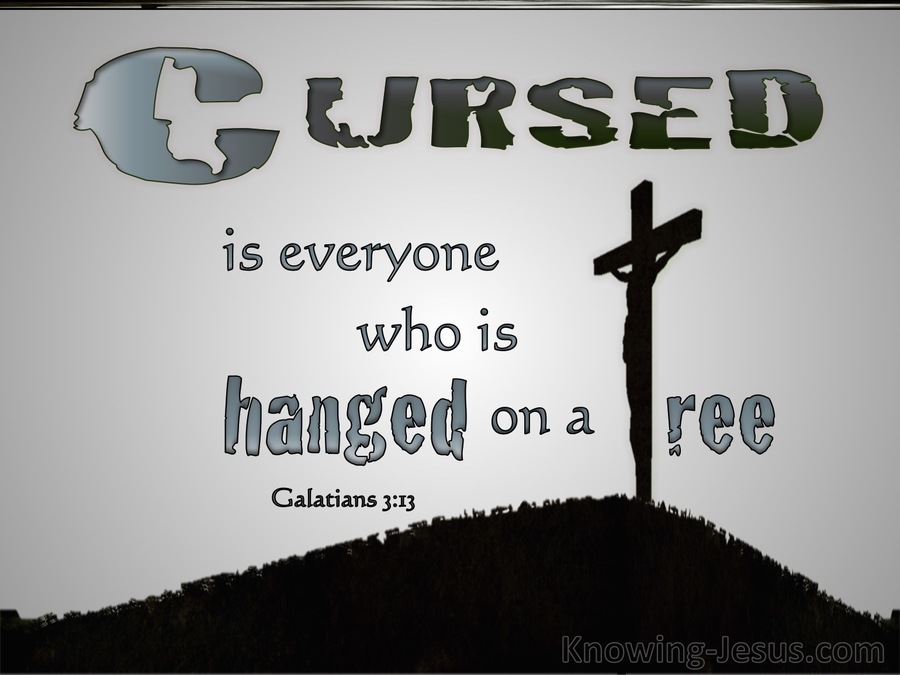
First, from Deuteronomy 21, verse 23:


St. Paul in his letter to the Galatians quotes that verse:

‘It is written, “Everyone who is hung on a tree is cursed.” (Gal: 3:13)


Let’s go to that verse in the OT:

Based on the Masoretic, from the NKJV:

“He who is hanged is accursed of God.”


From the Septuagint (Brenton):

“Every one that is hanged on a tree is cursed of God.”


Underlined are my emphasis.  One could be hanged in multiple ways, but the Septuagint specifically predicts Christ on the cross.


Second, from Psalm 22, verse 16:

Septuagint (Brenton):

“For many dogs encompassed me: the assembly of the wicked doers has beset me: they pierced my hands and my feet.”


Masoretic:

“For dogs have encompassed me: a company of evildoers have enclosed me: like a lion they are at my hands and my feet.”


Now you will not find the Masoretic in most Christian Bibles except as a footnote.  This was so egregious that even back when the put together the King James, those translators went with the Septuagint.  Still how can a Christian believe the accuracy of anything from a Masoretic translation when alterations were made like that?


This is not one of my top three egregious differences, but I feel obligated to mention Psalm 22:20 since it seems all the translations use the Masoretic and usually without a footnote. 


From Masoretic:

“Deliver my soul from the sword, my life from the power of these dogs!”


From Brenton Septuagint:

“Deliver my soul from the sword; my only-begotten one from the power of the dog.” 


That altered adjective “my only begotten” foreshadows the phrasing of John 3:16: “For God so loved the world that he gave his only-begotten Son.” 


Why was “only-begotten” left out of all the Christian translations and without even a footnote?  I have some suspicions, but that will sidetrack me, so I’m just going to leave it that it should be in all the Christian Bibles.


Third, Isaiah 7 verse 14:

Most translations have one of two options:

“The Lord Himself will give you a sign: Behold, the [virgin/young woman] will conceive and give birth to a son, and she will name Him Immanuel.”


The Masoretic translation uses “young woman;” the Septuagint uses “virgin.”  The difference is huge.  Remember the Septuagint is writing this some three hundred years before Christ’s virgin birth.  All translations has Matthew’s Gospel say some variation of “Behold, a virgin shall conceive and bear a son, and his name shall be called Emman′u-el.”  All specifically say “virgin.” 


The video makes a point of the original languages:

Masoretic Hebrew:  alma = young woman

Hebrew for Virgin: bethula

Septuagint Greek: parthenos = virgin


There could not have been a mistake made or a blurring of terms.  As the person speaking in the video, “virgin” when in the context of a woman giving birth would have not made any sense, and yet that is what how they translated it.  The miracle of a virgin birth was a conscious decision.


Now, most of today’s translations have done a double change.  Initially all Bibles went with the Septuagint.  Then in the 1950s when everyone started to become ecumenical the RSV (including the Catholic edition to my horror) went with “young woman.”  There was such an uproar that second edition of RSV (and thank God my Catholic edition) reversed course and went back to “virgin.”  Most of today’s translations that I scanned seem to use “virgin.” 


So no harm done, right?  Well, maybe not.  Let me tell you a story.  I came across this distinction many years ago.  I don’t remember if I was in college or a young man out of college, but it was around that time, almost forty years ago now.  Whatever I was reading—I don’t remember what—but I do remember the author making the point that “virgin” appears to have been a mistake and that the original text must have had “young woman.”  I don’t remember my reaction to that but I do remember accepting it.  It seemed logical and at the time I was at best an agnostic, and this probably reinforced my skepticism.  This is the perfect ammunition for Liberal professors to indoctrinate students.  Yes it does make a difference. 


###

St. Augustine:

Ok, so a “Protestant Bible” is defined as one that does not include the Deuterocanon/Apocrypha?

Manny:

I don’t know of any official definition.  I see “Catholic Editions” to certain Bibles, and so I assume the non-Catholic are for Protestants.  Certainly if they don’t contain the deuterocanonical books it could not be intended for Catholics or the other Apostolic Churches.  I hope you don’t think I was using it as a slur.  I wasn’t.  I do refer to the Protestant Bibles on occasion, just to check out a different translation.  I do listen to the NIV audio Bible for the OT.  Unfortunately I have not found a good Catholic audio Bible of the OT. 

St. Augustine:

And you understand that (not counting the KJV) most or all of them rely on the Masoretic, Dead Sea Scrolls, and LXX?

Manny:

In this learning exercise I have just gone through, it does seem like the newer translations do integrate the Masoretic and Septuagint.  I have not seen anything integrating from the Dead Sea Scrolls, but I’ll take your word for it.  I’m not for it though.  Why?  The NT was based on the Septuagint.  That’s what should be canonical for Christians. 

St. Augustine:

I have no idea what your point is.

Manny:

My point is that the average churchgoer – Protestant, Catholic, Eastern Orthodox, Coptic, etc.. – doesn’t know the history and the variations.  I was completely surprised about the Masoretic text, and I’m a fairly knowledgeable Christian.  These variations, even if footnotes explain, can alter the faith of people.  If Jews want to use the Masoretic text, that’s their prerogative.  Christians should have translations that don’t undermine their theology.  Even for scholars, isn’t it better to have clearly defined texts rather than a blurring of the two or three or more?

†