"Love follows knowledge."
"Beauty above all beauty!"
– St. Catherine of Siena

Showing posts with label Harper Lee. Show all posts

Thursday, March 10, 2016

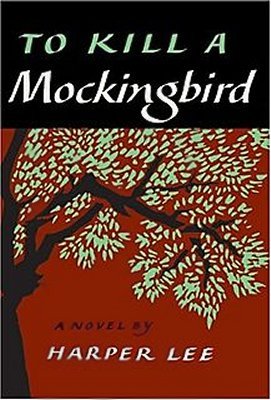
To Kill a Mockingbird by Harper Lee, Part 1

It’s always hard to write about a novel you are currently reading for the first time and haven’t finished.  I’m reading Harper Lee’s To Kill a Mockingbird, and it’s certainly enjoyable enough.  But here I am almost a third of the way through, and the main storyline—or what I think is the main storyline since perhaps I don’t know—has only come up in a suggestion, the innuendo that Atticus Finch, attorney, will be defending a “nigger” in court.  So what are these first hundred pages all about if it’s not the storyline and why am I enjoying it?

The novel is divided into two parts.  The first part, which I’ve now read, deals with the life in the southern town of Maycomb, Alabama as seen through the eyes of a six to seven year old girl, nicknamed Scout.  Except for the narrative section of trying to get a reclusive named Boo Radley to come out of his home, the stories are parallel anecdotes.  They could have been individual short stories.

Maycomb was an old town, but it was a tired old town when I first knew it.  In rainy weather the streets turned to red slop; grass grew on the sidewalks, the courthouse sagged in the square.  Somehow, it was hotter then: a black dog suffered on a summer’s day; bony mules hitched to Hoover carts flicked flies in the sweltering shade of the live oaks on the square.  Men’s stiff collars wilted by nine in the morning.  Ladies bathed before noon, after their three o’clock naps, and by nightfall were like soft teacakes with frostings of sweat and sweet talcum.

People moved slowly then.  They ambled across the square, shuffled in and out of the stores around it, took their time about everything.  A day was twenty-four hours long but seemed longer.  There was no hurry, for there was o where to go, nothing to buy and no money to buy it with, nothing to see outside the boundaries of Maycomb County.  But it was a time of vague optimism for some of the people: Maycomb County had recently been told that it had nothing to fear but fear itself.

That last sentence is a clever way of situating the time to 1933, the year President Franklyn Roosevelt took office and used that famous line.  I’m not going to give you a summary, but just to make the point there are a series of anecdotes involving Scout, her older brother Jem, and a childhood friend, Dill.  We get anecdotes of school, Miss Caroline the teacher, Miss Maudie the neighbor, the Radleys, also neighbors, her father Atticus, his siblings, a rabid dog that threatens the neighborhood, a fire that burnt down Miss Maudie’s home, and the passing of a cantankerous old woman, Mrs. Dubose.  What’s important here is that Lee is creating the world of a southern town in the early part of the twentieth century: family oriented, neighborly, but also racist.  Also of importance is the delineation of Scout’s character, a tomboy trying to fit into her world.  Here’s an interesting anecdote at the beginning of the third chapter.

Catching Walter Cunningham in the schoolyard gave me some pleasure, but whn I was rubbing his nose in the dirt Jem came by and told me to stop.  “You’re bigger’n he is,” he said.

“He’s as old as you, nearly,” I said.  “He’s made me start off on the wrong foot.”

“Let him go, Scout.  Why?”

“He didn’t have any lunch,” I said, and explained my involvement in Walter’s dietary affairs. 

Walter had picked himself up and was standing quietly listening to Jem and me.  His fists were half cocked, as if expecting an onslaught from both of us.  I stomped at him to chase him away, but Jem put out his hand and stopped me.  He examined Walter with an air of speculation.  “Your daddy Mr. Walter Cunningham from Old Sarum?” he asked, and Walter knodded.

Walter looked as if he had been raised on fish food: his eyes, as blue as Dill Harris’s, were red-rimmed and watery.  There was no color in his face except at the tip of his nose, which was mostly pink.  He fingered the straps of his overalls, nervously picking at the metal hooks.

Jem suddenly grinned at him.  “Come on home to dinner with us Walter,” he said.  “We’d be glad to have you.”

Walter’s face brightened, then darkened.

Jem said, “Our daddy’s a friend of your daddy’s.  Scout here, she’s crazy—she won’t fight you any more.

“I wouldn’t be too certain of that,” I said.  Jem’s free dispensation of my pledge irked me, but precious noontime minutes were ticking away.  “Yeah Walter, I won’t jump yuou again.  Don’t you like butterbeans?  Our Cal’s a real good cook.”

Walter stood where he was, biting his lip.  Jem and I gave up, and we were nearly to the Radley Place when Walter called, “Hey, I’m comin’!”

This little scene captures in a microcosm the themes of the book: fairness, justice, friendliness, and a religious obligation, suggested by the diction “free dispensation,” which alludes to the theological dispensation of grace.

At this point in my reading, I just don’t understand the significance of Boo Radley.  So why is the first third of the novel outside the main storyline?  Shouldn’t a writer put the reader in media res?  If you conceptualize the storyline to be Atticus’ defense of Tom Robinson at his trial, then the novel is incorrectly plotted, and perhaps even Scout’s first person point of view is badly chosen.  But you have to give the novelist her due.  The main storyline is not the trial but the education of Jean Louise Finch, her moral development, and the blossoming of her femininity.  The trial is in service of Scout’s development, not the other way around.  When the trial is first brought up, at the beginning of chapter nine, it is tied to Atticus educating Scout.

“You can just take that back, boy!”

This order, given by me to Cecil Jacobs, was the beginning of a rather thin time for Jem and me.  My fists were clenched and I was ready to let fly.  Atticus had promised me he would wear me out if he ever heard of me fighting any more; I was far too old and too big for such childish things, and the sooner I learned to hold in, the better off everybody would be.  I soon fogot.

Cecil Jacobs made me forget.  He in the schoolyard the day before that Scout Finch
S daddy defended niggers.  I denied it, but told Jem.

“What’d he mean sayin’ that? I asked.

“Nothing,” Jem said.  “Ask Atticus, he’ll tell you.”

“Do you defend niggers, Atticus?” I asked him that evening.

“Of course I do.  Don’t say nigger, Scout.  That’s common.”

“’s what everybody at school says.”

“From now on it’ll be everybody less one—“

“Well if you don’t want me to grow up talkin’ that way, why do you send me to school?”

My father looked at me mildly, amusement in his eyes.  Despite our compromise, my campaign to avoid school had continued in one form or another since my first day’s dose of it: the beginning of last September had brought on sinking spells, dizziness, and mild gastric complaints.  I went so far as to pay a nickel for the privilege of rubbing my head against of rubbing my head against the head of Miss Rachel’s cook’s son, who was afflicted with a tremendous ringworm.  It didn’t take.

But I was worrying another bone.  “Do all lawyers defend n-Negroes, Atticus?

“Of course they do, Scout.”

“Then why did Cecil say you defended niggers?  He made it sound like you were runnin’ a still.”

Atticus sighed.  “I’m simply defending a Negro—his name’s Tom Robinson.  He lives in that little settlement beyond the town dump.  He’s member of Calpurnia’s church, and Cal knows his family well.  She says they’re clean living folks.  Scout, you aren’t old enough to understand some things yet, but there’s been some high talk around town to the effect that I shouldn’t do much about defending this man.  It’s a peculiar case—it won’t come tio trial until summer session.  John Taylor was kind enough to give us a postponement…”


Here Scout is taught about vulgar talk, the dehumanization of people, justice, and even the “childishness” of fighting.  A novel about the development of the central character is called a Bildunsroman.  Childishness will eventually turn to maturity.


Monday, February 29, 2016

Lines I Wished I’d Written: Atticus is Feeble from To Kill a Mockingbird

I’ve been reading Harper Lee’s To Kill a Mockingbird.  I’m about a third of the way through and I will post some analytical thoughts as soon as I finish Part 1, which is another fifteen pages or so.  I’ve come across a number of passages that are delightfully written, and I’ve been debating over which one I should highlight.  As soon as I read this at my lunchtime break today, I concluded this was the one.

This is a passage where Scout Finch, the central character of the novel, a young girl somewhere between six and nine years old, tells about her father, Atticus Finch, who seems rather ordinary, unexciting, and less accomplished than the fathers of the other children at school.

Atticus was feeble: he was nearly fifty.  When Jem and I asked him why he was so old, he said he had got started late, which we felt reflected upon his abilities and manliness.  He was much older than the parents of our school contemporaries, and there was nothing Jem or I could say about him when our classmates said, “My father—“

Jem was football crazy.  Atticus was never too tired to play keep-away, but when Jem wanted to tackle him Atticus would say, “I’m too old for that, son.”

Our father didn’t do anything.  He worked in an office, not in a drugstore.  Atticus did not drive a dump-truck for the county, he was not the sheriff, he did not farm, work in a garage, or do anything that could possibly arouse the admiration of anyone.

Besides that, he wore glasses.  He was nearly blind in the left eye, and said his eyes were the tribal curse of the Finches.  Whenever he wanted to see something well, he turned his head and looked from his right eye.

He did not do things our schoolmates’ fathers did: he never went hunting, he did play poker or fish or drink or smoke.  He sat in the livingroom and read.

With these attributes, however, he would not remain as inconspicuous as we wished him to: that year, the school buzzed with talk about him defending Tom Robinson, none of which was complimentary.  After my bout with Cecil Jacobs when I committed myself to a policy of cowardice, word got around that Scout Finch wouldn’t fight any more, her daddy wouldn’t let her.  This was not entirely correct: I wouldn’t fight publically for Atticus, but the family was private ground.  I would fight anyone from a third cousin upwards tooth and nail.  Francis Hancock, for example, knew that.

When he gave us our air-rifles Atticus wouldn’t teach us to shoot.  Uncle Jack instructed us in the rudiments thereof; he said Atticus wasn’t interested in guns.  Atticus said to Jem one day, “I’d rather you shot at tin cans in the back yard, but I know you’ll go after birds.  Shoot all the bluejays you want, if you can hit ‘em, but remember it’s a sin to kill a mockingbird.”

That was the only time I ever heard Atticus say it was a sin to do something, and I asked Miss Maudie about it.

“Your father’s right,” she said.  “Mockingbirds don’t do one thing but make music for us to enjoy.  They don’t eat up people’s gardens, don’t nest in corncribs, they don’t do one thing but sing their hearts out for us.  That’s why it’s a sin to kill a mockingbird.”

So, that’s where we get the title of the novel.  I was wondering about that, and obviously it’s loaded with symbolism.  I don’t know what it’s symbolic of yet, but I would say it’s rich with possibilities.  That the mockingbird’s singing is noted reminds me of some of the Romantic poet’s use of bird singing to symbolize ideal beauty.  I’m thinking of Percy Shelley’s “To a Skylark” or John Keats’ “Ode to a Nightingale.”  Isn’t it interesting that the family’s last name is Finch, also a type of bird.  Is Finch a contrast to Mockingbird or are they analogous?  I’ll have to do a little ornithological research.  We shall see what develops from that. 

But I was struck with the delineation of Atticus Finch.  Let’s see, an older father than typical, wears glasses and loves to read, works in an office and is rather unexciting: who does that remind one of?  Me!  LOL.  I’m all those things except I’m an engineer instead of a lawyer, and I do drink alcoholic beverages every now and then.  I would like to think I’m as wise as Atticus Finch, but probably not. 


It was only a couple of weeks ago someone said on a comment to a post on a subject I forget that most women dream of marrying Atticus Finch but they wake up to find they are married to Homer Simpson.  LOL, well I hope I’m not that bad.  I would say I’m more like George Jetson.  


Saturday, February 20, 2016

Literature in the News: Harper Lee Dies and Her Reputation

The author of To Kill a Mockingbird, Harper Lee, died yesterday.  From Associated Press through Yahoo News: 

Harper Lee, the elusive novelist whose child's-eye view of racial injustice in a small Southern town, "To Kill a Mockingbird," became standard reading for millions of young people and an Oscar-winning film, has died. She was 89.

Lee died peacefully Friday, publisher HarperCollins said in a statement. It did not give any other details about how she died.

"The world knows Harper Lee was a brilliant writer but what many don't know is that she was an extraordinary woman of great joyfulness, humility and kindness. She lived her life the way she wanted to — in private — surrounded by books and the people who loved her," Michael Morrison, head of HarperCollins U.S. general books group, said in the statement.

As I’ve mentioned in the past I had never read To Kill a Mockingbird, one of the most notable works of American fiction in the second half of the 20th century.  It was the first book planned to be read in 2016, and I did start it.  I had to stop it to start my Lenten read, St. Theresa of Avila’s Interior Castle, which I just finished a few days ago.  I’m about a quarter of the way through To Kill a Mockingbird and I was about to pick it up when I saw the news of Lee’s passing.  From the Associated Press article:

"To Kill a Mockingbird," published in 1960, is the story of a girl nicknamed Scout growing up in a Depression-era Southern town. A black man has been wrongly accused of raping a white woman, and Scout's father, the resolute lawyer Atticus Finch, defends him despite threats and the scorn of many.

The book quickly became a best-seller, won the Pulitzer Prize and was made into a memorable movie in 1962, with Gregory Peck winning an Oscar for his portrayal of Atticus. As the civil rights movement grew, the novel inspired a generation of young lawyers, was assigned in high schools all over the country and was a popular choice for citywide, or nationwide, reading programs.

By 2015, its sales were reported by HarperCollins to be more than 40 million worldwide, making it one of the most widely read American novels of the 20th century. When the Library of Congress did a survey in 1991 on books that have affected people's lives, "To Kill a Mockingbird" was second only to the Bible.

It was just last year, almost to the day, I posted that after 54 years Harper Lee published a second novel after To Kill a Mockingbird.   The novel, Go Set a Watchman, was actually written before To Kill a Mockingbird, and contained the same characters only set 20 years later.  So the To Kill a Mockingbird is actually a prequel to Go Set a Watchman. 

But the prequel was a learning experience for Lee, and apparently is not of the same caliber. I won’t go into that since I haven’t read either.  I do feel the need to comment, however, on all the criticism out there for the people who pushed Lee to publish what critics claim is an unworthy effort.  They do absolve Lee of the critique since she was in her late eighties.  Here’s such criticism from Ron Charles, the fiction editor at the Washington Post:

The sadness of Harper Lee’s death on Friday in Monroeville, Ala., is deepened by the painful controversies that attended the last few years of her life. Long adored as the author of “To Kill a Mockingbird,” Lee found herself caught in a morass of claims and counterclaims about her competency to manage her own literary legacy.

“To Kill a Mockingbird” is still devoured by countless new and repeat readers around the world. Teenagers study the Depression-era story of Scout and Jem every year. Lawyers routinely say that Scout’s father, Atticus Finch, inspired them to study law. But ironically, lawyers and legal ambiguities eventually threatened to overshadow Lee’s life and work.

What a shame.


And Charles goes on to utter his disappointment with the recently published work:

When “Go Set a Watchman” finally appeared in print last summer, it quickly shattered sales records. But it also shattered something more precious: our admiration for Atticus Finch. In this old/new story, set two decades after the trial of Tom Robinson, Atticus has devolved into a racist. Jean Louise (“Scout”) is shocked and disillusioned. And so are we.

Maybe we should just grow up; after all, as close readers noticed, Atticus was never really as noble and uncomplicated as we imagined. But that’s not the point. It wasn’t Atticus’s reputation that was sullied by this second book, it was Lee’s.

“Go, set a watchman,” the prophet Isaiah writes. “Let him declare what he seeth.” And what we saw — the millions of us who bought this new book — was an inferior piece of work, an early draft of something we love, fascinating perhaps for its embryonic detail, but not a finished novel to place alongside “To Kill a Mockingbird.”

The tragic story of Harper Lee — and it is a tragedy — raises the question of who owns our literary heritage. Not in a legal sense, perhaps, but in a larger, cultural sense. Are there works of literature so beloved, so foundational to who we are, that they deserve to be classified as National Historic Landmarks, forever protected from garish rehab or wholesale demolition?

So Charles seems to bring up at least four issues there: (1) Should a work that contradicted the vision of the more renown work have been published? (2) Who should be responsible for an author’s personal papers and writings?  (3) Should a landmark work be protected from garish rehab? (4) Is an author’s reputation sullied by the publication of mediocre, if not poor, quality works?

Let’s take the easiest one to answer first, number 2.  Who should be responsible?  The person the author assigns to be responsible or if no one is assigned, the natural sequence of heirship.  It’s a legal matter.  If the author assigns poorly or it falls to an unscrupulous person, well, that’s life. 

Next, number 3, protection from rehab.  First, there are copyright laws which apply, and for the most part make sense.  Once the time has passed, then if people want to read some crazy prefabrications of a classic work, I don’t see the harm.  There are all sorts of crazy rewrites of Jane Austen novels with vampires or zombies complicating the action.  See here if you want to laugh.  But this charge itself against Go Tell a Watchman doesn’t make sense.  It was Lee herself who wrote the work.  It’s not a rehab but a prequel. 

As to number 1, Ron Charles answers it himself when he says above that “we should grow up.”  Yes, complaining that a character in one work contradicts the nature of that same character in a different work is is childish, even if both works are by the same author, perhaps especially so.  The works are separate and distinct.  If the author wants to hold to the same vision in both, then she has the prerogative; if she wants to have a different vision, then it’s still her prerogative.  Take the Renaissance painter Raphael for example.  He painted many versions of the Madonna, each with a different personality.  The character is the same, but the vision is different.

As to the harm the people who were responsible for her papers did by publishing Go Set a Watchman, I think it’s a complete non-issue.    I don’t see her reputation sullied.  Even if Watchman turns out to be a disaster – and a lot of people say it’s a disappointment – it will not hurt her reputation in the long run. Over the course of history, only a writer’s best work is part of their historical critical evaluation. No one remembers the few lousy Shakespeare plays. They just don’t count in the long run. If Harper Lee made some money with Watchman and handed it over to her heirs, so be it. It’s only a transient thing.


This is a nice TV news summary of her passing and the issue with the new novel.


By all accounts she was a sweet and good soul.  May she rest in peace.


Thursday, February 12, 2015

Literature in the News: Harper Lee to Publish a Second Novel

I’ve been reluctant to post on this, even though this is huge literary news.  I’ve been reluctant because I’ve never read Harper Lee’s To Kill a Mockingbird.  Shocking, I know, but for some reason the assignment escaped me while in school, and I can’t say it’s the type of novel that would galvanize me to run and pick it up.  (For the record, it’s one of my wife’s favorite novels and she was shocked I had never read it.)  That’s not to say it’s not a great book or even an important book.  I can’t vouch for how great a book it is since I haven’t read it, but certainly it’s an important book, either for its cultural significance of African-American civil rights and for being an incredible best seller.


Another reason why a second Harper Lee novel is big news is that in all these years—54 years since To Kill a Mockingbird was published—Lee has never published another novel, nor had expressed any interest in doing so.  Obviously there was speculation, even speculation that she didn’t even write Mockingbird.   Apparently that’s not true.  Some writers have a limitation to their imagination.  Some writers can only write about a particularly personal period in their lives, a period where the circumstances of their lives indelibly shape their persona so that life at that moment is heightened and perhaps even fossilized.  Hemingway and World War I is such an example.  Harper Lee’s imagination seems to have been indelibly formed by mid twentieth southern life, especially as it pertains to its racial tensions.  Which leads to her new novel, Go Set a Watchman, which will be published in July.

From the NY Times:  

For more than half a century, “To Kill a Mockingbird” has stood apart as a singular American literary masterpiece, a perennial best seller that has provoked countless classroom discussions about racial and social injustice. It brought instant and overwhelming fame to its enigmatic author, Harper Lee, who soon retreated from the spotlight to her native Monroeville, Ala. She never published another book, leaving her millions of fans yearning for more.

Now, at age 88, Ms. Lee has revealed that she wrote another novel after all — a sequel of sorts to “To Kill a Mockingbird,” featuring an aging Atticus Finch and his grown daughter, Scout.

On Tuesday, Ms. Lee’s publisher announced its plans to release that novel, recently rediscovered, which Ms. Lee completed in the mid-1950s, before she wrote “To Kill A Mockingbird.” The 304-page book, “Go Set a Watchman,” takes place 20 years later in the same fictional town, Maycomb, Ala., and unfolds as Jean Louise Finch, or Scout, the feisty child heroine of “To Kill a Mockingbird,” returns to visit her father. The novel, which is scheduled for release this July, tackles the racial tensions brewing in the South in the 1950s and delves into the complex relationship between father and daughter.

As you can see the new novel carries the same character, especially the central point-of-view character, Jean Louise Finch, which inescapably is the eyes of the novelist.  This apparently was when Ms. Lee’s imagination was formed and is most alive to creatively reproduce.  As it turns out, the new novel was written before the old novel, making To Kill a Mockingbird a prequel.   

Although written first, “Go Set a Watchman” is a continuation of the same story, with overlapping themes and characters. But Ms. Lee abandoned the manuscript after her editor, who was captivated by the flashbacks to Scout’s childhood, told her to write a new book from the young heroine’s perspective and to set it during her childhood.

“I was a first-time writer, so I did as I was told,” Ms. Lee said in a statement released by her publisher.

That story became “To Kill a Mockingbird,” a classic that was adapted into a 1962 film and has sold more than 40 million copies globally since it was published in 1960. It continues to sell more than a million copies a year and has been translated into more than 40 languages.

The new novel was recently discovered after all these years.

Ms. Lee said she had thought the draft of “Go Set a Watchman” had been lost or destroyed. Then last fall, Tonja Carter, her friend and lawyer, discovered the manuscript in a secure place where Ms. Lee keeps her archives, attached to an original typed manuscript of “To Kill a Mockingbird.” According to Ms. Lee’s publisher, Ms. Carter didn’t understand what she had stumbled on at first, until she realized that the passages weren’t from Ms. Lee’s first and only novel.

Ms. Lee wasn’t immediately sold on the idea of releasing it but was persuaded after a handful of people read it and reassured her it was worth publishing.

Continue reading the main story

“After much thought and hesitation, I shared it with a handful of people I trust and was pleased to hear that they considered it worthy of publication,” she said.

Scholars have long been aware that Harper Lee wrote an earlier manuscript, but many thought it was an early version of “To Kill a Mockingbird,” not a separate story that unfolds 20 years later.

I’m actually skeptical that the soon to be published book will be anywhere as good as the first.  After all, first novels are usually an act of apprenticeship and typically secondary works in a great writer’s career.  There was some rumor that Harper Lee was manipulated to publish this long lost work.  She had had a stroke in 2007 and did not have her full faculties.  And the sales of a new Harper Lee novel would certainly make some people a lot of money.  But that rumor was put to rest by a longtime friend.  From the Associated Press:  

A longtime friend who visited "To Kill a Mockingbird" author Harper Lee the day before the world learned she would release a sequel says she was feisty but didn't mention her new book.

Historian Wayne Flynt, a friend of the famous author, said he believes Lee was capable of giving permission for the previously unpublished manuscript to be released.

"This narrative of senility, exploitation of this helpless little old lady is just hogwash. It's just complete bunk," historian Wayne Flynt said in an interview with The Associated Press.

Flynt visited with Lee on Monday at the assisted-living facility where she lives in her hometown of Monroeville, Alabama. That was a day before a division of HarperCollins Publishers announced the publication of "Go Set a Watchman." The publisher said Tonja Carter, an attorney who practiced with Lee's sister, found the manuscript, which will be released in July as a sequel to the beloved novel.


All very interesting.  Perhaps I should try to squeeze in her classic into this year’s reads.